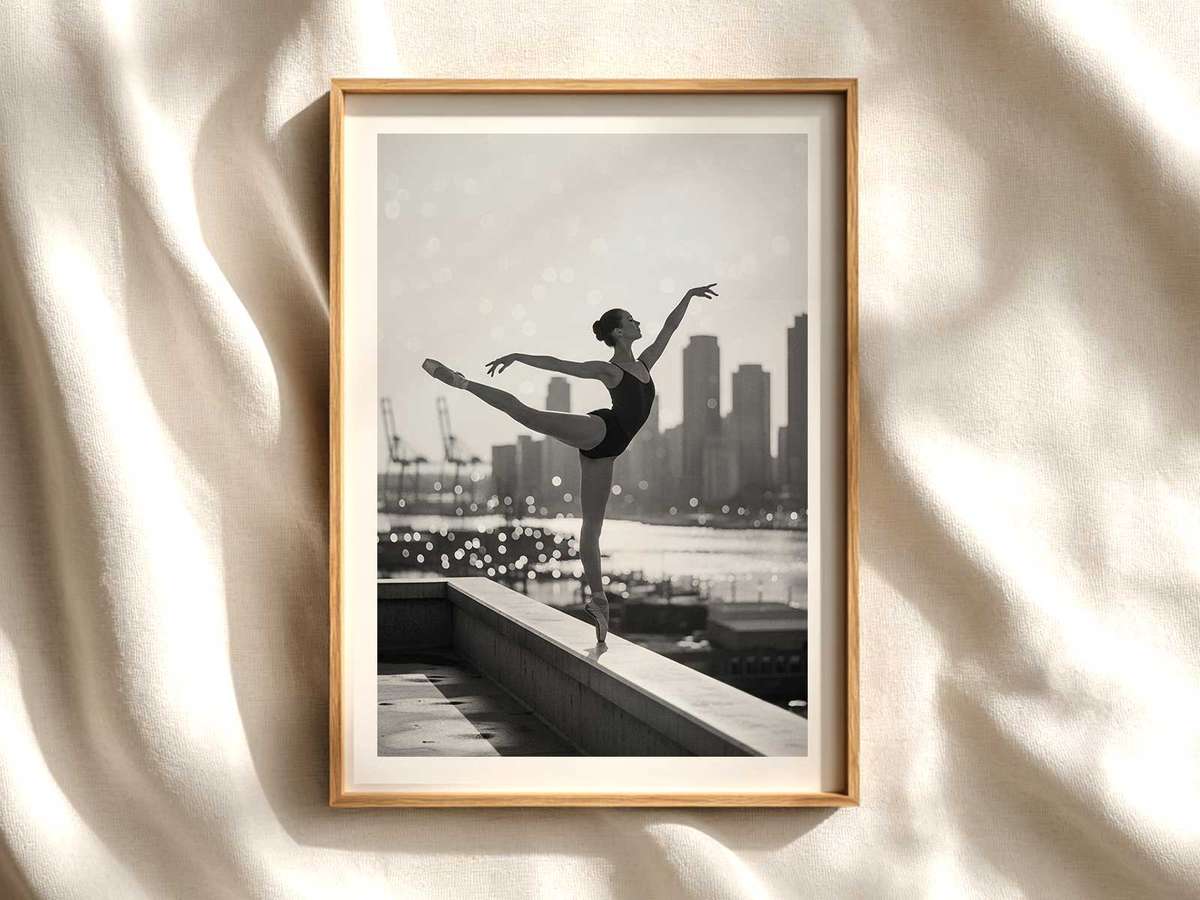
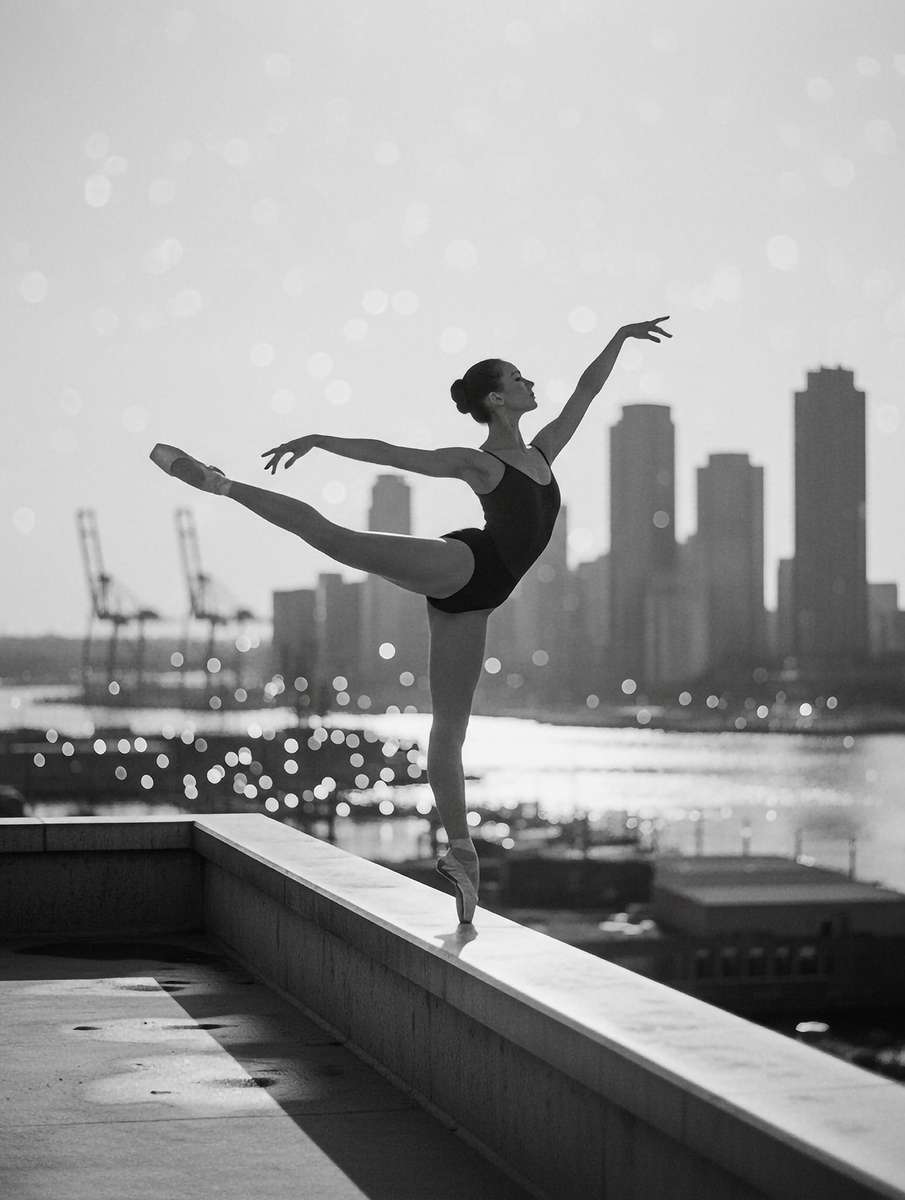
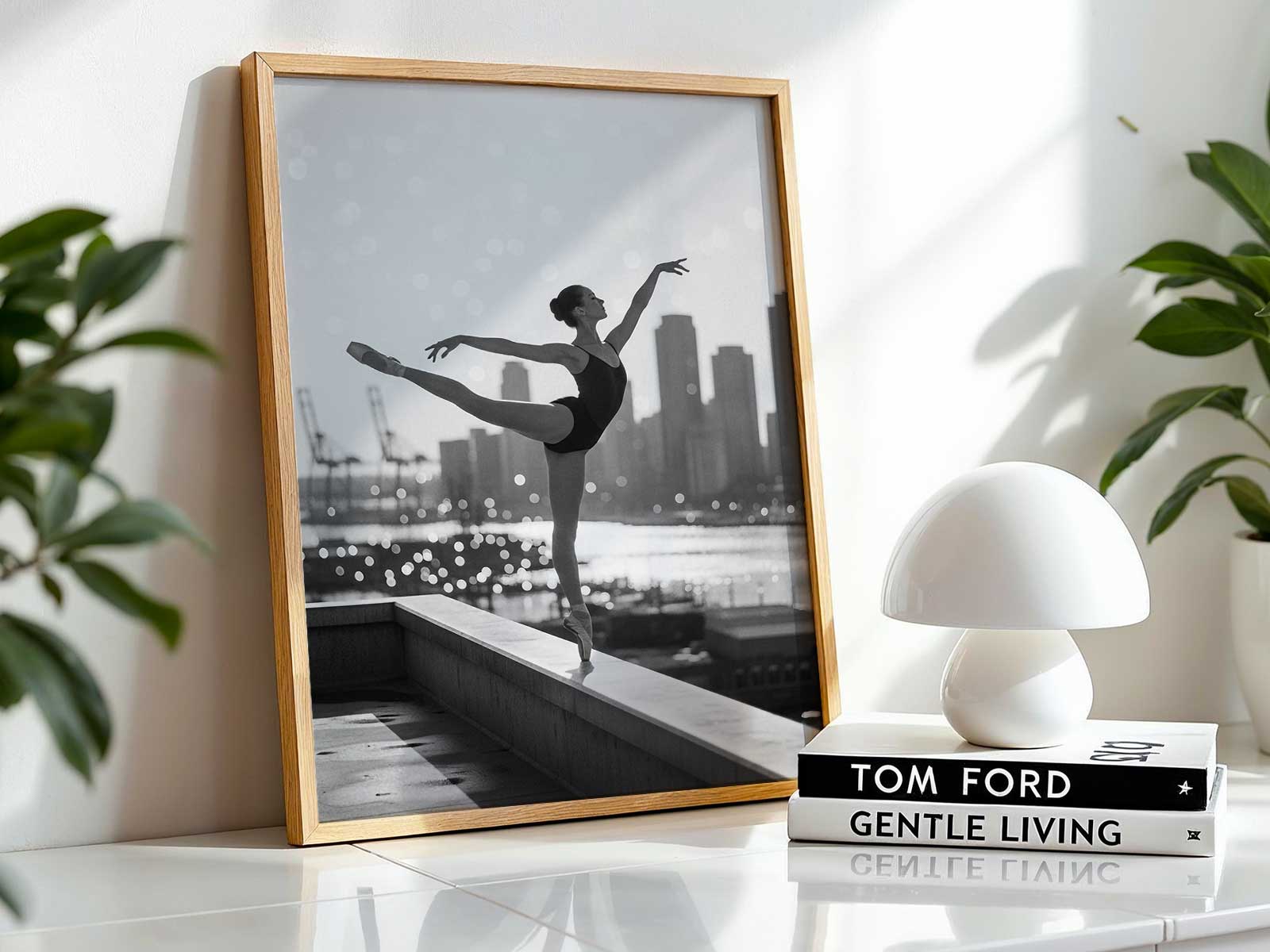
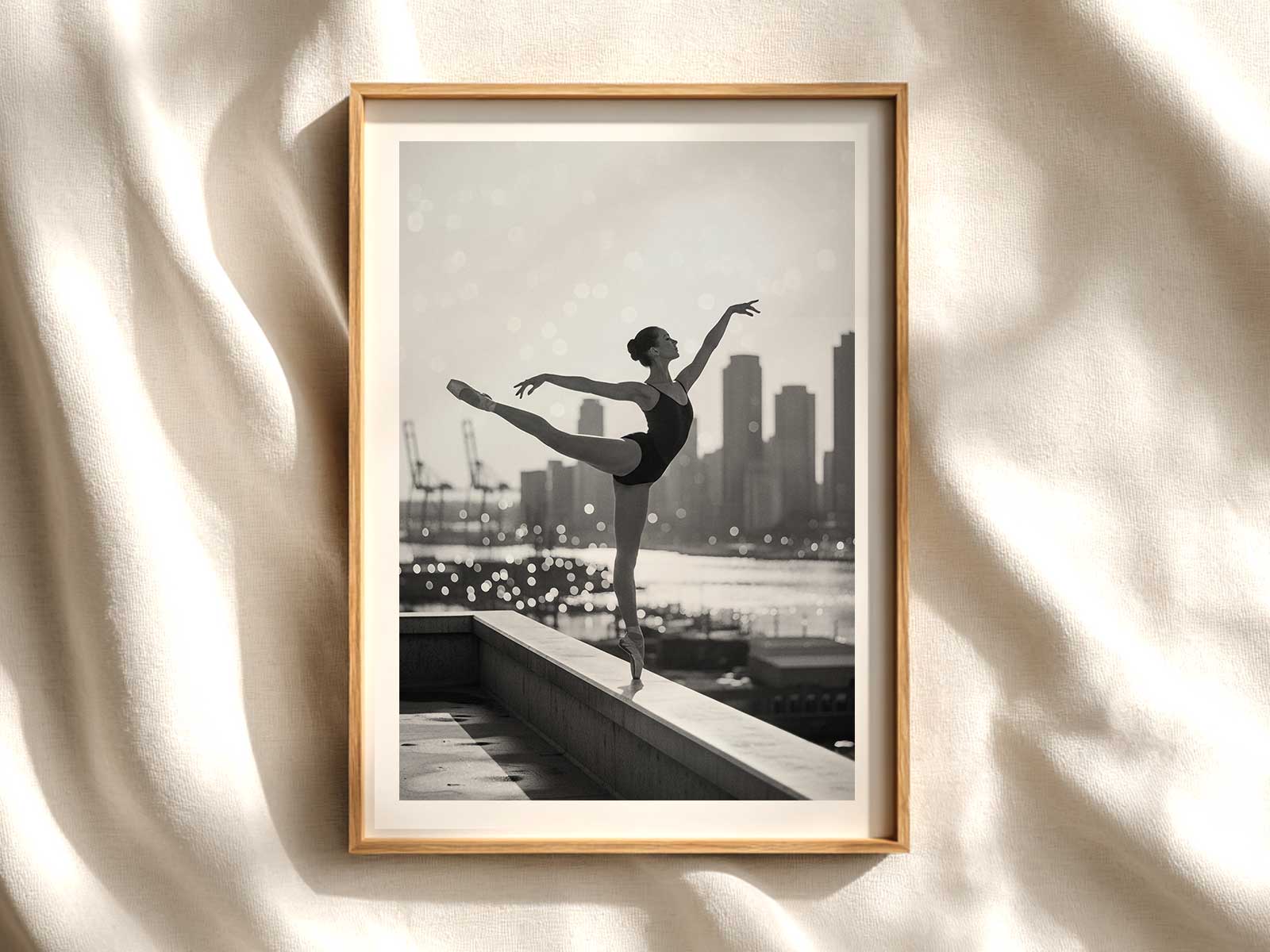
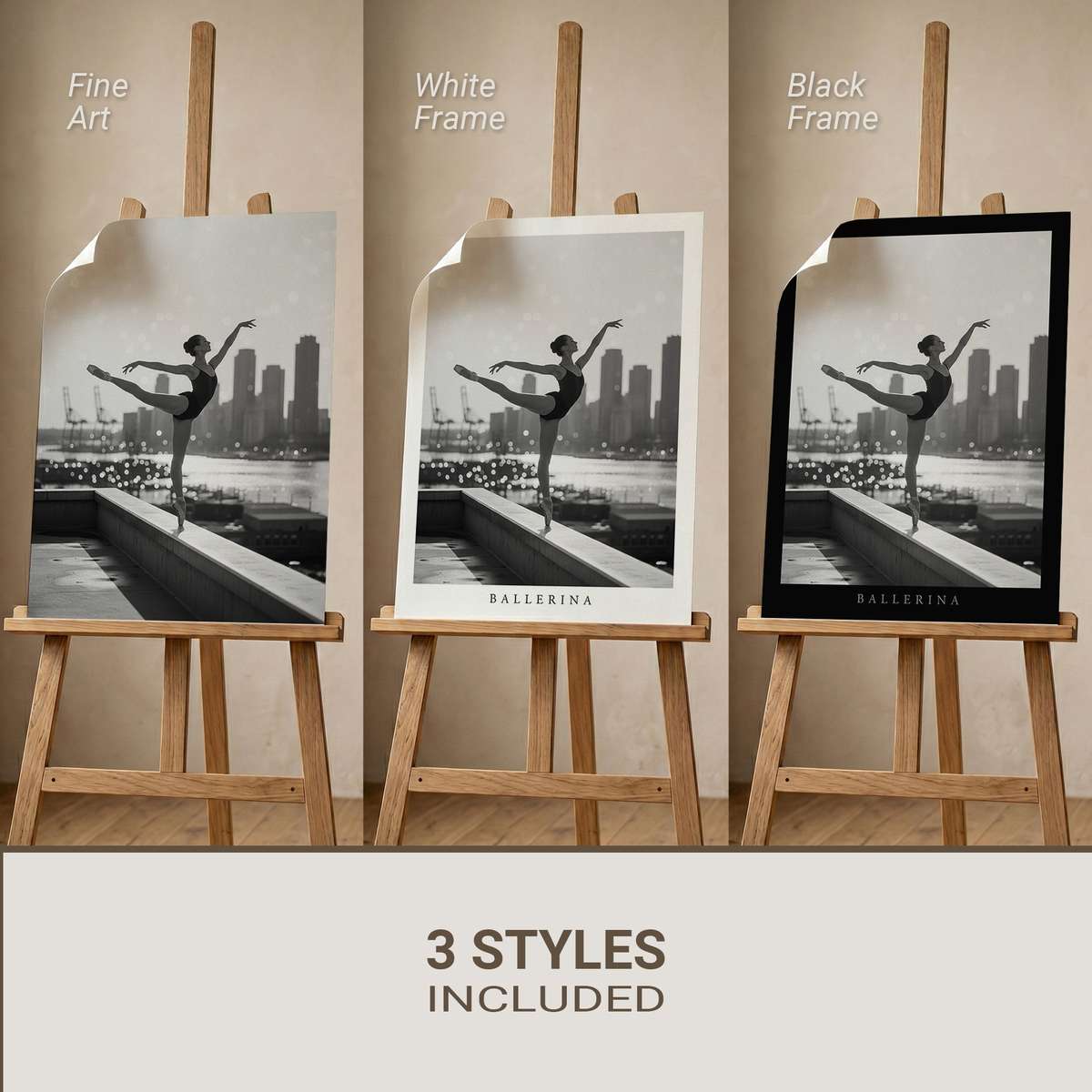
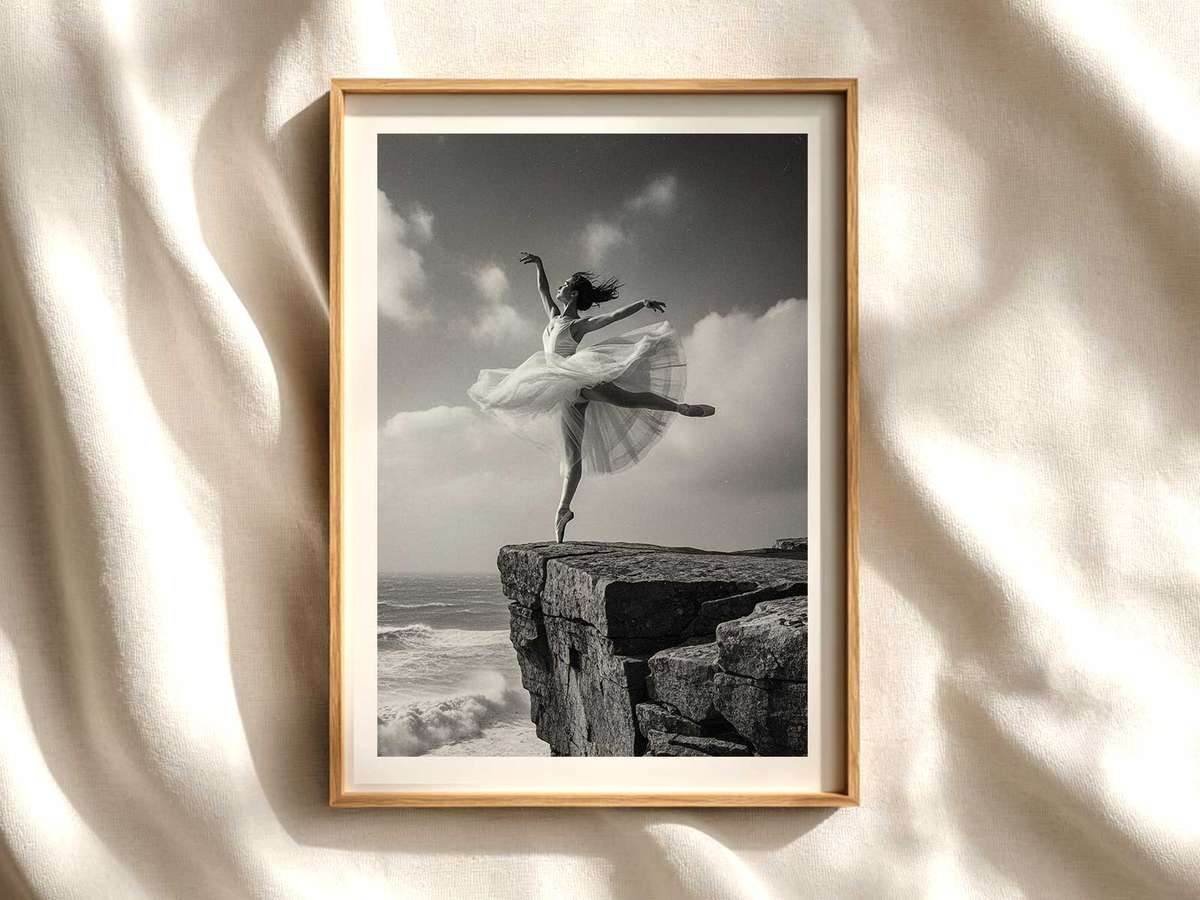
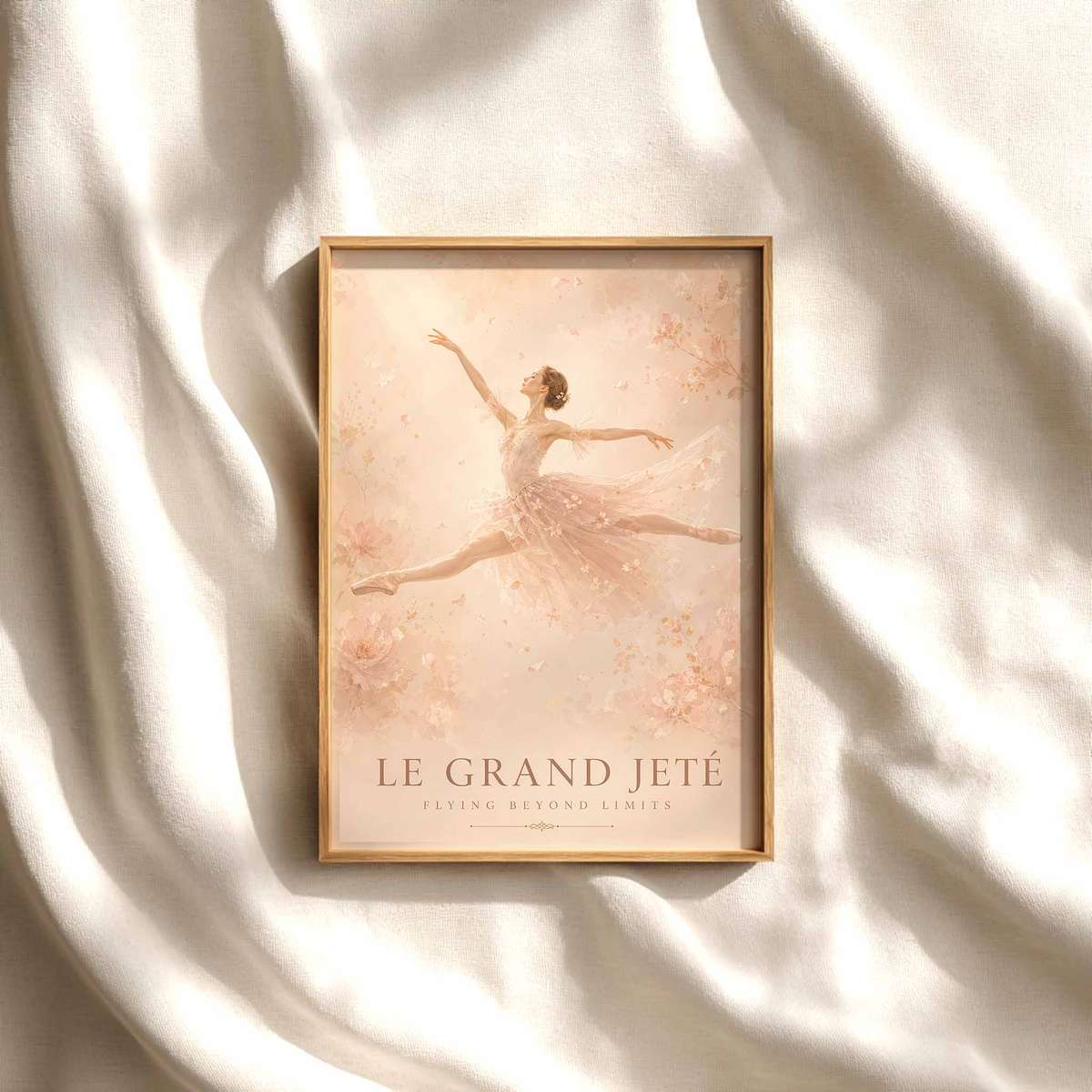
First glance: a ballerina poised against a harbour backdrop, but the feeling comes from the way the scene is rendered — an aged palette, softened contrast, and a print-like texture that asks you to remember as much as to look. This artistic ballet photography is not glossy spectacle; it’s a quietly composed study in continuity. The port’s ironwork and fogged light become stagecraft in themselves, lending the dancer a sense of journey and lineage rather than momentary display.
A ballet image with a sense of memory
What turns a photograph into something that feels like heritage is restraint: muted sepias, the careful reduction of highlight punch, and a grain that reads like old paper under the fingertip. Here, those choices make the harbour décor more than setting — it reads as a lived-in backdrop, a place the dancer returns to in memory. The image evokes transit and archives; ropes, pilings and distant sails form a geometric hush that frames the ballerina’s silhouette and suggests stories of travel, rehearsal, and repeat performance. The result is emotional specificity rather than vague nostalgia.
Light plays a central role. Instead of dramatic beams or studio-perfect illumination, the photograph favors a light that feels filtered by time: warm, diffuse, and directional in a way that evokes afternoon memory. That quality invites slow looking. Shadows soften the edges of costume and face, and the tonal restraint makes every subtle pose count. This is artistic ballet photography that rewards repeated viewing — the more you look, the more small, quiet details reveal themselves.
[IMAGE_INSERT_ARTICLE_01]
Why vintage texture changes the mood
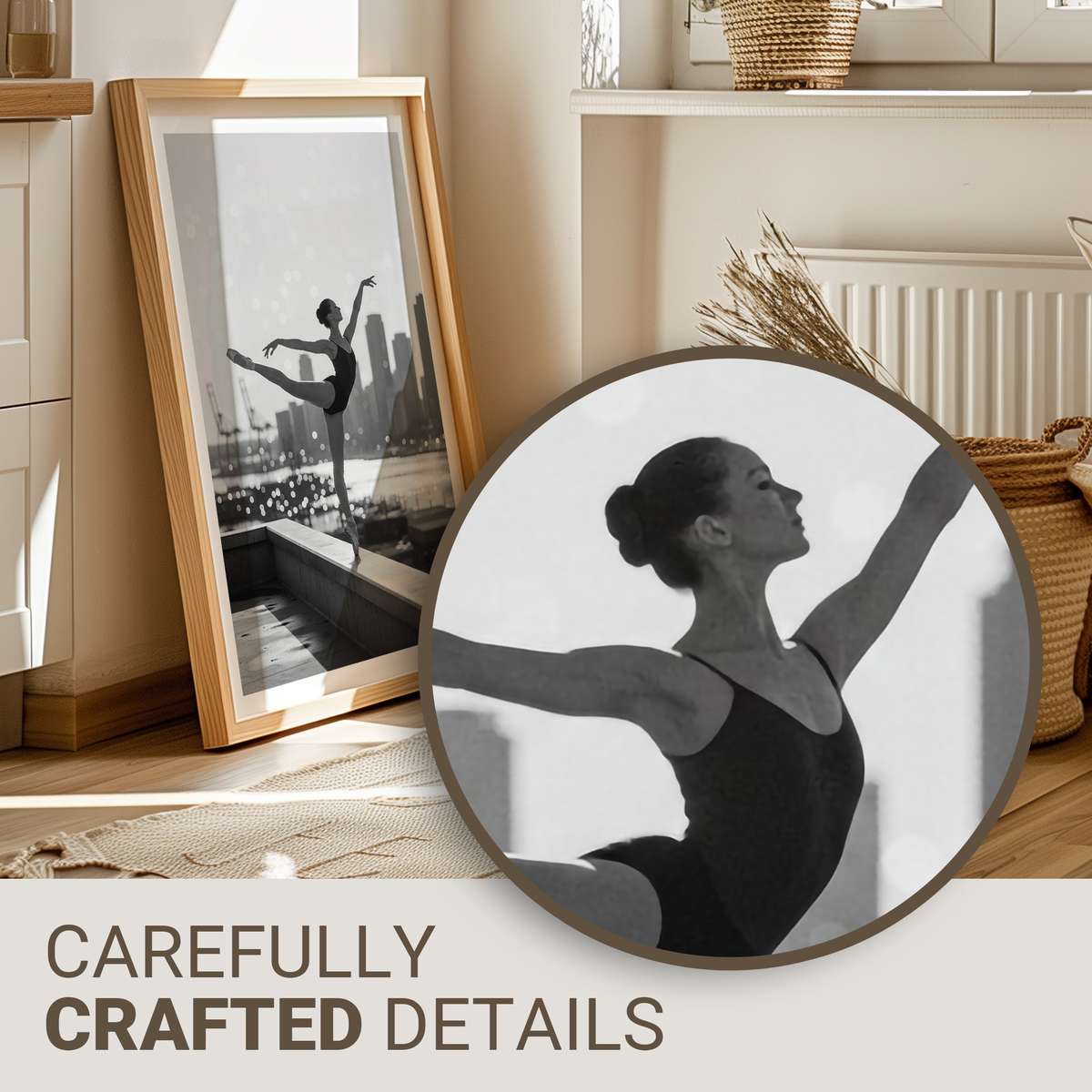
Texture here is not an affectation but a translator. A print-like grain and slightly weathered tones give the image a tactile presence, as if the poster were lifted from a studio wall where rehearsals were discussed and scores were kept. That physicality shifts the work from decorative to intimate: it feels like something a dancer or a devoted viewer would live with. The softened contrast reduces visual noise and allows the composition’s restraint — the poised wrist, the angled foot, the harbour’s horizontal lines — to breathe and accumulate meaning over time.
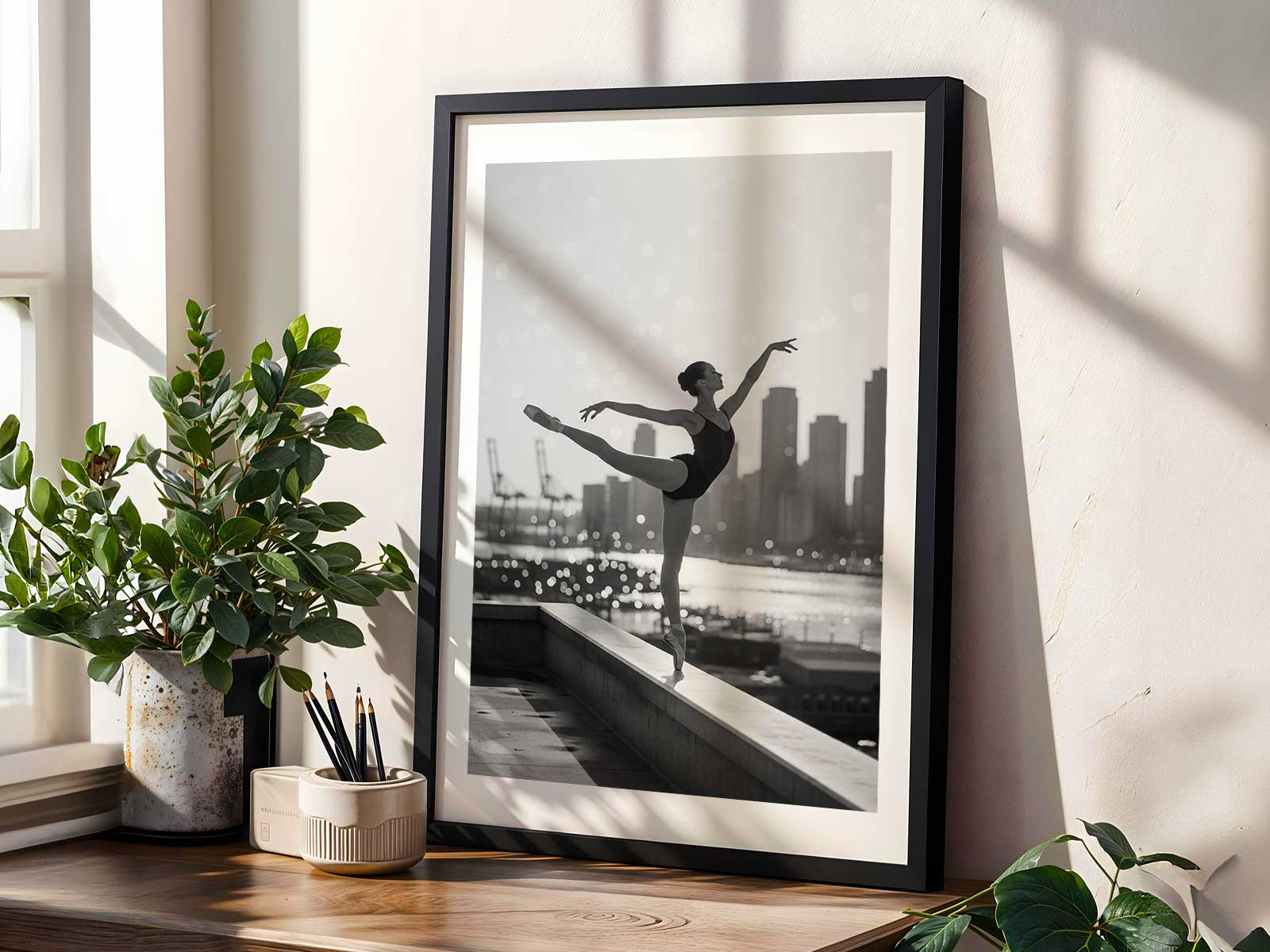
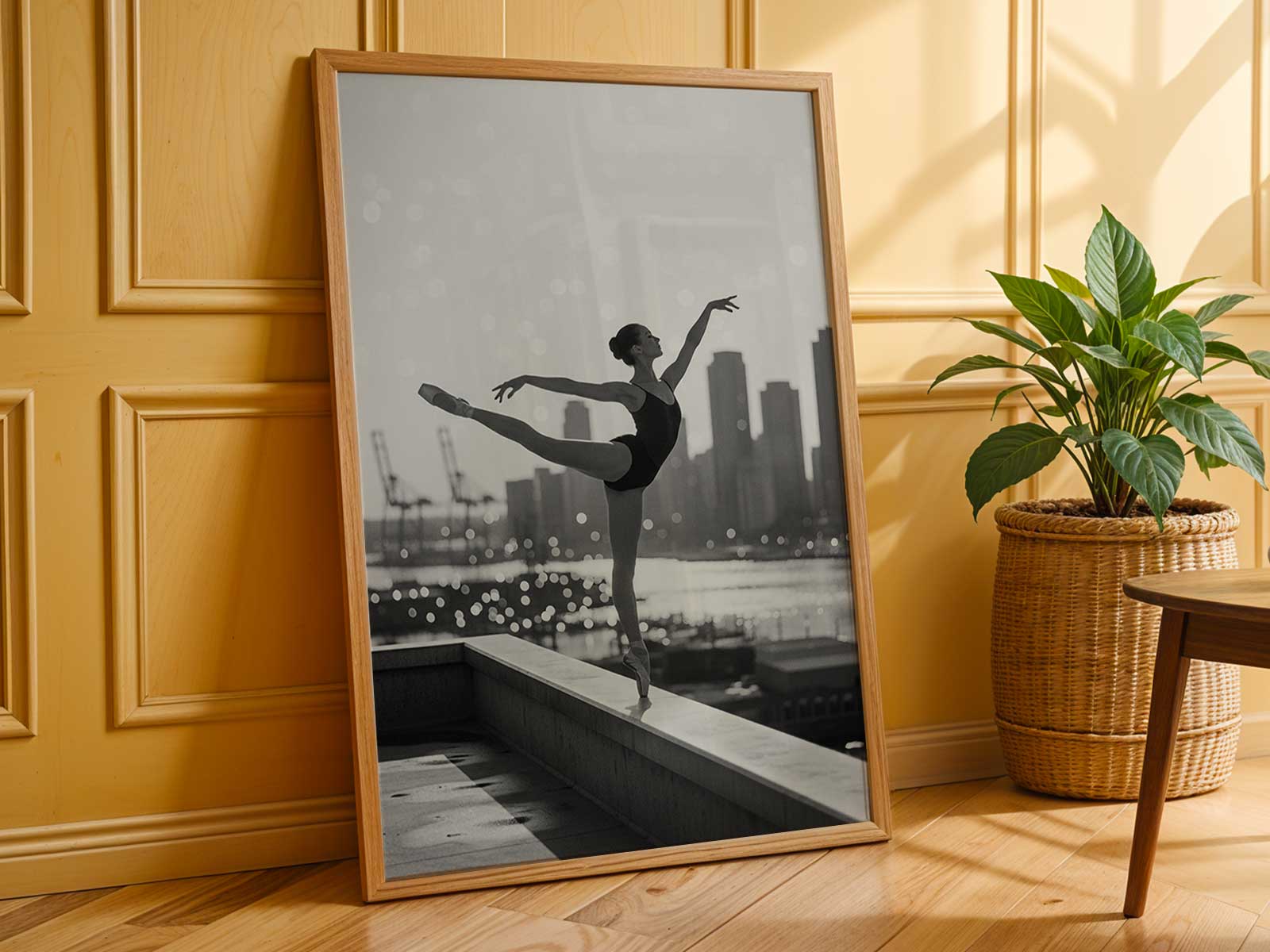
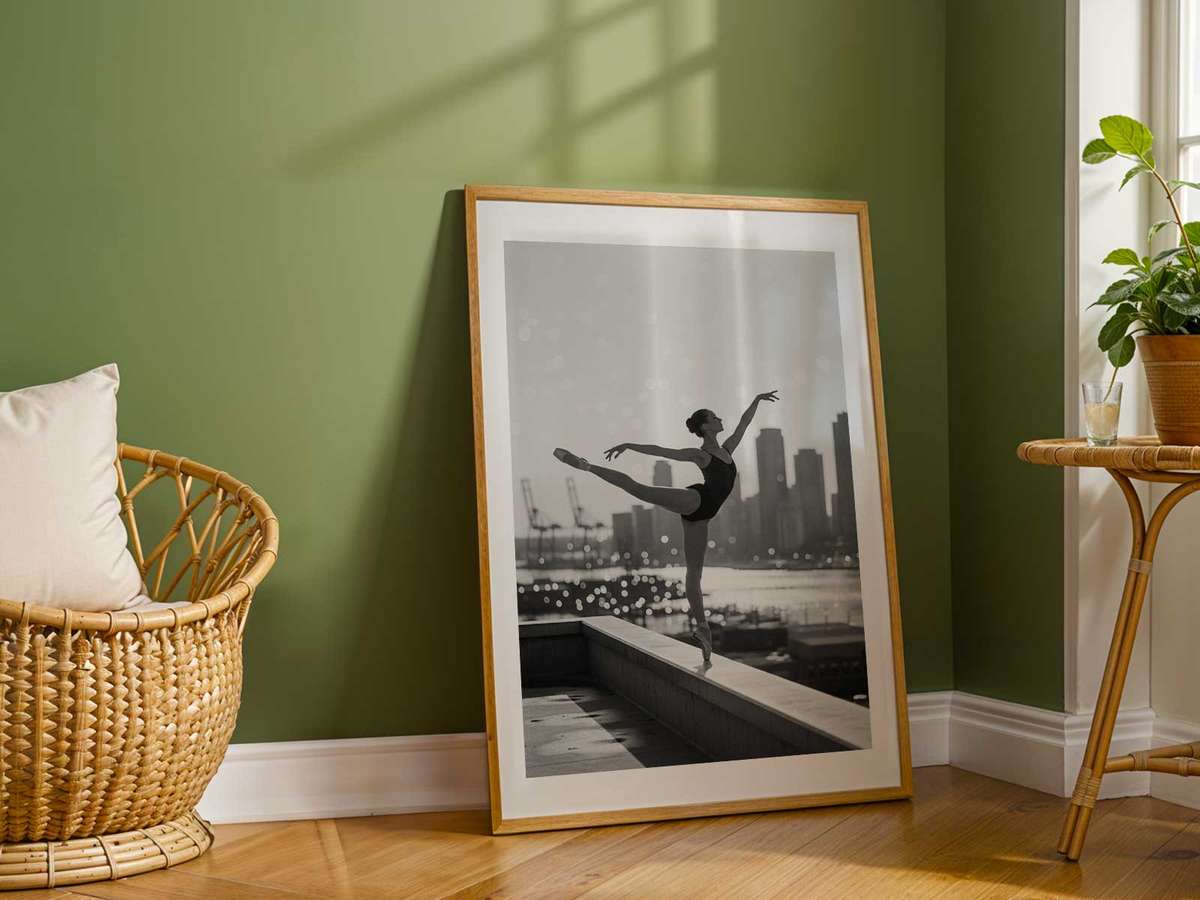
Unlike trend-led art that depends on novelty, this poster’s visual language is about continuity. Its heritage cues create a visual vocabulary that complements interiors built around books, calm palettes, and objects with a story. Place it beside a music corner or a reading nook and the image becomes part of a curated domestic archive: not shouting, but quietly confirming a love of ballet, of travel, and of print culture.
The appeal is emotional and practical. The palette’s warmth brings a room together; the archival softness reduces glare and invites close, private viewing; the restraint in composition ensures the poster will adapt as tastes evolve. It’s a refined wall piece that prefers being worn-in emotionally rather than being new for novelty’s sake.
In short, this artistic ballet photography turns a harbour décor and a ballerina into a sustained, memory-rich image. It feels collected rather than manufactured, and its weathered tonal restraint offers a quiet, lasting presence for anyone who values continuity, texture, and the delicate poetry of dance.