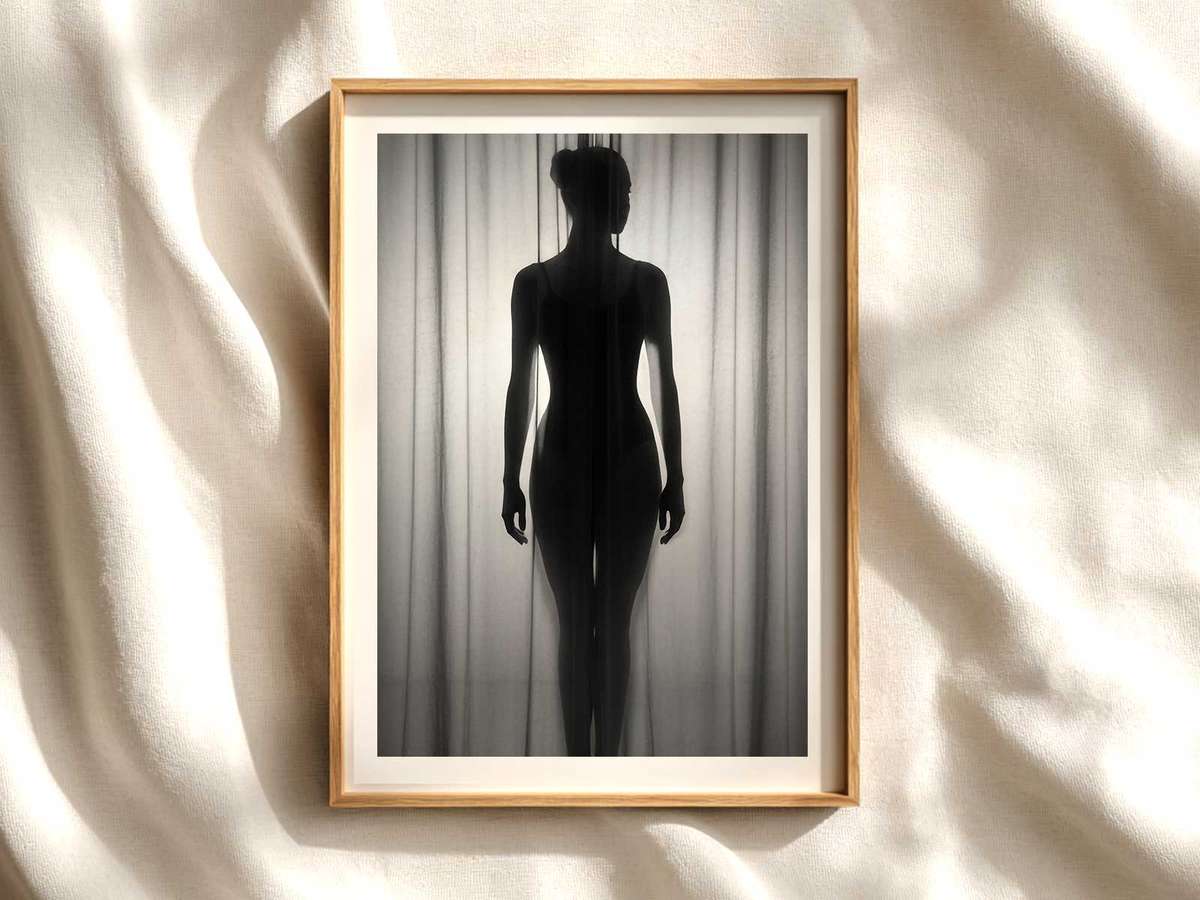
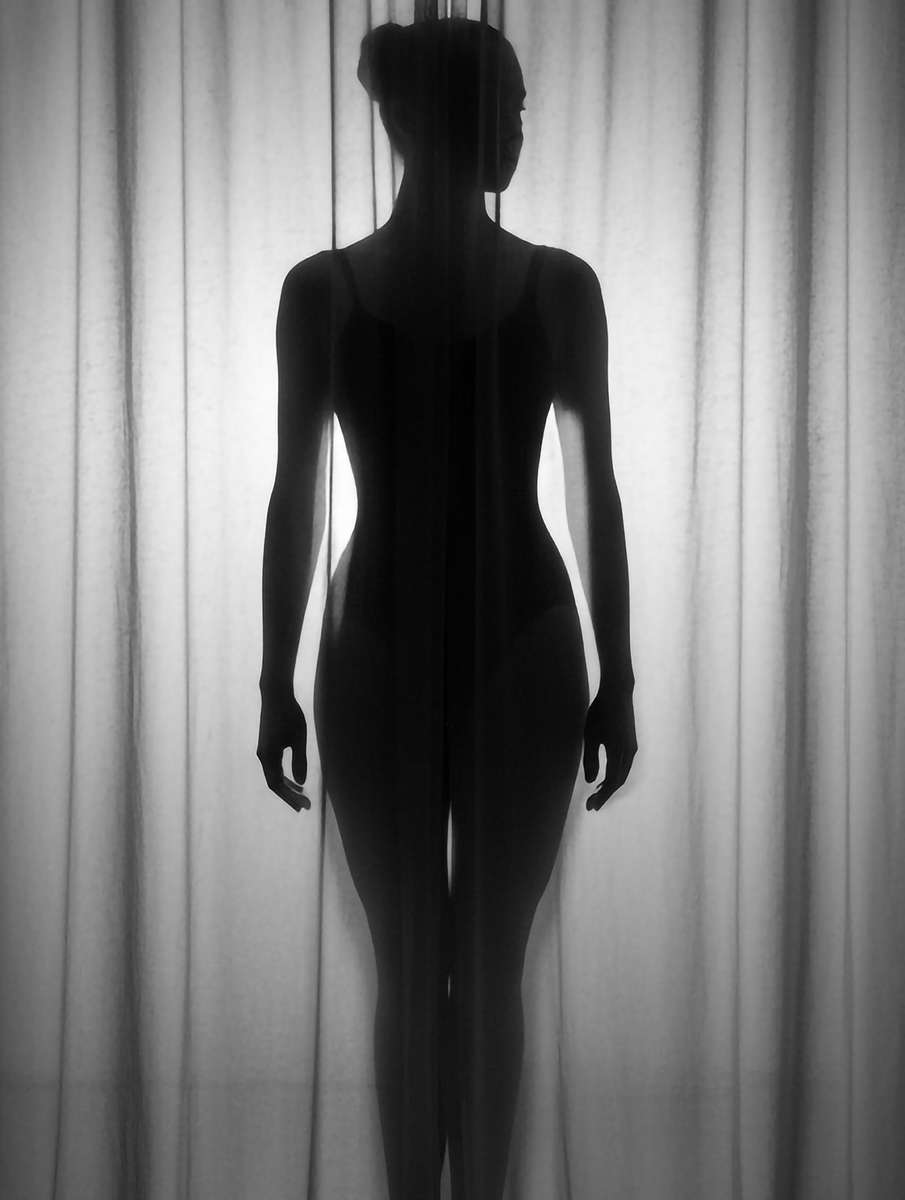
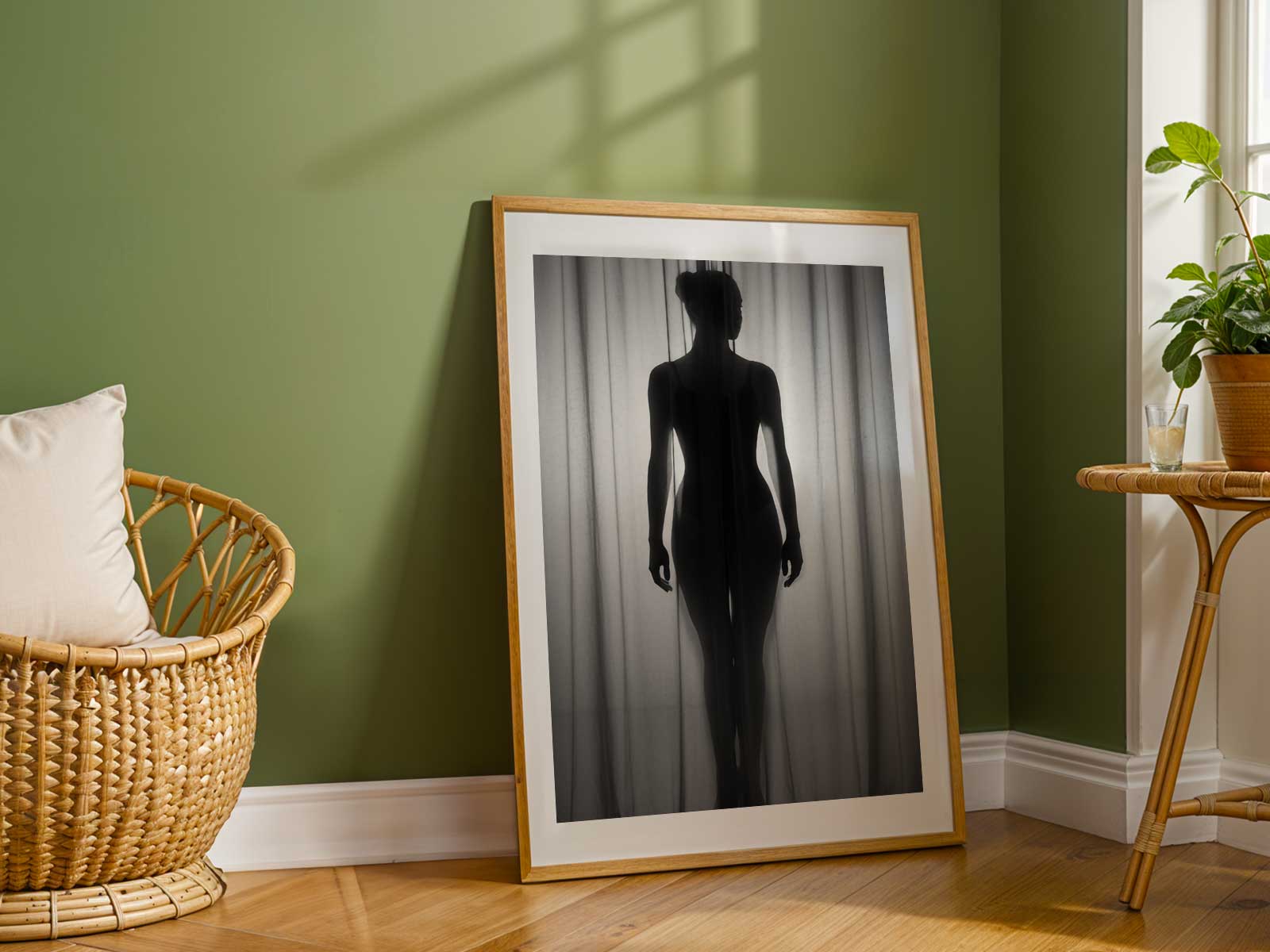
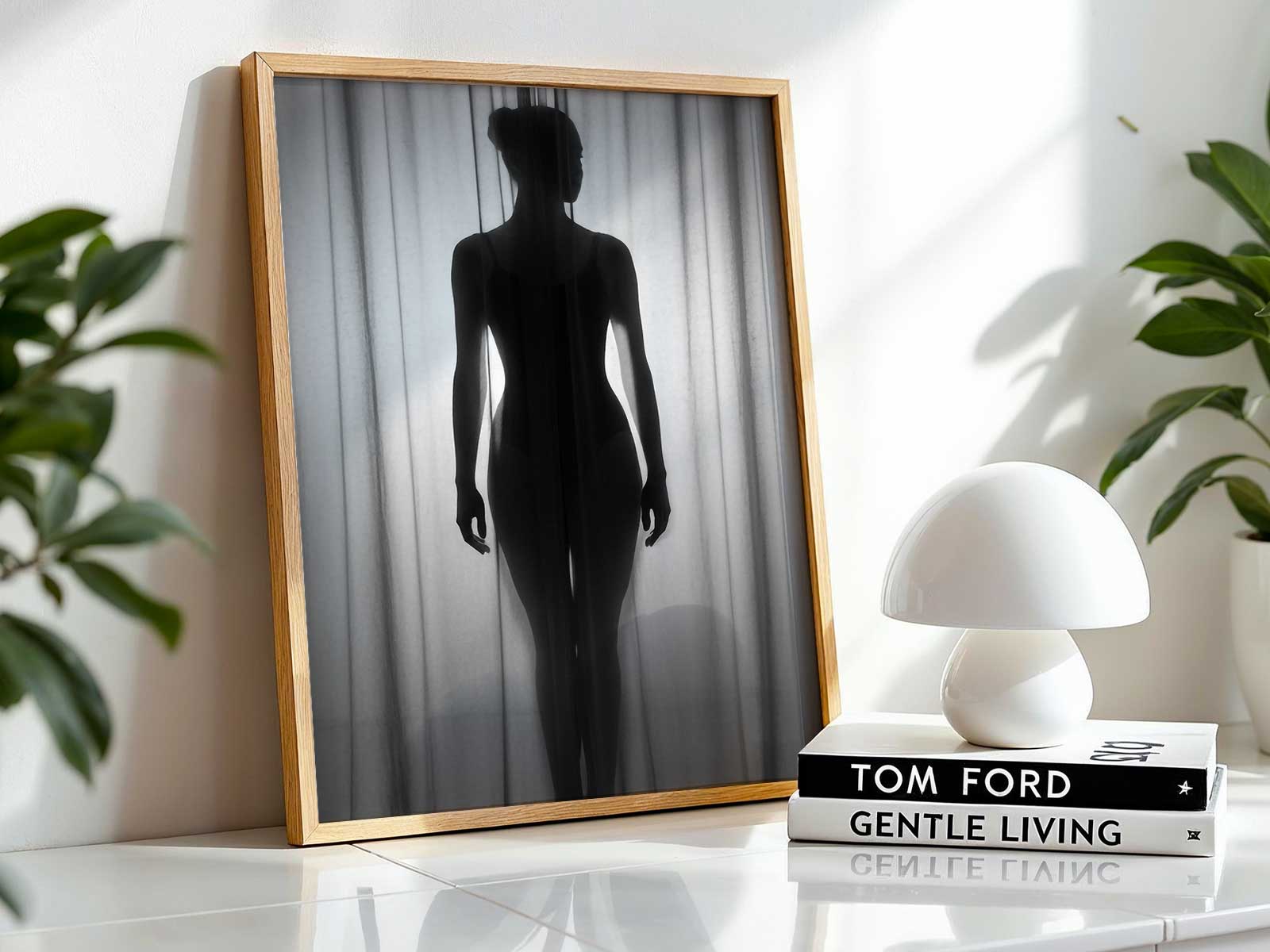
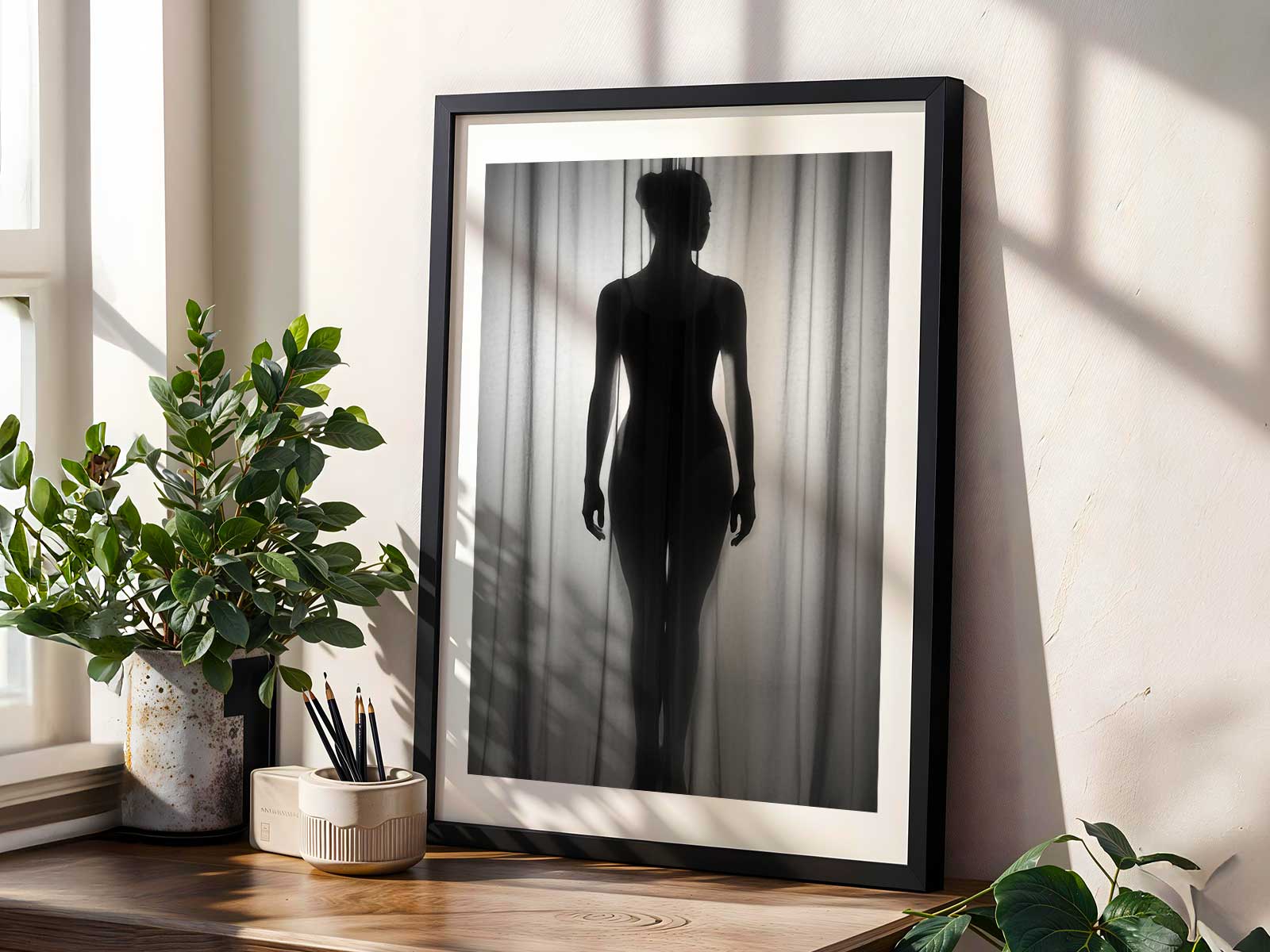
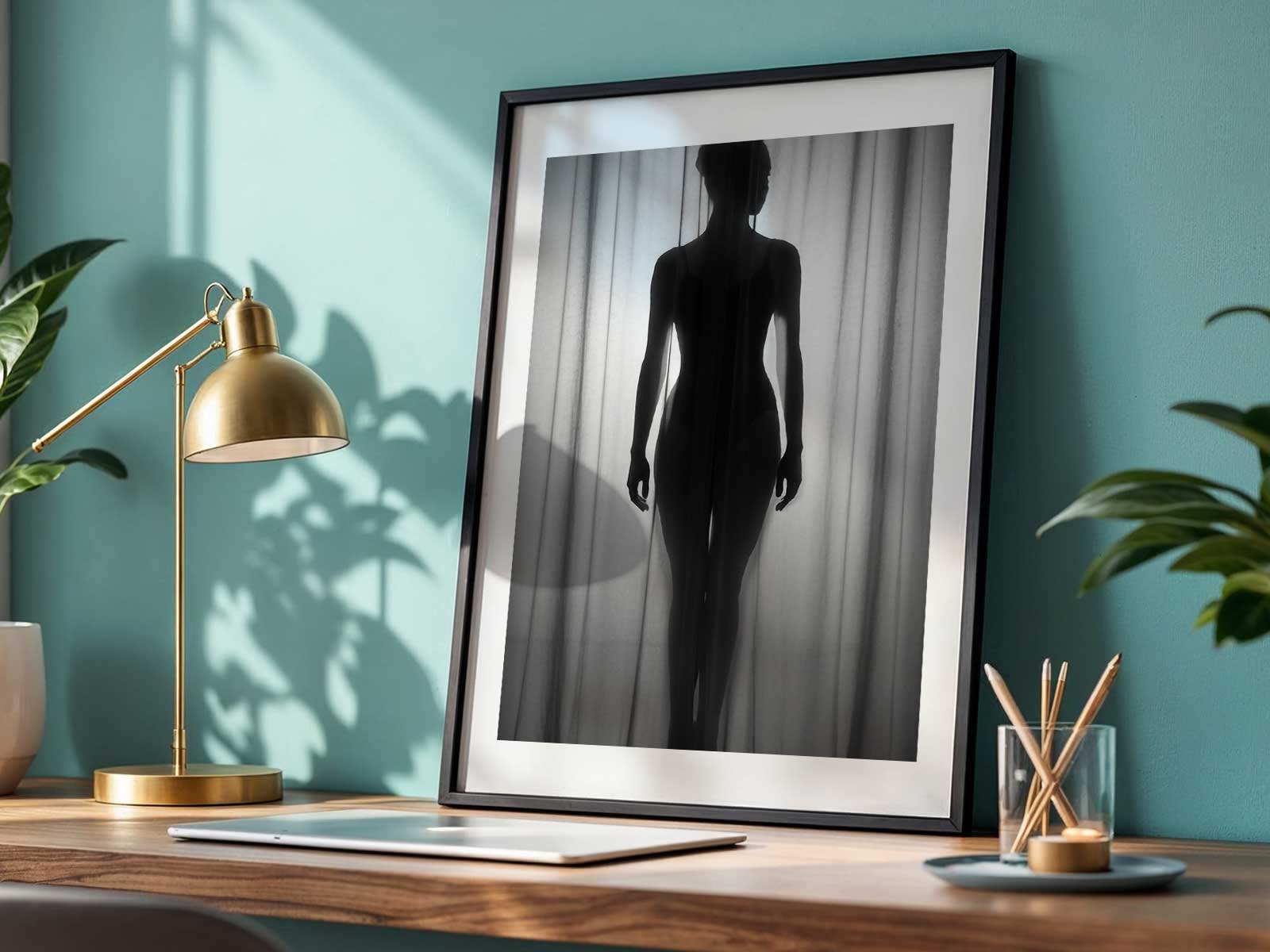
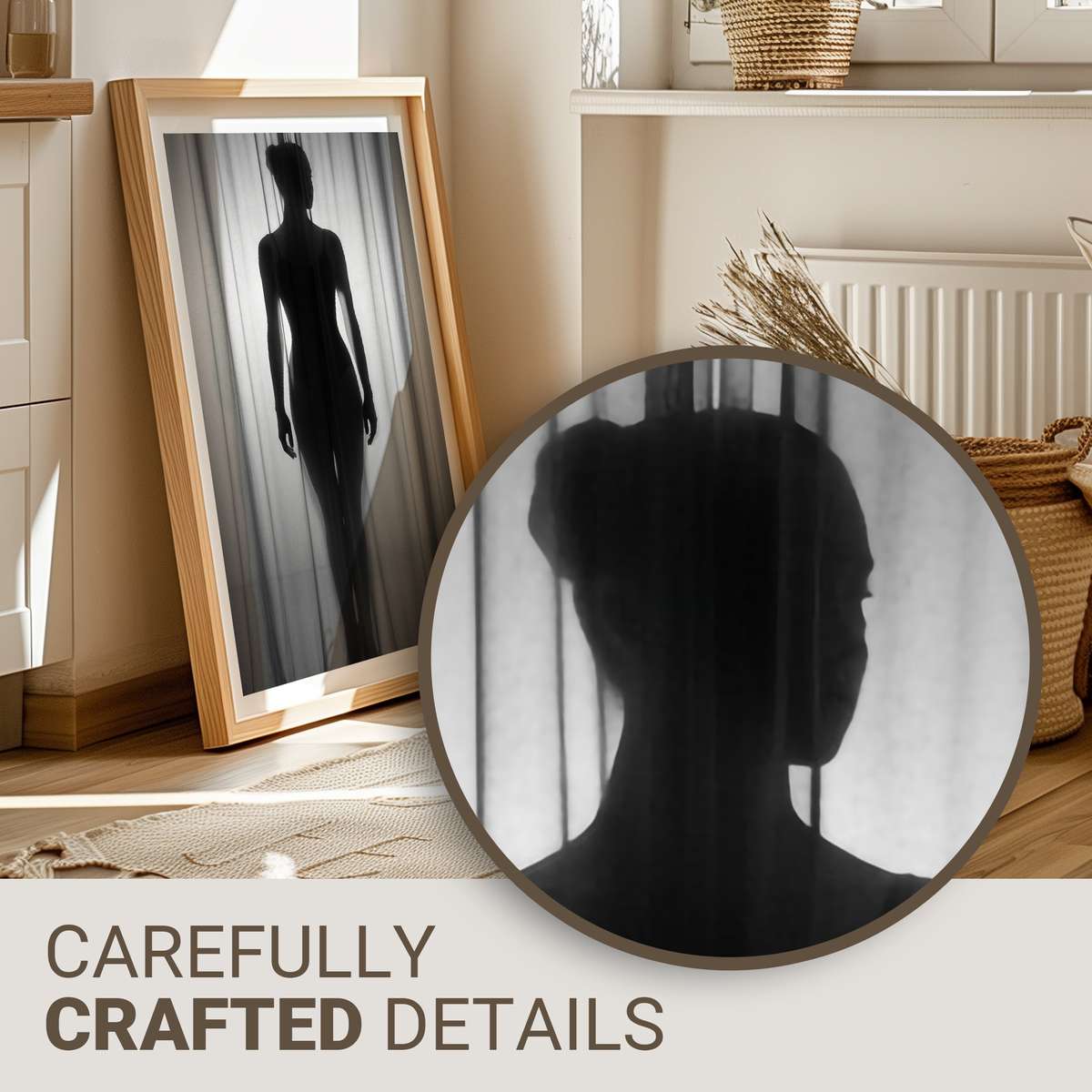
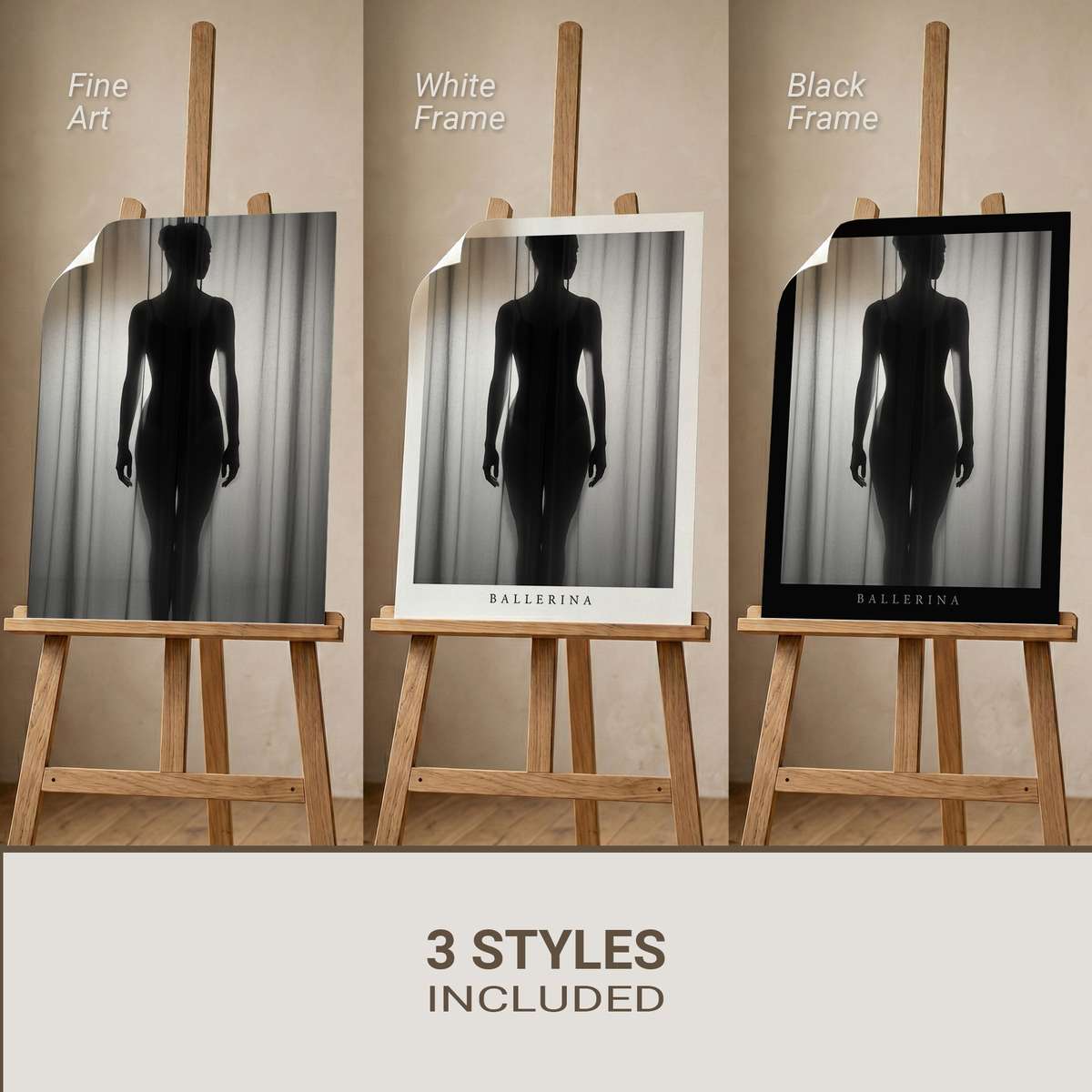
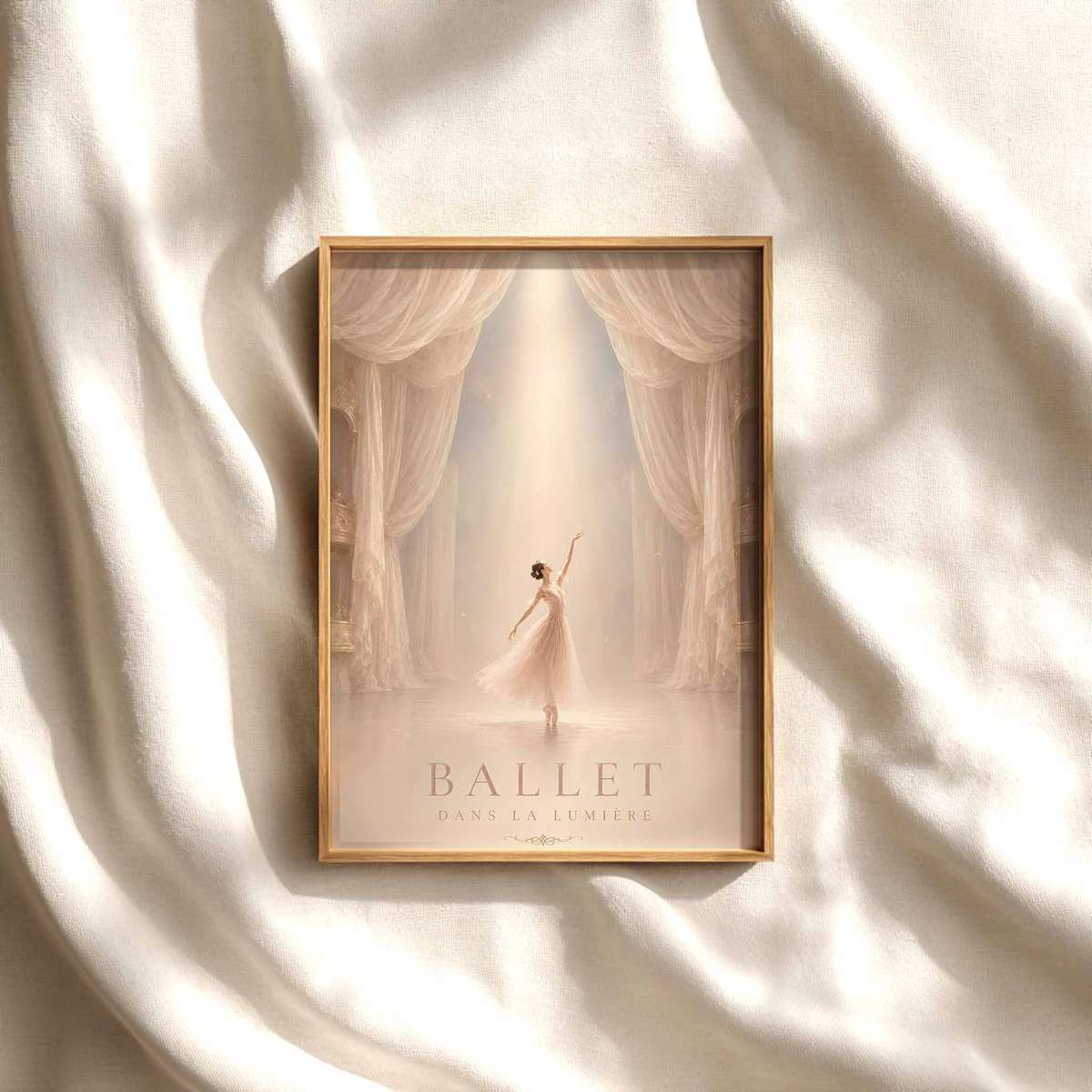
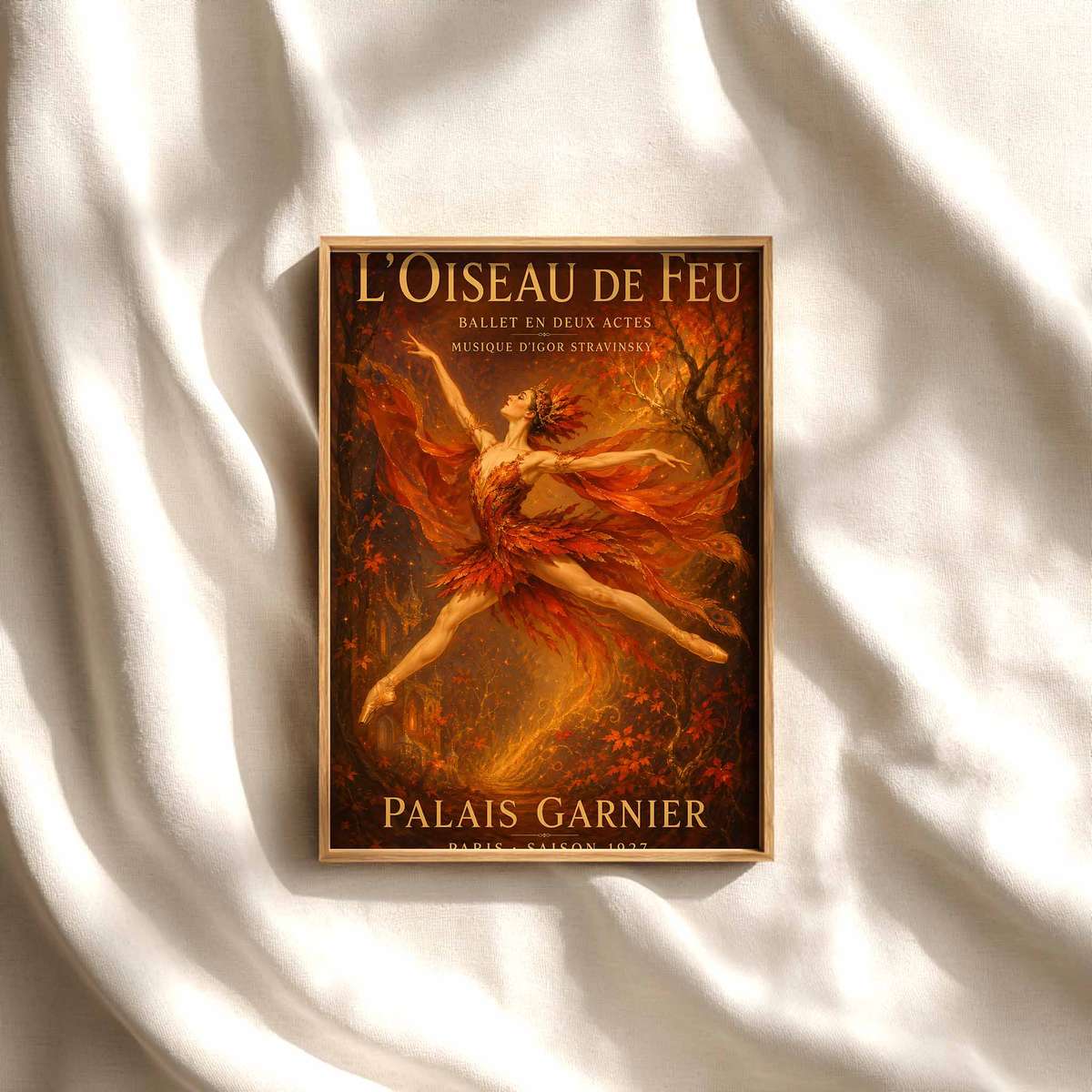
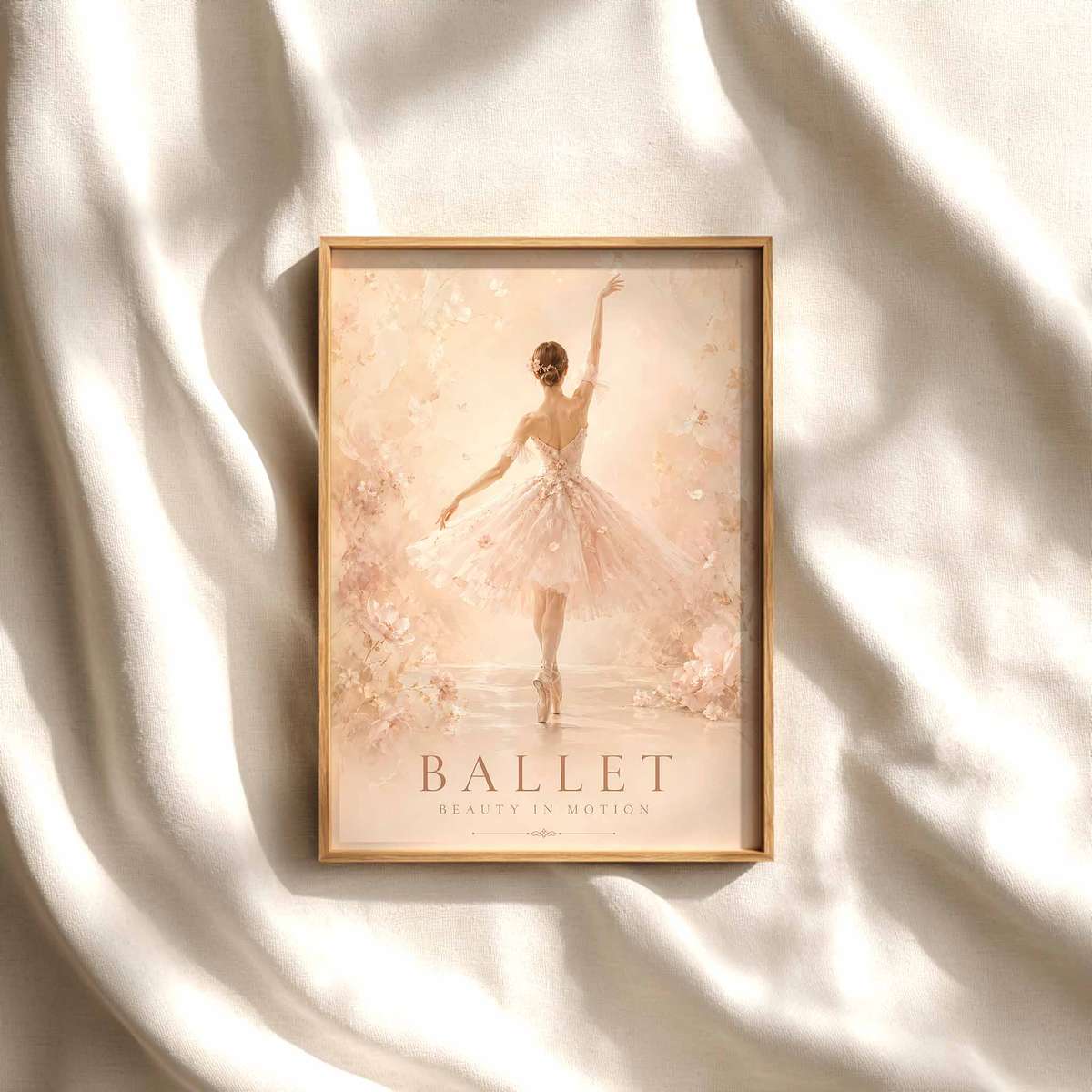
The first thing you notice is the way costume and body become one: a translucent veil extends the dancer’s arm into a soft, architectural line while the bodice carves a clear, vertical axis. Together they produce a portrait where movement is implied by contour rather than motion—an economy of gesture that reads as refinement on the wall.
Where costume becomes part of the line
Here the veil is not merely an accessory but a directional tool. It lengthens the line of the arm, creating a prolonged sweep that guides the eye from shoulder to fingertip. The fabric’s translucence softens the transition between limb and air, so the silhouette reads as a single continuous form. That continuity gives the figure a poised elongation: the body appears taller, the neck and torso more deliberate, and the overall posture more composed than the dancer’s pose alone would suggest.
The bodice works against the veil’s softness by providing structure. Its fitted shape frames the ribcage and waist, producing a neat spine to the composition. Where the veil invites expansion, the bodice insists on clarity—this tension between yielding fabric and contained shape creates visual interest without ornament. It’s a subtle dialogue of restraint and release that makes the portrait feel both theatrical and intimate.
[IMAGE_INSERT_ARTICLE_01]
Soft structure, strong visual presence
The fabric’s behavior informs the image’s emotional tone. The veil falls in gentle gradients, folding into shadow and soft highlight rather than flattening into pattern; this produces a sense of stillness that belies the potential for motion. Because the costume shapes the negative space as clearly as the positive, the poster holds its composition at a glance: the eye rests on the centreline and is then invited outward along the veil’s curve. The result is an image that calms a room while holding attention.
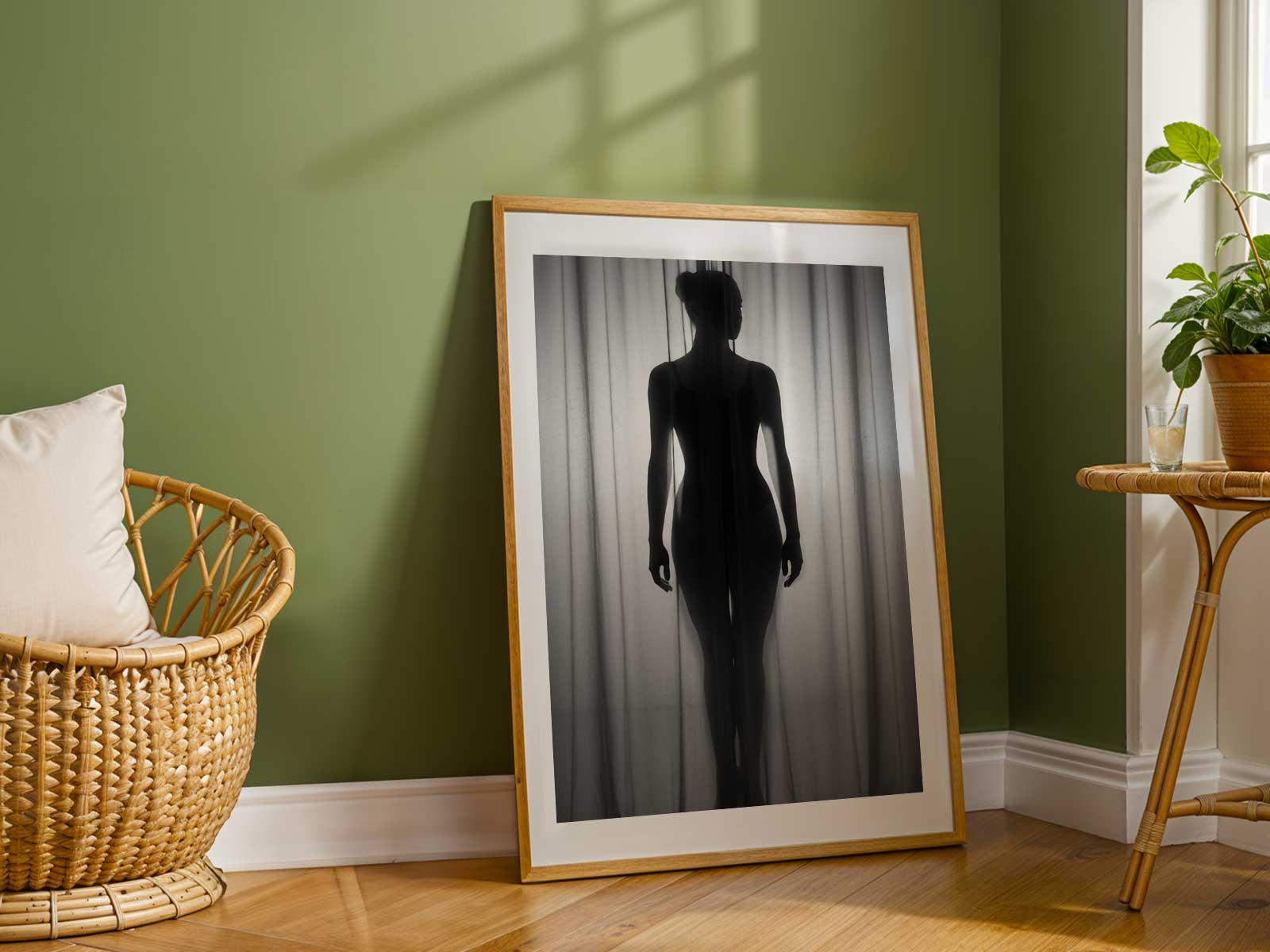
Tonal choices support the design-driven composition. A restrained palette—muted creams, soft grays or a limited warm wash—lets the costume’s geometry read cleanly against the background. Without competing colours, the poster becomes a study in form: light models the folds, shadows sharpen the seam lines, and the overall restraint makes the portrait feel like a considered piece of wall art rather than a fleeting stage snapshot.
On a bedroom wall, a dressing studio or a living room that appreciates figurative restraint, this portrait works as a quiet anchor. It brings the clarity of classical line without demanding theatrical scale; the costume supplies both softness and definition so the image reads coherently at any viewing distance. You’re buying a picture where the dress is not decoration but compositional intent—where veil, line and silhouette perform together to create a memorable, refined presence.