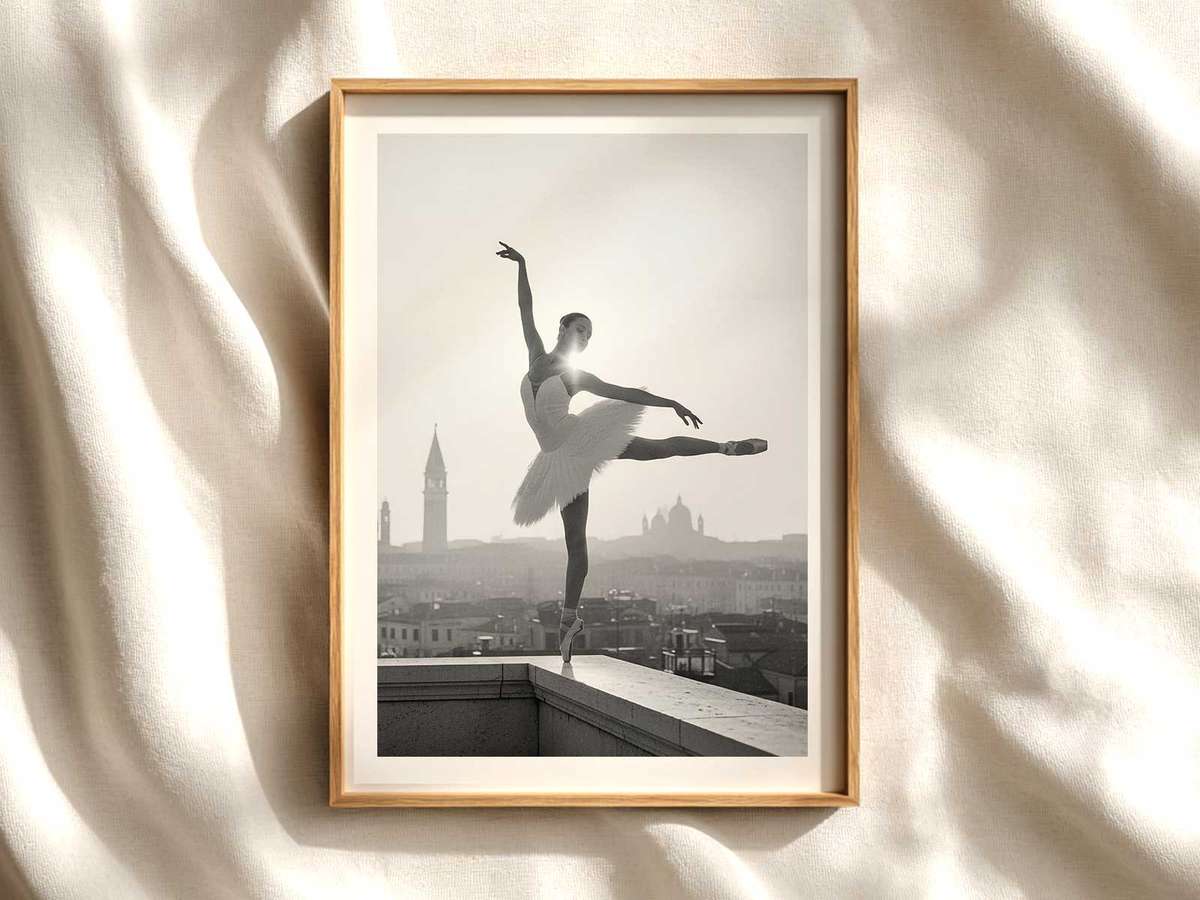
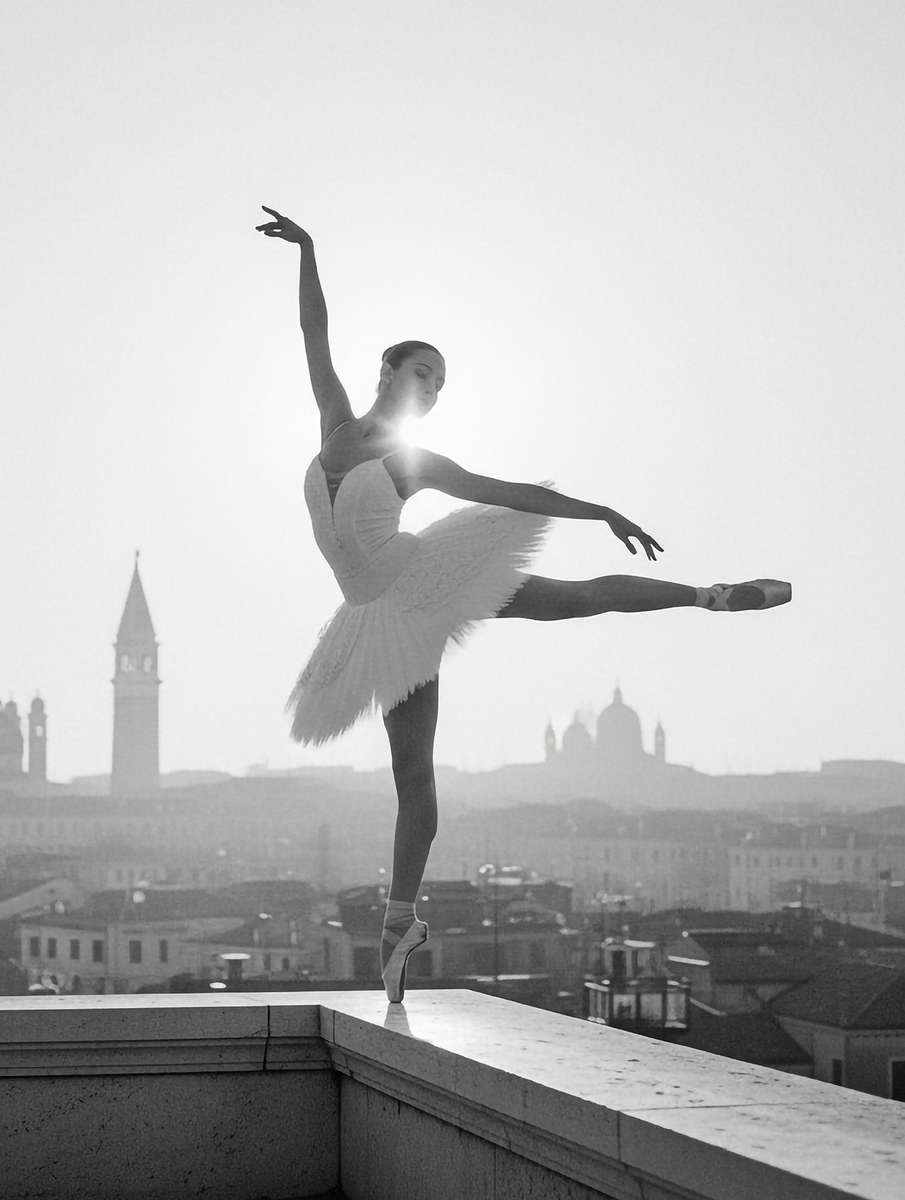
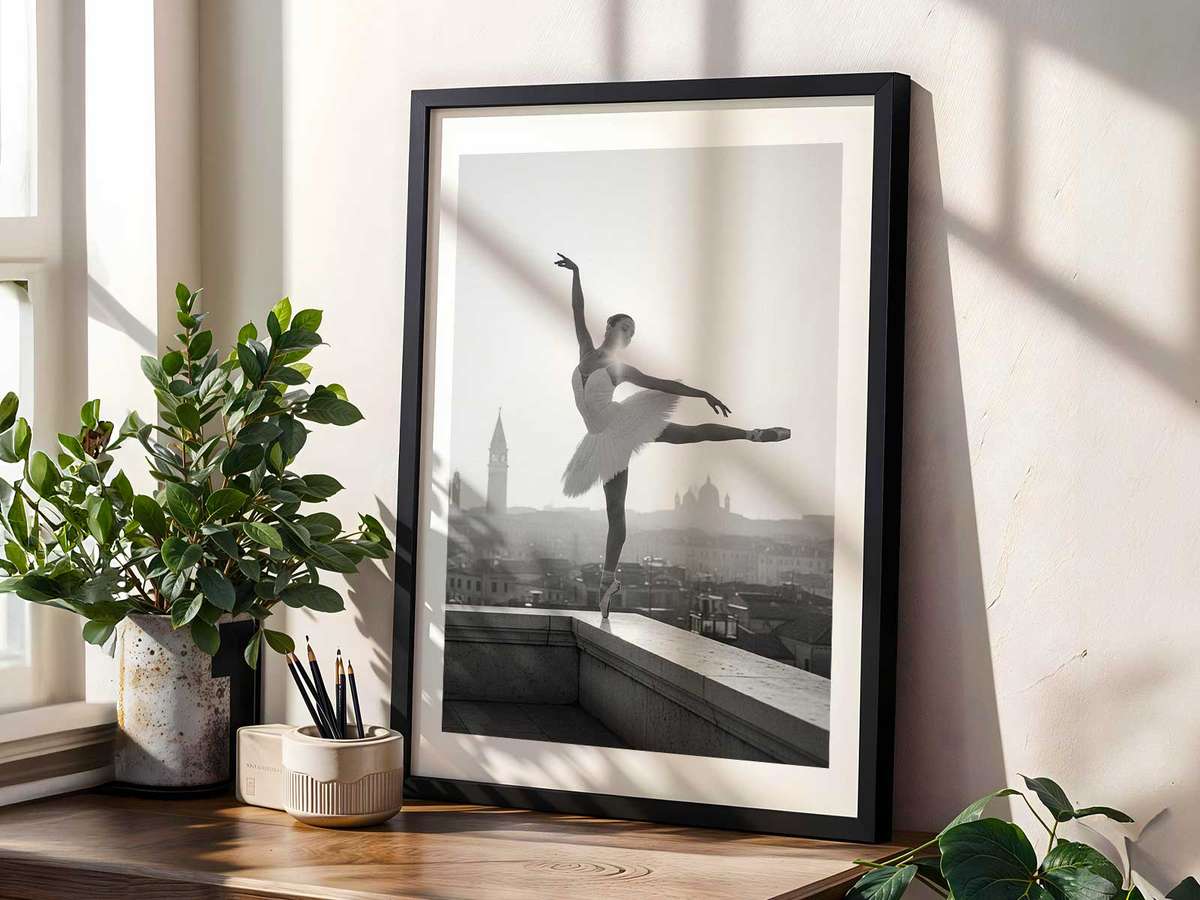
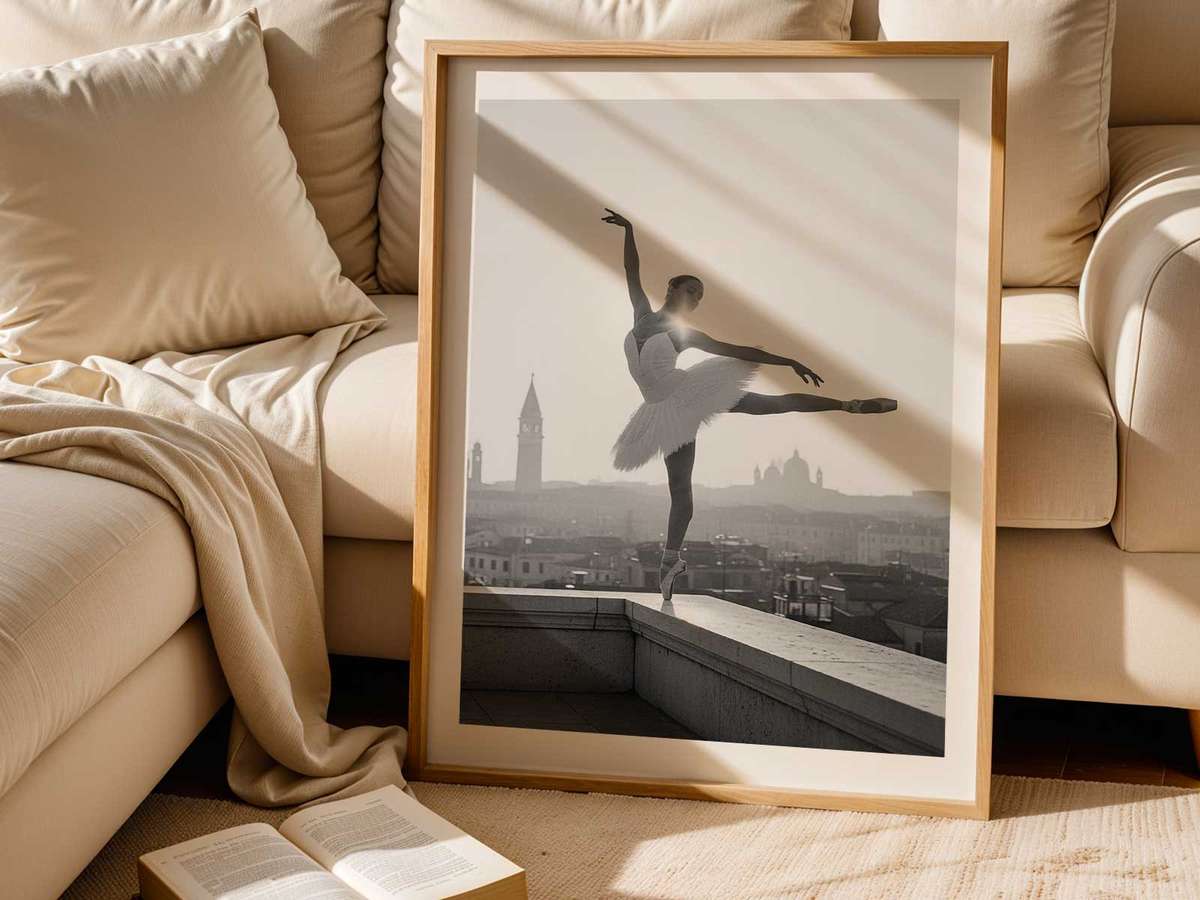
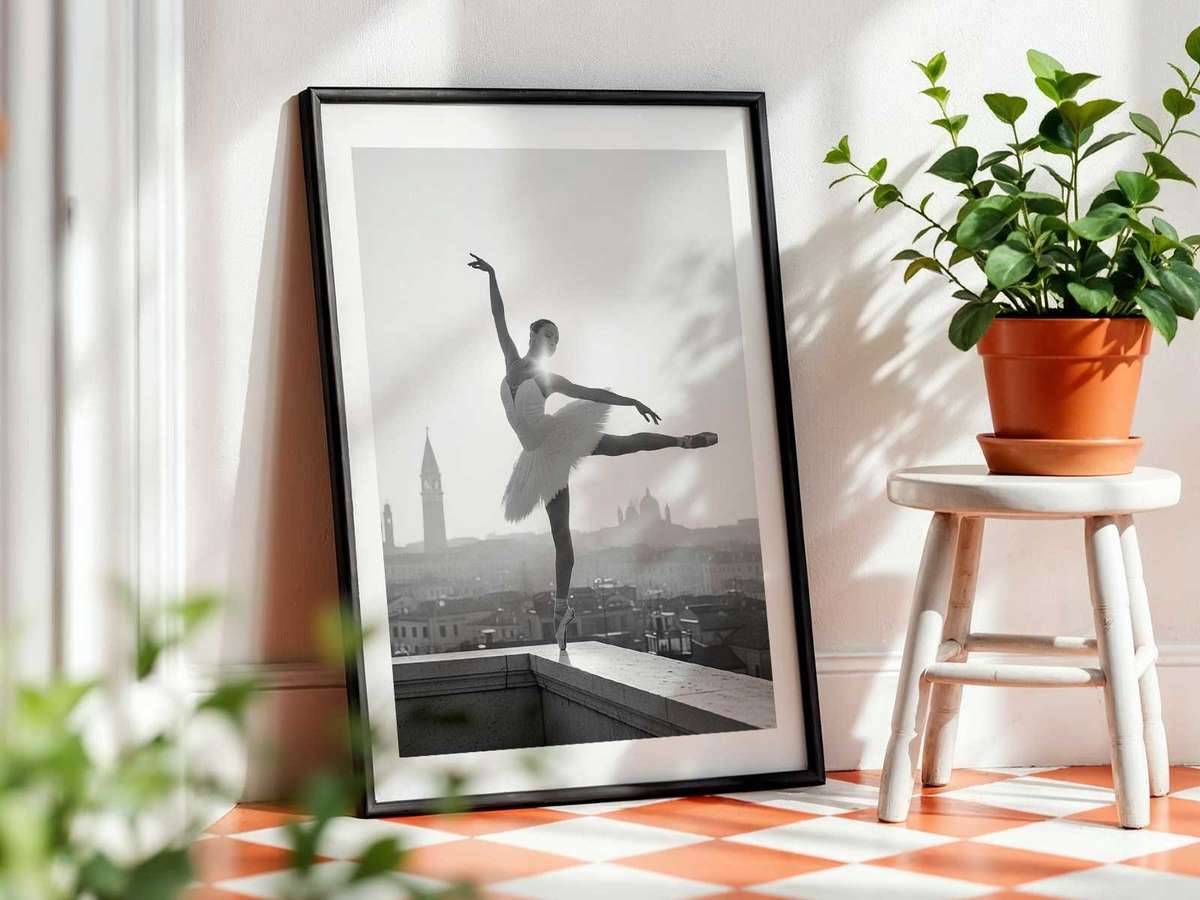
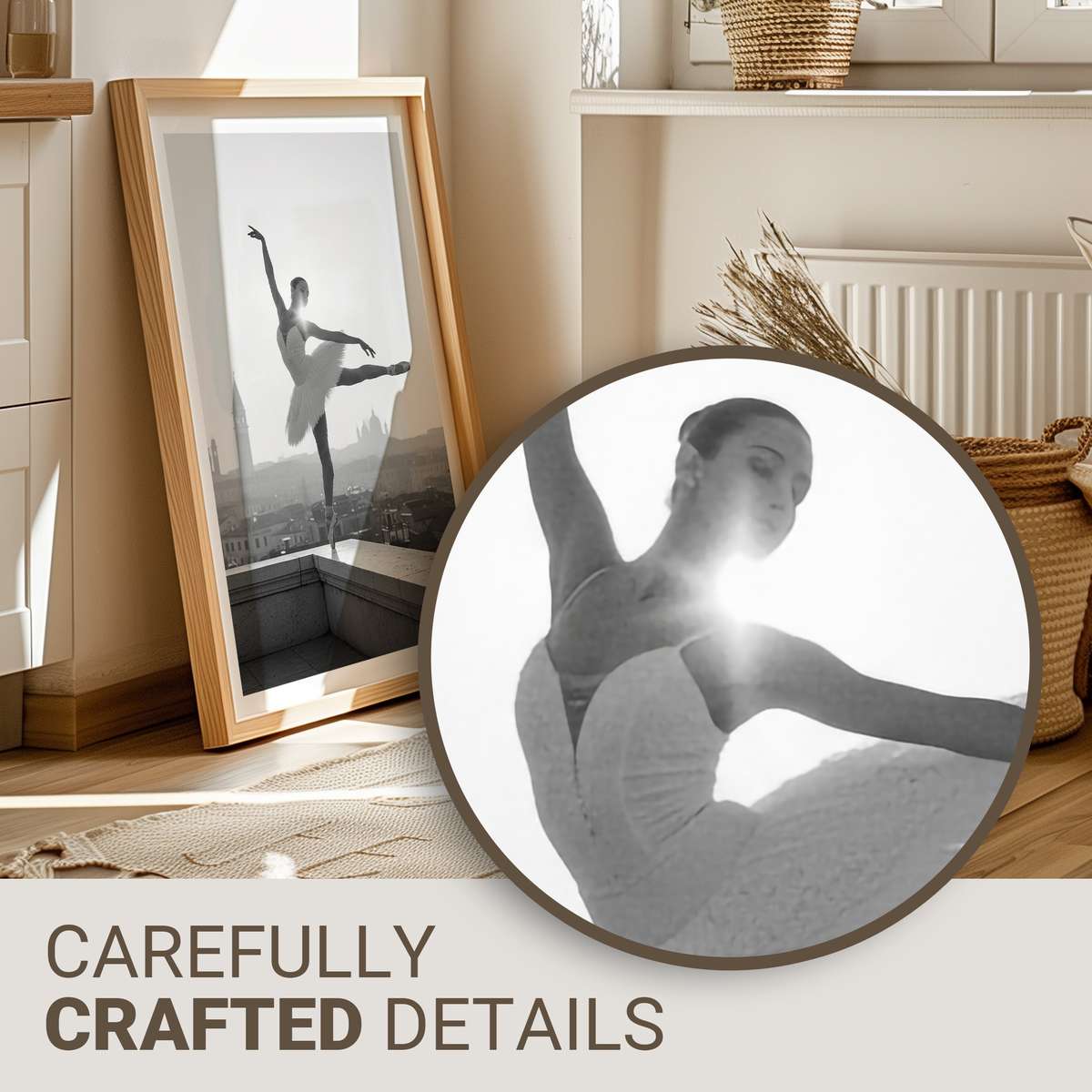
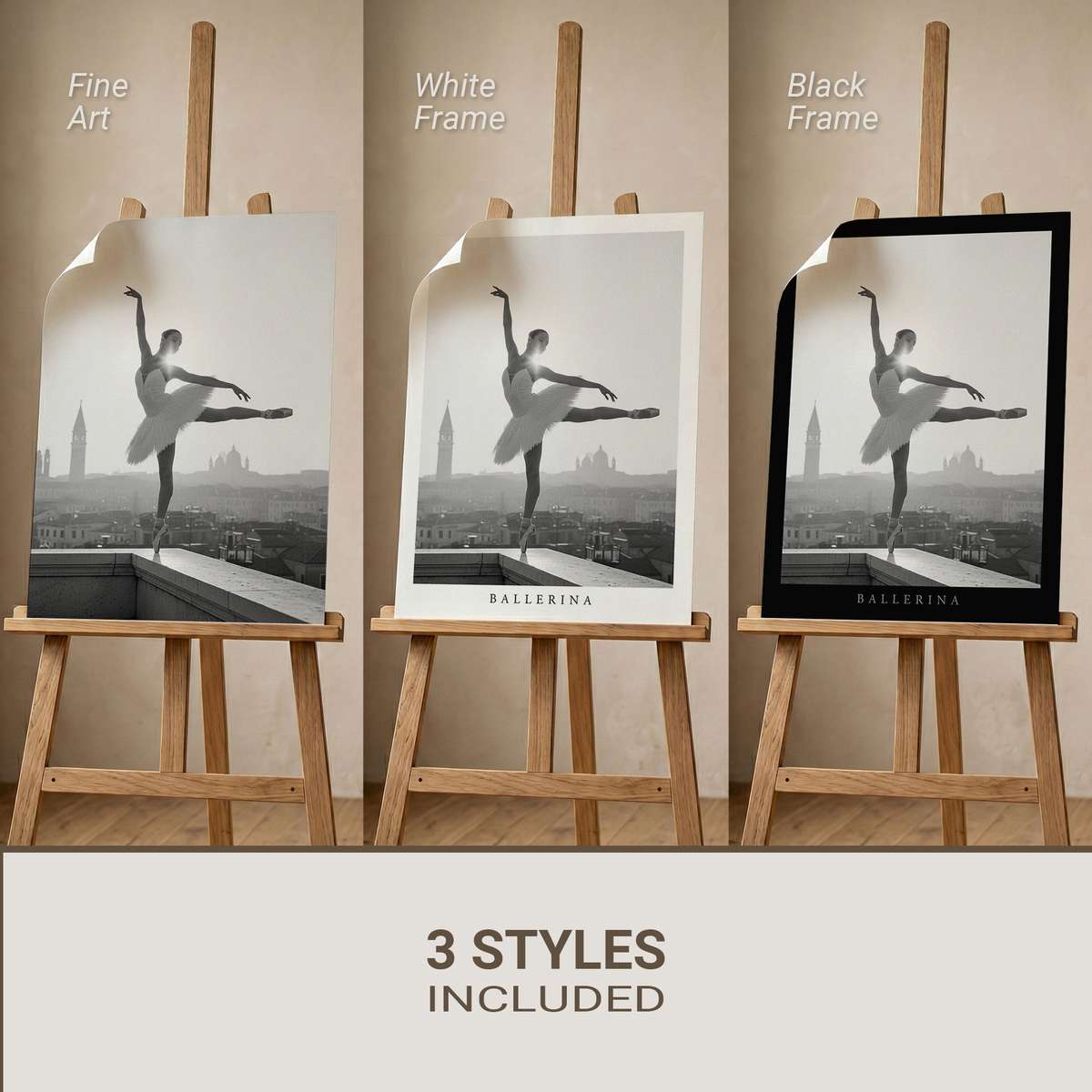
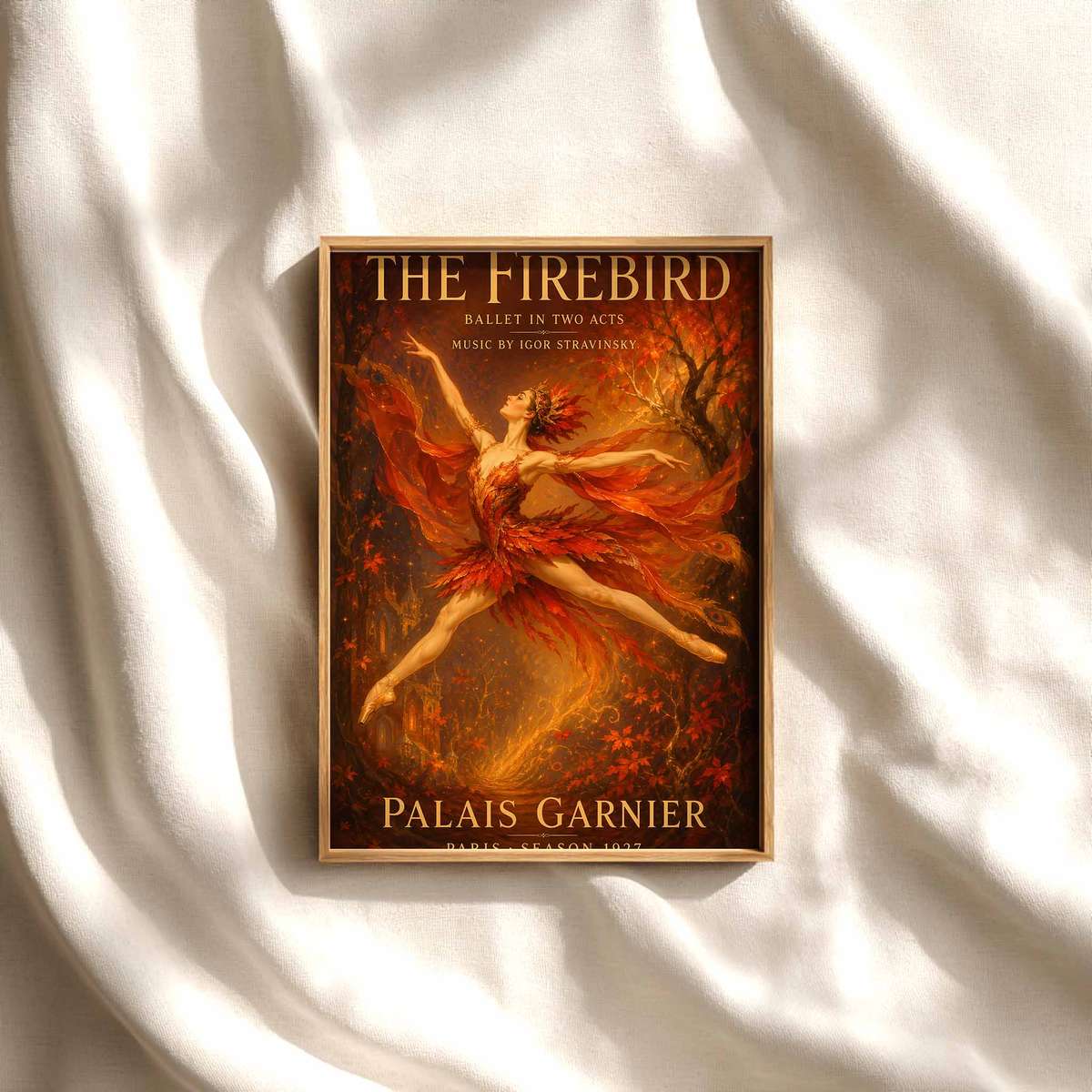
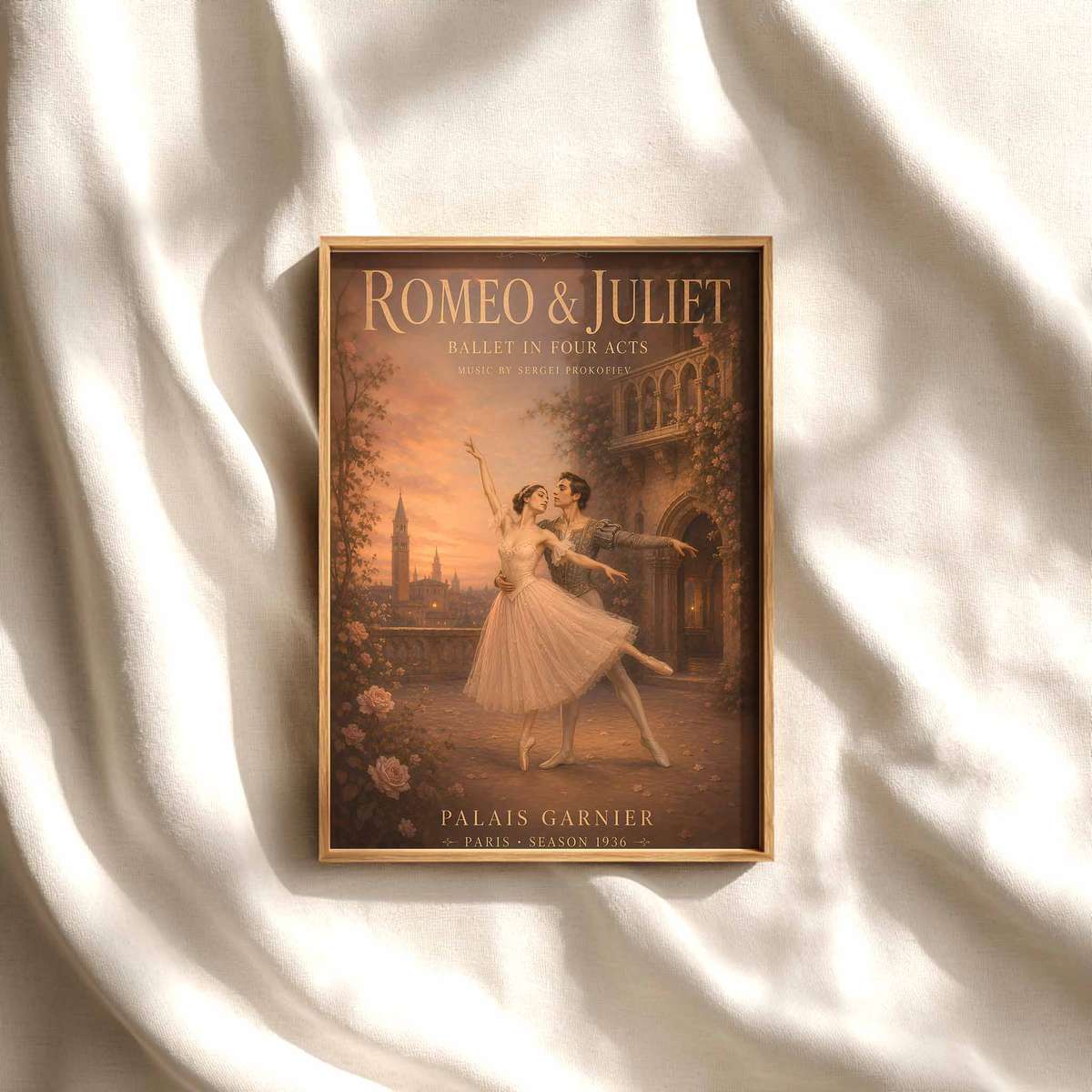
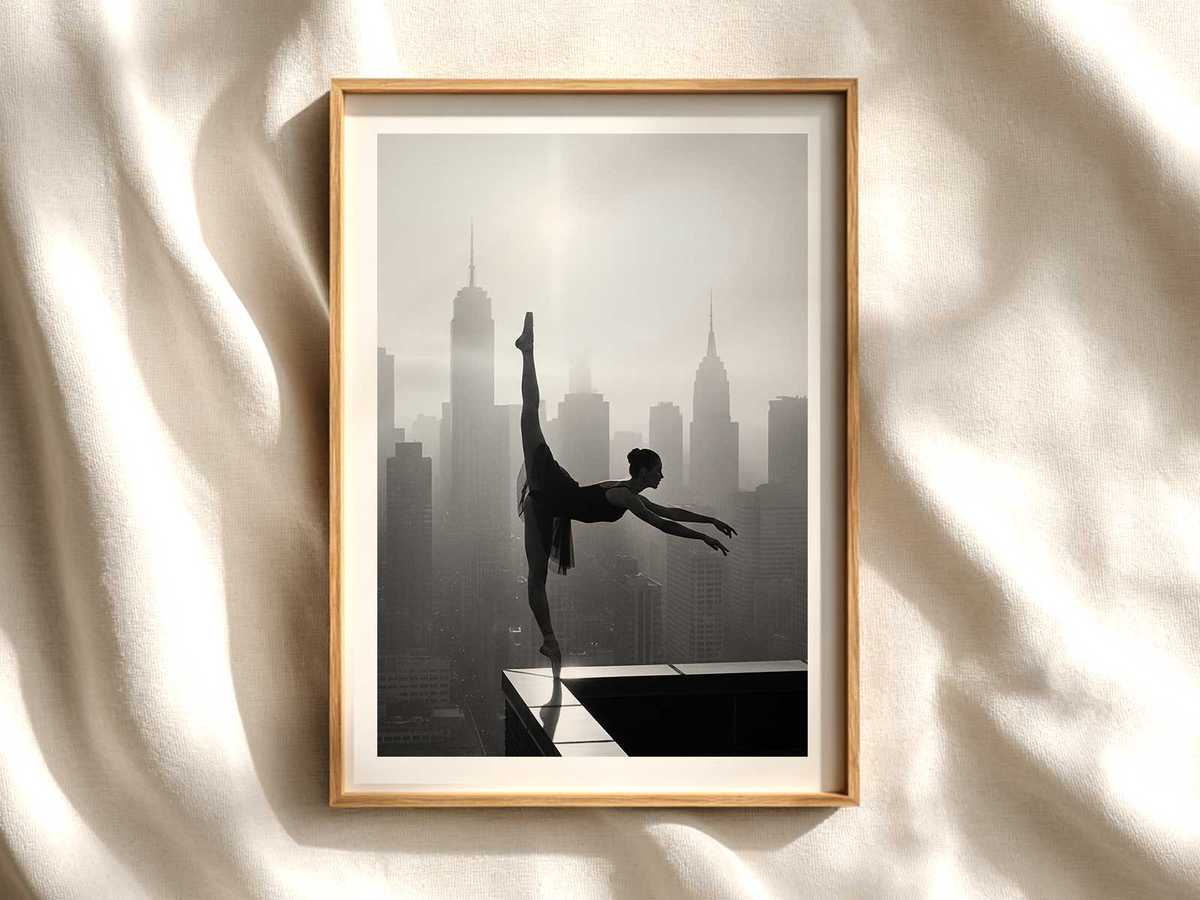
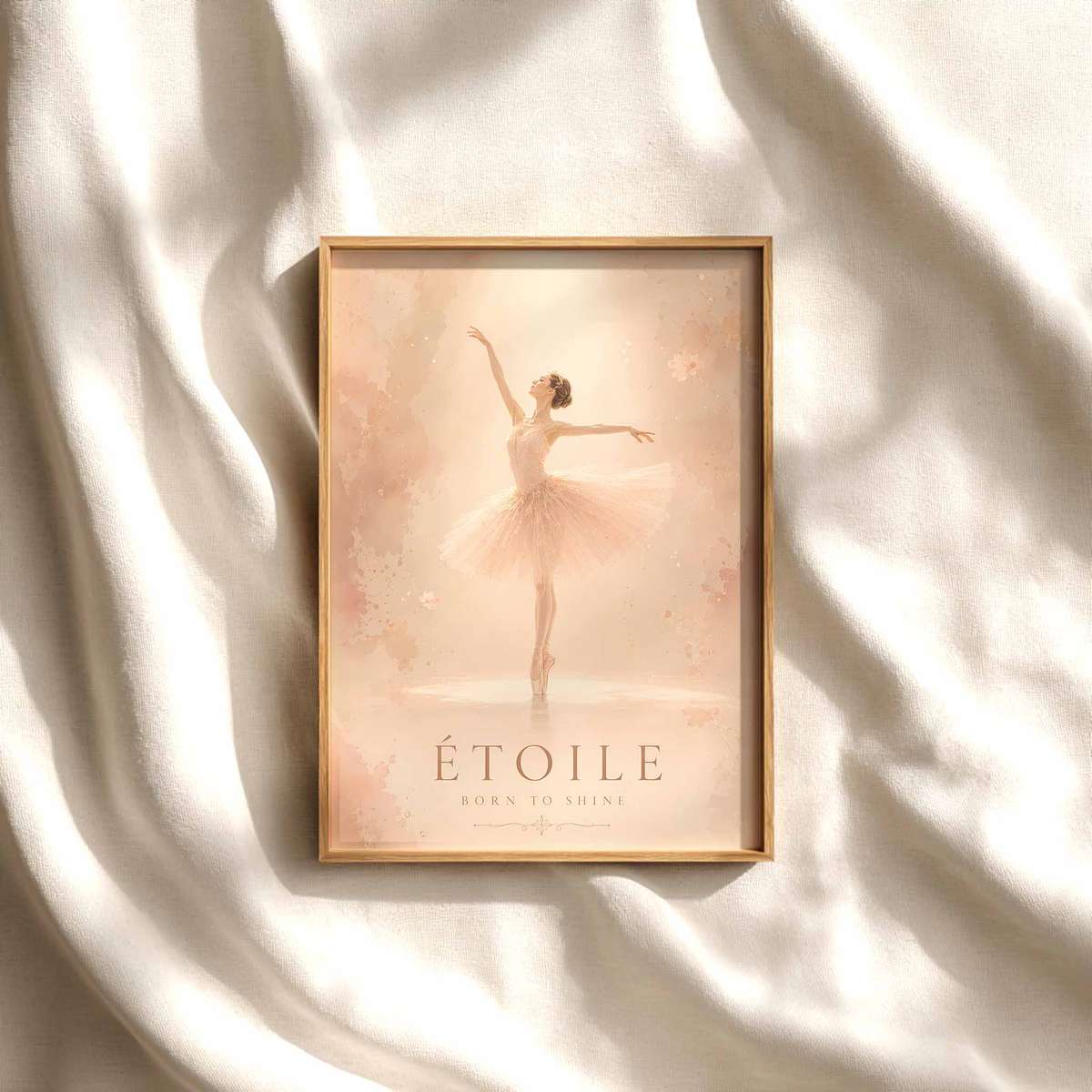
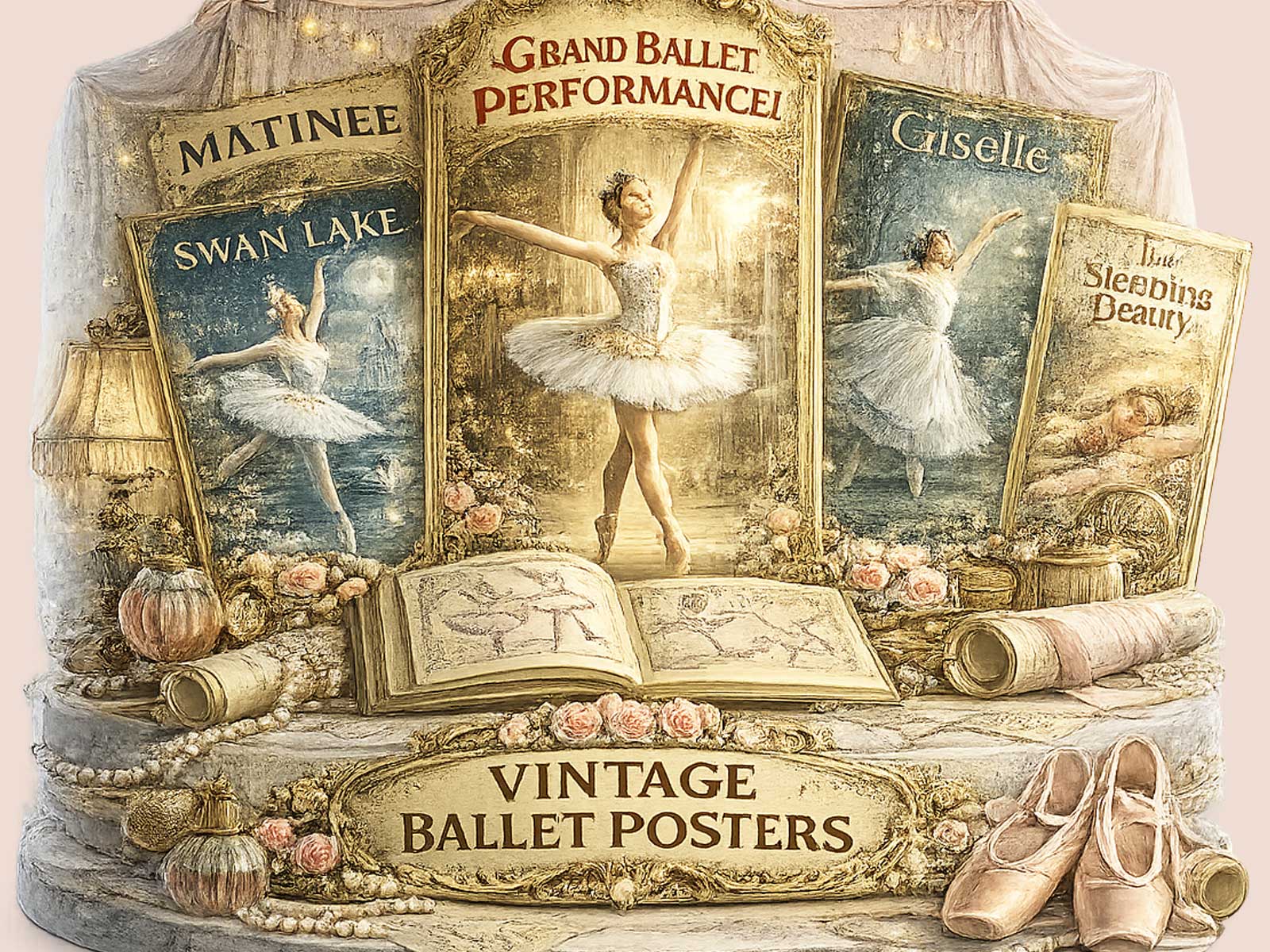
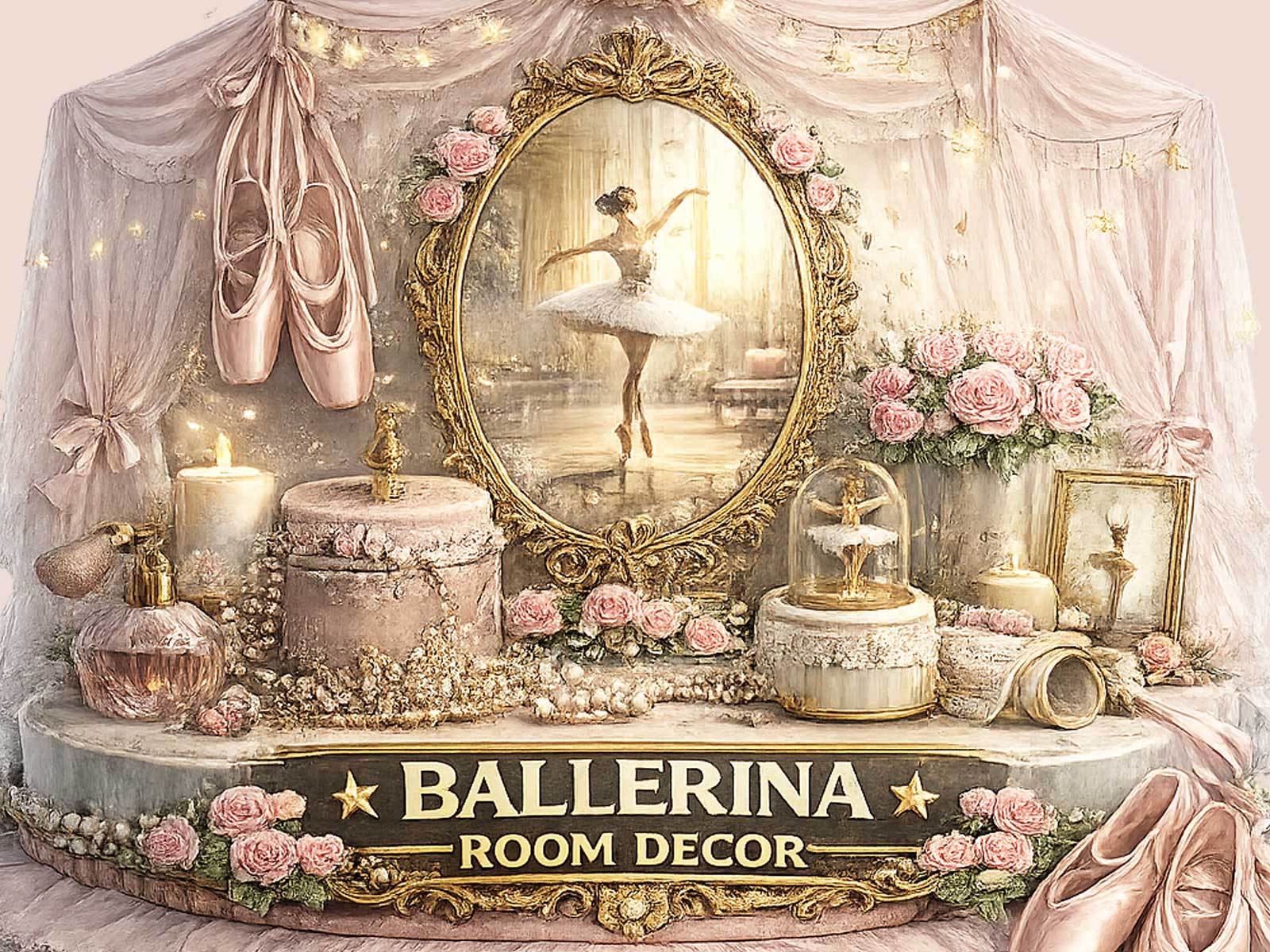
At first glance this poster reads like a recovered page from a private theatre album: photographs of ballerinas set against a Venetian imaginary, where waterlight and gilt theatre décor meet a softened, print-like surface. The palette is deliberately aged — muted sepias, oyster whites and a quiet aquamarine — each tone reduced in contrast so the image feels like a memory rather than a snapshot. That restraint gives the scene a patrimonial quality: the ballerina is not simply posed, she is situated within a tradition of European romantic imagery, framed by imagined canals, curtain shadows and the hush of backstage corners.
A ballet image with a sense of memory
What makes these photographs of ballerinas feel lasting is the way visual cues of age and print are used to shape emotion. Softened edges and a grain that reads like old paper invite the viewer to lean in; the textures suggest the poster has been handled, admired, and collected — not because it is old, but because it was designed to evoke that quiet intimacy. The Venetian motifs — a reflective ribbon of water, a distant balcony, hints of masquerade ornament — place the dancer within a romantic European stage world. That context turns a single portrait into a narrative fragment, a remembered performance that rewards repeated looking.
Heritage here means continuity rather than reproduction. The image borrows compositional habits from historical theatre photography — diagonal light, a sense of mise-en-scène, generous negative space — and uses them to slow the eye. Where trend-led posters often shout with high gloss and saturated color, this poster chooses visual restraint. The result is warmer, less urgent, and more companionable: it complements a room where books are read aloud, where music is part of daily life, where objects are chosen for their ability to hold memory.
[IMAGE_INSERT_ARTICLE_01]
Why vintage texture changes the mood
Texture is not decoration here; it is emotional temperature. A printed texture that hints at letterpress or soft lithography gives skin and costume a tactile presence. The ballerina's costume seems like fabric you could remember touching; the reflected light on canal water reads like a soft, worn gloss. This kind of surface treatment reduces visual noise and increases depth, allowing subtle gestures — the tilt of a head, the arc of an arm — to register more poignantly. The poster becomes an object that invites quiet attention rather than commanding it.
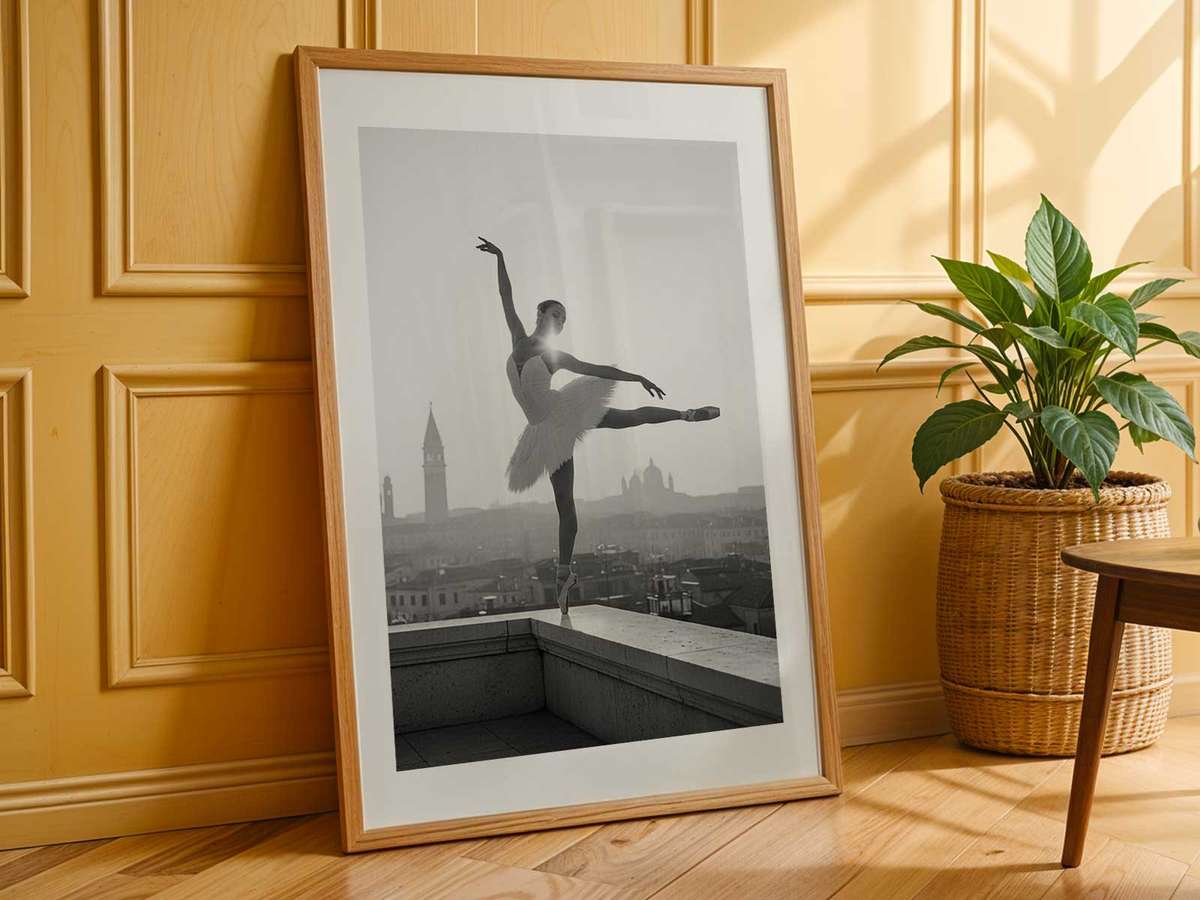
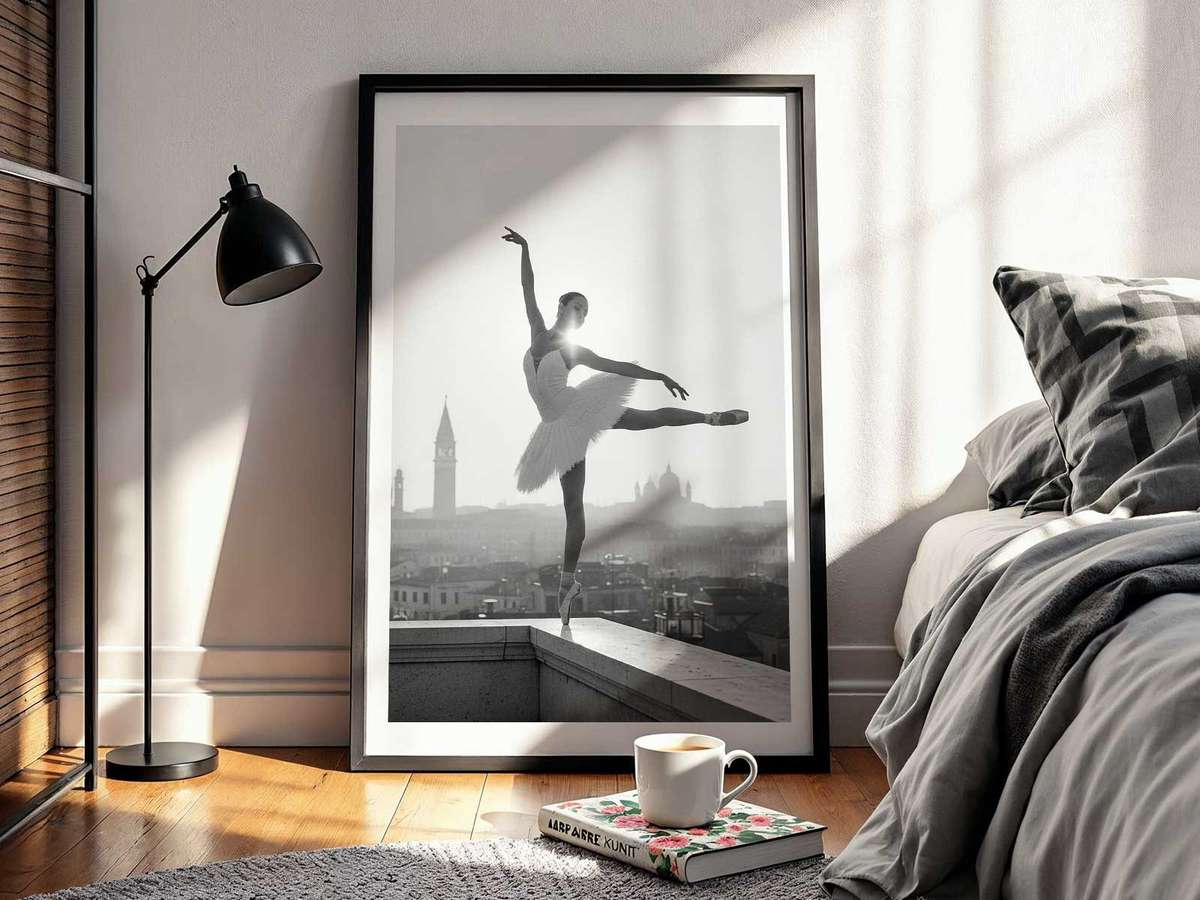
This is also a poster that settles into domestic life. In a reading nook or a music corner, it harmonizes with leather-bound volumes and a lamp with a warm bulb. In a bedroom where the décor favors calm and layering, it lends a theatrical atmosphere without theatricality. The imagery feels curated, like a discovered photograph from a family album of the arts, making walls feel more personal and lived-with instead of merely decorated.
Finally, this poster offers a considered alternative to fast trends: by foregrounding heritage-led design, softened contrast, and archival-inspired texture, it promises an image that endures through changing fashions. It is for people who love ballet not only for its spectacle, but for its history, its quiet rituals and its ability to store memory in light and fabric. Place it where you want a feeling of continuity — a small stage of calm within your home — and let the image grow warmer with time and daily attention.