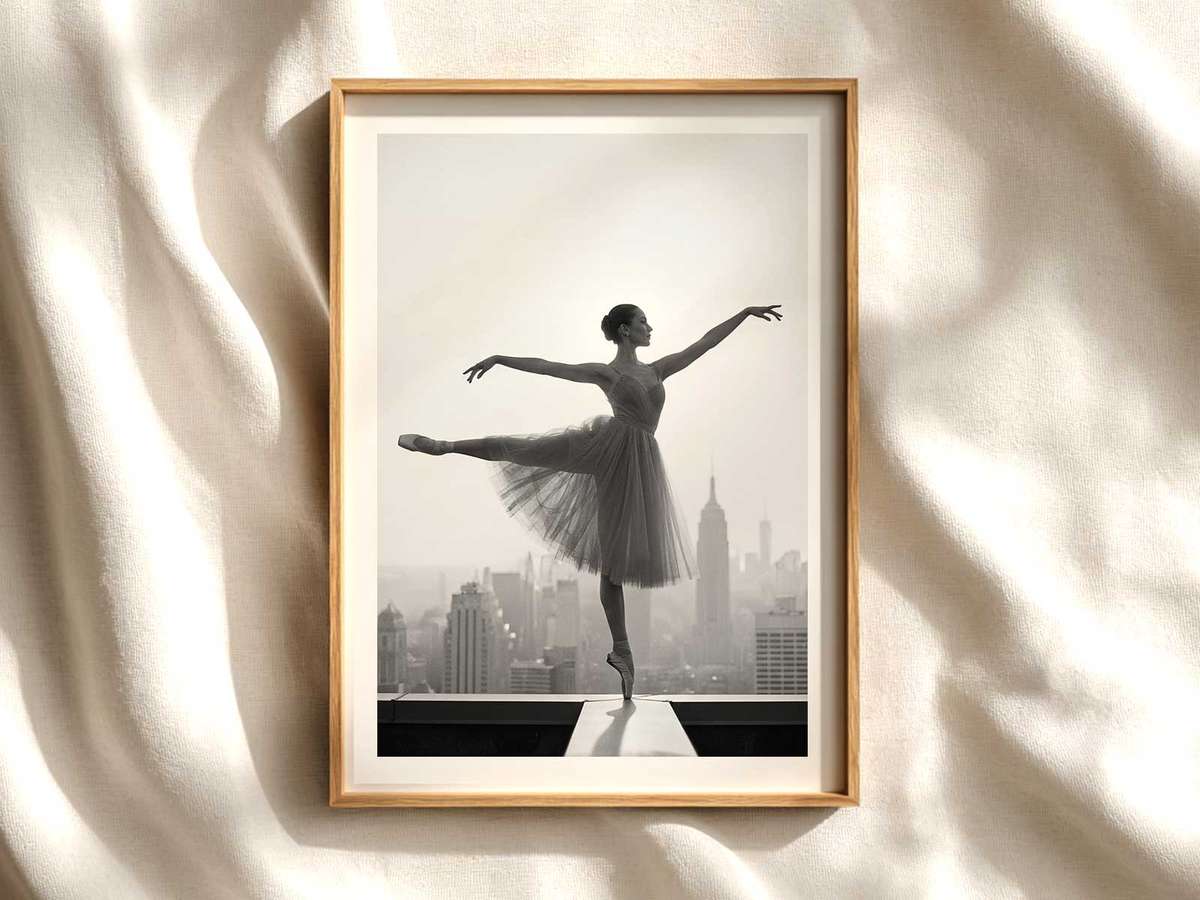
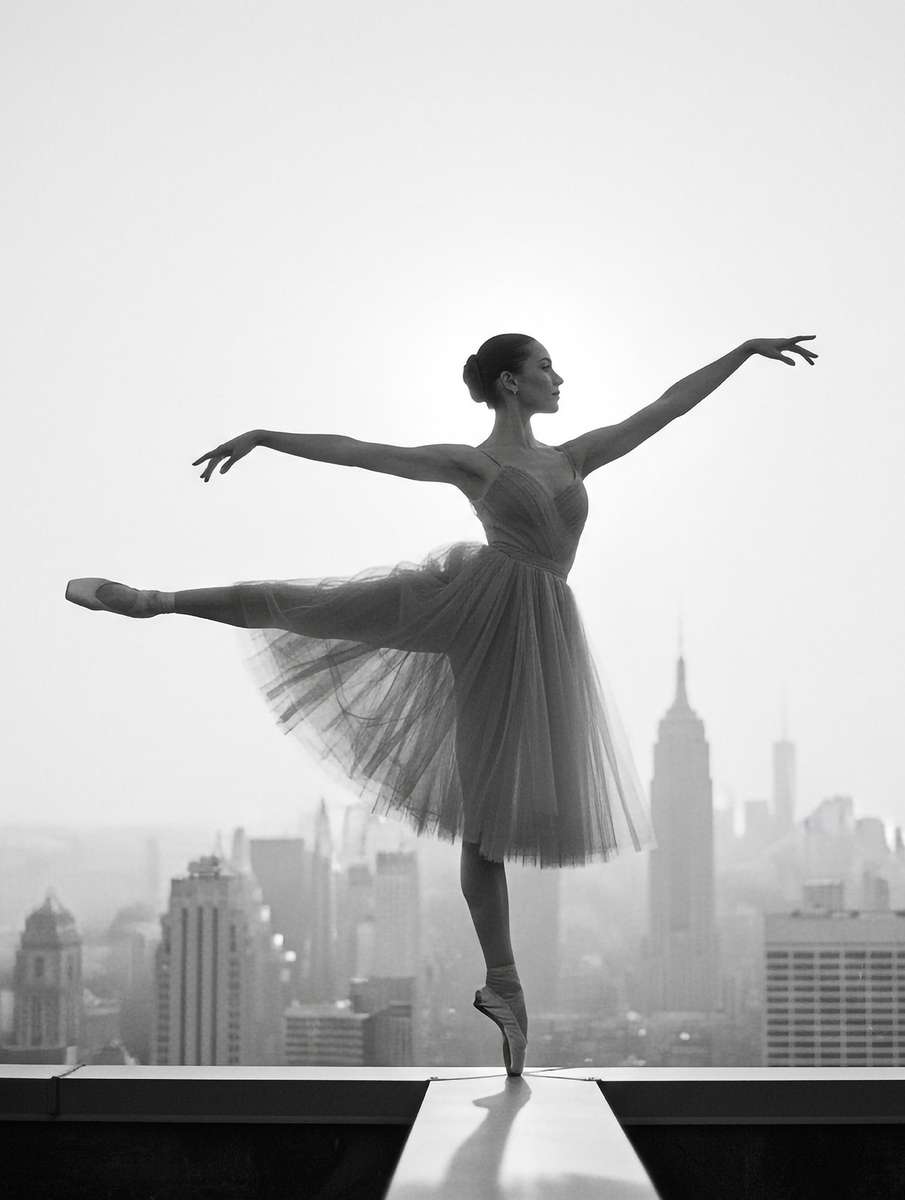
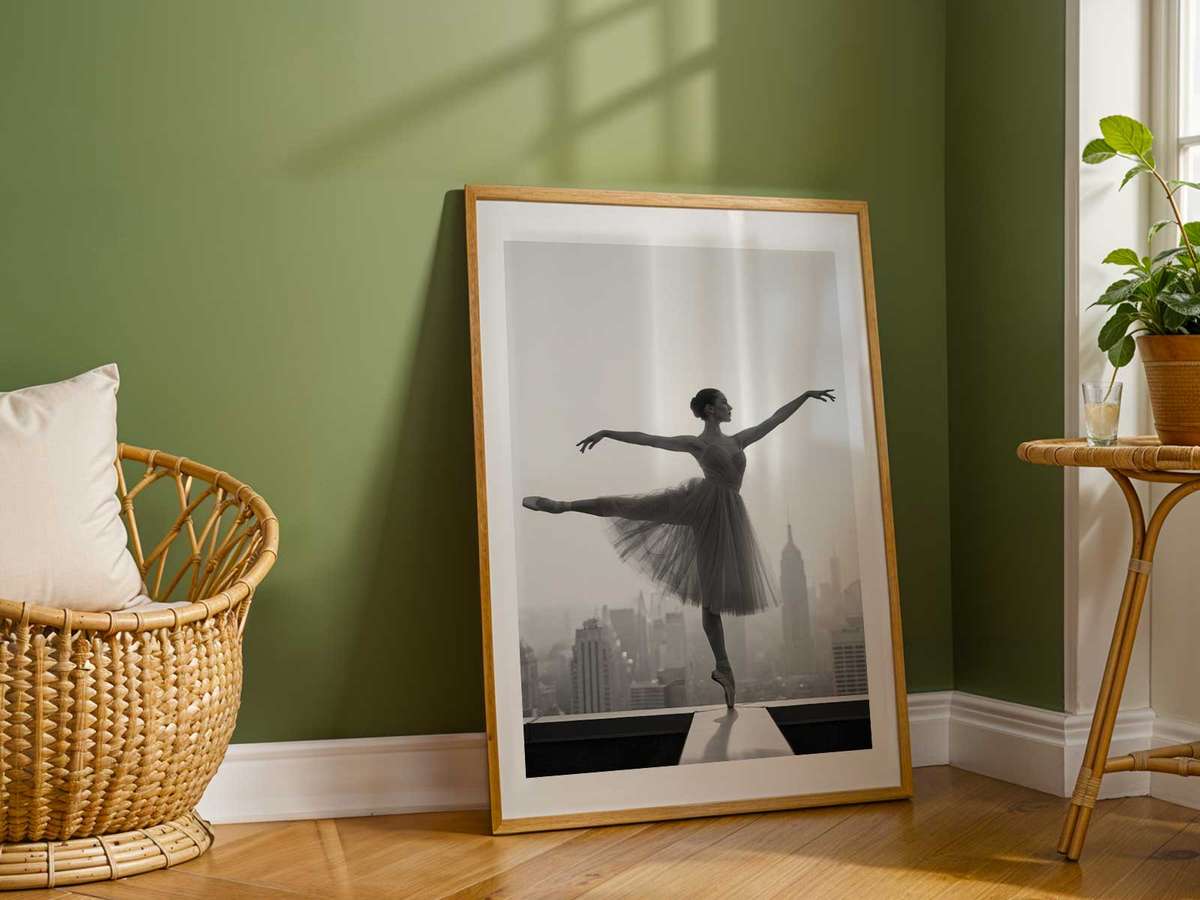
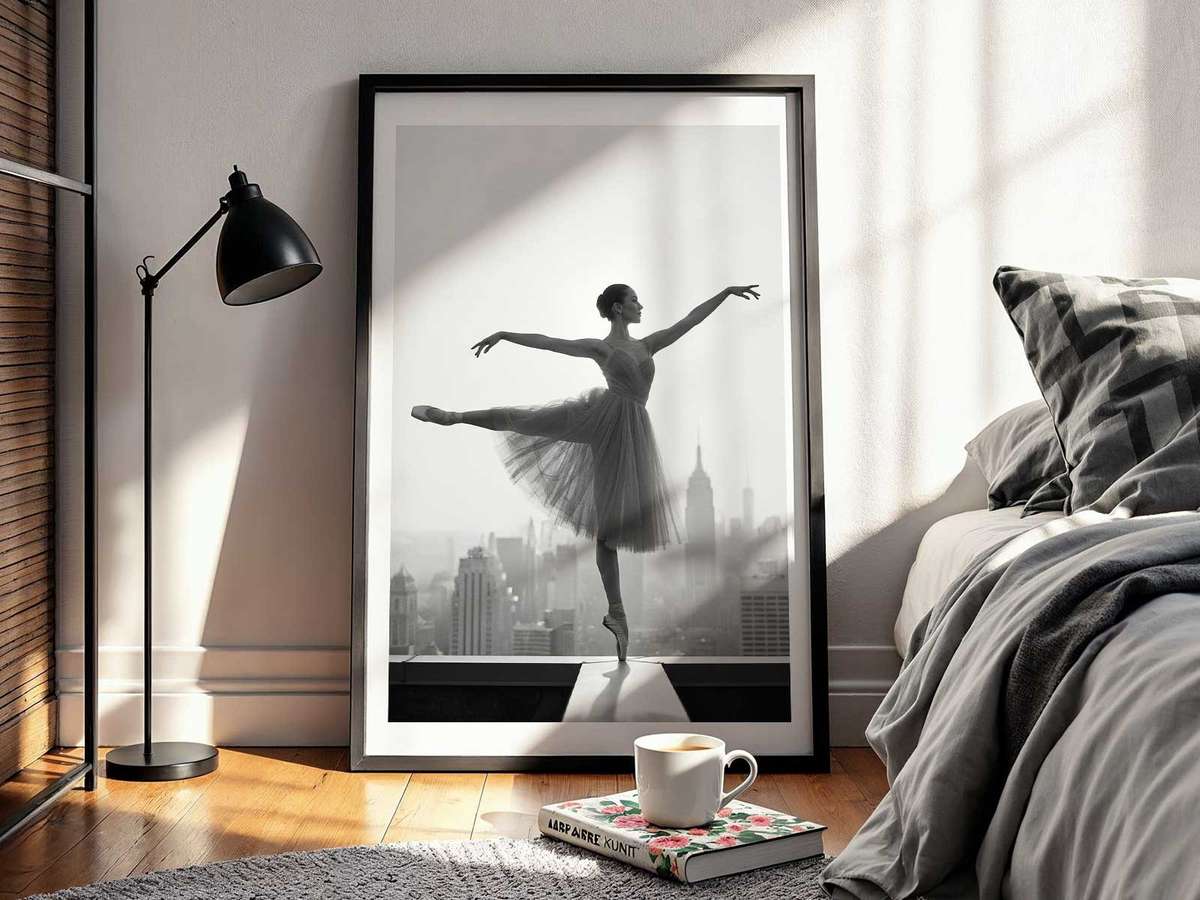
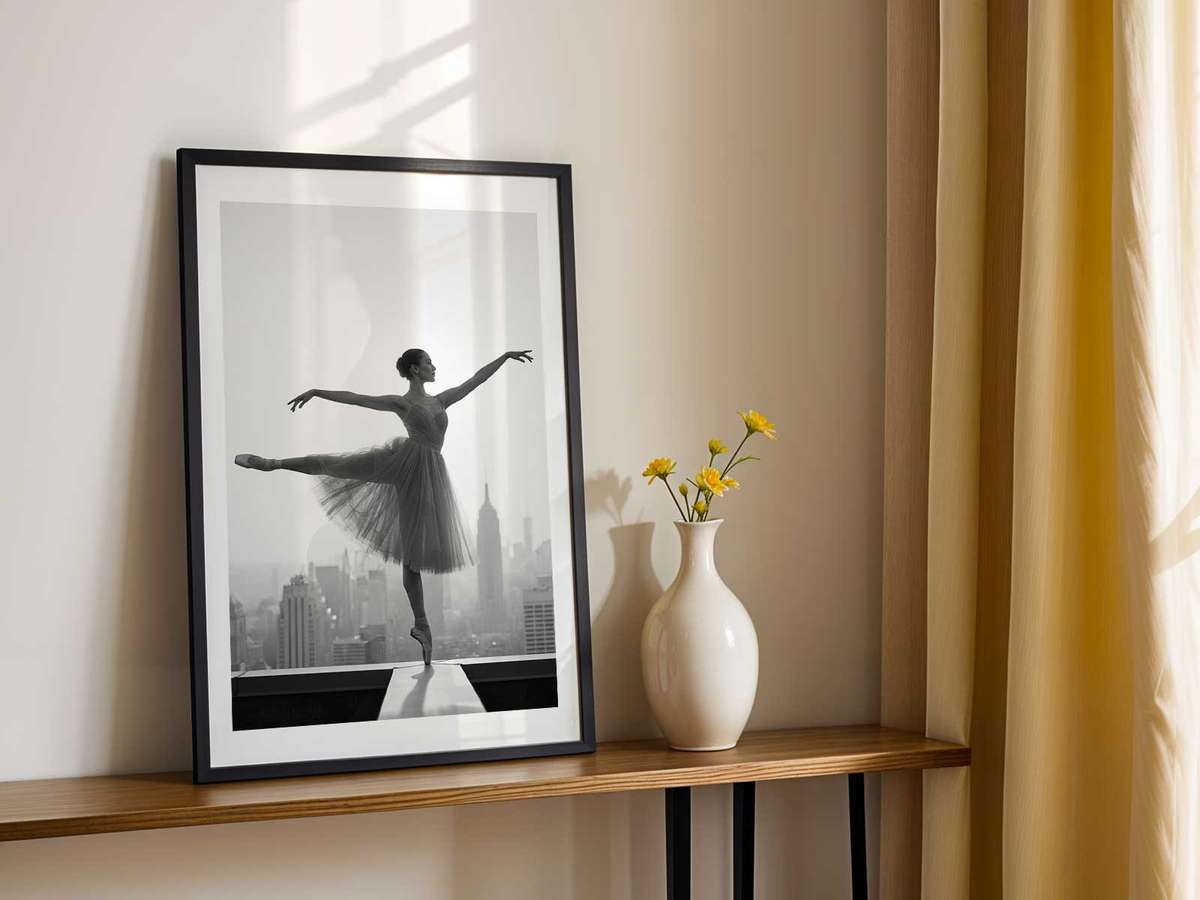
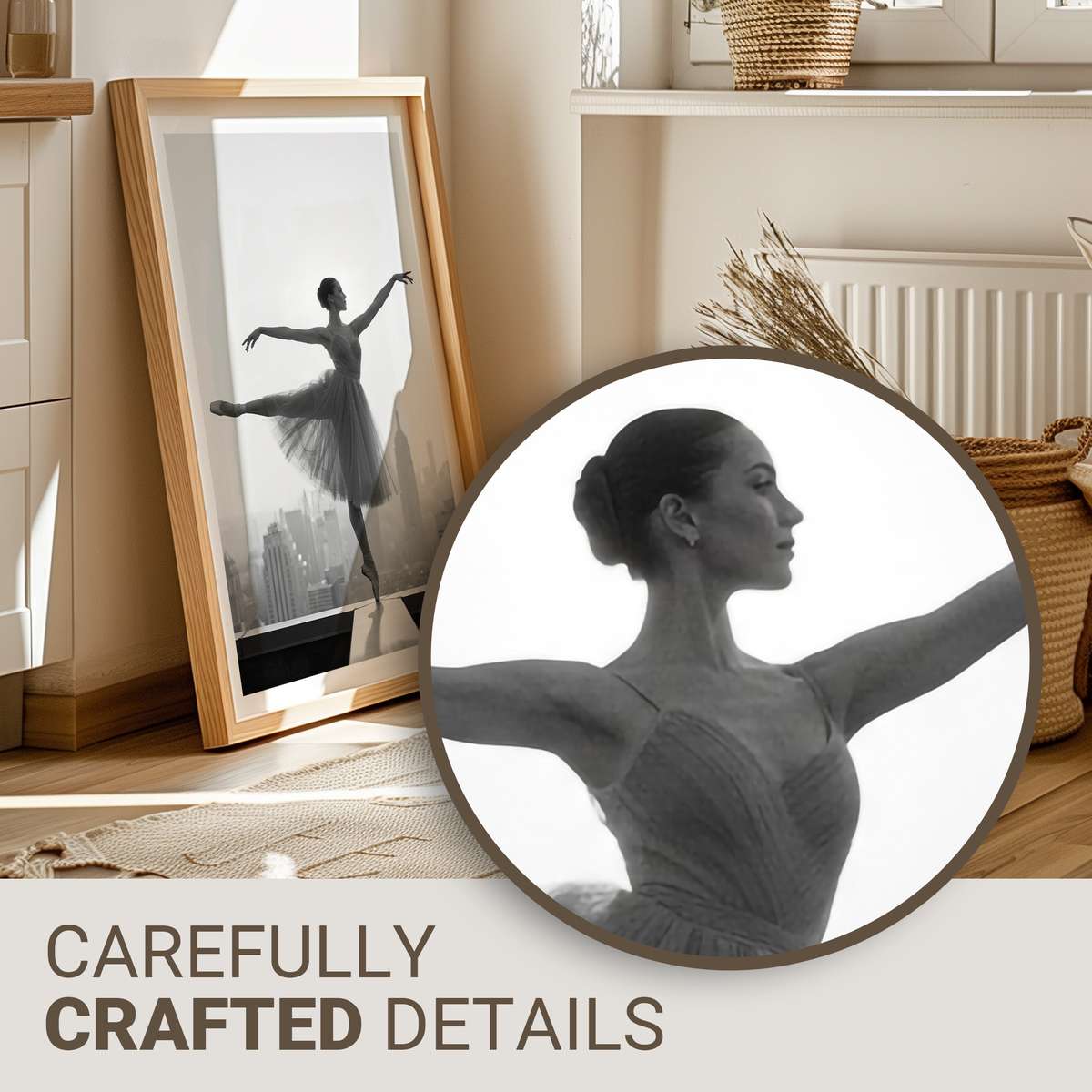
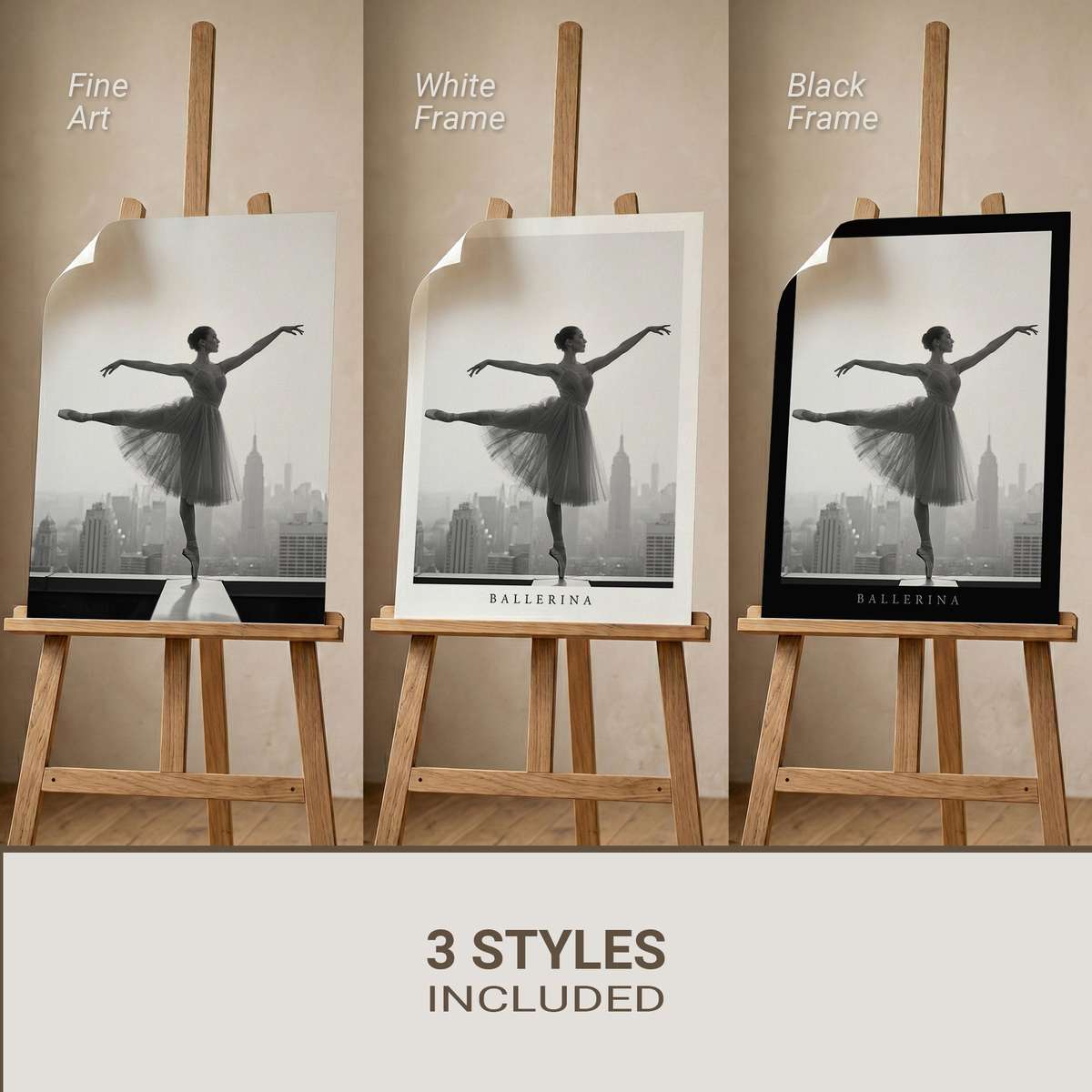
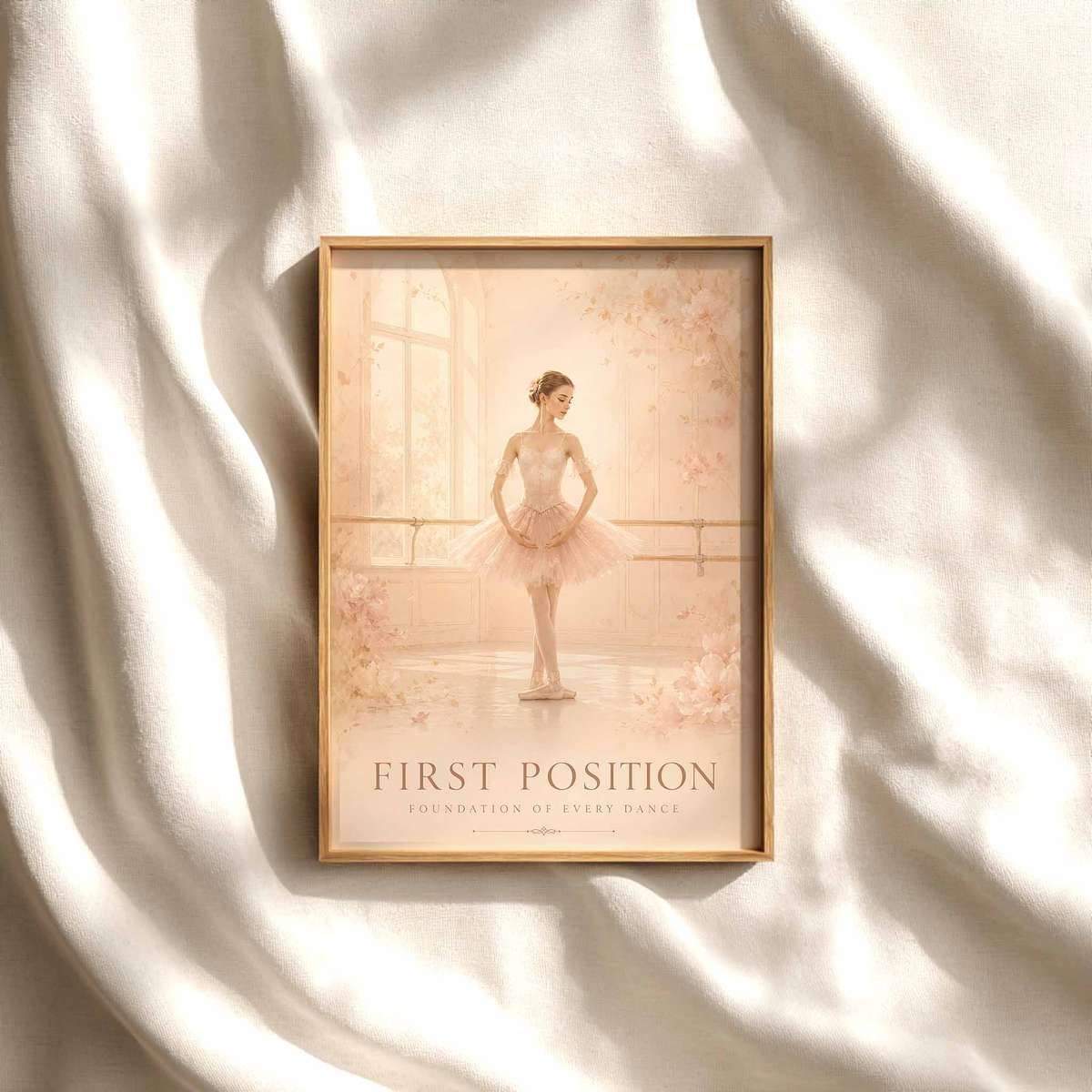
The first thing you notice is the stillness: a single ballerina held in a posture both simple and unmistakably noble. Her body becomes a sentence on the wall—clean, articulated, and deliberate—so that each curve and extension reads like punctuation. The head is lightly inclined, the shoulder line softened, and the arm follows a gentle arch that leads the eye from wrist to collarbone. This restrained orchestration of line turns a solitary figure into a strong decorative presence without the need for elaborate background or theatrical gesture.
What holds the room is proportion and restraint. The dancer’s silhouette balances negative space with a quiet authority: the torso’s vertical axis anchors the composition while a subtly lifted pelvis and engaged core create an upward, unspoken tension. The arm path — neither fully extended nor close to the body — establishes an intermediate rhythm that feels intimate rather than demonstrative. Such measured spacing between limbs and torso invites a slower, closer reading; the poster becomes a place where the eye can rest on refined decisions of weight and balance.
[IMAGE_INSERT_ARTICLE_01]
Line here is the language. The neck’s length, the soft turn of the head, the gentle openness of the chest: all of these shape an emotional tone that reads as composed introspection. The pose doesn’t ask for applause; it asks for presence. That restraint makes the image feel personal—like a private moment observed from a respectful distance. Texture and tonal restraint in the artwork emphasize contours rather than costume detail, so the viewer registers posture and carriage first and foremost. This prioritization of bodily language gives the print a refined clarity that translates directly into visual calm on a wall.
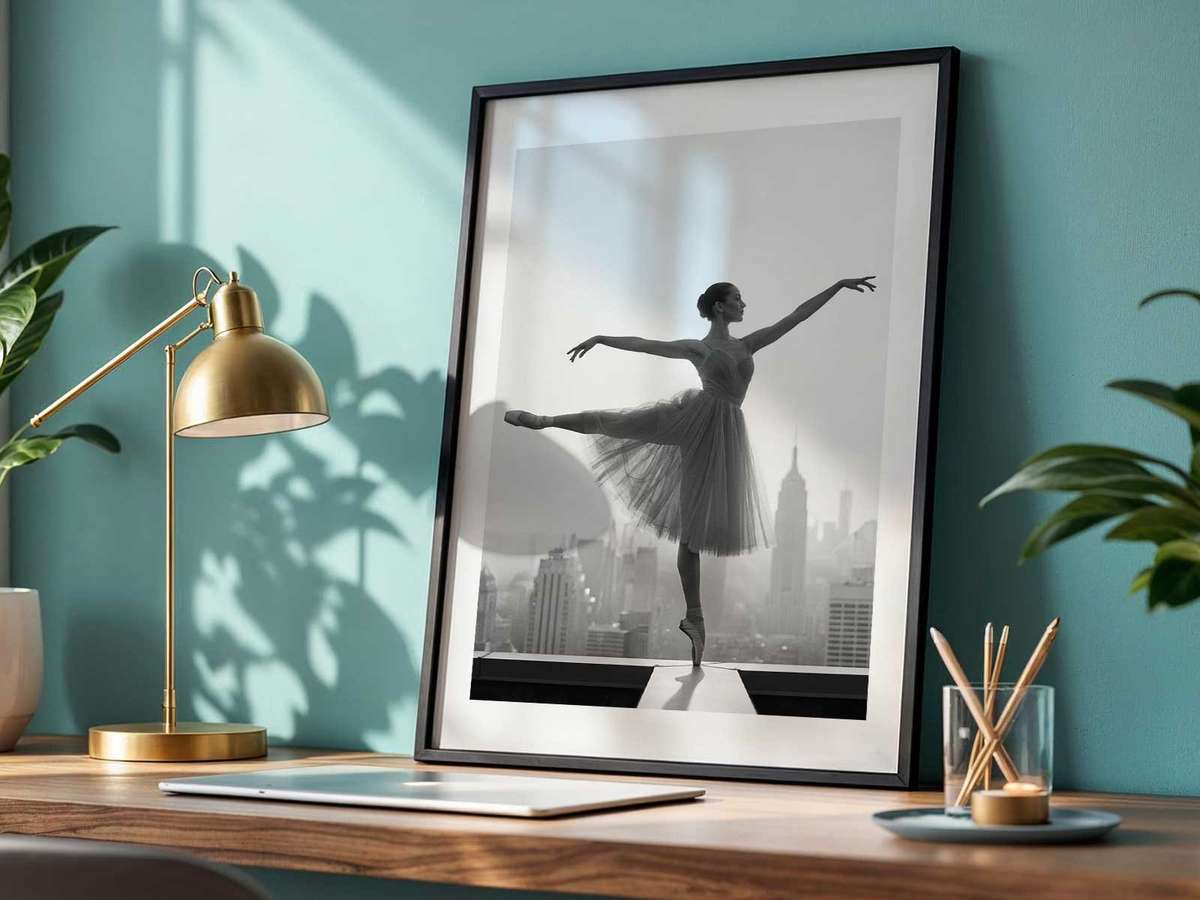
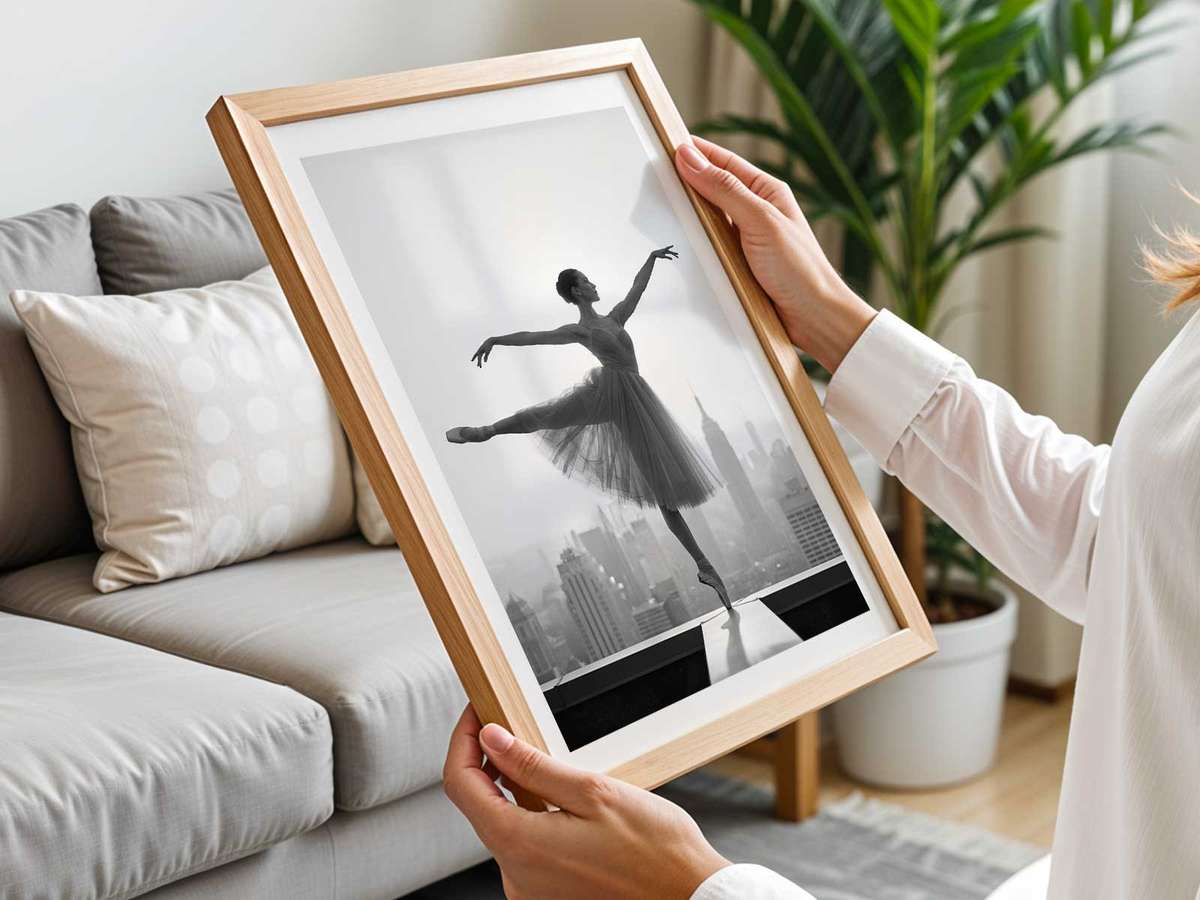
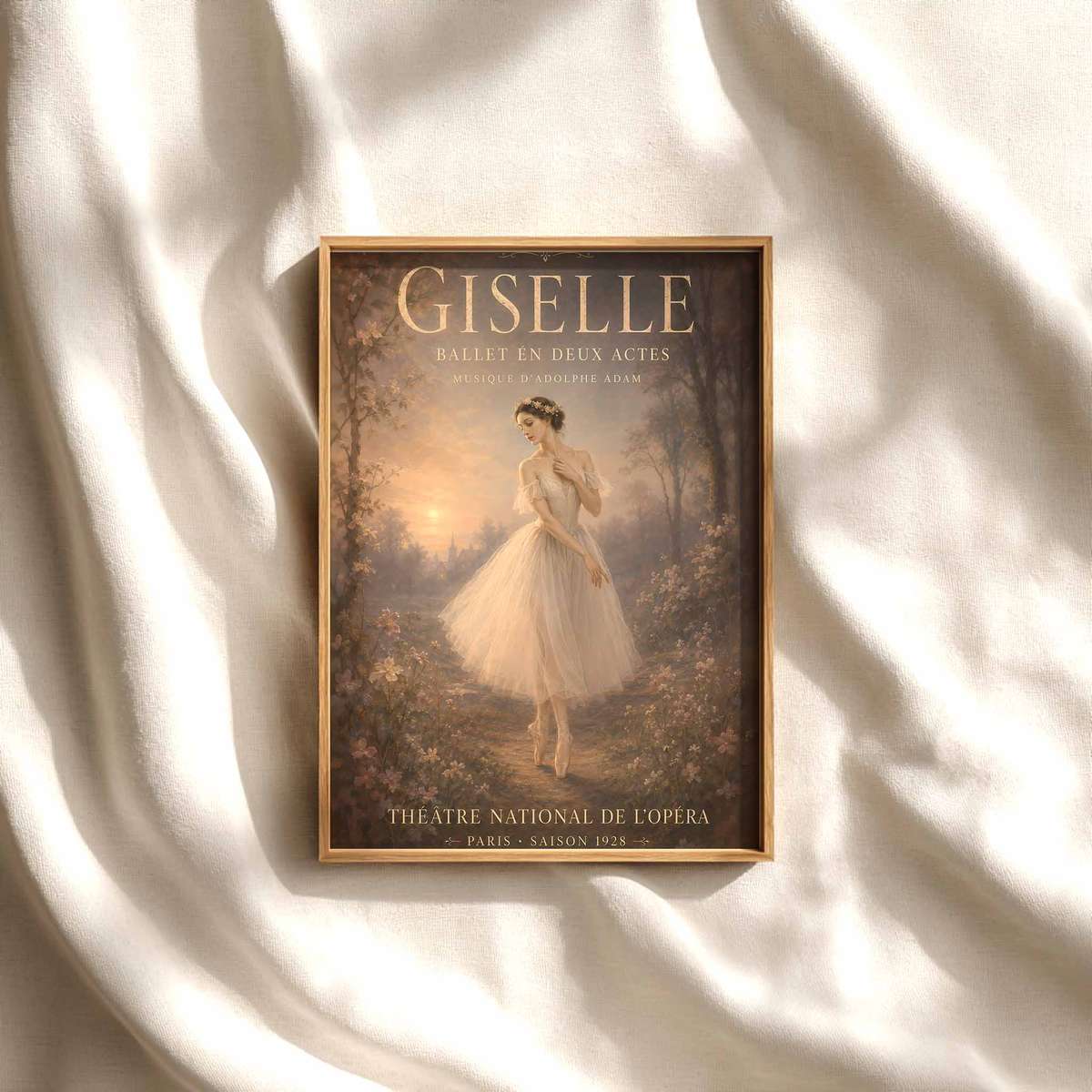
Living with a dancer-centered image is different from living with a scenic photograph or abstract pattern because the human figure provides a continual point of emotional reference. A simple turn of the head or the barely-there curve of a wrist can suggest resolve, tenderness, or quiet concentration; the viewer supplies narrative without the image forcing it. For interiors, that quality is useful: in a dressing corner the print echoes preparation and ritual; in a reading nook it offers a quiet companion; in a ballet-themed bedroom it deepens the room’s sense of purpose and poise without overwhelming other décor.
The real desirability of this ballerina art print lies in its clarity of intention. She is the image’s center and its grammar—every angle and pause contributes to an overall vocabulary of grace that is measured, intimate, and decorative. Rather than relying on flamboyance, the poster invites repeated looking and rewards attention with new discoveries in how the body declares balance and intention. It’s a piece that quietly refines a space by bringing the articulate presence of a dancer into everyday life.