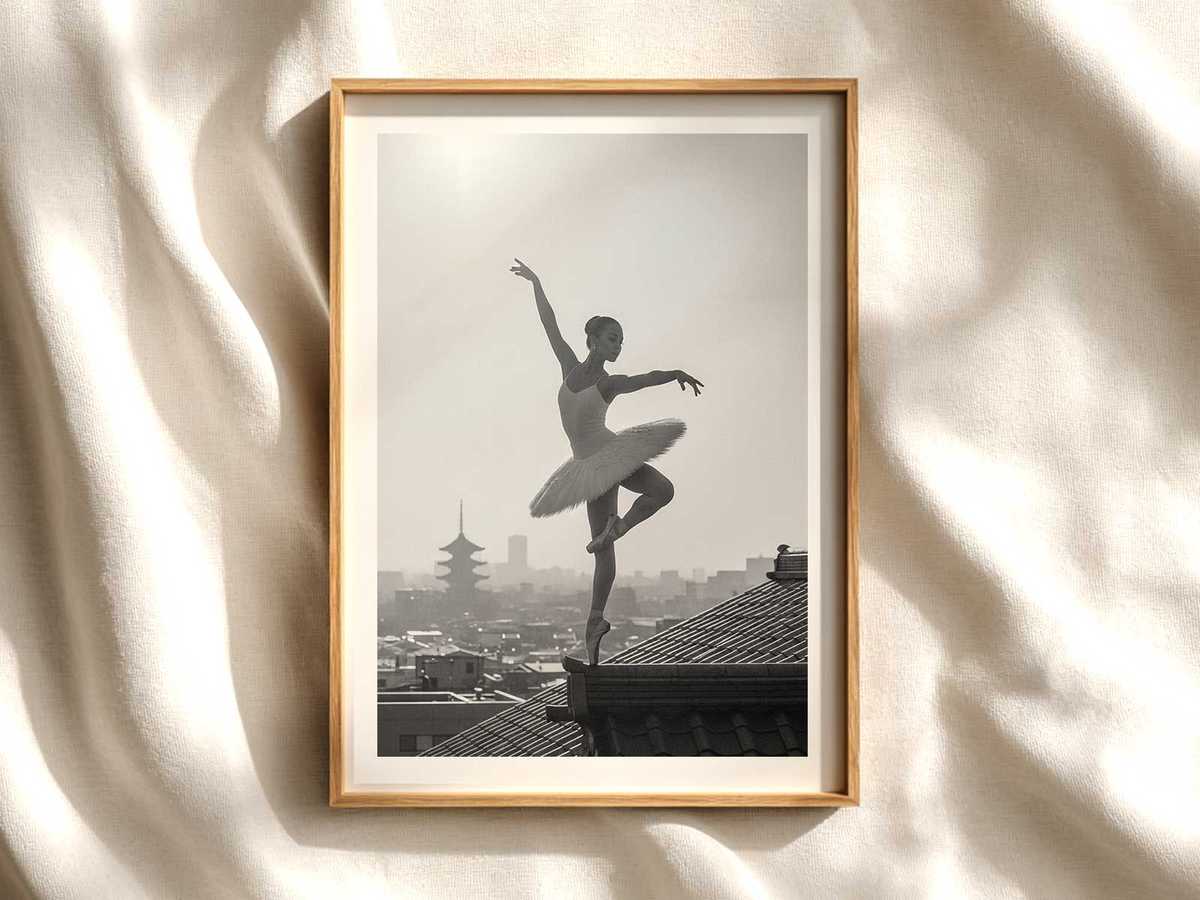
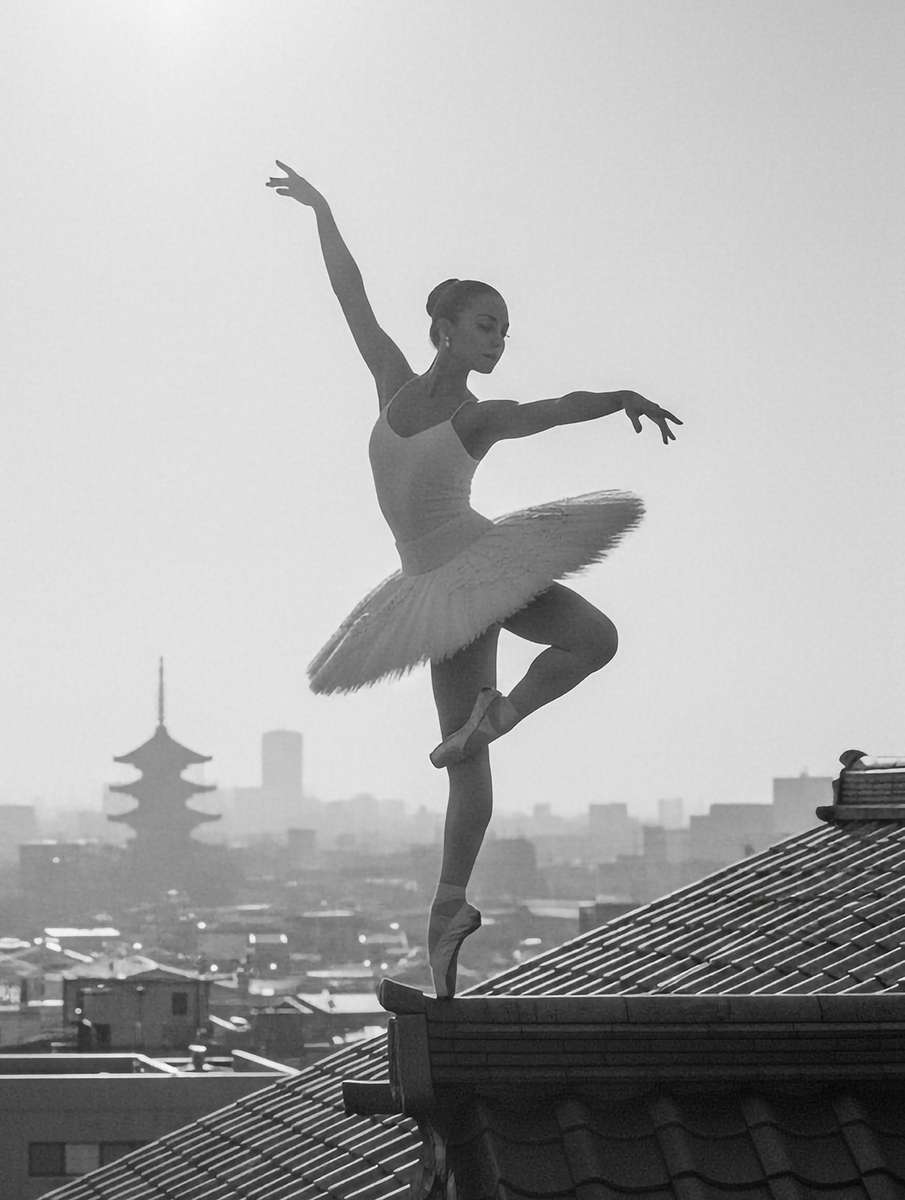
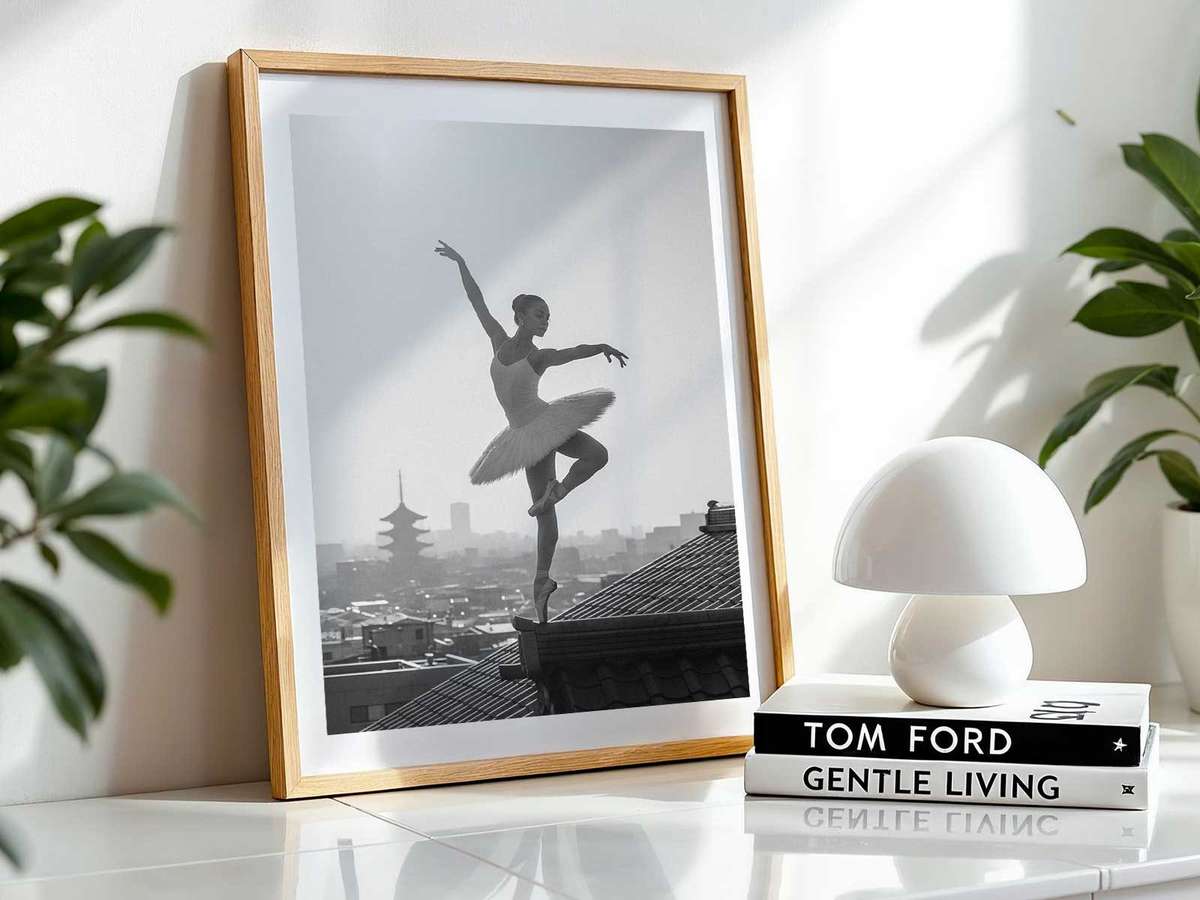
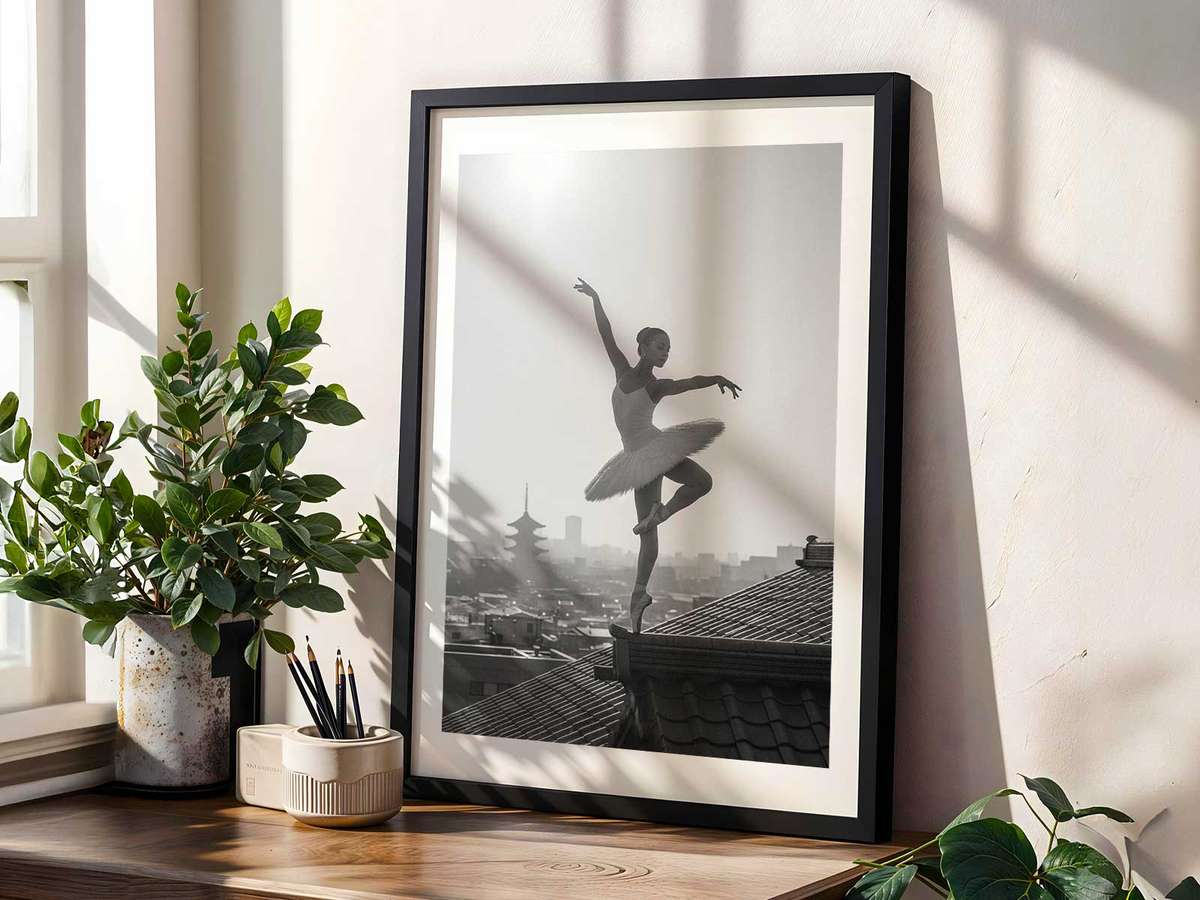
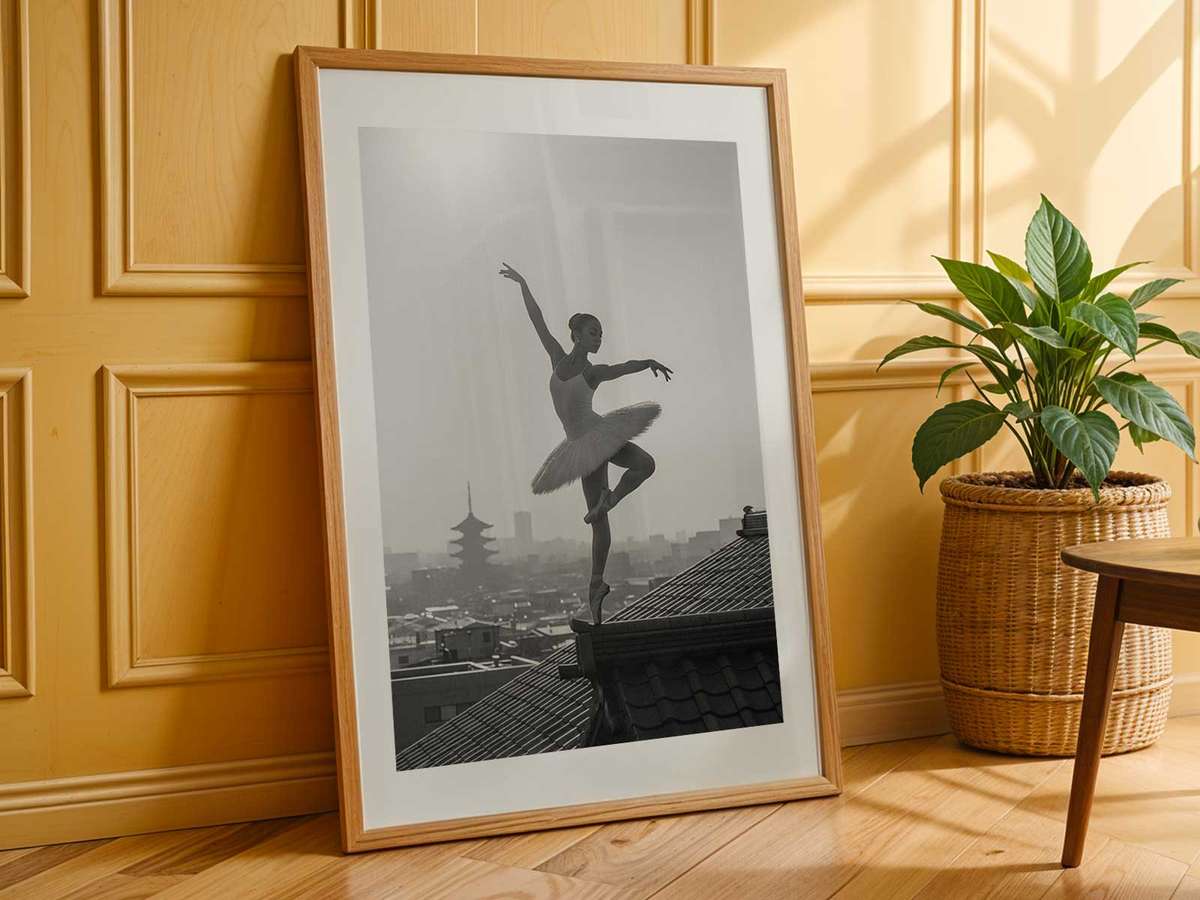
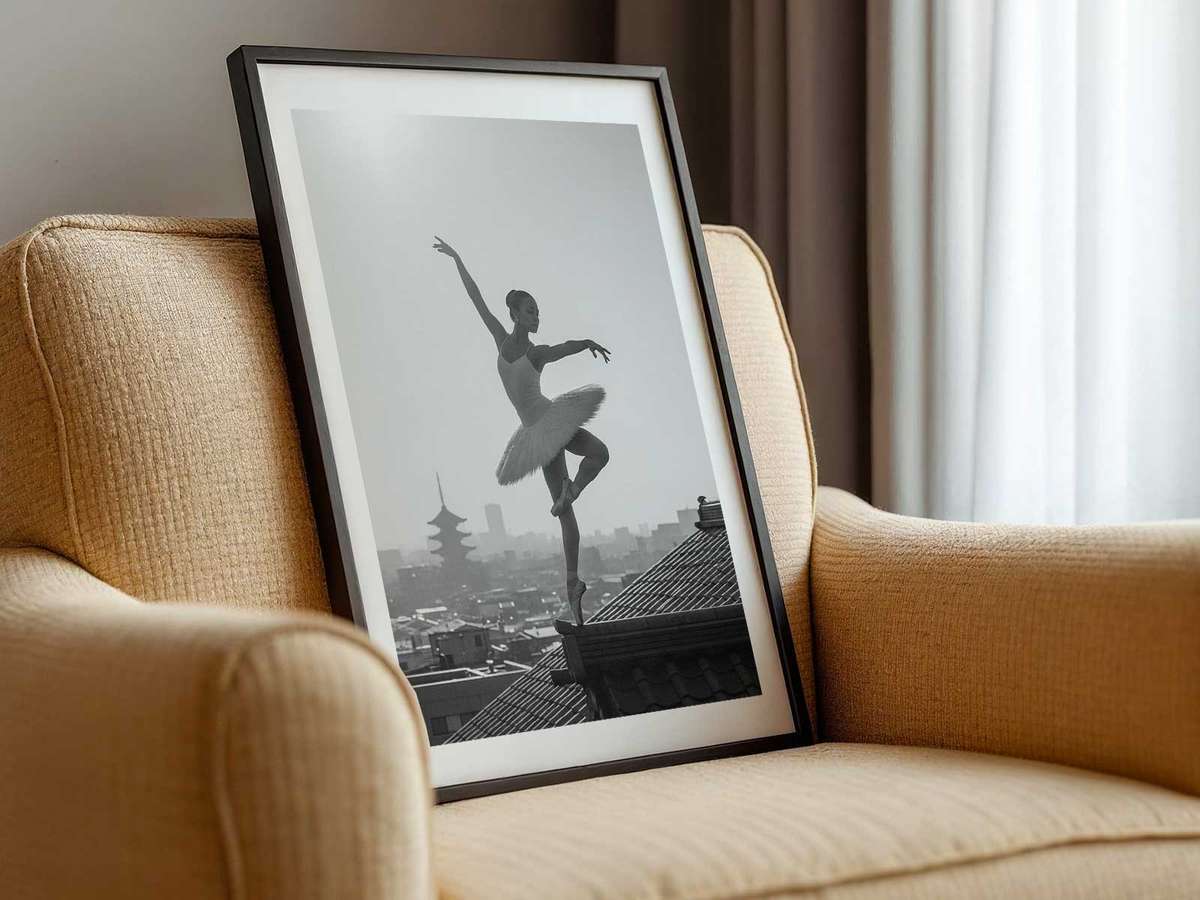
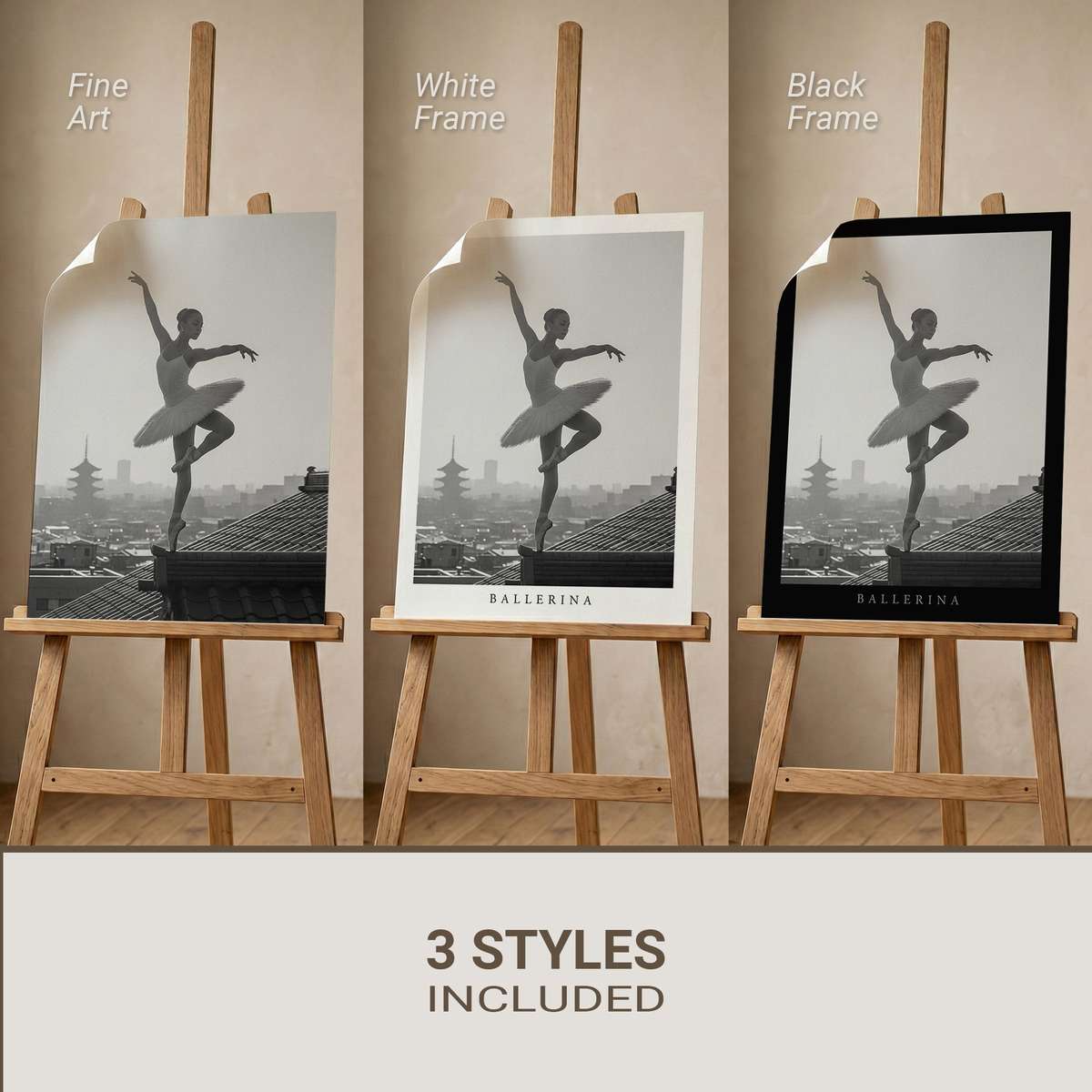
At first glance the image reads like a nocturne: a single professional dancer occupies a slice of city-night, the architecture and neon suggestion of Tokyo folding around her. The poster does not merely show a pose; it stages a moment where the metropolis becomes scenic partner. Reflected light pools along building edges, deep alley shadows recede into soft haze, and a measured distance between dancer and city gives the composition a contemplative quiet. This is an interior image that asks to be lived with — to be glanced at from a sofa or bedside, and to return a hushed, cinematic presence.
Rather than isolating the figure on a blank field, the photograph places the dancer within a layered set: balcony rails, vertical signage, a curtain of misty light and the faint geometry of windows. Those elements perform the role of scenery, suggesting side wings and depth without crowding the central gaze. The cityscape functions as a silent chorus — it amplifies the dancer's solitude by offering scale and context. When hung on a wall, the poster reads as a small stage you can return to, where every look reveals another architectural line or gradation of night.
[IMAGE_INSERT_ARTICLE_01]
Light, distance, and theatrical calm
Light in this image is disciplined: cool, urban highlights rim the dancer and pull her silhouette into relief, while pockets of deeper shadow preserve negative space that breathes. The effect is not mere clarity but a sense of stage lighting that selects what to hold and what to let go. Distance is used like a soft curtain — the buildings are neither caricature nor mere backdrop but spatial actors that create hush. This interplay produces a contemplative temperature: the viewer experiences both the dancer's poise and the city's patient presence, as if overhearing a private rehearsal at night.
The photograph's emphasis on spacing — a generous floor plane, an elevated horizon, and a careful margin of darkness — gives the image cinematic depth. It resists flat decoration and instead offers a place for the eye to move, from illuminated limbs to the suggestion of a far street. That movement becomes a quiet narrative, encouraging repeated viewing and slow attention.
Why atmosphere matters on the wall
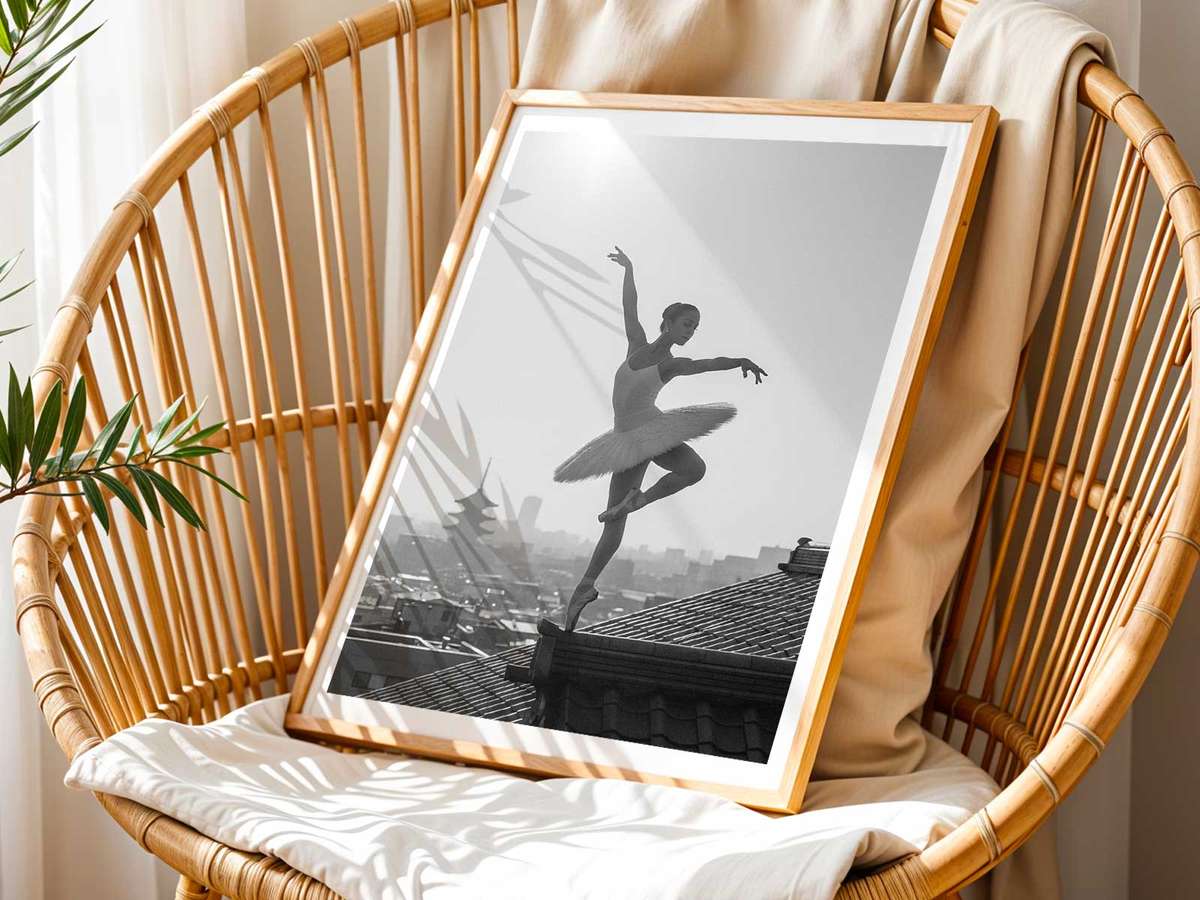
For collectors of ballet imagery who value more than gesture, this poster provides mood as a material. It is designed to complement interiors that appreciate restraint: a reading corner where light is dimmed and attention turns inward, a bedroom where quiet and depth feel intentional, or a studio where a mindful atmosphere encourages practice. The image's nocturnal urban setting ensures the dancer never appears decorative; she occupies a world. On the wall, she keeps that world in reserve — an elegant solitude that shapes a room's emotional temperature without shouting.
Owning this print means inviting a staged silence into your space: an image that suggests choreography between light and city, distance and intimacy, and that preserves the refined loneliness of a dancer rehearsing against an evening skyline. It is a poster that rewards slow looking and brings a measured theatrical presence to interiors that prefer atmosphere over ornament.