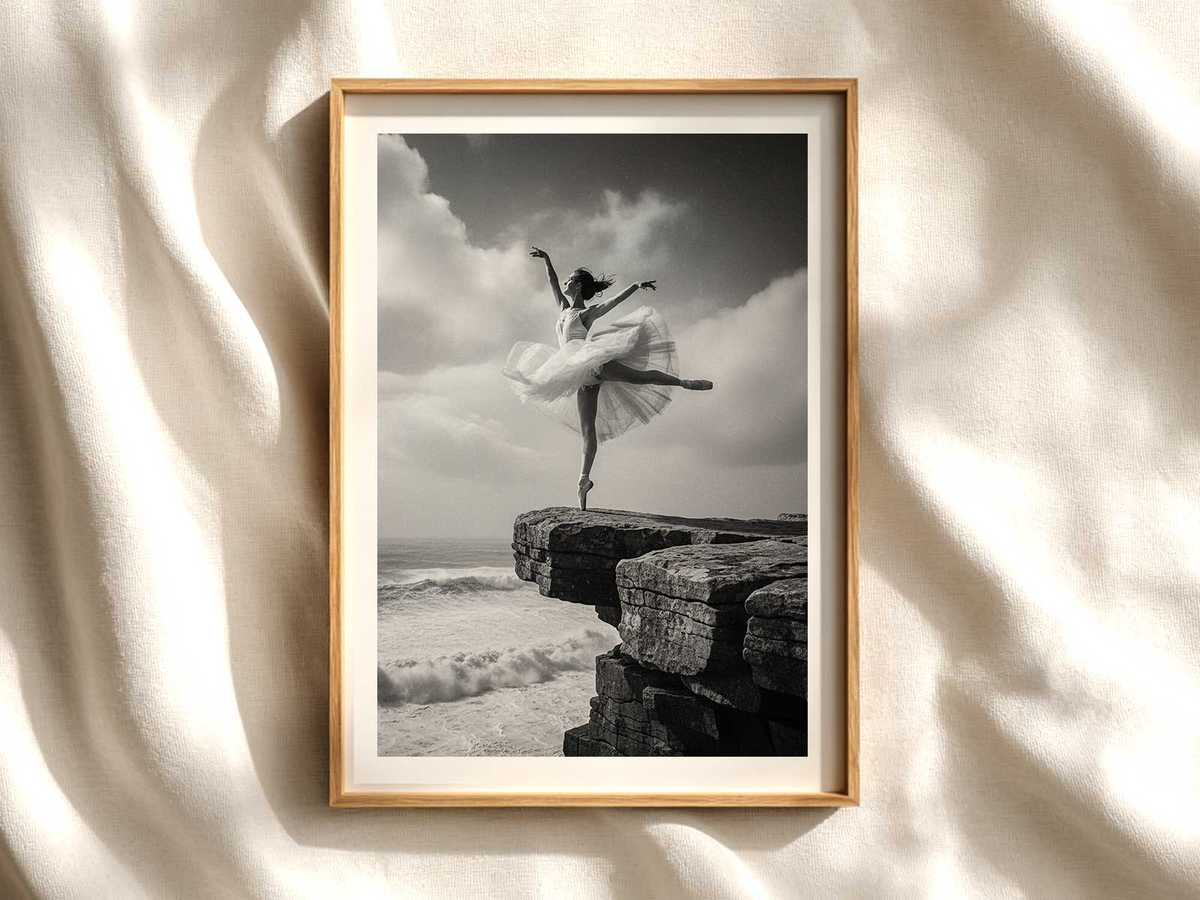
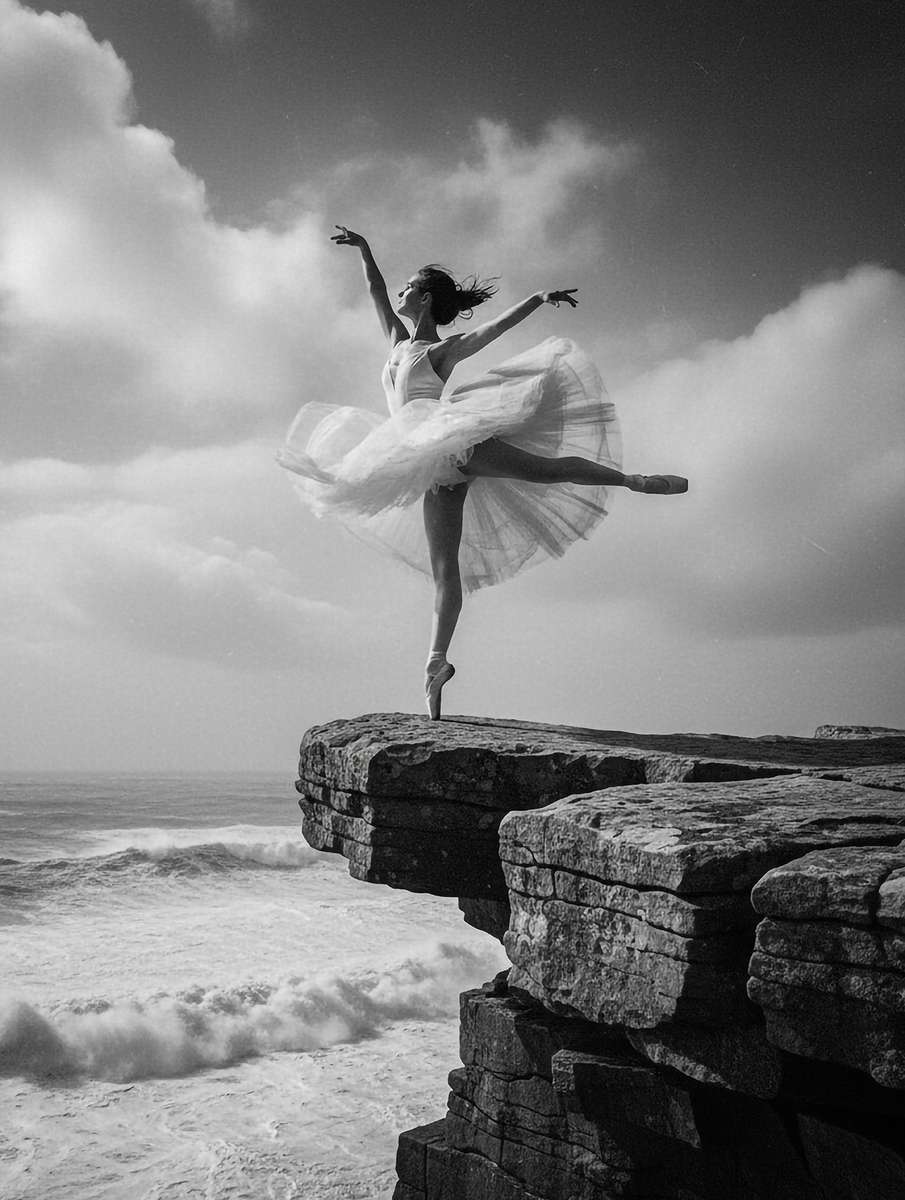
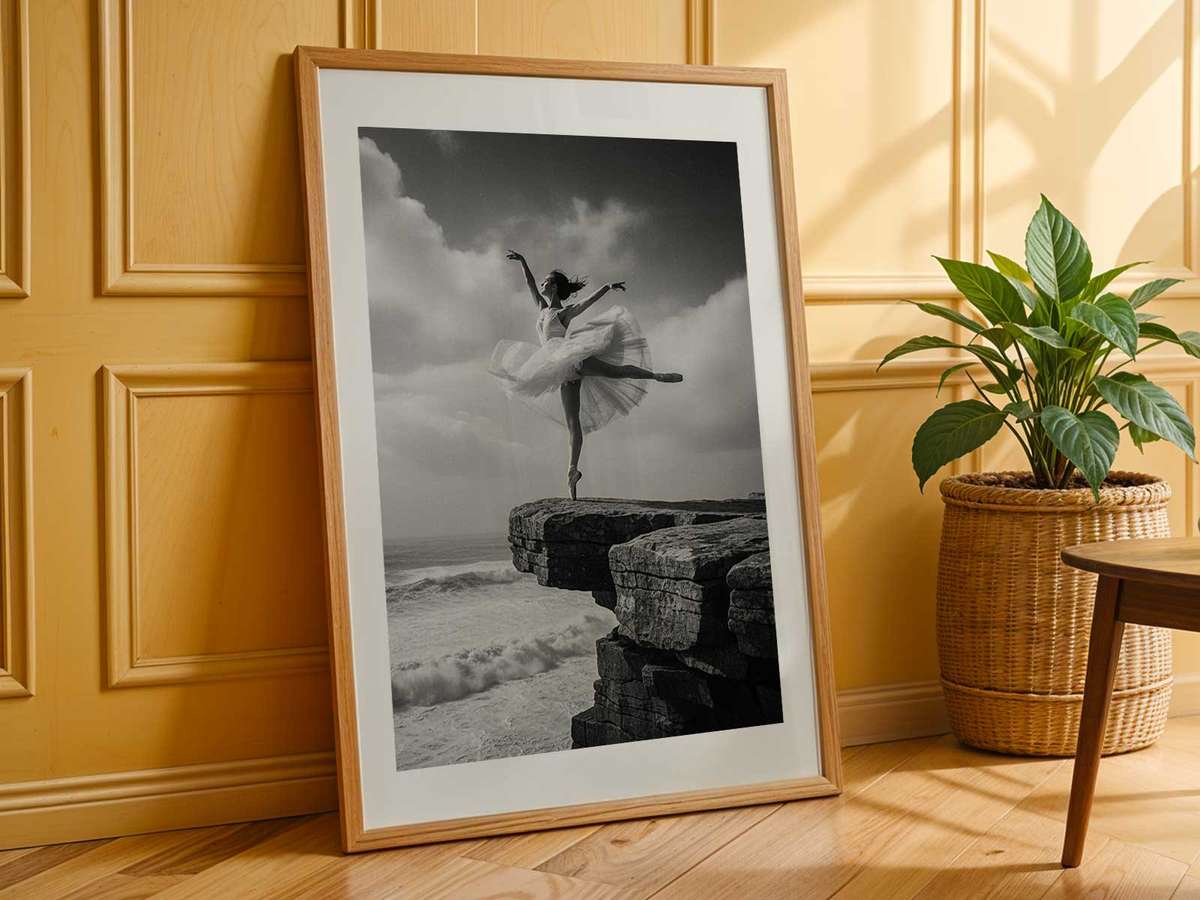
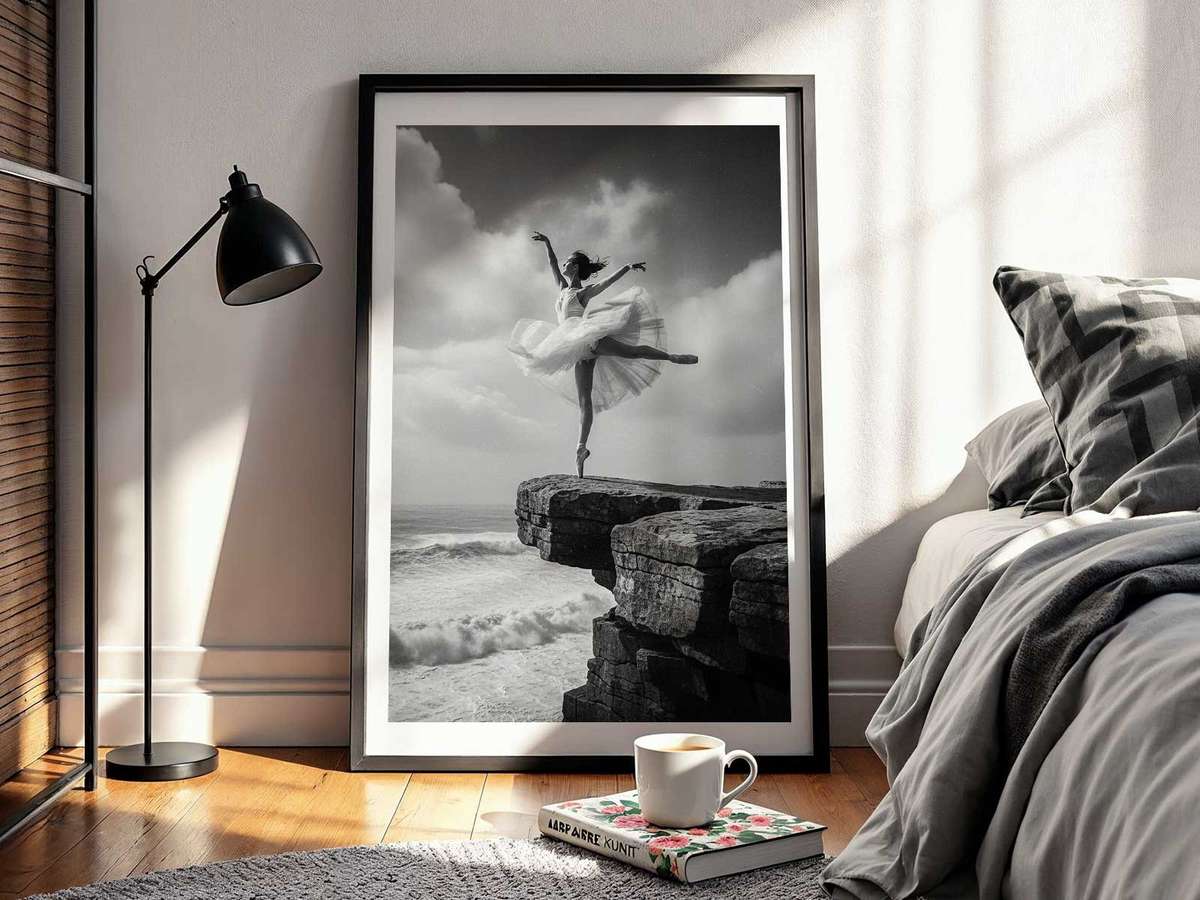
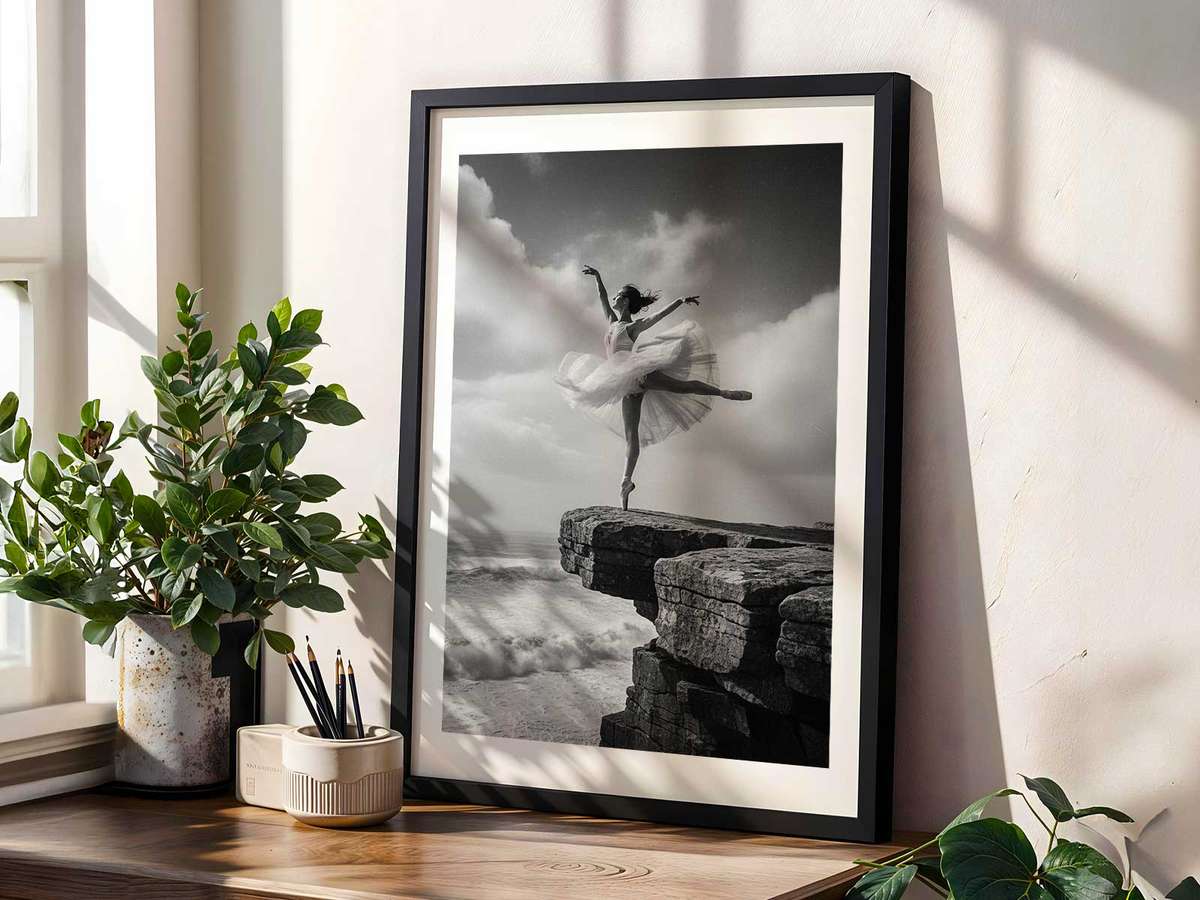
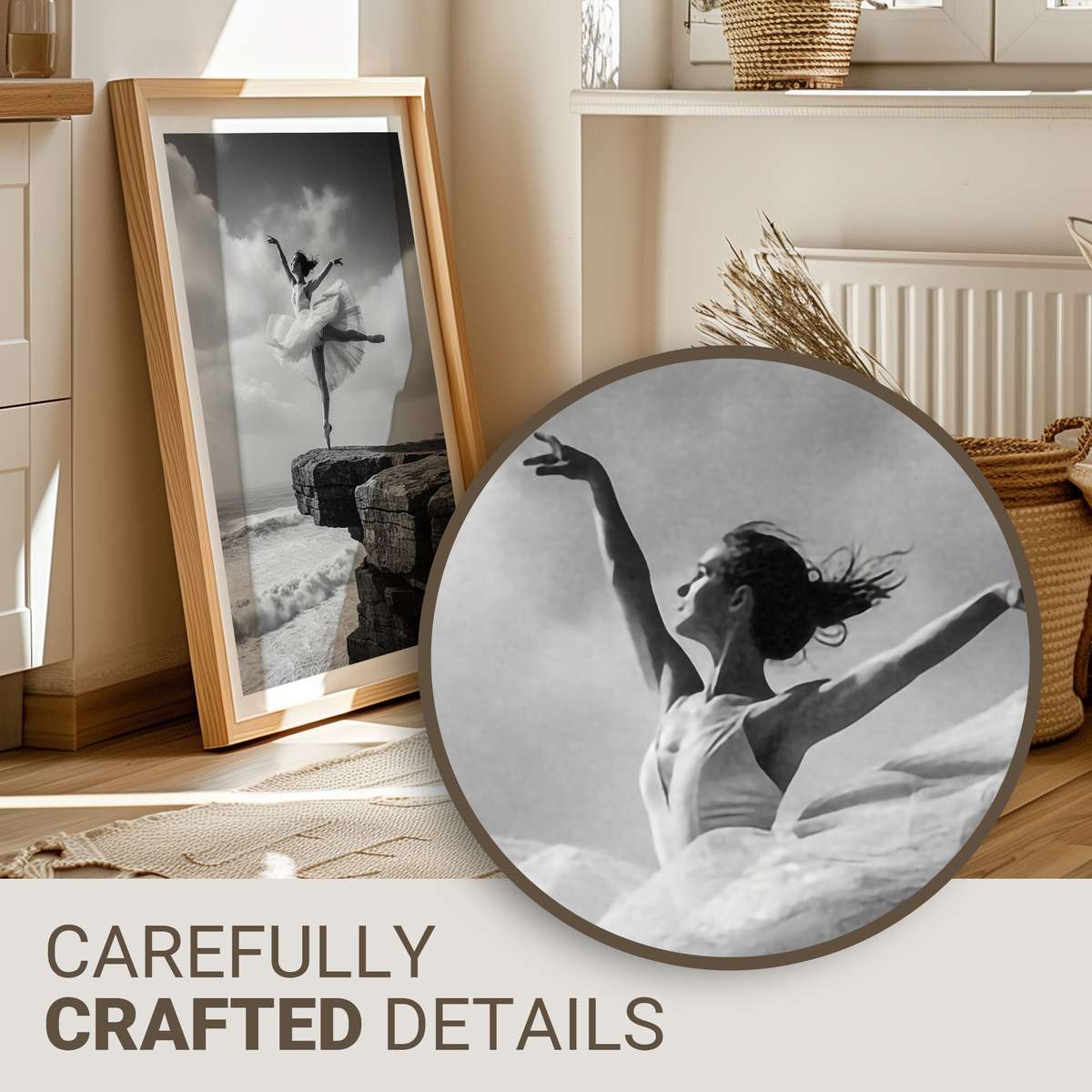
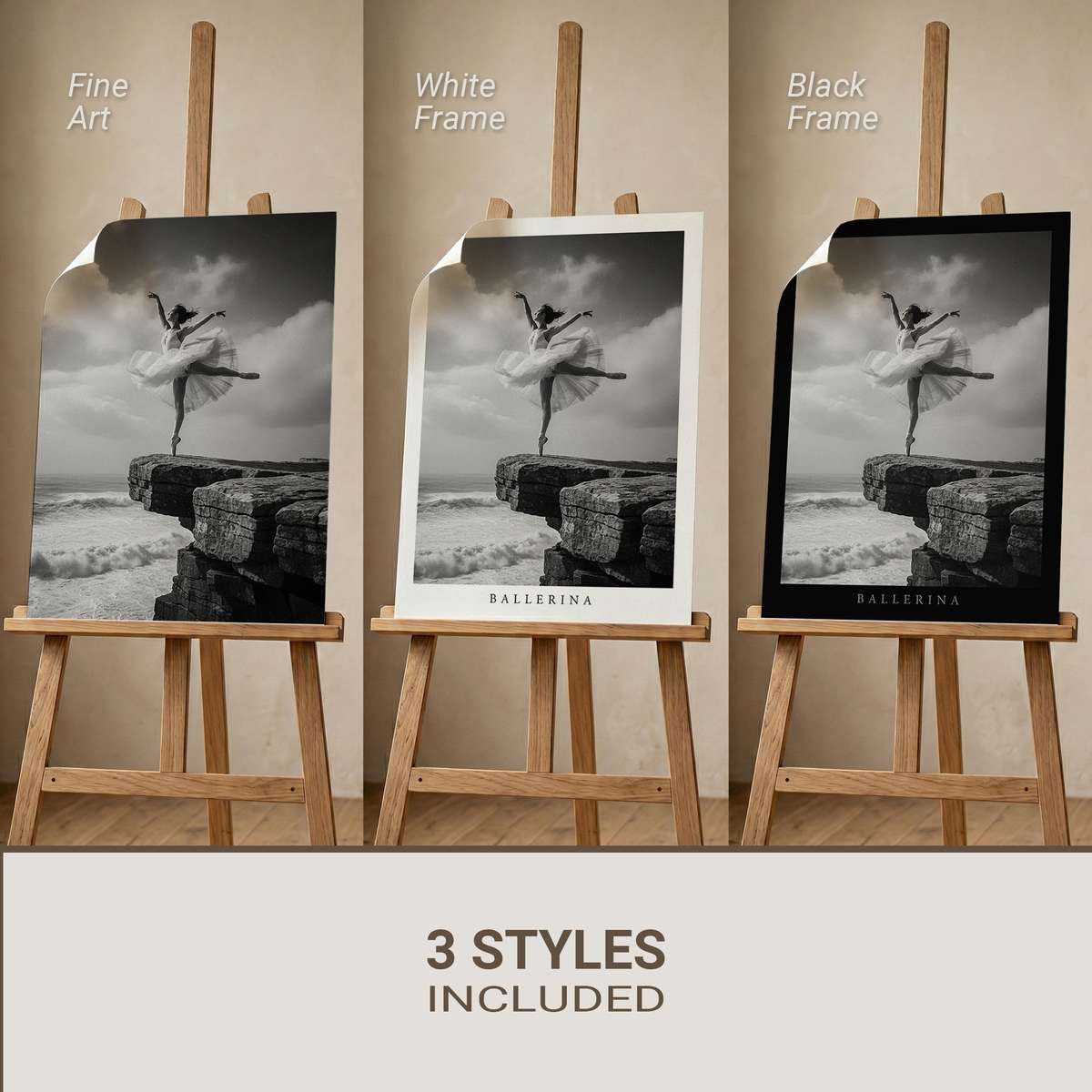
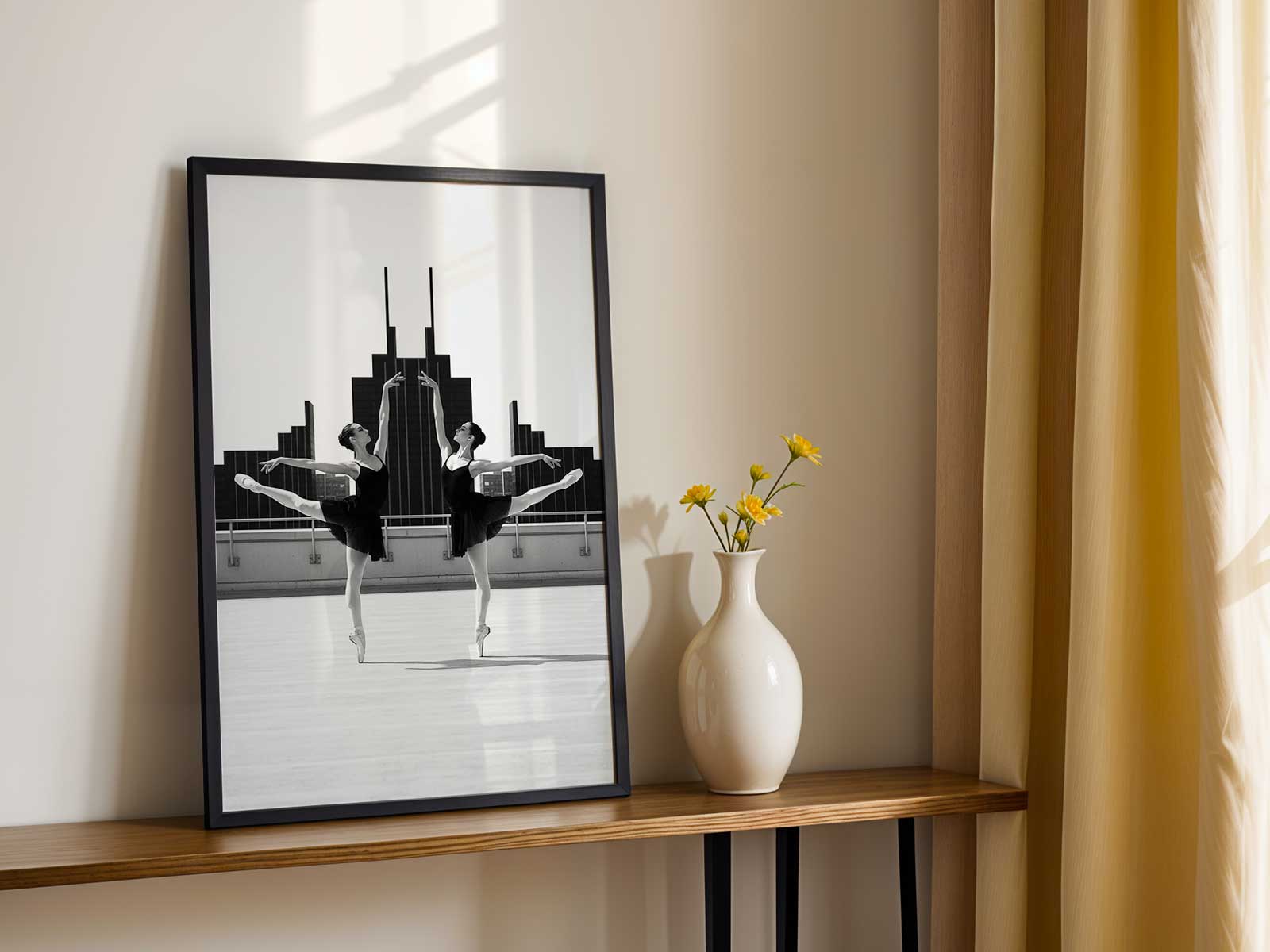
At first glance the image reads like a single figure, poised at the very lip of a stage that meets an abrupt relief. Look closer and you discover the poster's true subject: a stage world in which the air itself acts as scenic design. The cliff-edge placement opens the theatre outward; wind-like breath and distant horizon become active partners to the dancer's measured balance. This is ballerina fine art that depends as much on the surrounding space as on the body that occupies it.
A whole stage world in one image
The composition resists isolation. Rather than floating against an indifferent backdrop, the ballerina is nested within a fragile architecture of rock and sky. The abrupt relief frames her silhouette so the eye travels from the foreground stage floor to the raw drop beyond, and then back to the dancer's held line. That visual loop creates narrative tension: the prospect of vastness counterbalances the precision of each arm, foot, and tilt of the head. On a wall, the poster therefore reads as an entire act — an implied sequence of movement and pause — instead of a single frozen pose.
Light in this scene does specific work. It does not merely flatter; it carves. Side light grazes the costume and the contours of the relief, emphasising texture and the thin margin between stability and release. Shadows extend the stage beyond its physical edge, giving the image depth that feels architectural rather than flat. Where the light is softer it suggests hush; where it edges into shadow it suggests risk. Together these tones establish an emotional temperature that is contemplative, alert, and quietly charged.
[IMAGE_INSERT_ARTICLE_01]
Light, distance, and theatrical calm
Distance matters here: the backdrop of landscape is not decorative but directional. A distant horizon becomes visual air, allowing the dancer's gestures to read against something that breathes. Negative space is used like stagecraft — pauses between gestures are given room to resonate. This gives the poster a calm that is active rather than passive: it invites the viewer to inhabit the silence, to feel the draft of the outside world as a theatrical element.
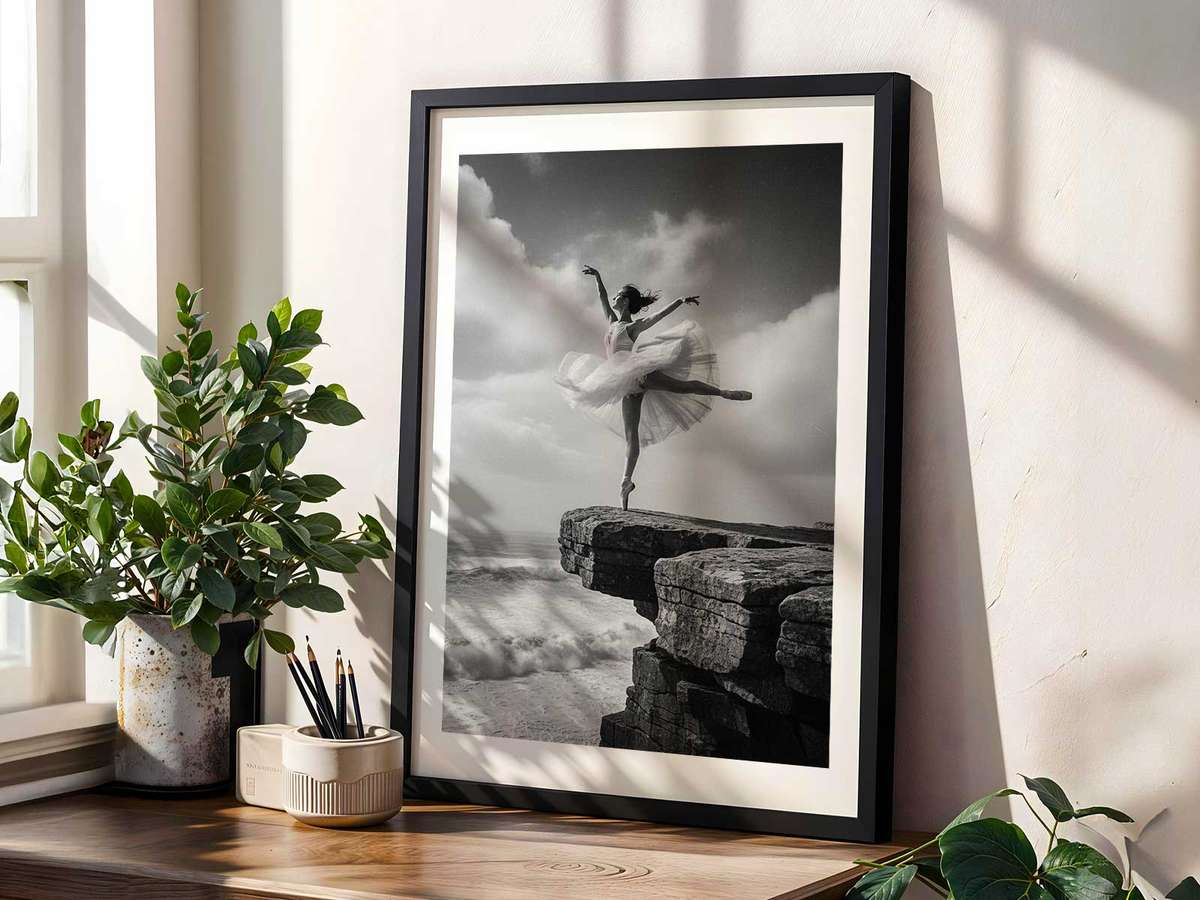
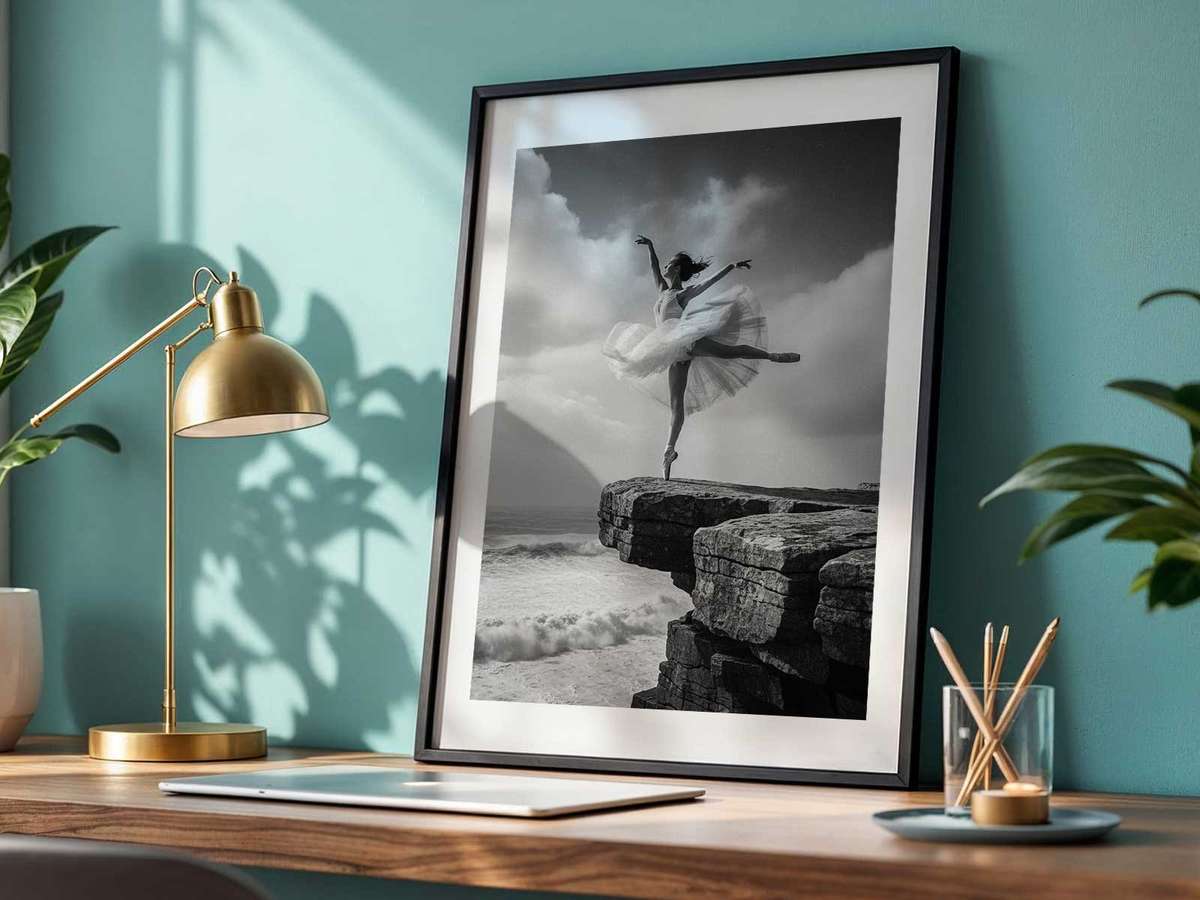
Placing such a piece on a wall changes how a room feels. In a reading corner it deepens concentration, offering a quiet foil to pages and soft lamplight. In a bedroom or private studio it brings a sense of poised vulnerability that rewards slow looking. The image asks for thoughtful space rather than competitive ornament: rooms that favour atmosphere over clutter will let the poster function as a source of steady mood and scenic depth.
Ultimately this ballerina fine art poster does more than present a dancer; it preserves a relationship between movement and environment. The abrupt relief converts the stage into a threshold, and the photographed moment becomes an ongoing conversation between risk and control, horizon and hold. On a wall, that conversation continues: it supplies a durable sense of theatre, a measured hush, and a refined visual anchor for interiors that value atmosphere as much as image.