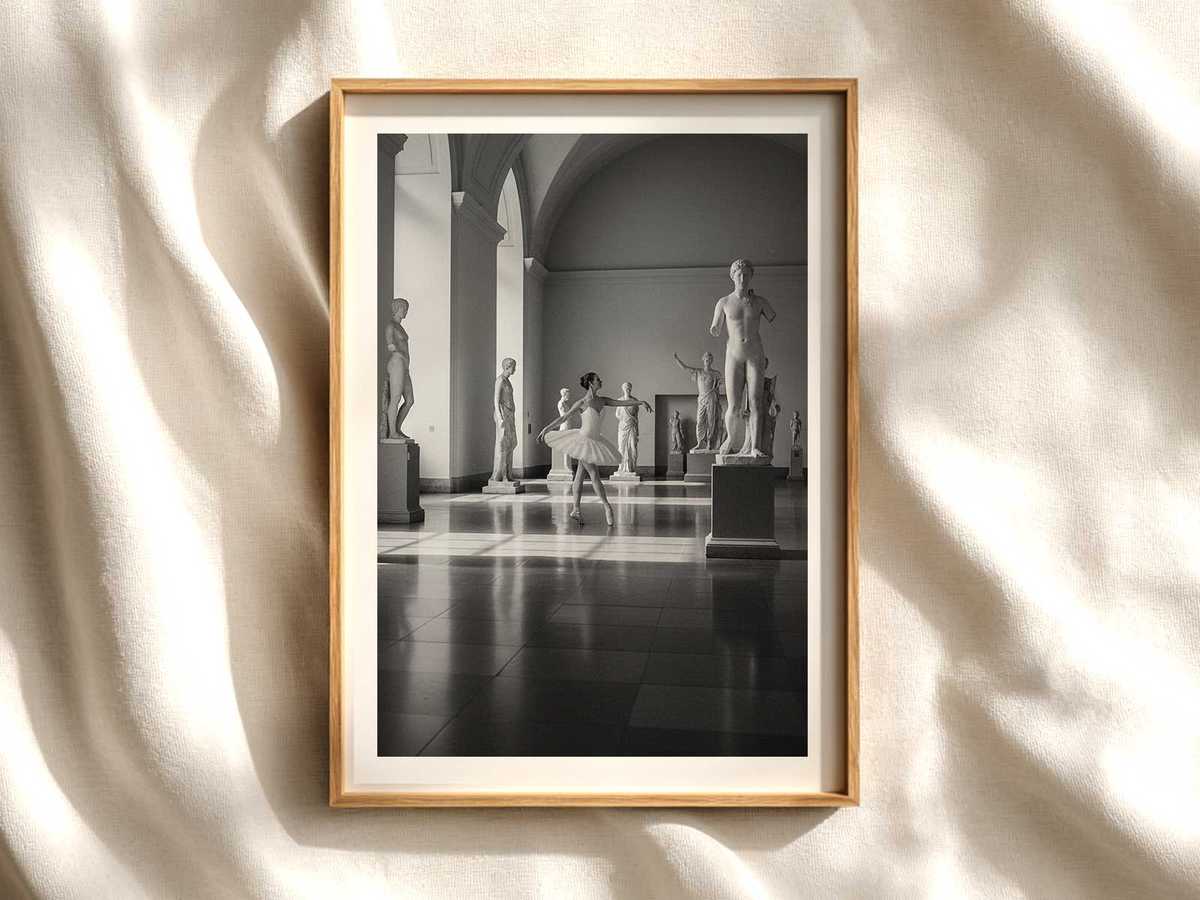
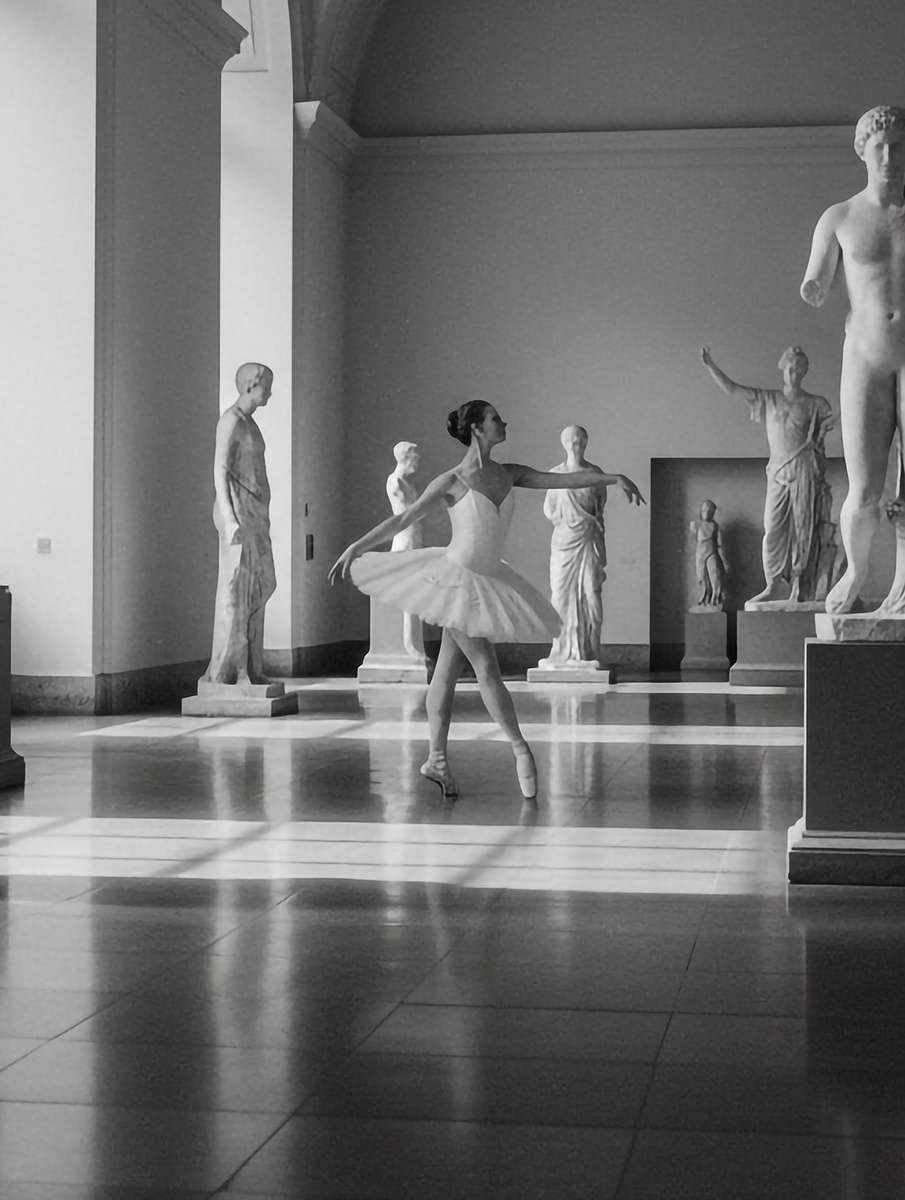
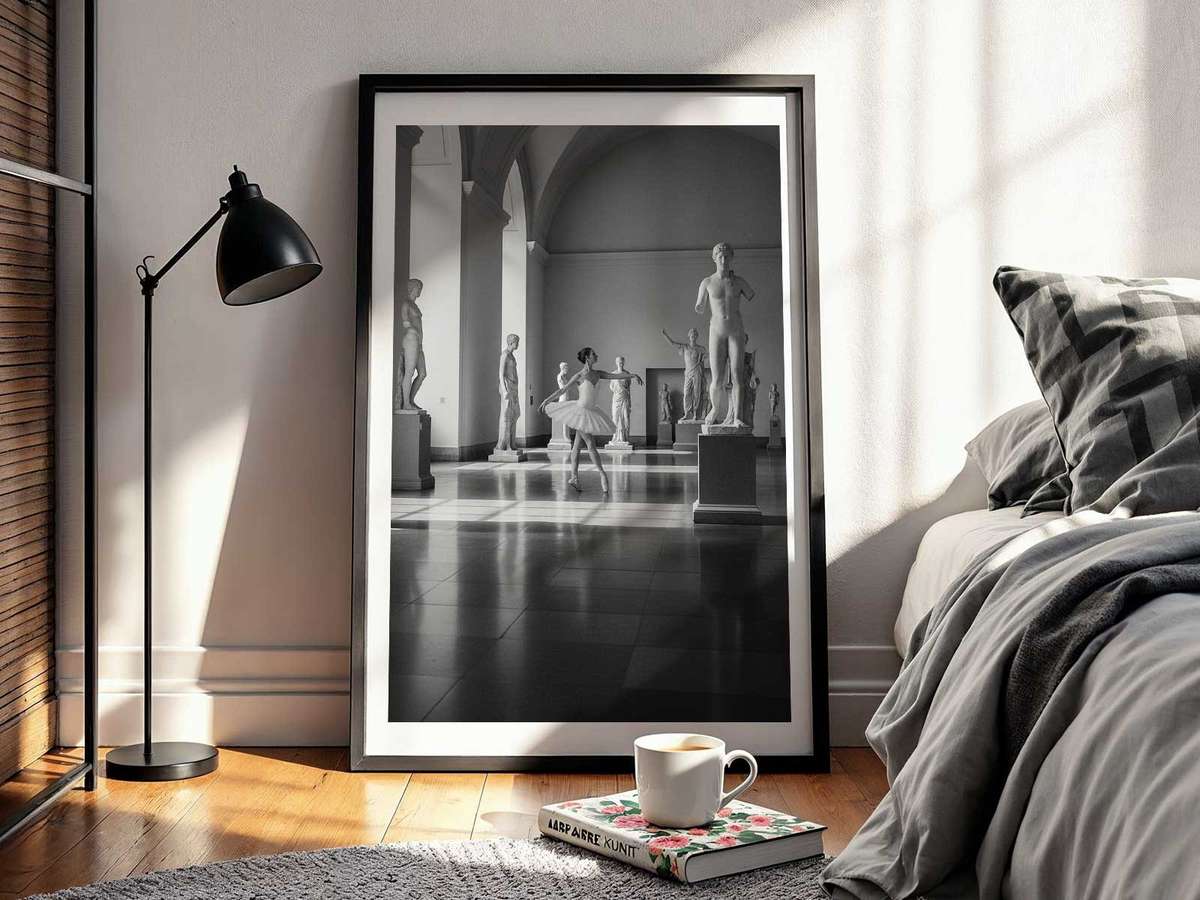
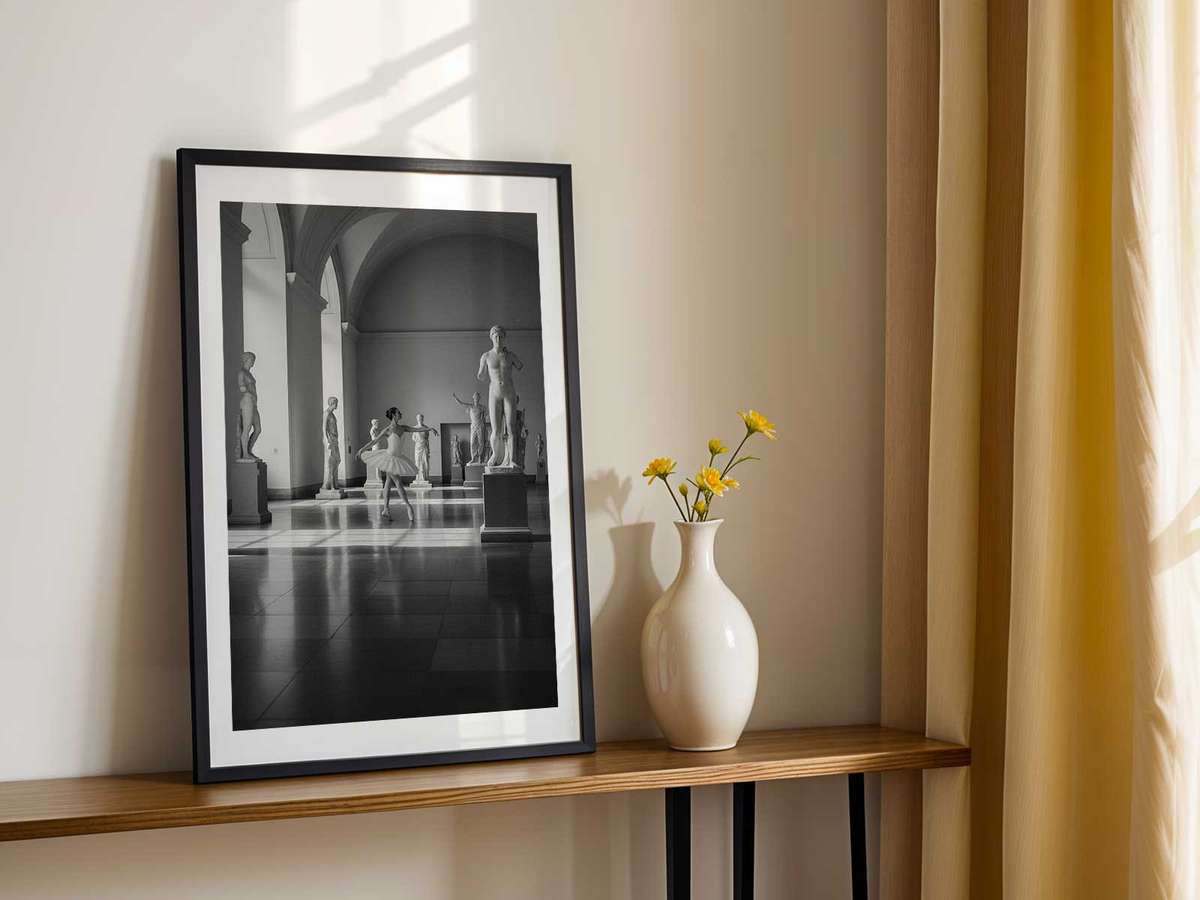
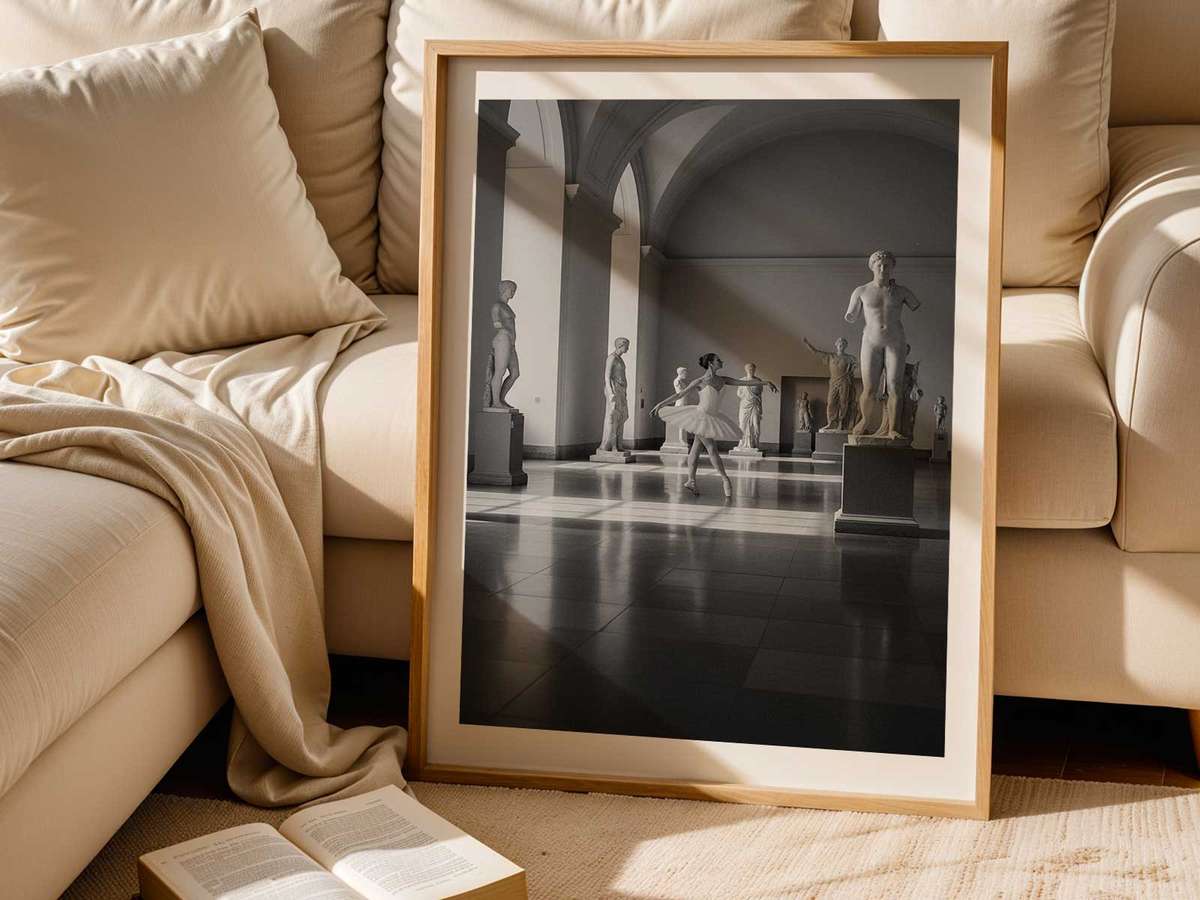
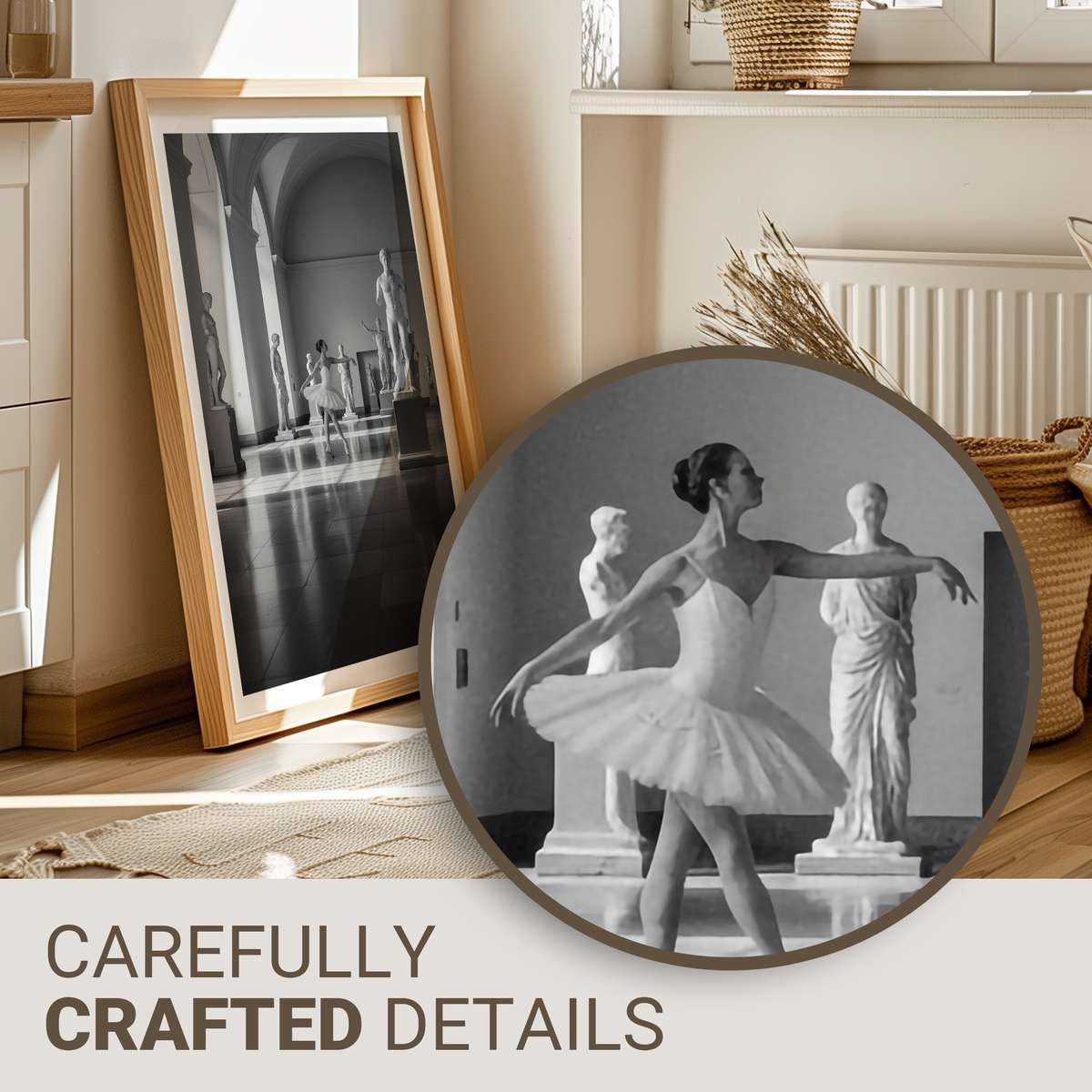
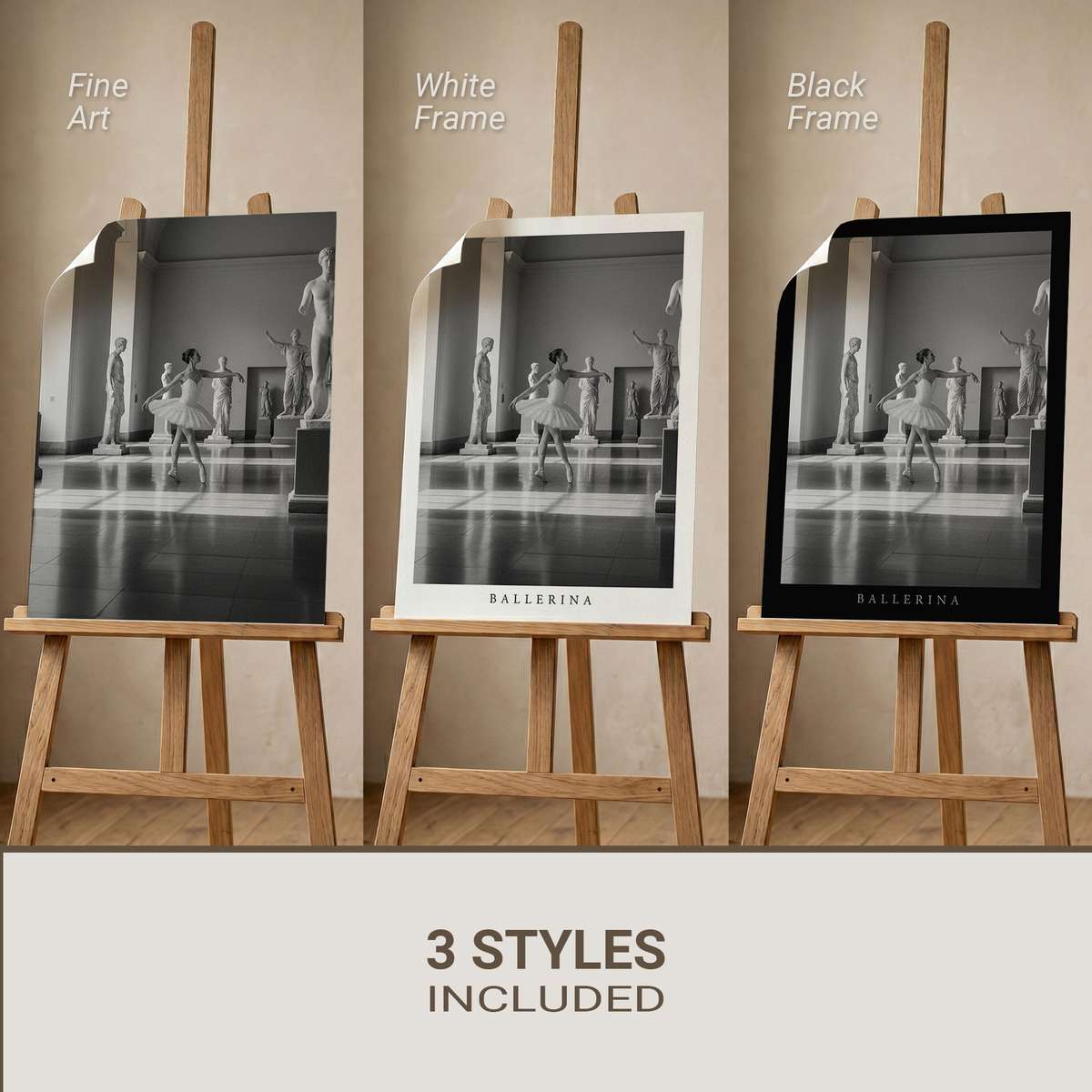
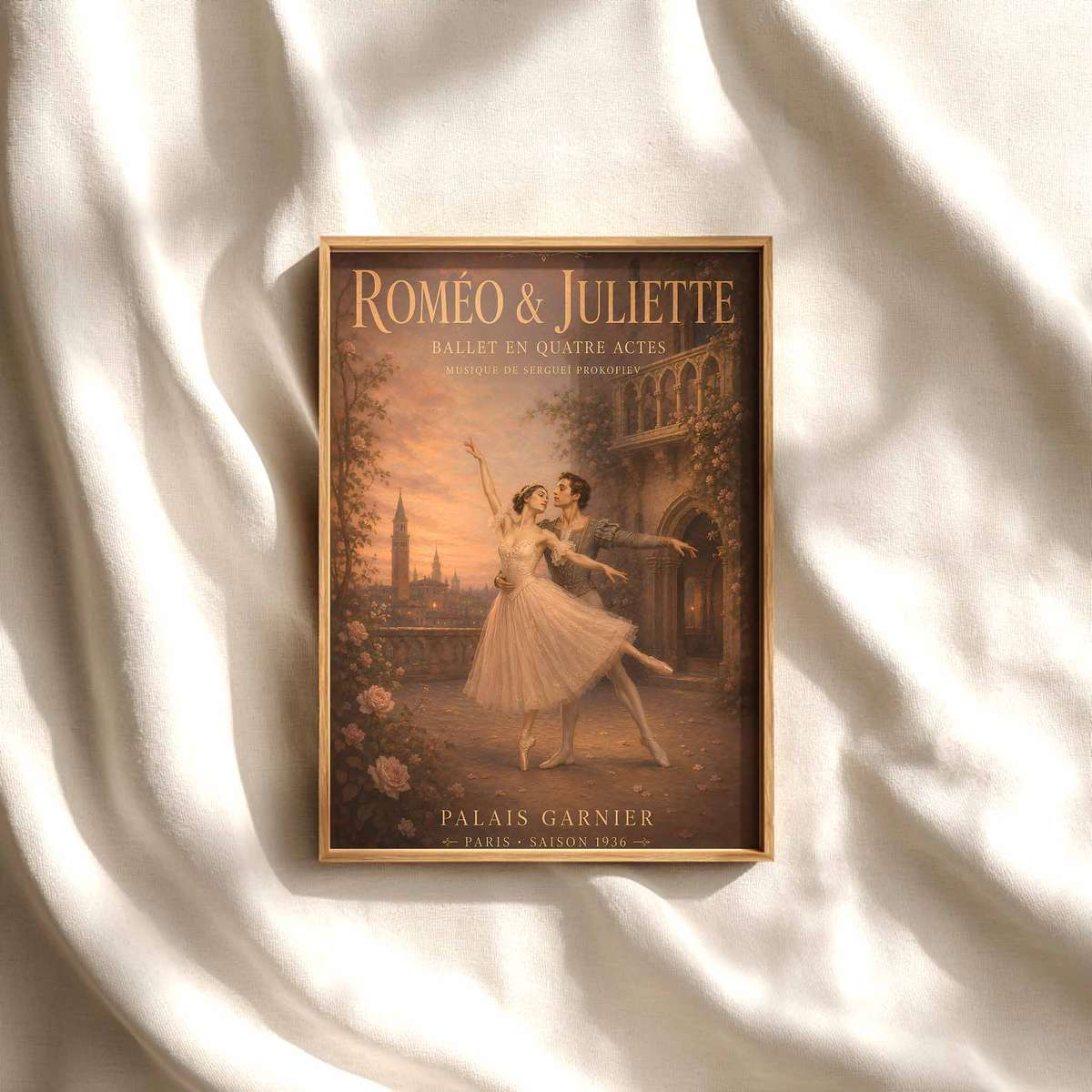
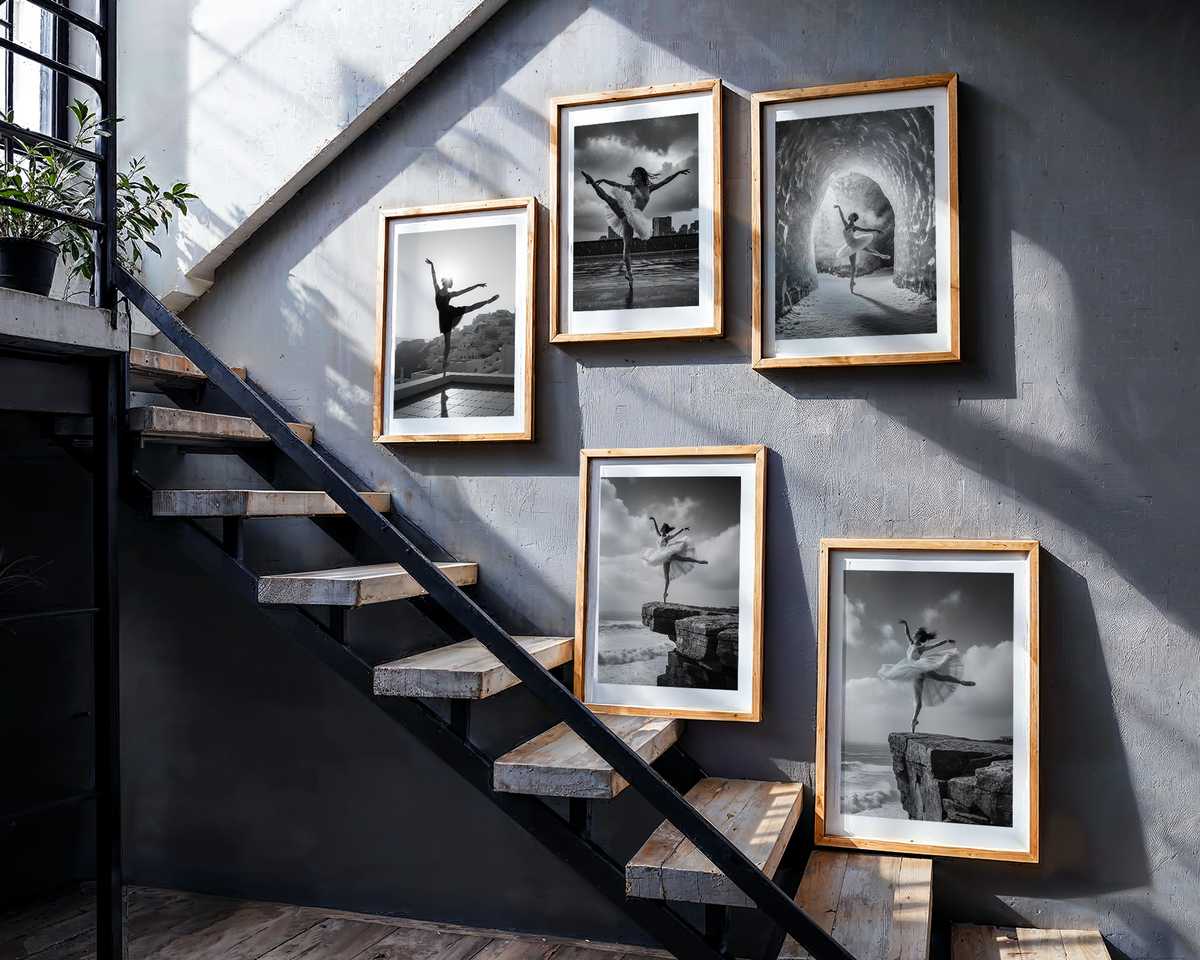
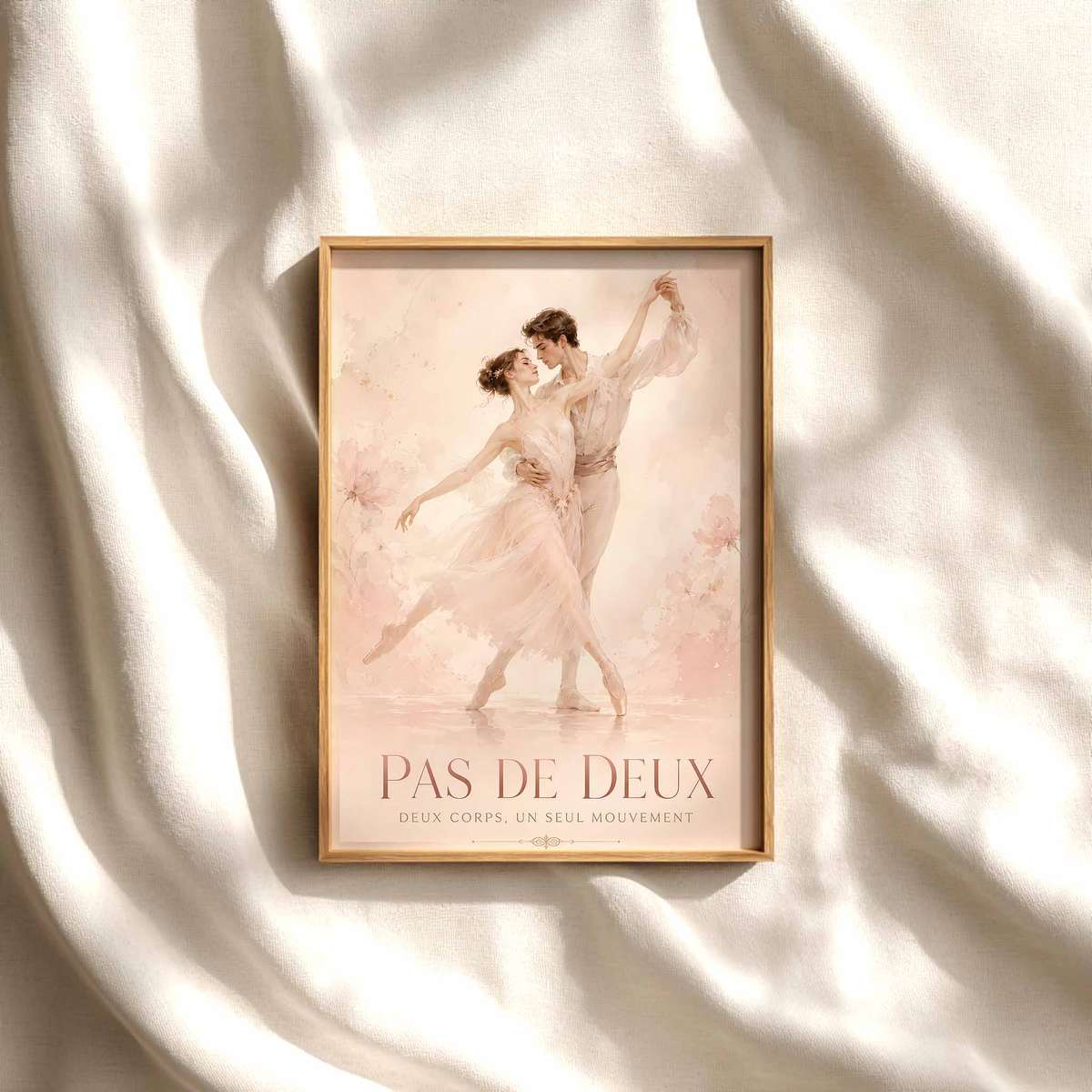
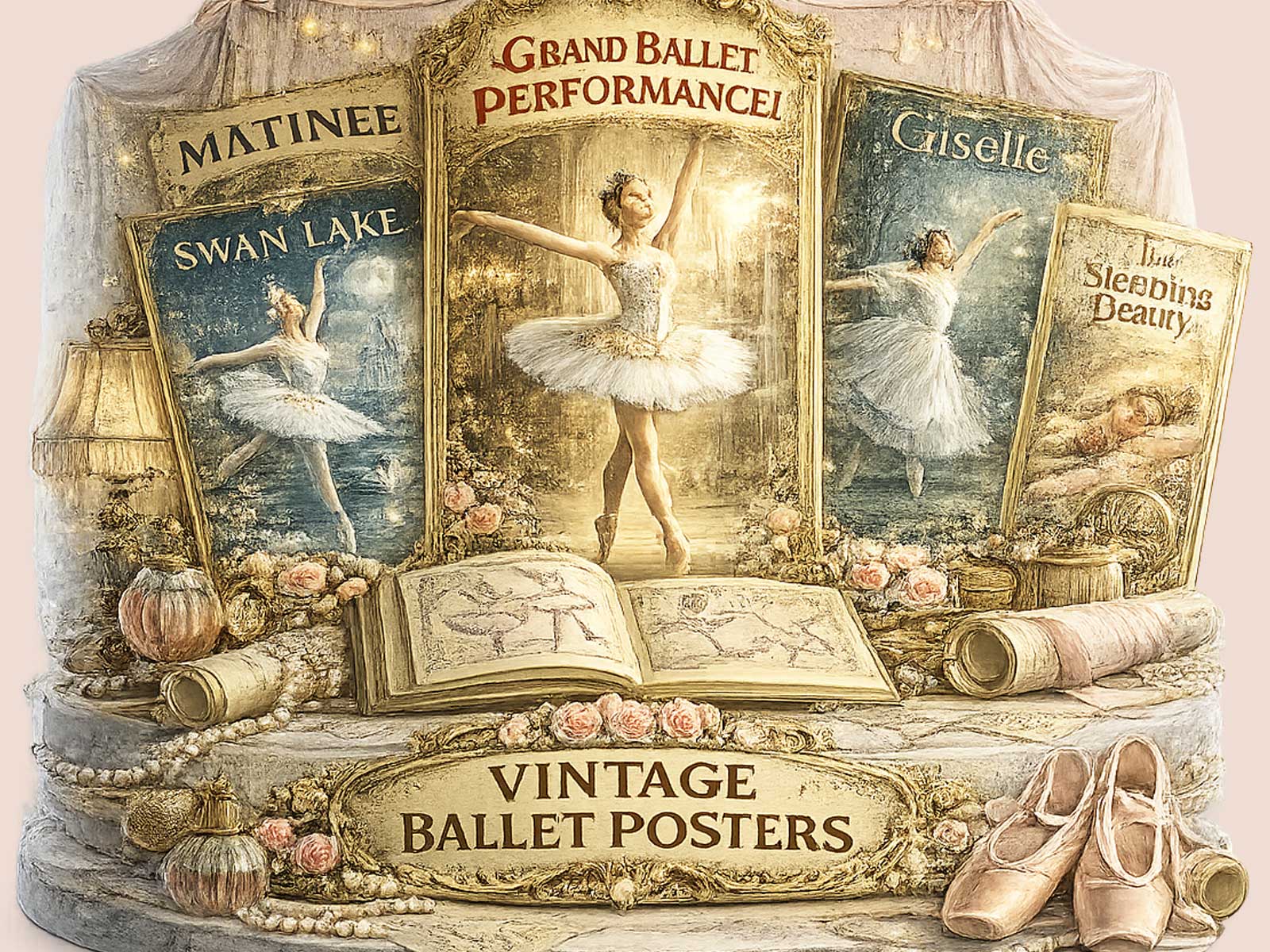
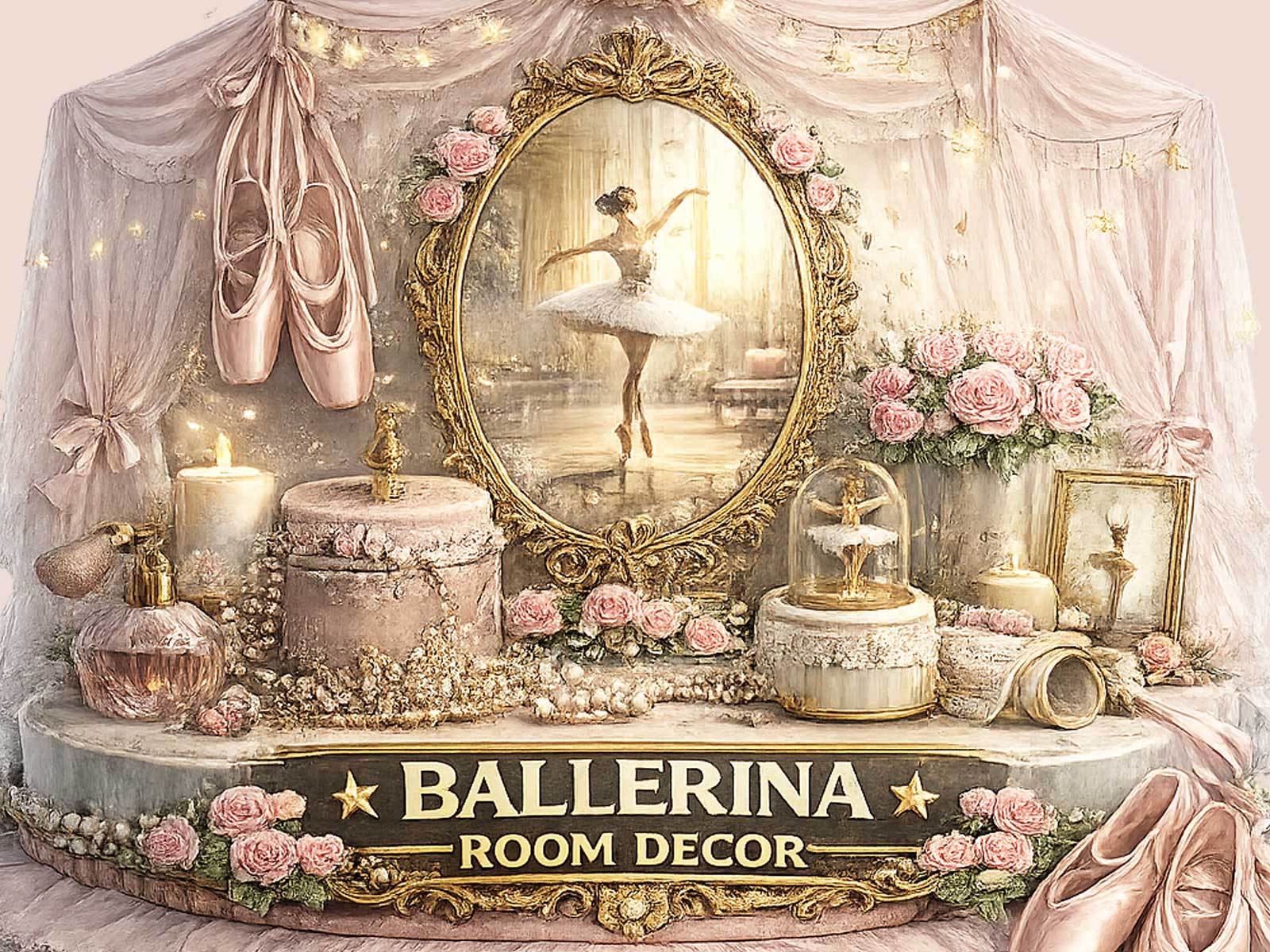
At first glance this ballerina fine art poster reads like a study in heritage: a close, sculptural portrayal that borrows the stillness and restraint of a statue while keeping intact the fragile grace of dance. The composition treats the dancer as both subject and relic — not to suggest false antiquity, but to give the image a collected, museum-adjacent quality. A softened palette and print-like surface make the figure feel settled into time, as if worn gently by repeated looking rather than artificially aged.
A ballet image with a sense of memory
The decision to bring the ballerina near to a sculptural imaginary changes the way we read motion. Instead of capturing a fleeting arabesque, the poster frames a gesture as an emblem: quiet, considered, almost tactile. Muted ochres, low-contrast shadows, and a hint of paper grain suggest the sensation of turning the page of a well-loved program — an emotional memory rather than a theatrical moment. For those who love ballet, that feeling resembles the quiet conviction of rehearsal rooms and faded studio prints; it rewards repeat viewing because each encounter reveals new subtleties.
Vintage-inspired visual cues here are not decorative afterthoughts. They are tools that alter temperature and narrative: desaturated tones warm the figure’s presence without stealing her delicacy, while a restrained tonal range invites the eye to linger on line and form. The result is an image that feels intimate rather than glossy, the way a familiar photograph holds more truth than a staged portrait.
[IMAGE_INSERT_ARTICLE_01]
Why vintage texture changes the mood
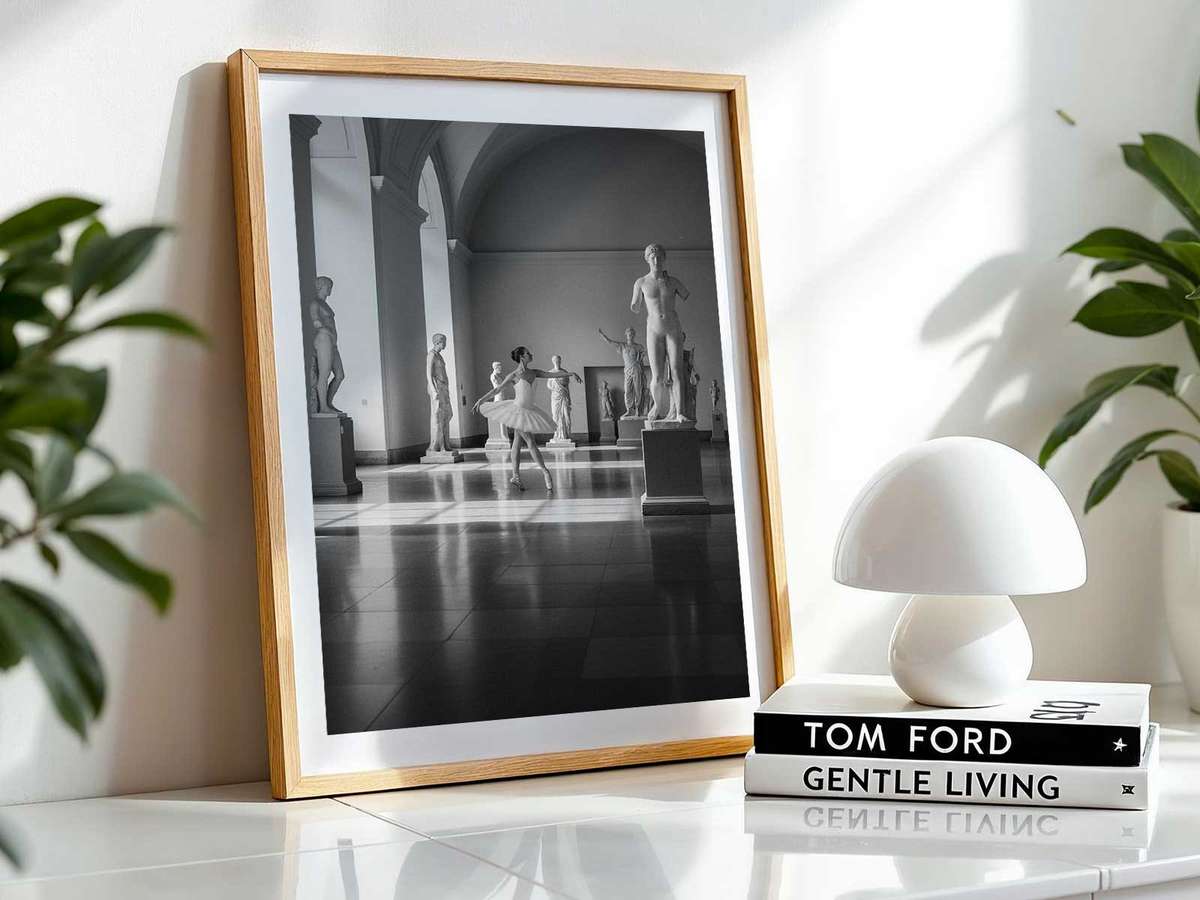
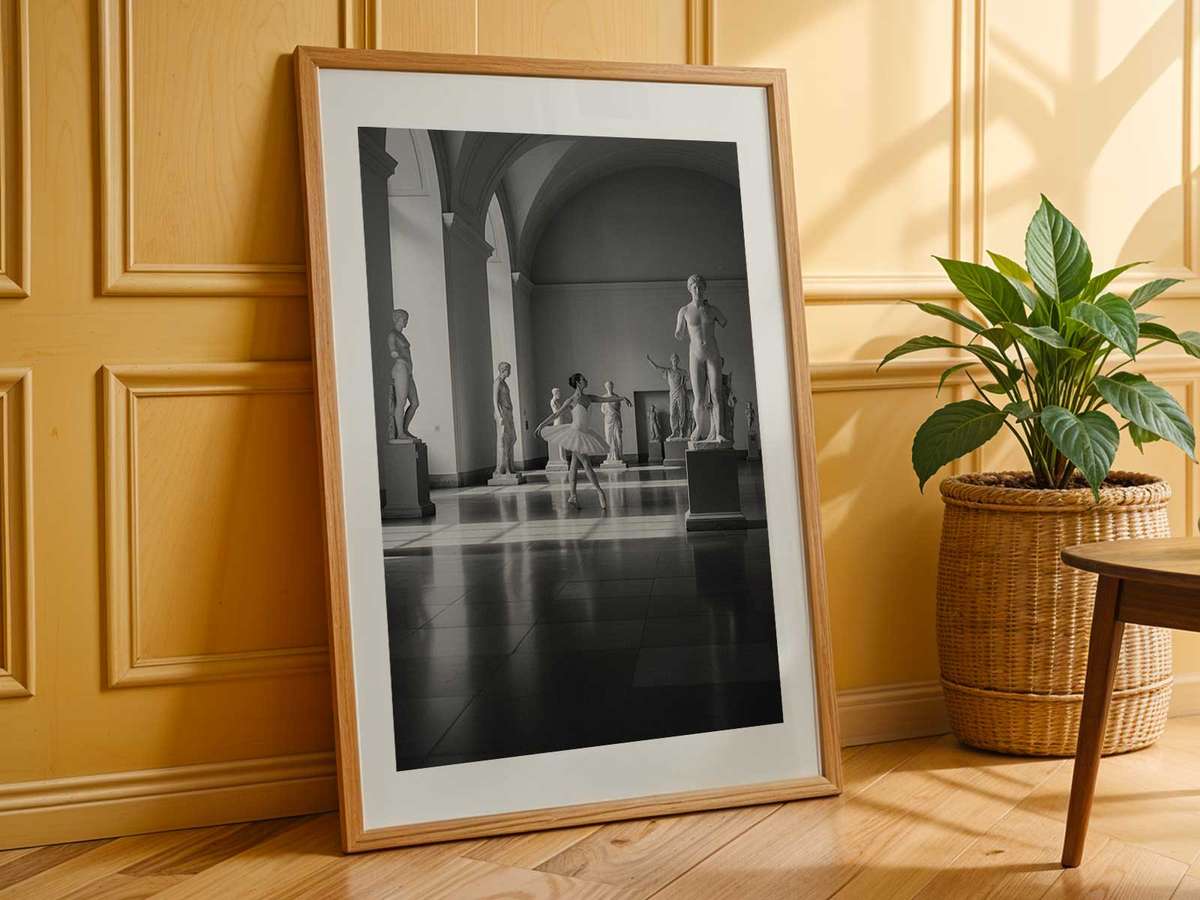
Printed texture and archival-style restraint do more than imitate an era: they provide visual continuity. A subtly weathered surface reduces the instantaneous pop of contemporary prints, replacing it with a slow-building comfort. This quiet weathering acts like a seam between the image and the room — it harmonises with books, worn linens, and warm woods, and it softens the sense of trend-driven urgency. The poster feels acquired rather than bought on impulse, a piece that can travel with you across interiors and decades.
Because the design prioritises composition and tonal subtlety over loud ornament, the dancer’s vulnerability remains central. The sculptural reference lends gravity without hardening the image; light and shadow model the body gently, preserving ballet’s signature delicacy. For collectors of print culture or those who curate rooms around memory and craft, this balance is what turns a pretty picture into something felt and kept.
This poster is for those who prefer art that accumulates meaning. It complements a reading nook where music scores live beside a lamp, it sits quietly above a dressing table in a ballet-inspired bedroom, and it feels at home in living spaces that prize warmth and quiet history. More than a decorative accent, it is a companion piece — an artwork that rewards careful looking and grows more personal with time.
Designed to feel lived-with rather than trend-led, the piece—rooted in a heritage-led sensibility—invites the viewer into a contemplative relationship with ballet: sculptural, soft, and quietly enduring.