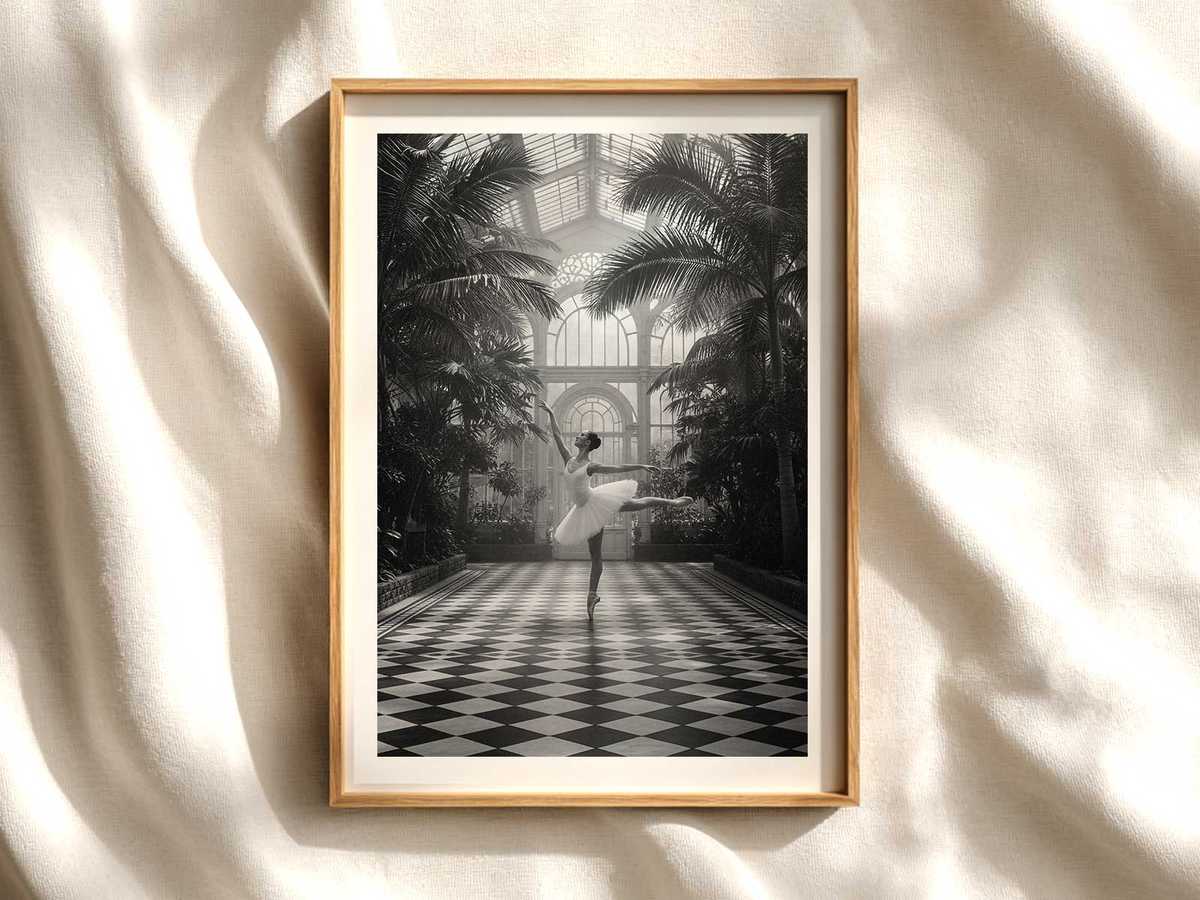
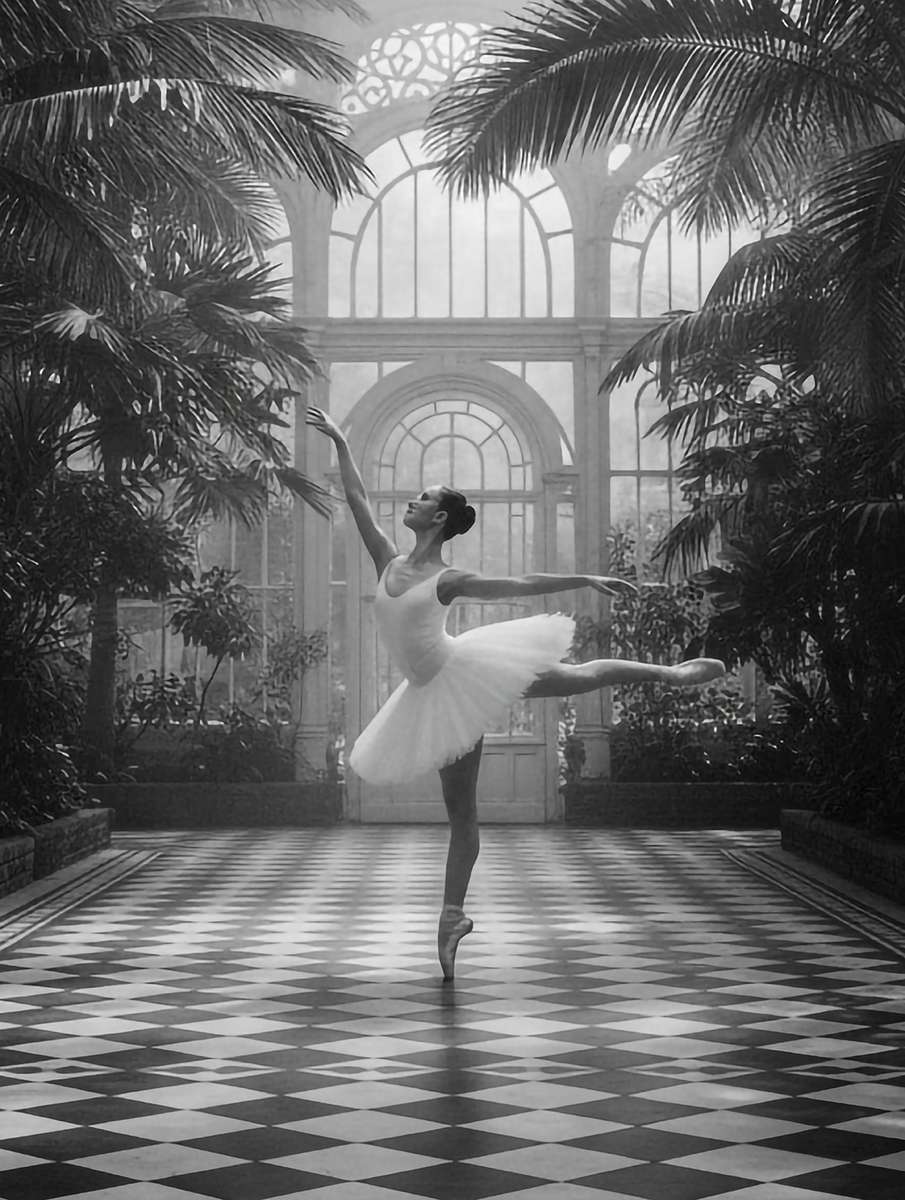
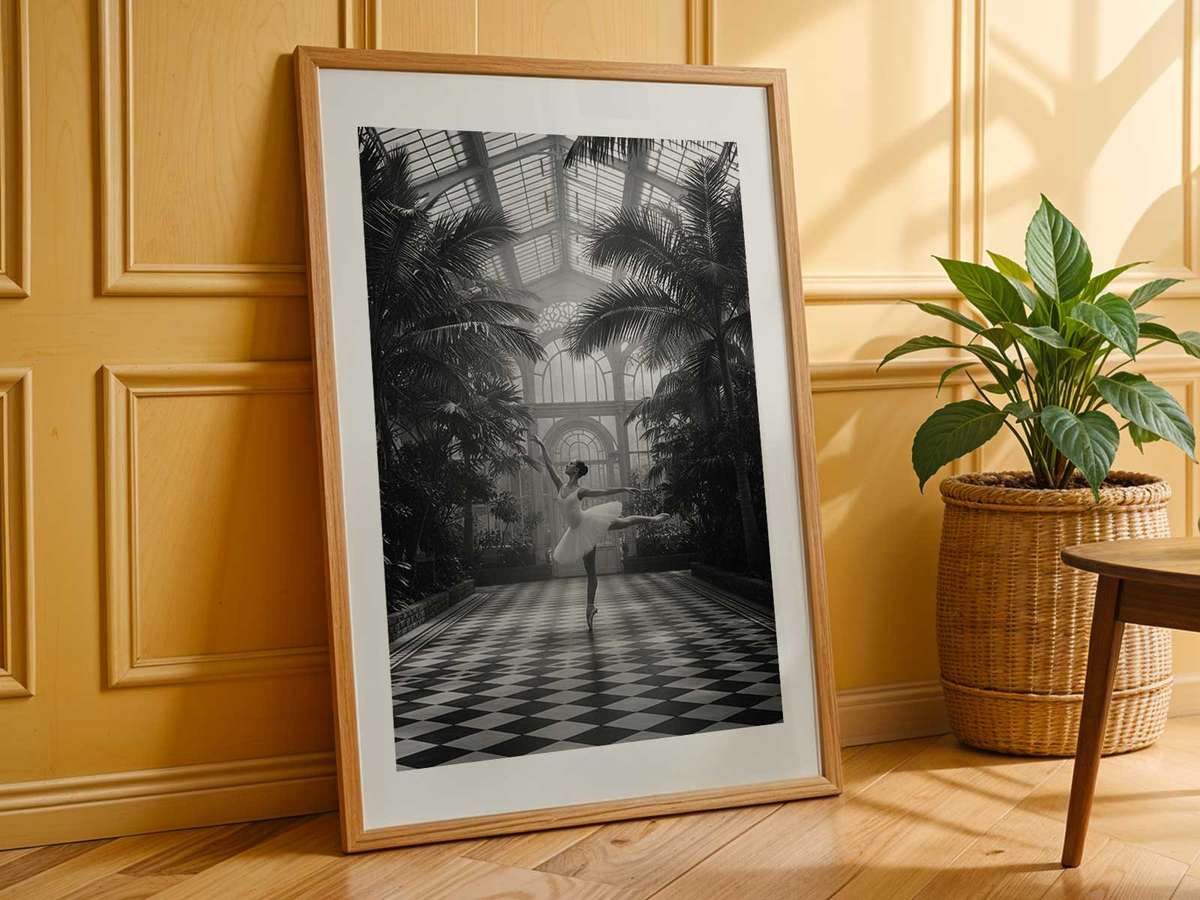
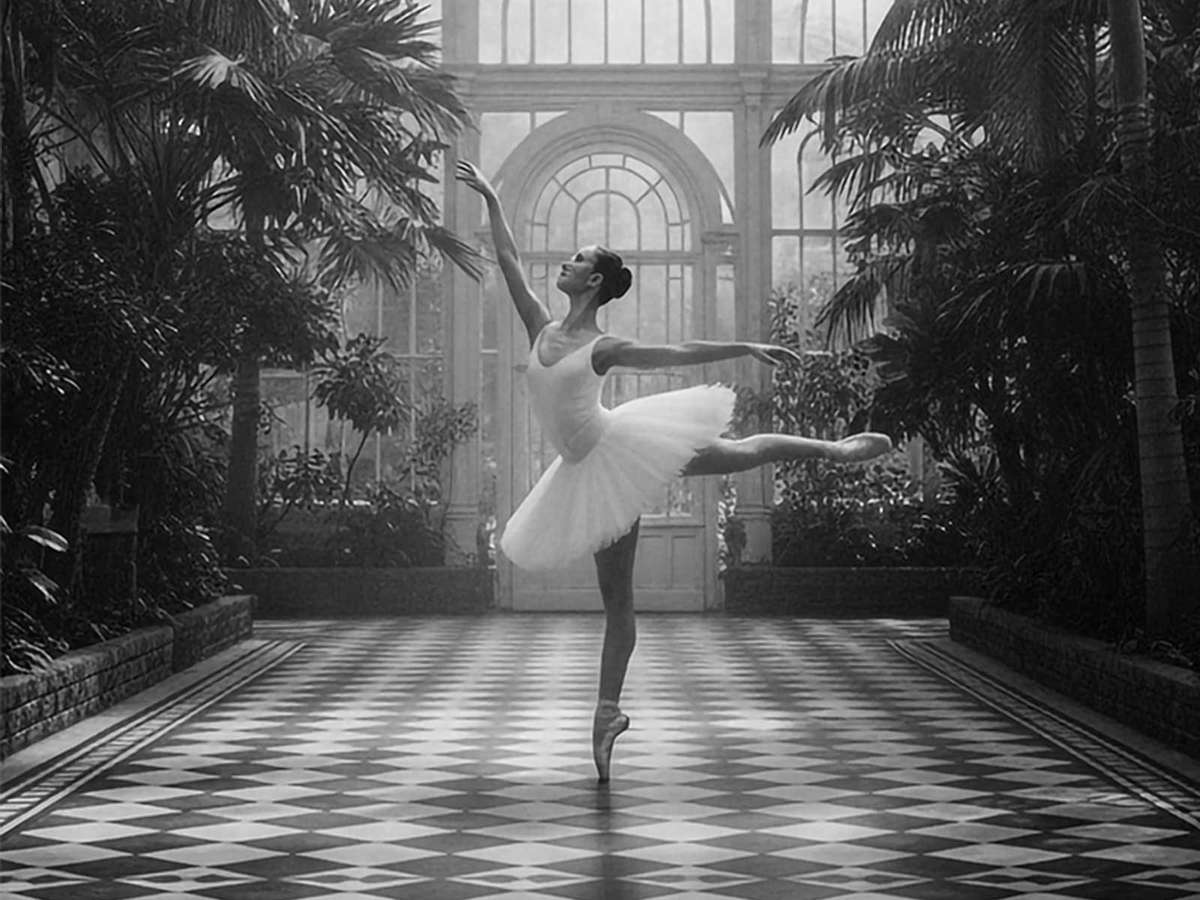
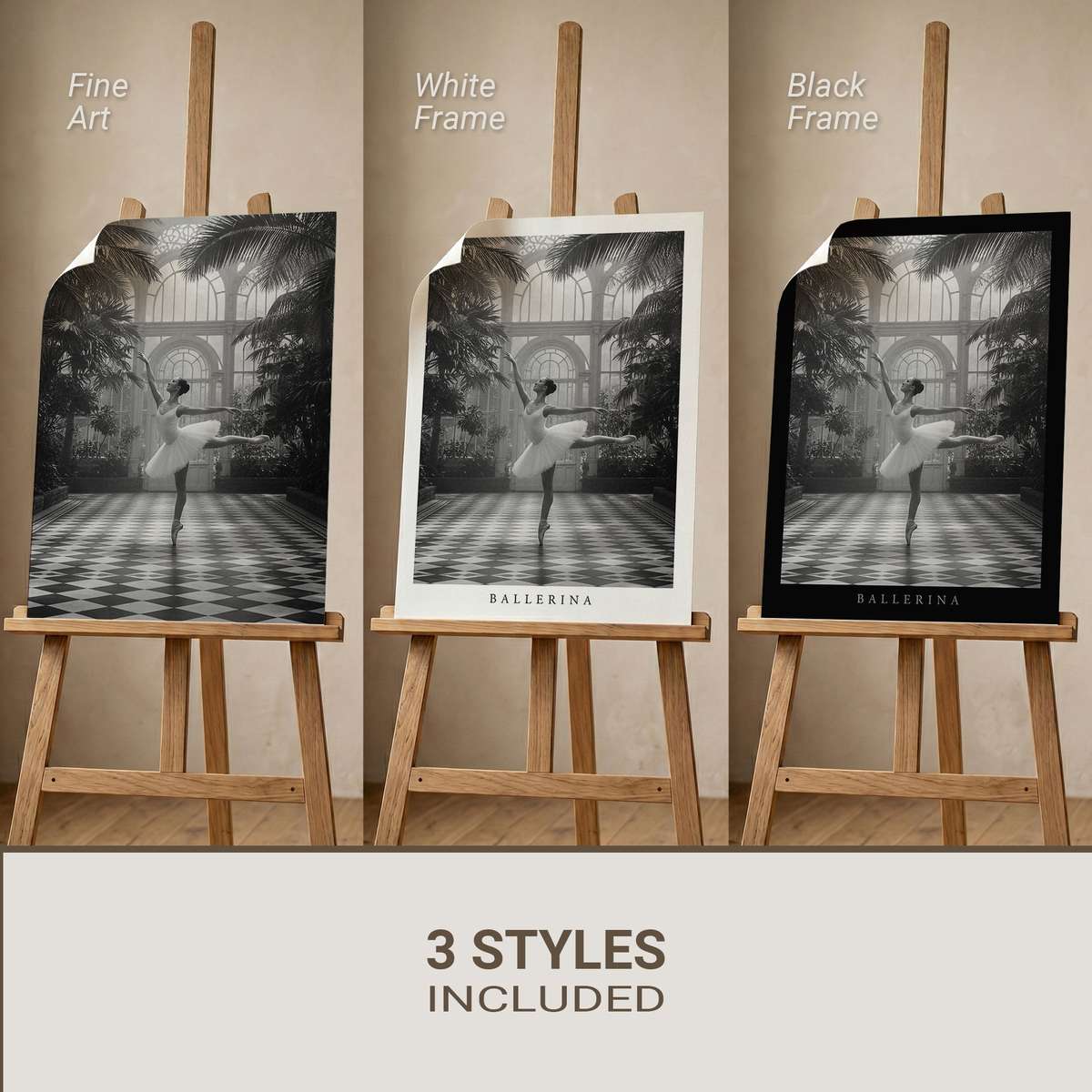
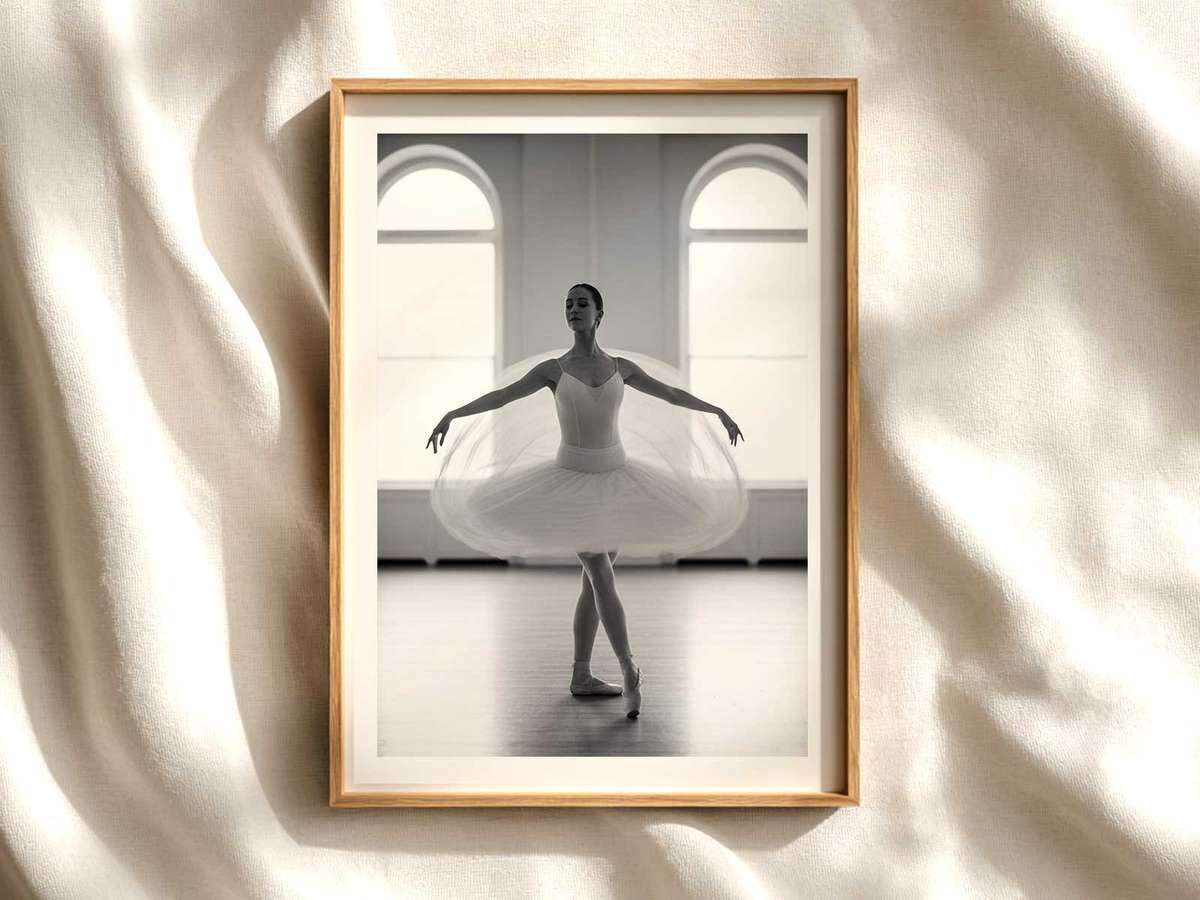
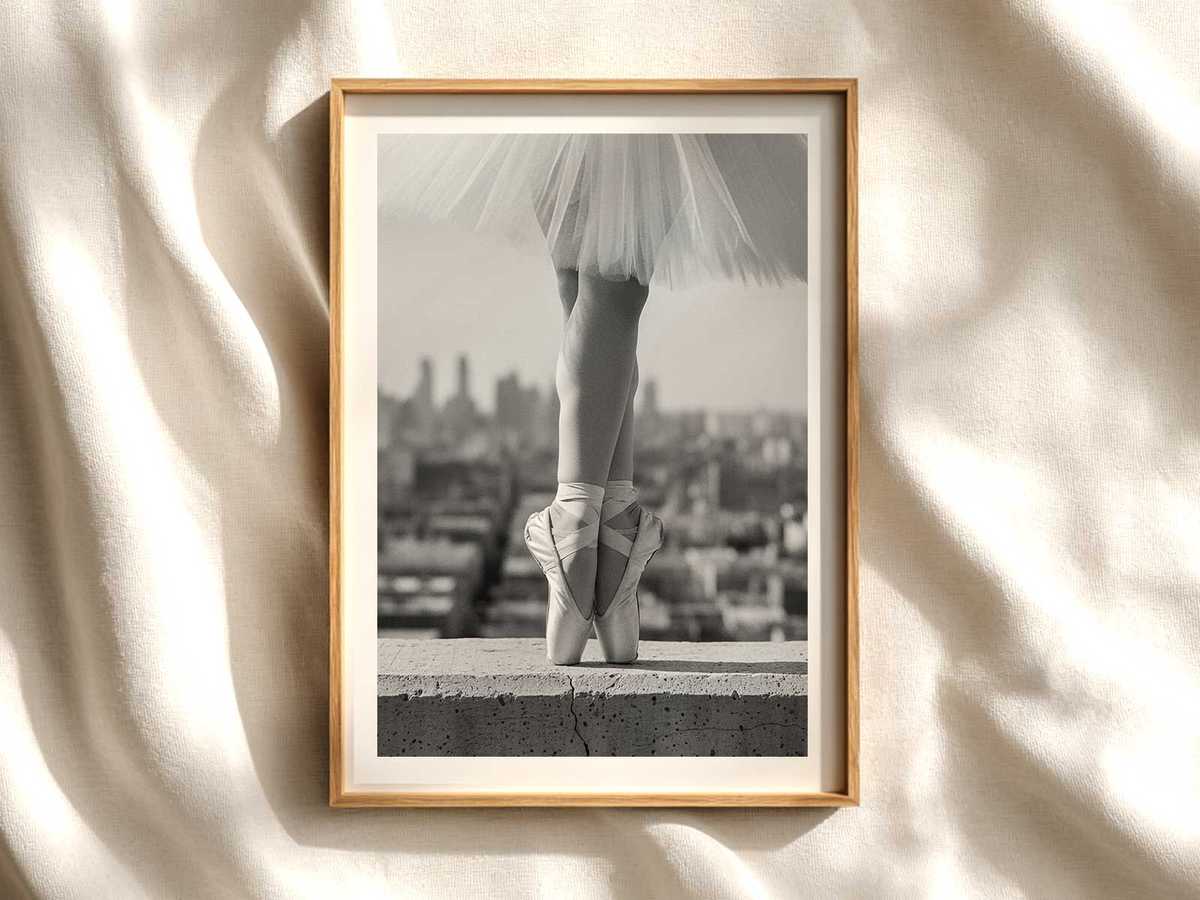
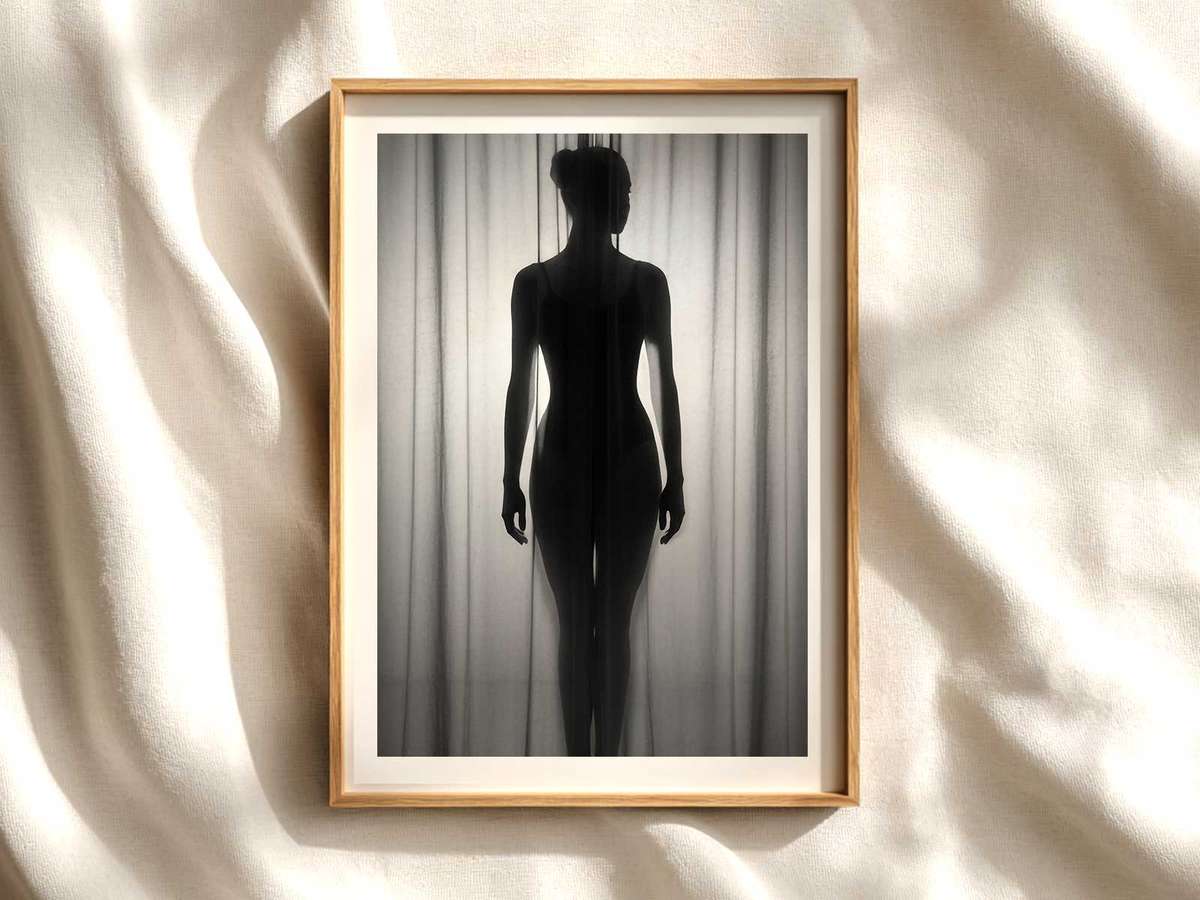
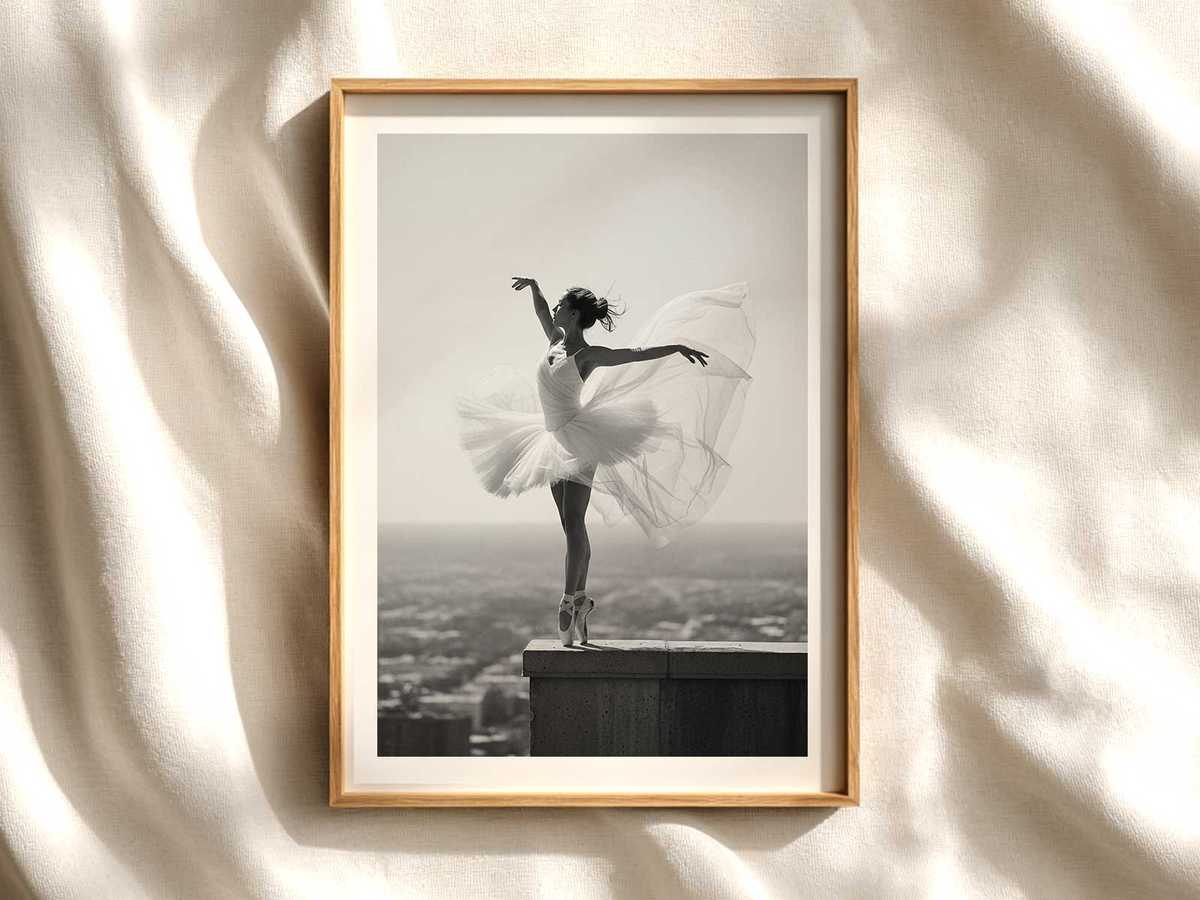
The first thing you notice is the silhouette: a single figure poised with such clarity that the eye rests and lingers. In this framed picture the ballerina’s line reads like a precise drawing—the long neck, the slightly lifted chest, the sleeve of an arm that curves away from the body and then returns in a soft, inevitable arc. There is no busy backdrop to distract; the composition trusts the body’s geometry. That confidence in negative space is what makes a ballet image strong for framing: it lets posture and outline become the room’s quiet punctuation.
Her balance is deliberate. You sense the weight on one supporting foot, the counterbalance of the free leg, the small rotation of the torso that sets the shoulders at a refined angle. These are tiny, specific details that shape how the whole image reads on the wall: not an abstract suggestion of movement, but a composed moment of stillness that implies motion. The head tilts just so—eyes lowered or cast beyond the frame—and that modest directionality makes the figure feel thoughtful rather than performative. When you live with a framed ballerina like this, she becomes a presence you return to, not a statement that demands attention every minute.
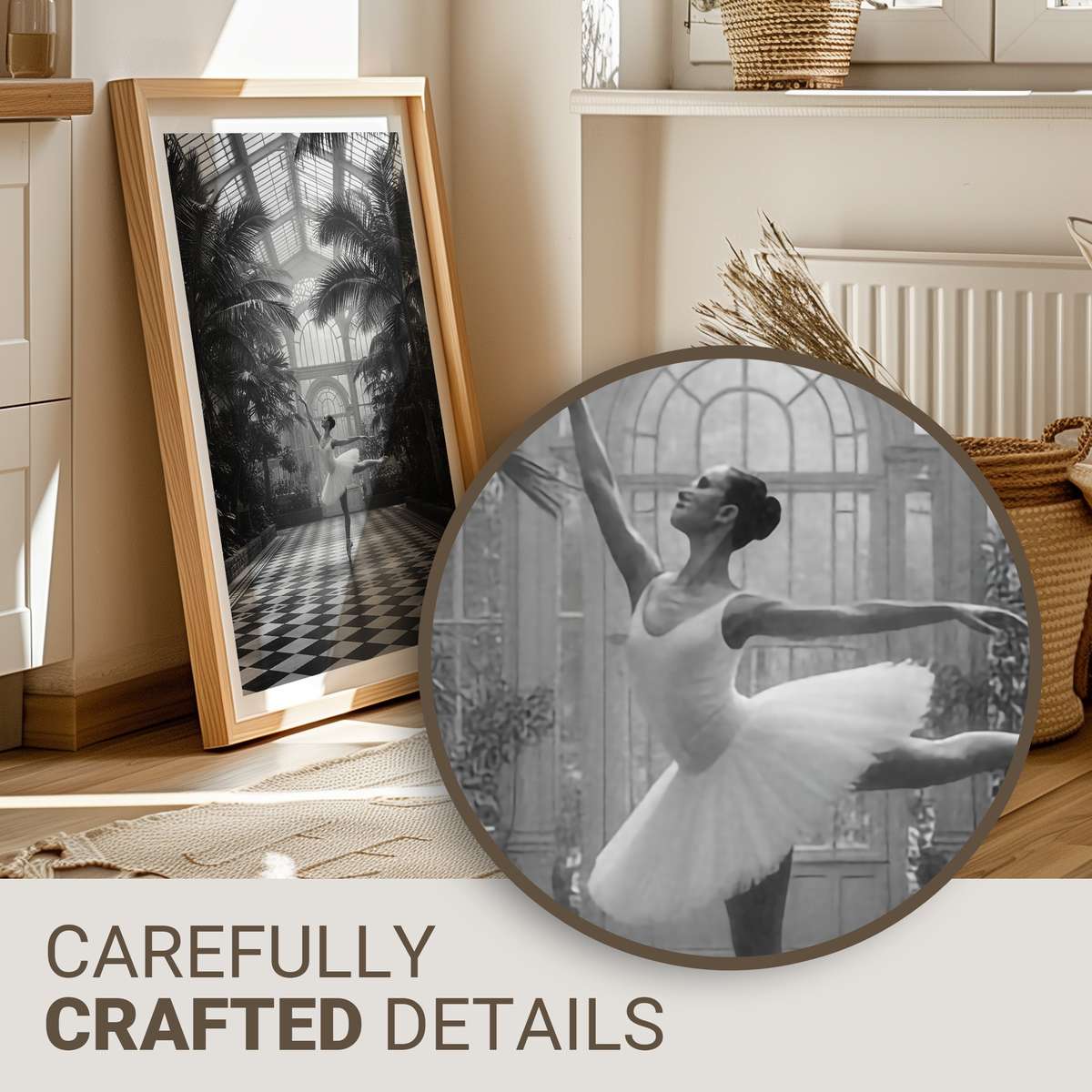
Look closely at the arm line: it isn’t ornamental but intentional. The forearm and hand finish the gesture, softening a geometric silhouette with just enough vulnerability to suggest breath between poses. The dress or costume follows the body’s architecture rather than obscuring it; fabric becomes a whisper of rhythm, offering gentle contrast where the silhouette needs it. This interplay between structure and softness is why dancer-centered pictures read as intimate—because each element is an extension of the body’s language, not an added accessory.
[IMAGE_INSERT_ARTICLE_01]
Line, poise, and emotional focus
Compositionally, the piece privileges clarity: crisp edges, considered spacing, and a central figure that holds the viewer’s focus without competing visual noise. Such discipline produces a poster that feels modern and timeless at once. Emotion here is distilled into posture—a slight surrender of the shoulder, the poised incline of the chin, the tension at the ankle—small cues that invite empathy. You don’t need dance training to read them; the body speaks in universal lines, and the framed image translates those lines into everyday calm.
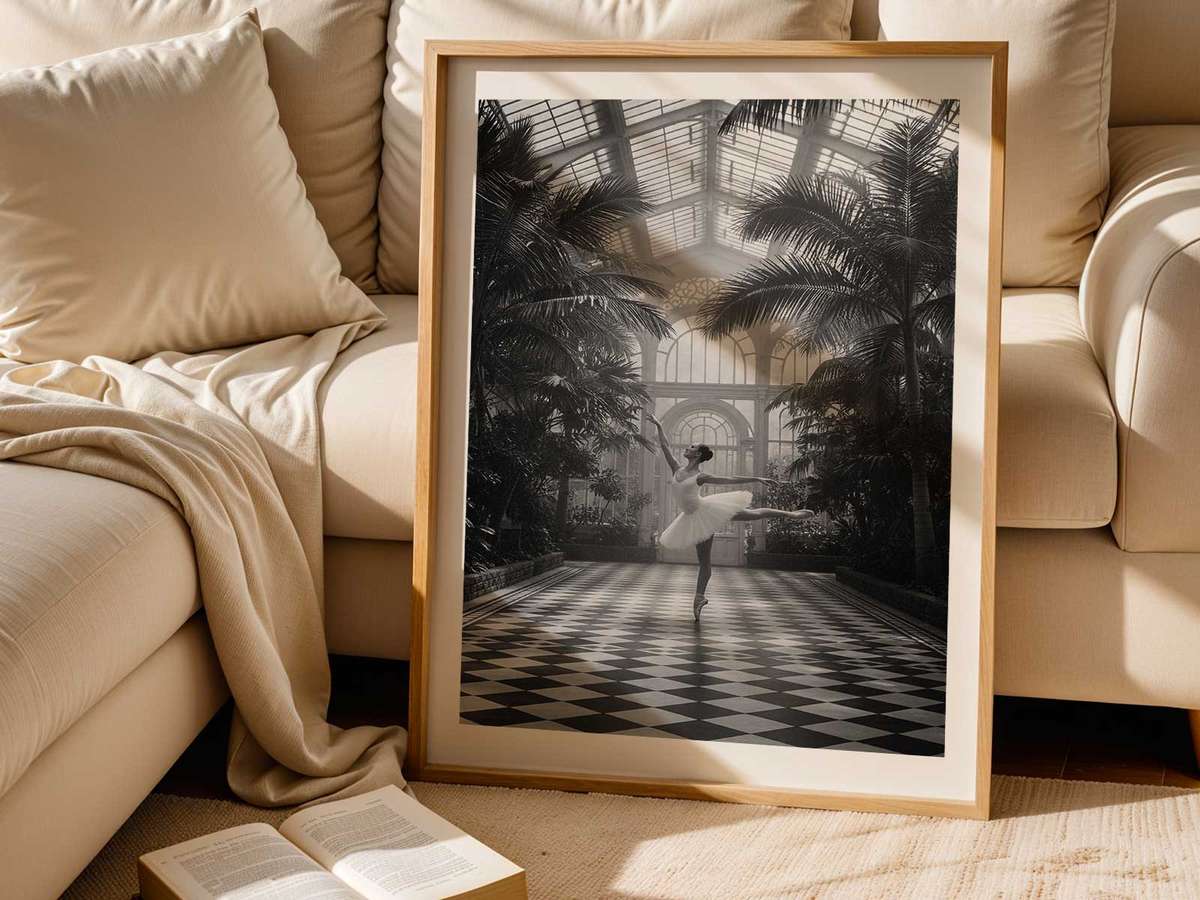
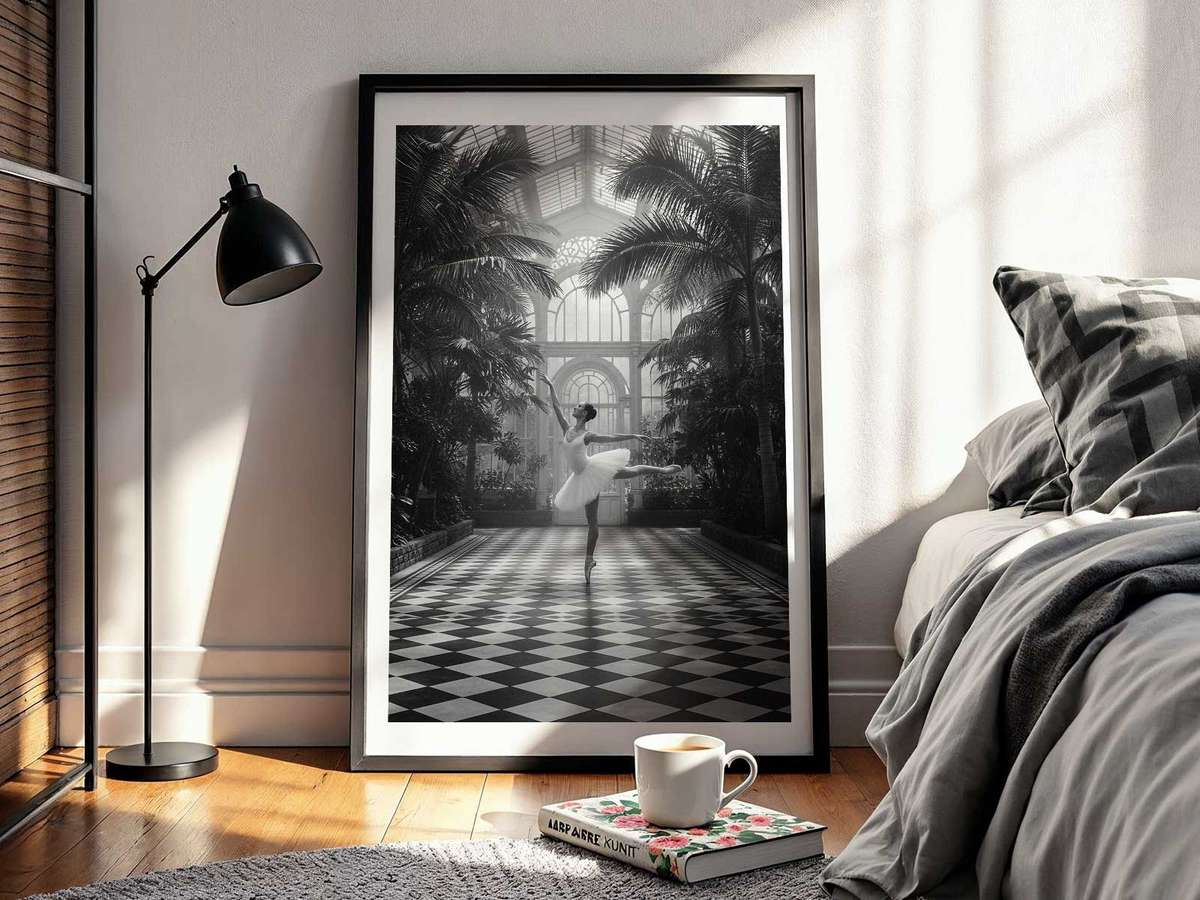
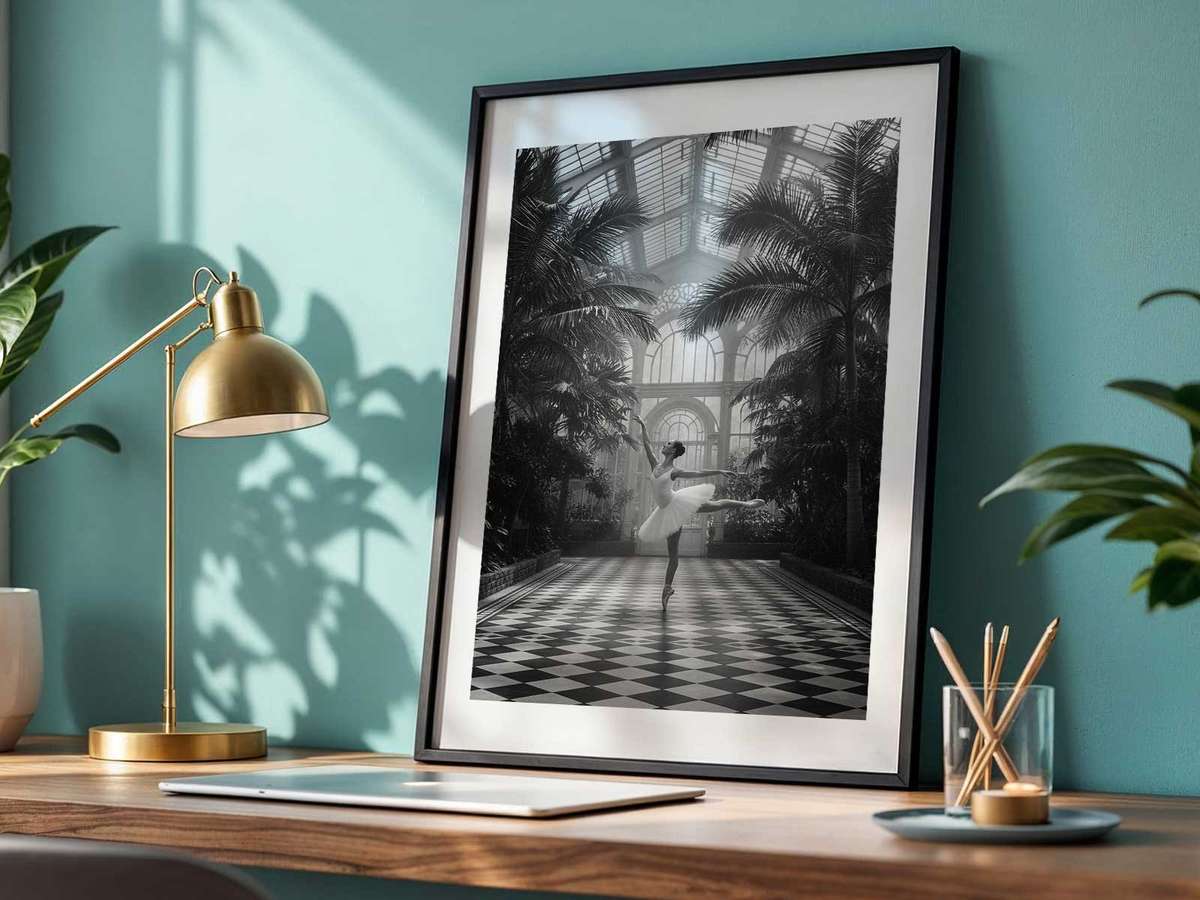
Where many images shout, this one converses. It offers a private tableau that settles into quiet corners: a dressing area where preparations begin, a reading nook that benefits from focused calm, or a ballet-themed bedroom where soft discipline feels natural. The effect is subtle: the poster does not dominate but it defines, adding a feminine line and composed posture that elevate the room’s mood without overwhelming it.
Ultimately, this ballerina is the reason the framed picture works. Her silhouette, careful carriage, and the poised calm of her gesture create an image that feels both decorative and intimate. Choosing a dancer-led print like this is choosing a constant, elegant companion on the wall—one whose presence is measured in lines, weight, and the unspoken story in a single held pose.