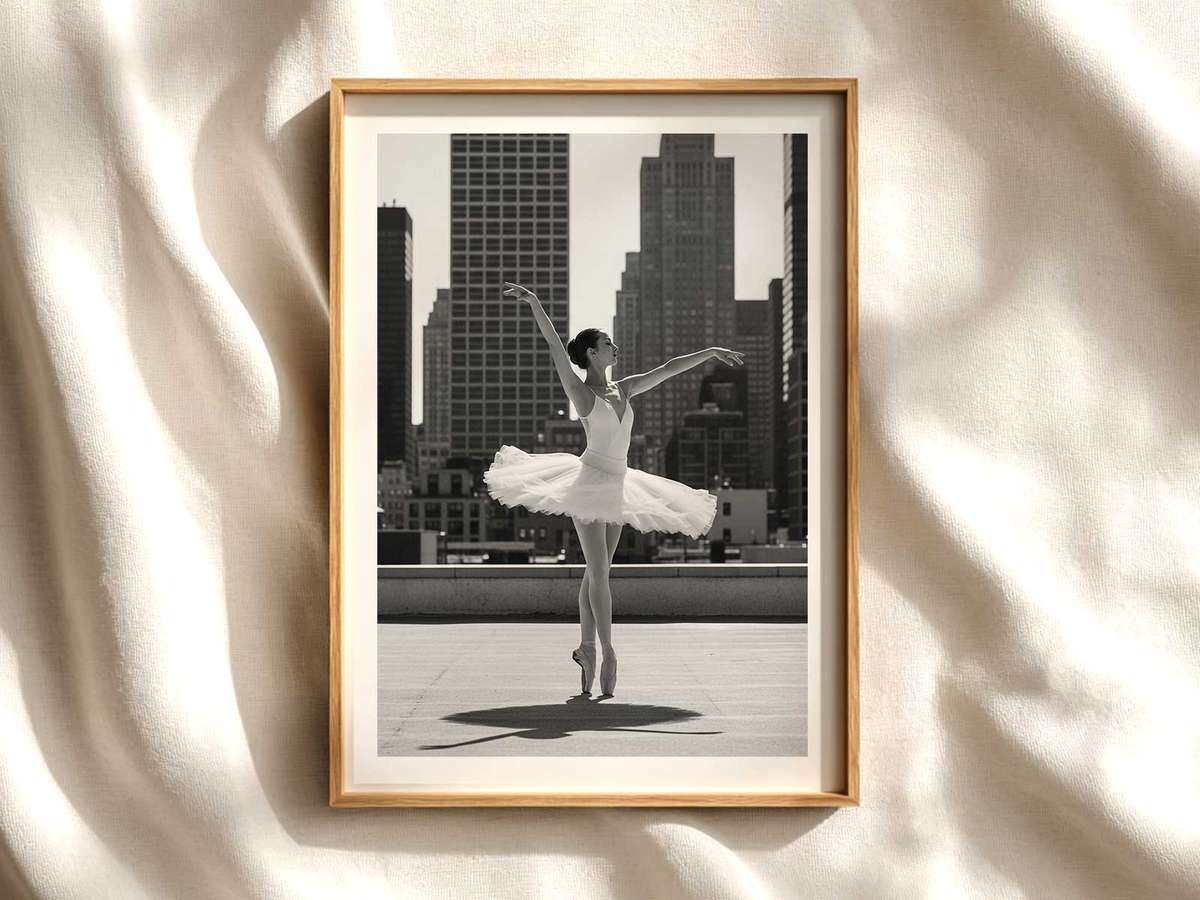
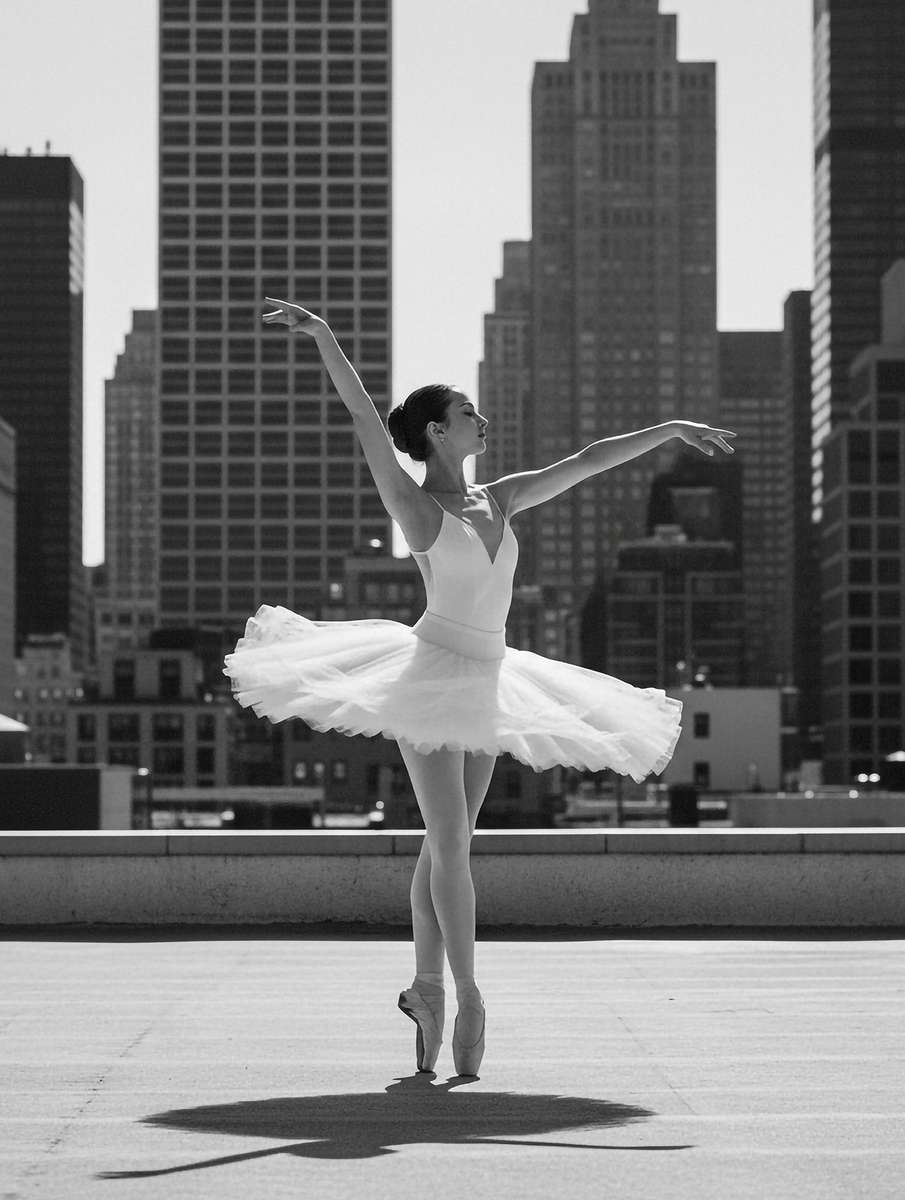
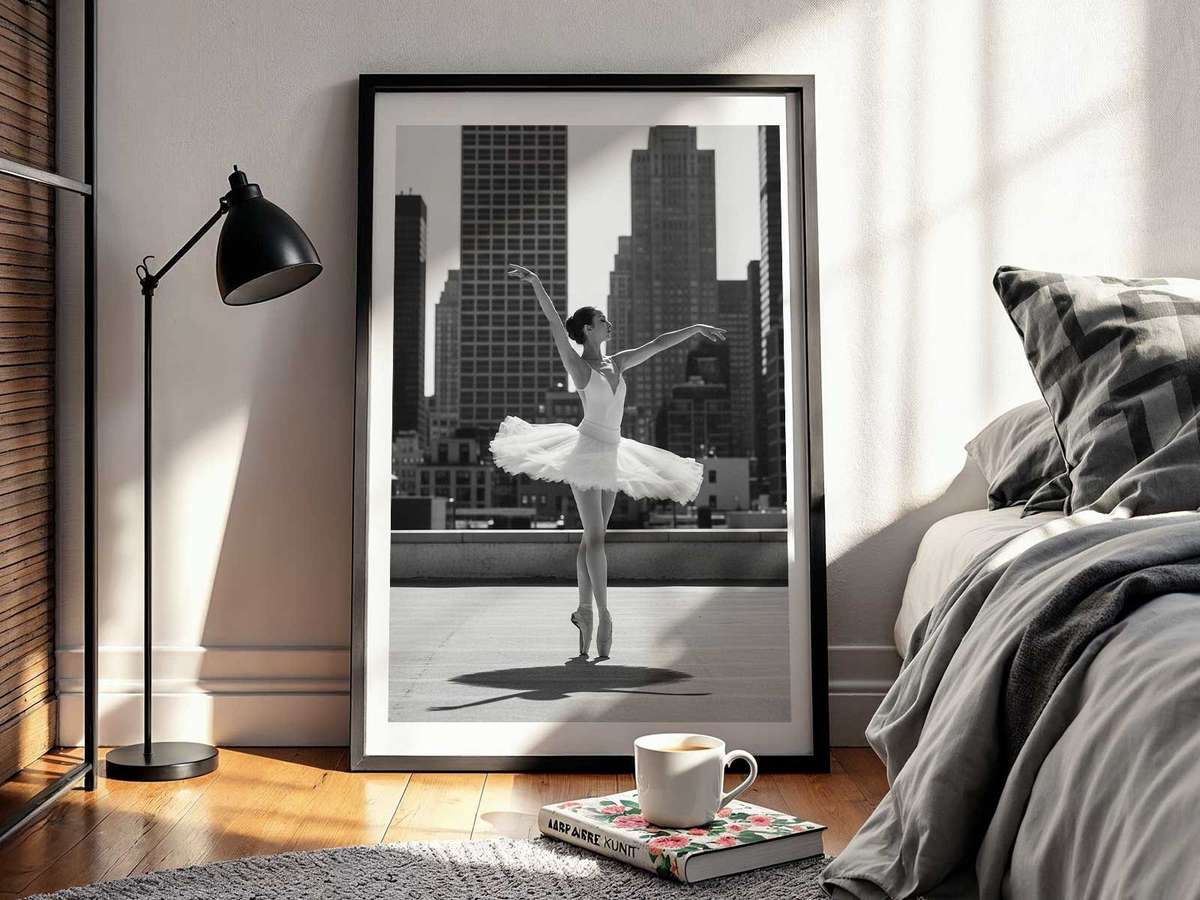
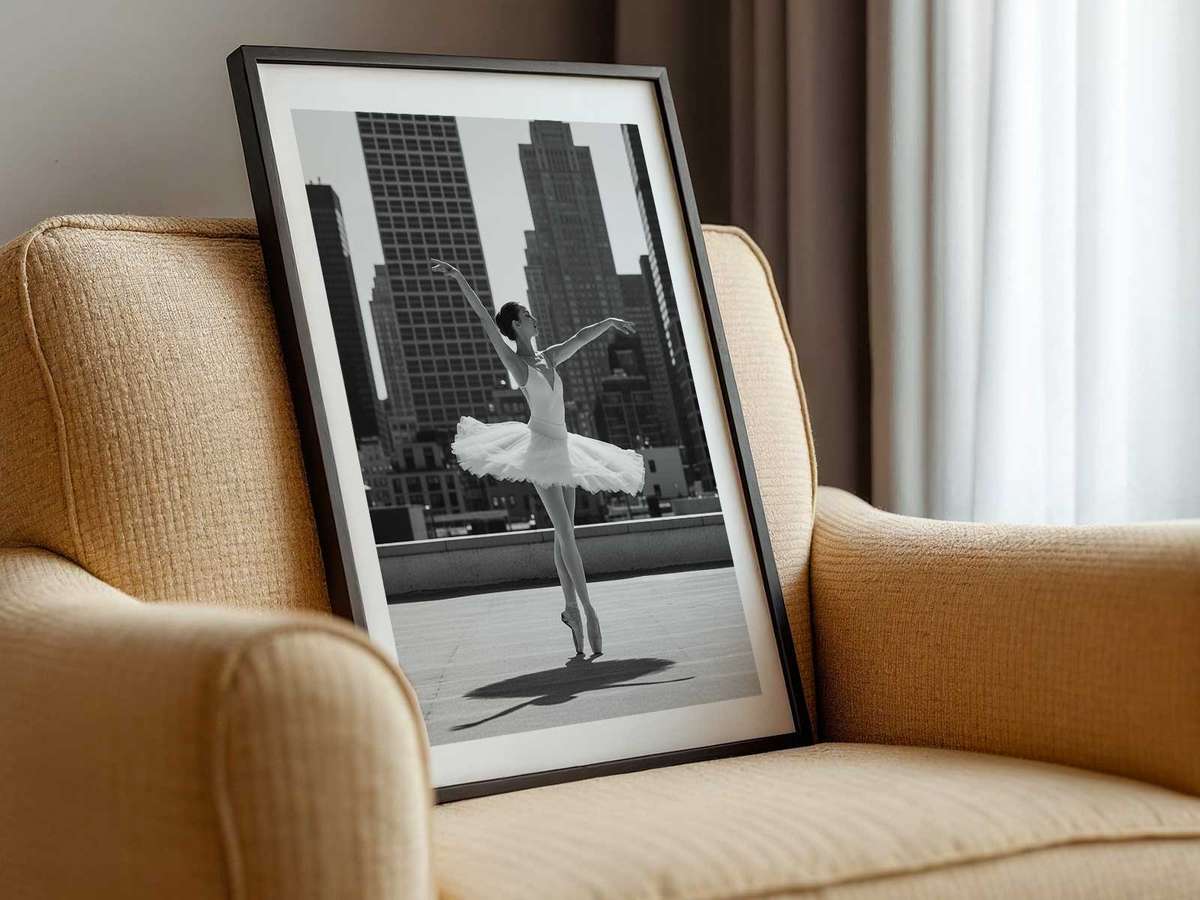
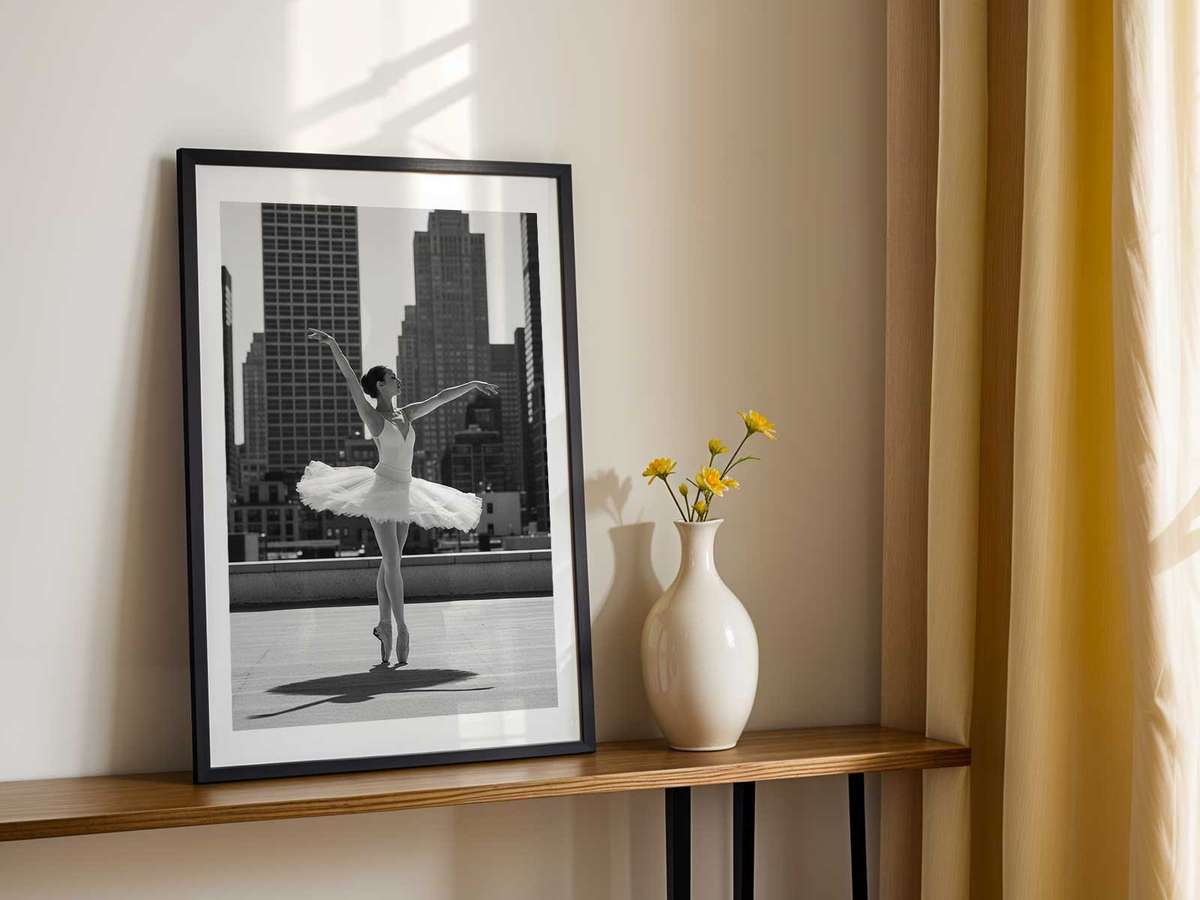
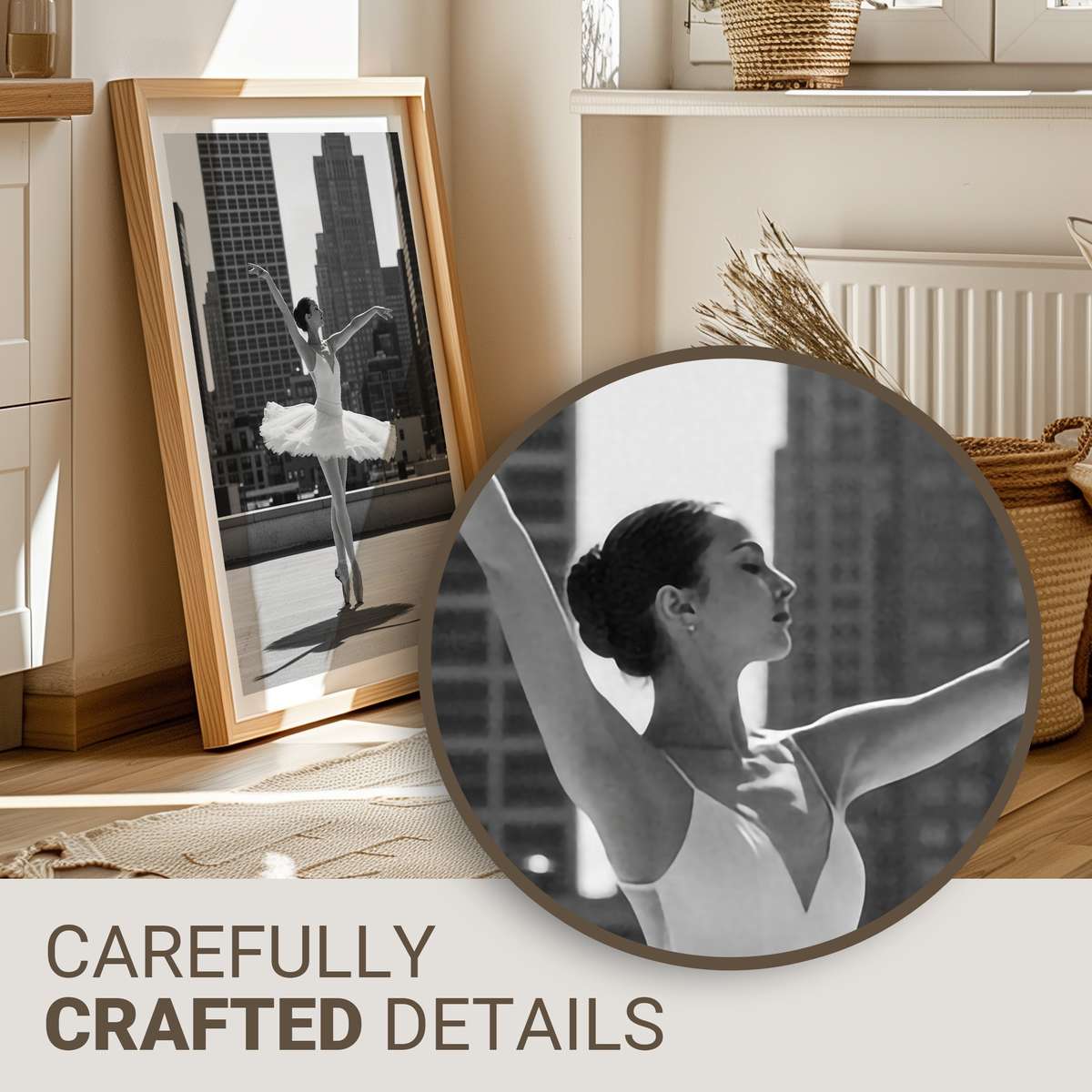
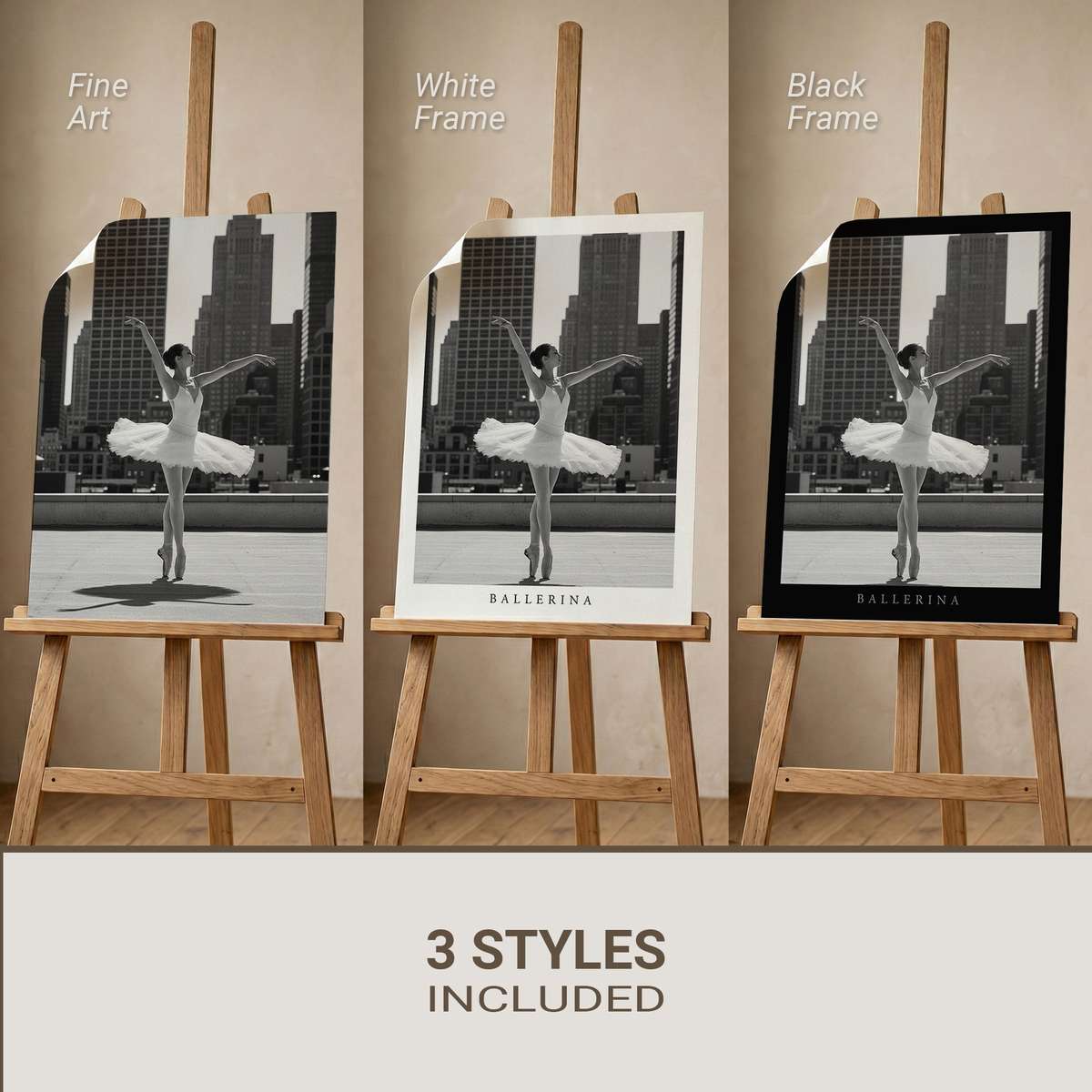
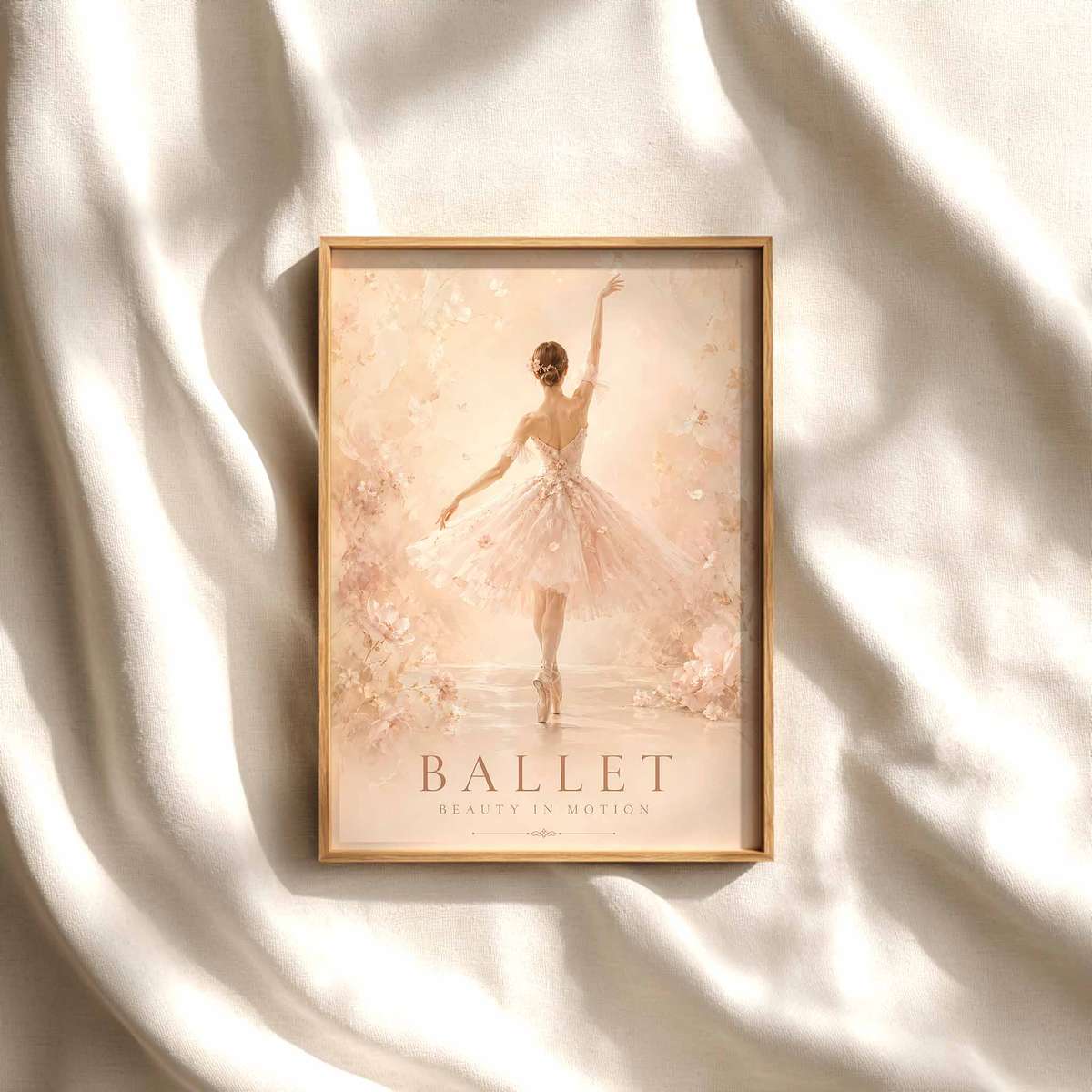
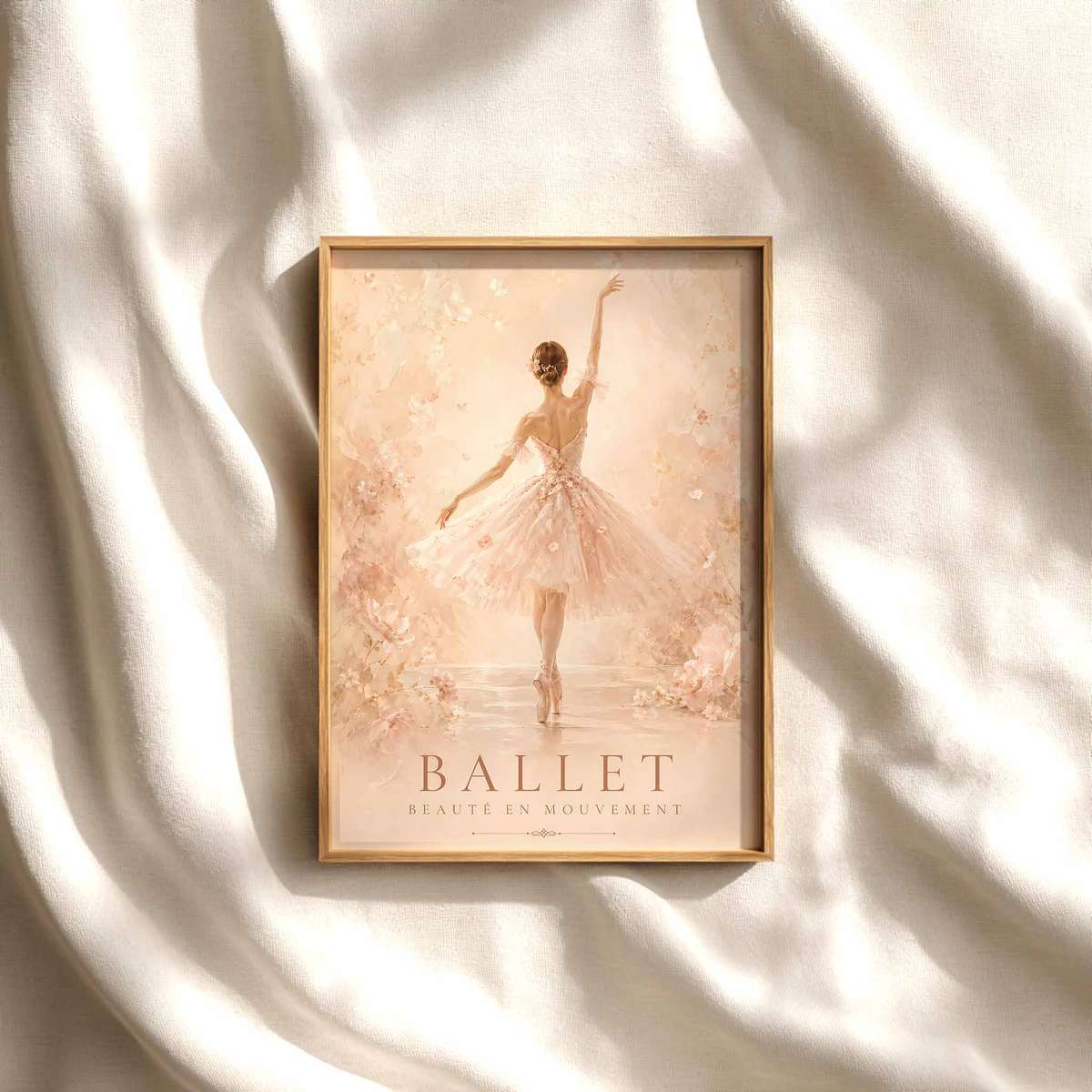
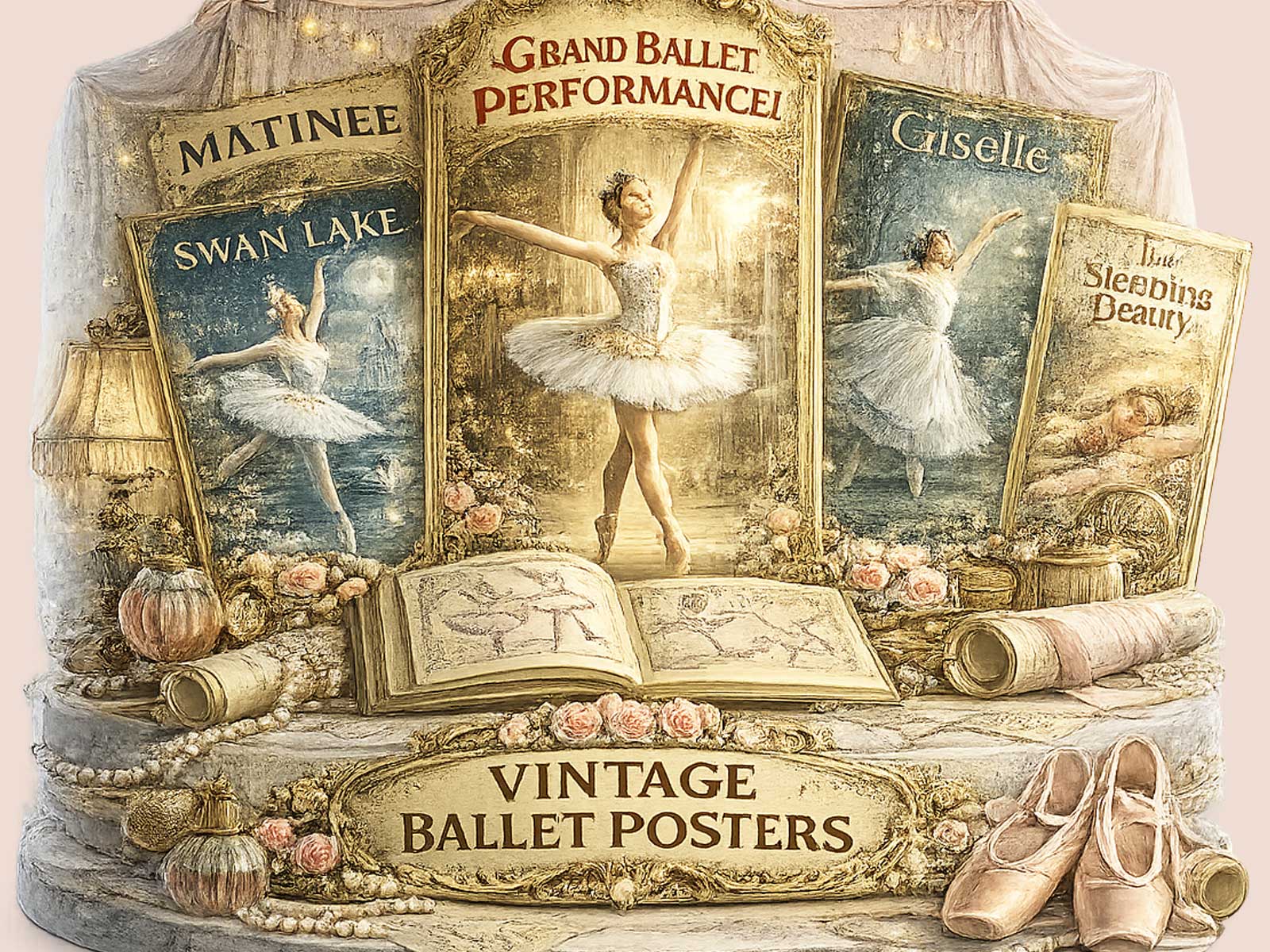
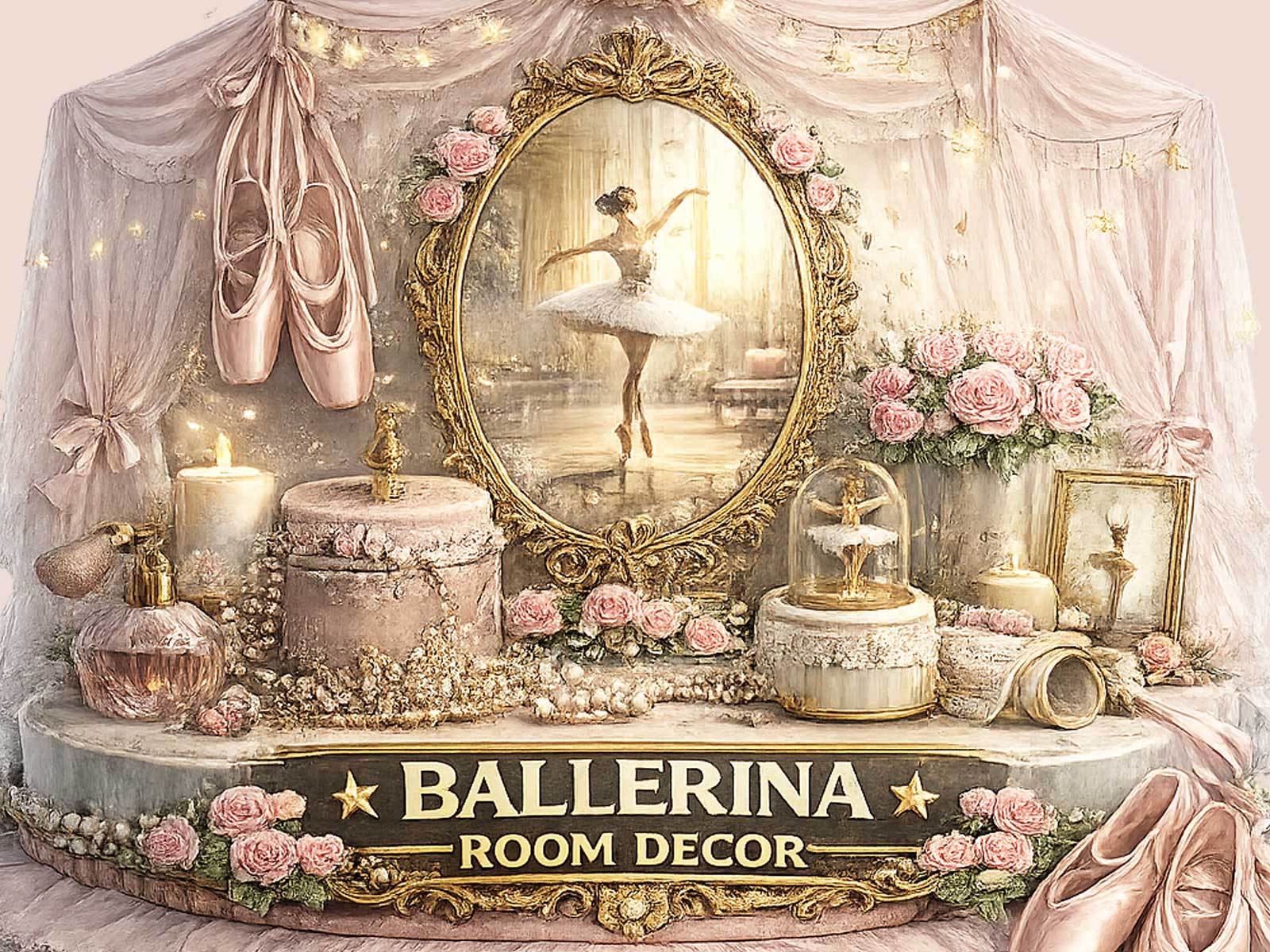
The first thing you notice is not the face but the architecture: a long, vertical line from neck to toe punctuated by the soft flare of fabric. In this ballerina art poster the costume and the dancer’s posture act as a single design element—the skirt reads as a gentle counterpoint to the stretched limb, and together they produce a visual rhythm that is at once composed and alive. The dress frames the body so the eye travels along the line rather than stopping, making the figure feel both elongated and quietly anchored.
Where costume becomes part of the line
Here the costume does more than clothe: its cut shapes the silhouette. The bodice narrows the torso, sharpening the vertical axis, while the skirt widens slightly at the hip to trace the dancer’s balance. That subtle widening prevents the form from becoming too rigid; instead it creates a controlled expansion that highlights the length of the leg and the tilt of the torso. The result is a silhouette that reads as a deliberate composition—clear, extended, and visually disciplined—rather than as a simple representation of a dancer.
Fabric behaviour in the image is precise rather than theatrical. The textile falls with a measured softness that suggests weight and drape rather than billow. Where the skirt meets movement it softens the limb, creating a halo of texture that tempers the figure’s architectural line. This interplay—sharp lines softened by quiet folds—gives the poster its refined restraint: the fabric absorbs small gestures and translates them into a calm, decorative surface.
[IMAGE_INSERT_ARTICLE_01]
Soft structure, strong visual presence
Tonal choices reinforce the geometry. A pared-back palette keeps the focus on the relationship between body and costume: mid-tones define the plane, with highlights on the bodice and skirt edges to clarify the shape against the background. Because the costume’s tones sit close to the dancer’s form, the eye reads continuity—no abrupt colour breaks to distract from the verticality. The image therefore holds a composed, quiet authority on the wall, making it particularly effective where a room needs a single, refined focal point.
Emotion in this poster is carried through compositional clarity rather than expressive gesture. The posture—an elongated arabesque or composed pose—translates discipline into decoration. The costume’s interplay with that posture tells the viewer how the dancer occupies space: the skirt anchors the stance, the bodice defines the center, and the extended line invites the eye upward. This is decoration born from discipline, the kind that rewards close looking and stays visually interesting over time.
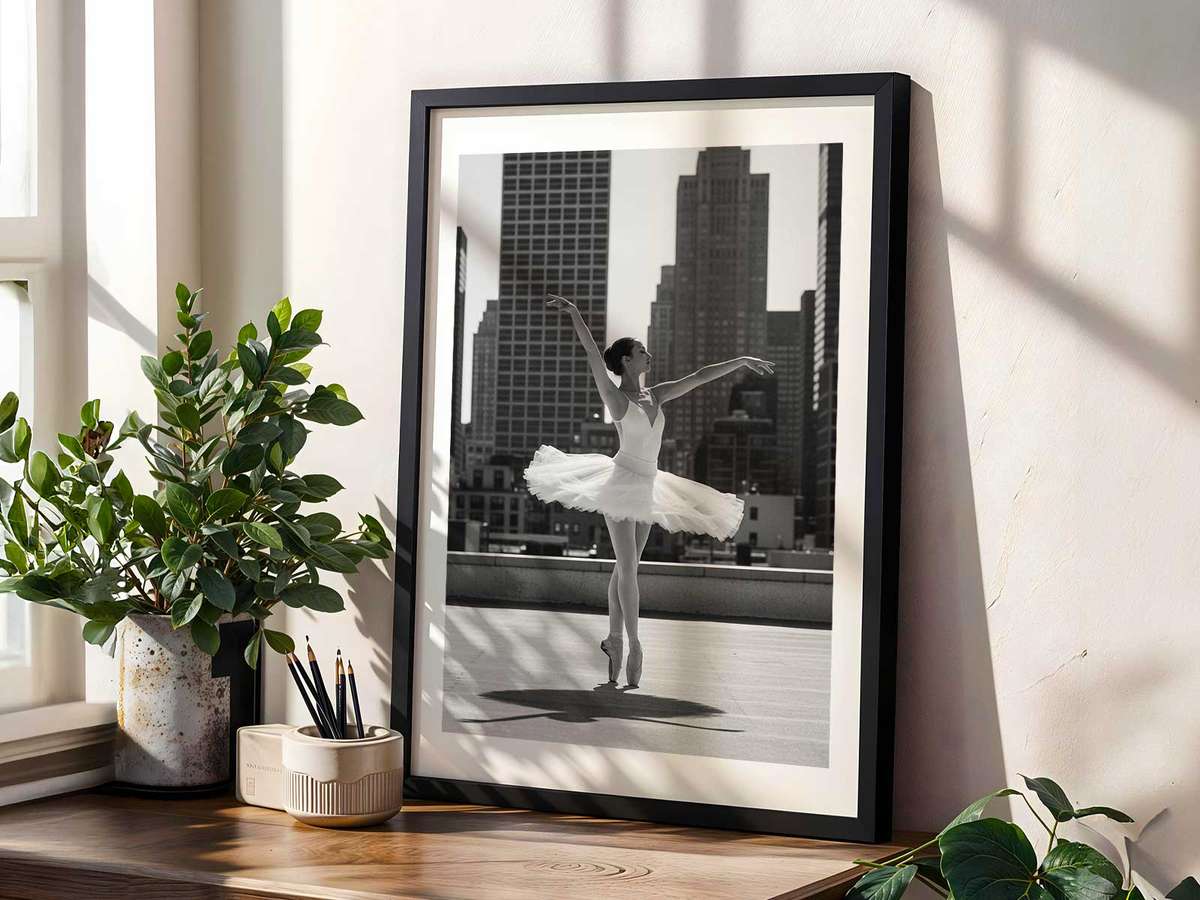
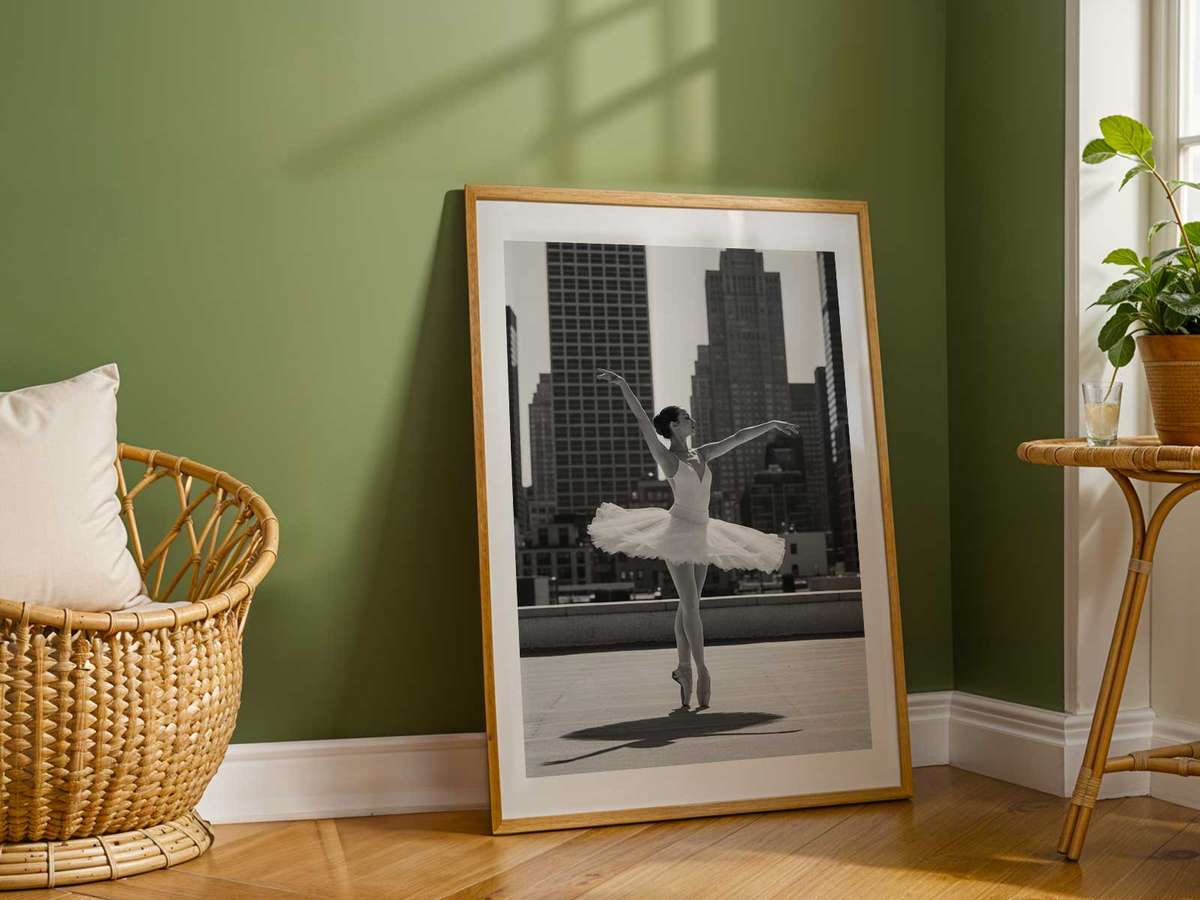
Placed above a dressing table, in a studio corner, or in a bedroom that favours calm, this poster brings a sense of order and textural depth. It appeals to anyone drawn to the mechanics of elegance: people who notice how a seam guides the eye, how a fold modifies light, and how elongated posture can turn movement into shape. Here, costume and line are inseparable—the precise reason the image feels composed, memorable, and quietly decorative on the wall.