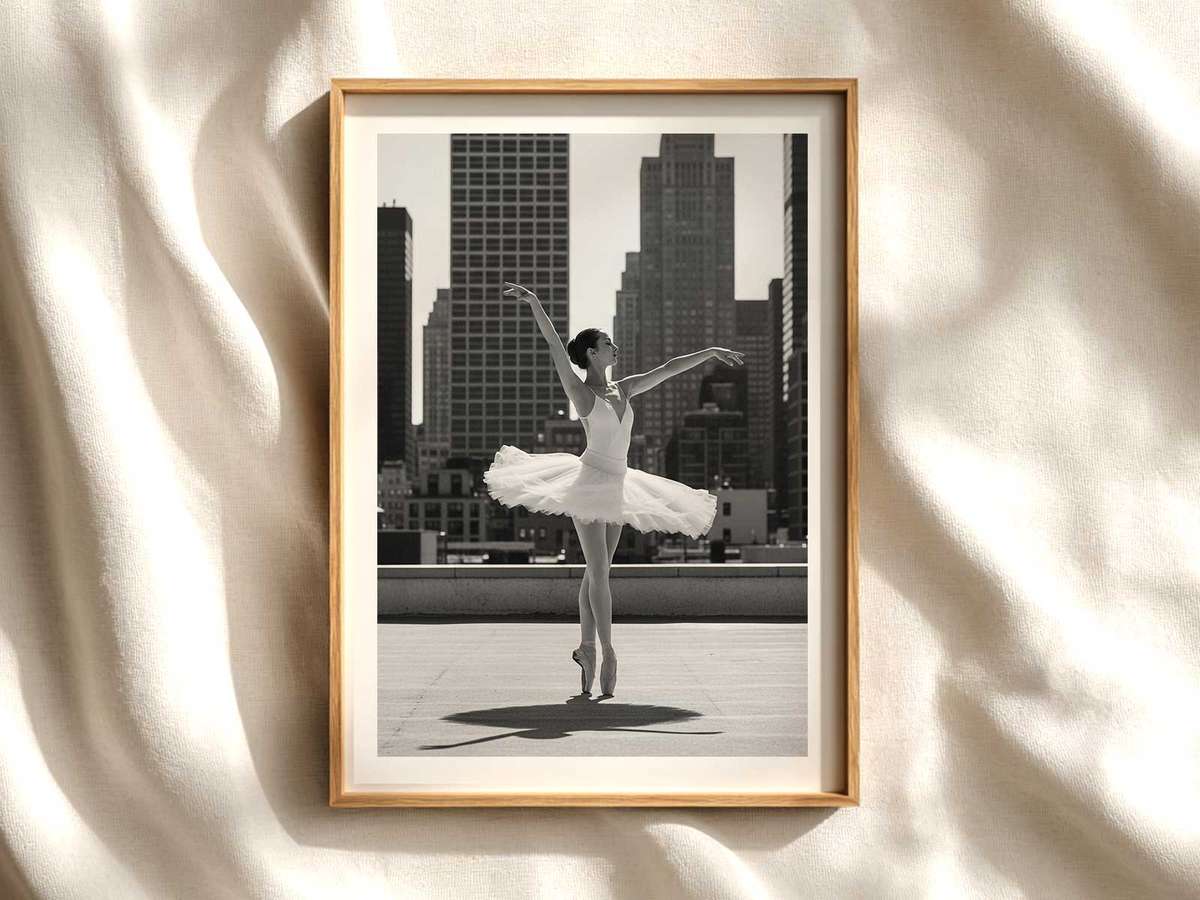
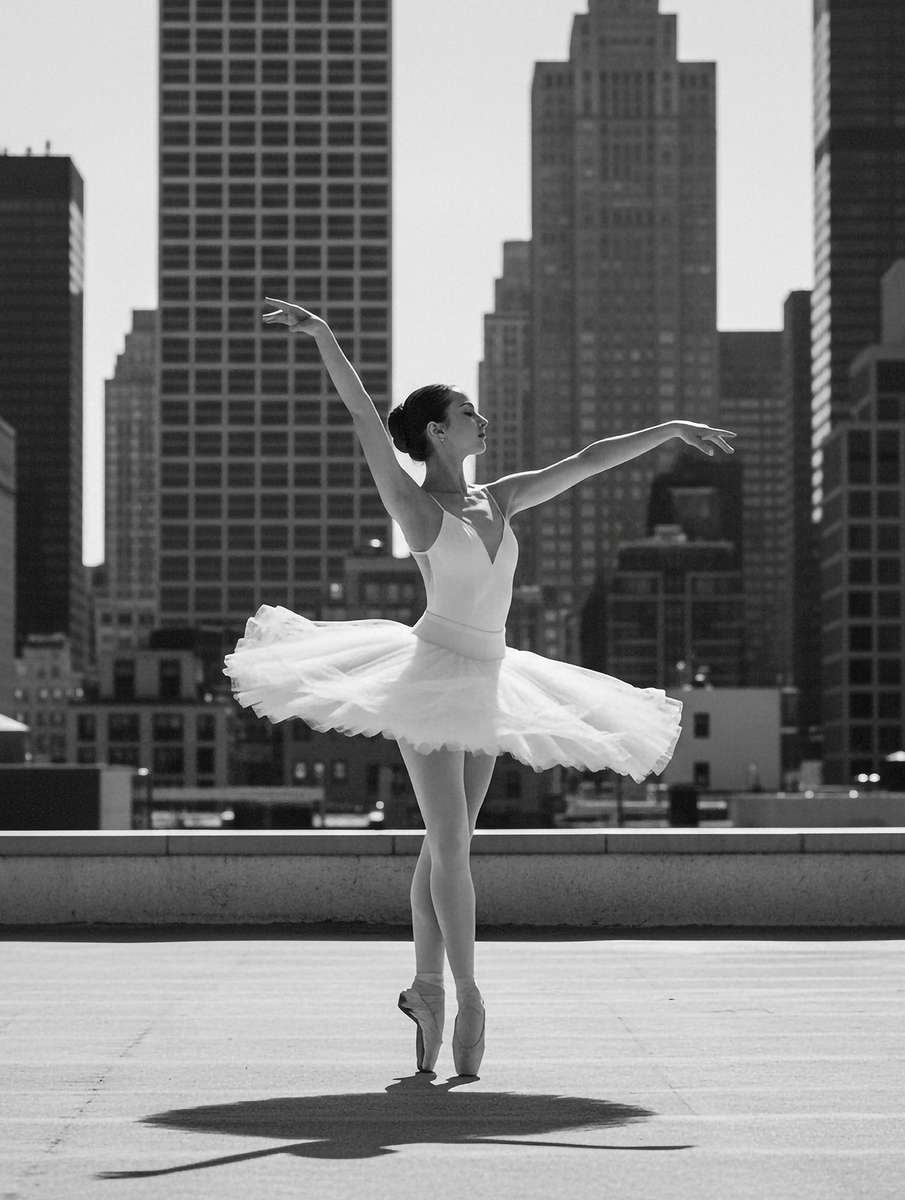
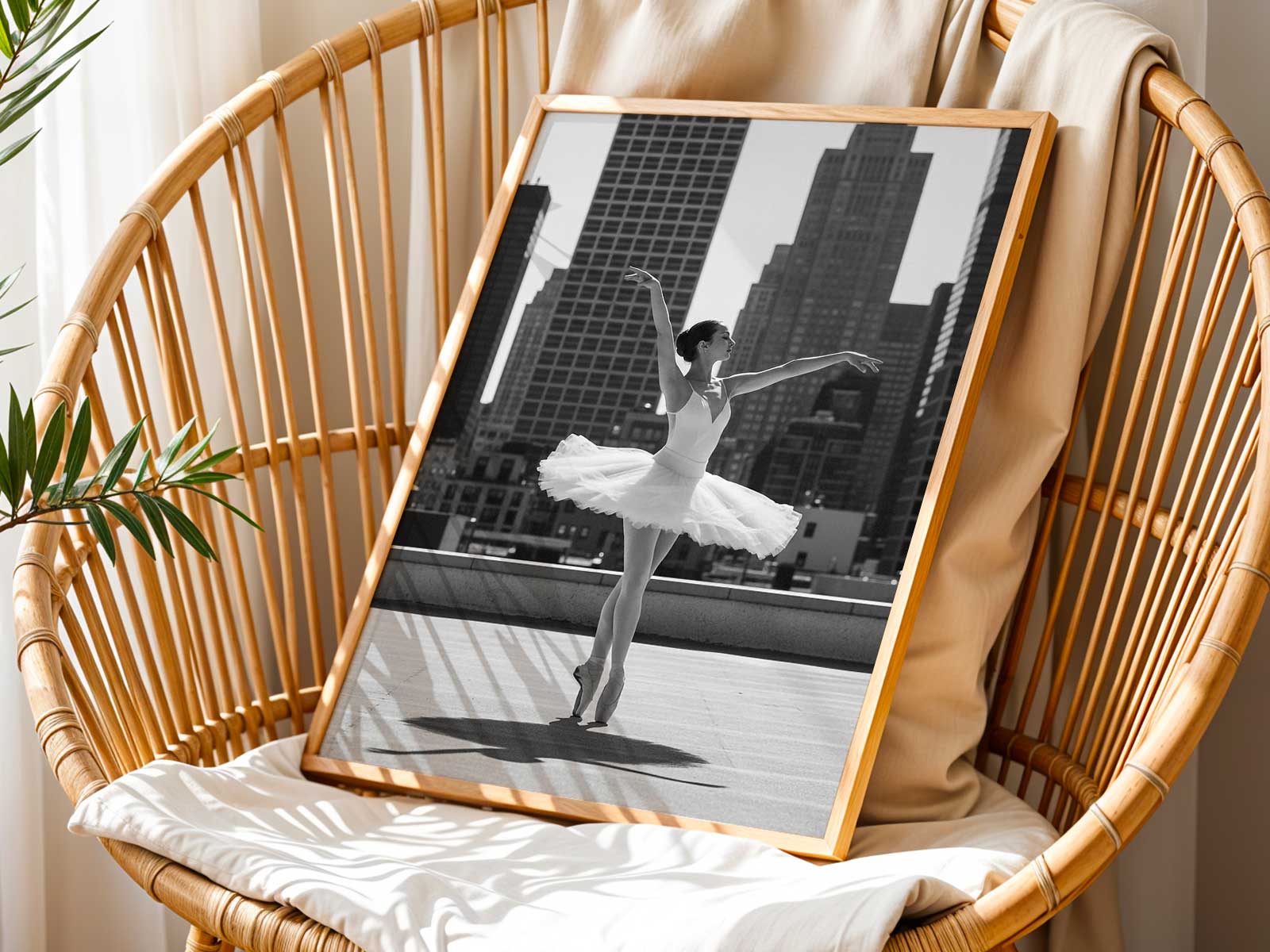
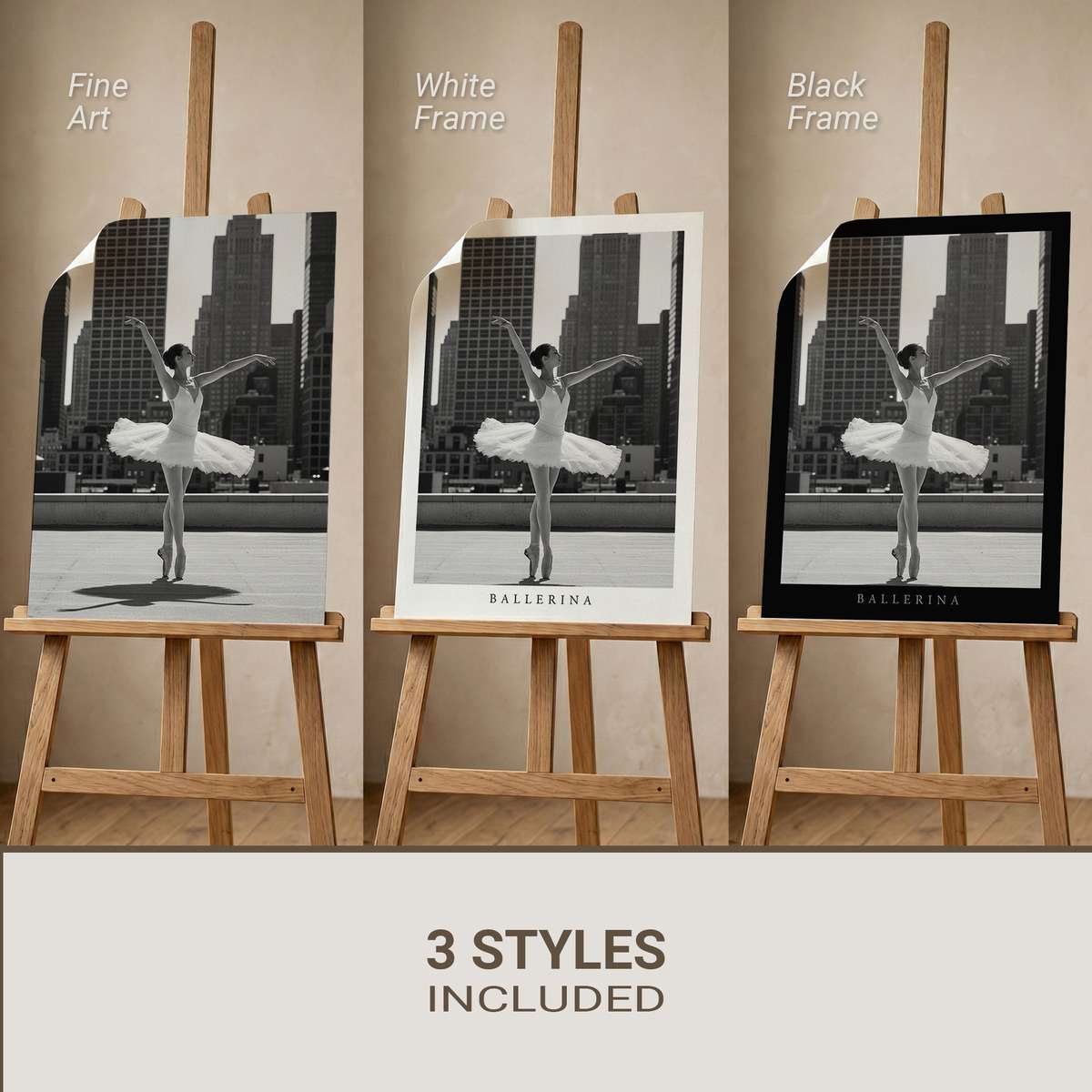
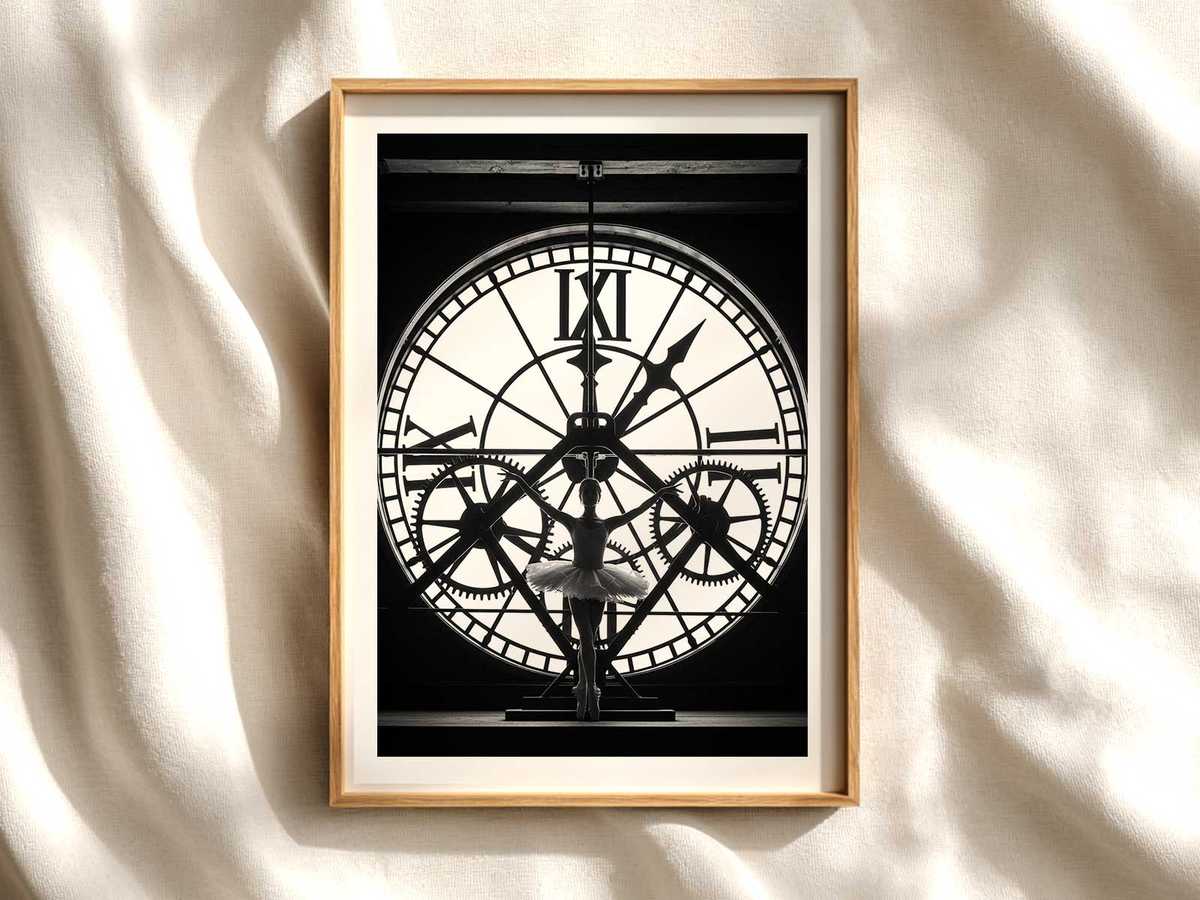
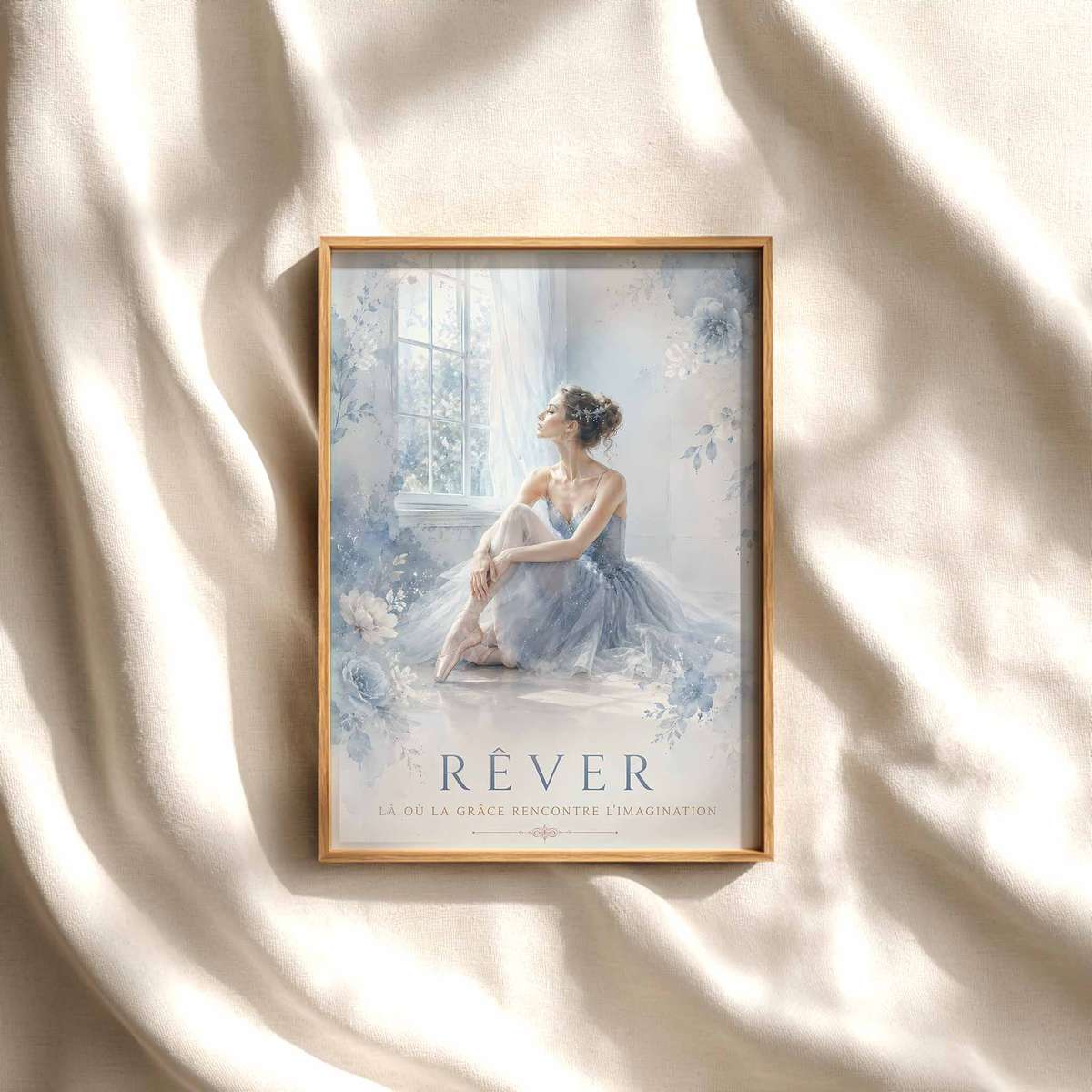
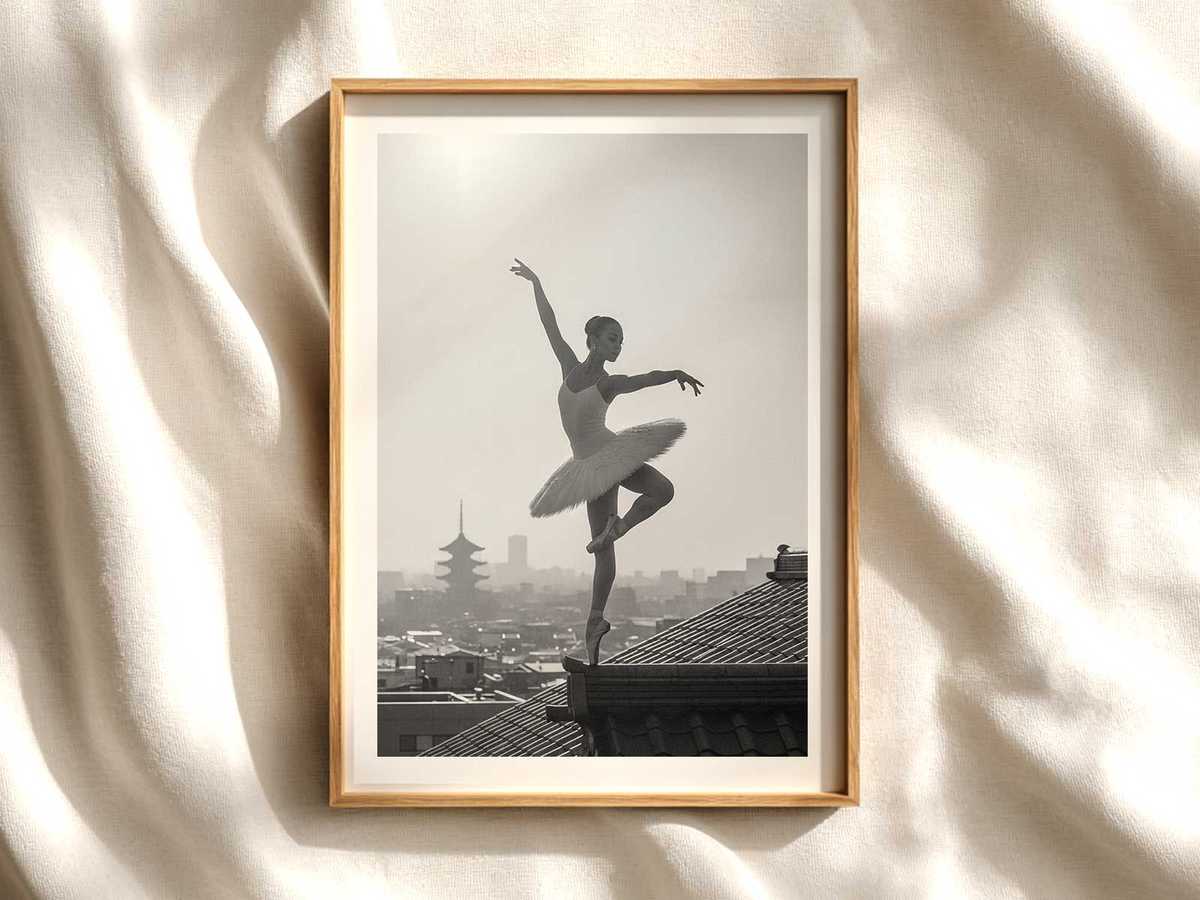
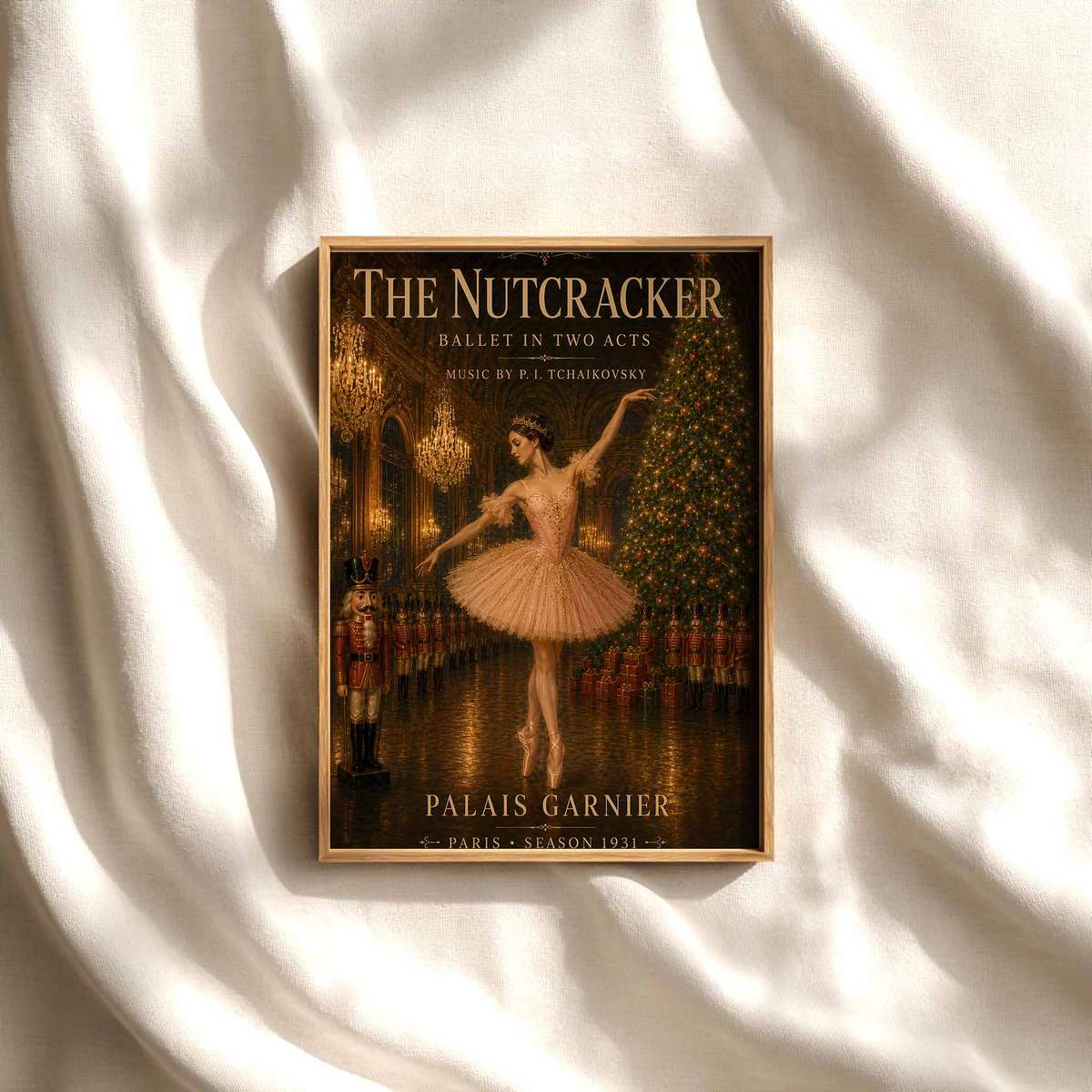
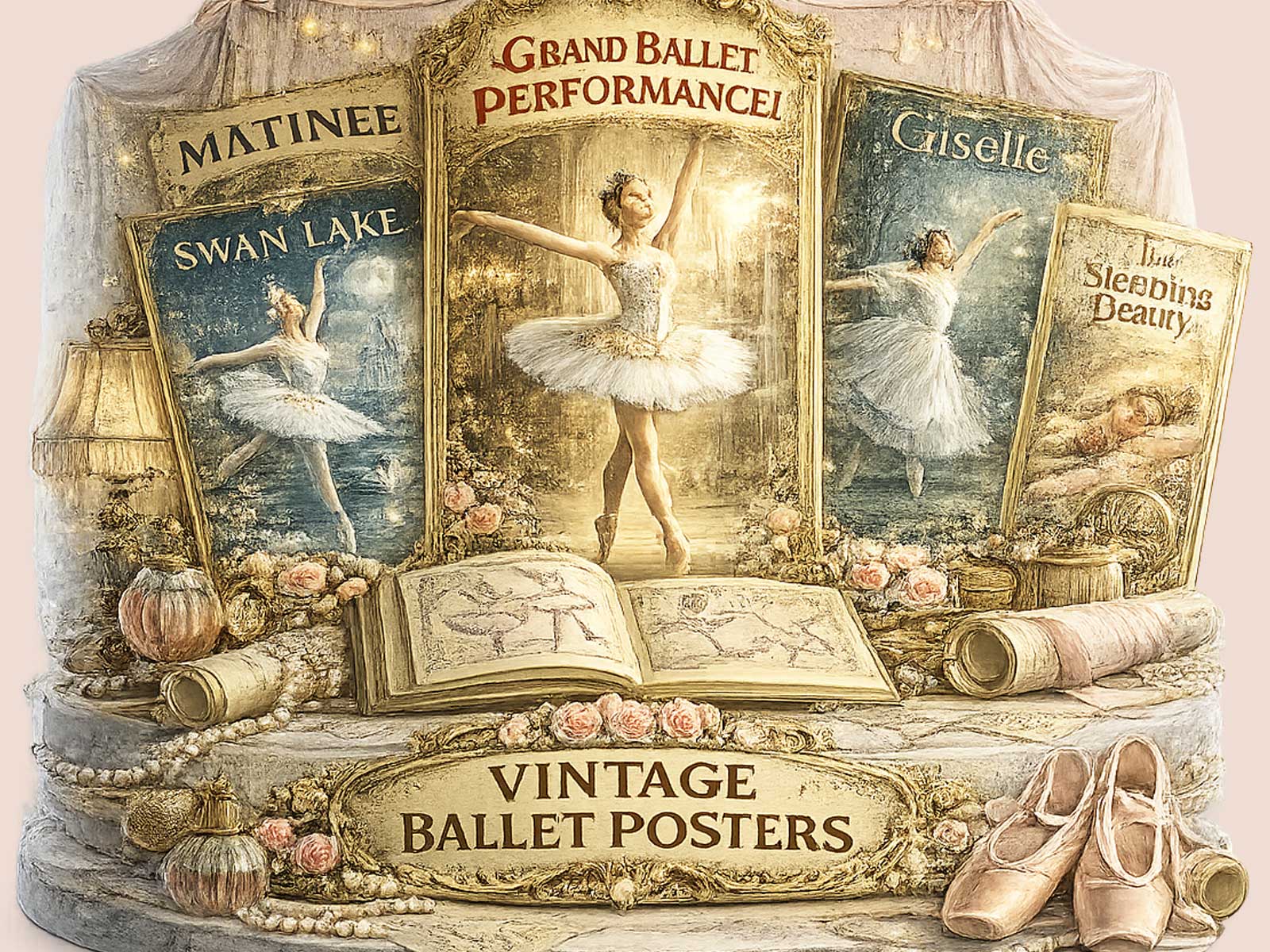
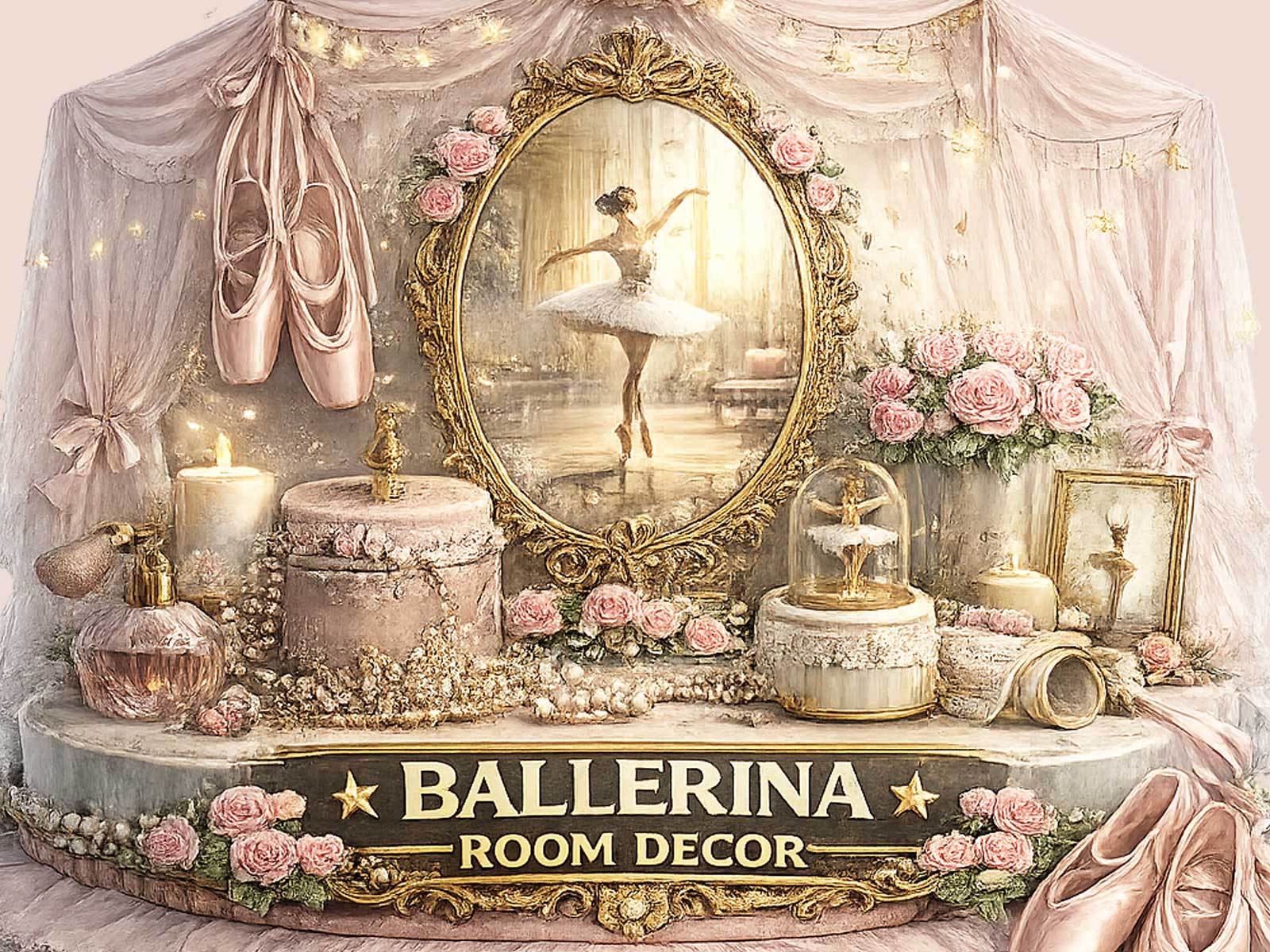
The first glance at a ballerina print is an invitation: the eye follows a single fluent line from fingertips to the crown of the neck and discovers a posture that seems composed of air and intention. In a room full of objects, a dancer-centered image reads as an act of calm clarity. Her silhouette condenses movement into a sculptural quiet, making the poster itself feel like a pause in which beauty is measured by proportion, balance and the visible honesty of the pose.
Visual force of line and silhouette
A ballerina print succeeds because it trusts the visual language of the body. The curve of the port de bras, the extension of the arm, the length of the neck — these are graphic elements that the mind decodes instantly. Against a neutral background, they become chiselled geometry: an arc that leads the gaze, a negative space that breathes, a clear silhouette that reads equally well from a distance or close up. This economy of line is what gives the image its decorative strength; it reduces complexity and yields a confident, readable composition that anchors a wall.
[IMAGE_INSERT_ARTICLE_01]
How carriage and expression shape mood
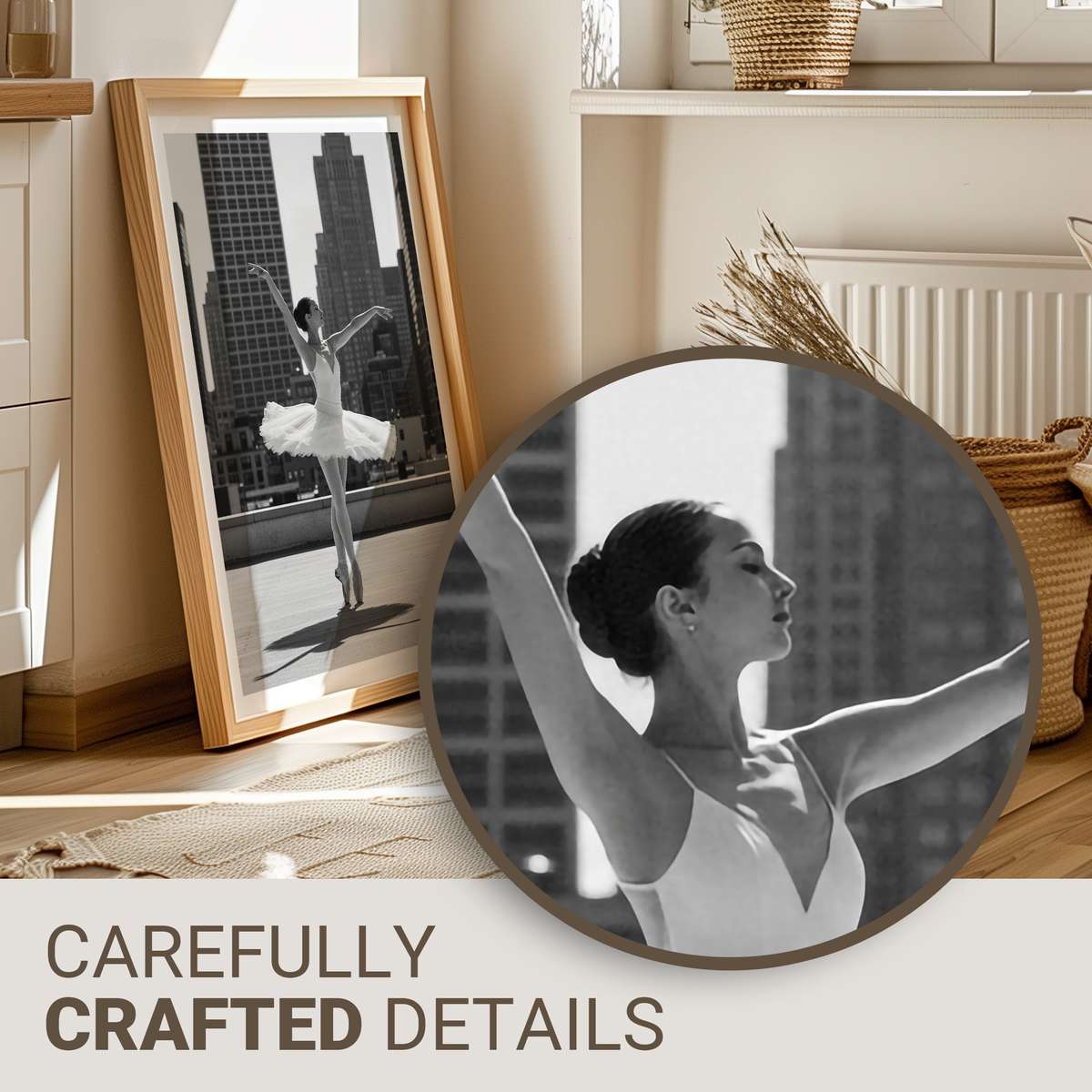
Beyond technique, the way a dancer holds herself — the slight lift of the sternum, the gentle tension of the neck, the soft focus of the eyes — defines the poster’s emotional register. A tucked chin can suggest introspection; an open throat conveys ease and welcome. Because the face often remains serene, the body becomes the expressive instrument, and the viewer supplies narrative: a memory, an aspiration, a desire for poise. This subtlety makes a ballerina print feel intimate rather than performative; it is equally at home as a personal talisman or a composed focal point in shared spaces.
The tonal restraint of many ballet images — muted palettes, selective highlights, careful negative space — enhances their longevity. They do not compete for attention; they invite repeated looking. Over time the poster establishes itself not as decoration that dates, but as an enduring accent that refines a room’s feeling of order and softness.
Why the dancer-centered image elevates a room
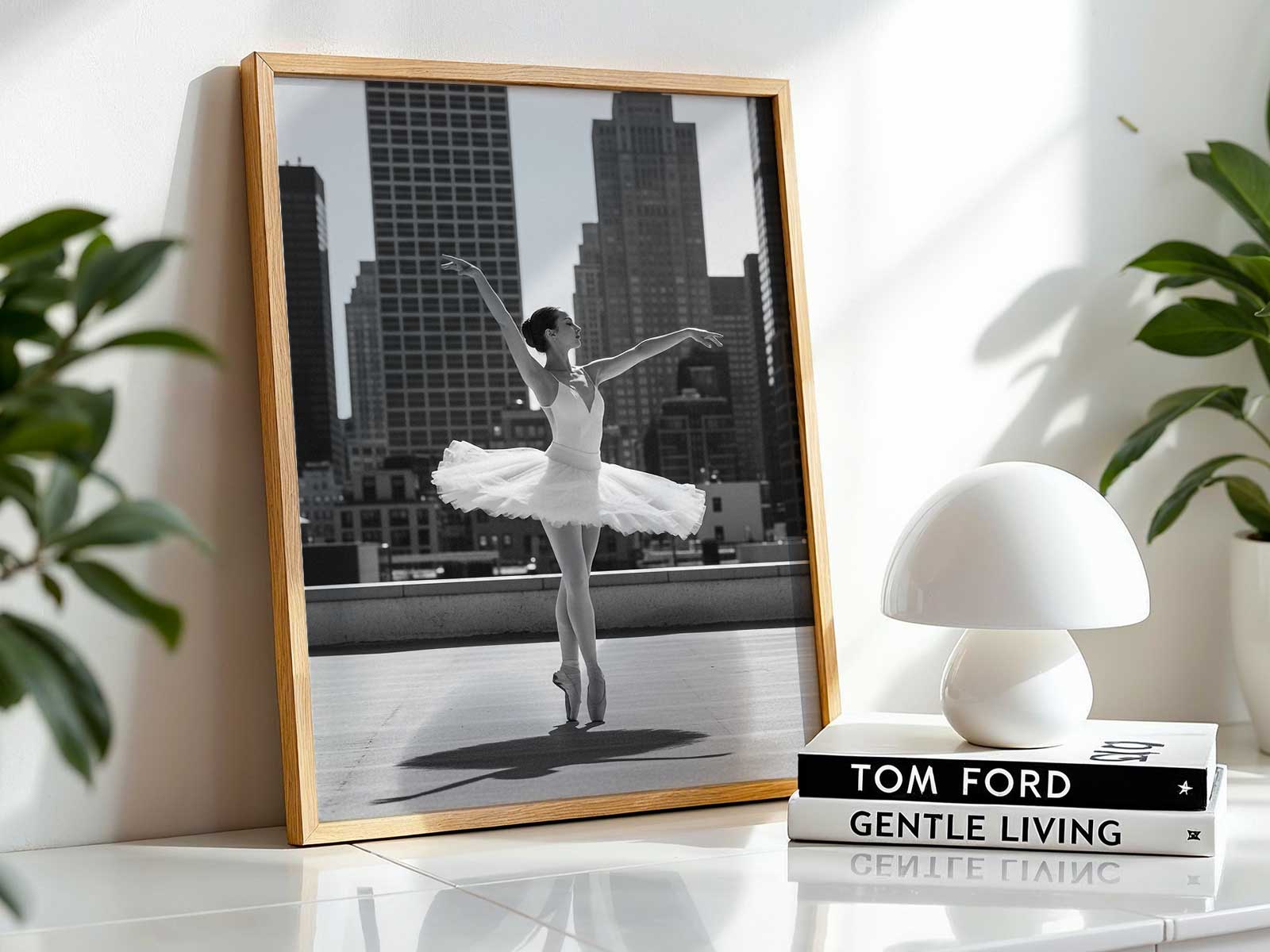
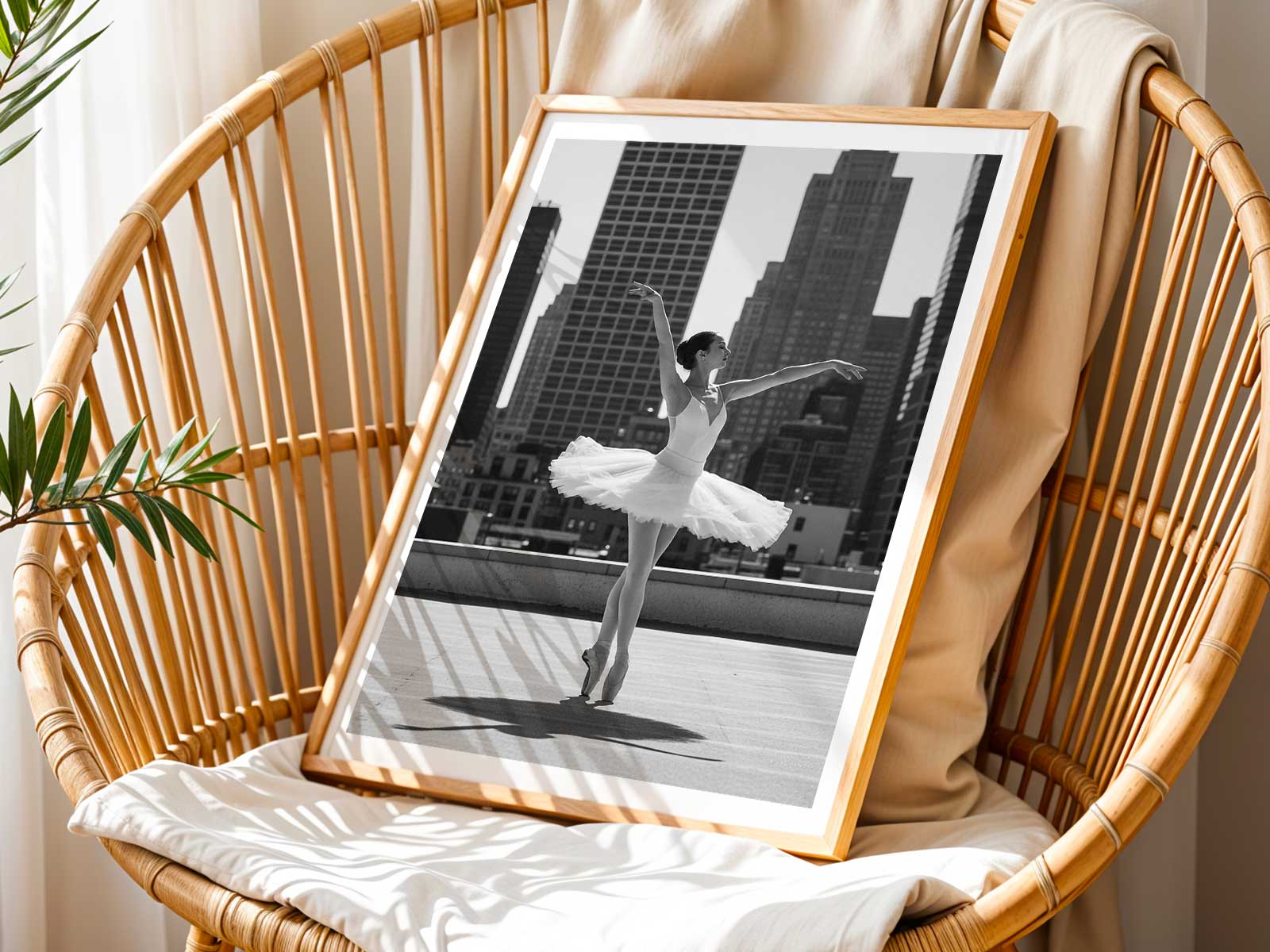
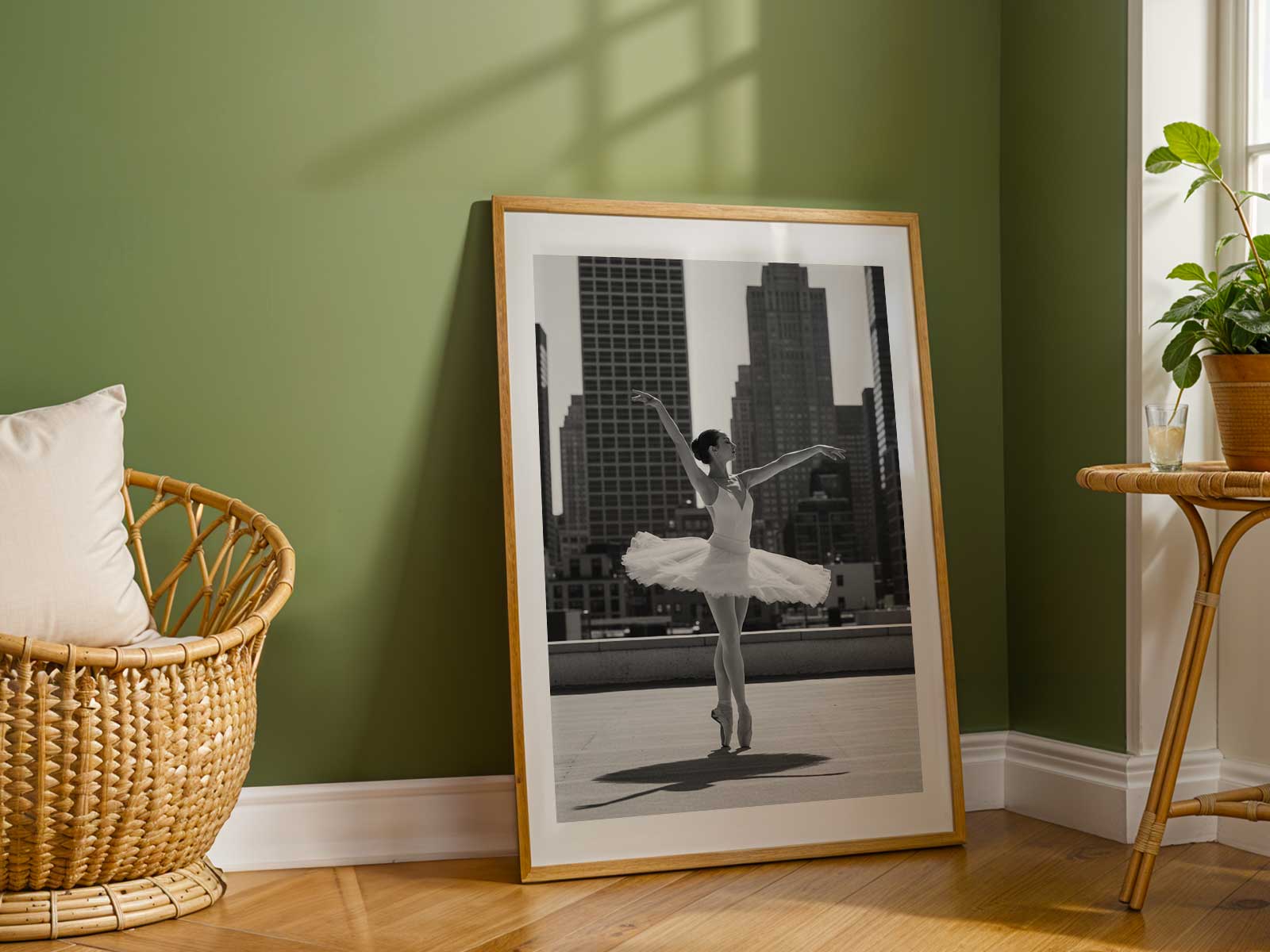
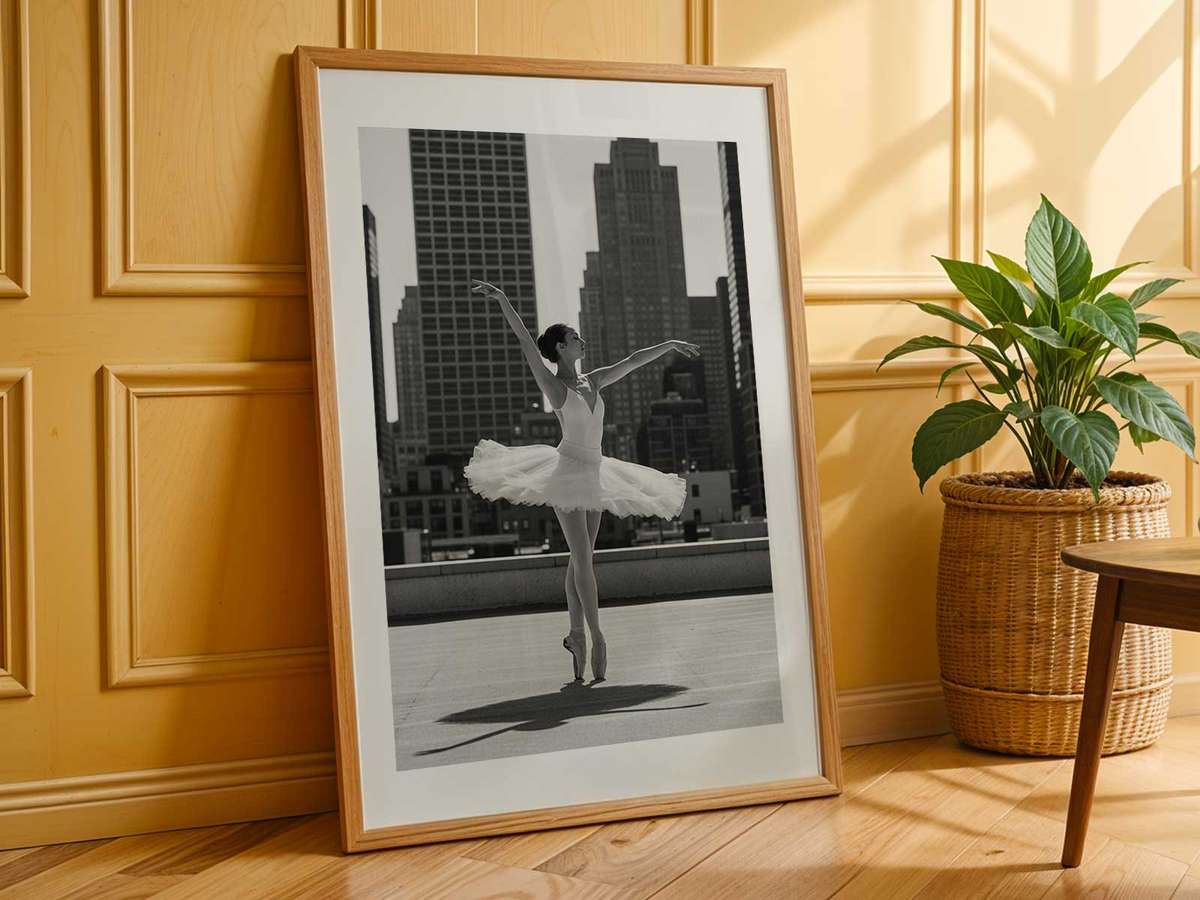
A ballerina print offers a distinctive kind of elegance: it is decorative without ornament, aspirational without ostentation. Its power lies in clarity of composition and emotional restraint. Hung above a console, over a bed, or in a hallway, the image disciplines the surrounding space, encouraging coordination of color, texture and scale. It pairs naturally with simple frames, linen textiles and muted ceramics, and the human presence within the print keeps the decor from feeling sterile — the poster provides a human axis around which objects and light can align.
Finally, there is a personal magnetism to a dancer-centered poster. Many respond to the poise as a quiet form of encouragement: a reminder of balance, of practice, of stillness. Whether the purchase is driven by love of dance, an eye for composition, or the desire for a softer atmosphere, the ballerina figure does the work of both art and companion. She makes the wall speak in a language of measured line and gracious restraint, turning an ordinary space into something quietly memorable.