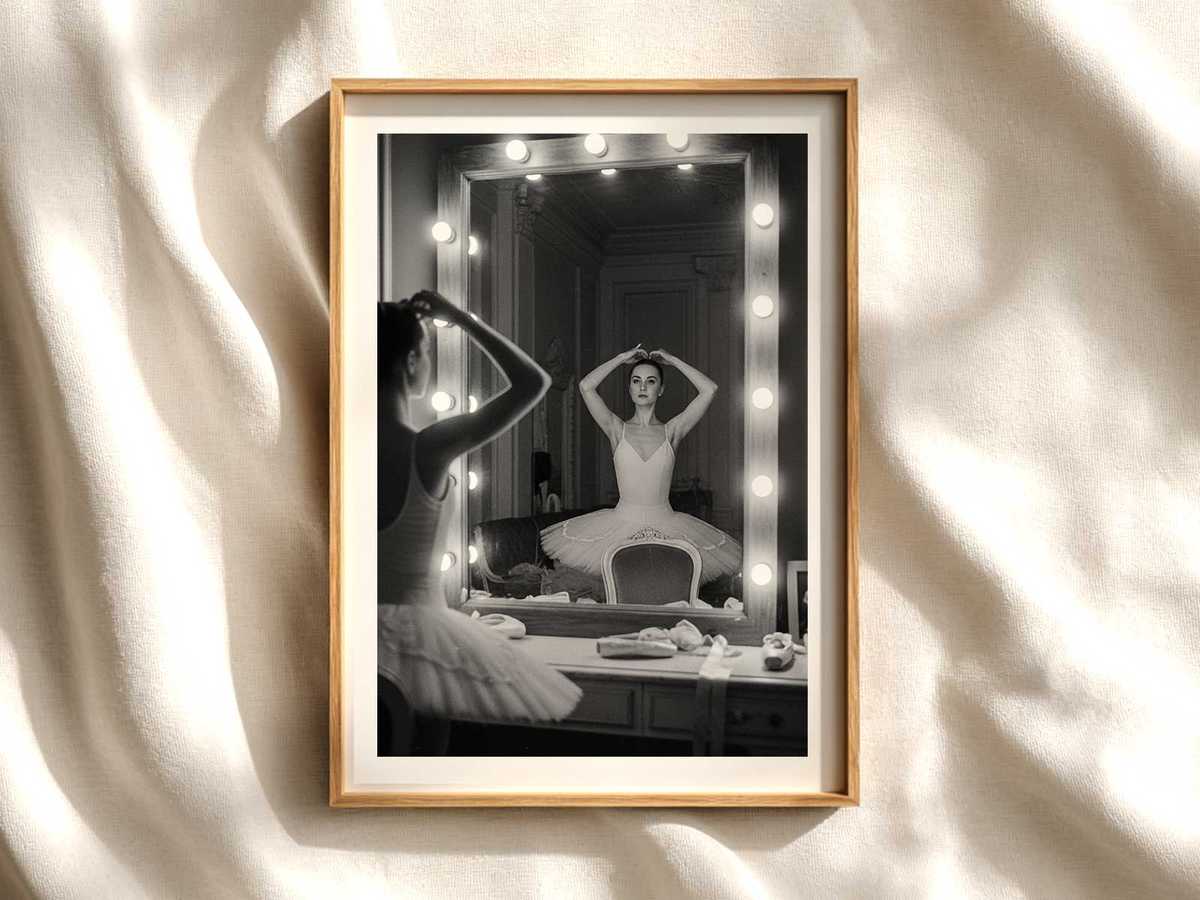
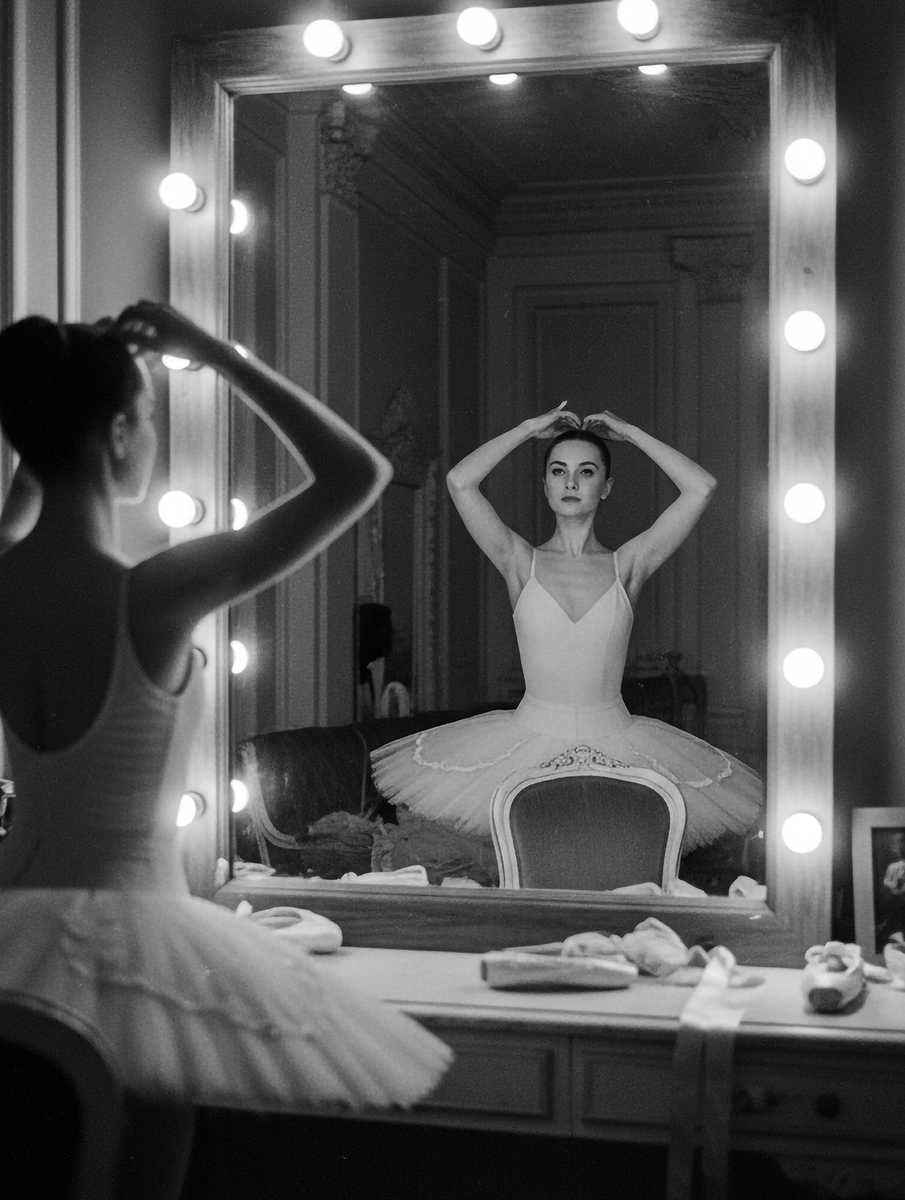
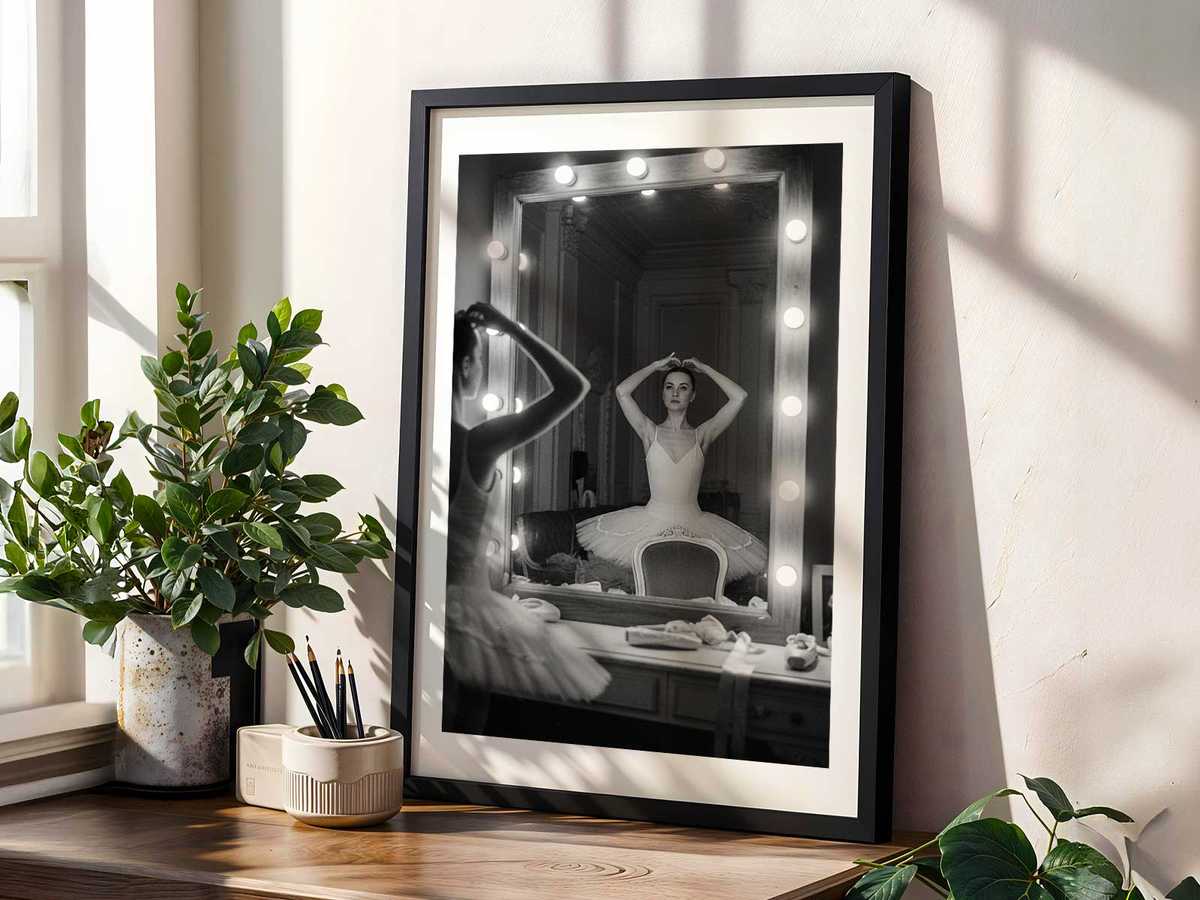
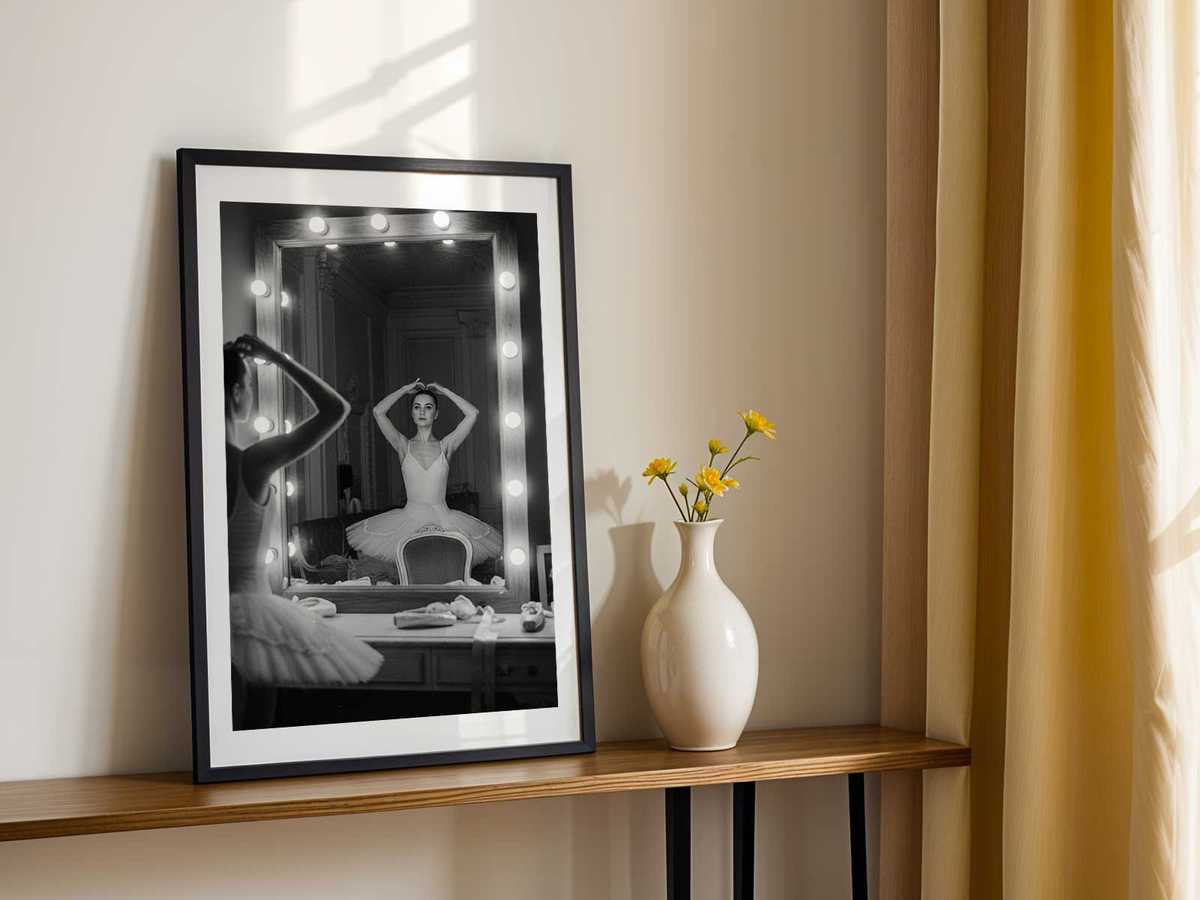
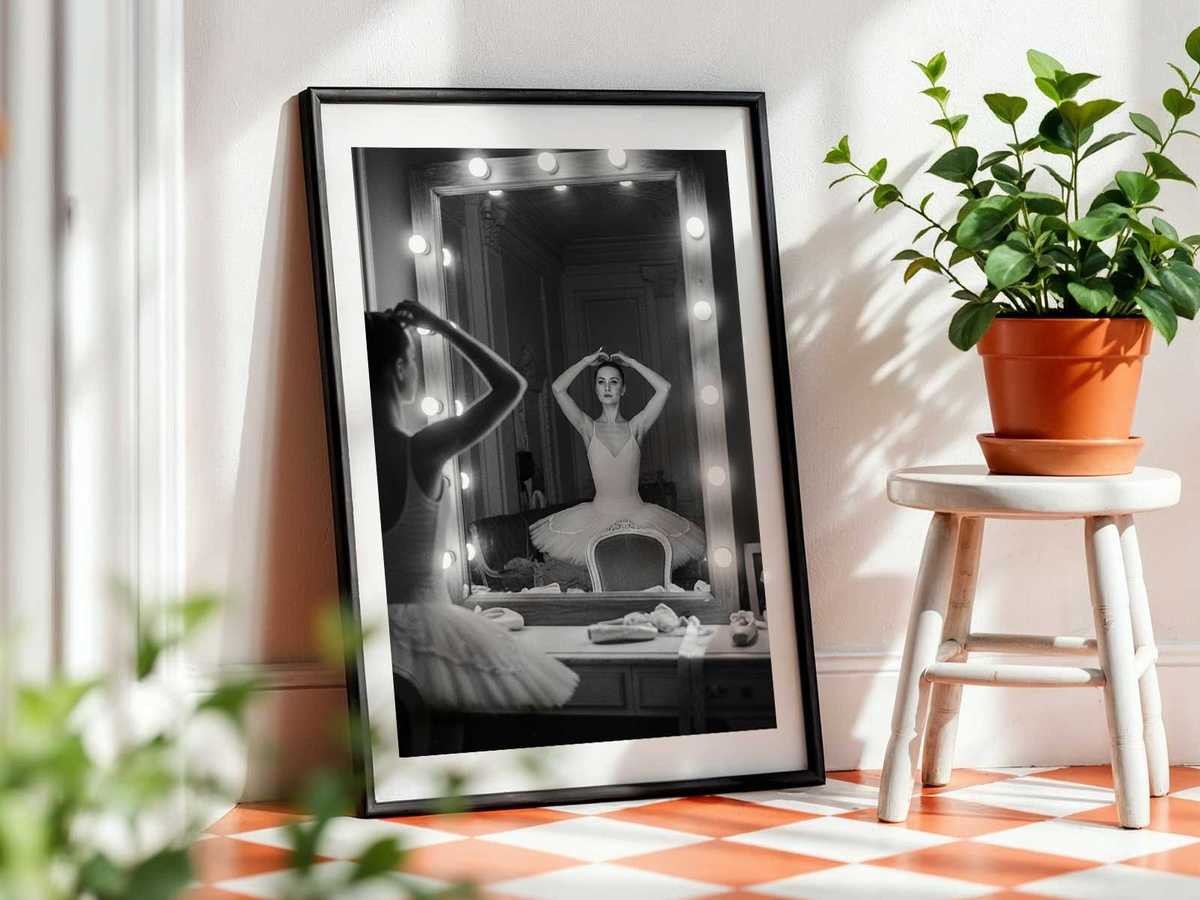
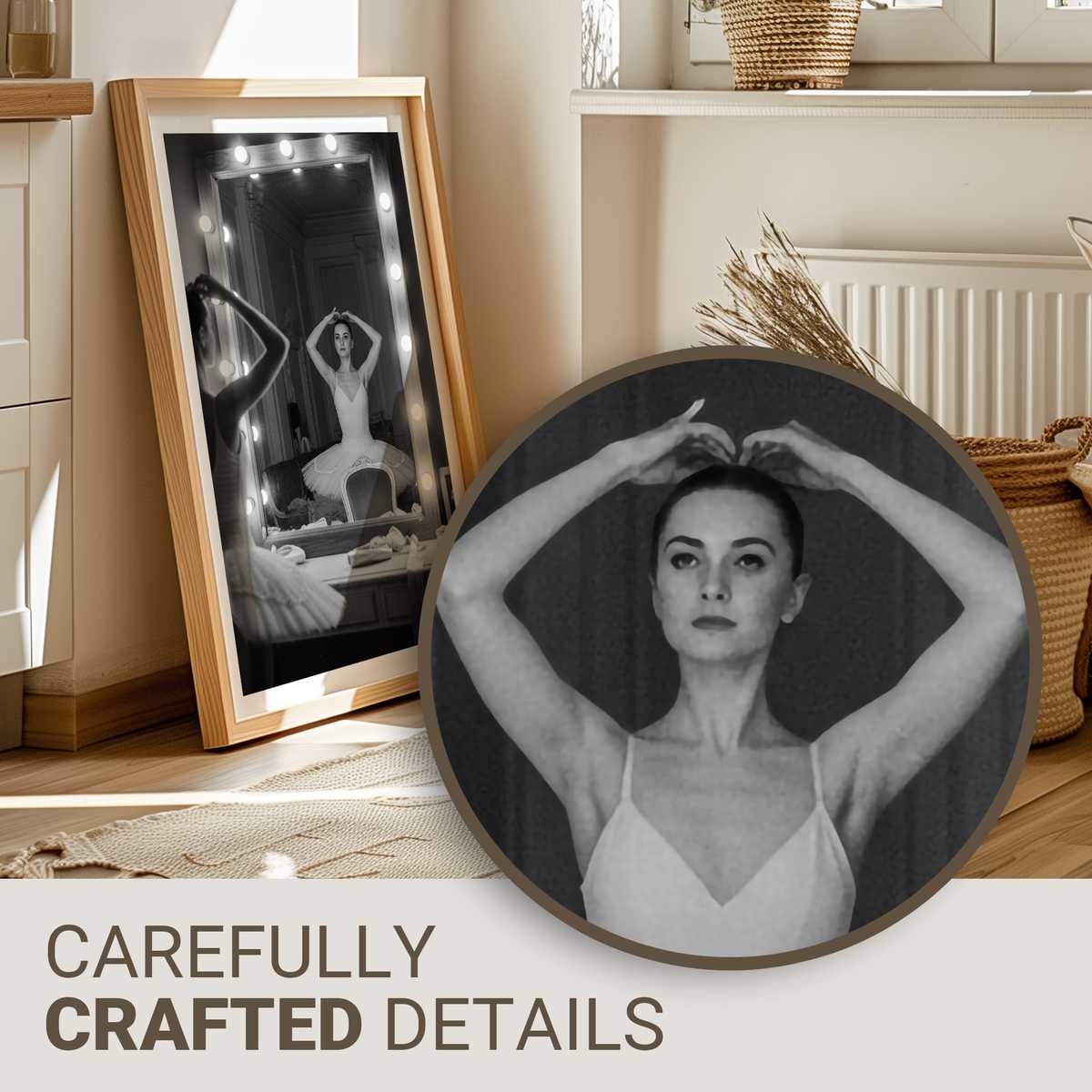
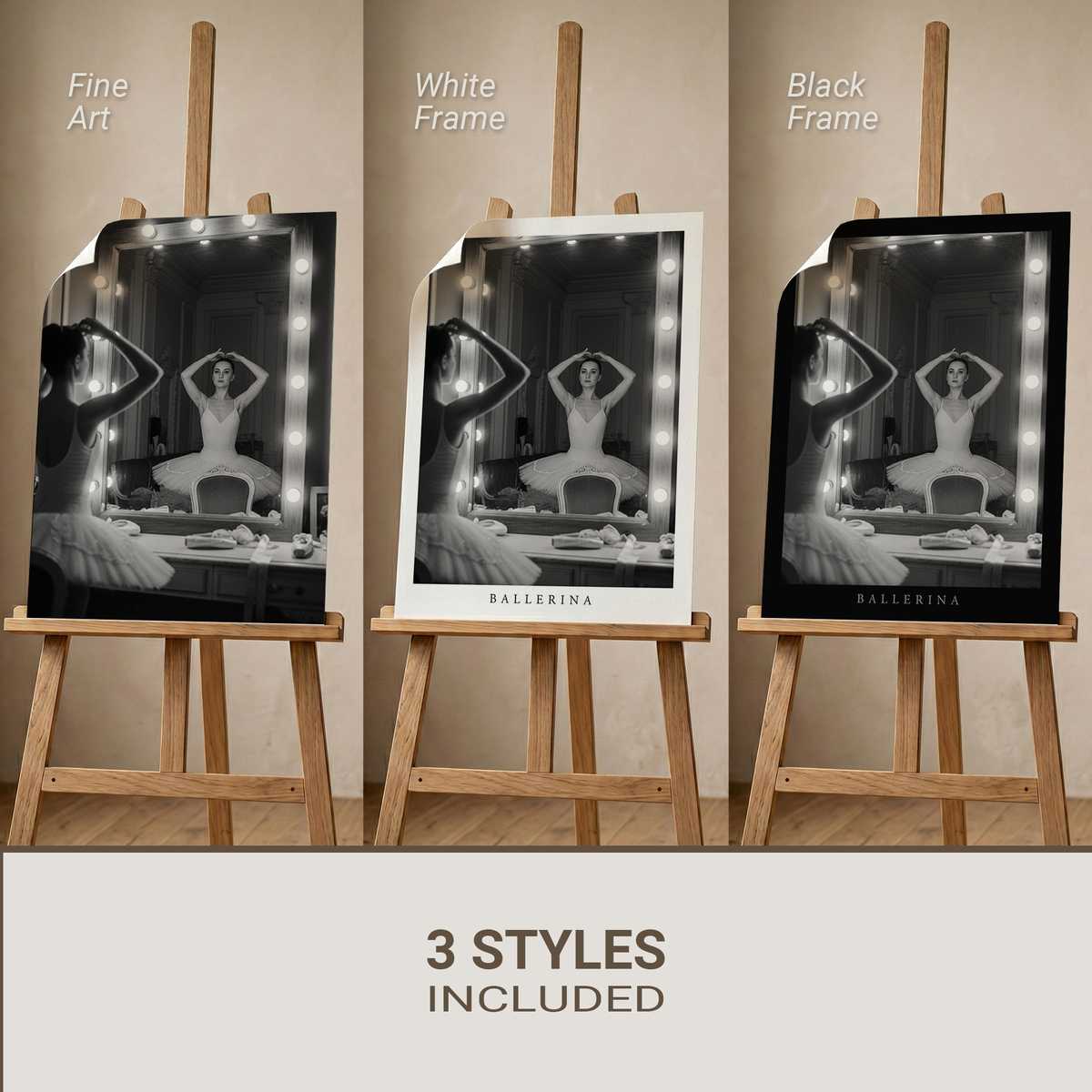
In the center of this photograph a single gesture commands attention: an arm lifted, spine elongated, and weight arranged between floor and reflection so that two images—one real, one mirrored—compose a richer, denser moment. The mirror does more than duplicate; it complicates the scene. It multiplies the sequence of rehearsal into a layered study of intention: the dancer watches herself correct an angle, test a line, and refine the timing of a wrist or foot. The result is a portrait of practice rather than performance, where the making of the movement becomes the subject.
The visual intensity comes from contrasts of focus and repetition. One body is present and tactile—muscle, fabric, breath—while the reflected body reads like recorded memory, slightly offset in time and space. This offset creates a taut diagonal of sightlines: the viewer follows the lifted arm to its echo, the supporting leg to its mirrored counterpart, and in that travel perceives the construction of gesture. Light sculpts the skin and studio floor; shadows gather at the mirror’s edge. Those small tonal decisions—where the light softens on the cheek, where the leg fades into shadow—give the image a choreography of values that feels like a score you can read with your eyes.
[IMAGE_INSERT_ARTICLE_01]
Why this specific second matters more than a generic pose: it records the negotiation between discipline and self-observation. A grand jeté or a staged arabesque freezes finished virtuosity. This photograph captures the unfinished: the precise moment the dancer consults her reflection, adjusting the smallest alignment that will determine the success of the next phrase. That regulatory glance—practical, exacting, human—turns an aesthetic instant into narrative. The poster preserves an internal rehearsal, a micro-decision usually invisible to an audience, and displays it as a study in concentration and craft.
Emotion here is low and dense rather than dramatic. The temperature is concentrated: not triumph but attention, not spectacle but insistence. This temperament suits rooms that value quiet rigor—a studio corner where one trains, a refined living space that benefits from compositional focus, or a bedroom where calm energy is preferred to theatrics. The image introduces an active stillness: you feel the readiness to move and the discipline that holds it.
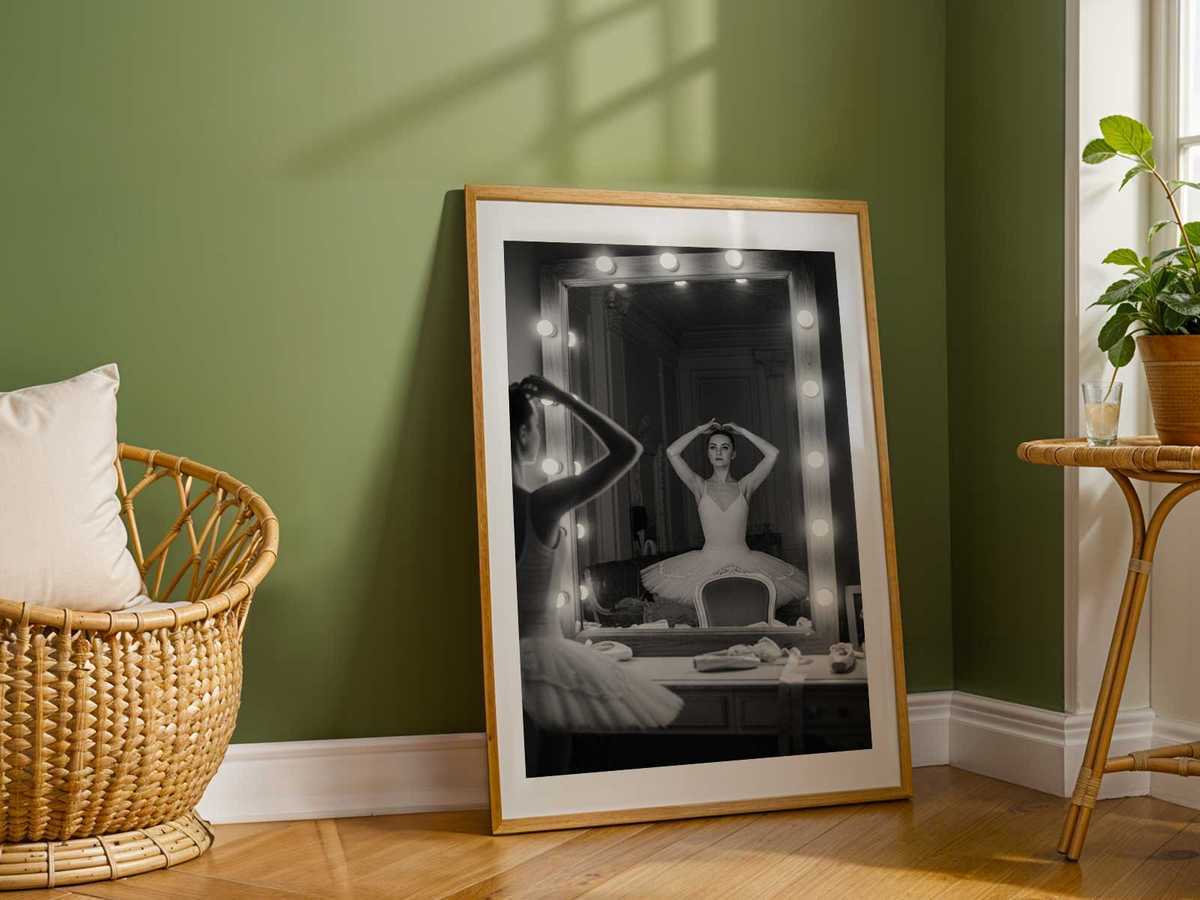
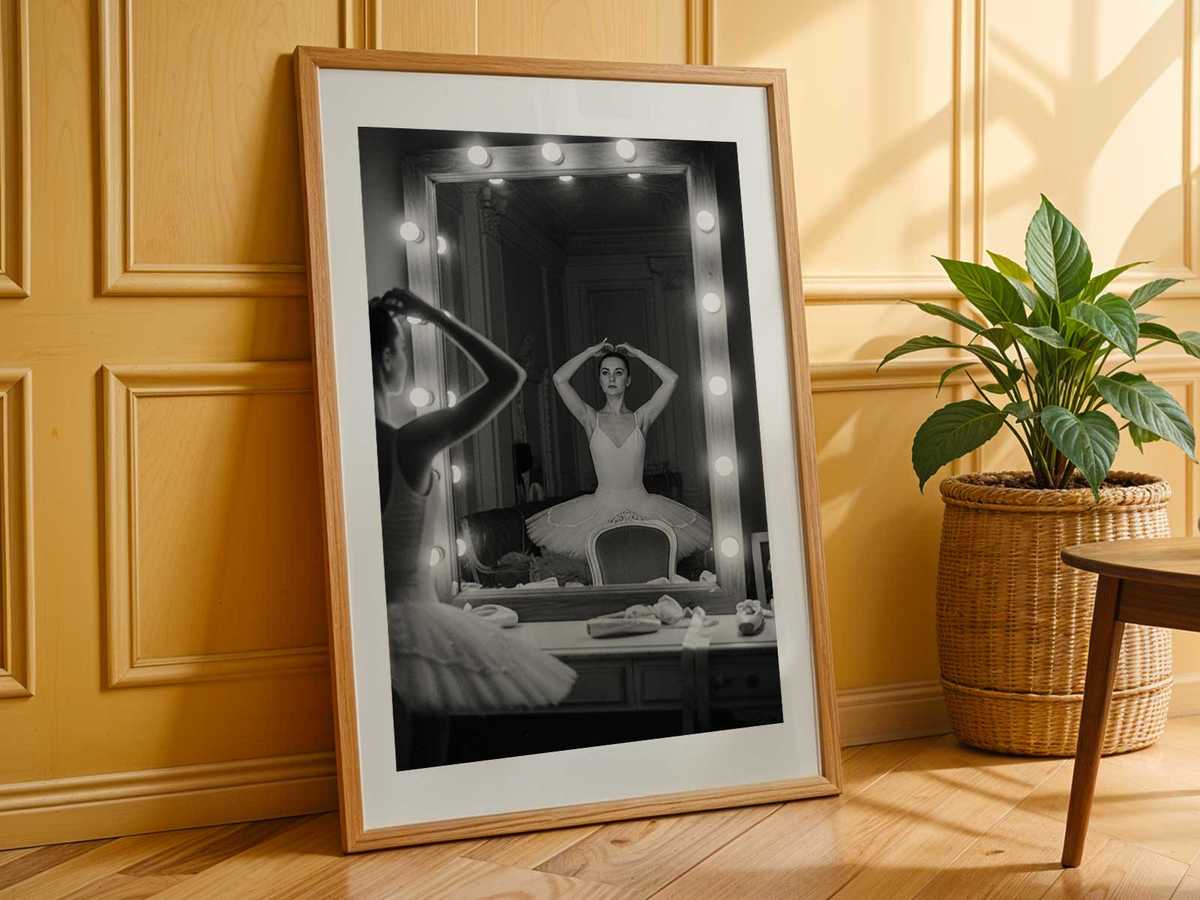
On the wall, the poster functions like a rehearsal partner. It invites repeated looking, revealing new relationships between line and reflection each time: the way a shoulder answers its echo, how the eyes meet an image of themselves, or how balance is negotiated just before resolution. It is less an illustration of performance and more a meditation on how technique is assembled—appealing to anyone who loves the unseen labor behind a polished step.
Anchored in a single, well-observed instant, this ballet dance photograph carries the quiet authority of practice. It keeps on the wall not as a showpiece but as an insistence: that movement is constructed moment by moment, that the mirror is both critic and teacher, and that the most telling images are those that show how art is made.