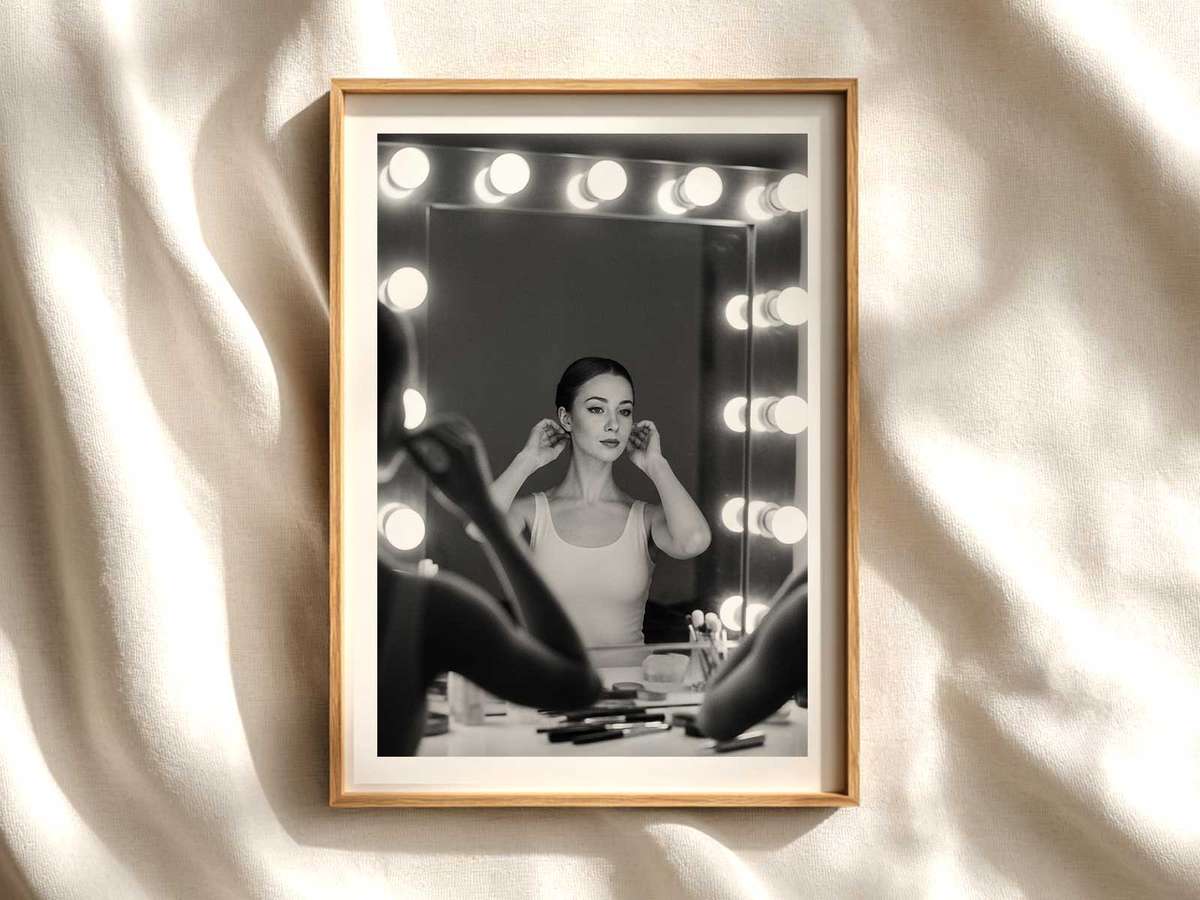
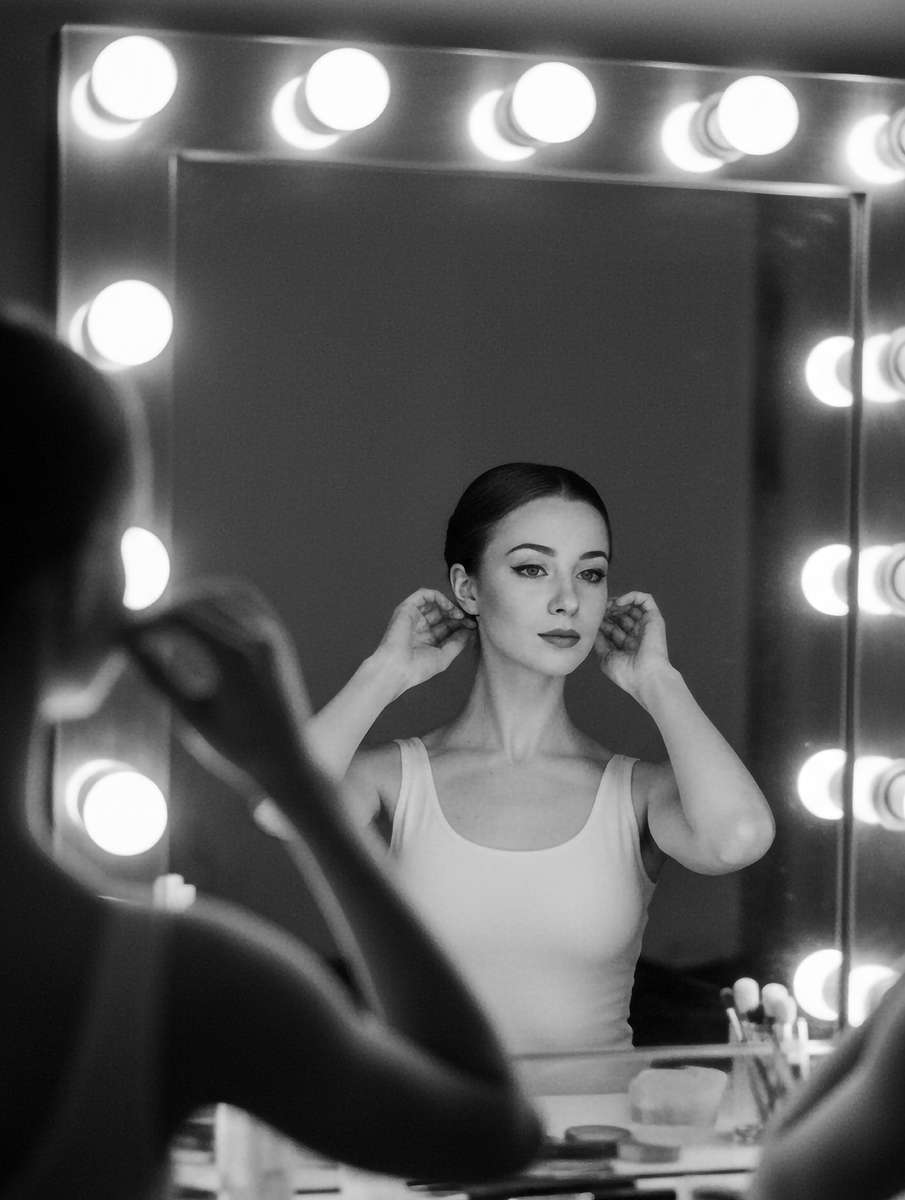
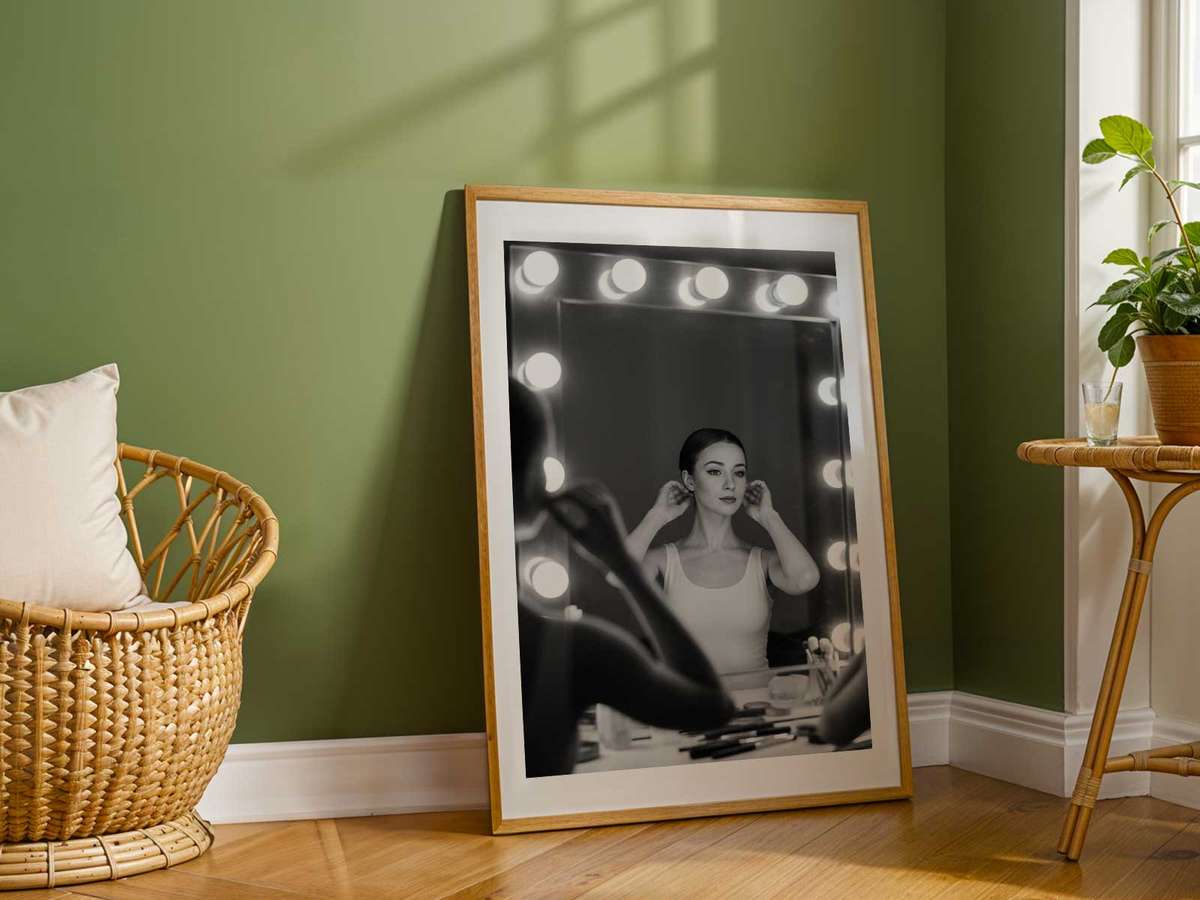
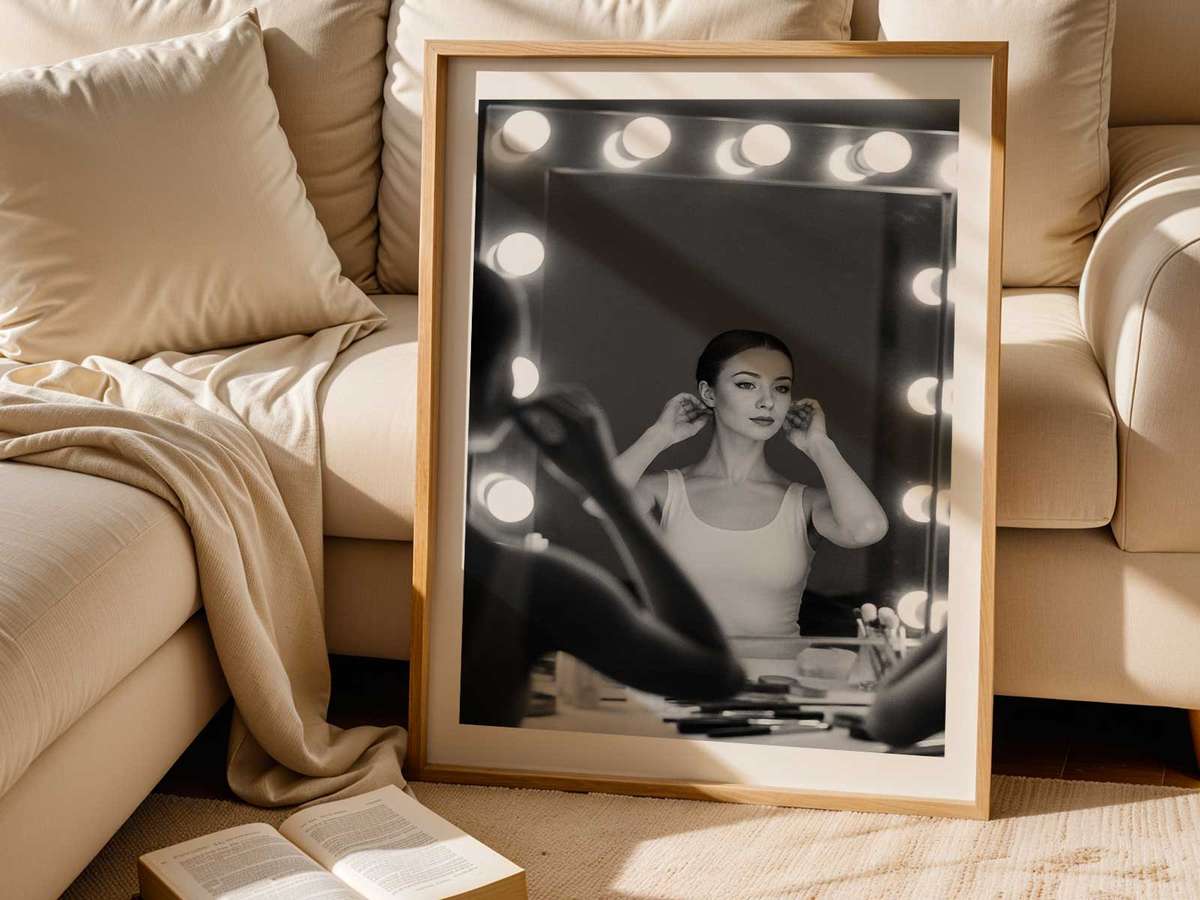
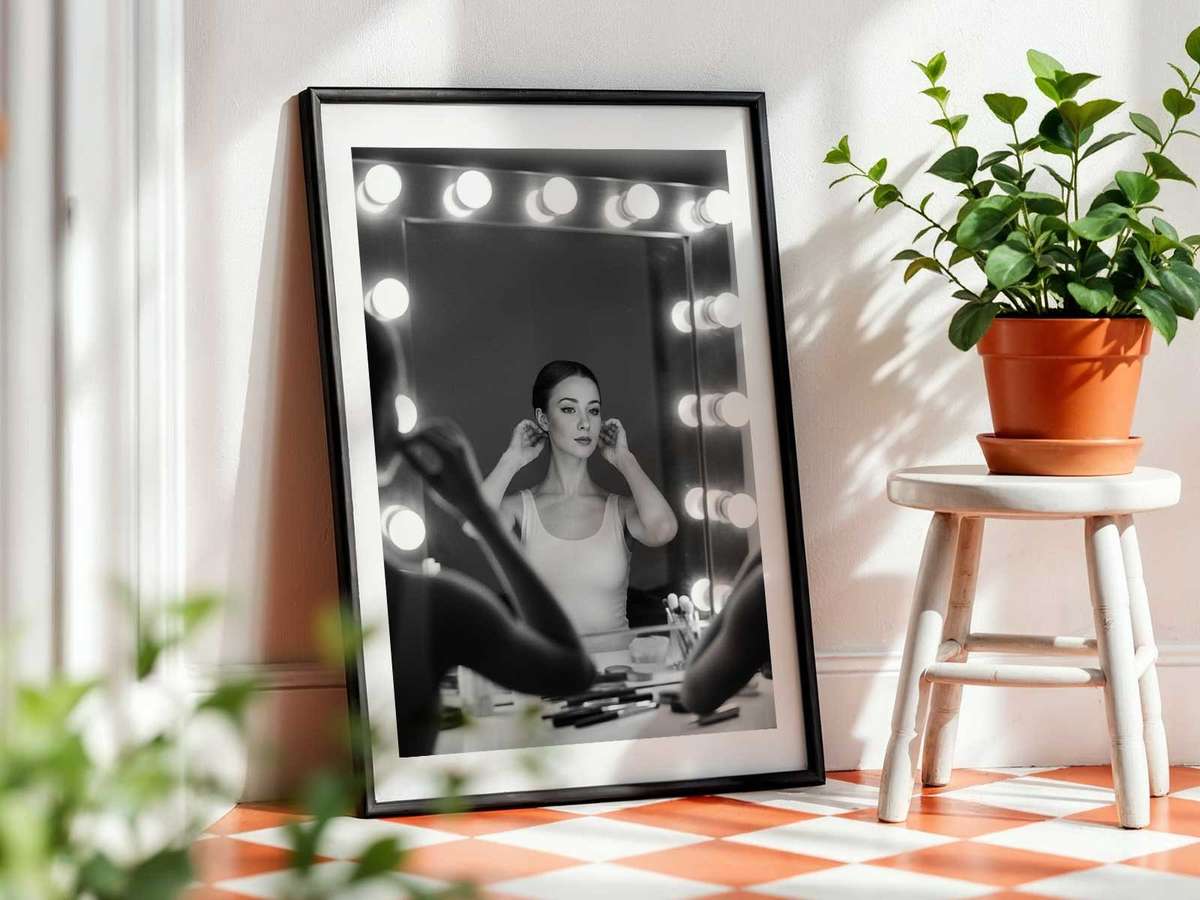
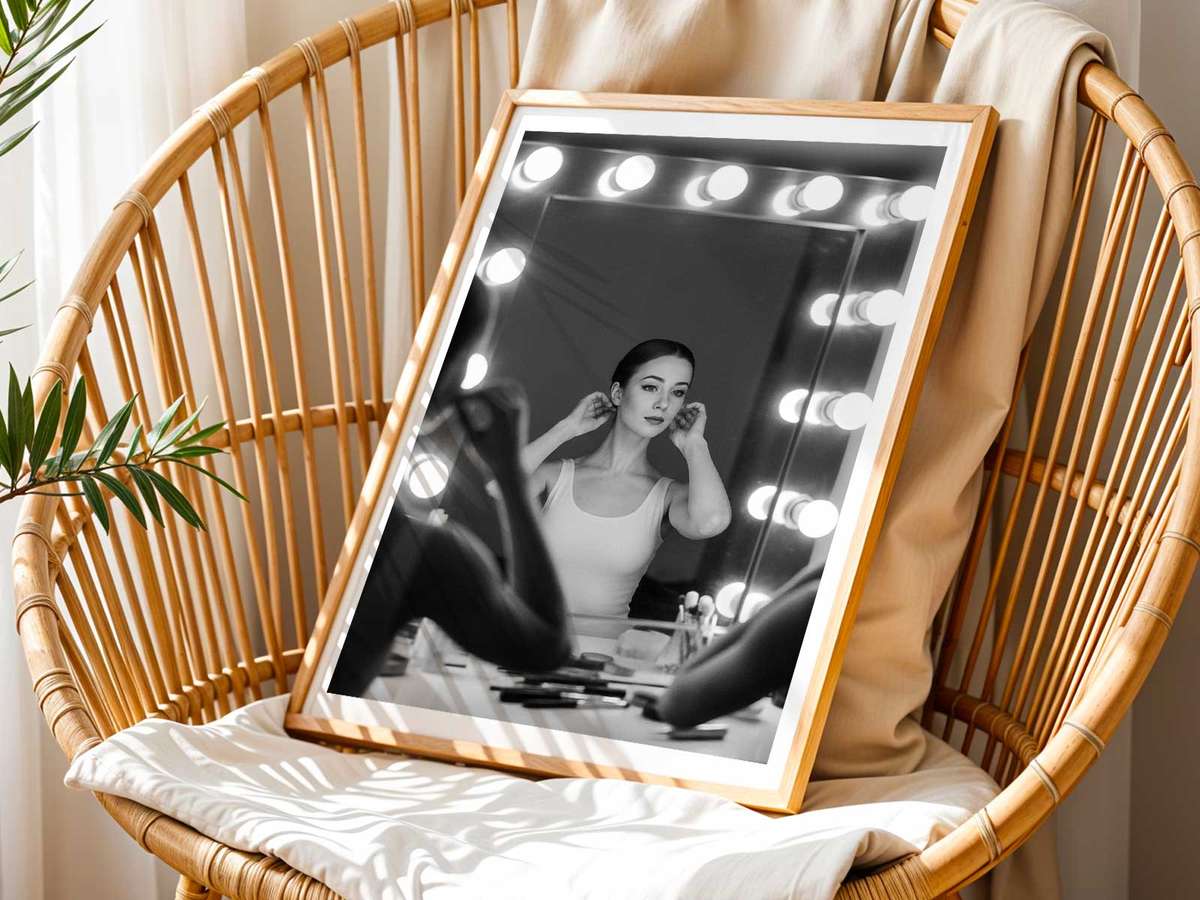
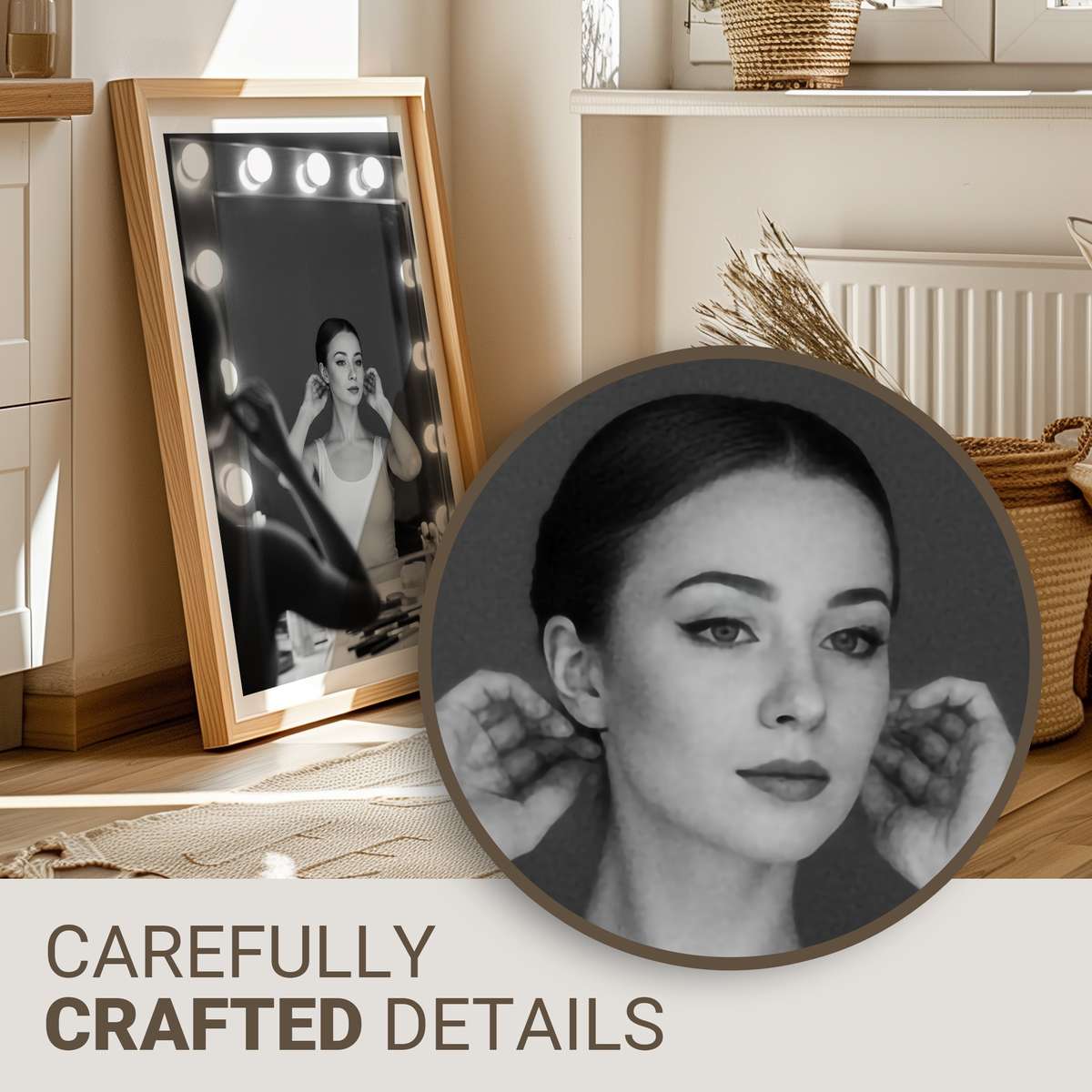
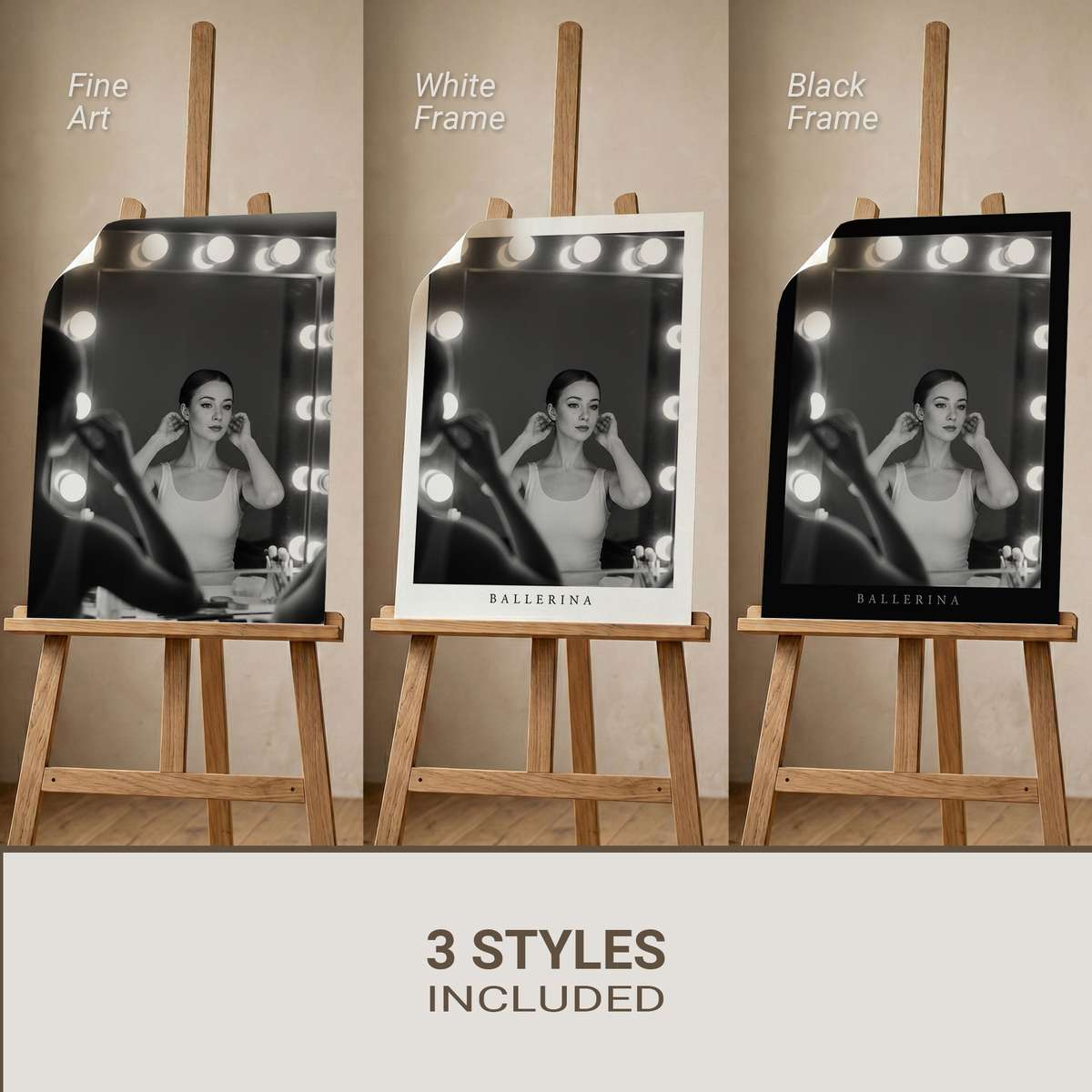
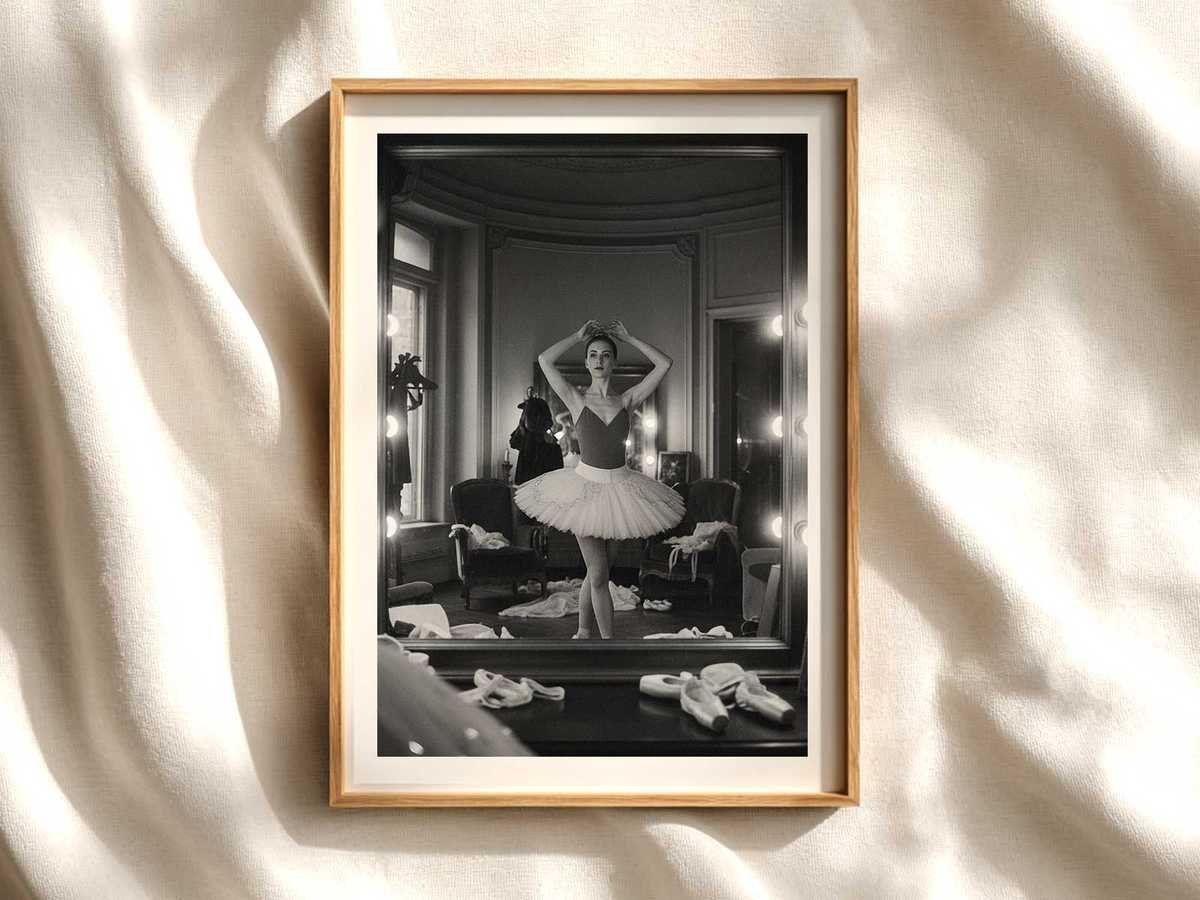
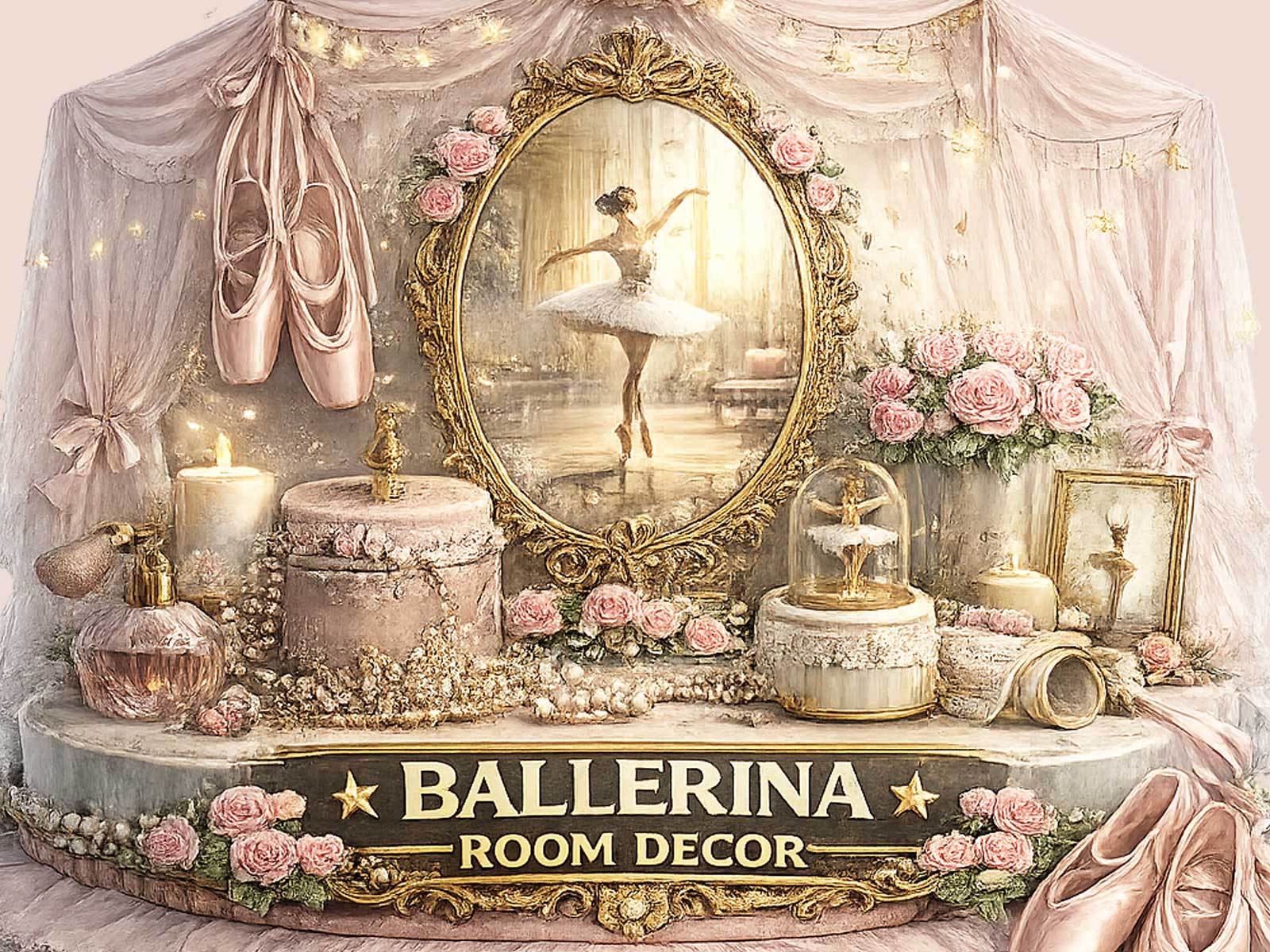
The image arrests a single, intimate second: a ballerina framed half in profile, half reflected, where the practiced line of her arm meets the private geometry of the mirror. What feels at first like a study of posture becomes, on closer sight, a concord between two realities—the outward performance and the inward rehearsal. The mirror doubles the pose and multiplies intention, turning a single gesture into a miniature scene of concentration, memory, and stage readiness.
Here the visual clarity of the captured instant is what gives the poster its power. The living line of the dancer—shoulder, extended arm, lifted rib—reads as both direction and discipline. The reflection repeats that line but not identically: subtle asymmetries in angle, breath, and gaze create a taut dialogue. That difference is the image’s narrative engine; it tells you that this is not a posed portrait but a suspended negotiation between public display and private calibration. You sense the muscle remembering a turn, the eye rehearsing arrival, the breath timed between counts.
[IMAGE_INSERT_ARTICLE_01]
Visually the photograph balances stillness and motion. The body’s geometry points outward while the reflected face suggests inward focus, producing a tension that stops time without flattening it. Light skims the dancer’s cheek and arm, carving a silhouette that reads at a distance yet rewards close viewing: a faint tremor in a wrist, the set of a jaw, the quiet compression of a foot preparing to spring. Those small details are what make this more than a decorative image—they are evidence of an artistic process you can hang on your wall.
Why the image stays with you
Because it preserves both the appearance of performance and the labor behind it. A generic dancer shot shows an ideal line; this portrait shows the work that produces that line. The mirror introduces a narrative pause—a rehearsal loop of intention and response. That layered meaning gives the poster a presence that continues to unfold; each glance reveals a fresh micro-story about preparation, doubt, triumph, or concentration.
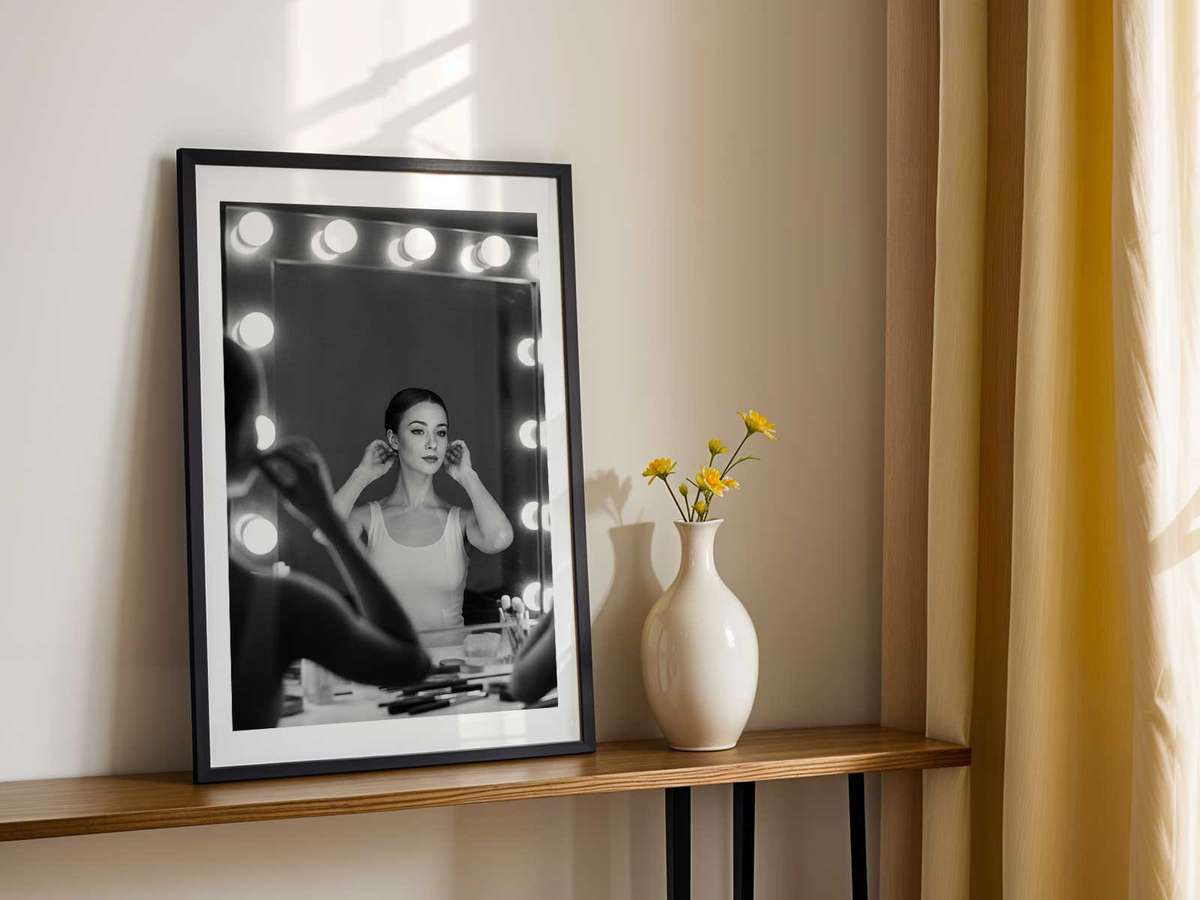
Placed in a studio corner, a refined living room, or a bedroom where someone keeps books and barre shoes, the poster quietly changes the room’s atmosphere. It does not demand attention like a loud print; it invites sustained looking. The image brings a sense of composed energy: the feeling of a breath held before music resumes, of a thought assembling itself into action. For anyone drawn to ballet or expressive visual art, that quality makes the piece feel personally resonant rather than merely decorative.
A moment held at full intensity
Ultimately this portrait endures because it saves a fleeting alignment—the athlete’s focus, the artist’s doubt, the performer’s readiness—so you can return to it. It reads as a complete scene in miniature: the stage presence implied by outward line, the interior life suggested by reflected features. Hanging it is a way to live with the discipline and tenderness of a single performance second, to let that suspended beat lend clarity and intent to a room.