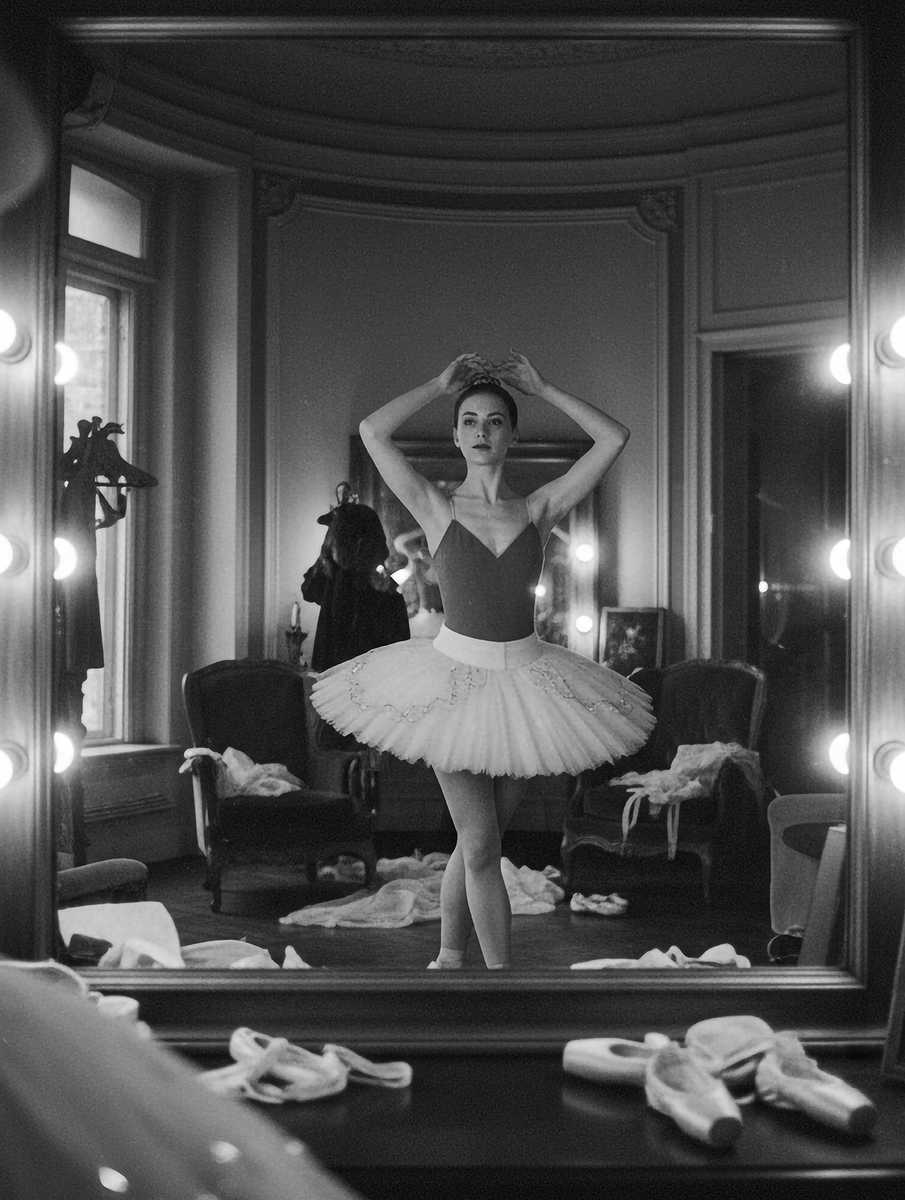
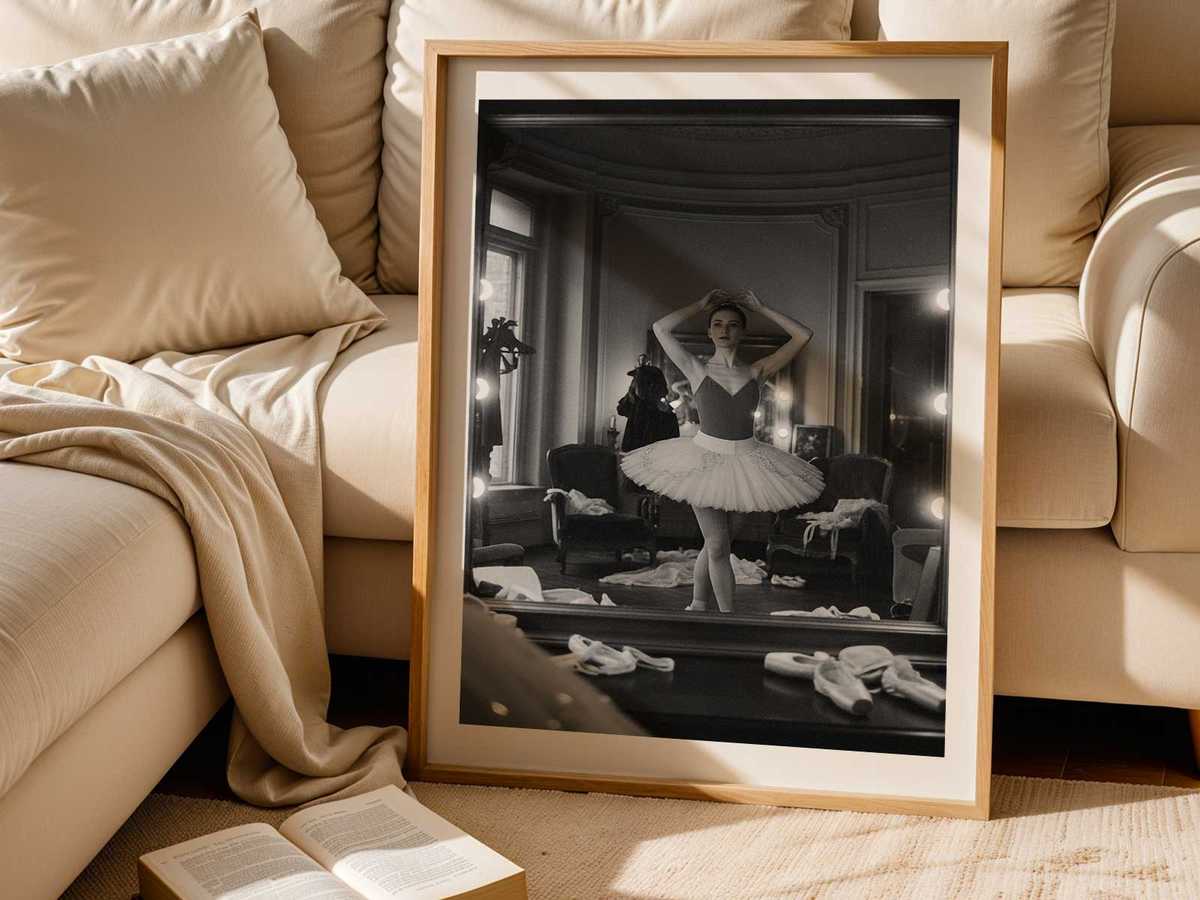
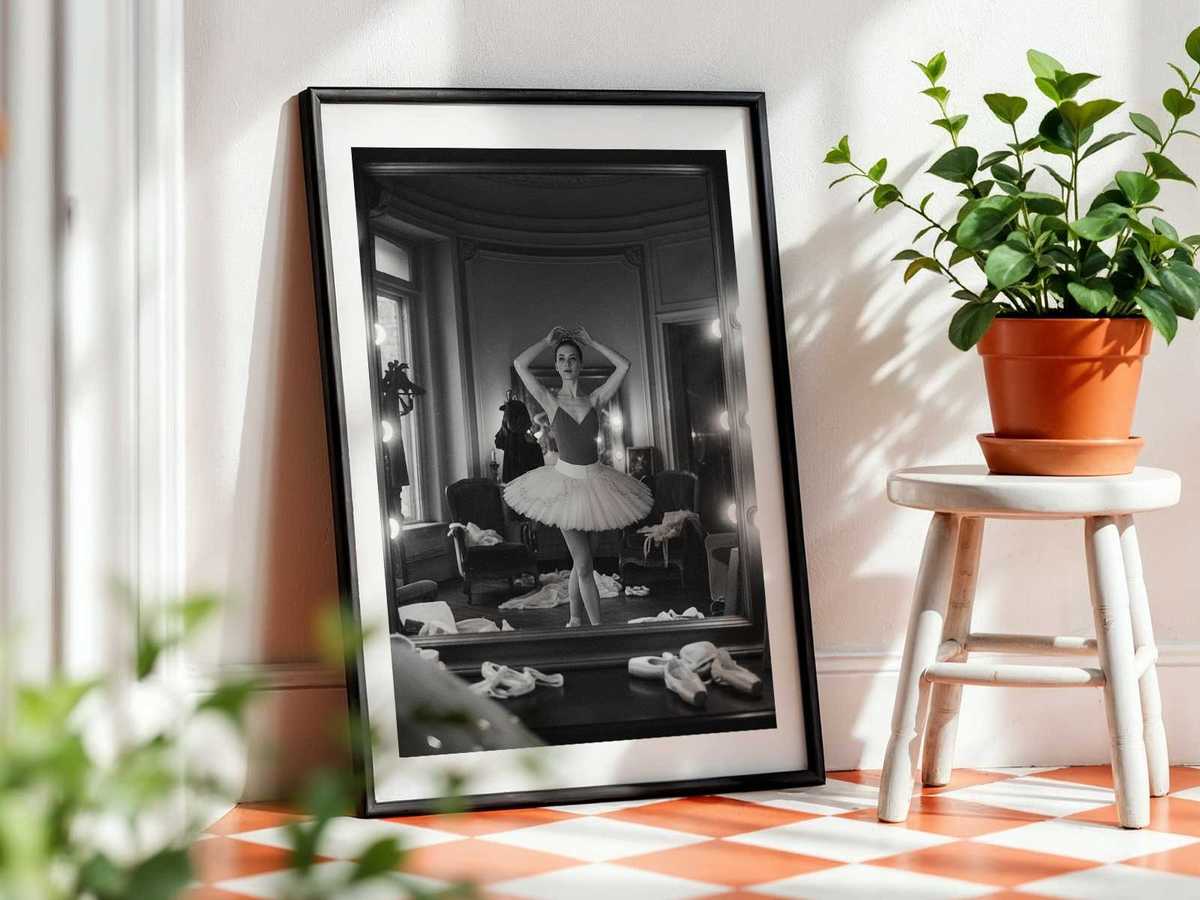
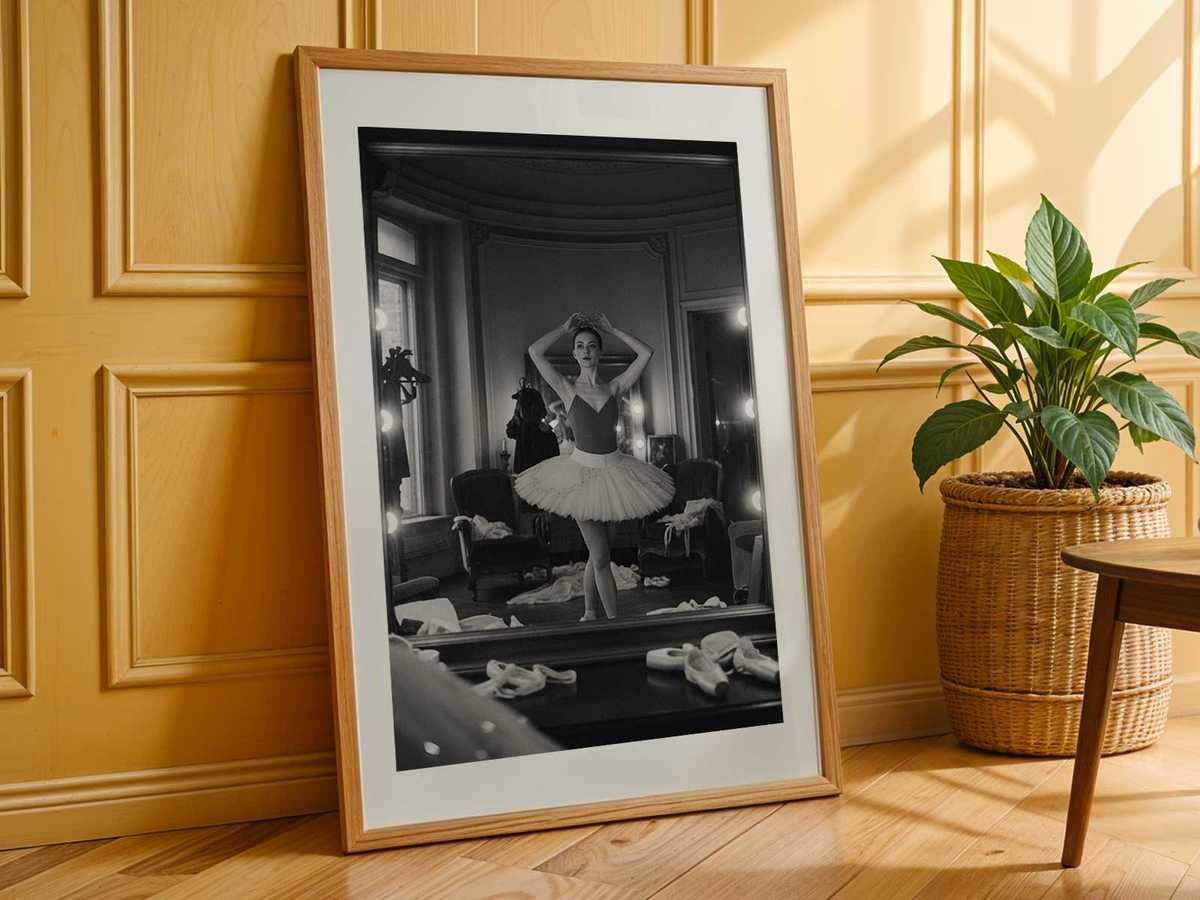
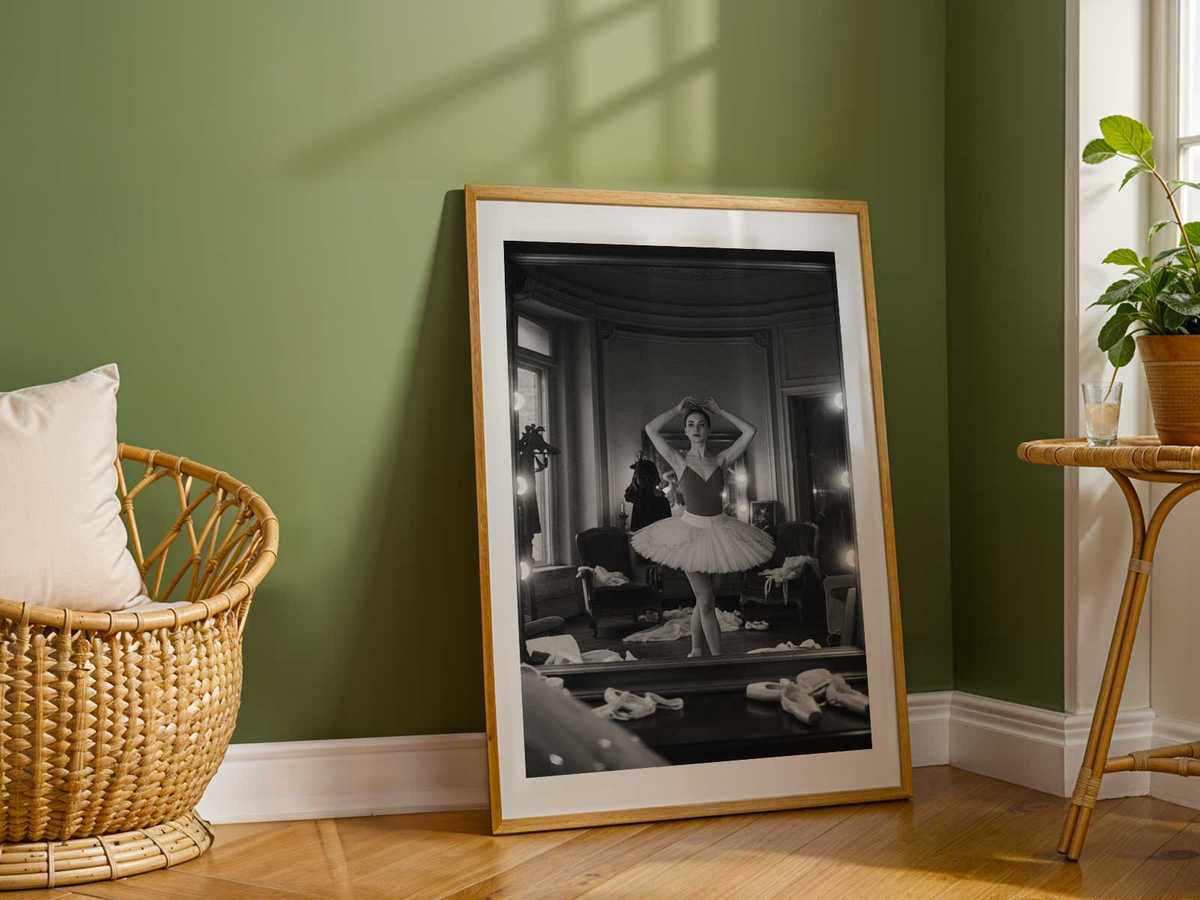
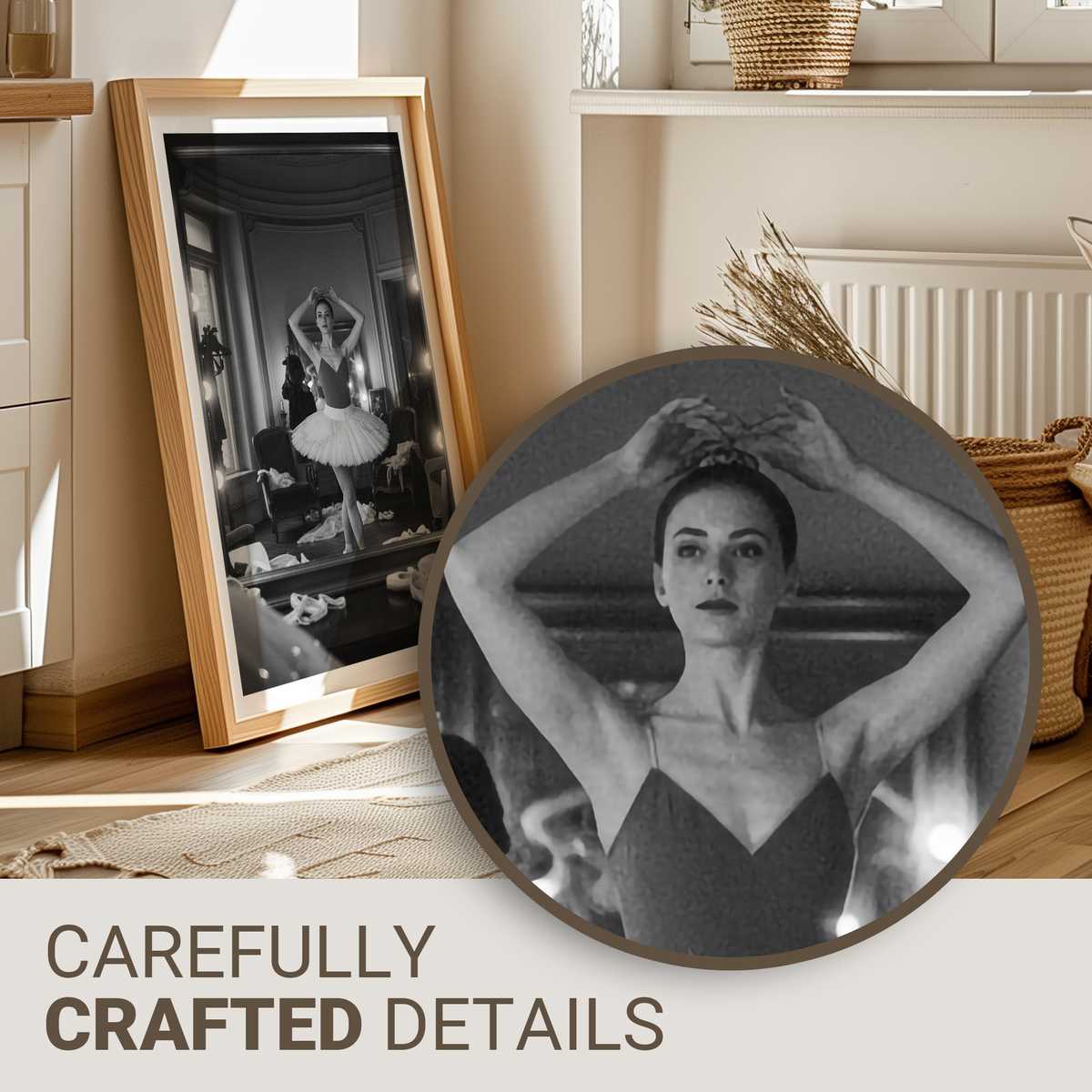
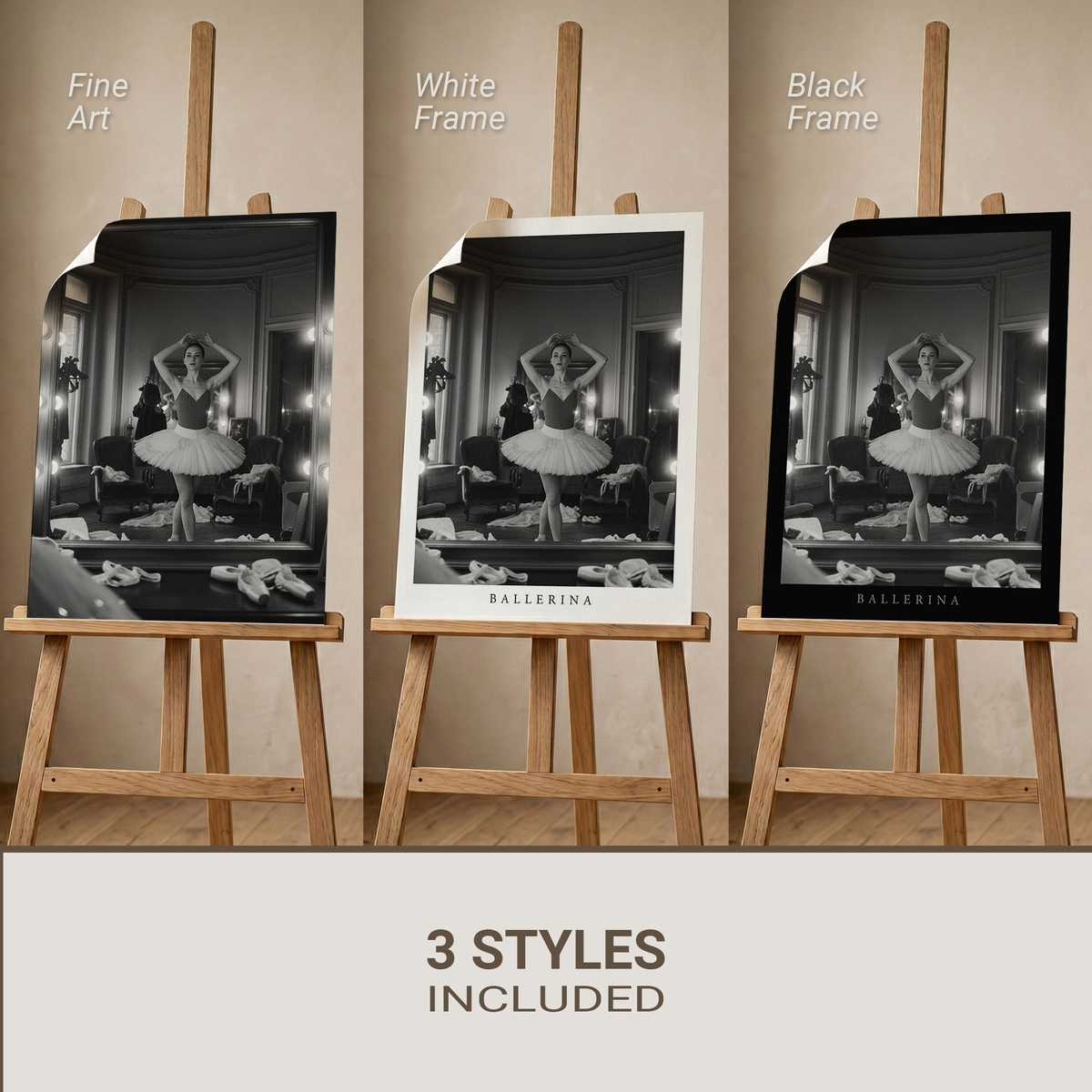
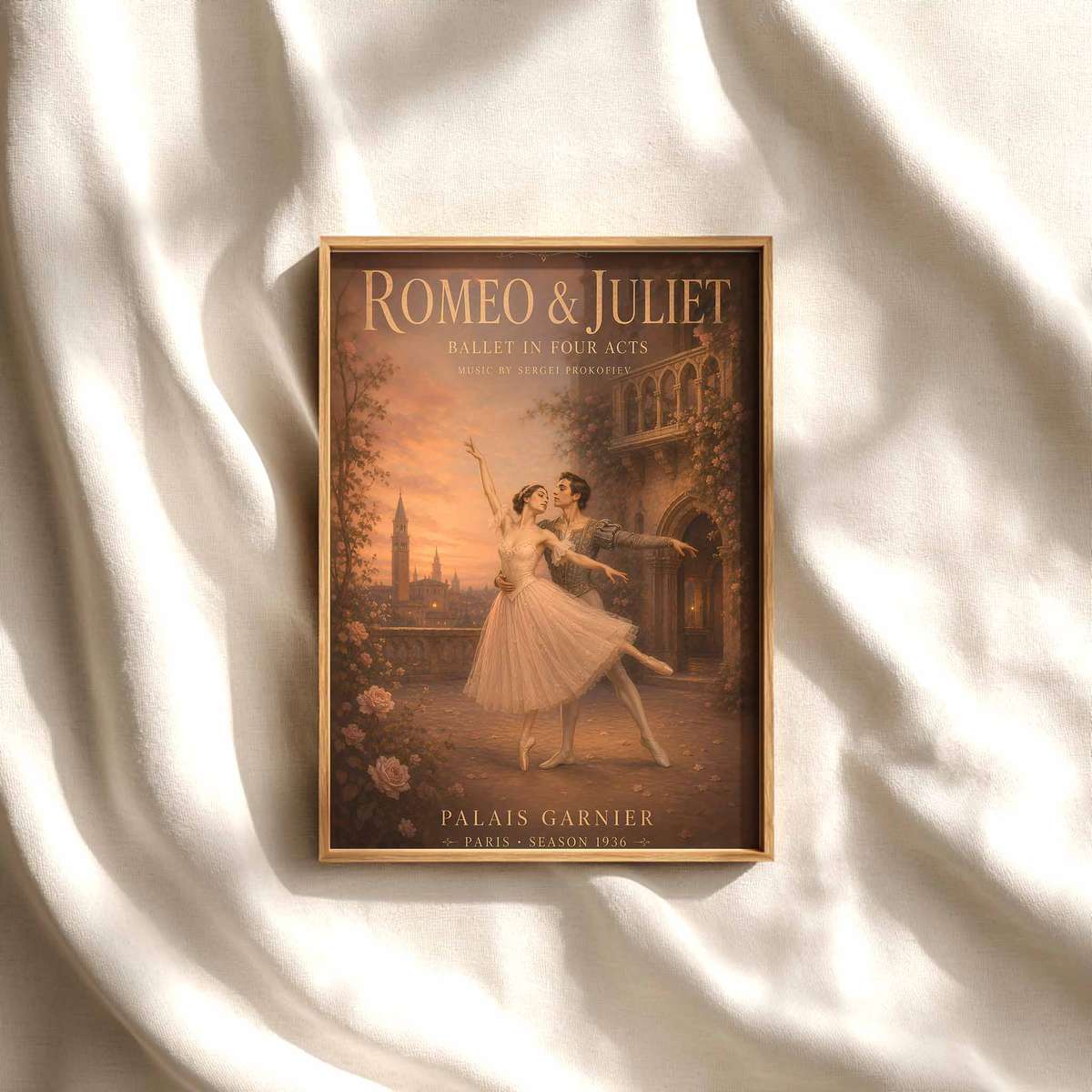
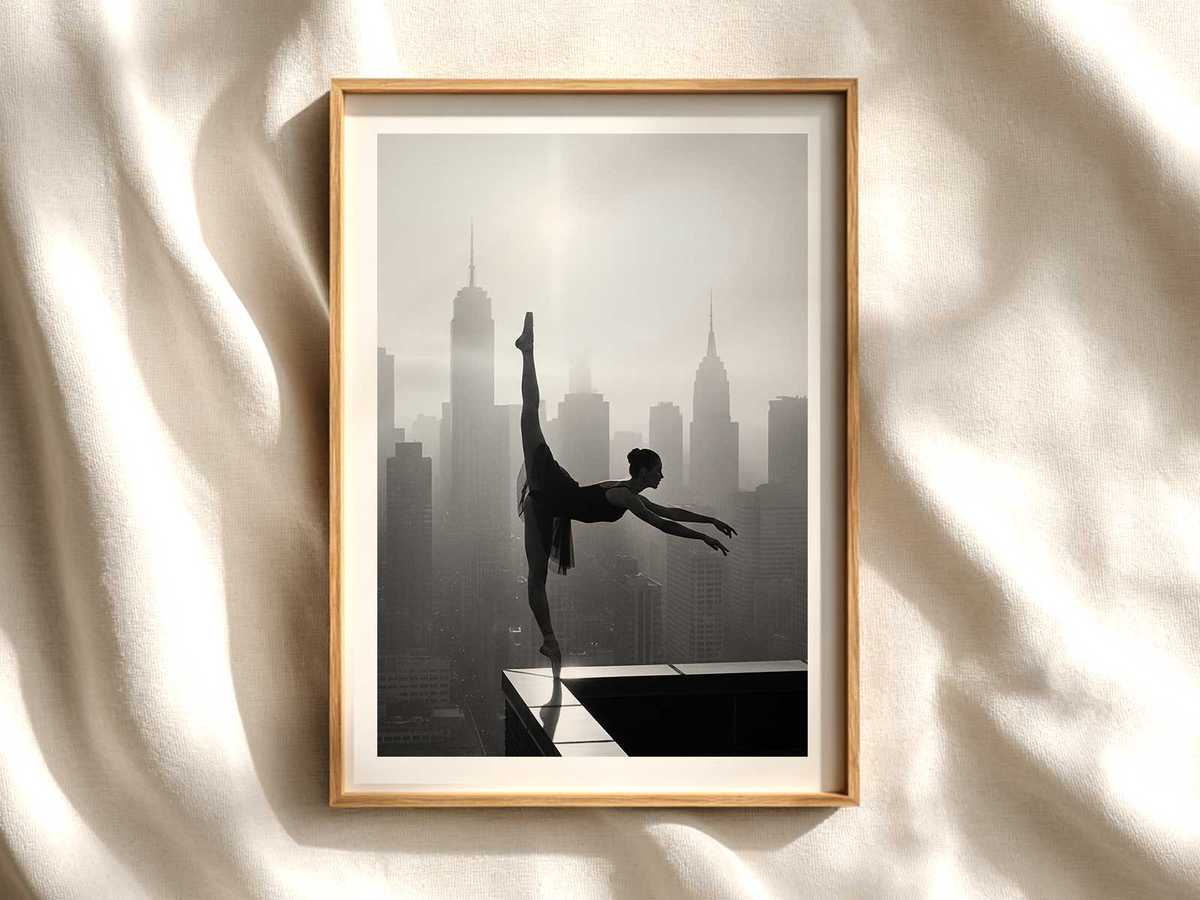
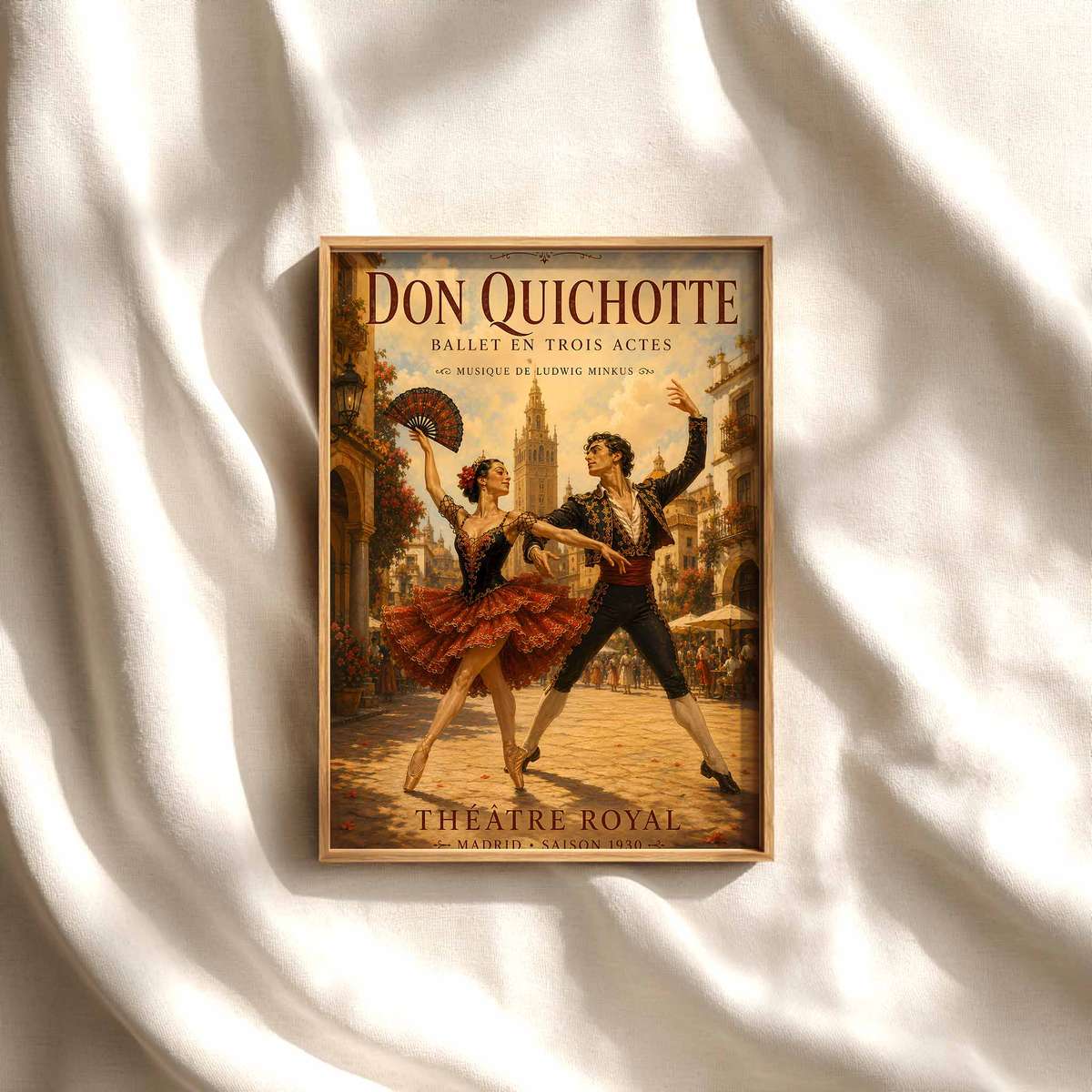
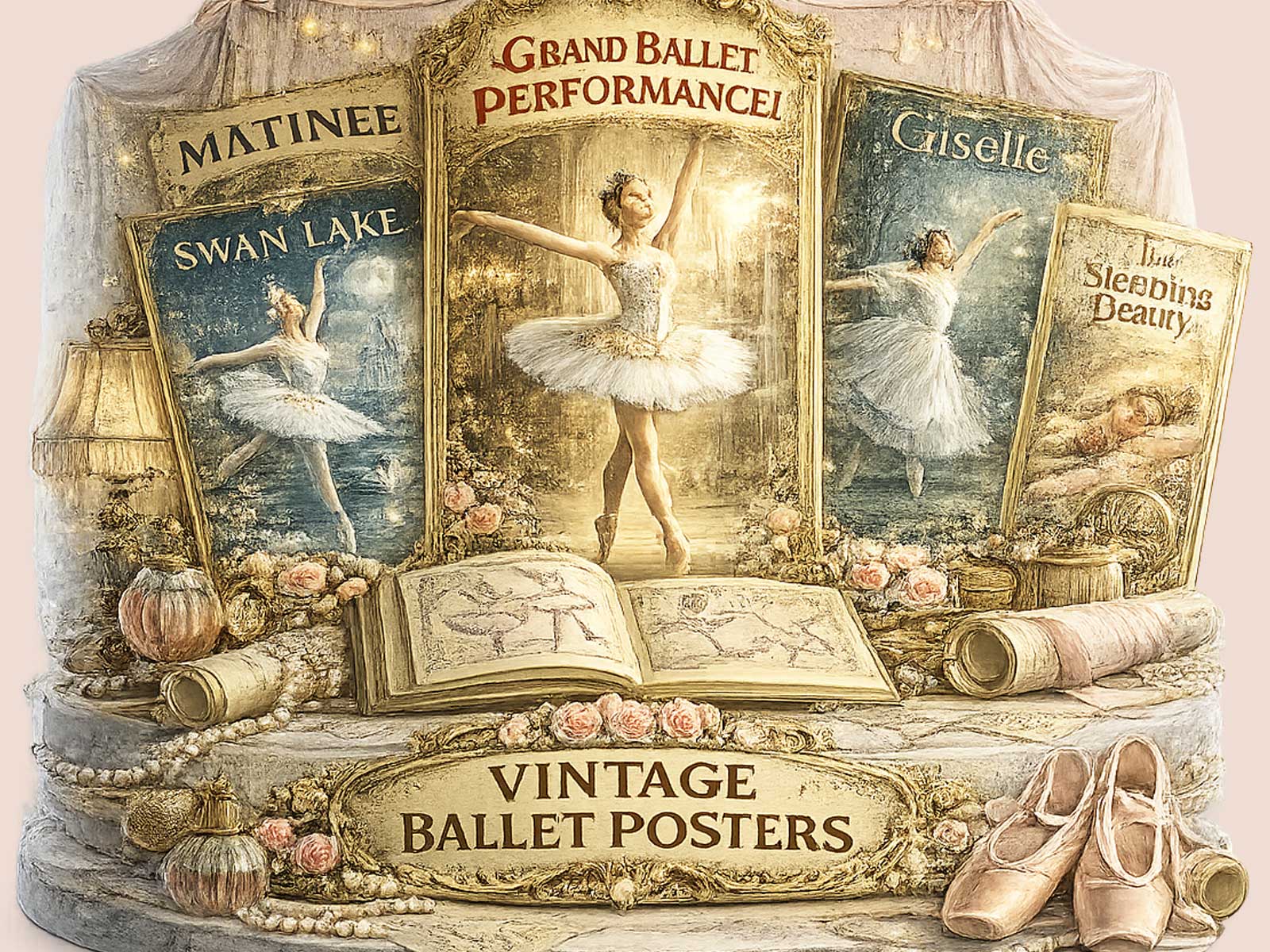
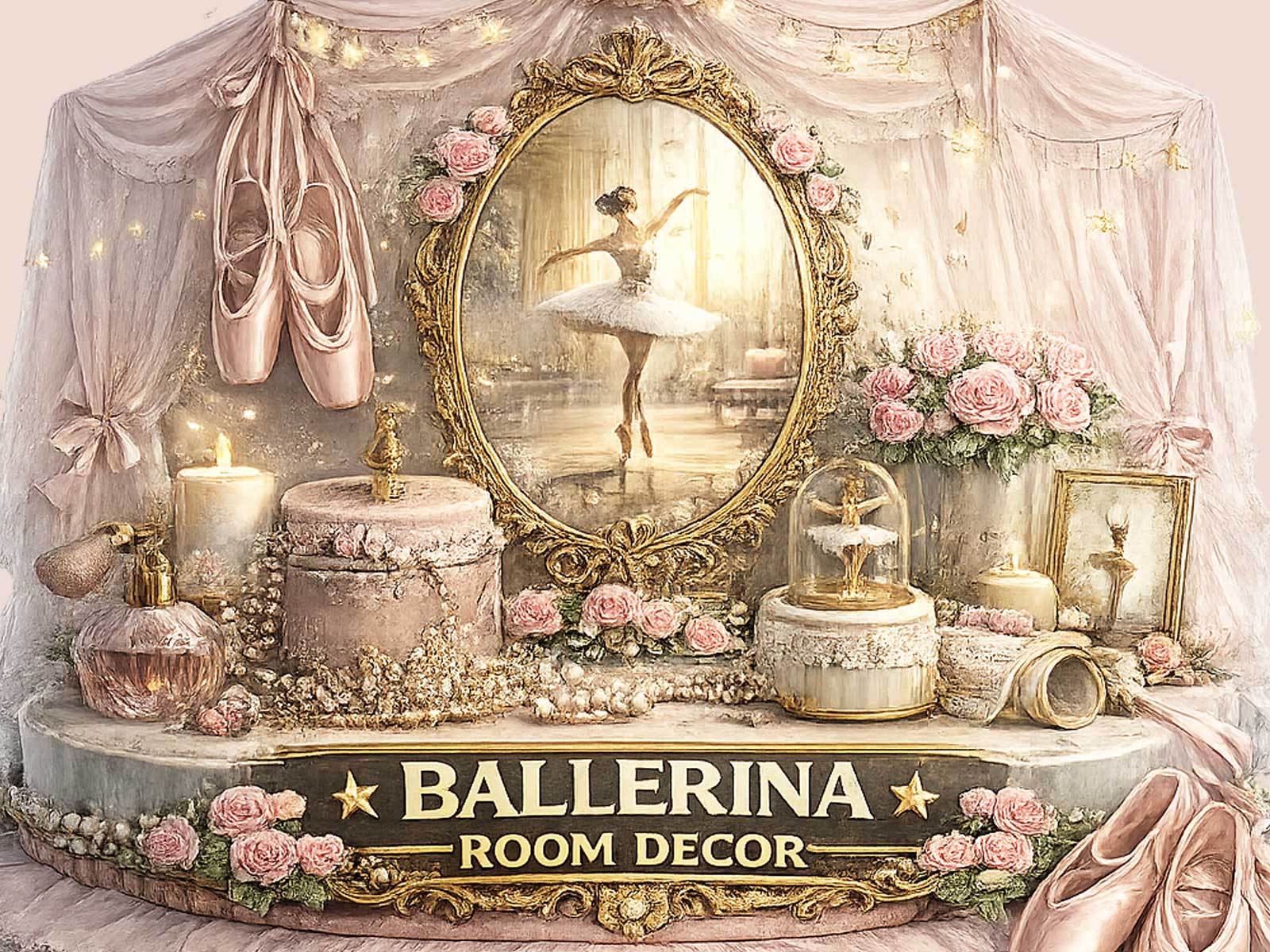
A dancer pauses in the exact half-breath between effort and ease — one arm extended, the neck long, the foot poised as if still deciding whether to leave the floor. Beside her, the mirror repeats and refracts that decision: a second body that is both testament and question. This poster makes that doubled instant the subject itself, turning a rehearsal-room fragment into a study of line, attention and mirrored intensity.
A moment held at full intensity
The visual force here comes from duplication. The real torso and its reflected twin set up a subtle counterpoint: the live weight of muscle and breath opposite the cool, infinitesimal correction of the reflection. Where a single dancer image can read like a snapshot of technique, this composition turns technique into dialogue. Your eye moves between two nearly identical lines and in that motion discovers the slight deviations — a fingertip that tilts differently, a shoulder that yields a fraction — and those deviations are what give the image urgency.
[IMAGE_INSERT_ARTICLE_01]
Light slices across the scene to emphasize planes. Shadows carve the shadow of the supporting leg; the mirror returns a softer, almost editorial version of the same plane. Together they clarify the geometry of the body: extension becomes graphic, the spine a clean axis, the arm a drawn line. The image preserves the millisecond where intention and perception meet, so the poster feels less like decoration and more like evidence of discipline made visible.
Why the image stays with you
Because it records a choice that usually disappears — the moment a dancer reads her own line and adjusts. That awareness is palpable in the picture: concentration is visible on the face, and the mirror makes that concentration public and private at once. The doubled presence adds narrative tension without drama; it’s intimate rather than theatrical, precise rather than expressive excess. For someone who loves ballet, this is recognition — the private correction made visible — and for anyone attracted to clean, purposeful imagery, it’s an object lesson in composure.
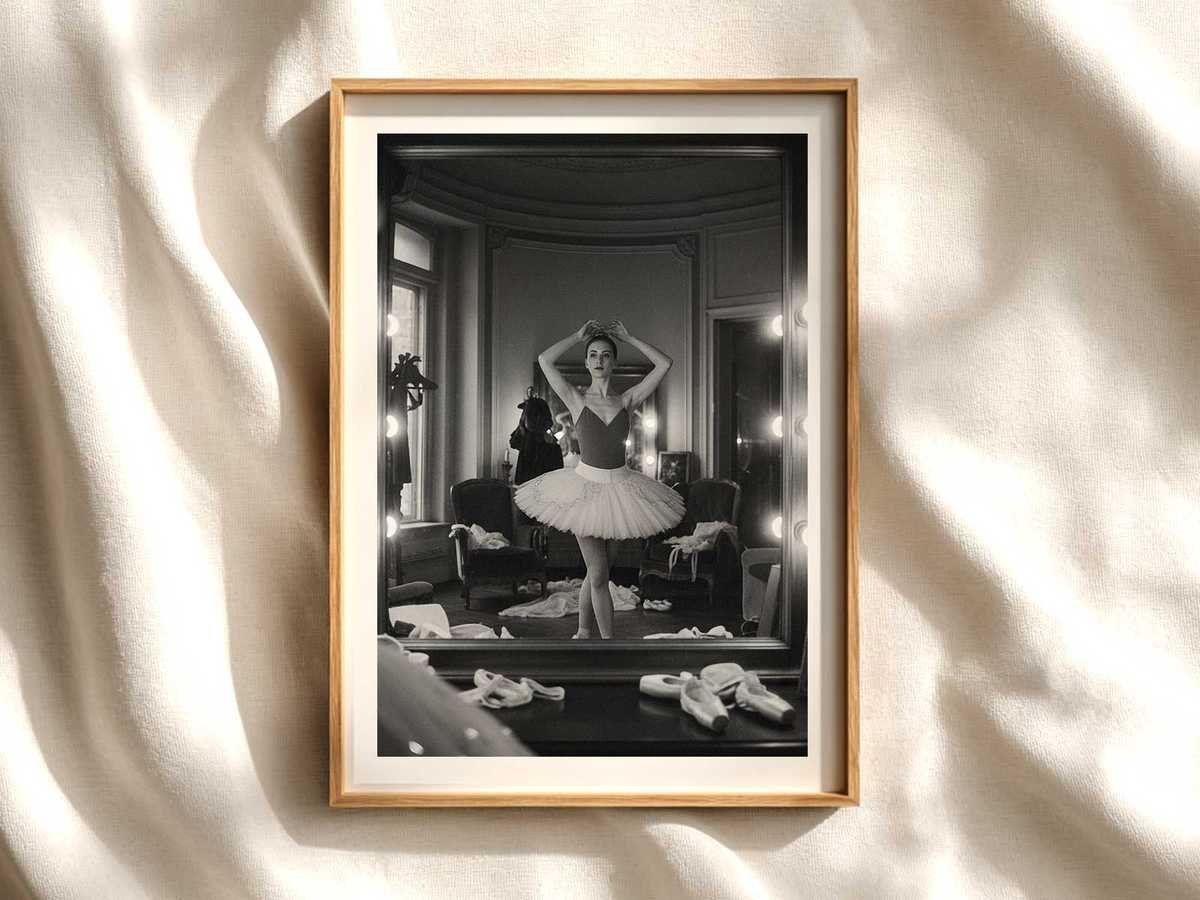
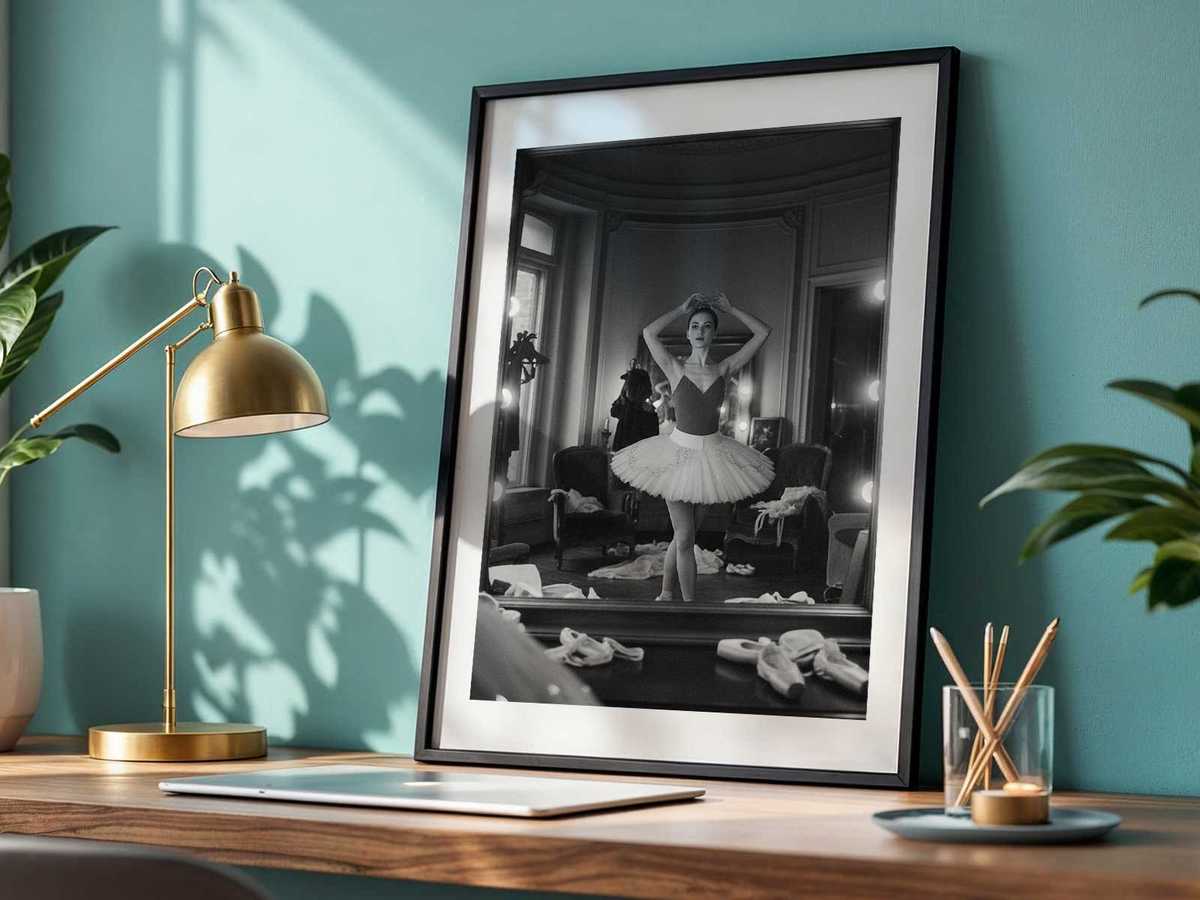
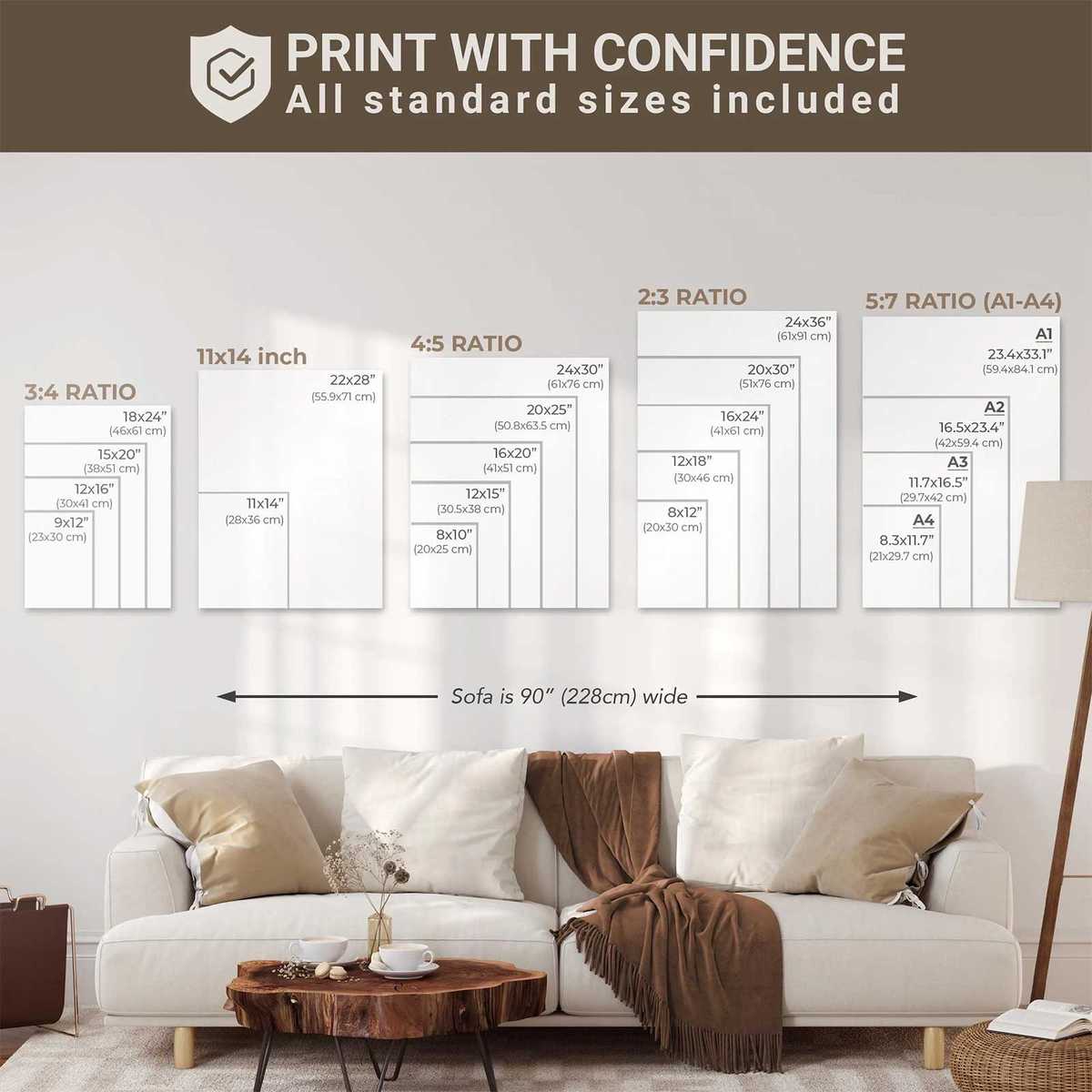
On a wall, the poster brings a contained propulsion. It suggests motion without requiring it: viewers sense the possibility of continuation, the next step, the soft release after the held line. In a studio corner it amplifies focus; in a refined living room it introduces compositional rigor; in a bedroom it offers a quiet companion of concentration. The image’s balance of stillness and implied movement invites repeated looking rather than a single glance.
More than an image of form, this poster preserves an exacting moment of perception — the instant when dancer and reflection measure and answer one another. Kept on a wall, it becomes a private prompt toward attention: an artwork that rewards both admiration of training and a deeper appreciation for the fragile geometry of human motion.