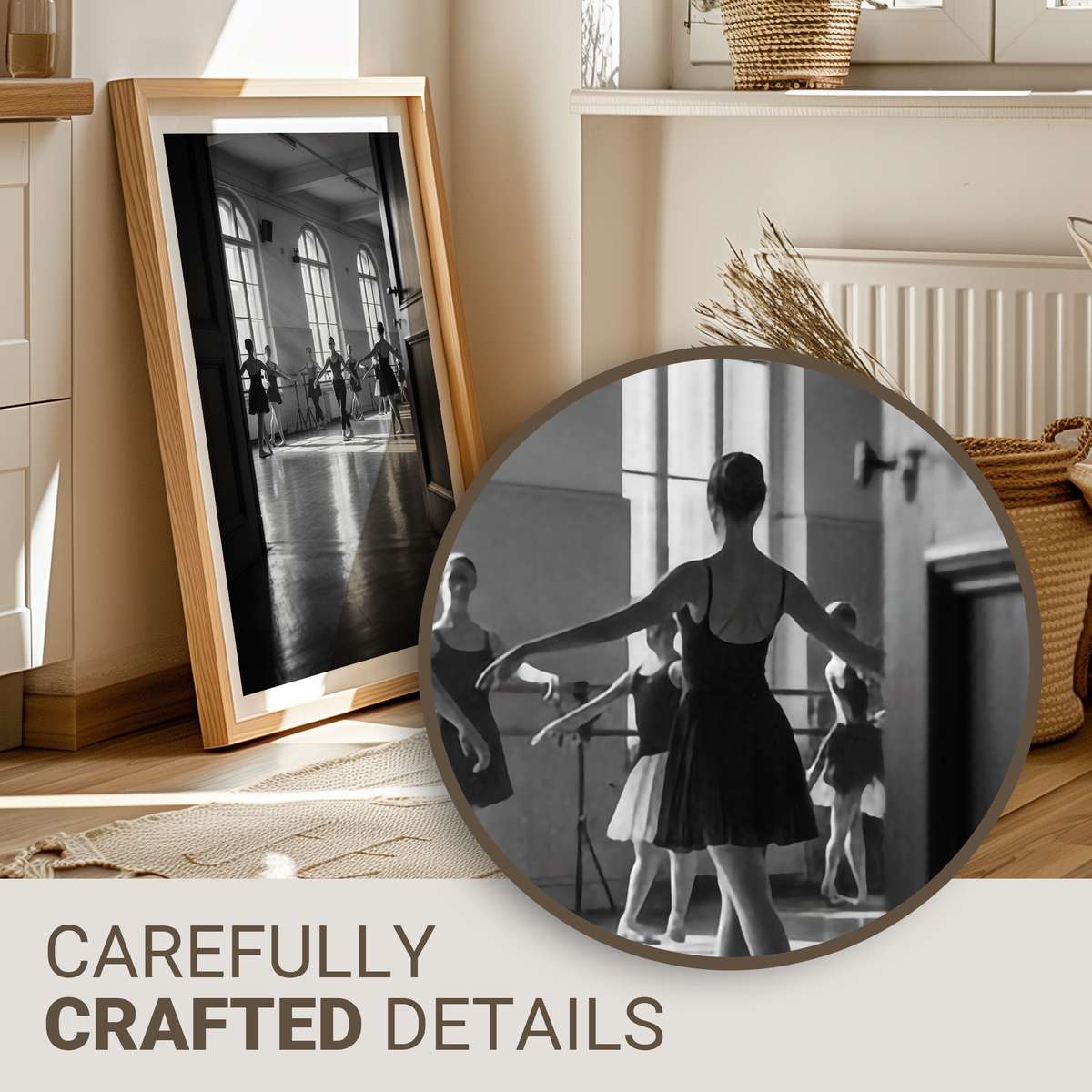
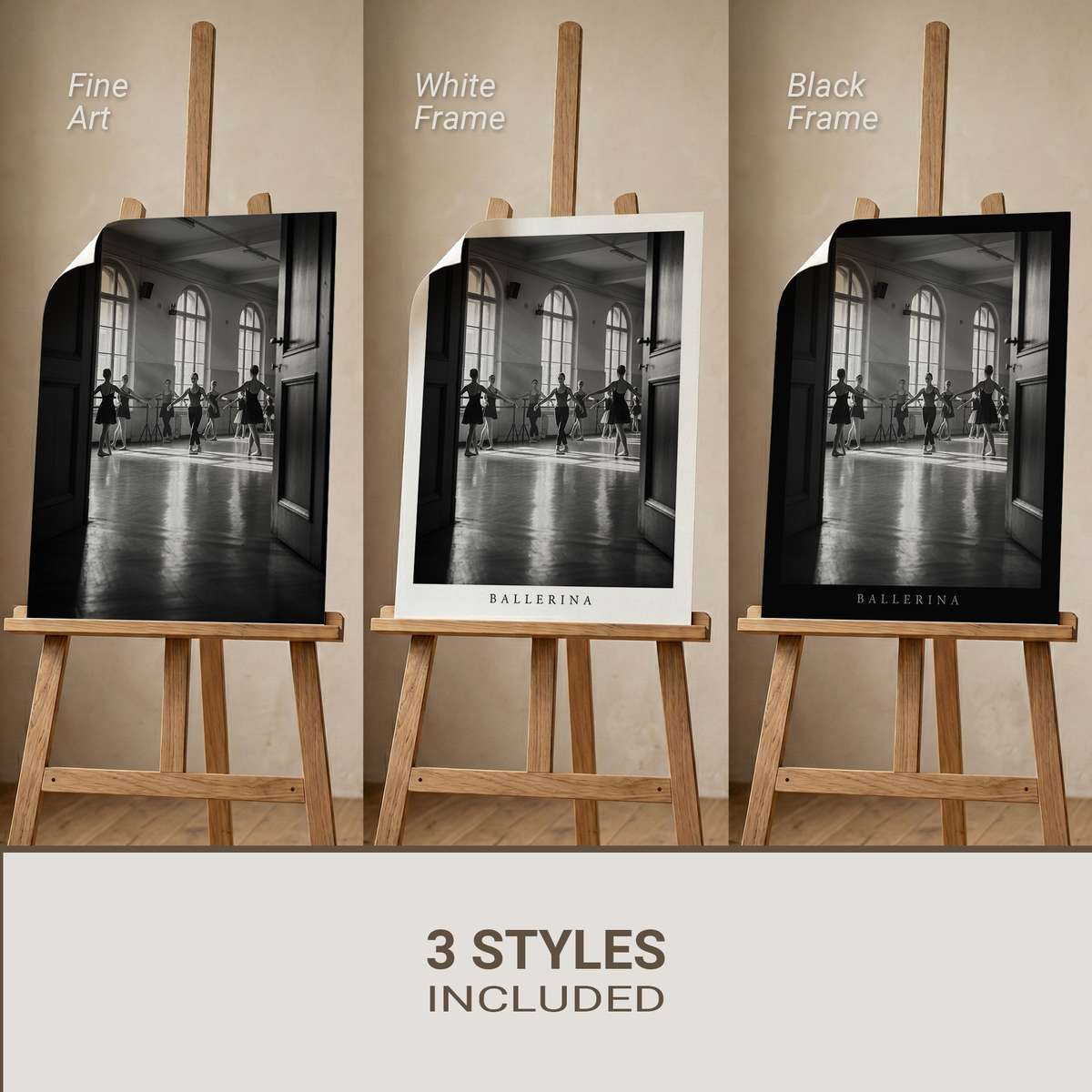
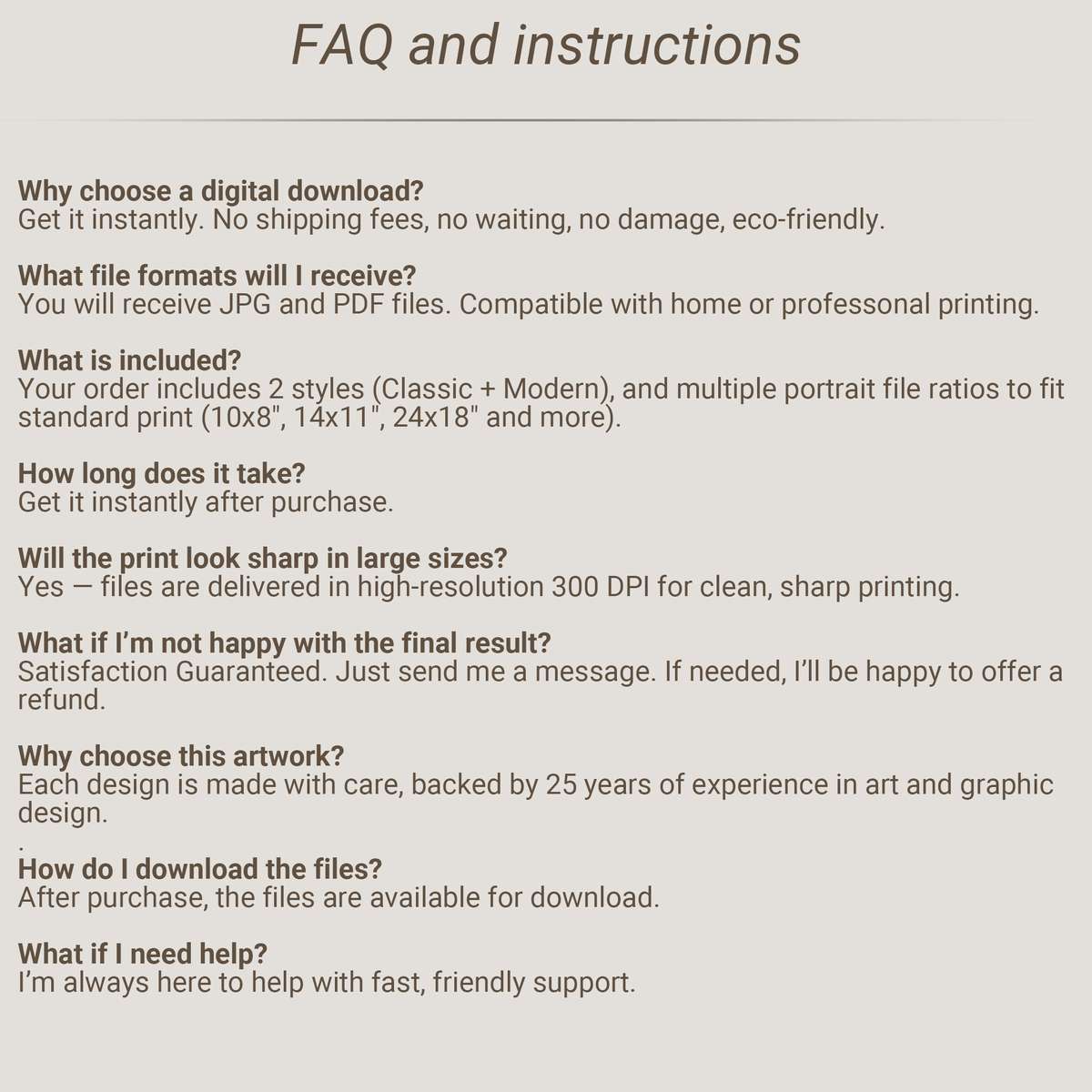
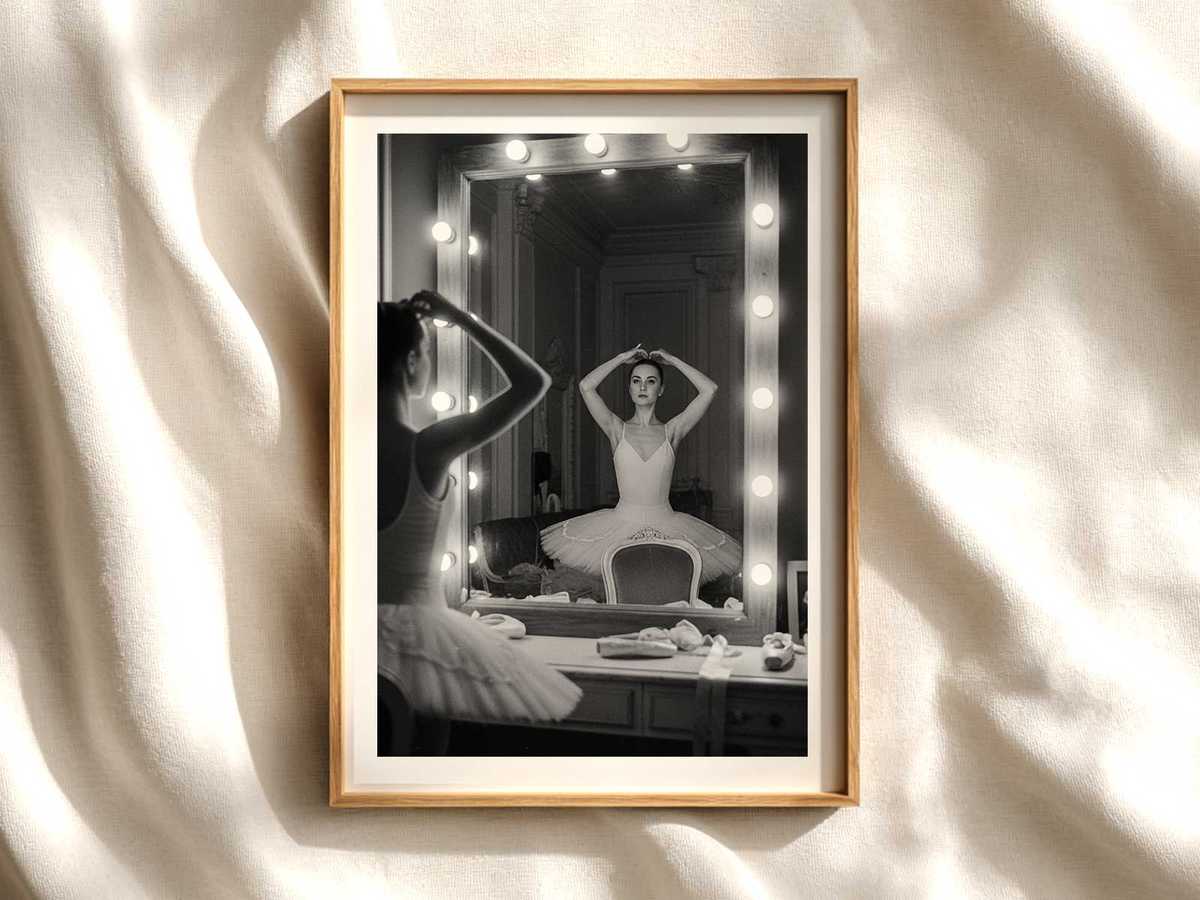
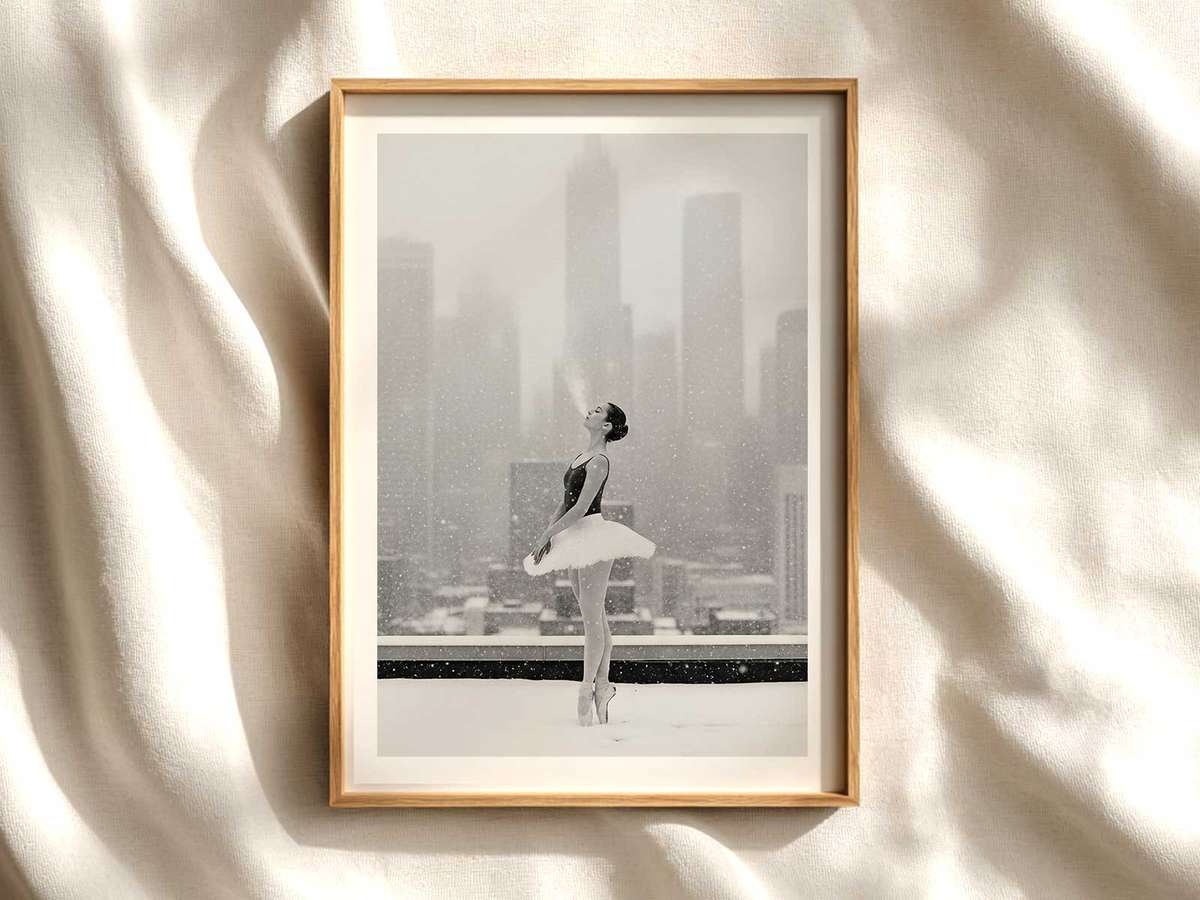
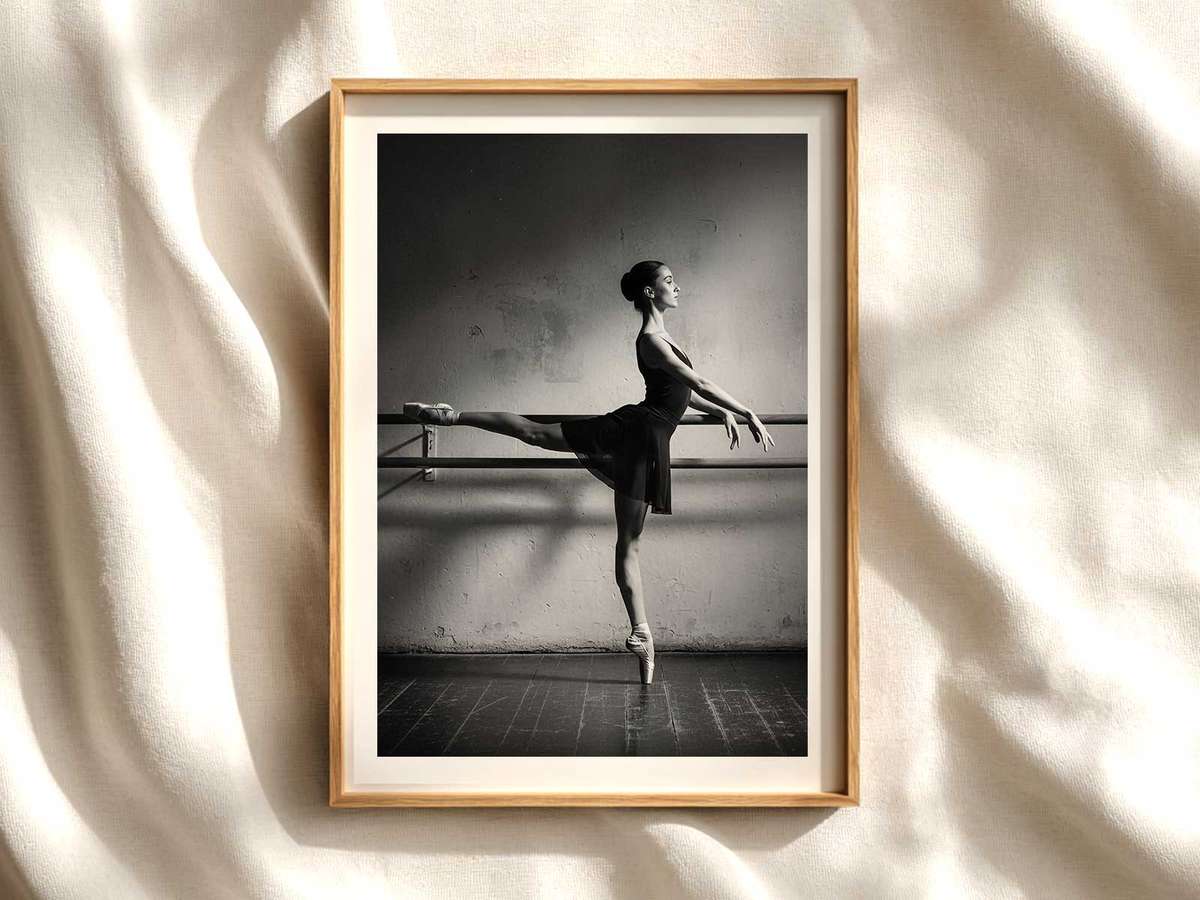
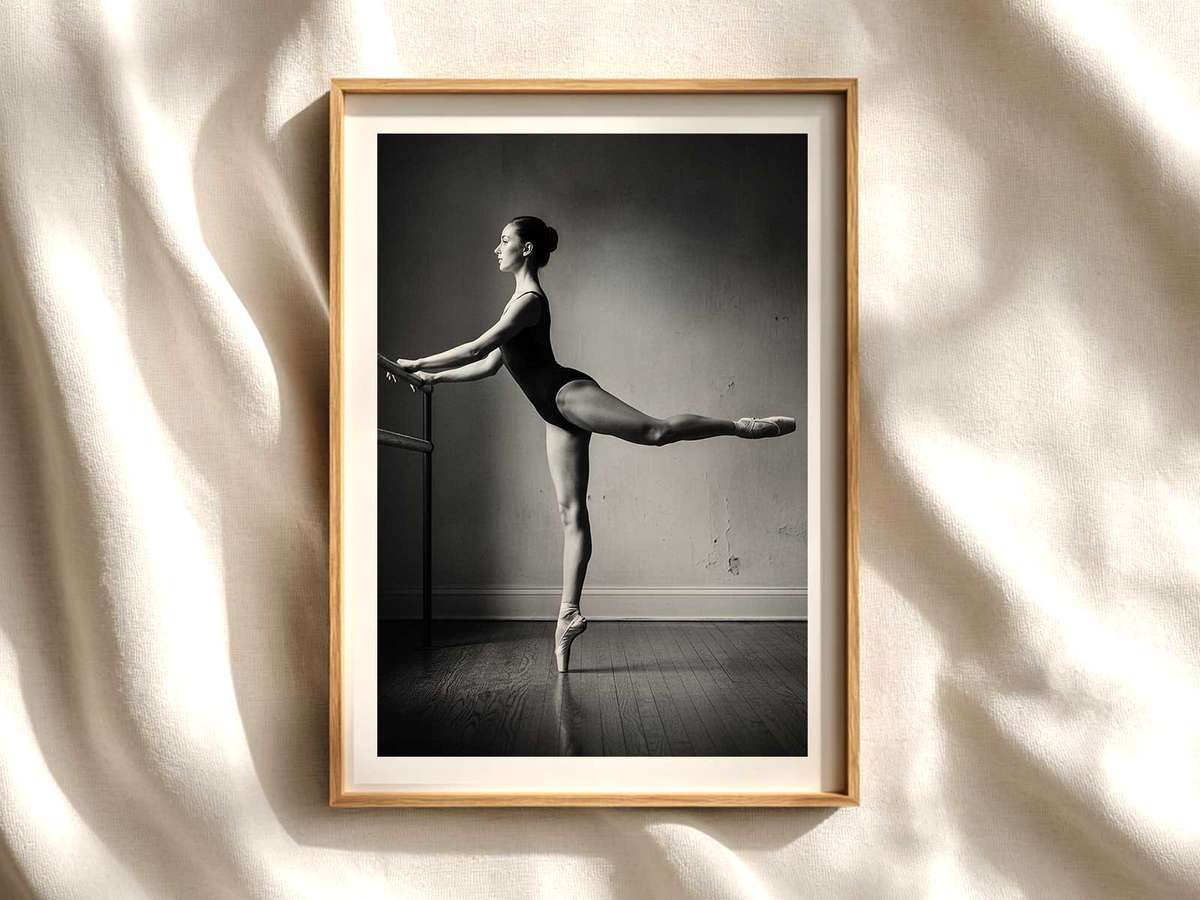
The image centers on a single rehearsal gesture: an arm lifted at the exact angle where exertion still shows, a shoulder slightly turned, a line that is both practiced and unfinished. This is not a posed portrait but a second mid-process, a visible trace of training and repetition. The eye reads the direction of weight, the tiny tension in hand and forearm, and understands that the pose arrived there through countless returns to the same phrase. That sense of labour—and of memory held in muscle—gives the photograph an immediacy that a staged frame rarely achieves.
A moment held at full intensity
What arrests you is how the gesture behaves like a sentence interrupted. The dancer’s torso suggests forward motion while the foot still gathers the past beat; the arm both completes and anticipates the phrase. Visual tension comes from those almost-contradictory cues: suspension against momentum, the soft exhaustion of shoulders against the crisp clarity of the line. The result is a portrait of work in action—a fragment where technique and feeling collide and both remain legible.
[IMAGE_INSERT_ARTICLE_01]
This ballet dancer print translates that charged fragment into a still object for the wall. It preserves the micro-memory of rehearsal—the little corrections, the breath between counts, the quiet commitment that training etches into posture. Because the moment is not flattened into perfection, the image invites the viewer into process: you can imagine the sound of the barre, the teacher’s quiet instruction, the repetition that sculpts muscle memory. It becomes less about one ideal silhouette and more about the discipline that shapes every subsequent silhouette.
Why the image stays with you
Emotion here is specific and modest: a mix of concentration, fatigue, and a small triumph. The face, if visible, is softened by focus rather than smoothed for presentation. Light and shadow emphasize the geometry of limbs and the persistence of movement—the way a line continues beyond the frame. That continuation is what makes the piece active in a room; it doesn’t declare an ending but implies a sequence, a story that carries on just out of sight.
As a decorative presence, this poster suits interiors that welcome intentionality. In a studio corner it echoes practice and motivates; in a refined living room it introduces an undercurrent of discipline and lyricism without theatrical excess. Hang it where you want a moment of concentrated beauty to anchor the space—a place that benefits from calm focus rather than decorative noise.
Ultimately, this ballet dancer print offers more than a pretty pose: it keeps a rehearsal second alive, the kind that contains both the labor of becoming and the hush of an achieved line. Living with that image is a quiet reminder of what persistence looks like, framed as a visual fragment that continues to move long after the music stops.