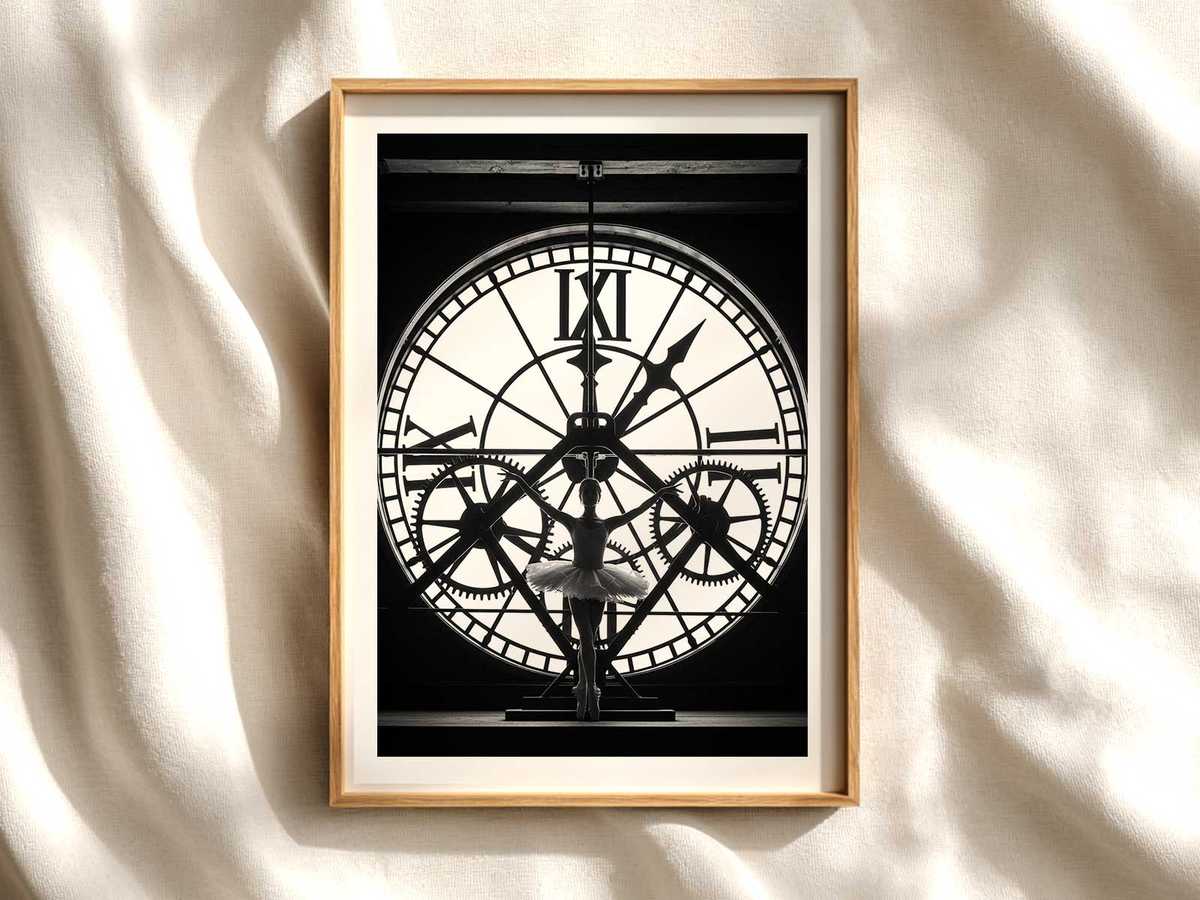
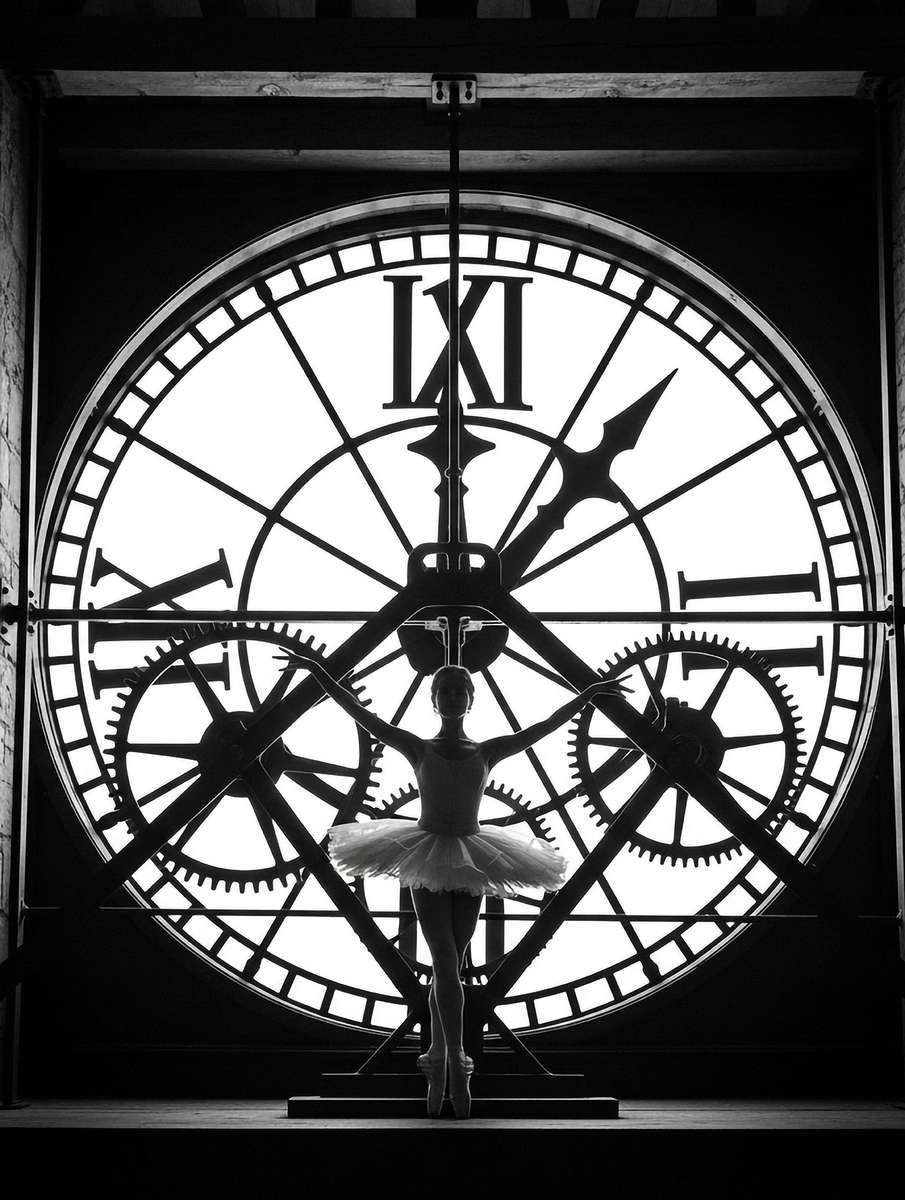
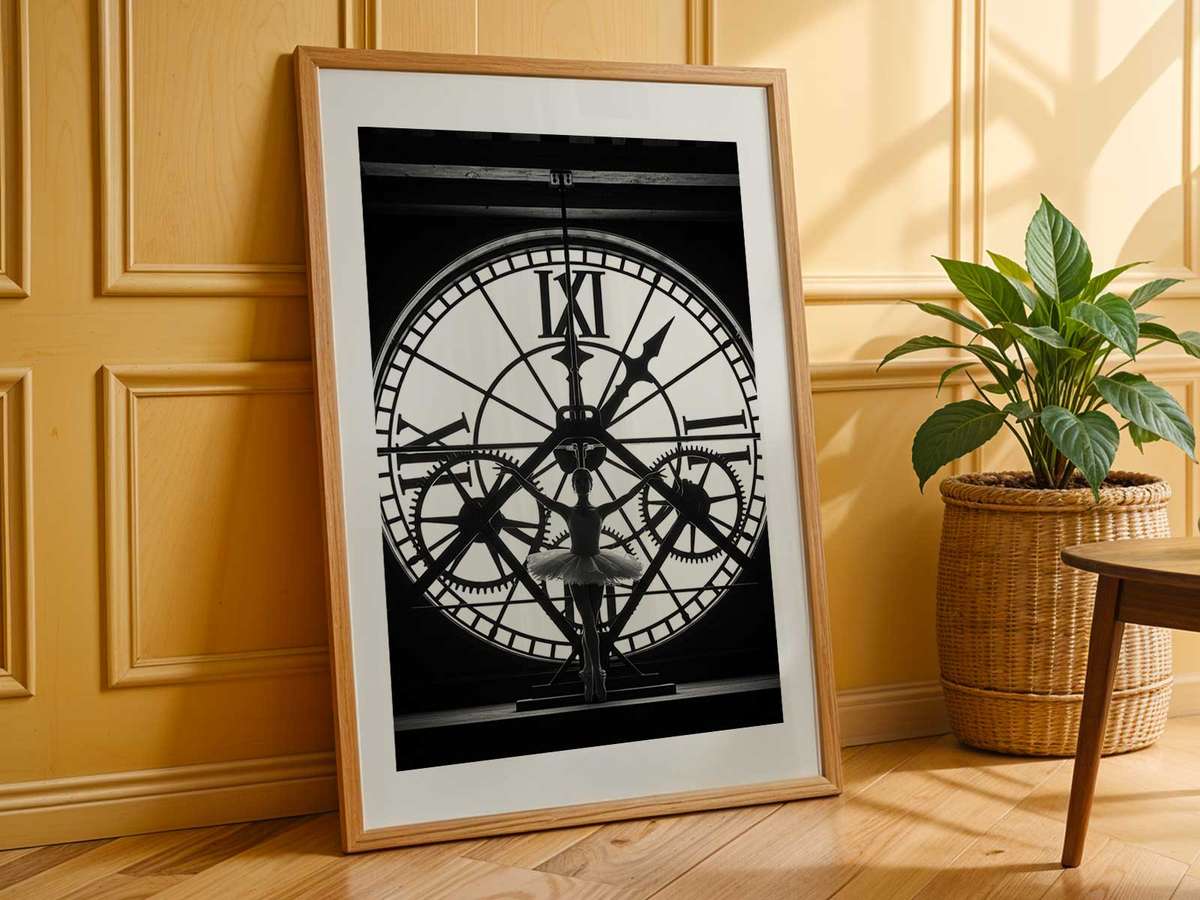
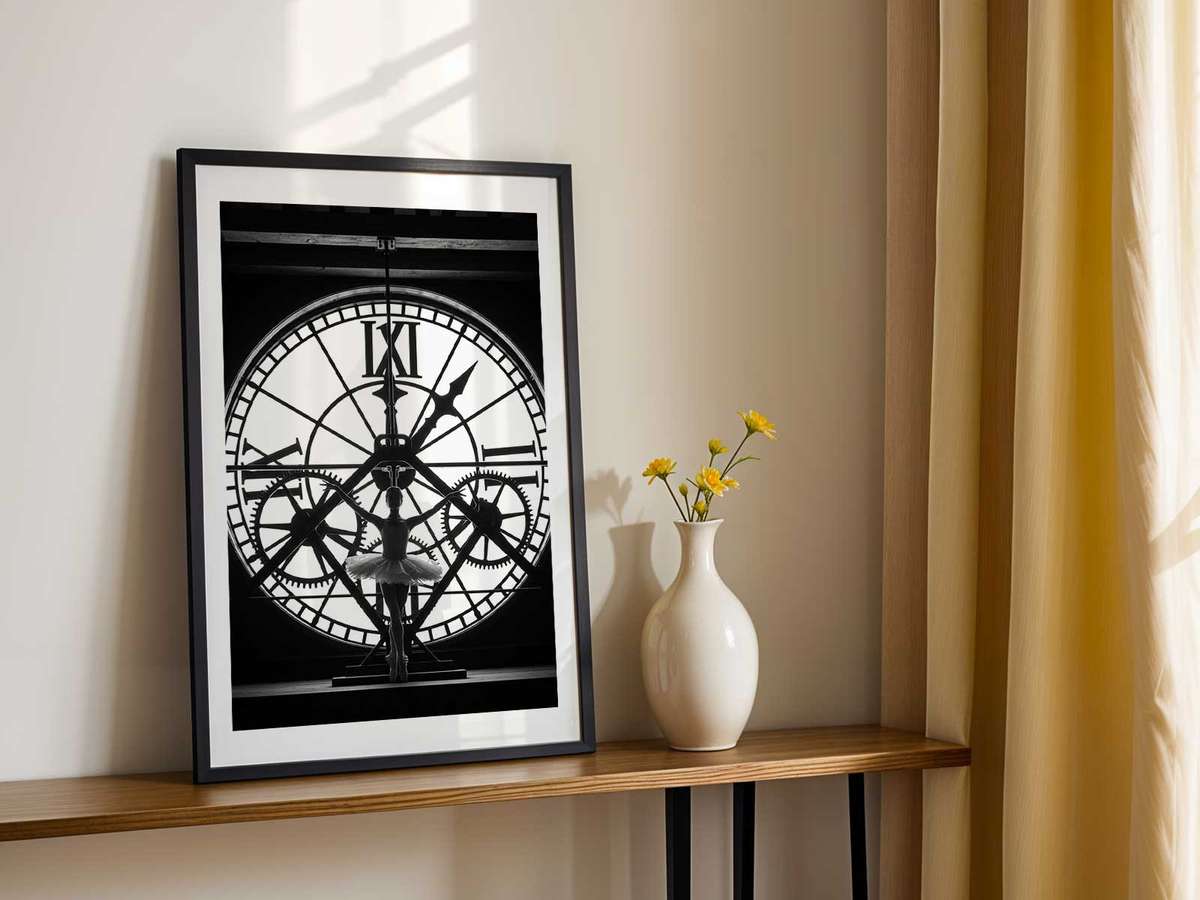
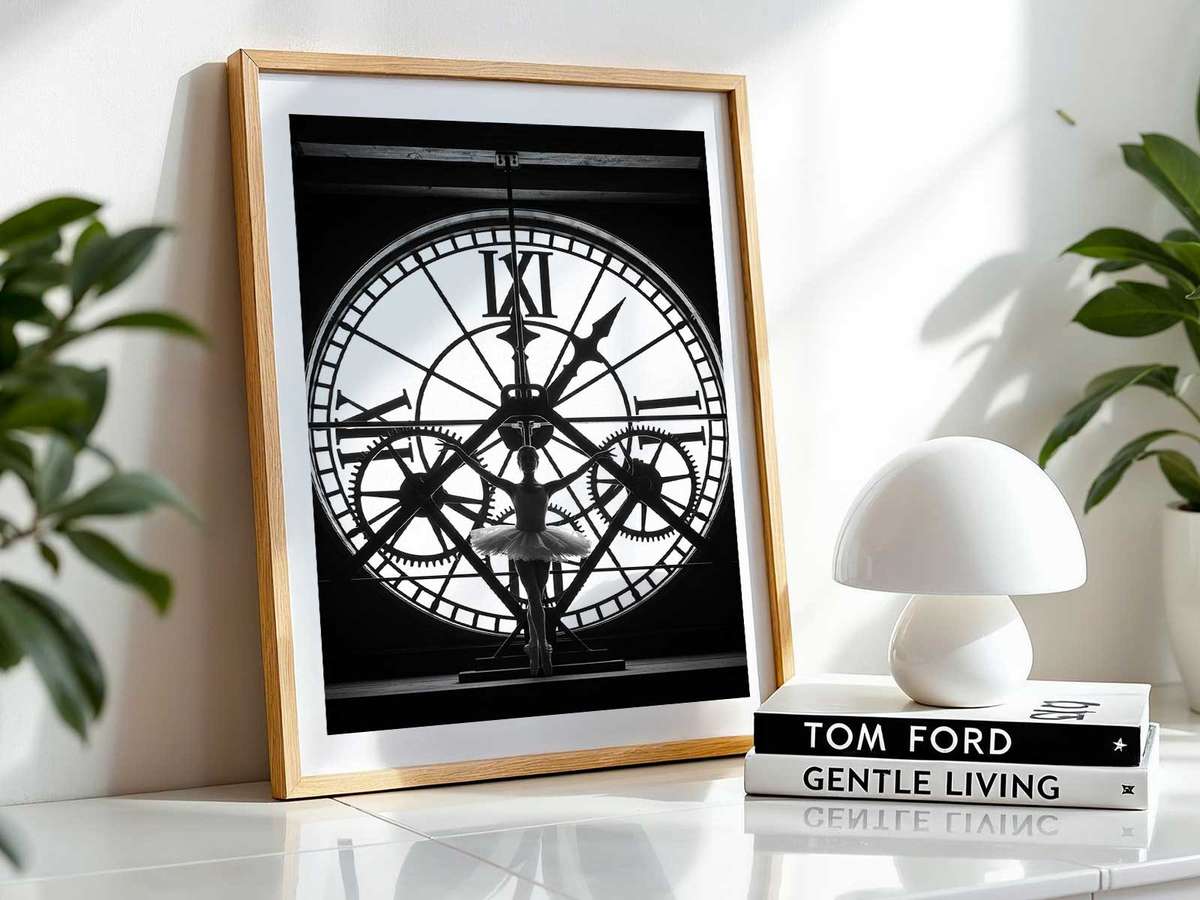
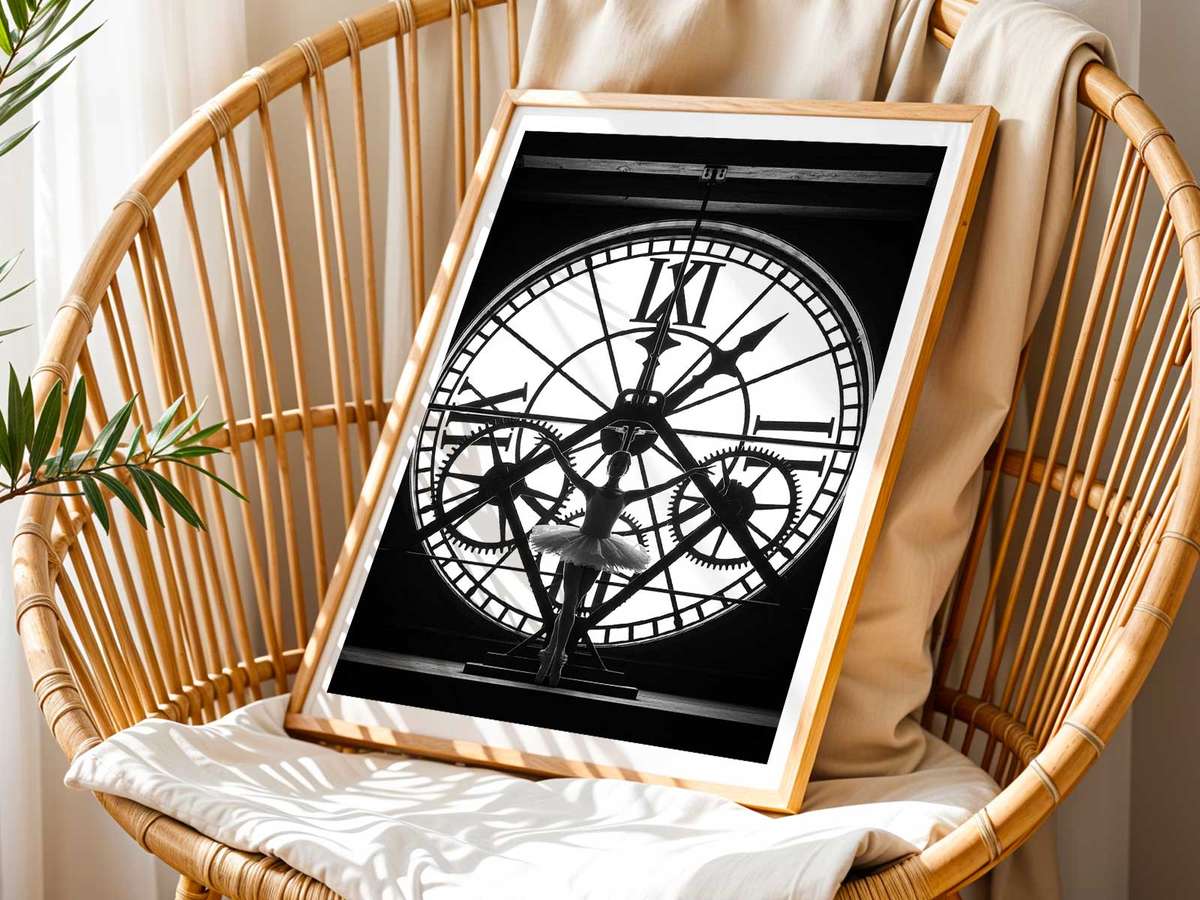
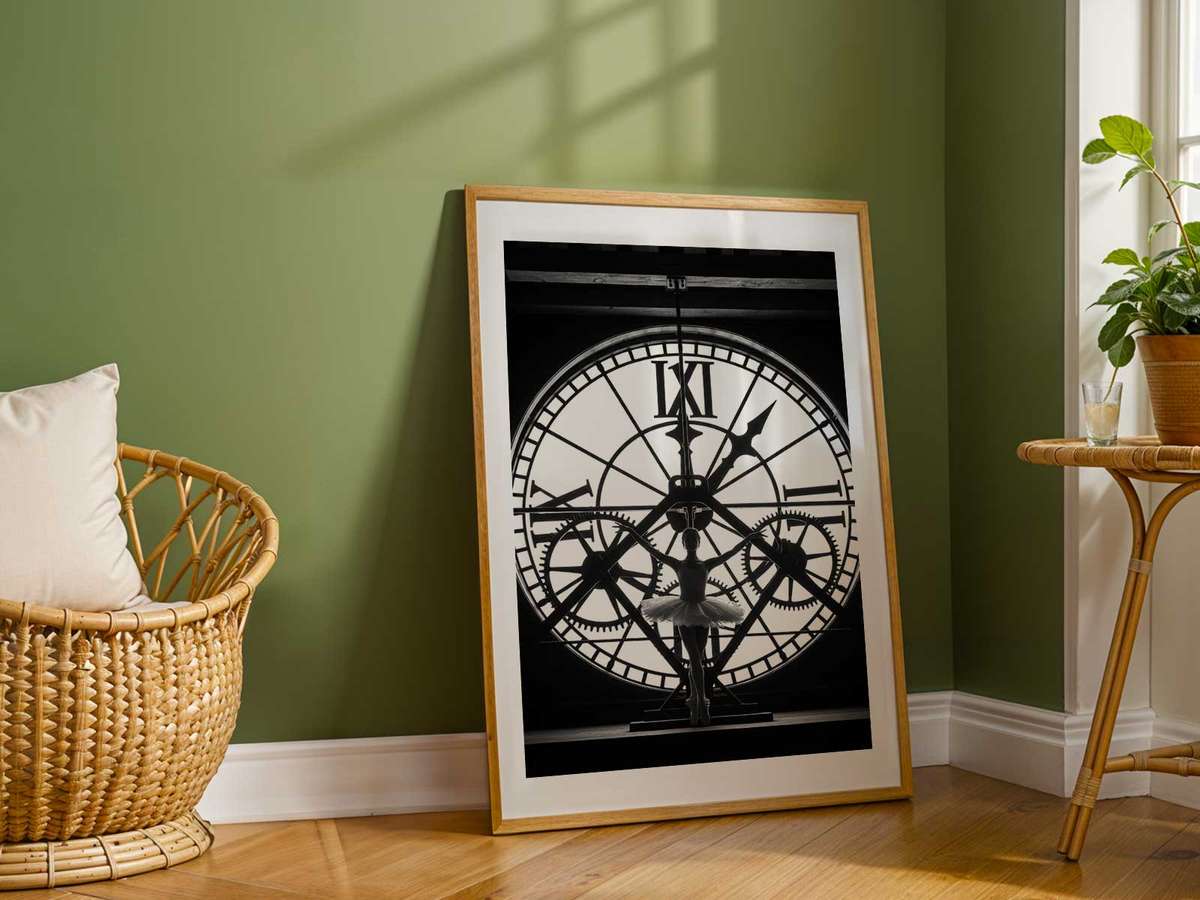
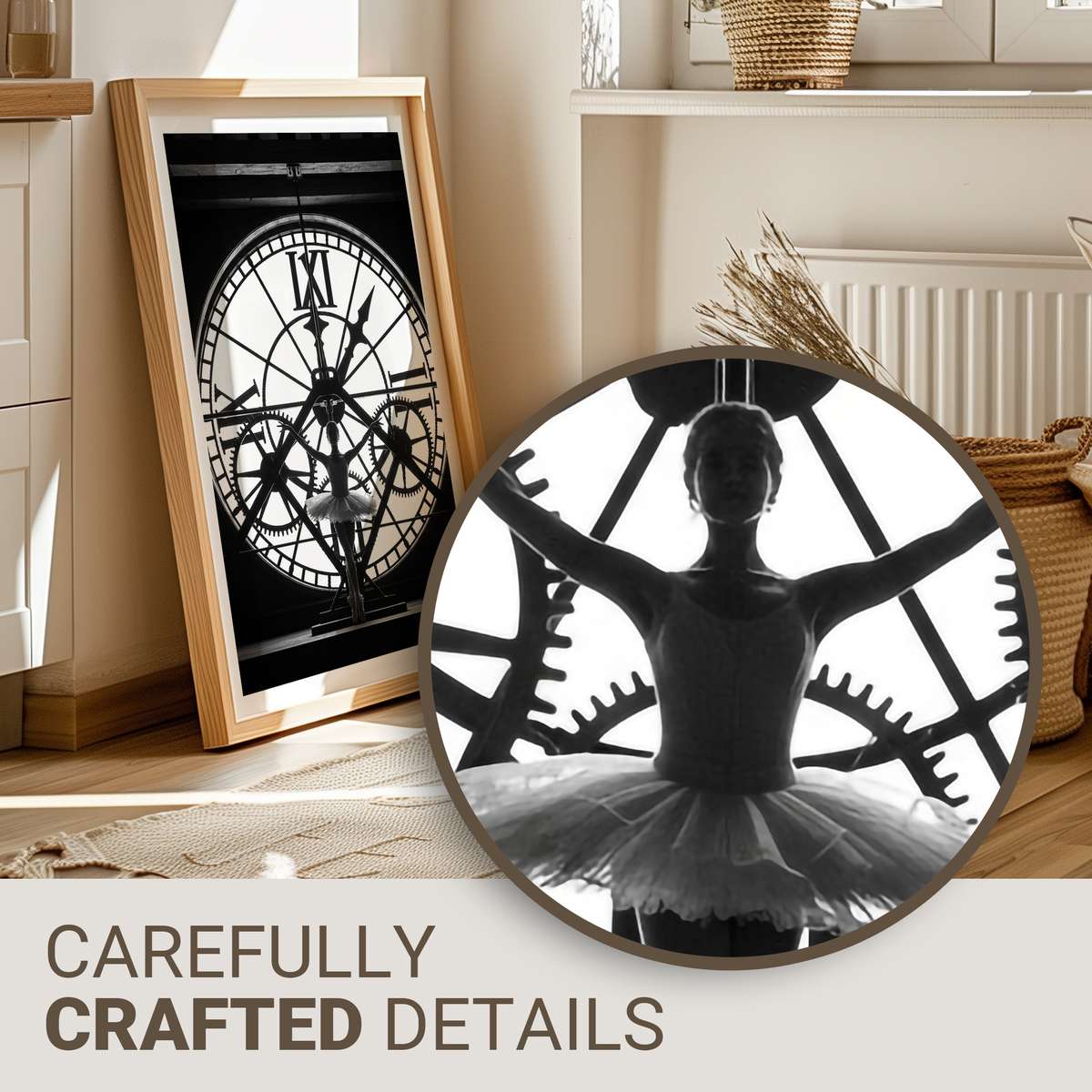
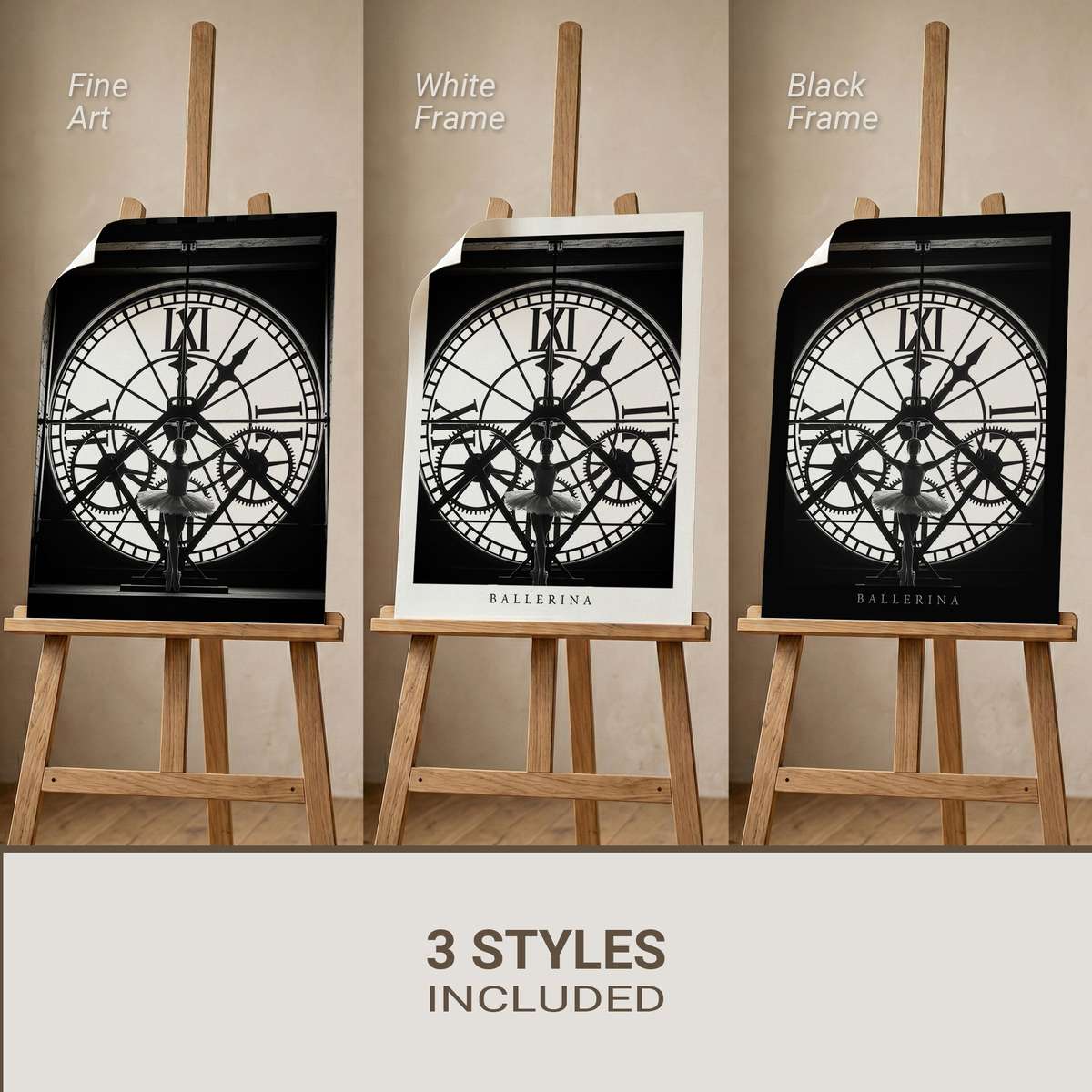
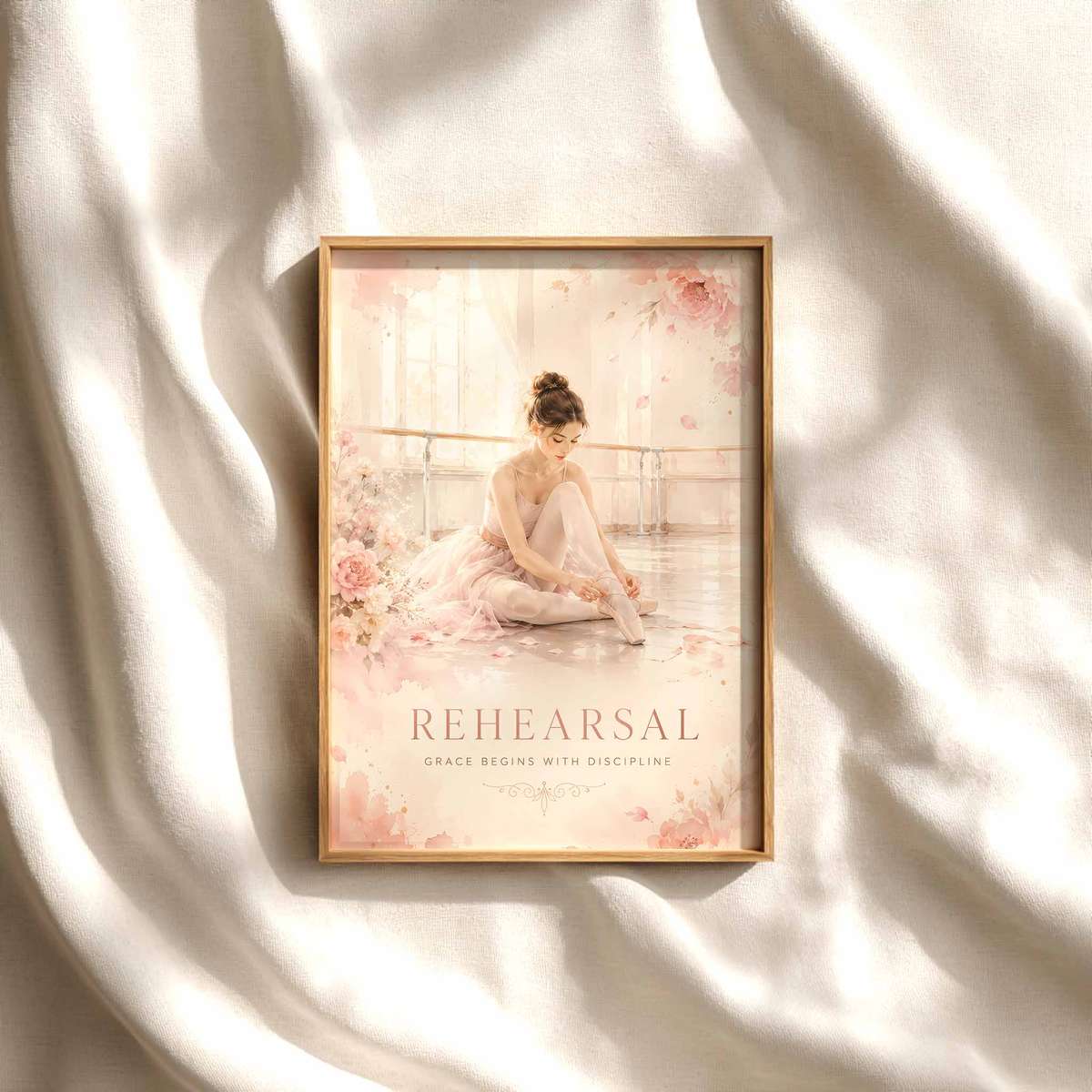
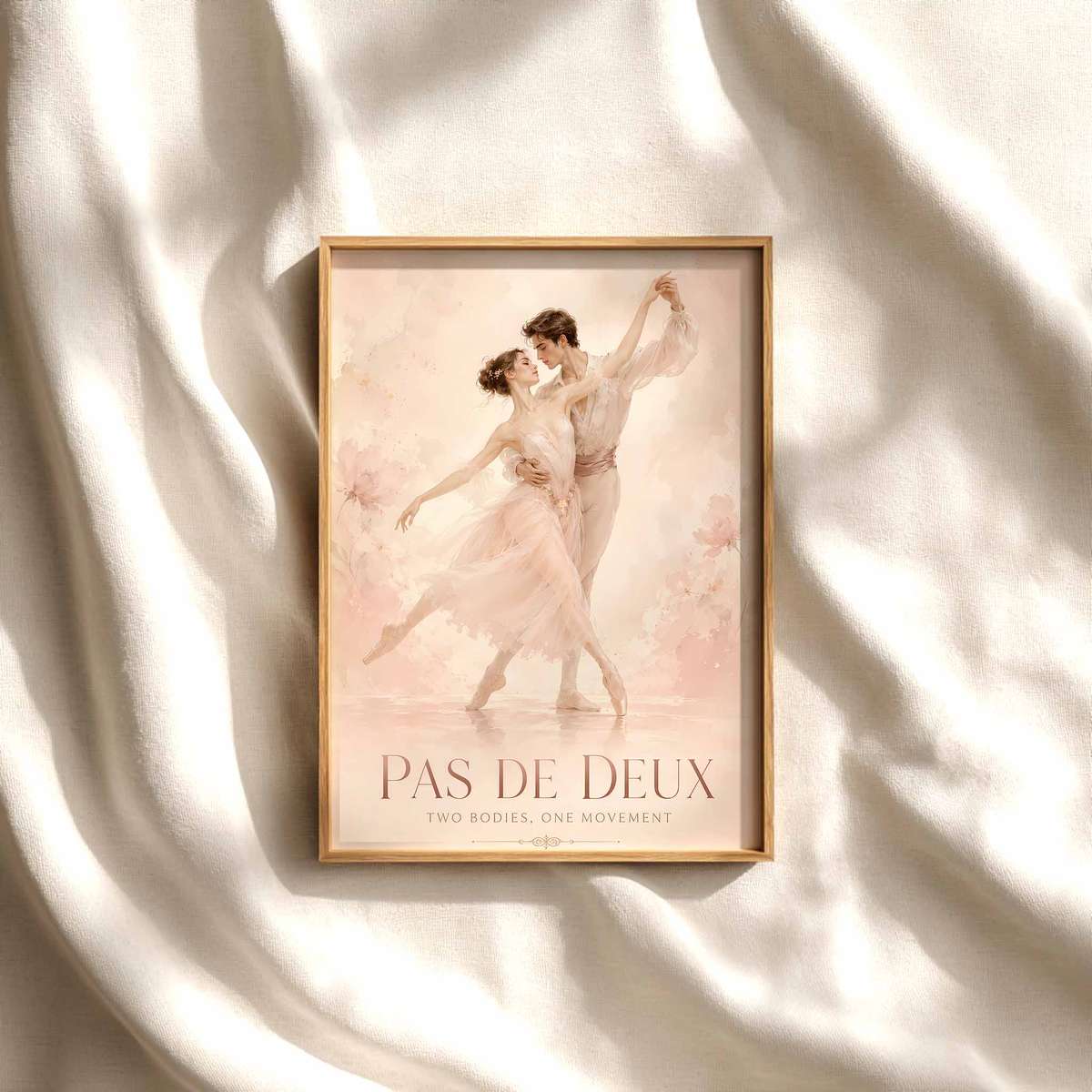
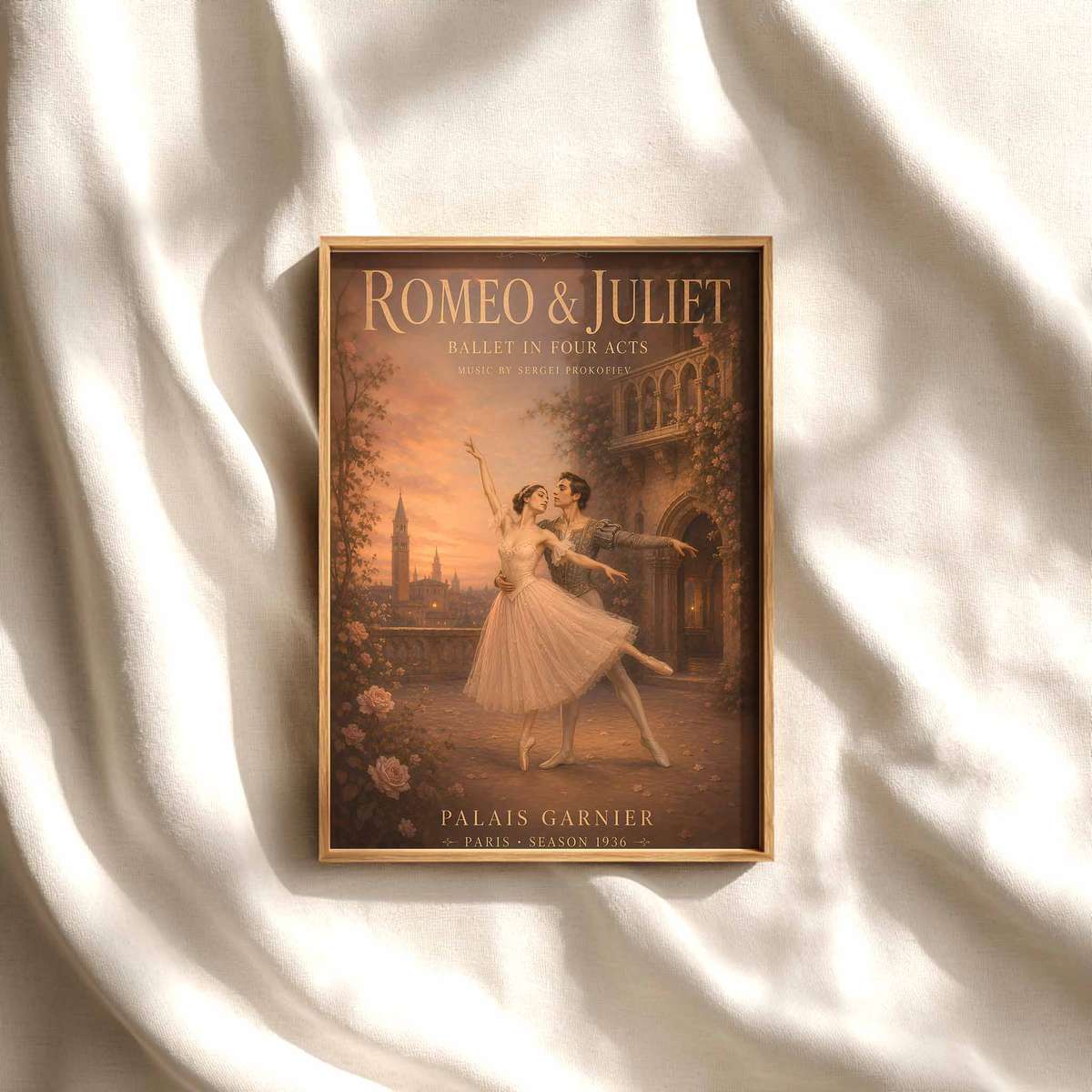
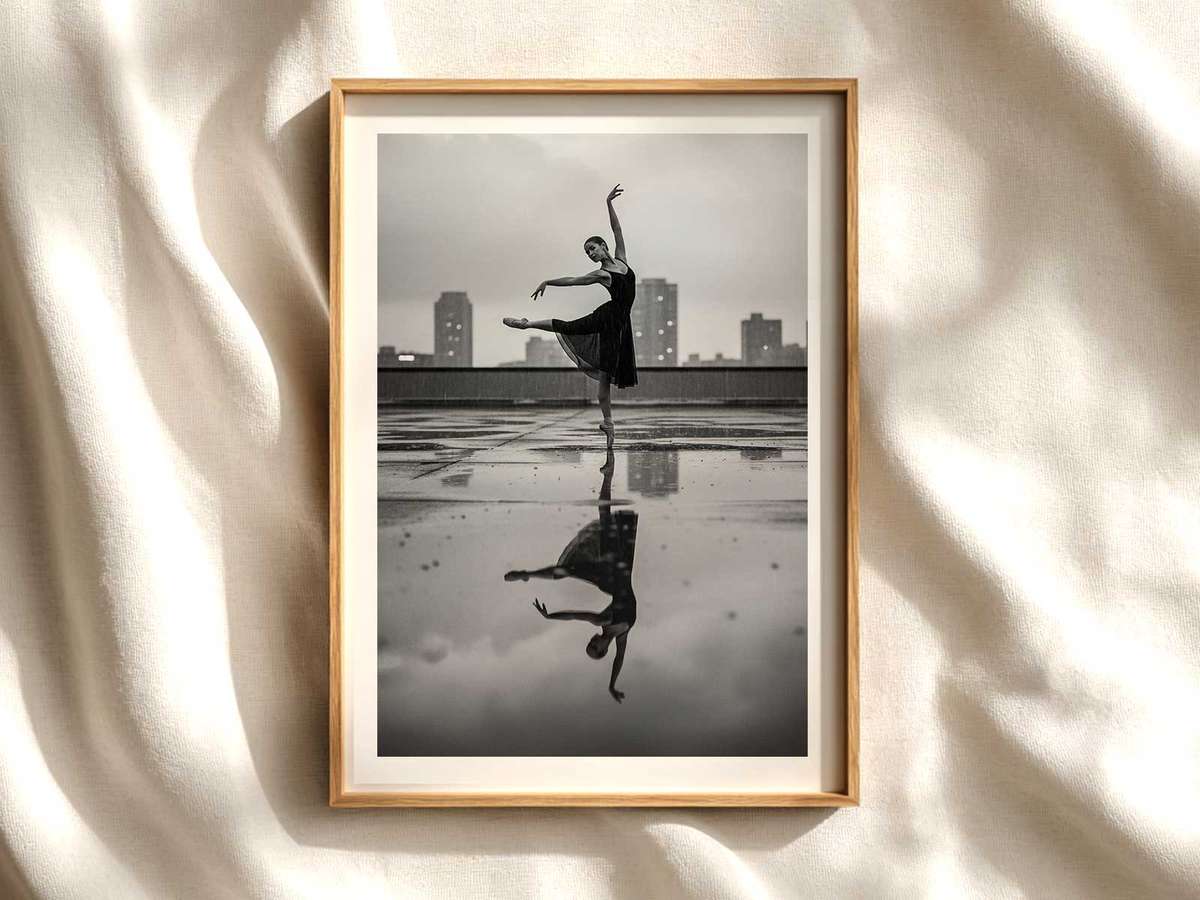
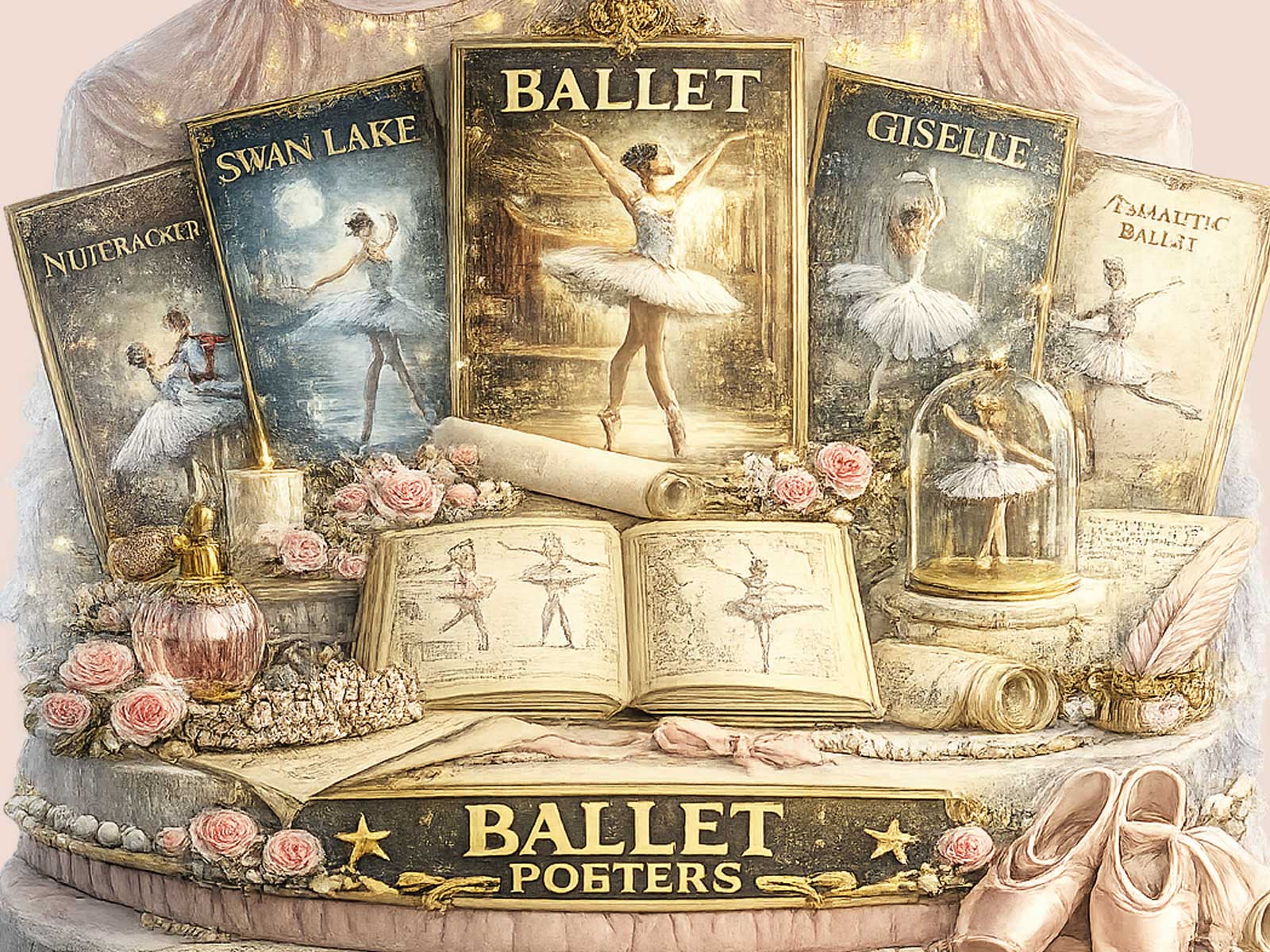
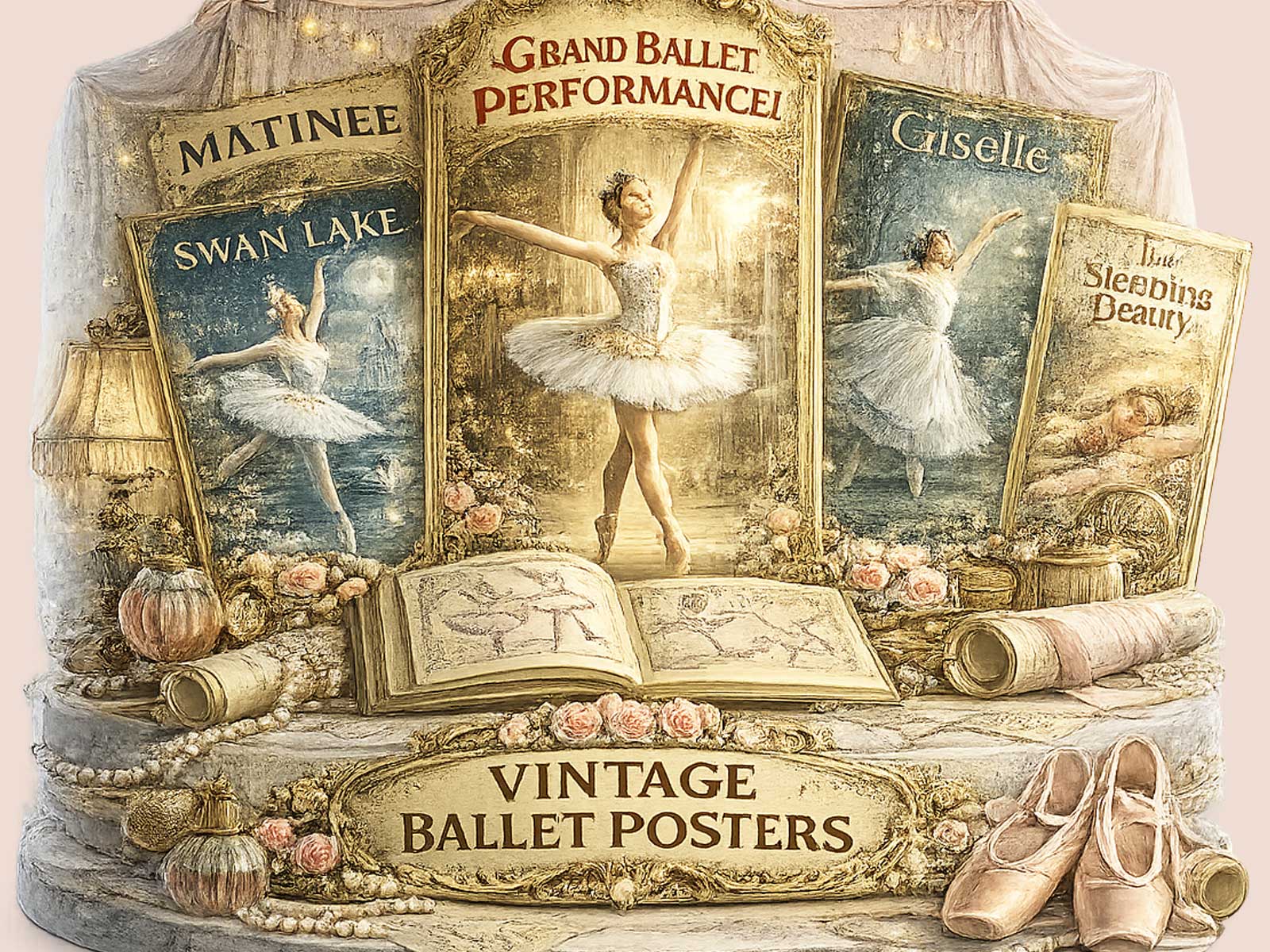
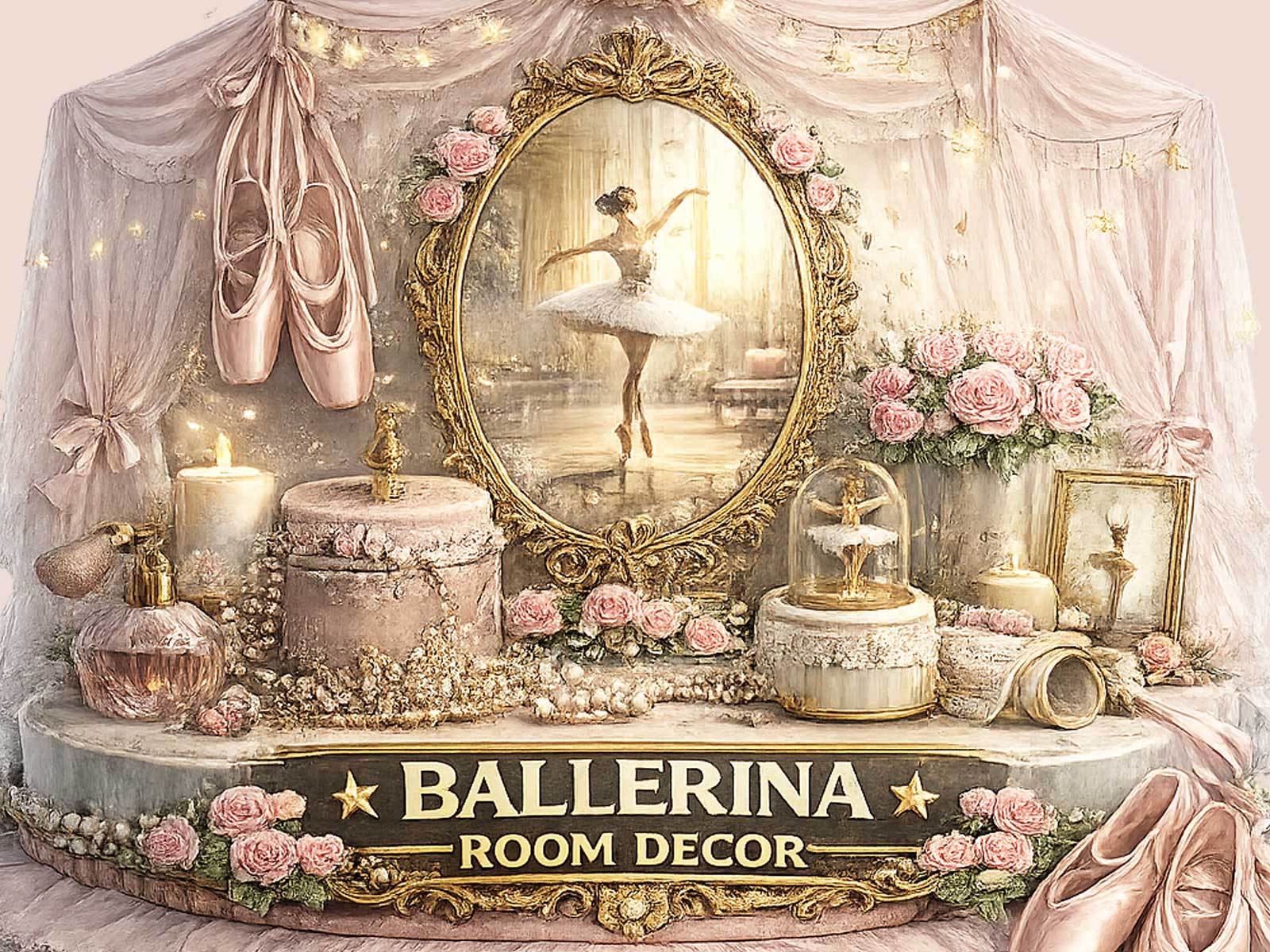
At first glance this ballerina artwork reads like a page from an old studio ledger: softened inks, a palette warmed by age, and a movement paused mid-ritual. The composition treats the dancer as both subject and chronicle — her pose a classical gesture, the image subtly traversed by the idea of time and memory. The result is a poster that feels collected rather than fashionable, its visual restraint inviting slow looking and quiet attachment.
A ballet image with a sense of memory
Here the suggestion of clockwork — whether hinted by muted circular forms, faint numerals, or an implied horizon of hours — does not interrupt the grace of the body; it deepens it. Time becomes a layer in the image: a film of recollection that gives weight to each arabesque. Rather than staging spectacle, the piece evokes rehearsal rooms, backstage rituals and the small persistence of practice. For someone who loves ballet, this quality transforms the poster from illustration into memory-object.
The vintage-inspired palette matters: low-contrast tones and a desaturated warmth create emotional distance without coolness. Skin and tulle seem to rest inside a soft print surface, where highlights are hushed and shadows are gently sugared. That softness reads as tactility — a suggestion of paper grain and ink absorption — making the work feel intimate and immediate, like a quiet relic you might turn to again and again.
[IMAGE_INSERT_ARTICLE_01]
Why vintage texture changes the mood
Texture here is not decorative flourish but a structural choice that alters how the image is lived with. A print-like texture reduces glare and bright reflectivity, letting the body of the dancer settle into the room with warmth. Weathered tonal edges and subtle vignette effects direct the eye inward, enhancing the sense that this is an image of continuity: gestures inherited and repeated, a lineage of practice rather than a fleeting trend.
Because the work feels rooted, it resists the disposable rhythms of seasonal decor. It will sit comfortably above a reading nook, beside a slim library of dance scores, or in a bedroom where mornings begin with remembered music. The poster's heritage-led look complements interiors that favor material depth and a curated, lived-in aesthetic.
This is a poster that rewards repeat viewing. Details emerge gradually — a trace of typography that suggests retro print, the faint suggestion of an hourmark, the way light falls across a folded skirt — each visit revealing a new layer of feeling. That economy of detail is precisely what makes the piece enduring: it offers sensation without shouting, memory without sentimentality.
In choosing this ballerina artwork you bring a refined, narrative-rich image into your home: one that balances ephemeral beauty with the quiet permanence of classical gesture. It is meant to be lived with, to accumulate the light of days and the small attentions of a room devoted to art, music and memory.