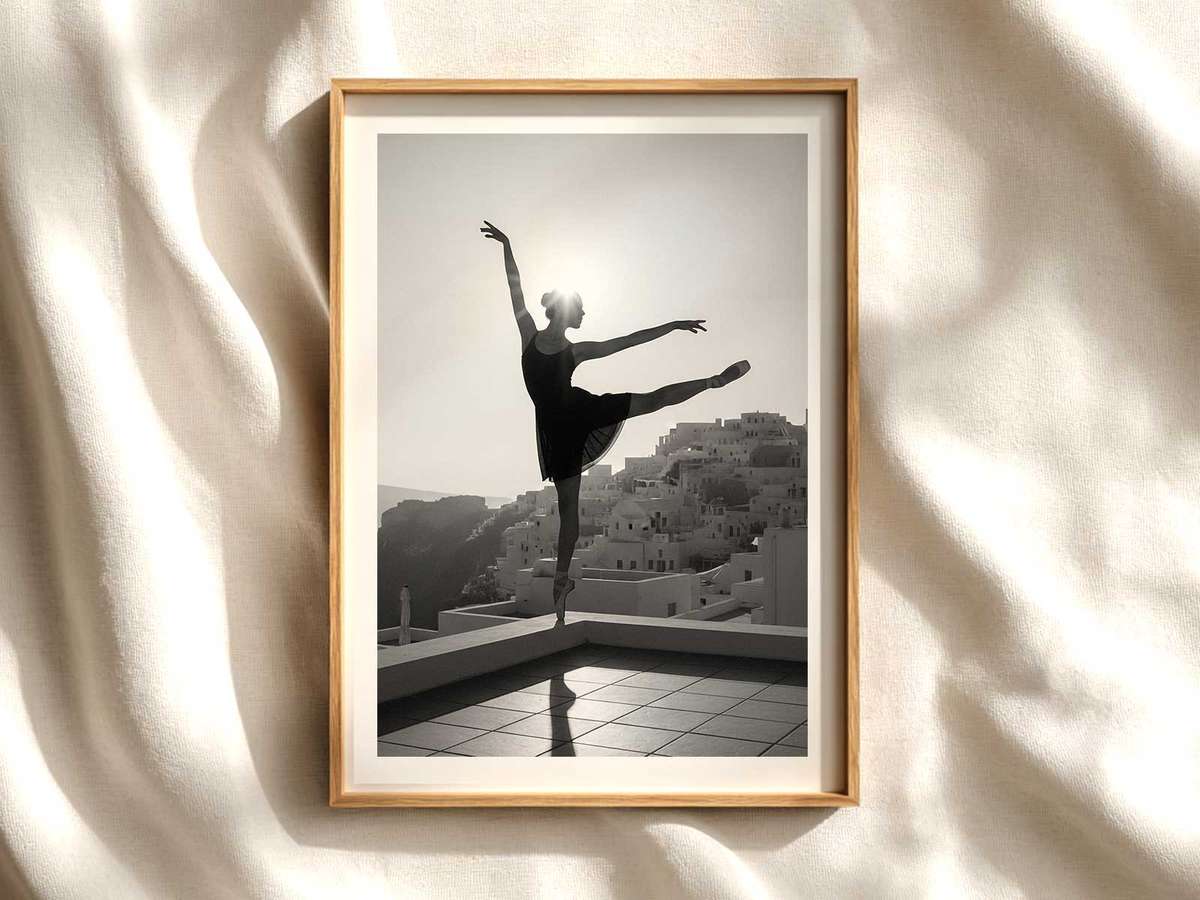
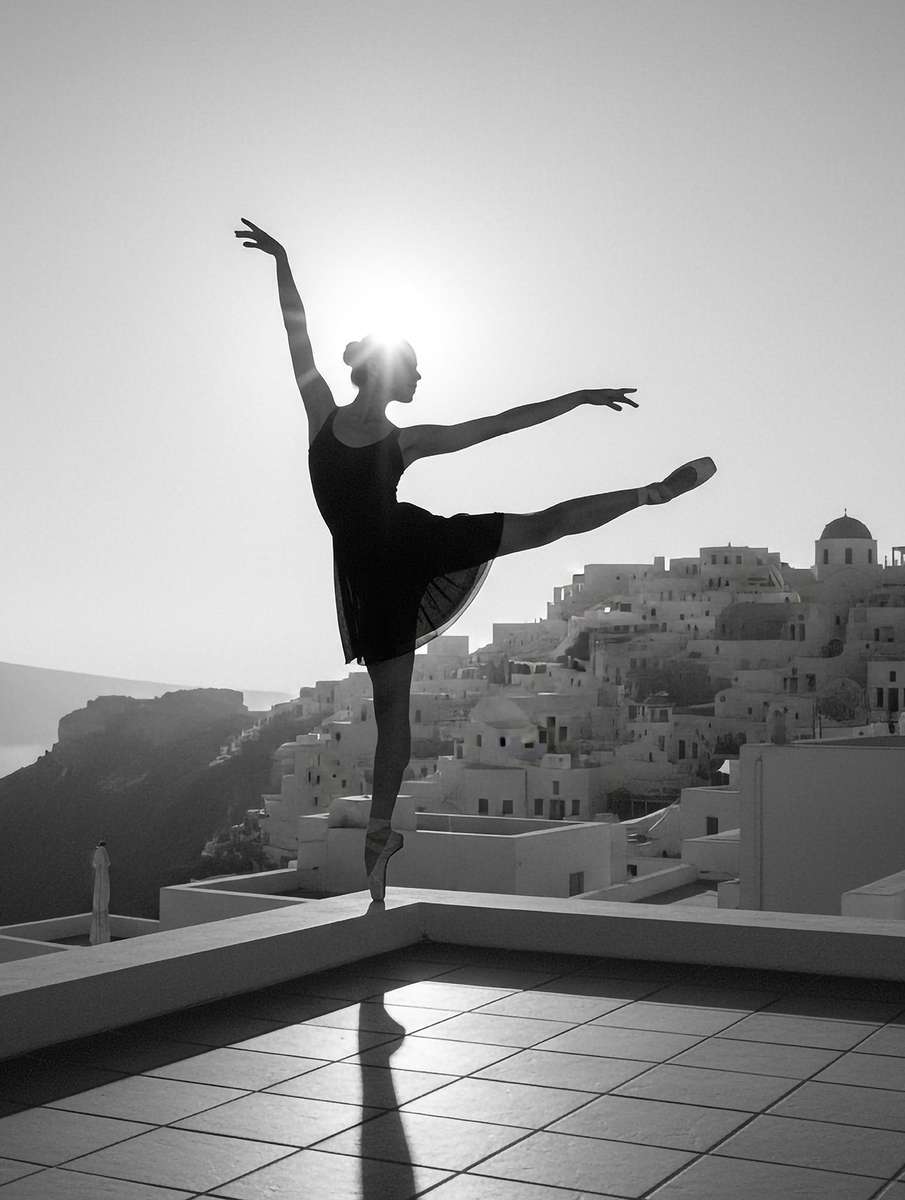
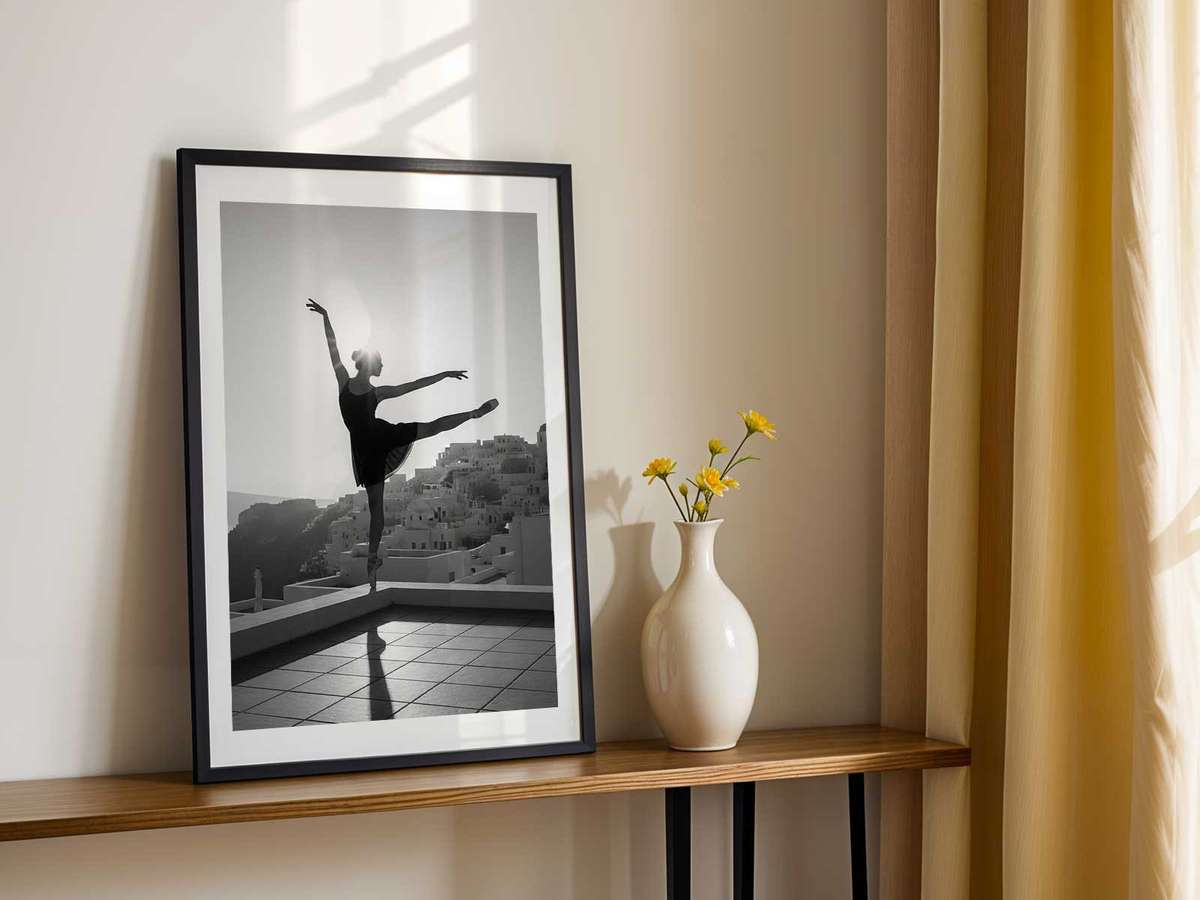
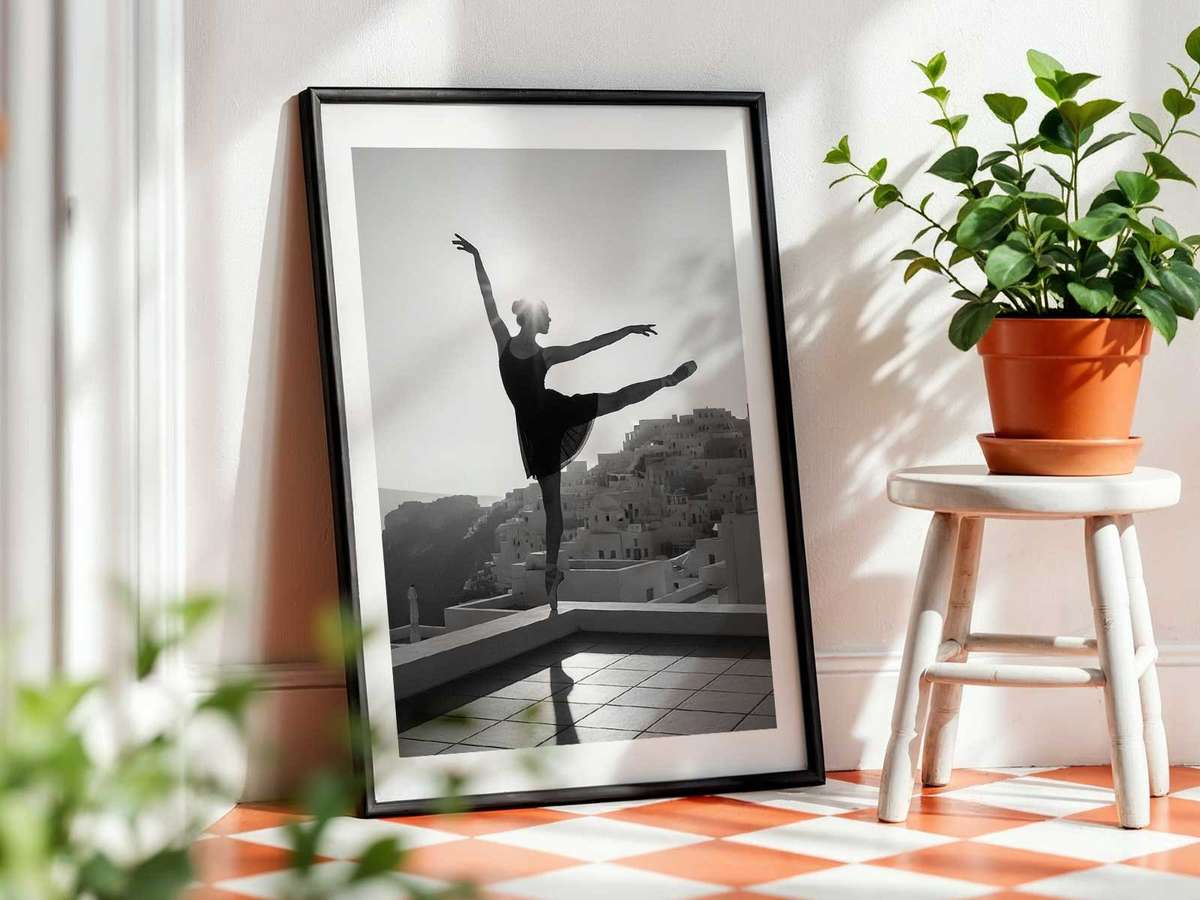
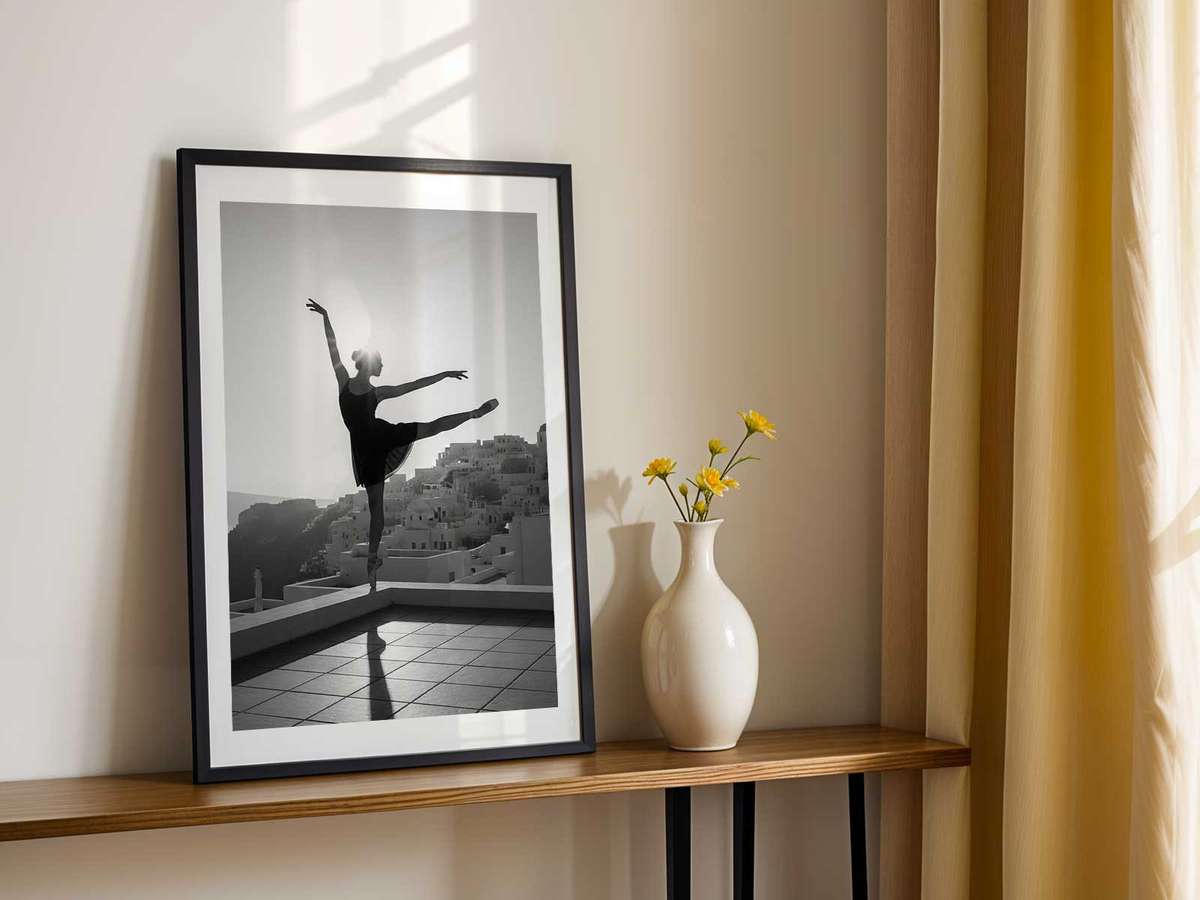
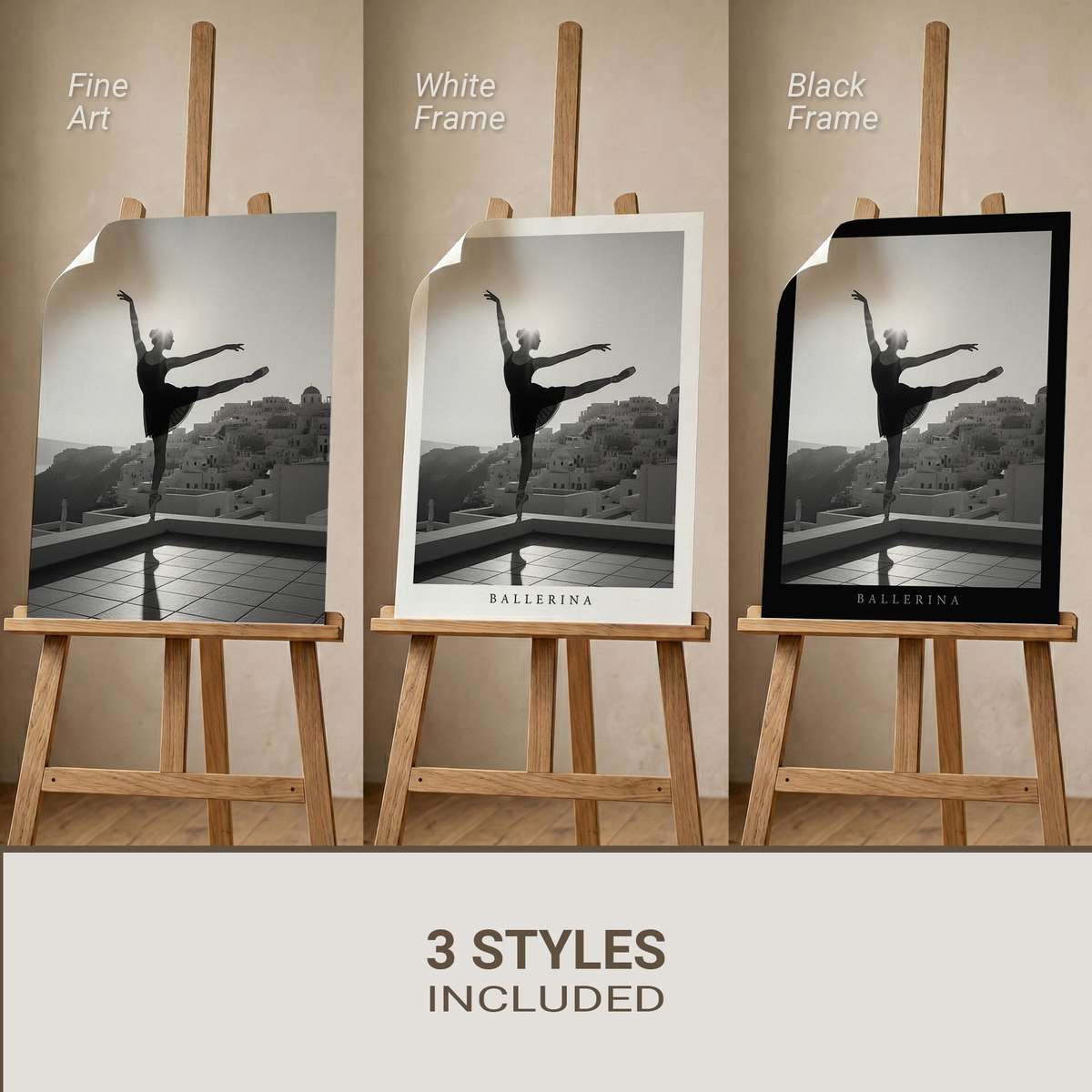
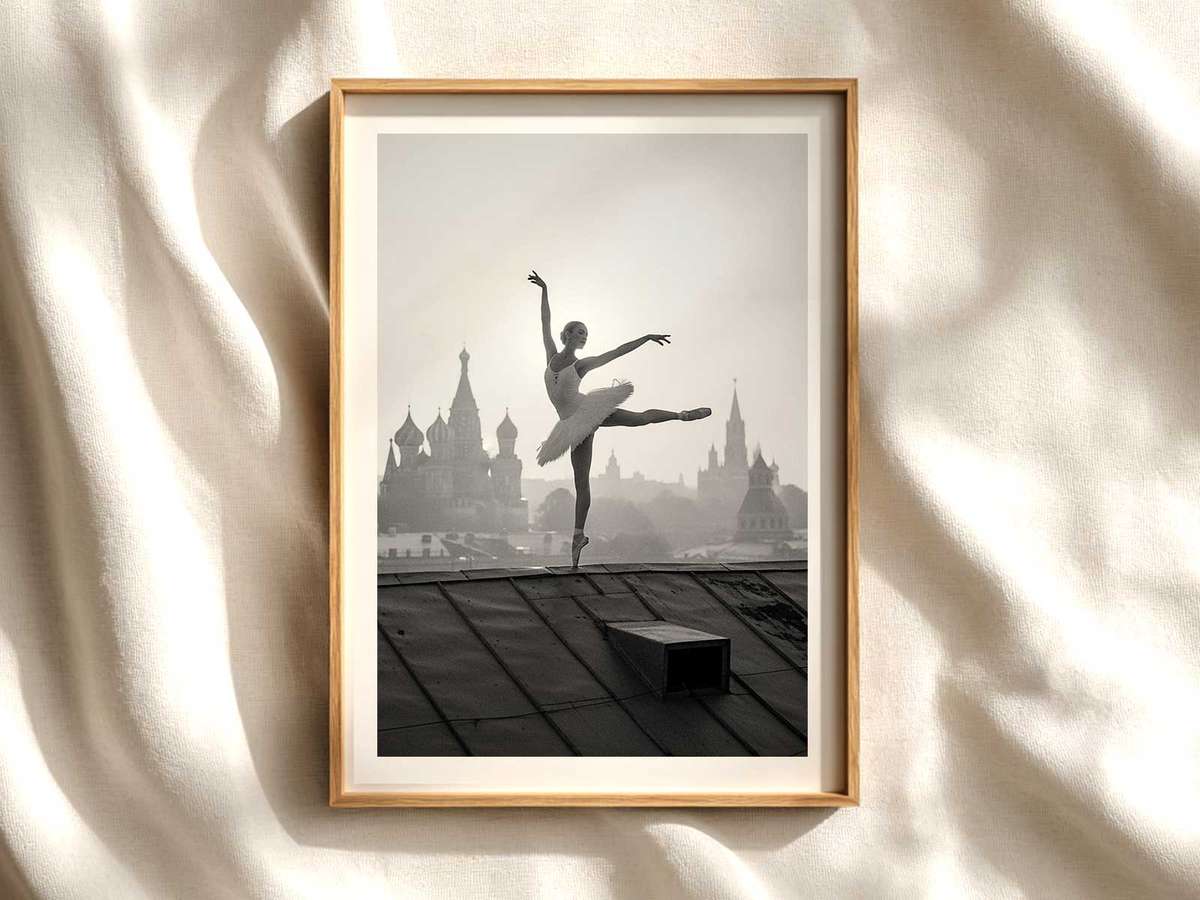
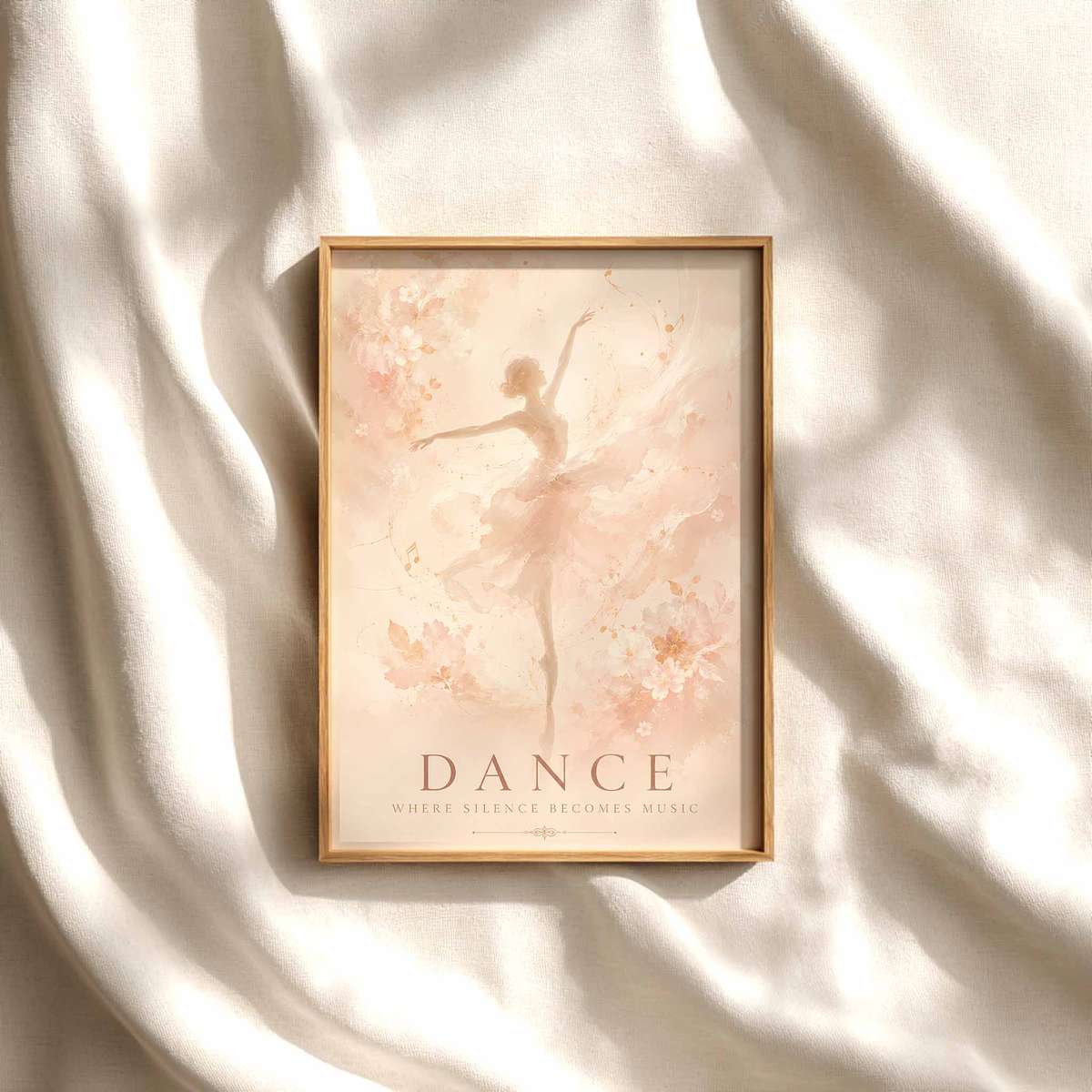
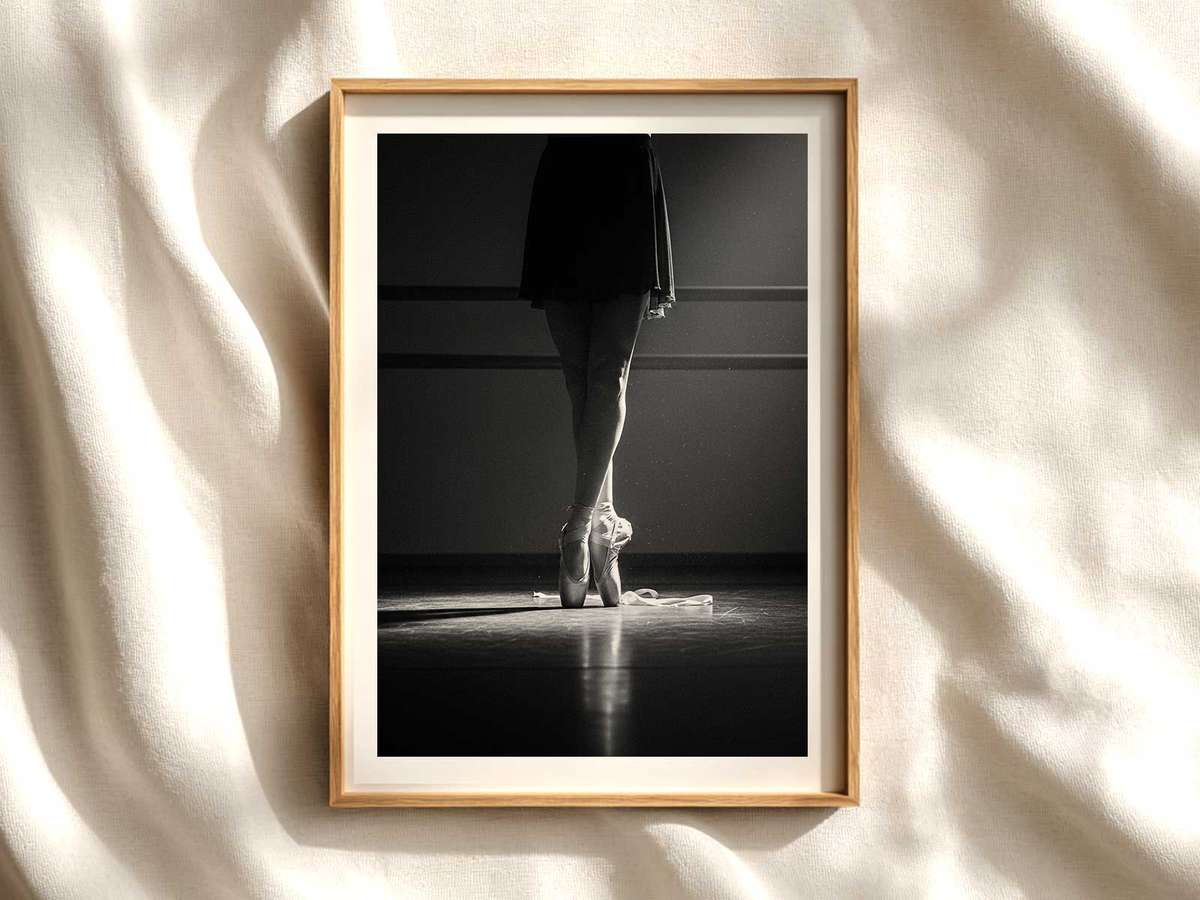
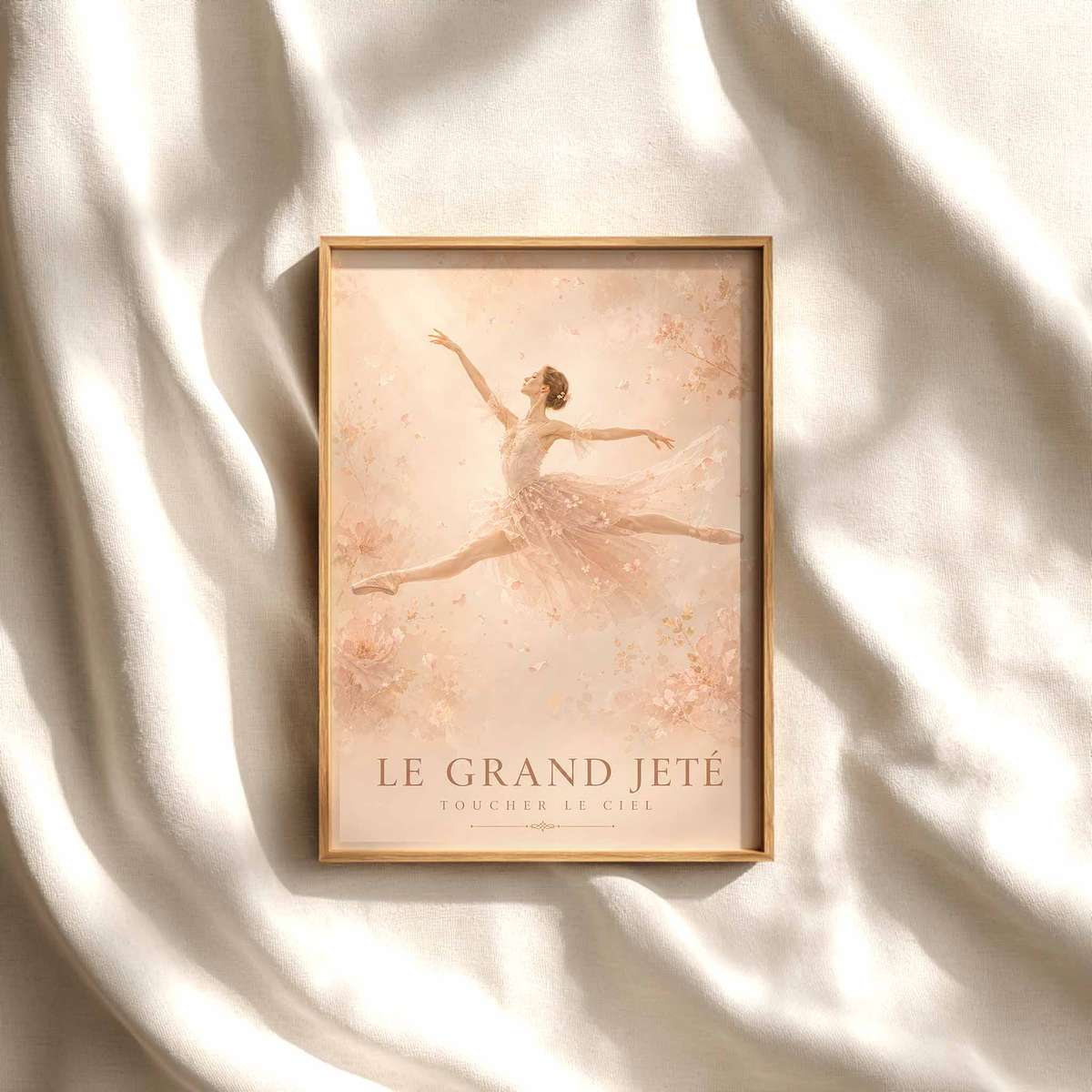
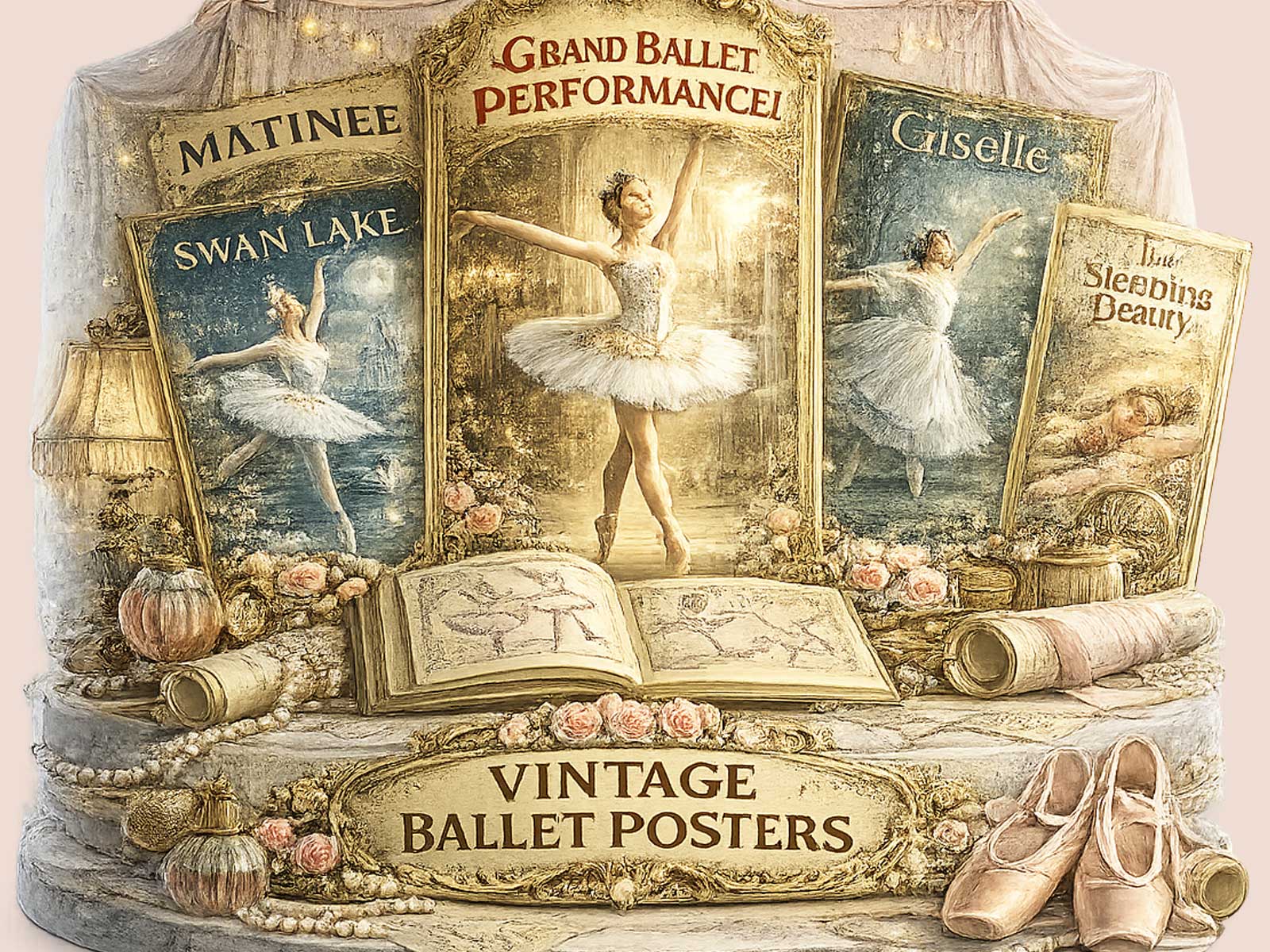
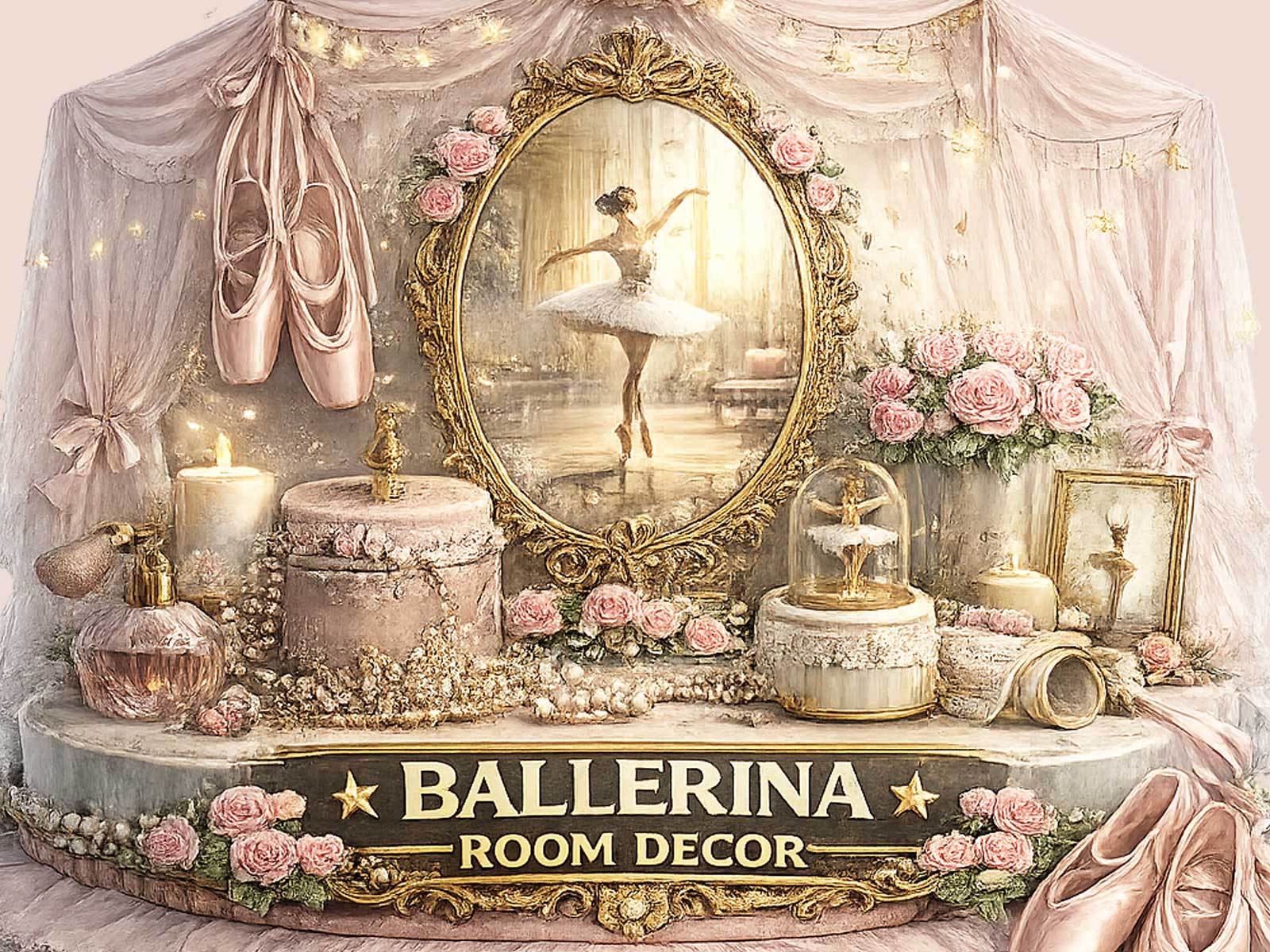
This ballet dance photo greets the viewer with a calm, heritage-led atmosphere that feels shaped by the light and restraint of classical Mediterranean imagery. The palette is gently aged—warm ivories, sunwashed ochres and cooled stone greys—so the dancer’s line reads less like a glossy snapshot and more like a memory held in print. That suggestion of time softens contrast, allowing the pose and the architecture of the body to occupy the same quiet space as imagined columns or an open courtyard, lending the image a subtle classical dignity.
A ballet image with a sense of memory
What makes this poster distinct is the way vintage-inspired cues alter what we see. Printed texture and a slightly muted saturation act like a pause: the eye rests on gesture rather than on perfect detail. The effect is intimate rather than slick—like a photograph you might find folded between an old program and a ticket stub—so the viewer experiences the dancer not as a performance to consume but as a memory to revisit. The Mediterranean suggestion—clear, directional light and a restrained architectural sensibility—frames the figure in a classical context, connecting contemporary dance to an older visual tradition of balance and poise.
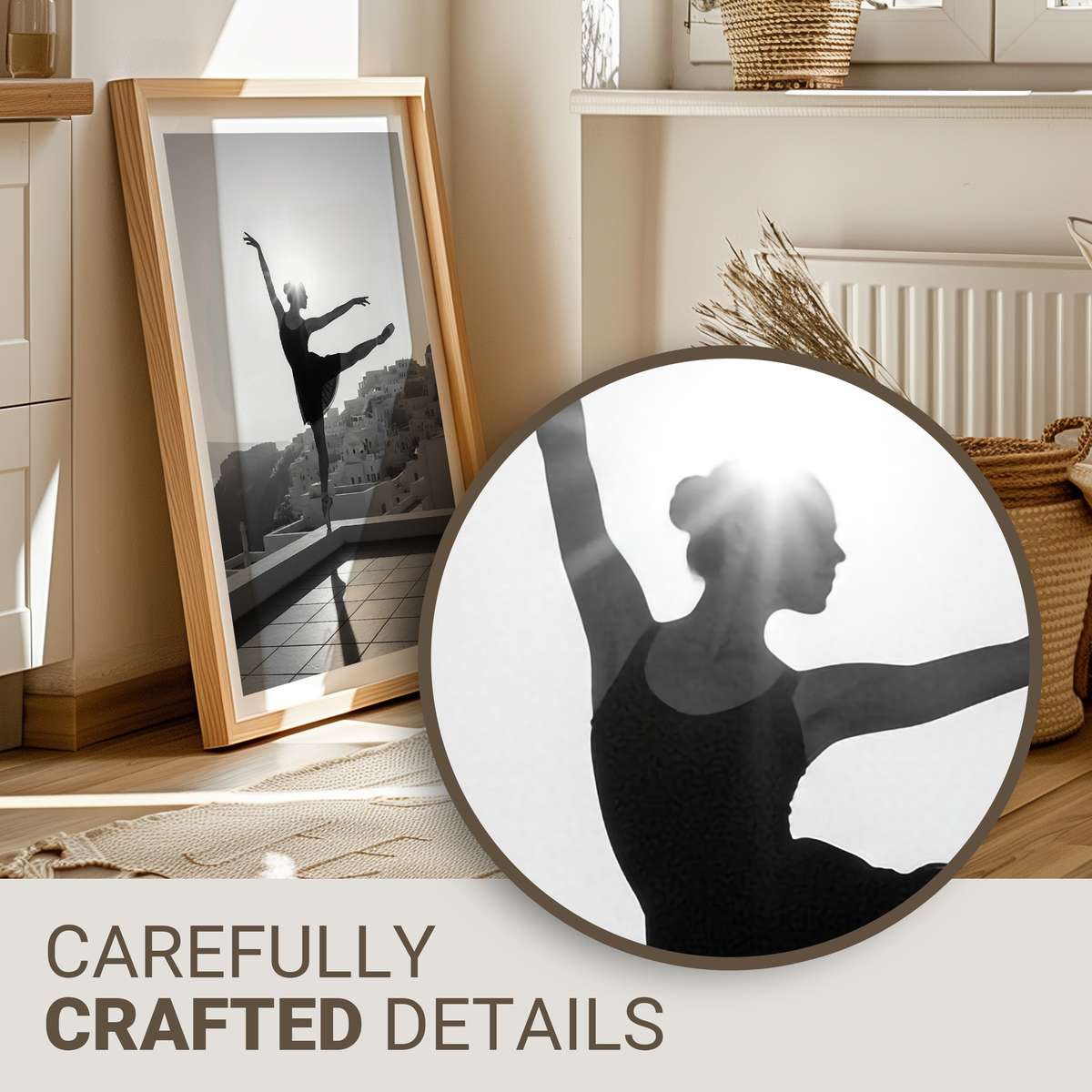
Texture here is purposeful. A subtle paper grain and moderated highlights reduce glare and invite long viewing. These visual choices create a sense of continuity; the image seems as if it has lived on a wall, companion to books and objects collected over time. That warmth supports rooms that prize a calm, contemplative mood: a reading alcove, a music corner, or a bedroom where art is intended to soothe rather than compete with modern electronics.
[IMAGE_INSERT_ARTICLE_01]
Why vintage texture changes the mood
Vintage-inspired texture does more than decorate; it redefines the relationship between viewer and subject. Softened edges and a restrained tonal range emphasize form and rhythm—gravity and release become tactile sensations rather than only visual facts. The result is a poster that rewards repeated viewing: small details emerge over time, the paper’s warmth deepens, and the composition reveals itself like a practiced phrase in a score. This is an image that ages in sympathy with a home, rather than competing with changing trends.
The heritage-led presentation also creates emotional continuity. For lovers of ballet and print culture alike, the poster feels collected, not ephemeral. It reads as part of a longer story: a studio’s quiet afternoons, a bookmarked program, the steady rehearsal of an armline. These are specific sensations—light on plaster, the hush after a final pose—that make the work desirable for someone who prefers depth to novelty.
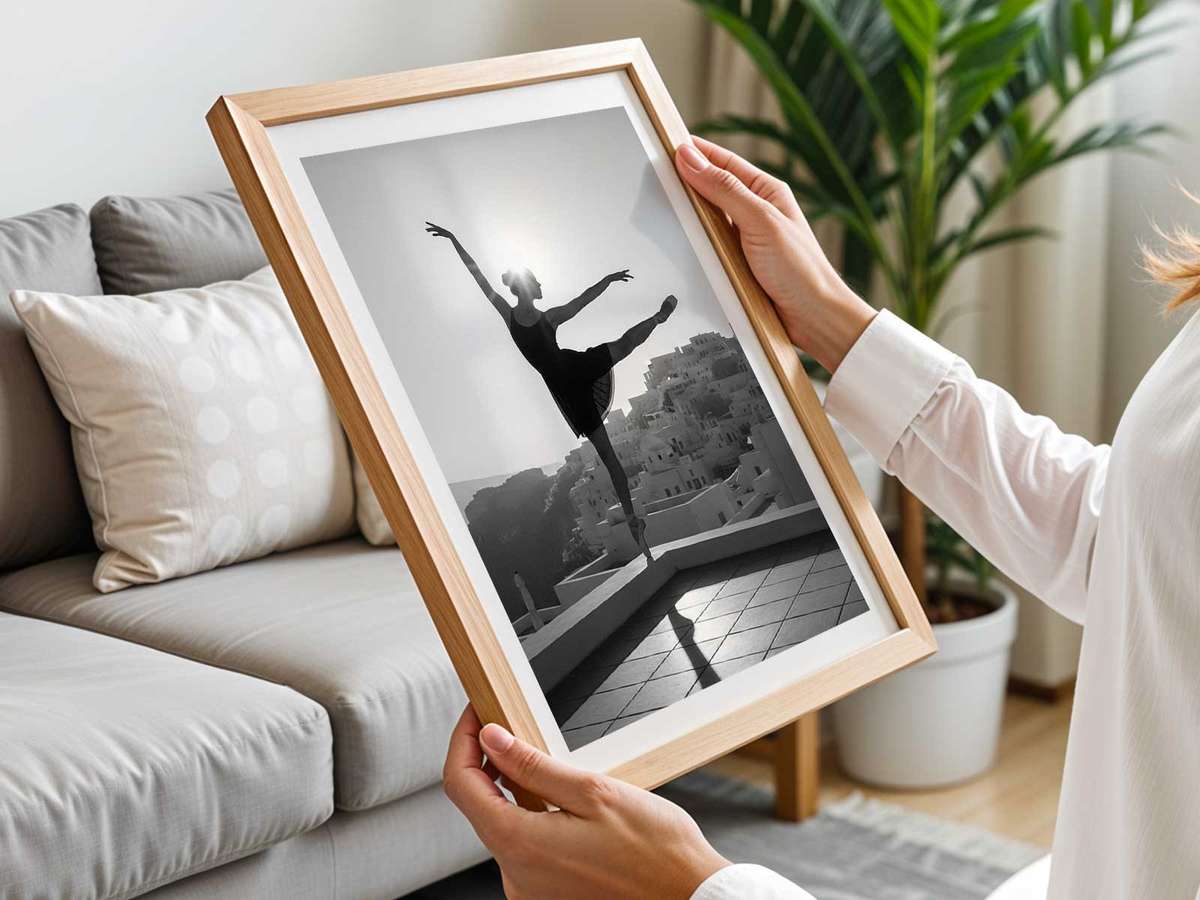
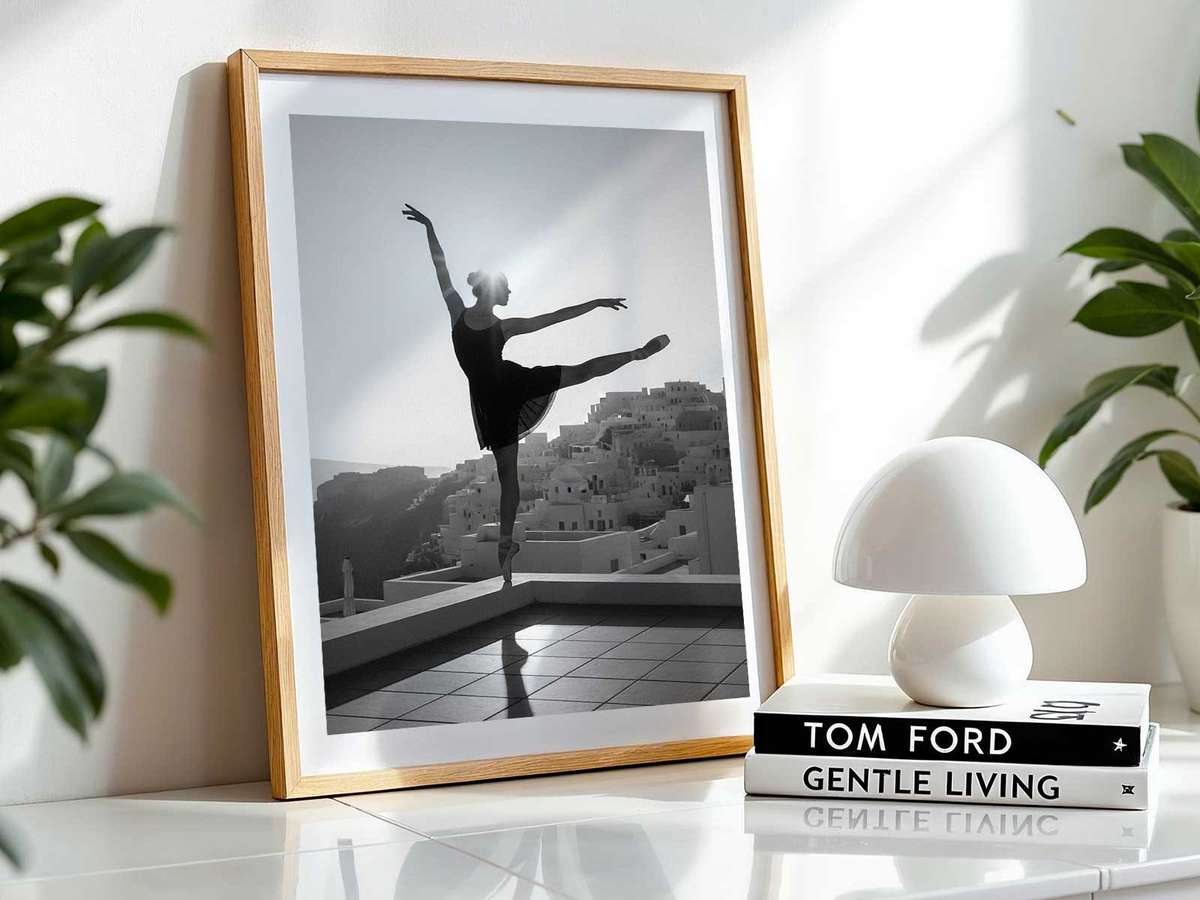
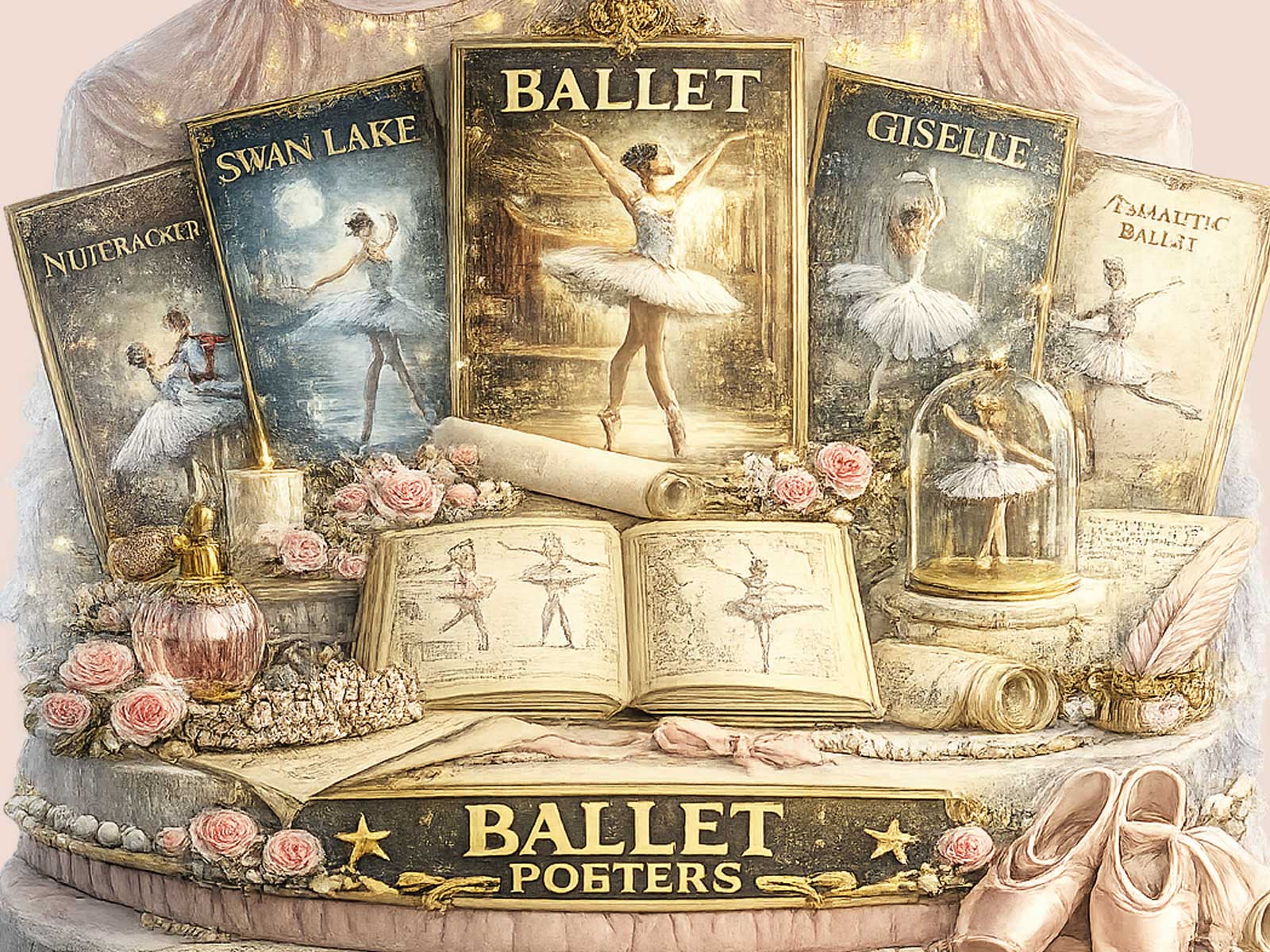
Placed among books, a small sculpture or an heirloom lamp, the poster becomes a quiet anchor: it calms a space and invites reflection. It complements interiors that value texture and memory—rooms where light changes through the day and art is chosen for its ability to be lived with.
This ballet dance photo is not about fleeting fashion; it is about establishing a lasting mood. The classical suggestion of Greek and Mediterranean light, the softened, print-like finish, and the considered restraint of the composition make this poster a refined addition to a home that cherishes continuity, warmth, and the deep pleasure of revisiting a beloved image.