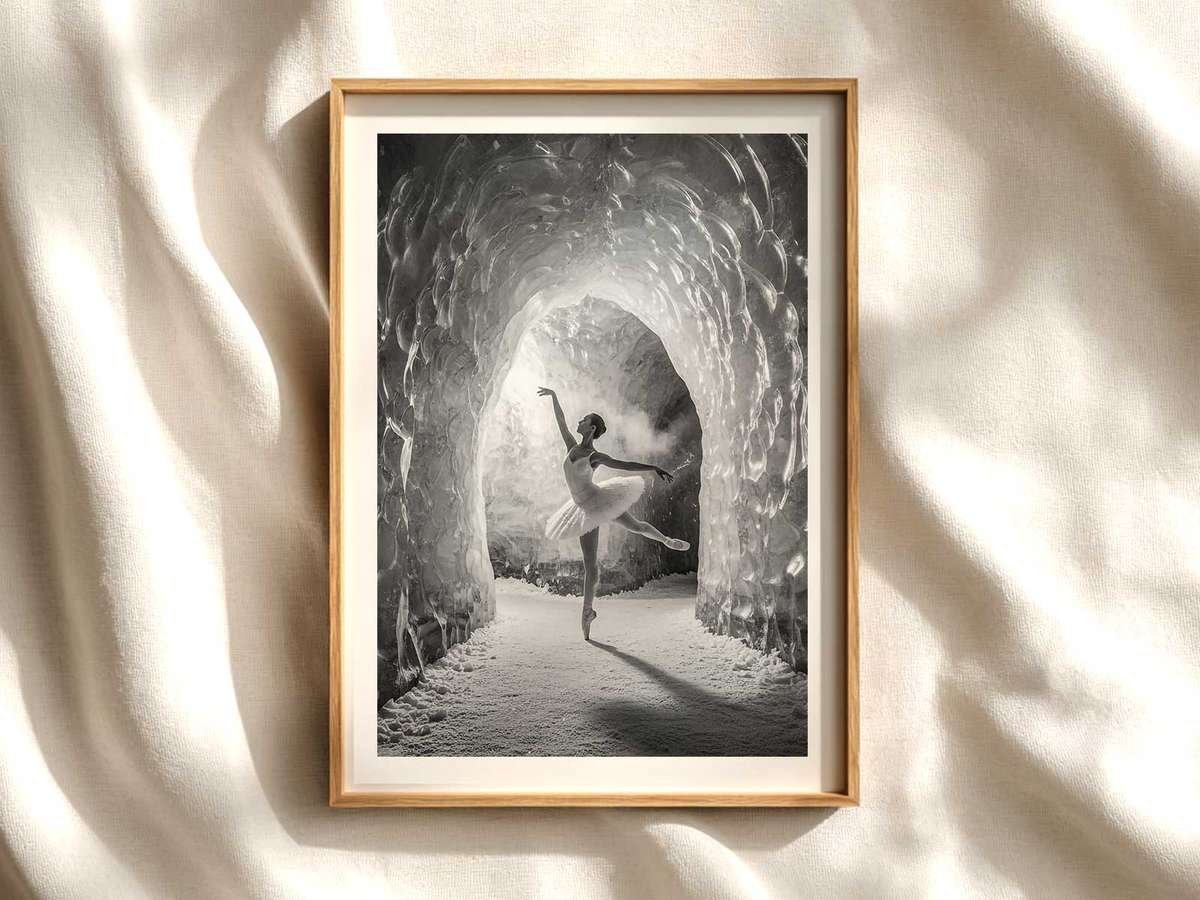
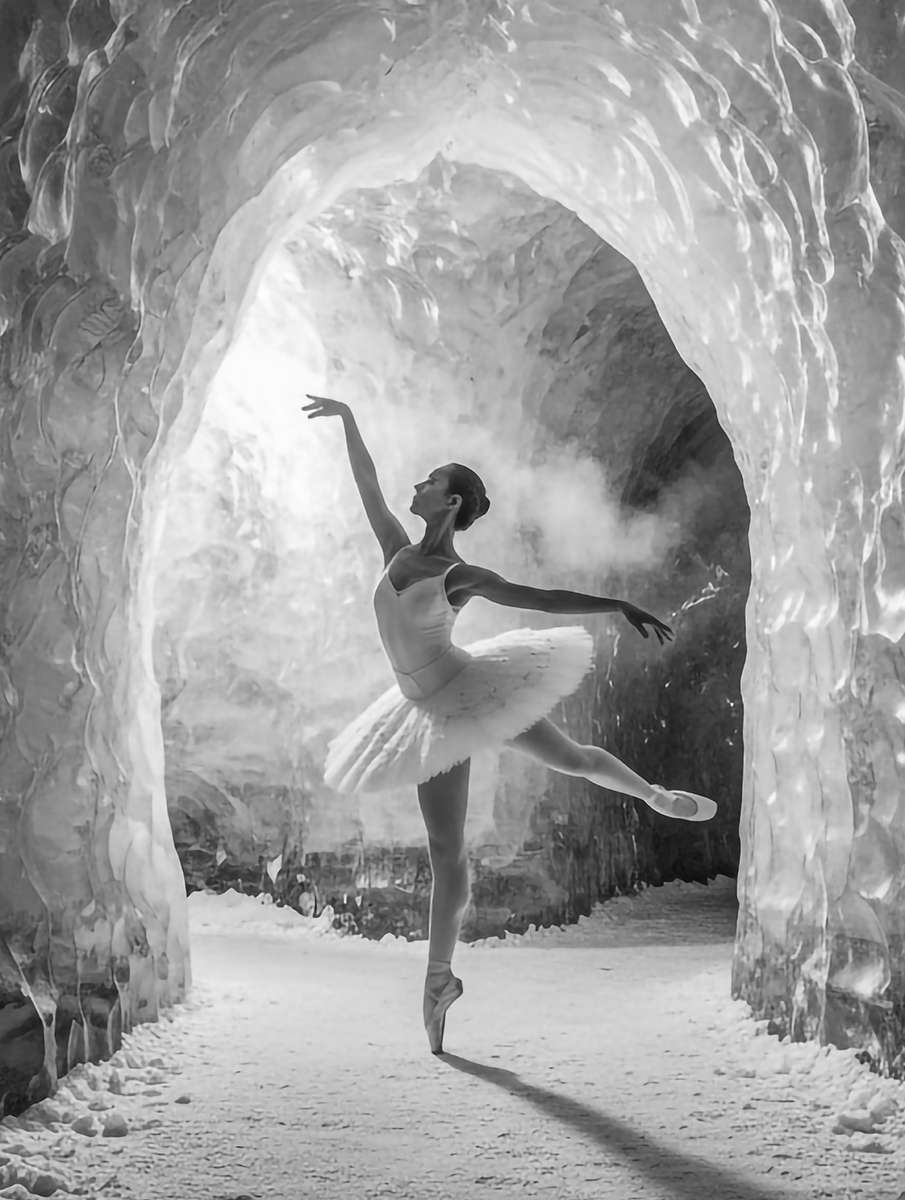
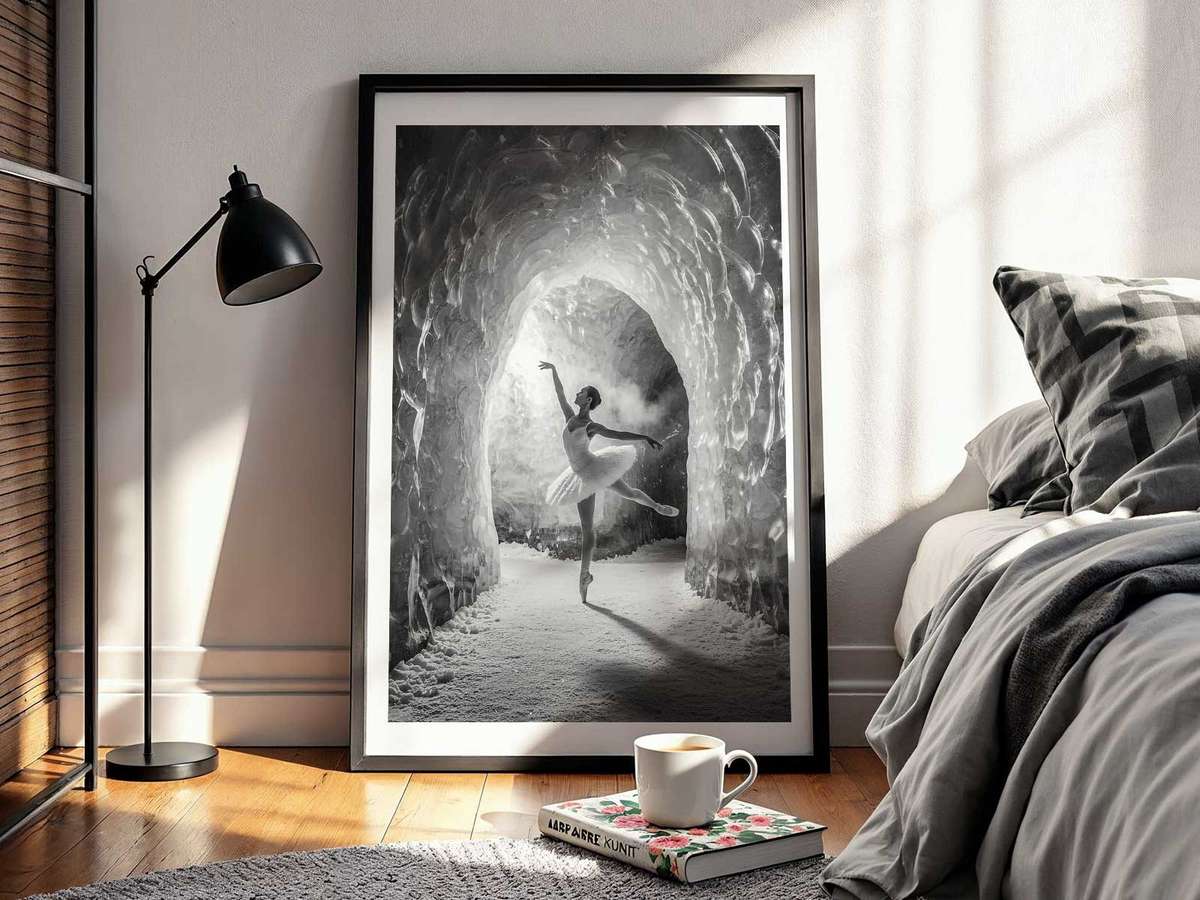
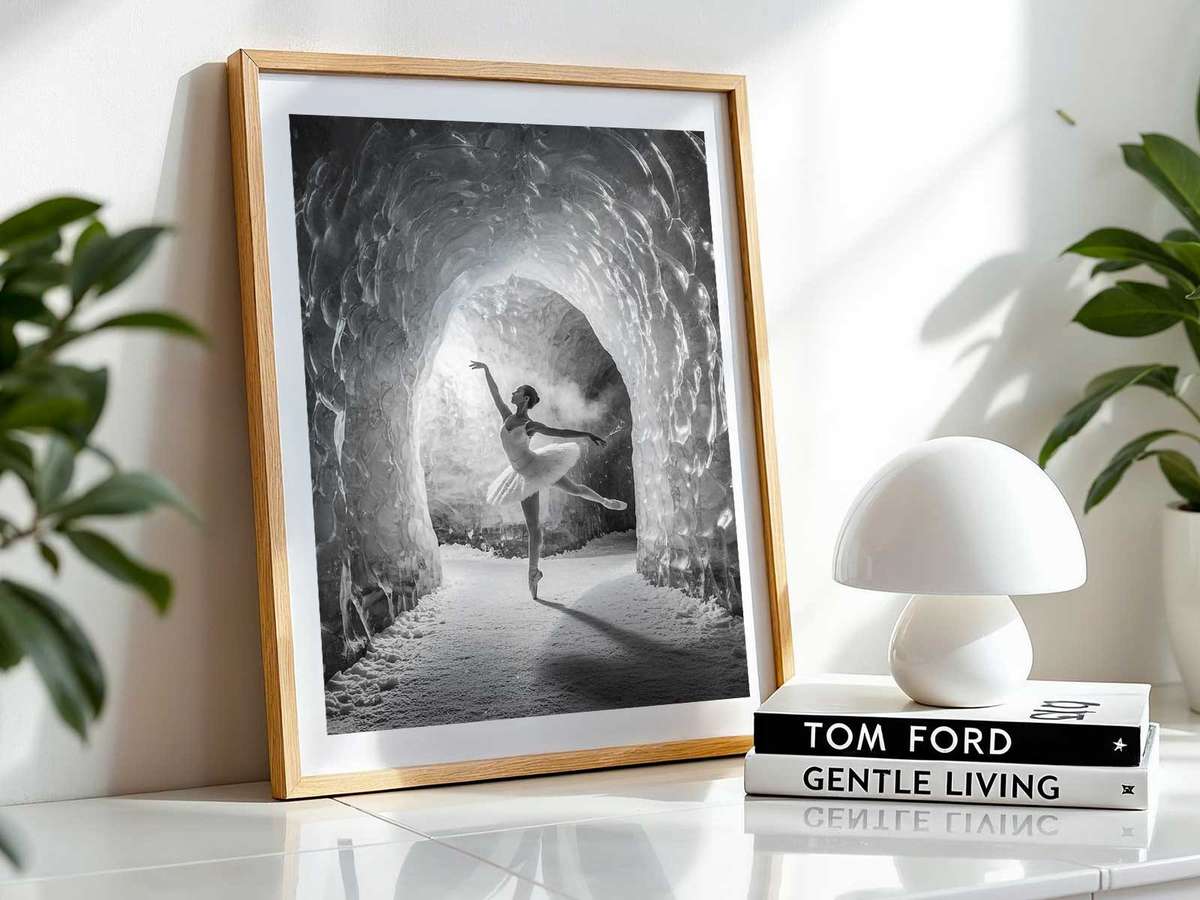
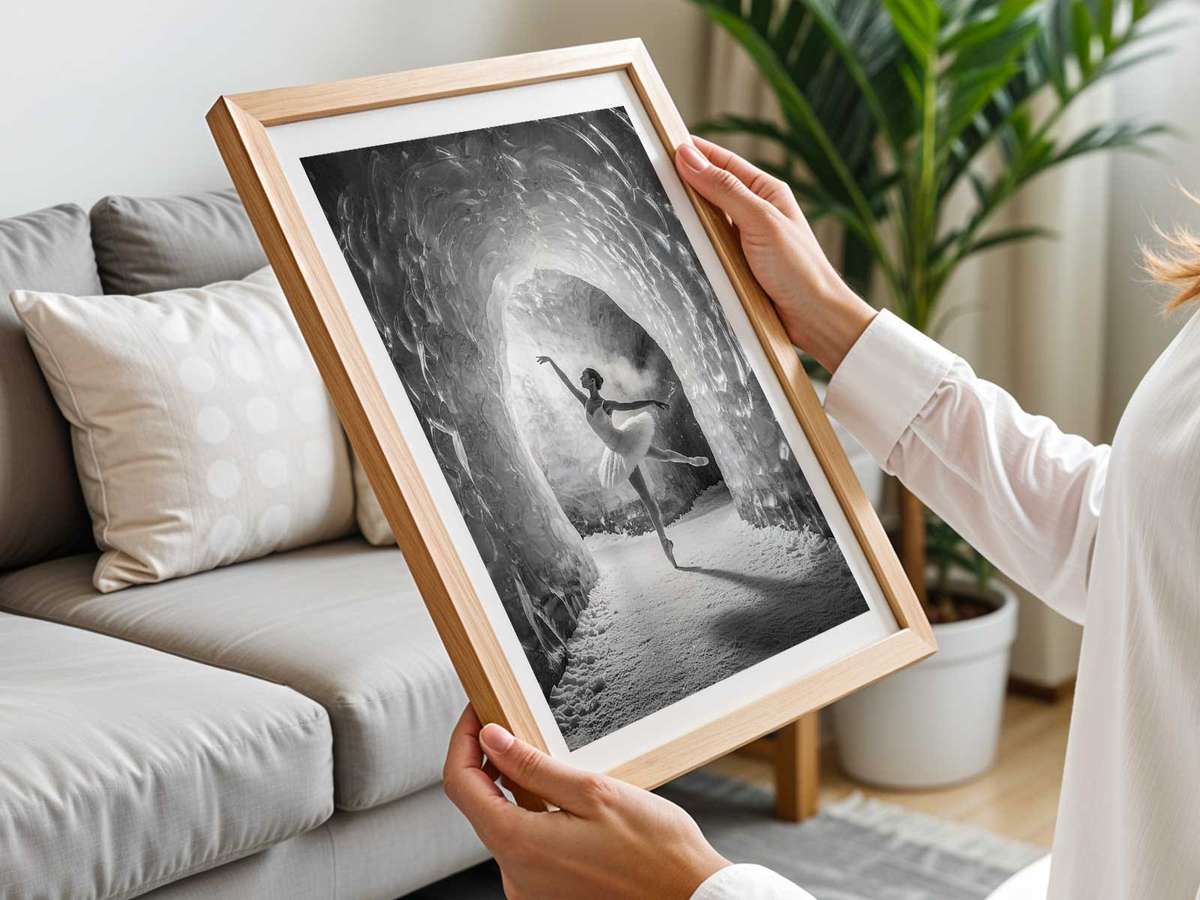
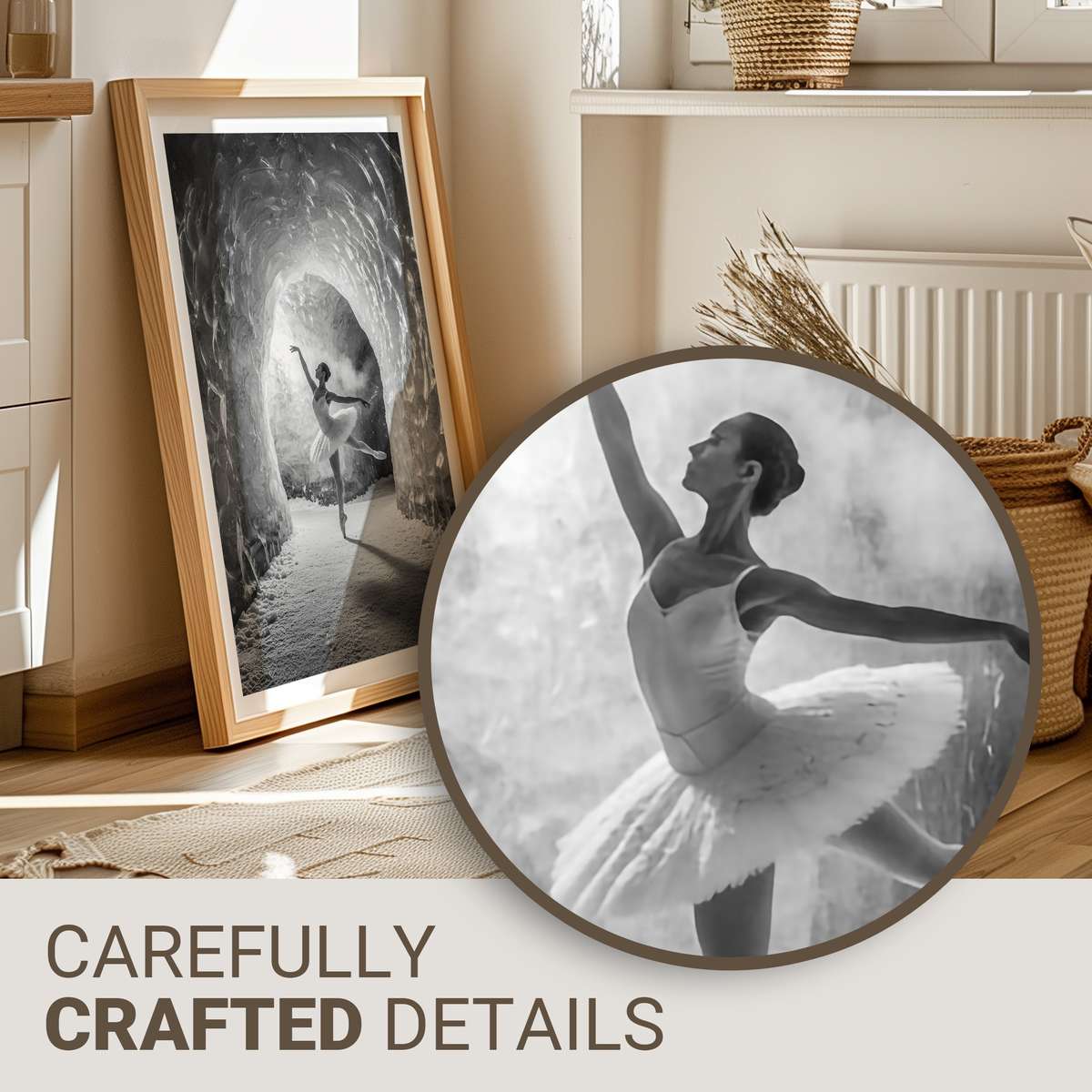
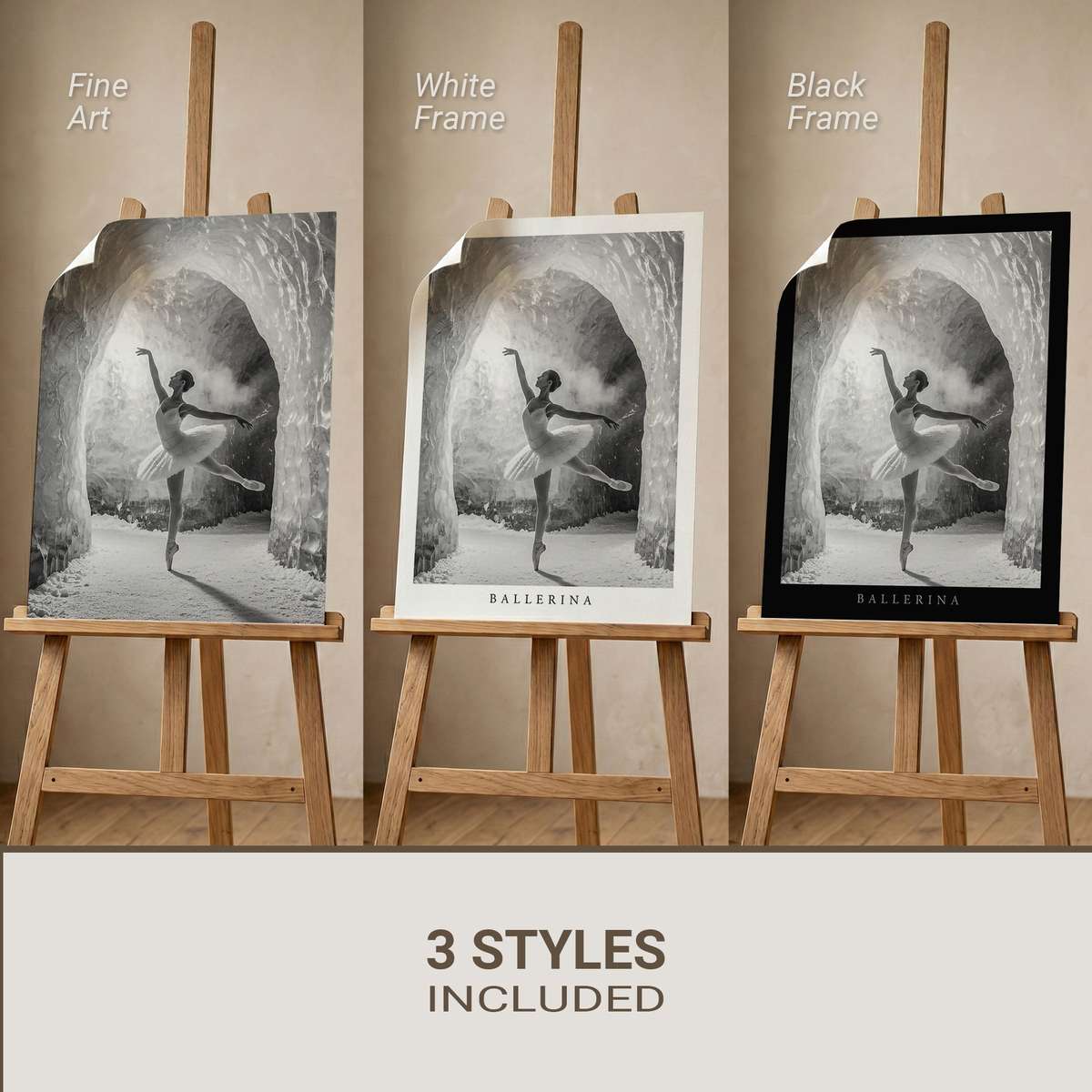
At first glance the image reads like a memory of a performance held in a frozen theater: a single ballerina occupies a wide stage whose scenery is stripped to pale planes of frost and white. The composition treats whiteness not as emptiness but as a scenic element — a cool surface that catches and shapes light, a theatrical salt that sharpens silhouette and slows motion. You do not only see the dancer; you sense the cold air, the hush between cues, the way breath would hang if sound were allowed to remain.
A whole stage world in one image
Space is central here. The backdrop recedes in layered tones of ivory and silver, suggesting set flats and painted horizon rather than mere studio white. Curtains and scenic rails are hinted at by thin shadow lines and vertical breaks of deeper gray, which give the scene theatrical architecture and a perceived depth beyond the picture plane. The ballerina sits within this invented environment — neither floating nor posed against a neutral field — and her presence reads as an event contained by the stage’s width and quiet. On a wall, this print reads like a fragment of a performance, an implied beginning or a long-held pause.
[IMAGE_INSERT_ARTICLE_01]
Light, distance, and theatrical calm
Light in this image is an actor itself. A cool sidelight carves the dancer’s outline, bleaching details of costume and skin while leaving other areas in soft shadow. The white planes reflect and diffuse that light so the scene feels luminous without glare — a measured, stage-calibrated brightness that isolates gesture and suggests a low, deliberate temperature. Because the illumination is selective, the eye travels: from the crisp highlight along the shoulder, down the curve of a leg, into the darker negative space that frames the figure. The result is not simply a pretty portrait but a spatial score of emphasis and quiet.
The emotional temperature this creates is contemplative rather than triumphant. The whiteness and frost imply restraint; the distance between dancer and far backdrop creates a gentle suspense, as if the next movement might be withheld for dramatic effect. That restraint is what makes the image useful in interiors that favour atmosphere — spaces where silence is as valued as decoration.
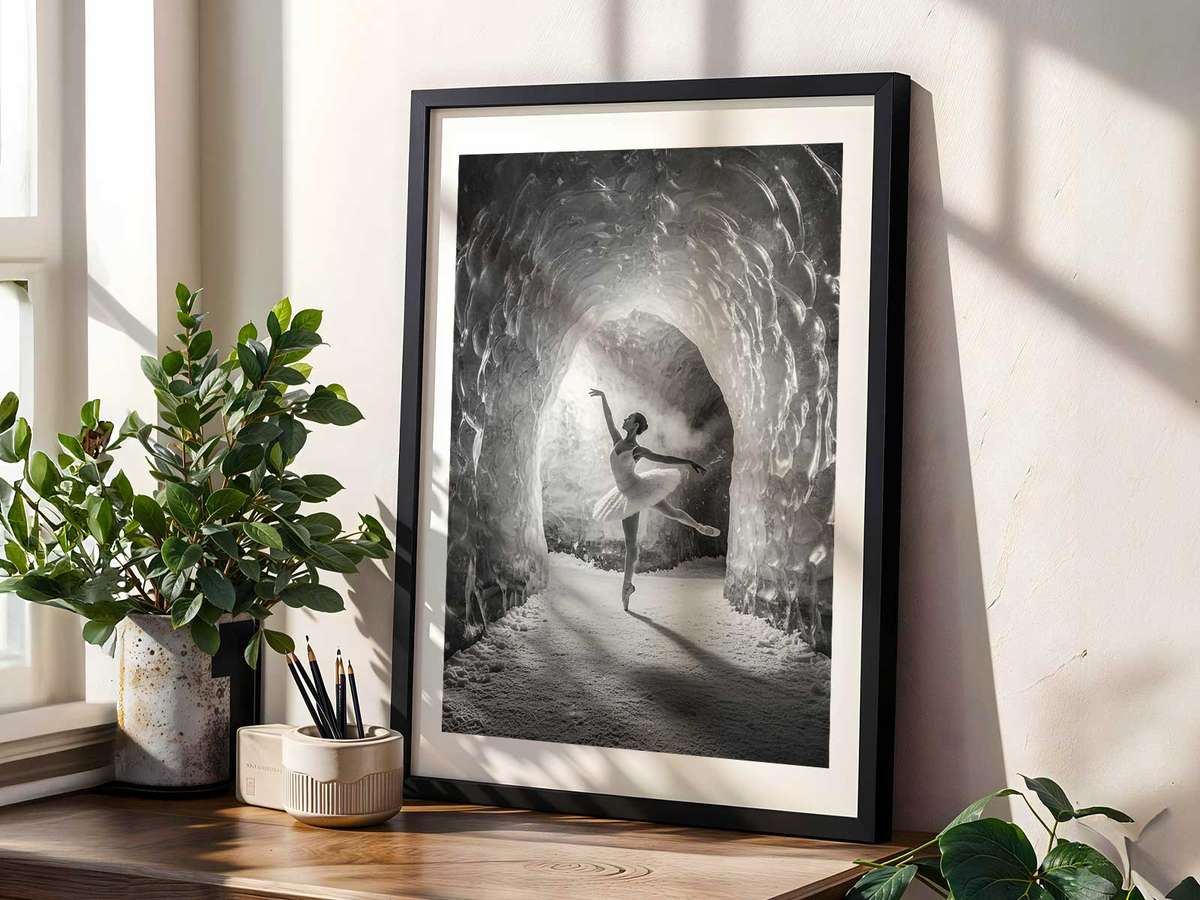
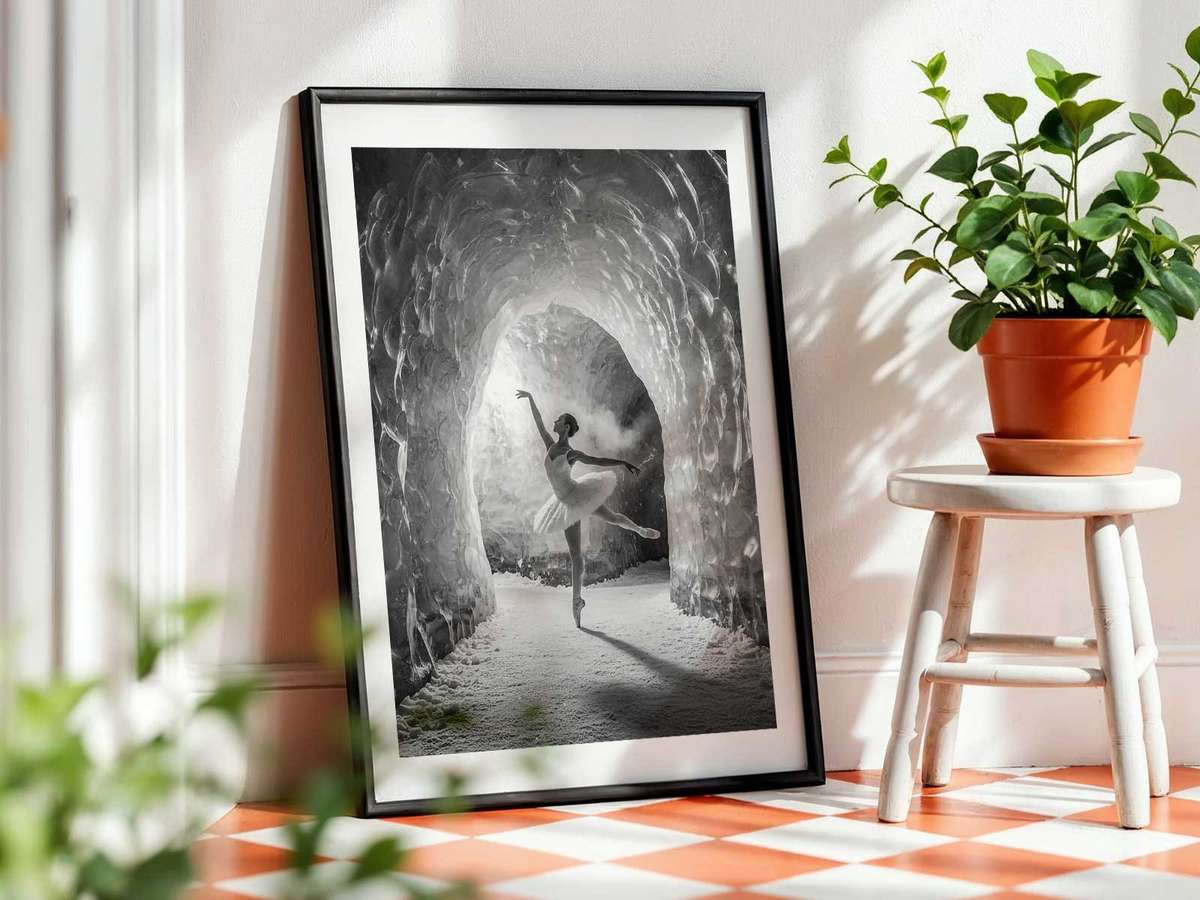
On a living wall the print invites a slow gaze. It complements a reading corner where light is subdued, a bedroom that benefits from calm visual focus, or a studio that prizes spatial thinking over ornament. The artwork does not dominate with color or pattern; instead it anchors a room with a sense of theatrical depth that encourages people to look twice and to linger.
What distinguishes this poster is its insistence on scene rather than just figure. The whiteness is a set piece, the cold a staging choice, and the light a director’s cue — together they preserve an entire theatrical atmosphere. Mounted on a wall, the image offers a lasting sense of suspended time: a stage remembered, a composition that supplies hush and spatial richness long after the curtain would fall.