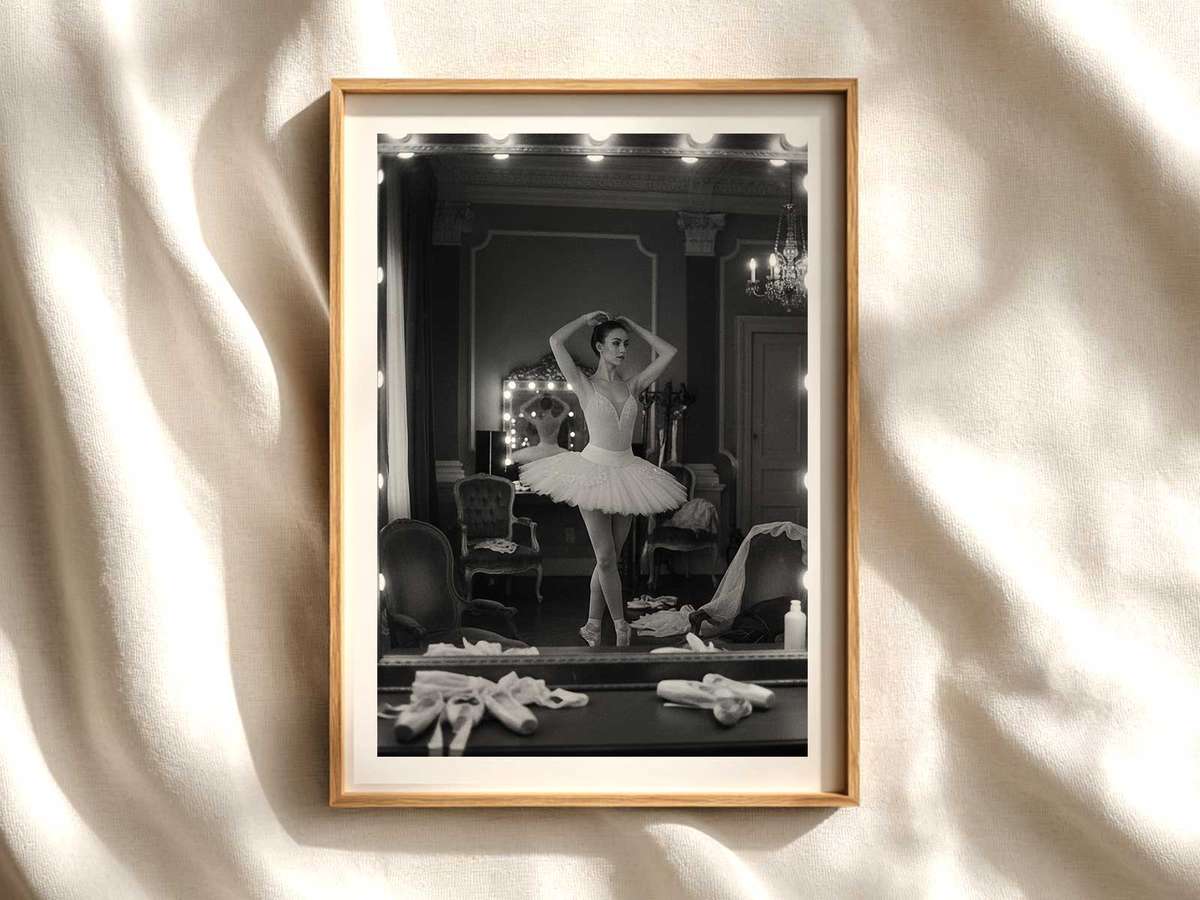
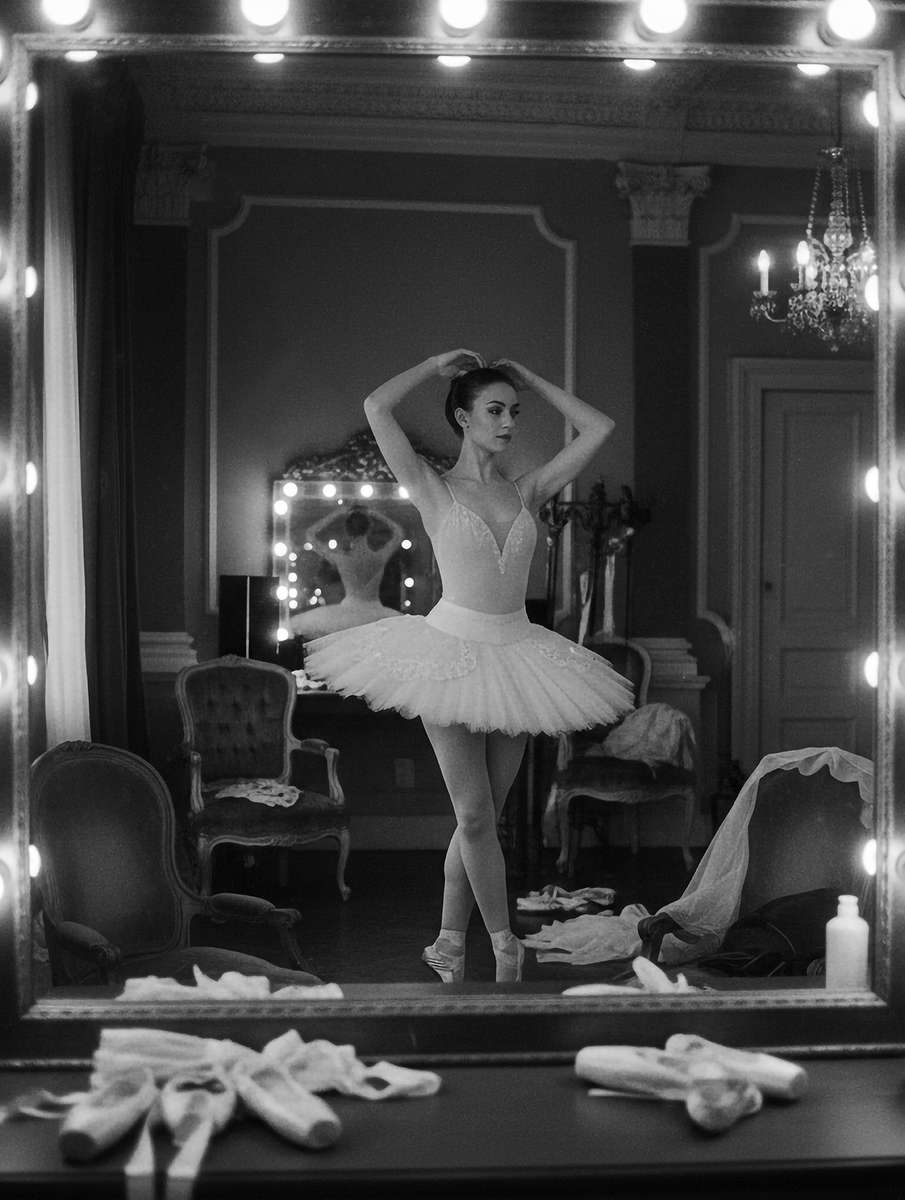
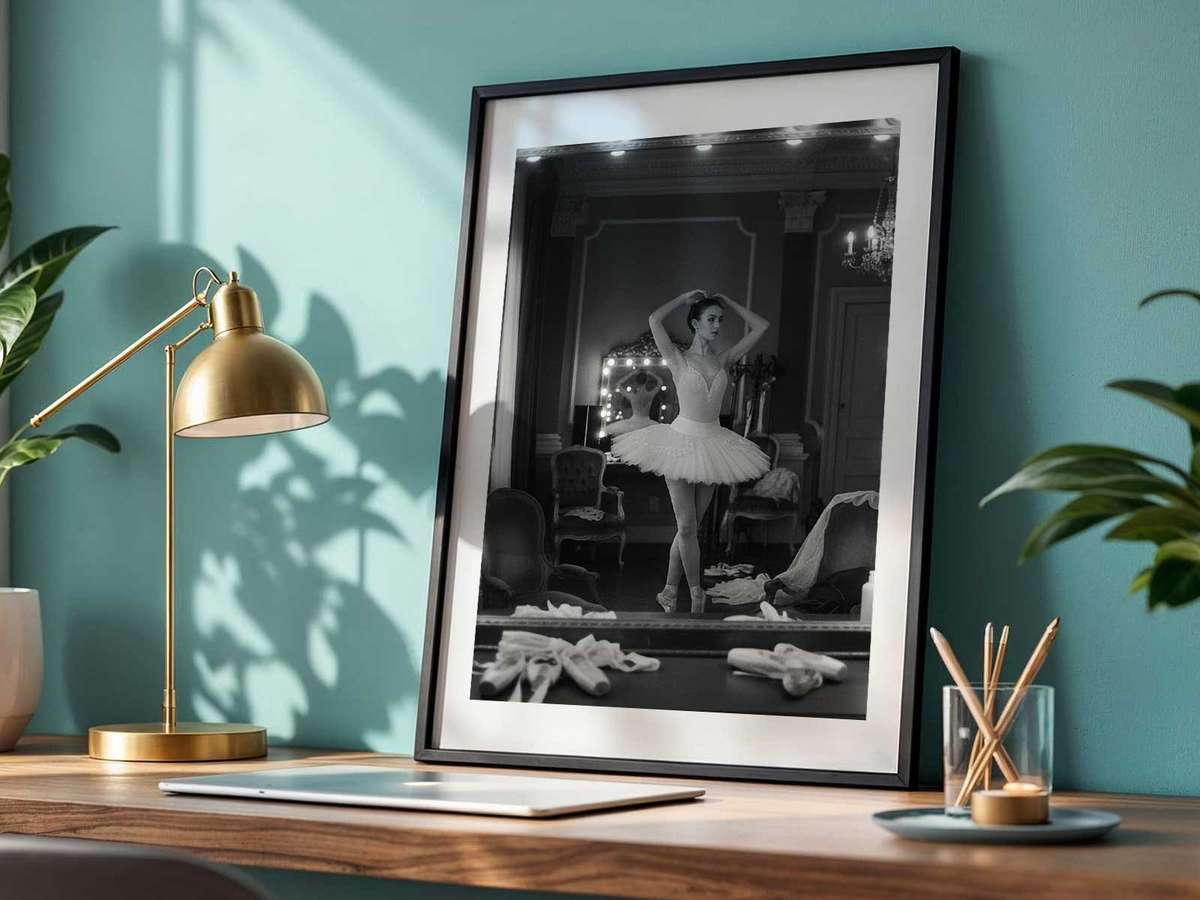
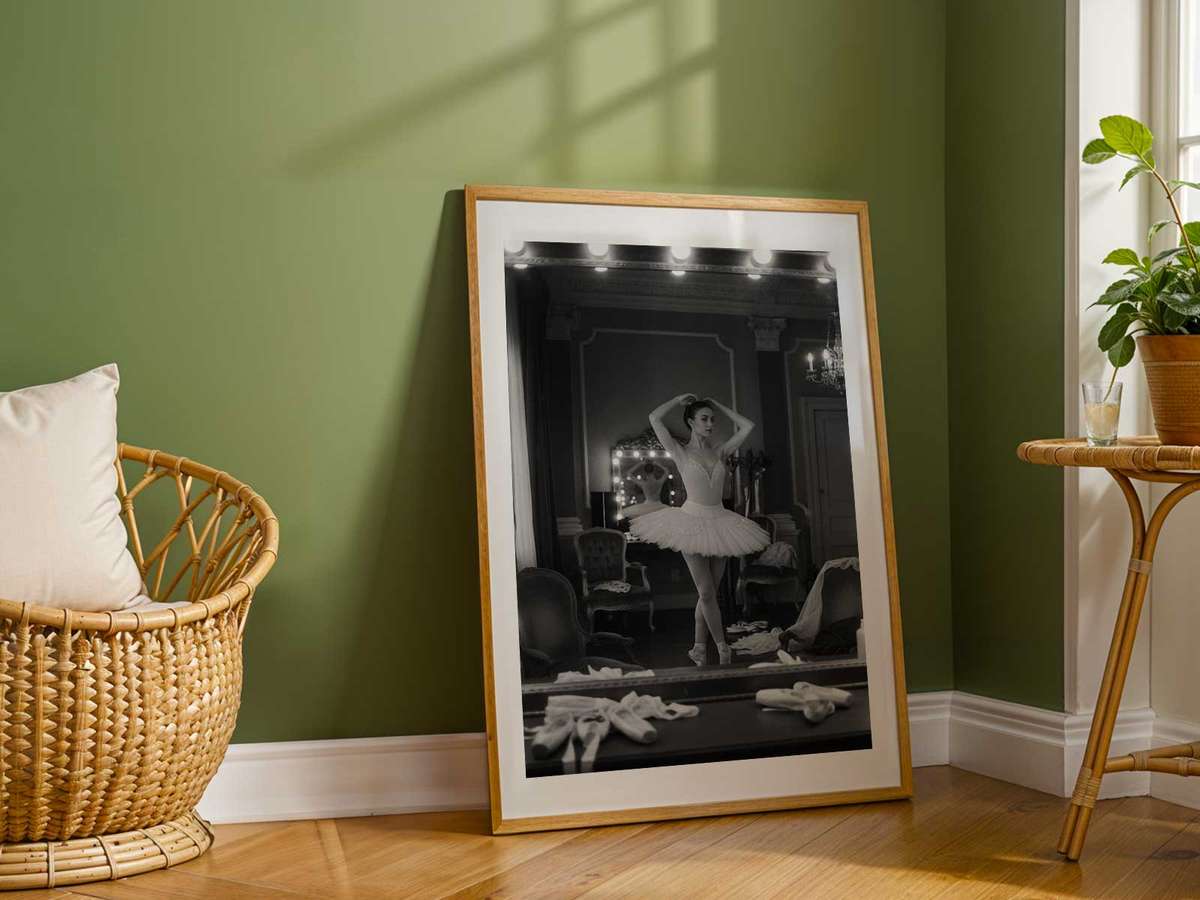
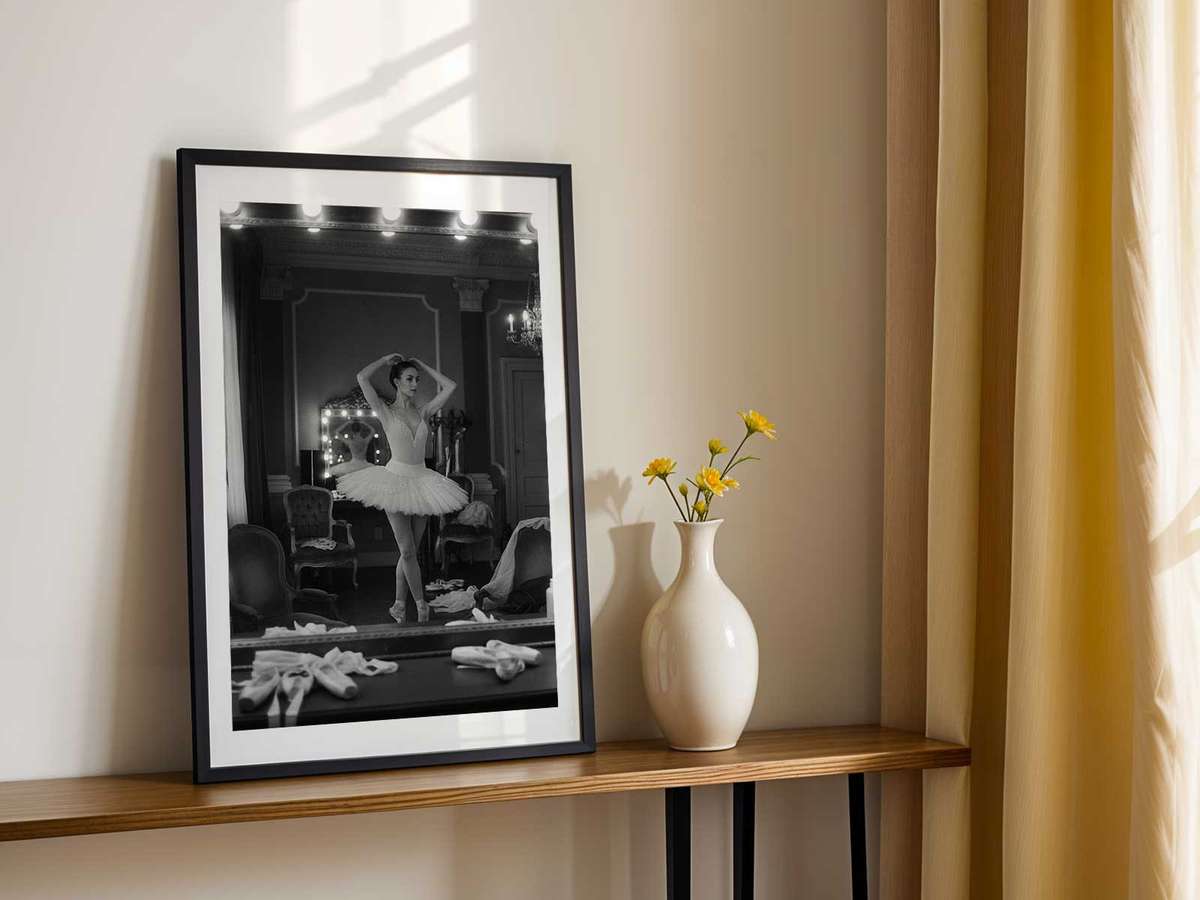
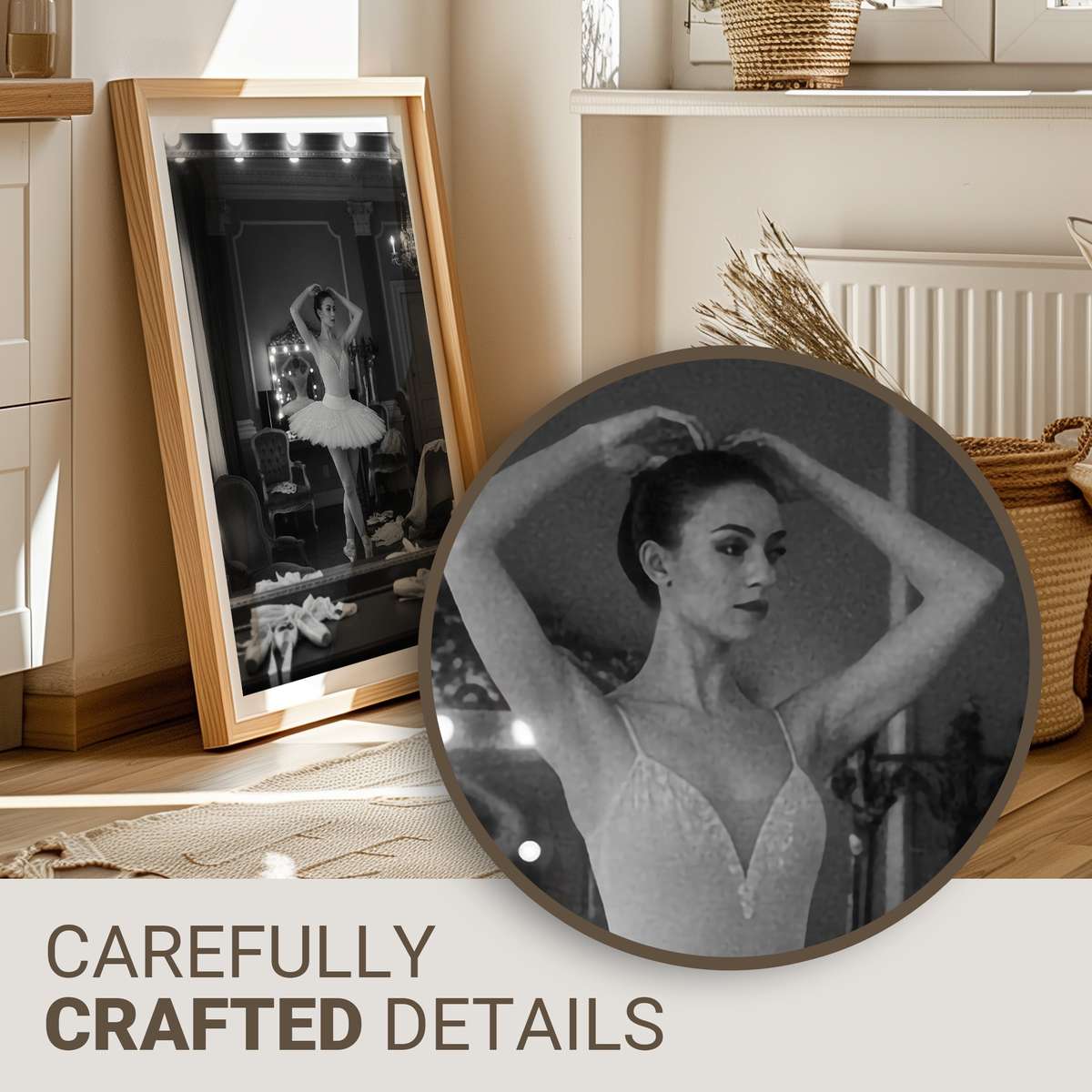
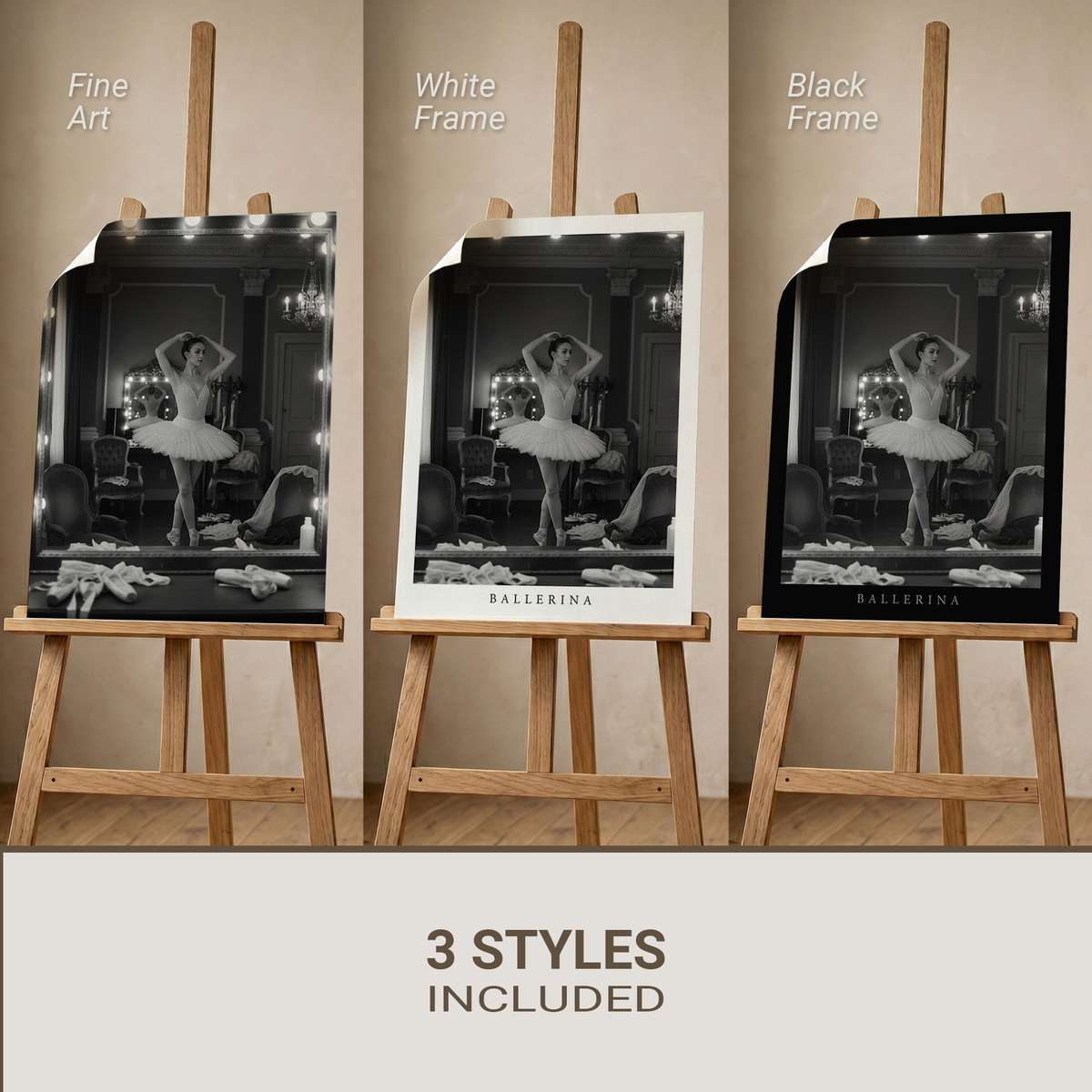
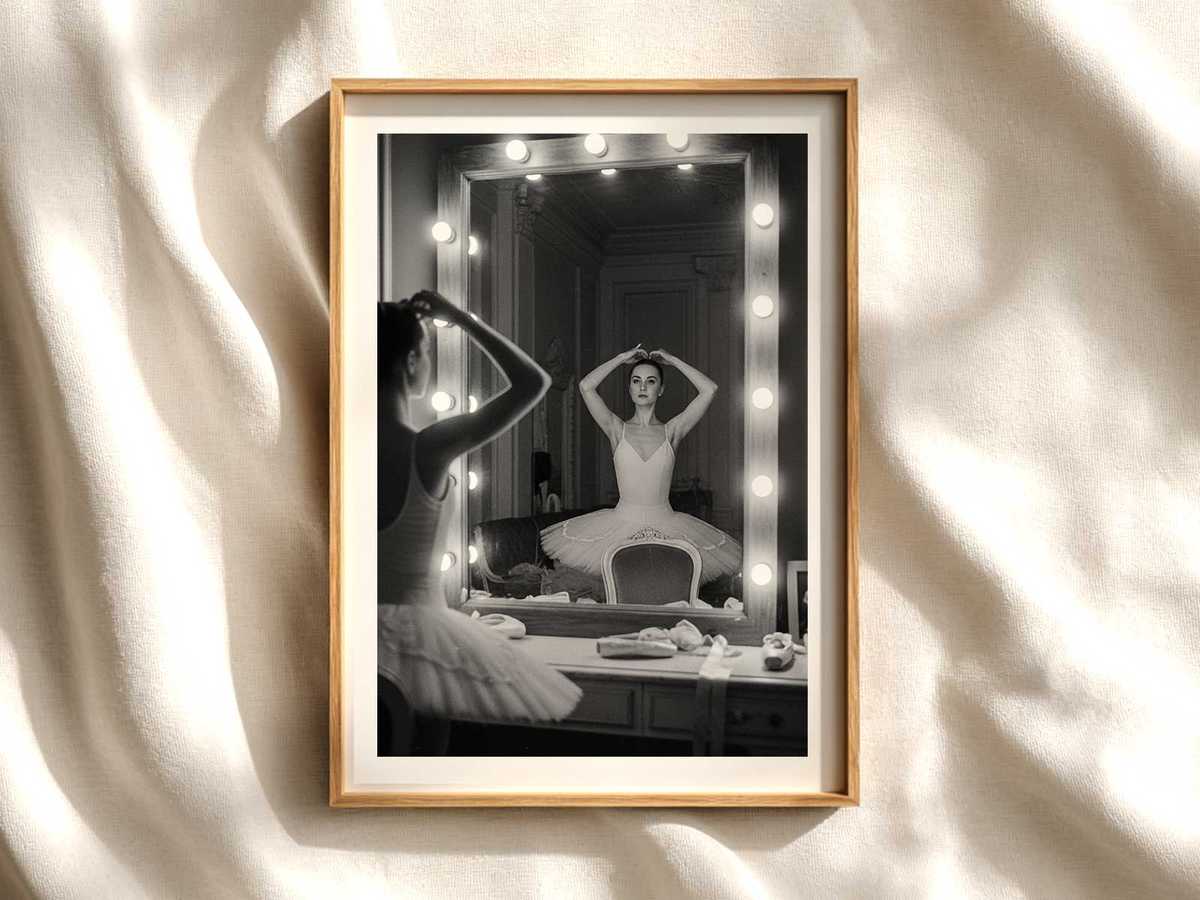
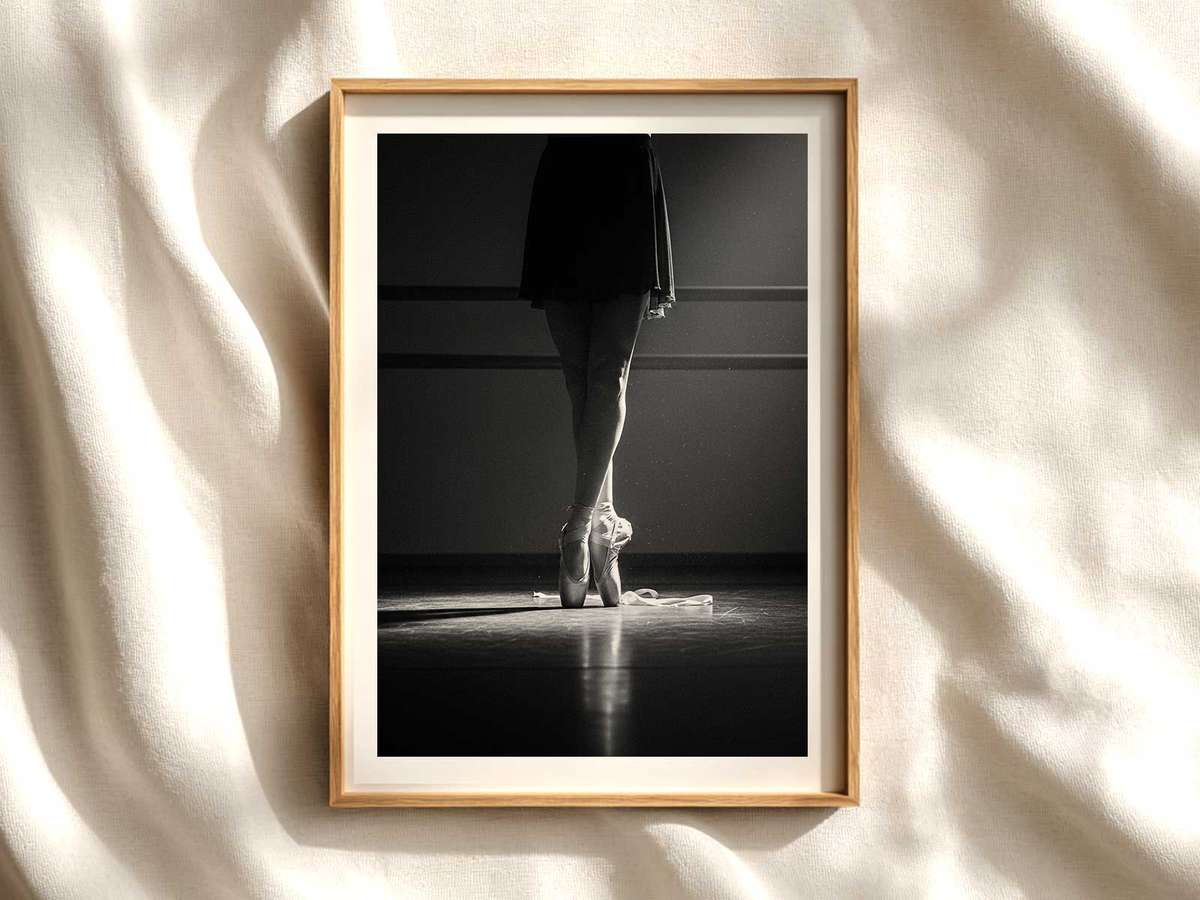
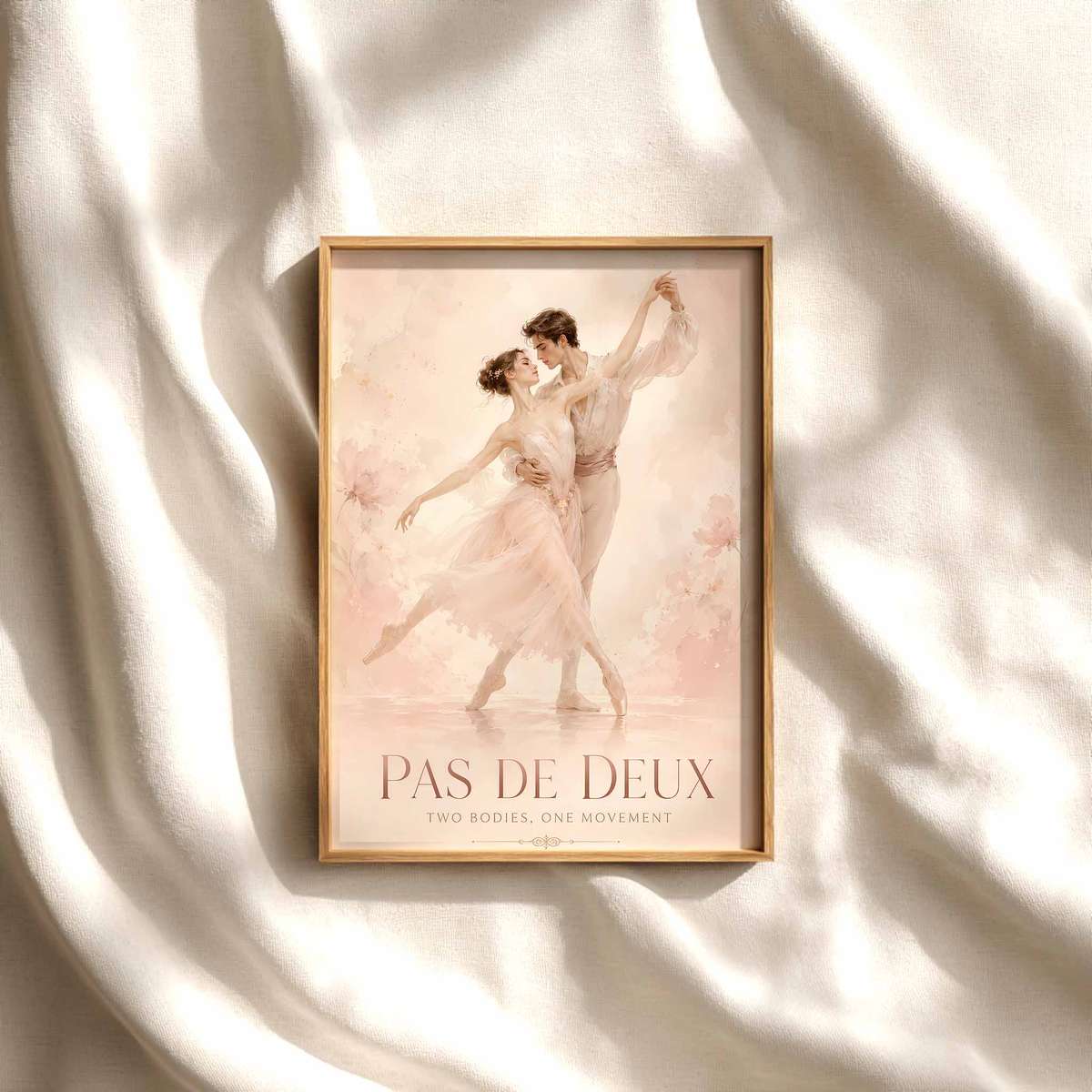
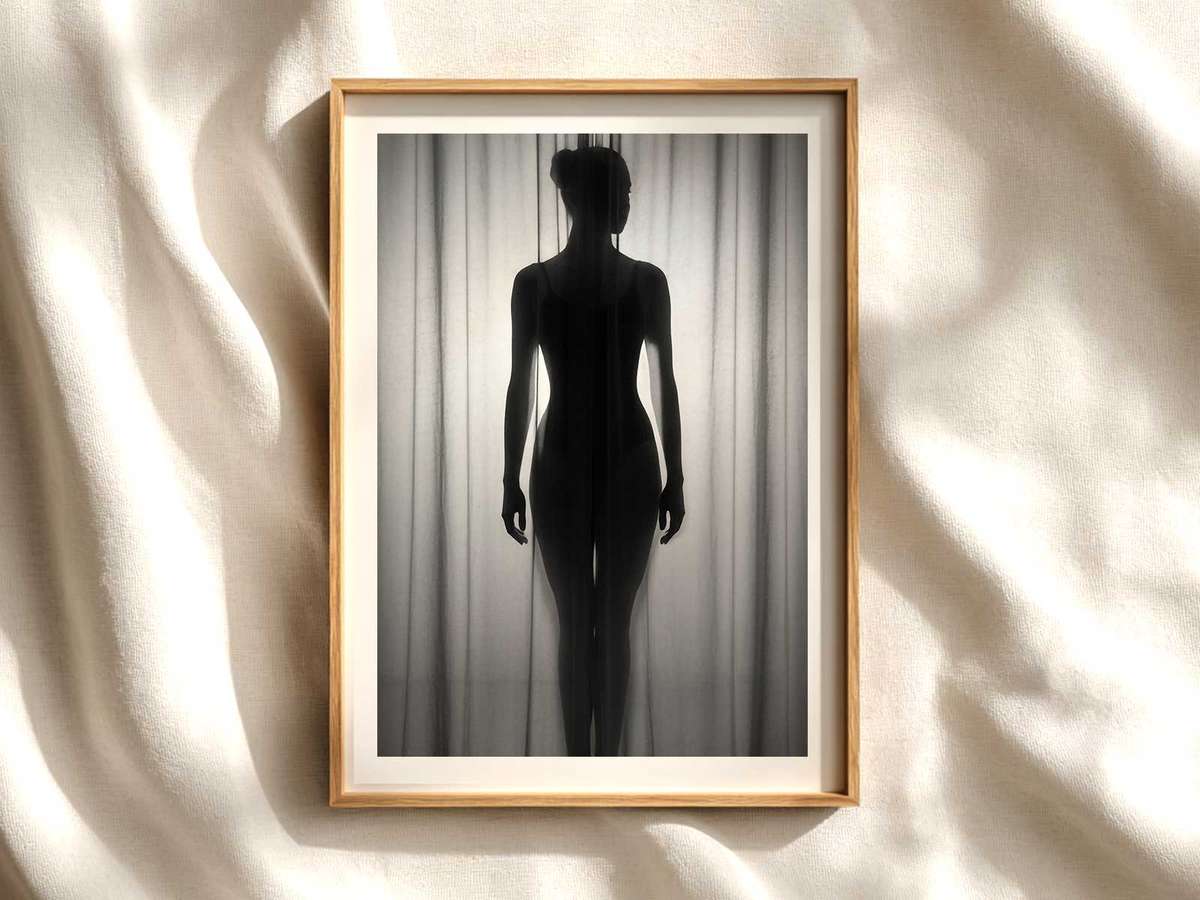
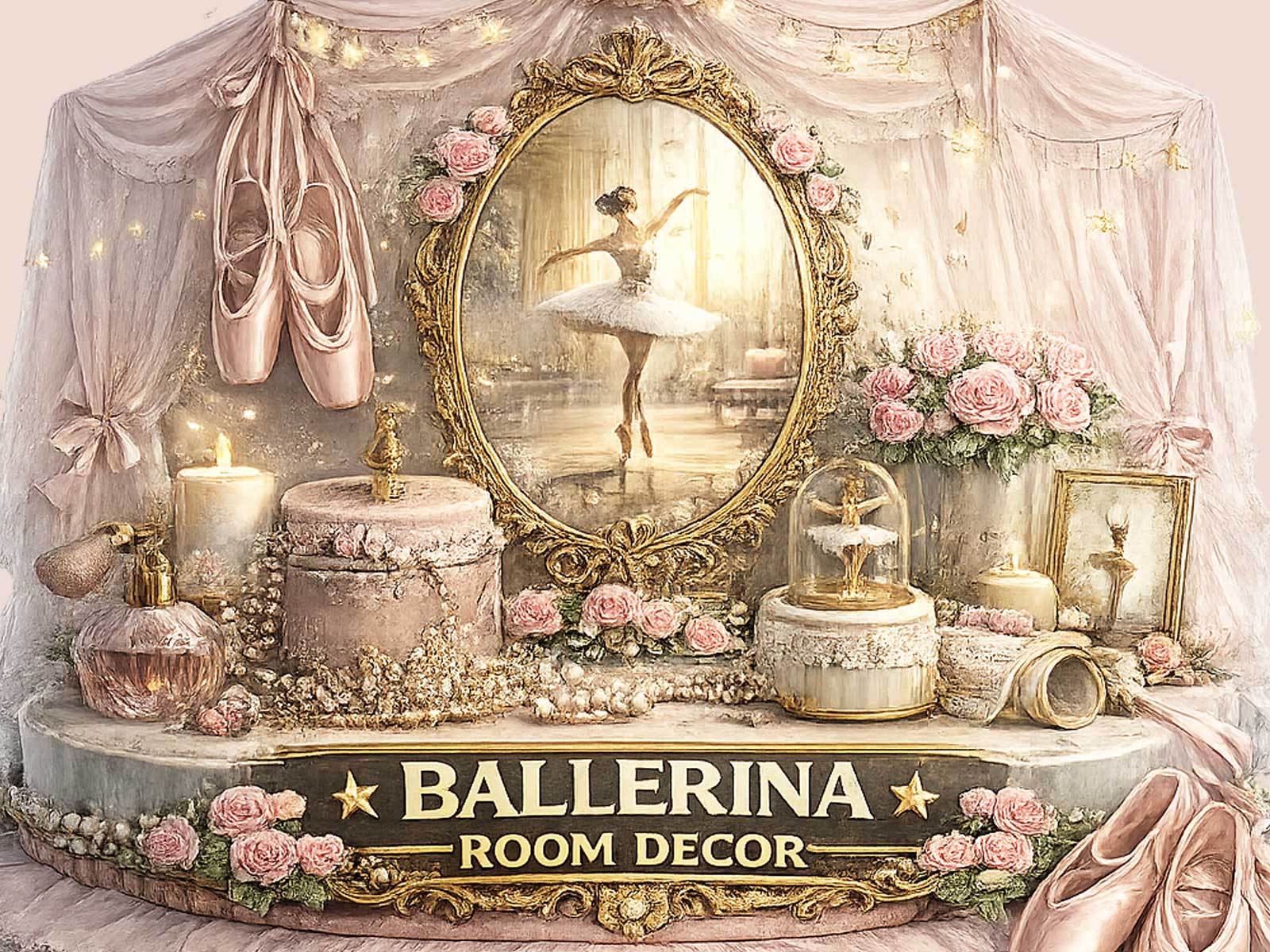
The image fixes a single studio breath: a dancer caught in a poised pause, arm lifted, torso threaded through an oblique line that the mirror replicates and refracts. What would be a simple study of technique becomes a layered composition—the body and its reflection negotiating space, timing and intent. The mirror doesn’t merely copy motion; it complicates it, showing both what is presented to the camera and the private angle just out of frame, so the second feels both seen and held back.
A moment held at full intensity
Look closely and the photo’s power is in the small, precise tensions: the wrist’s subtle flex, the slight tilt of the crown, the way the supporting leg is a quiet vertical that contrasts with an expanded horizontal arabesque of gaze and hand. The mirror doubles those tensions, creating a shallow interplay of symmetry and offset where one figure frames the other. That interplay transforms a split-second into a conversation between forward motion and reflective stillness, so the viewer senses both the dancer’s concentration and the echo of an inner rehearsal.
[IMAGE_INSERT_ARTICLE_01]
Why the image stays with you
Rather than dramatizing movement through blur or theatrical lighting, the photograph finds intensity in quiet clarity. The mirror introduces an emotional temperature that is introspective: the reflected pose reads like a memory or a possible correction—an alternate version of the same intent. This creates a cognitive tug—are we watching the performance or the preparation?—and that ambiguity is what makes the poster linger in the mind. It preserves the sense that something disciplined is also fragile and private.
Visually, the mirror adds depth without clutter. Lines repeat, angles echo, and negative space becomes meaningful: the small gap between body and reflection acts as a breathing room that heightens the gesture. For someone who loves ballet or evocative wall art, the print rewards repeated looking. Each viewing reveals a new relationship of limb to light, gesture to shadow, presence to apparition.
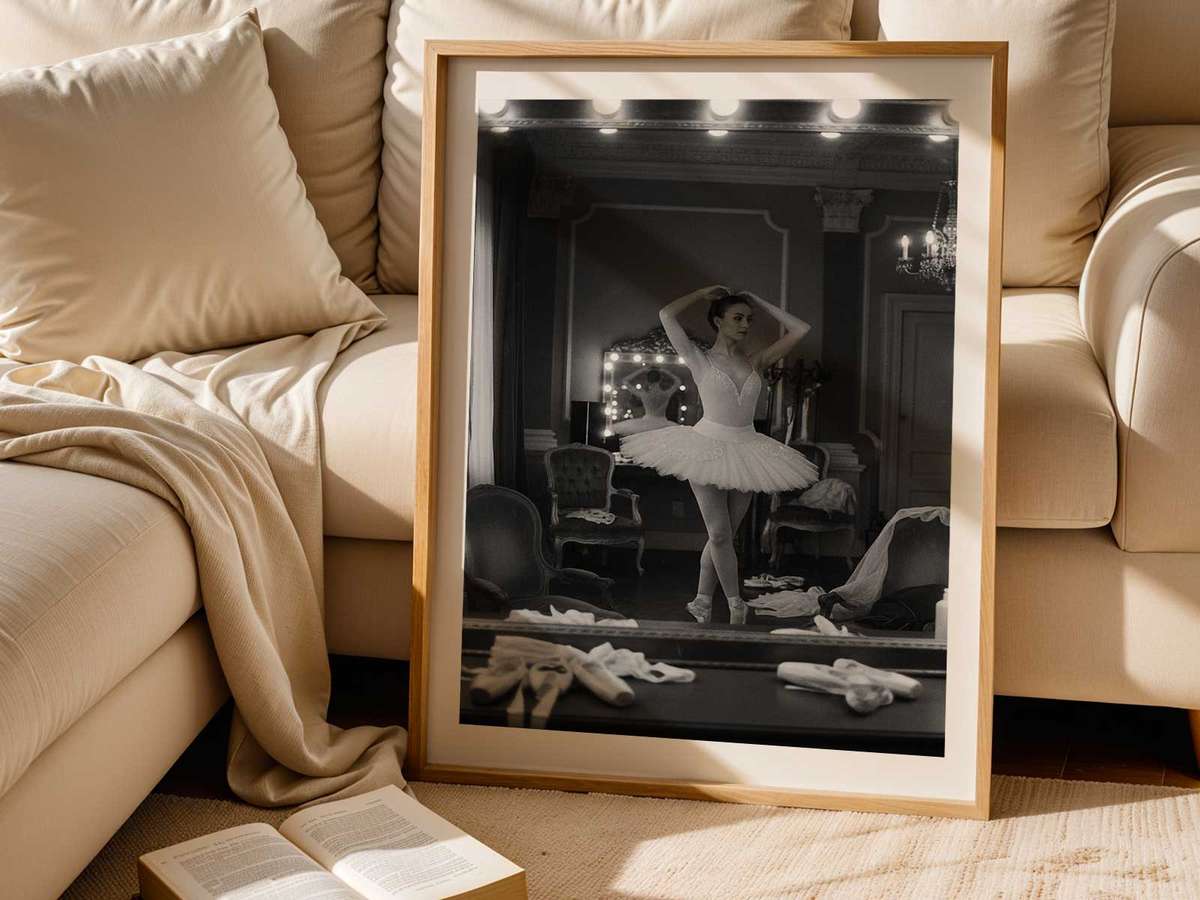
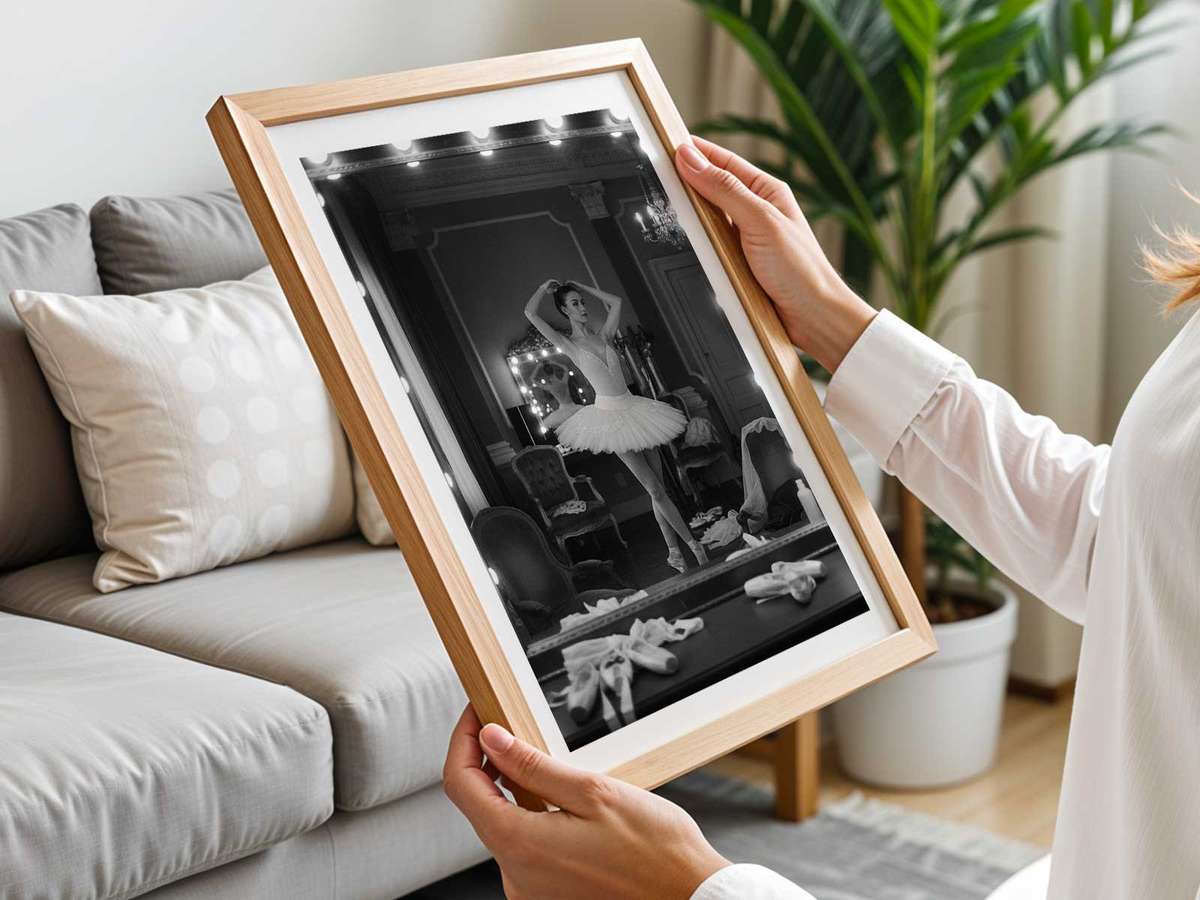
The poster brings an elemental studio mood into a room—reserved, focused, quietly theatrical. It suits a ballet-inspired bedroom, a practice corner, or a refined living space where art can feel like a lived companion. The image supplies motion without noise: a contained energy that animates a wall while keeping the ambient tone calm and contemplative.
Ultimately this is a study of an instant made durable. The mirror takes what might have been a straightforward technical snapshot and makes it into a composition about introspection, rehearsal and the unseen halves of performance. On your wall it acts as a small, steady performance—one that invites attention, rewards patience, and keeps the rare quality of that captured second close at hand.