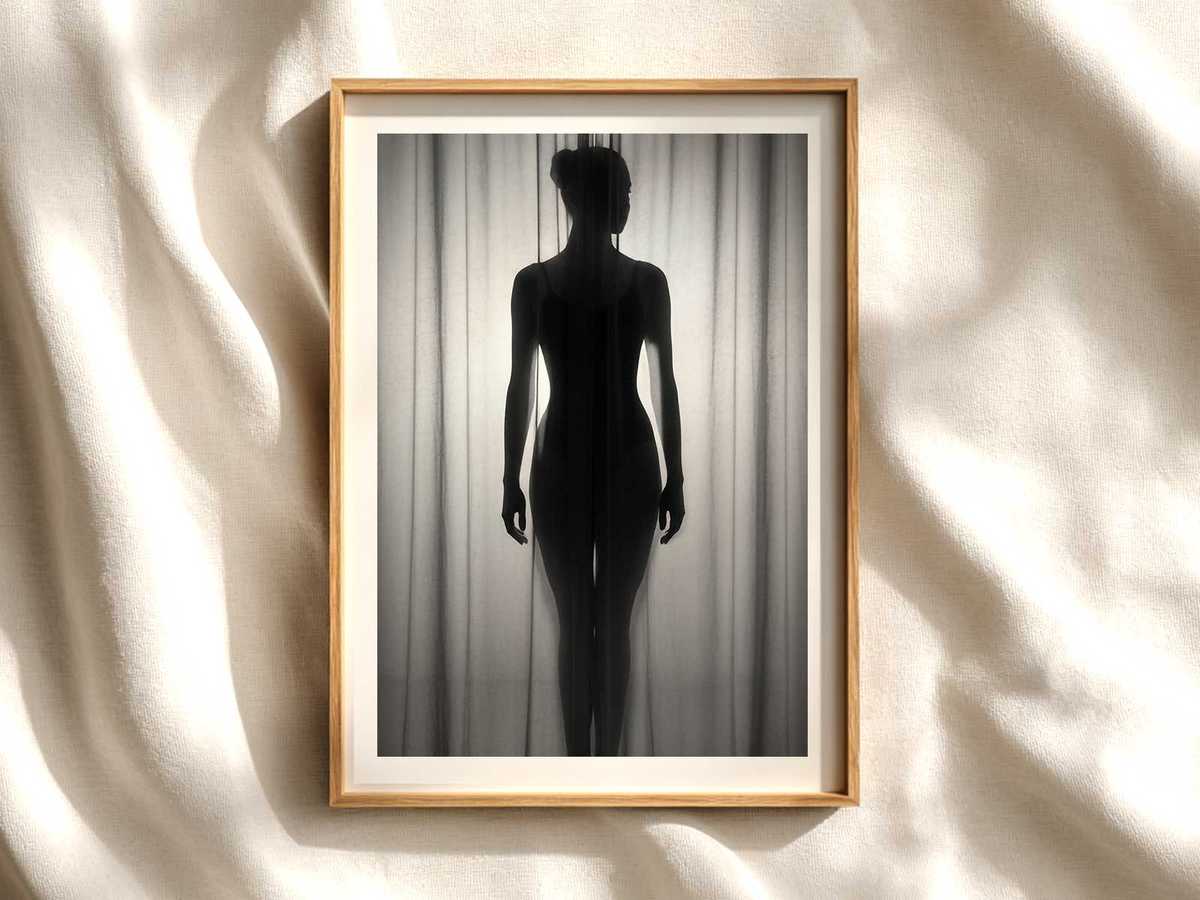
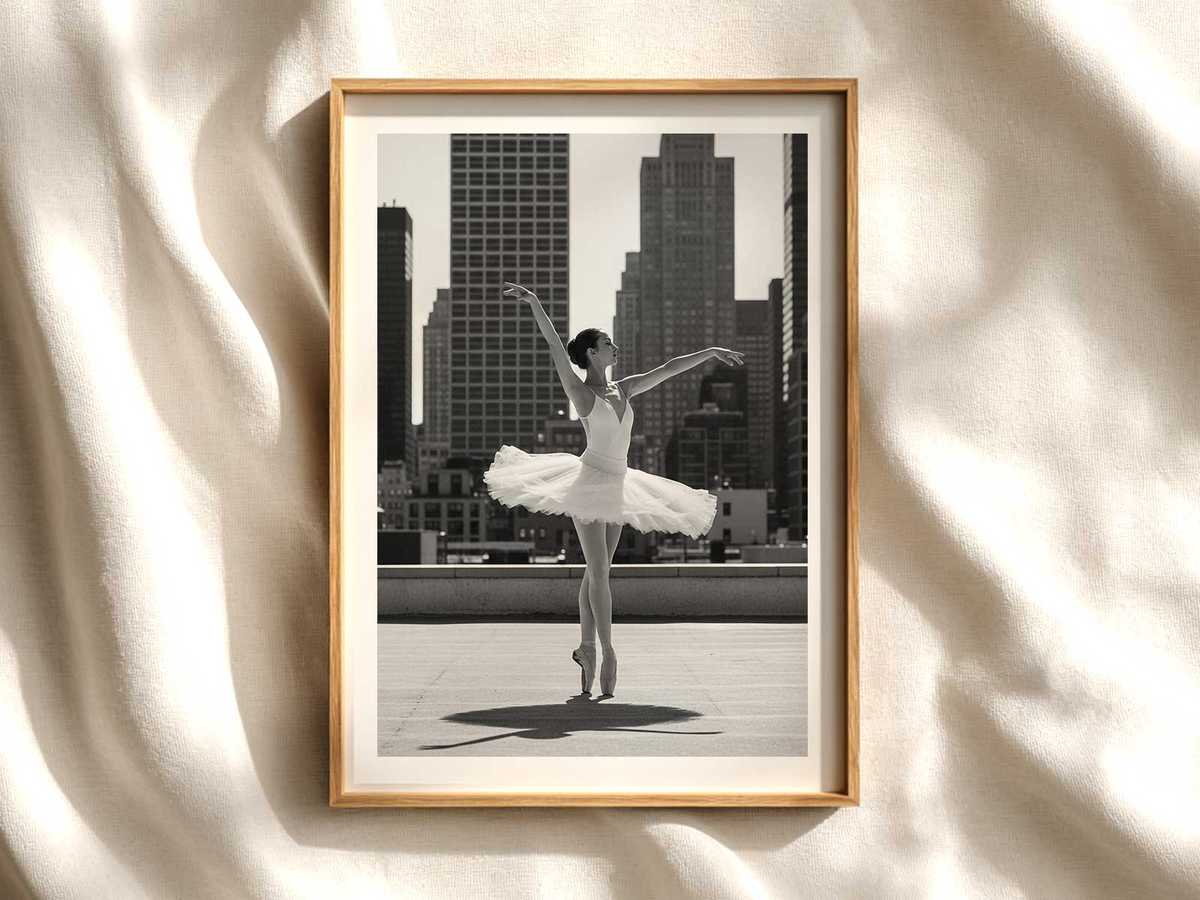
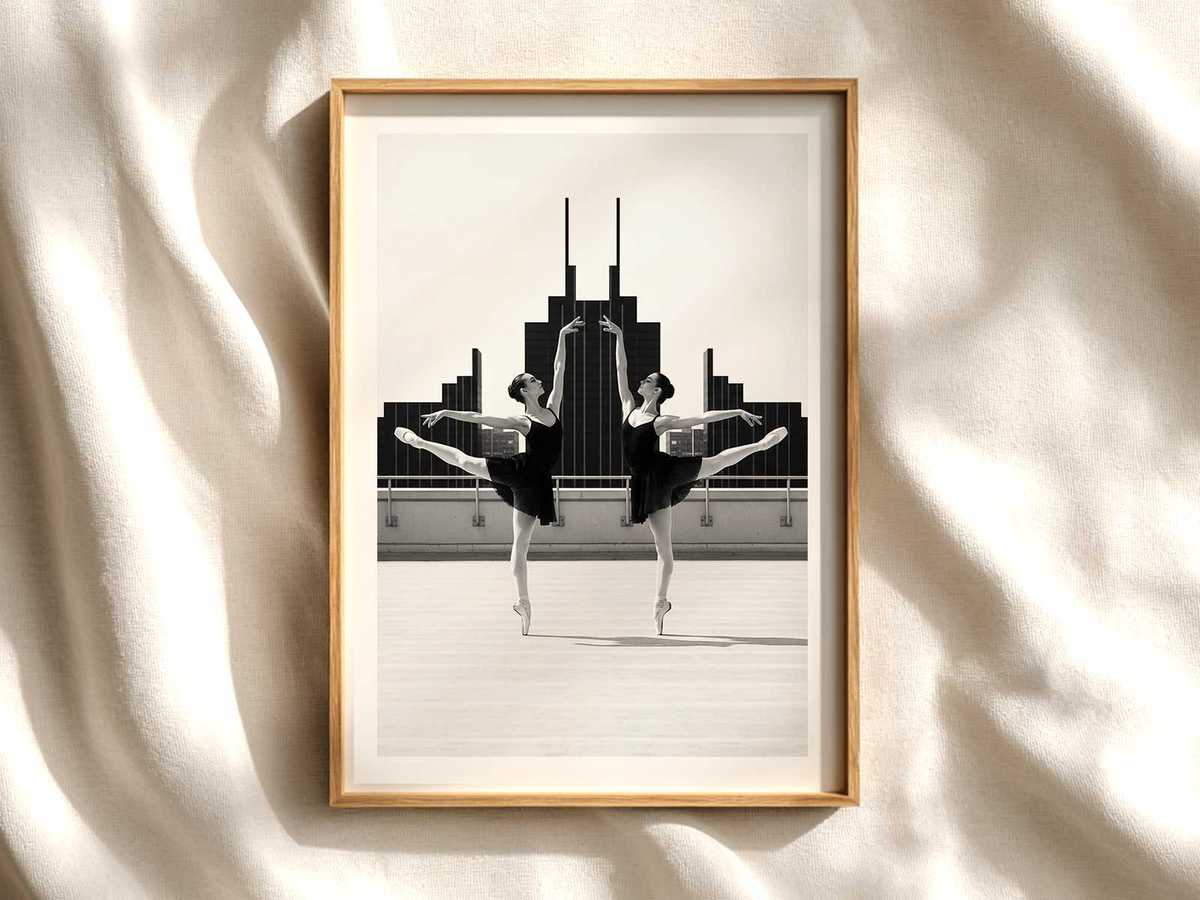
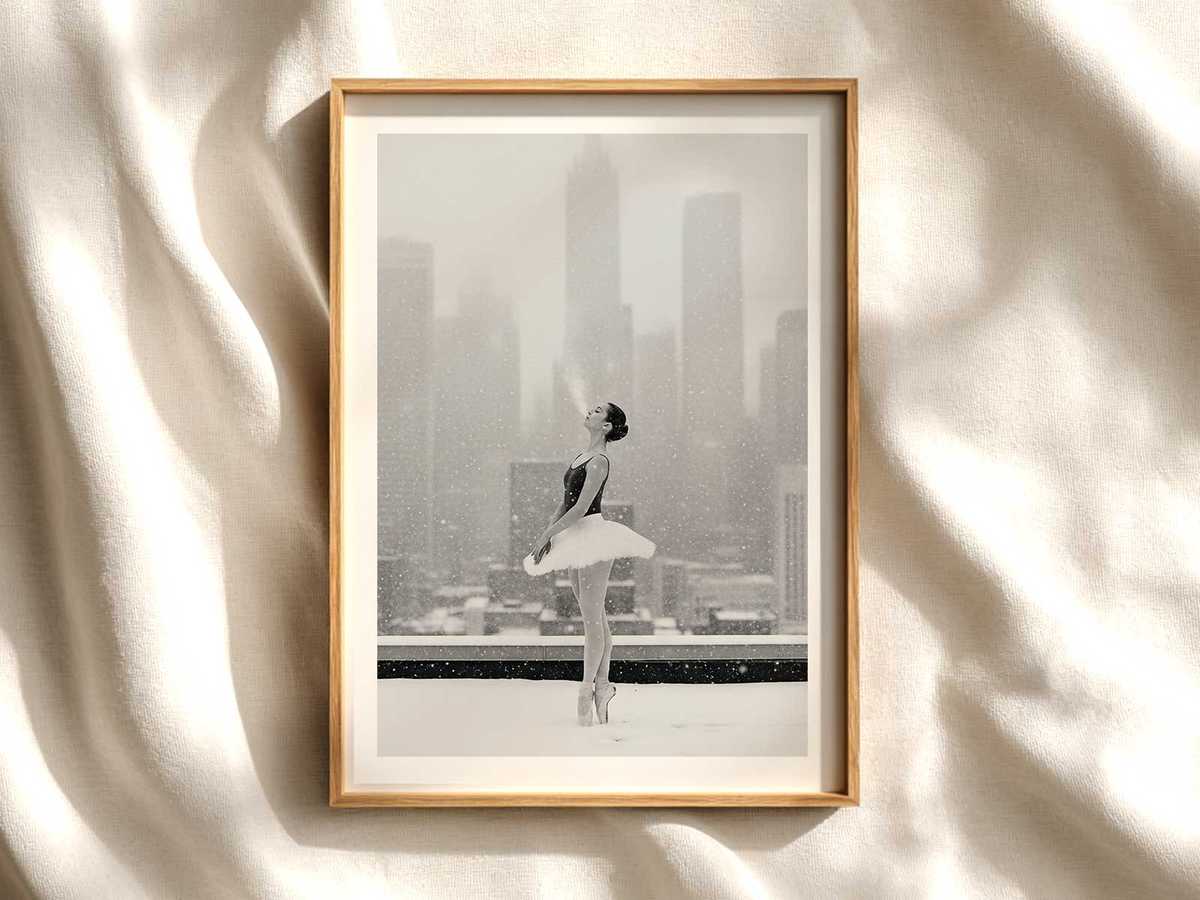
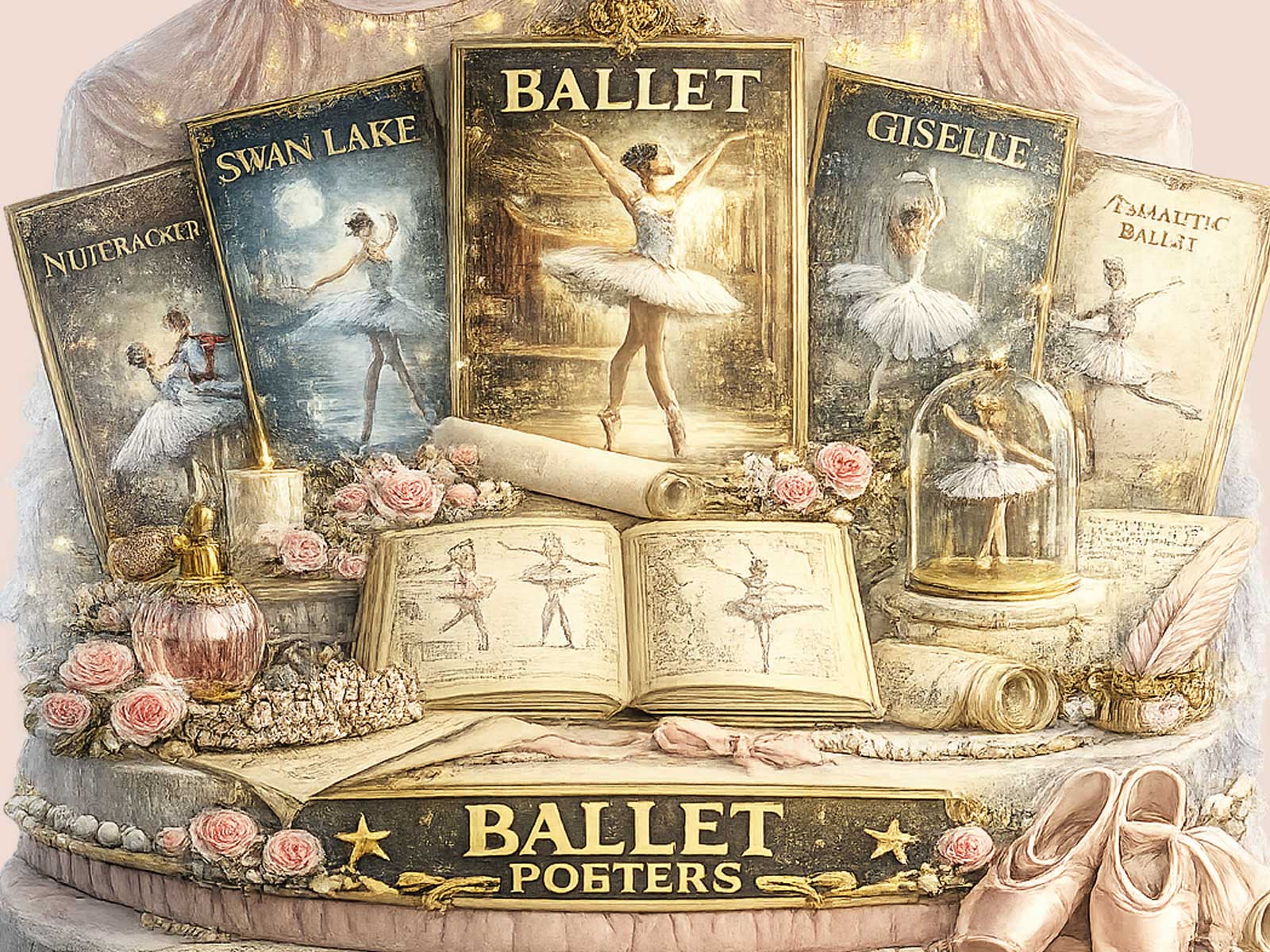
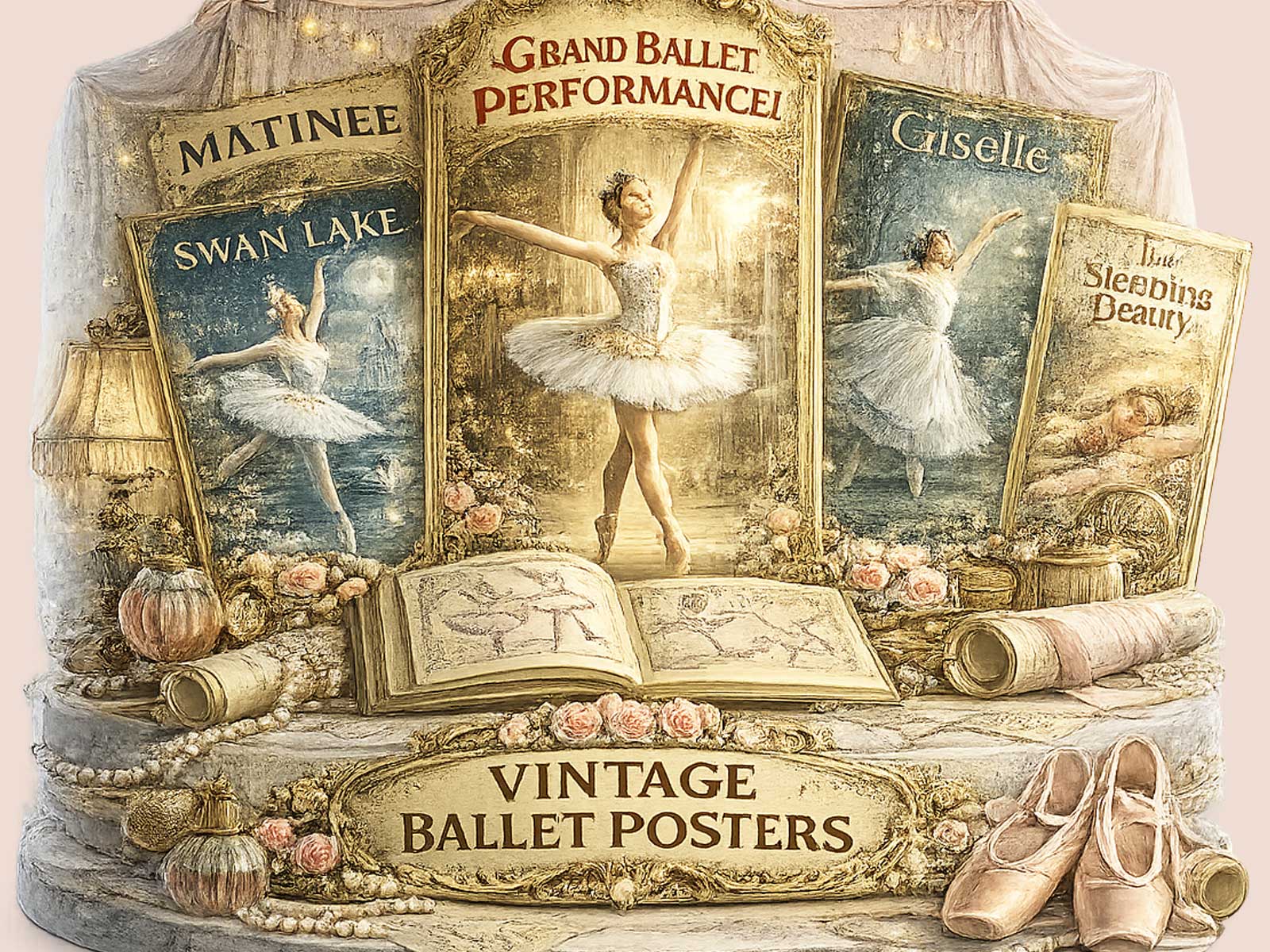
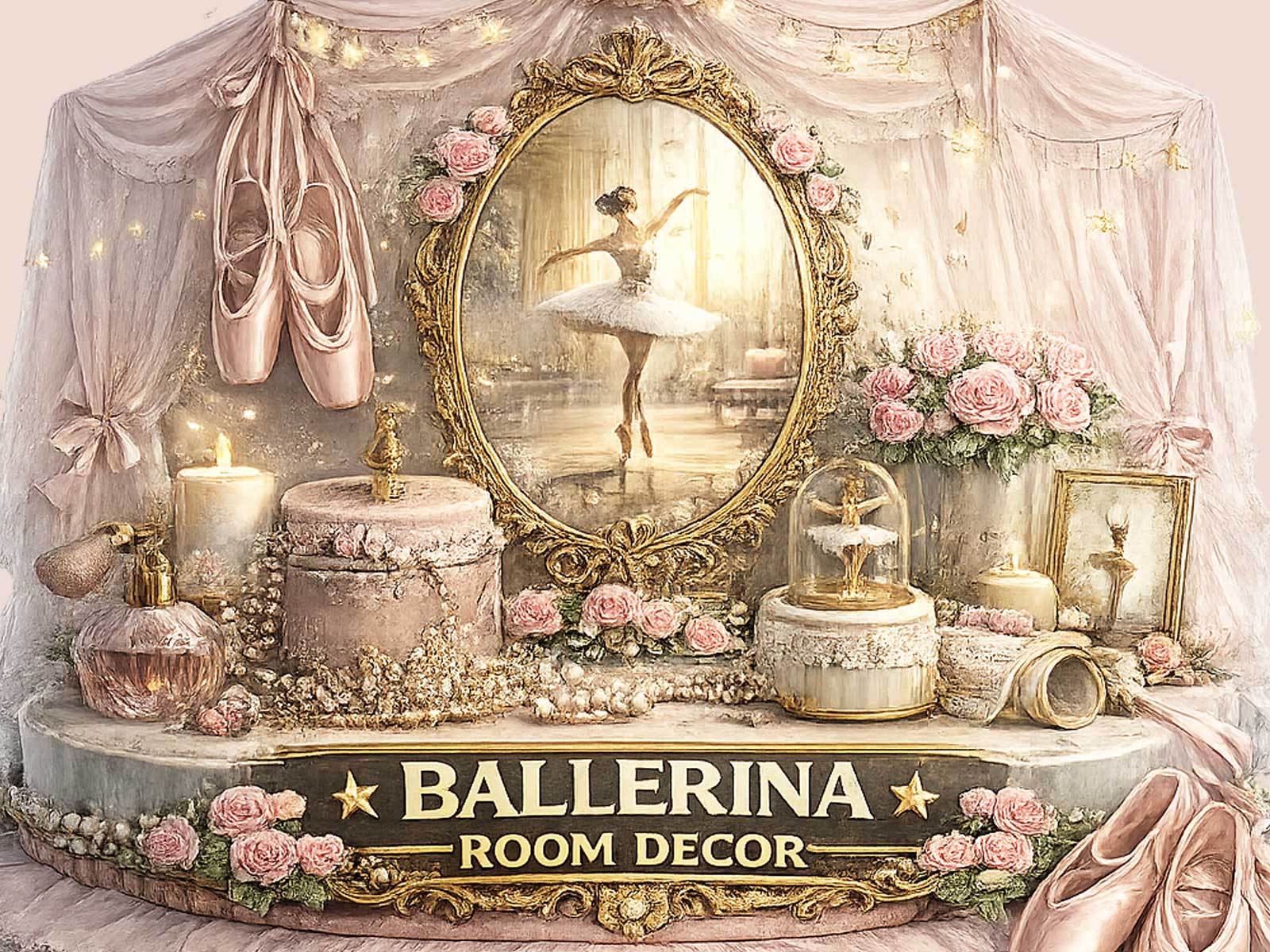
The instant chosen for a ballet poster is not merely a pretty position: it is a freeze-frame of mise-en-scène where composition reads faster than speech. Stage composition functions like a pictorial construction, and a single theatrical moment can register immediately with the clarity and weight of a painting. That immediacy explains why a captured second on a proscenium stage holds such decorative force: the visual grammar of the stage—placement, line, and pictorial balance—makes the image readable at a glance while suggesting narrative beyond the frame.
A moment held at full intensity
Onstage, directorial blocking and the use of gaze, stillness, or tableau create concentrated moments of dramatic tension. When a dancer is held within that structure—paused in a turn, a lift, or a poised line—the pause itself becomes meaningful. The viewer sees deliberate choices: where the body stands relative to scenery, how eyes are aimed, and which elements remain motionless. These choices concentrate emotion and attention, turning a single second into a distilled theatrical event suitable for a poster. The stillness feels charged because it was staged to be so.
Scenography contributes another layer. Historic and modern perspective techniques—relief perspective and linear devices—are used to widen, contract, or shape perceived depth onstage. When a dancer occupies those shaped spaces, their scale against backdrops and architectural elements anchors the illusion of distance and volume. That perceived depth is essential to the decorative appeal: the image does more than show a figure, it offers a crafted space that draws the eye inward and promises continued movement off-frame.
[IMAGE_INSERT_ARTICLE_01]
Lighting design acts as the director’s brush. Selective lighting isolates a focal point, clarifies line, and sculpts mood; it can push scenery into shadow while lifting the dancer into crisp visibility. This orchestration of light and shadow heightens the dramatic tension of the frozen moment and increases its potency as wall art. The viewer senses not only form but the moment’s intended emphasis—the single beat the designers intended the audience to hold.
Why the image stays with you
Scholarly work on the theatrical moment and the theatrical sublime shows that concentrated visual events—those built from composition, silence, and image—produce a memorable experience. A poster that preserves such an event lets a room live with that concentrated experience: it brings compositional rigor, a suggested spatial depth, and a charged pause that rewards repeated looking. Unlike a generic dancer portrait, this kind of image encodes the relationships between body, light, and stage architecture—the elements that originally created its intensity.
Placed in a studio corner, a refined living space, or a dance room, a poster built from a staged moment supplies focus and narrative without needing explanation. It keeps at hand the mechanics that made the moment powerful: mise-en-scène as picture, scenography as depth-maker, blocking and gaze as tension-builders, and lighting as emphasis. Those are the precise reasons the second feels worth preserving on a wall.
In the end, a poster ballet image drawn from a single staged moment is desirable because it conserves an engineered instant of theatrical clarity. It is not simply decoration but a compacted stage experience—composition, depth, and light arranged so the second continues to speak long after the auditorium has fallen quiet.