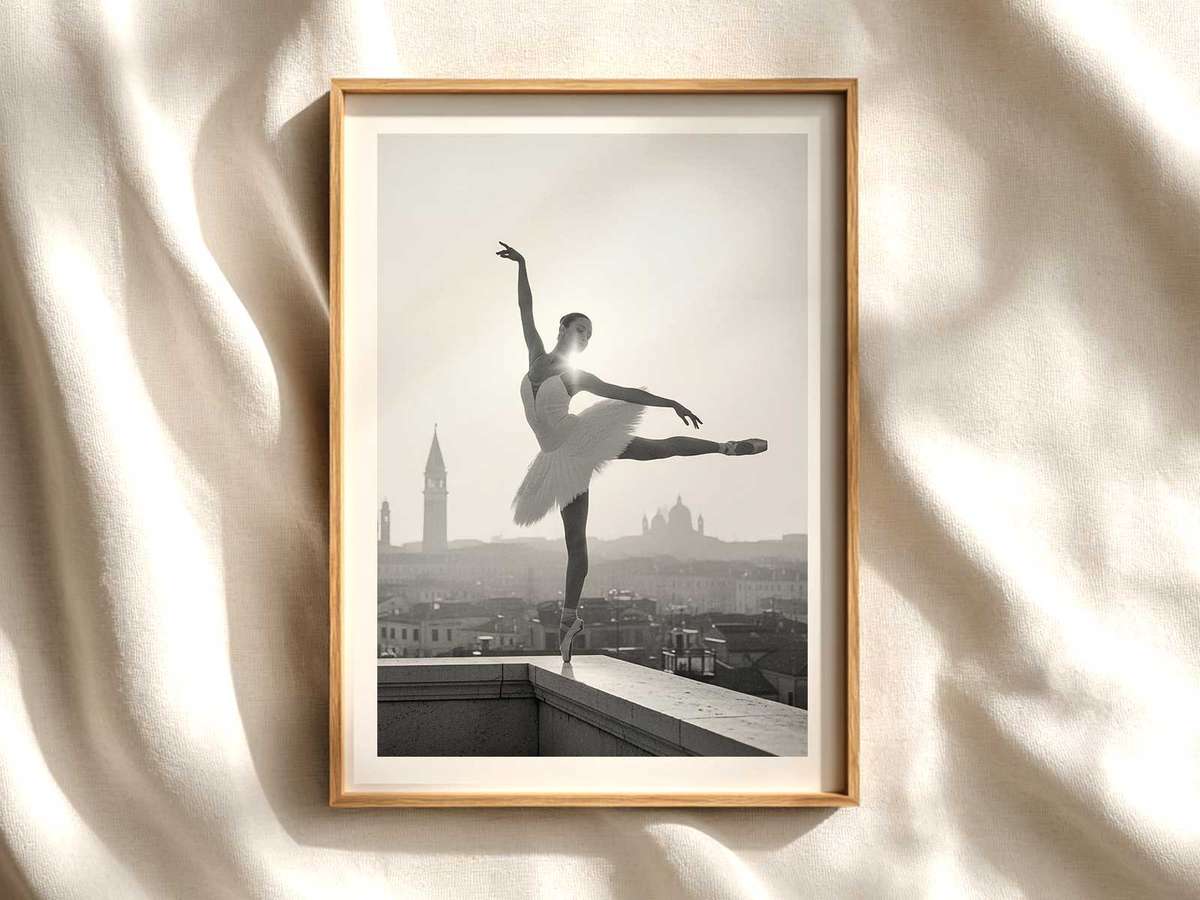
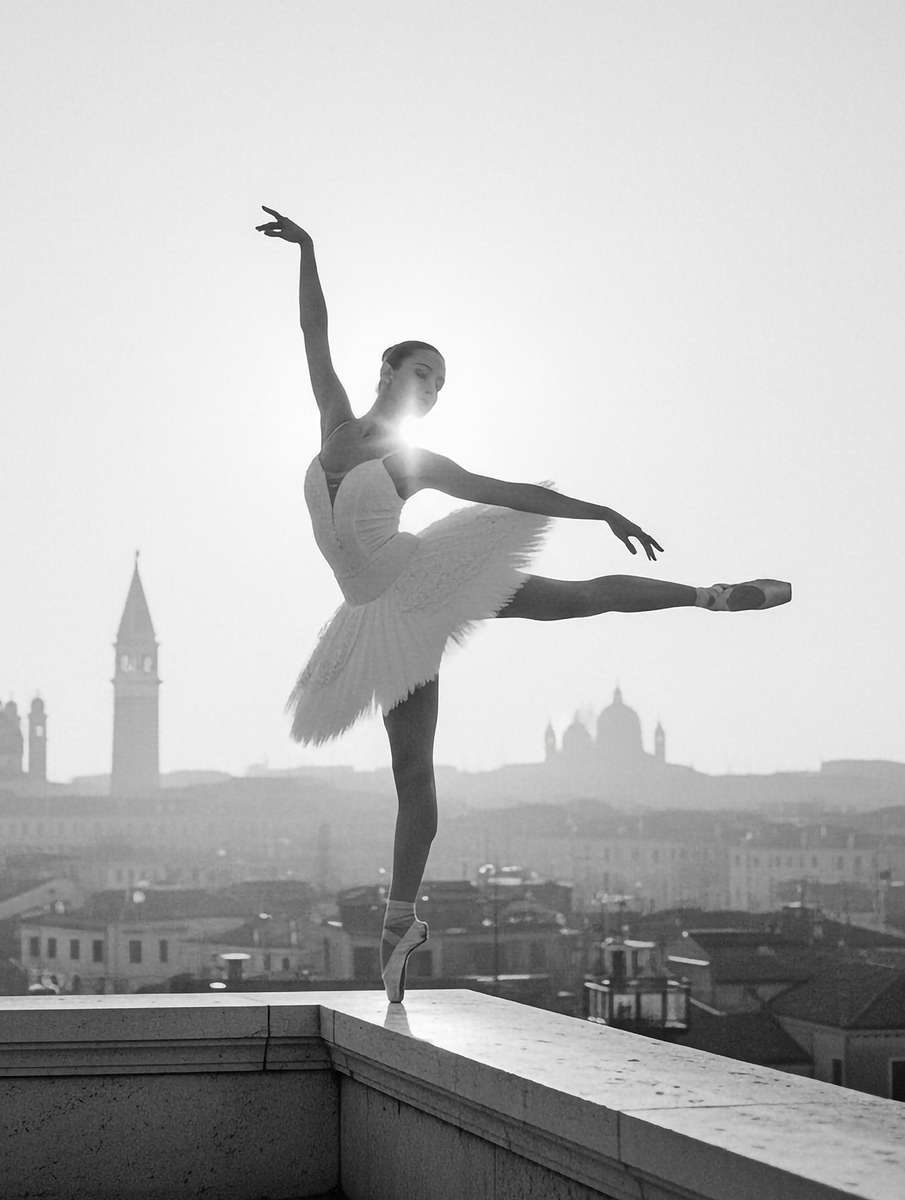
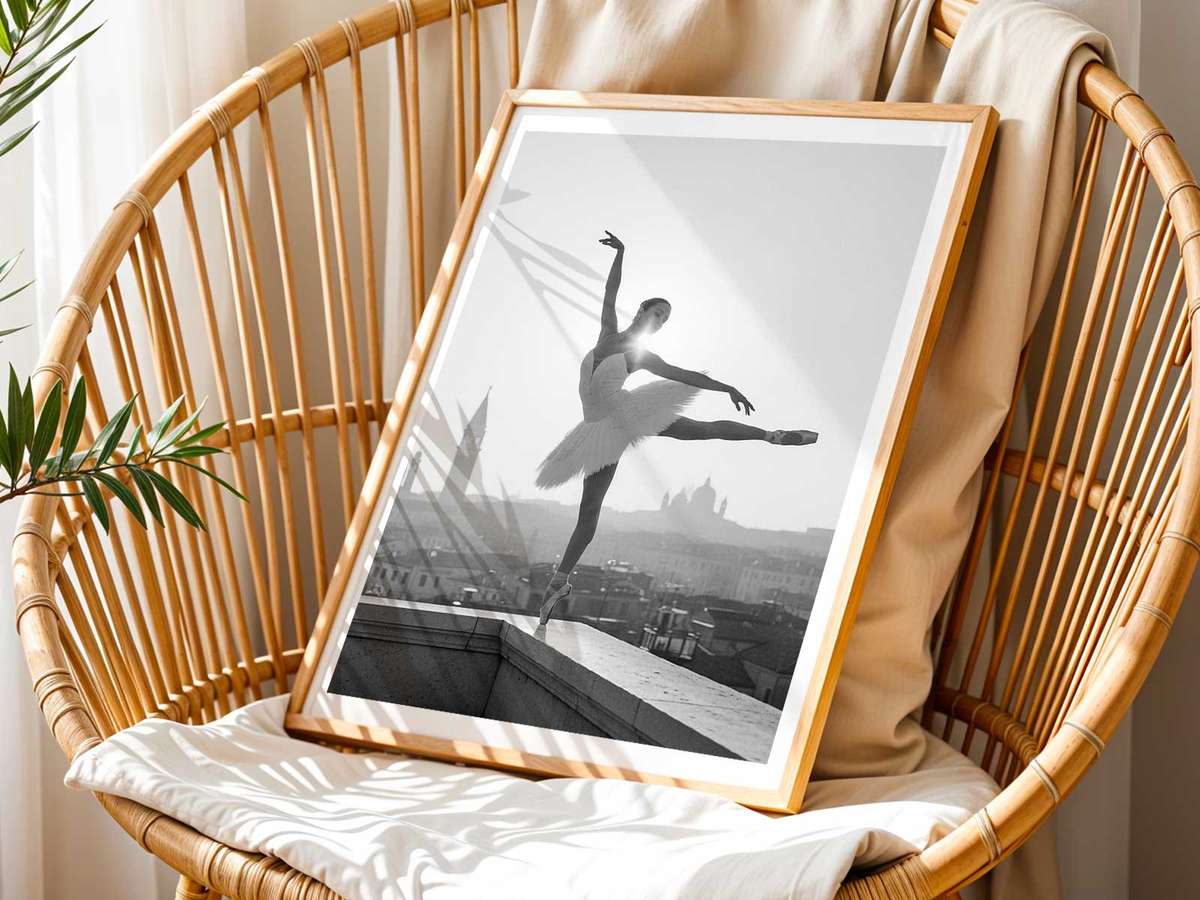
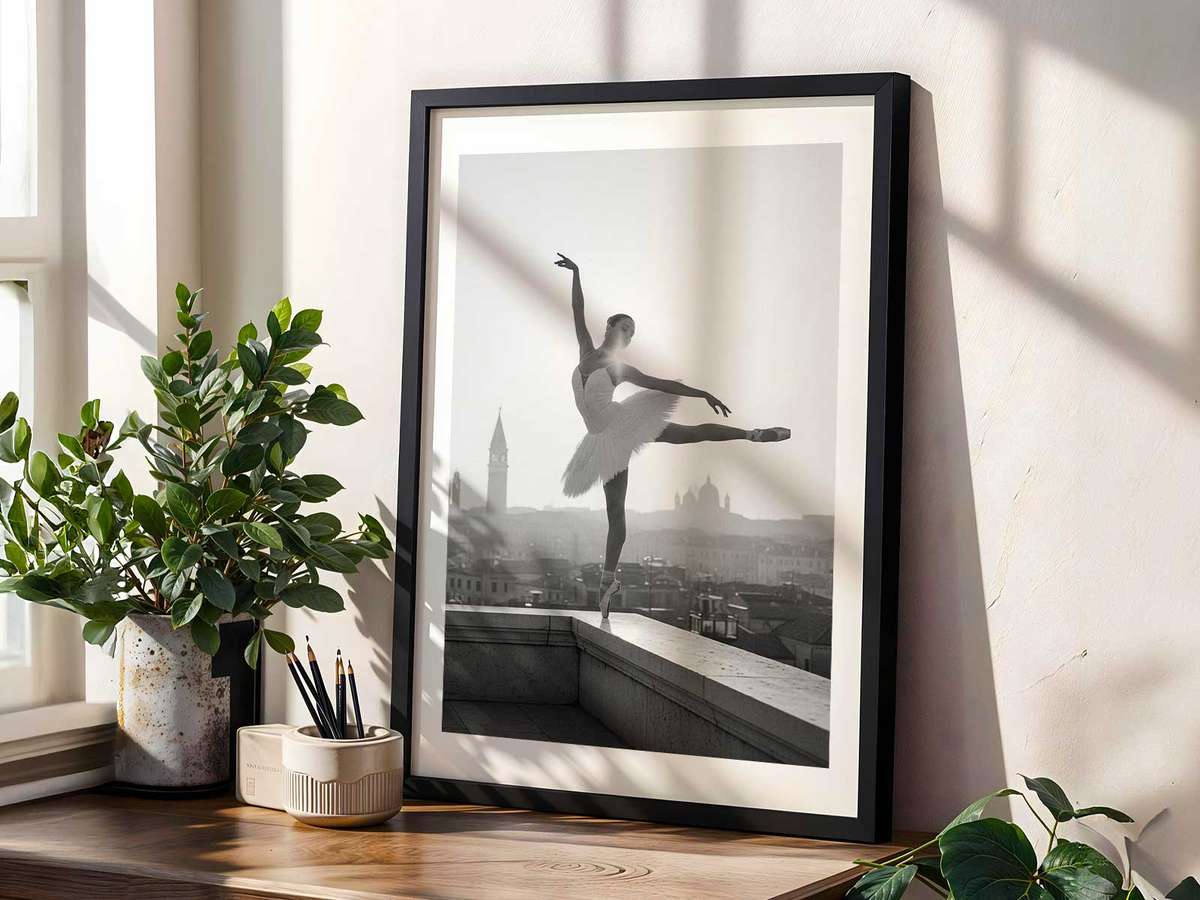
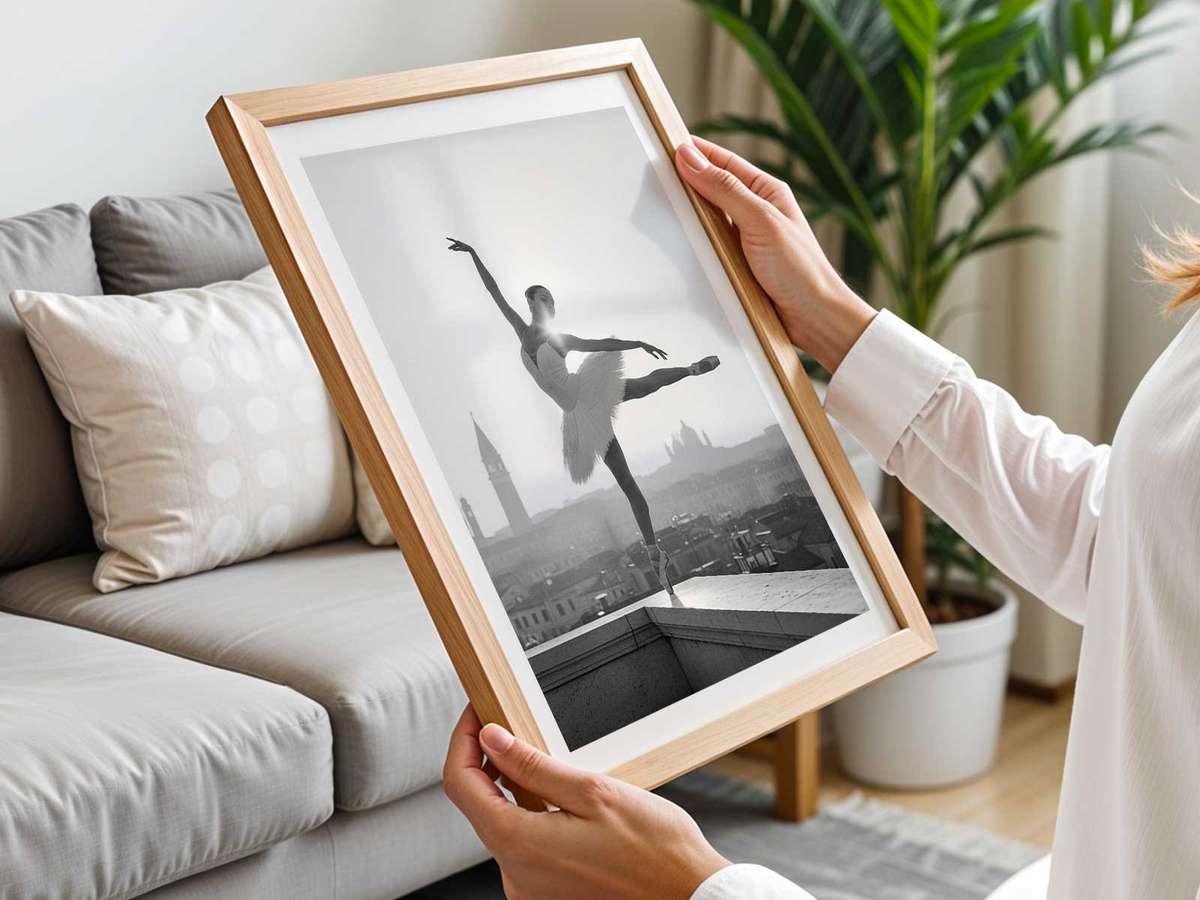
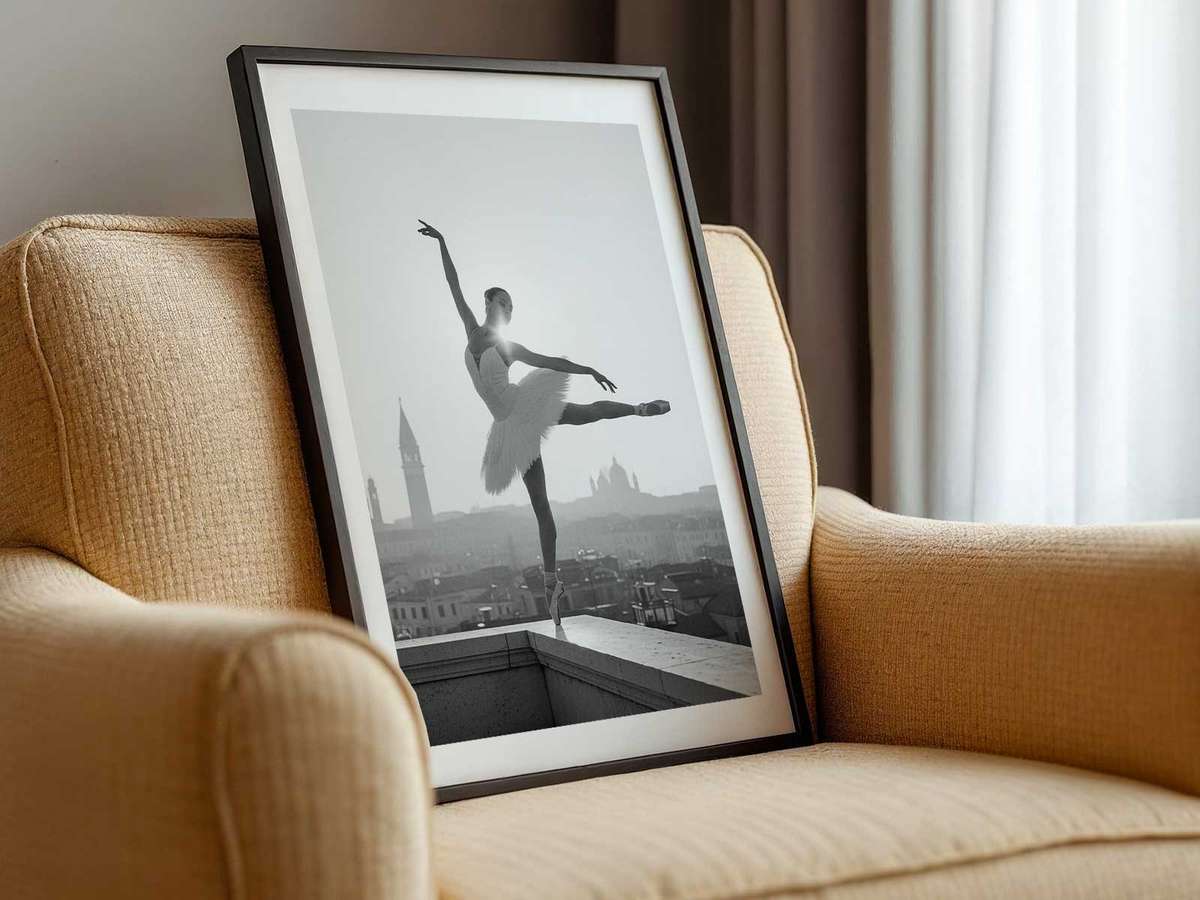
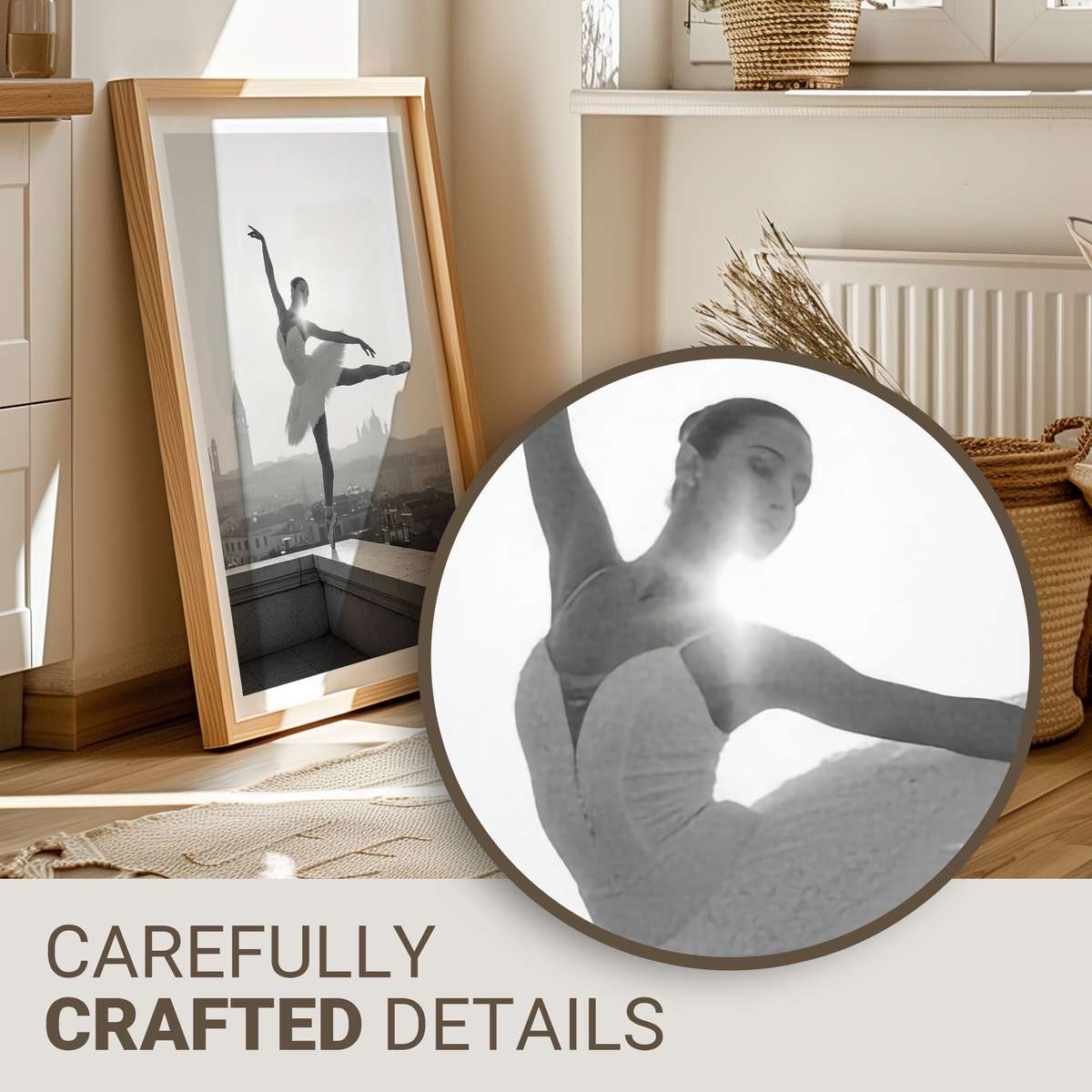
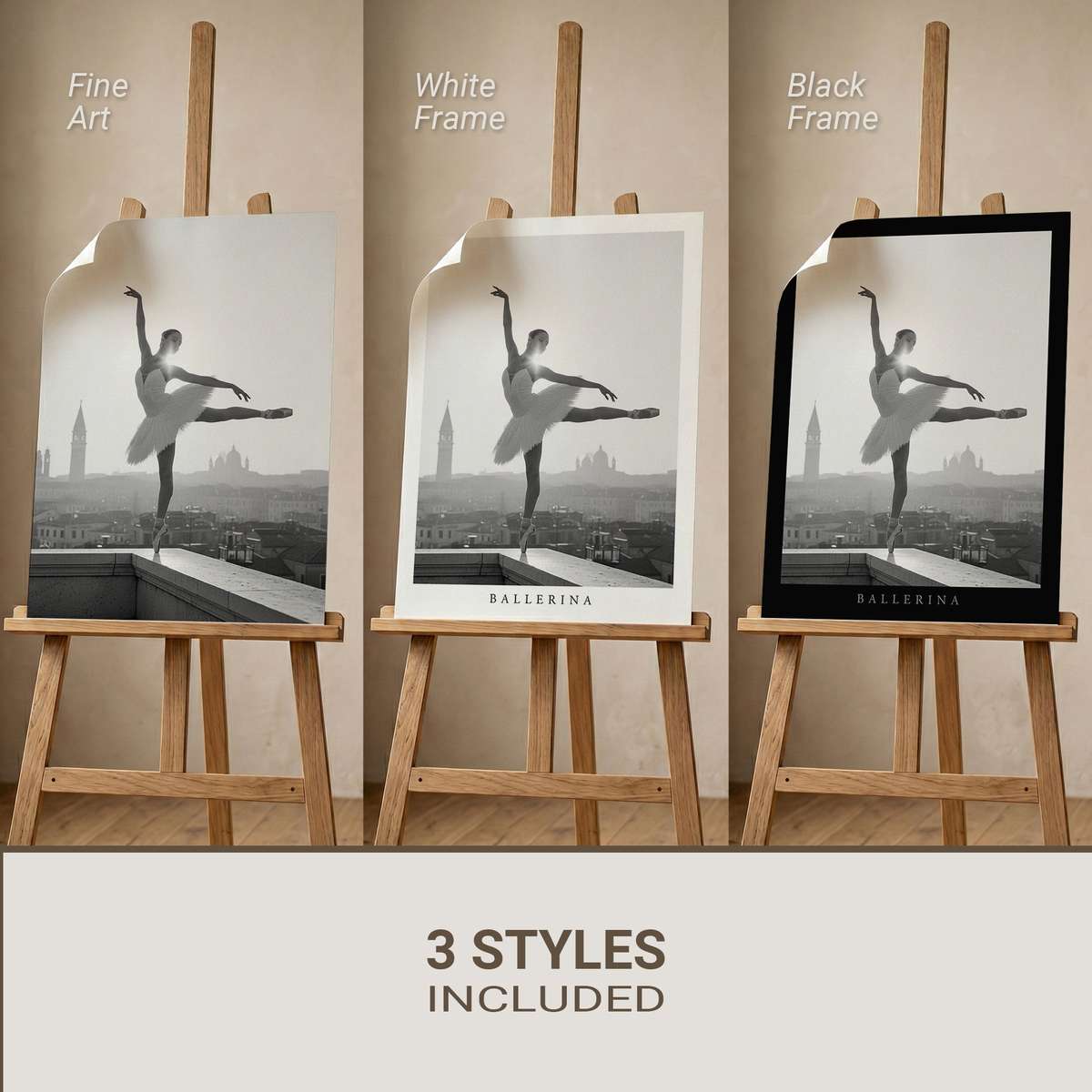
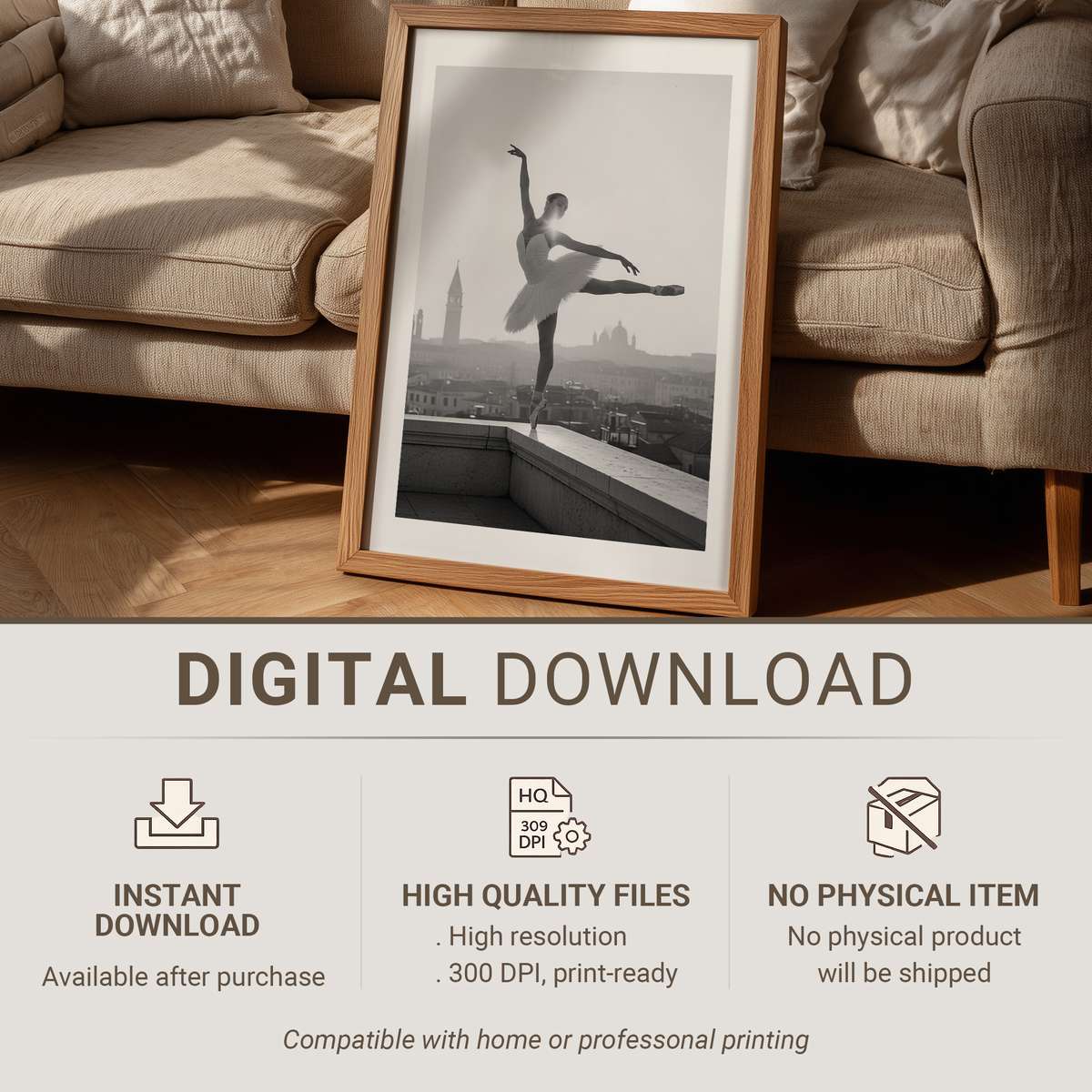
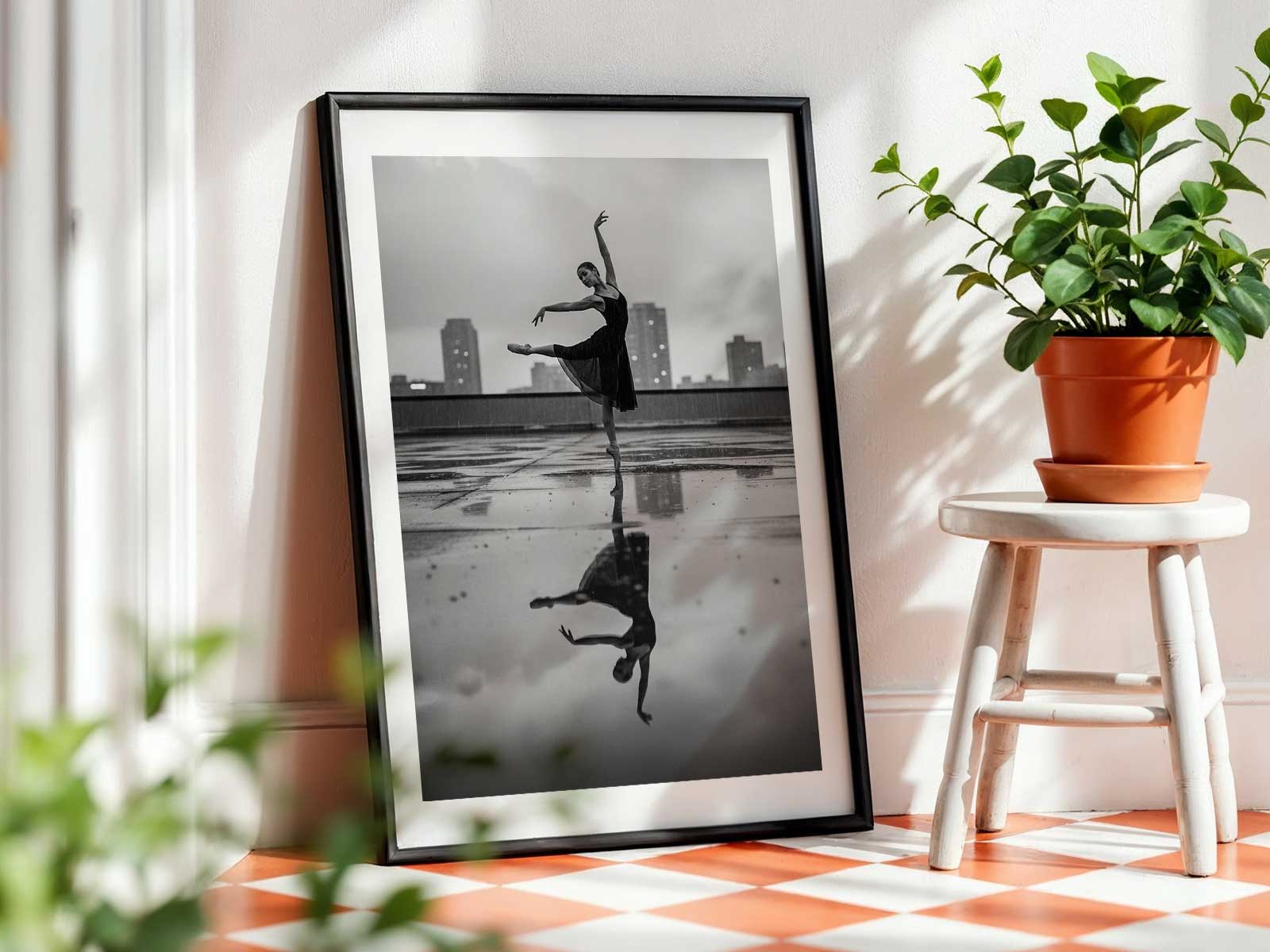
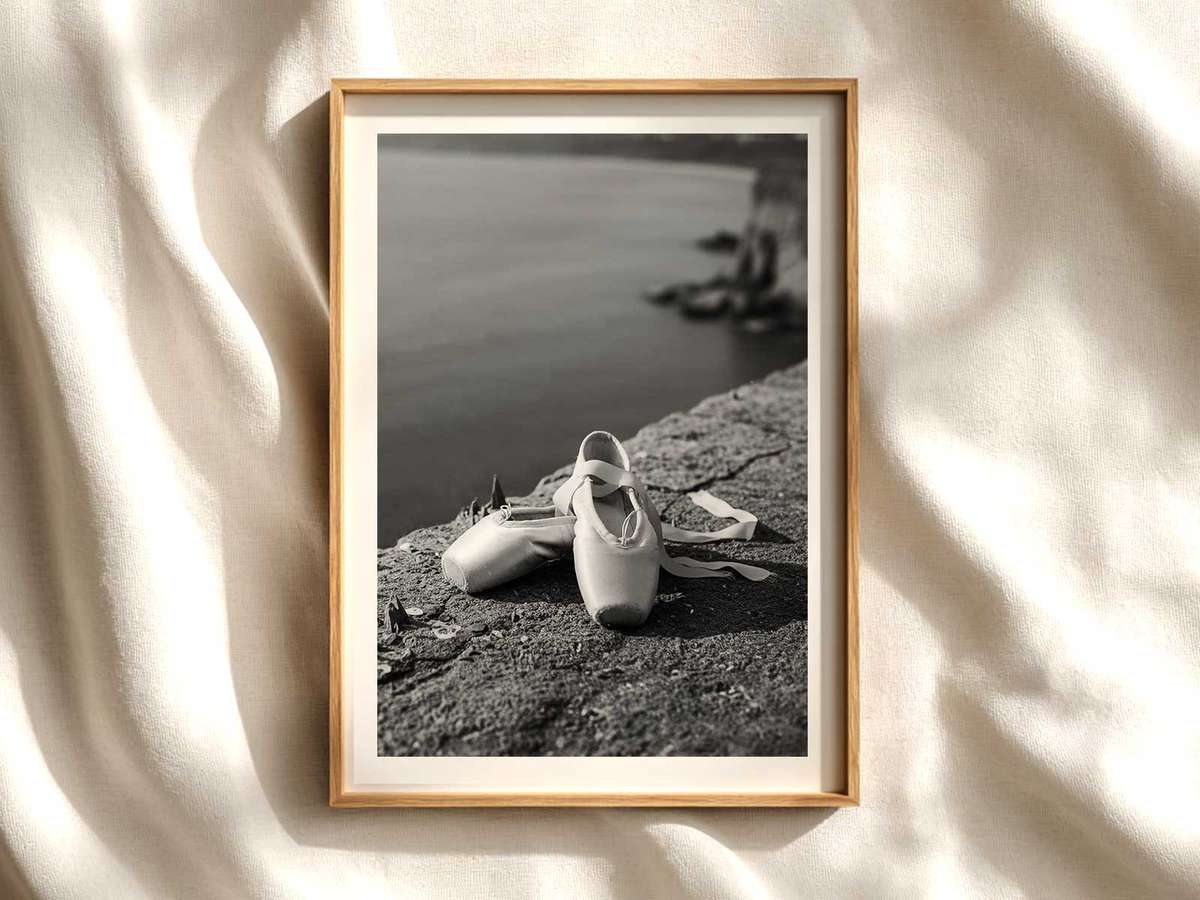
In this photograph the single instant of a dancer moving through Venice reads like an architectural cut: a lifted leg becomes a diagonal that answers a canal-side cornice, an outstretched arm punctuates an open sky, and the body’s impulse traces a line across stone and water. That precise second — neither the run-up nor the landing but the fulcrum between — is what grants the image its clarity. You feel the propulsion of travel and the stillness of the city at once; the pose converts a passing beat into a compositional axis the eye can follow again and again.
The image gains depth because the dancer does not merely inhabit Venice as a backdrop but grafts ballet onto its urban anatomy. Arches, steps and balconies become stages, giving the body a set of architectural partners: verticals that echo the spine, horizontal ledges that balance a foot, and receding canals that provide atmospheric perspective. That interplay produces a poetic geometry — the city’s built forms articulate the dancer’s tension and release, while the dancer humanizes the geometry with breath and risk. The result is a photograph that reads as both cityscape and intimate performance.
[IMAGE_INSERT_ARTICLE_01]
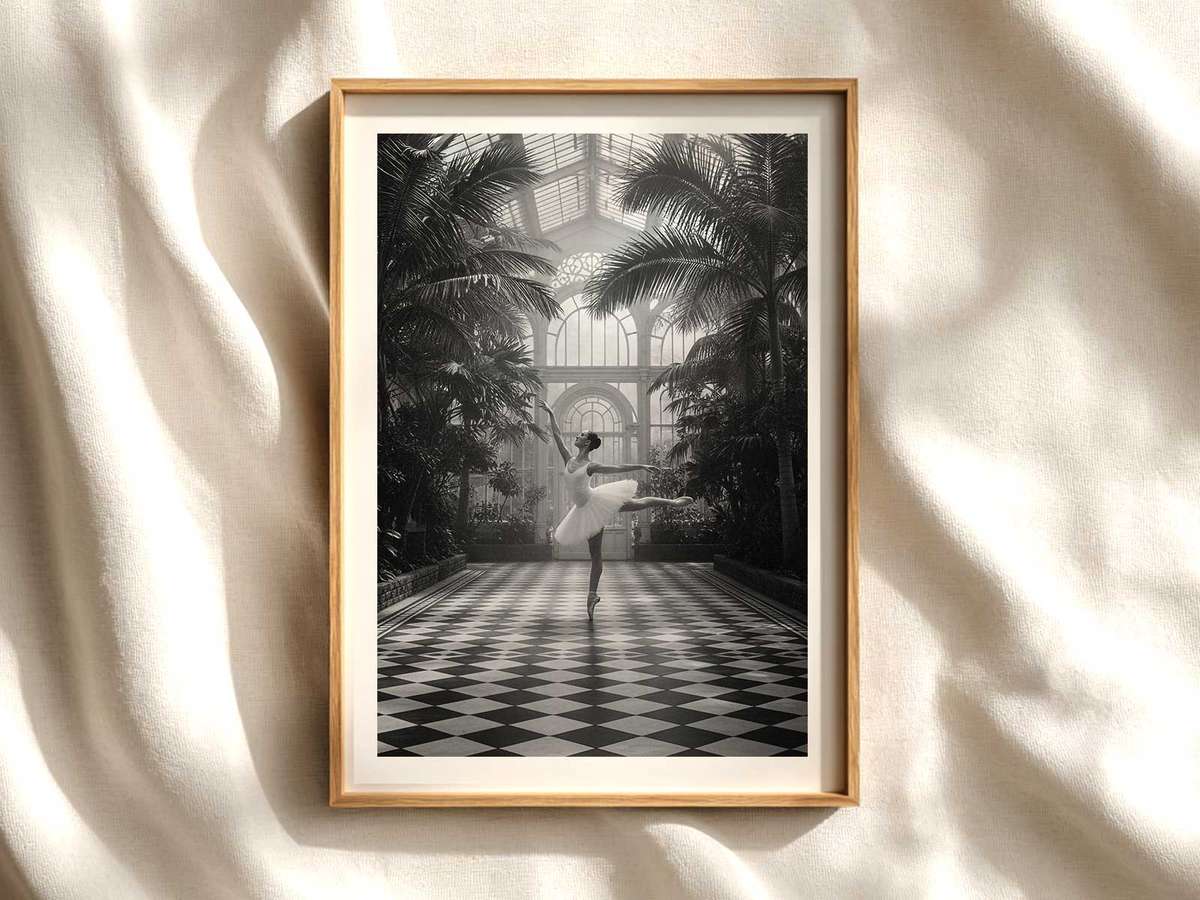
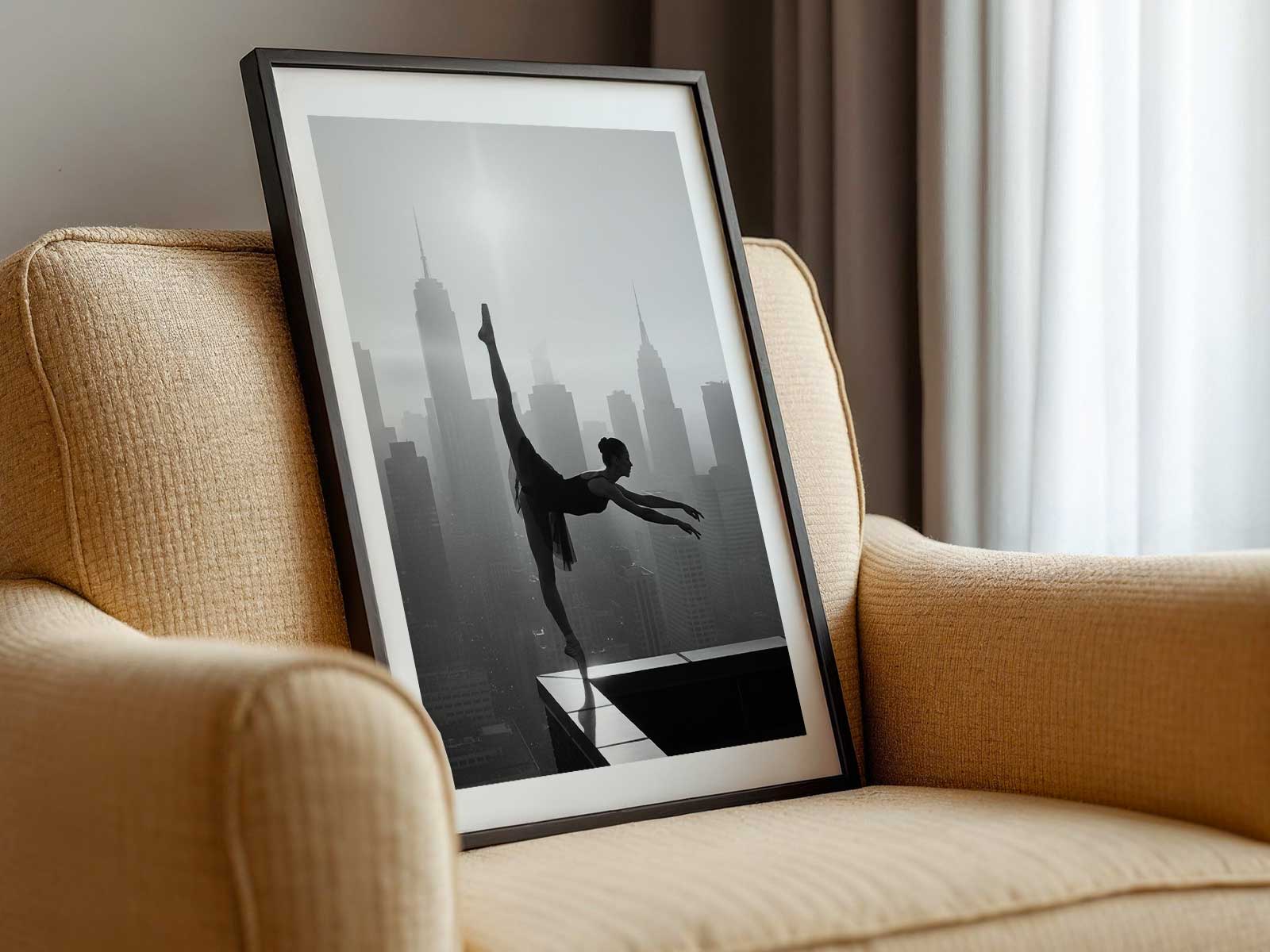
What separates this poster from a generic dance portrait is its layered narrative. The visual tension is not only in the line of the leg or the angle of the torso but in how that line negotiates the frame’s architecture: a sudden upward reach interrupts horizontal masonry, a suspended turn meets a column’s shadow. The moment feels preserved against the usual ephemerality of performance — the image holds a second that, in life, would dissolve into motion — and by doing so it asks to be lived with. It is a still that remembers movement, and a city that remembers travel.
A moment held at full intensity
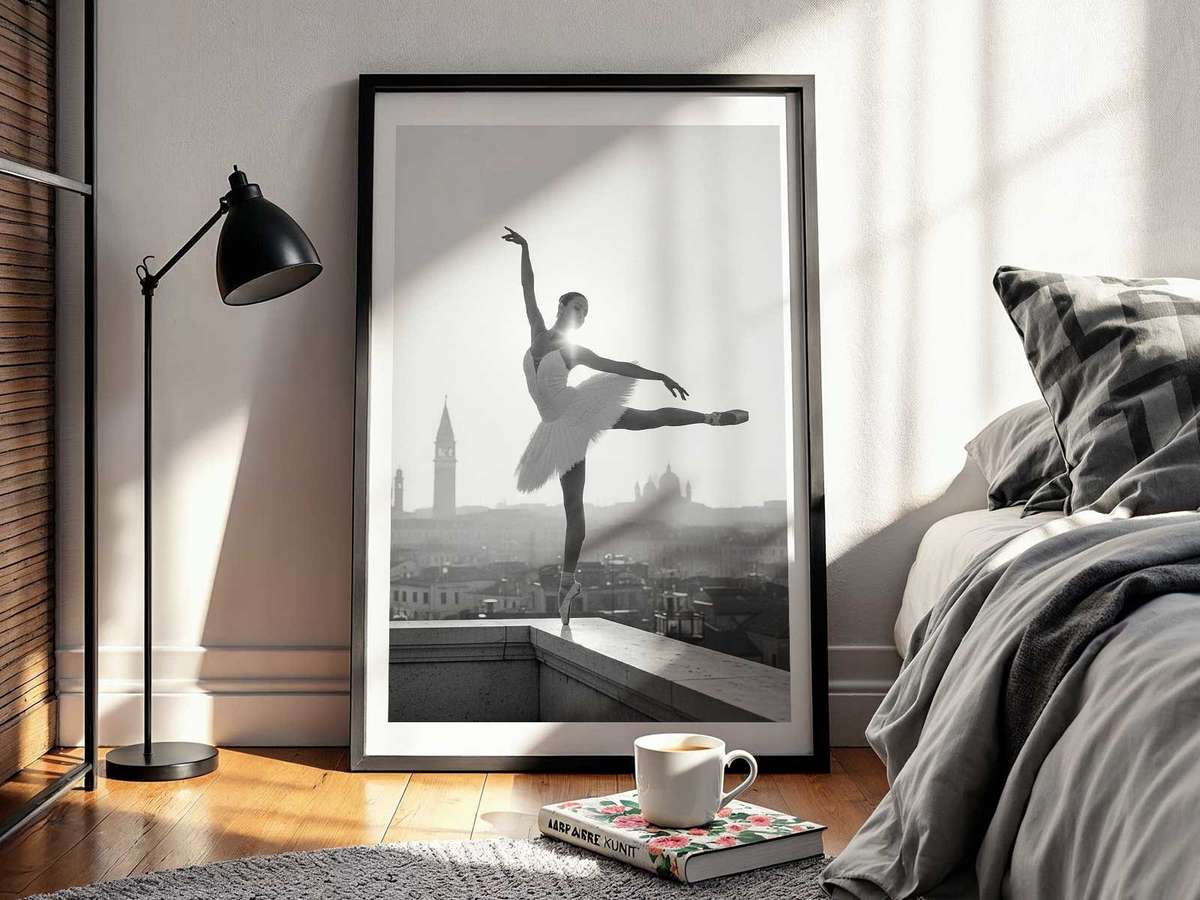
The emotional temperature here is precise and quiet rather than theatrical. There is concentration in the compactness of the body and an implied journey in the outward gaze and directional energy. Those qualities make the poster work in a room as a source of disciplined calm: it brings a focused presence rather than decorative bustle. In a studio corner it reads as professional aspiration; in a refined living space it becomes a sculptural accent that suggests narrative and motion without dominating the décor.
Because this photograph ties ballet to a recognizable urban stage — Venice’s stone, water and horizon — it invites repeated looking. Each revisit reveals a new meeting of surfaces: how light rests on a cheekbone and a windowsill alike, or how a shadow from a balustrade aligns with a forearm. Those discoveries are why someone who loves performance and expressive wall art would choose to live with this poster: it rewards attention and keeps returning the observer to the suspended moment.
Why the image stays with you
On the wall the composition functions like a quiet manifesto: movement can be anchored to place, and a city can be read through the body. The poster’s strength is not hyperbole but specificity — a captured second that clarifies relationships between figure, architecture and the sense of travel. It brings an energetic stillness into a room, an object that holds both the discipline of ballet and the layered memory of a place. Kept nearby, it becomes less an ornament and more a companion: a kept instant that keeps inviting you back to the architecture of motion.
Author: