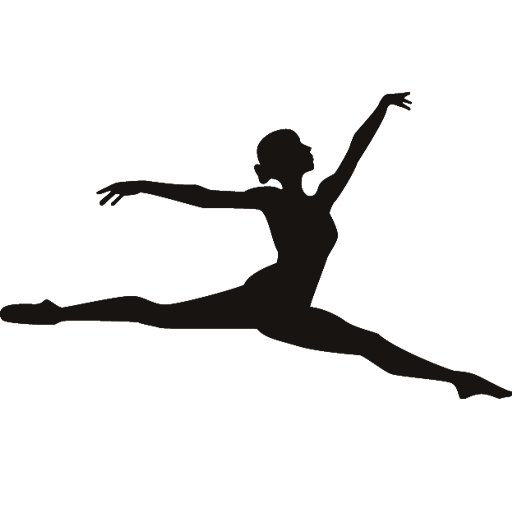
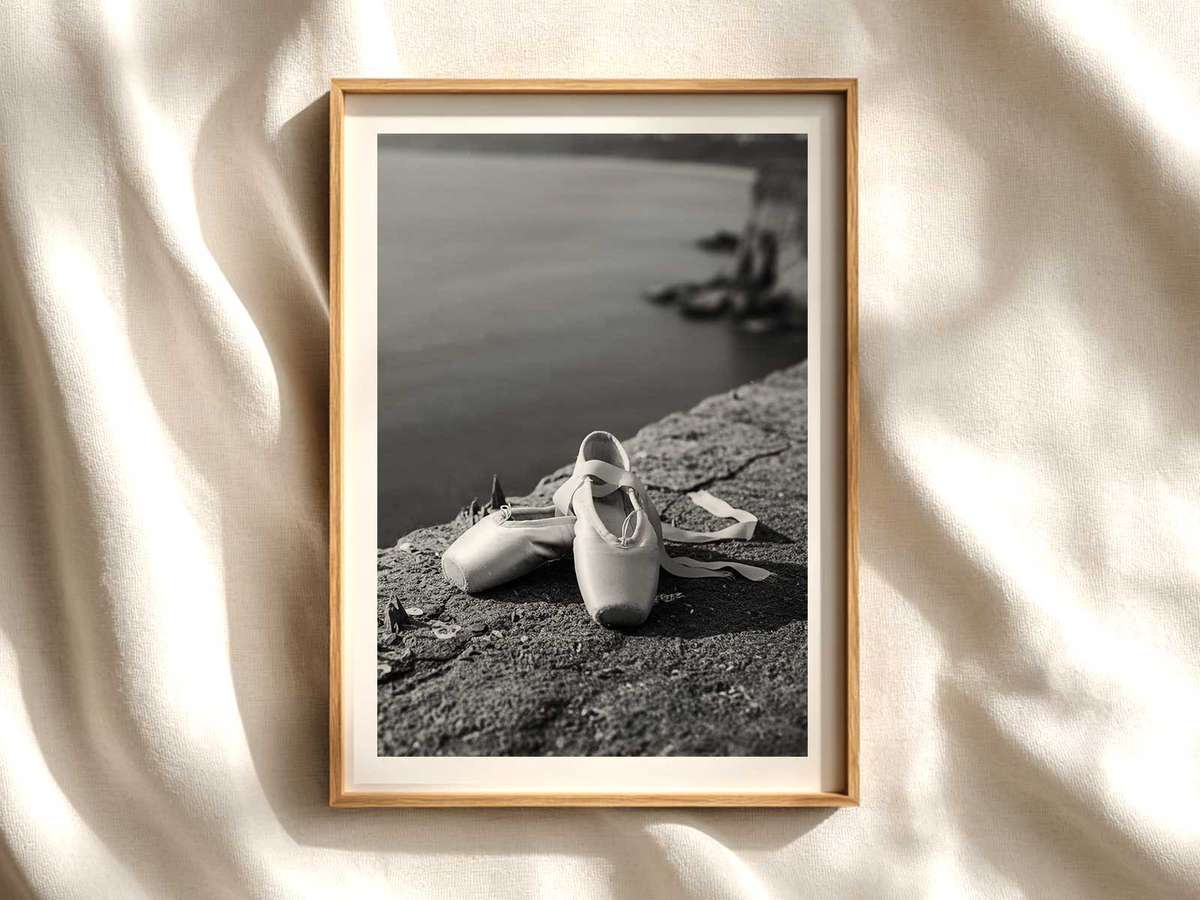
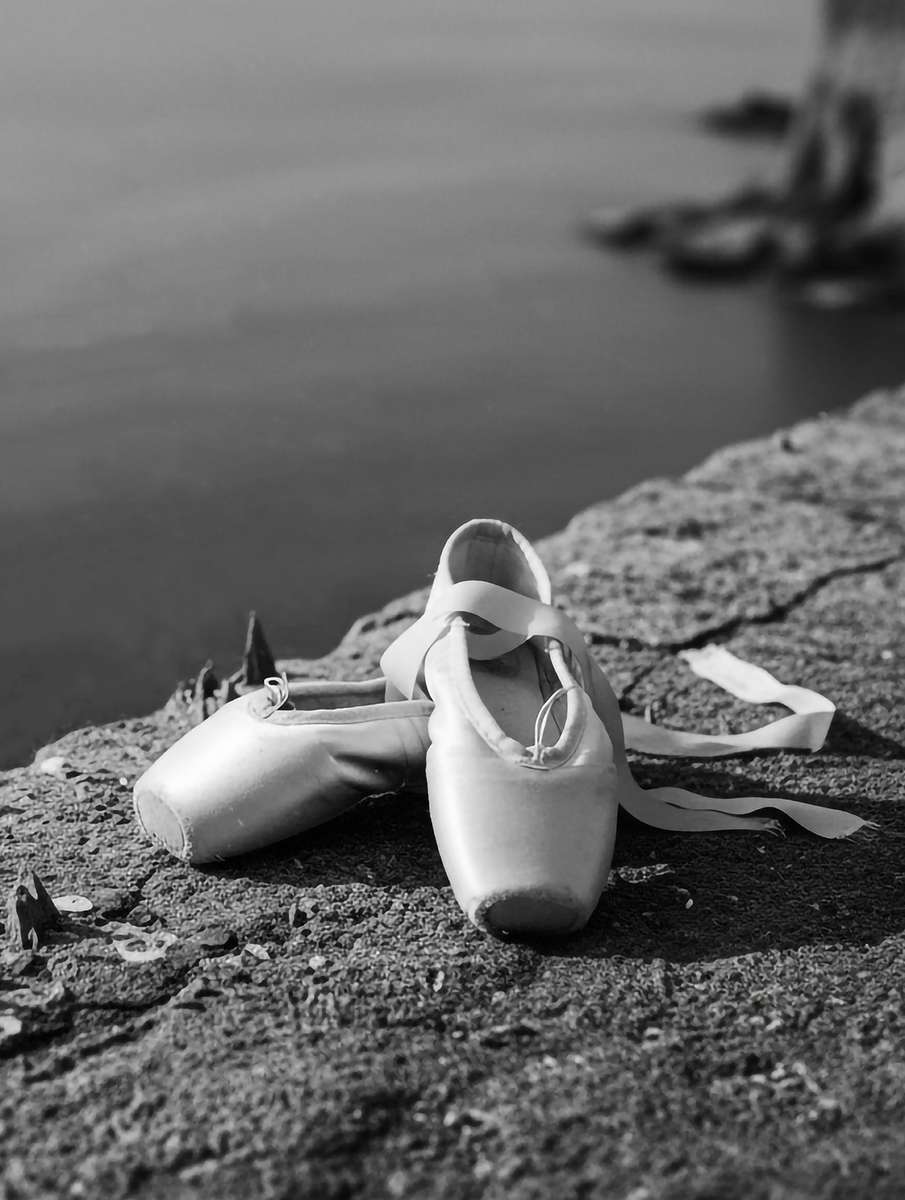
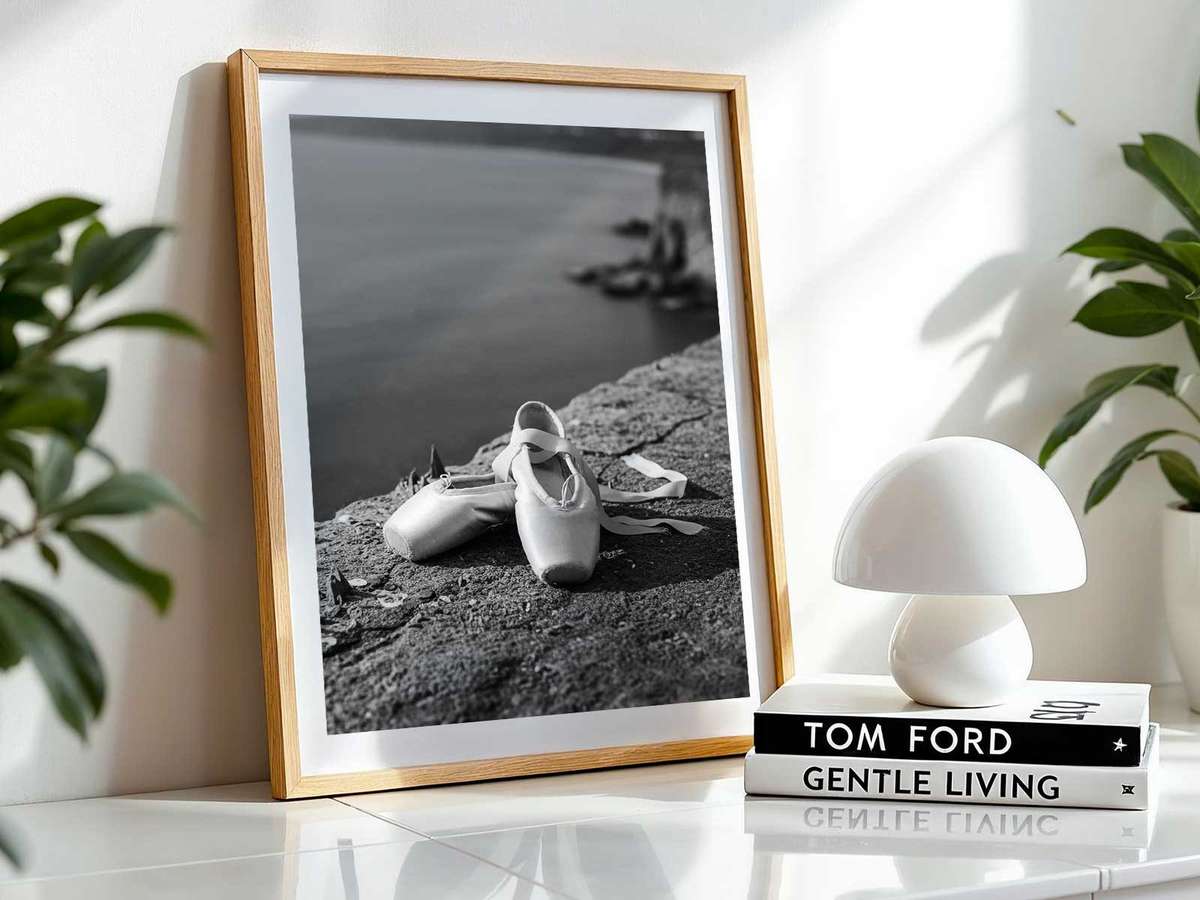
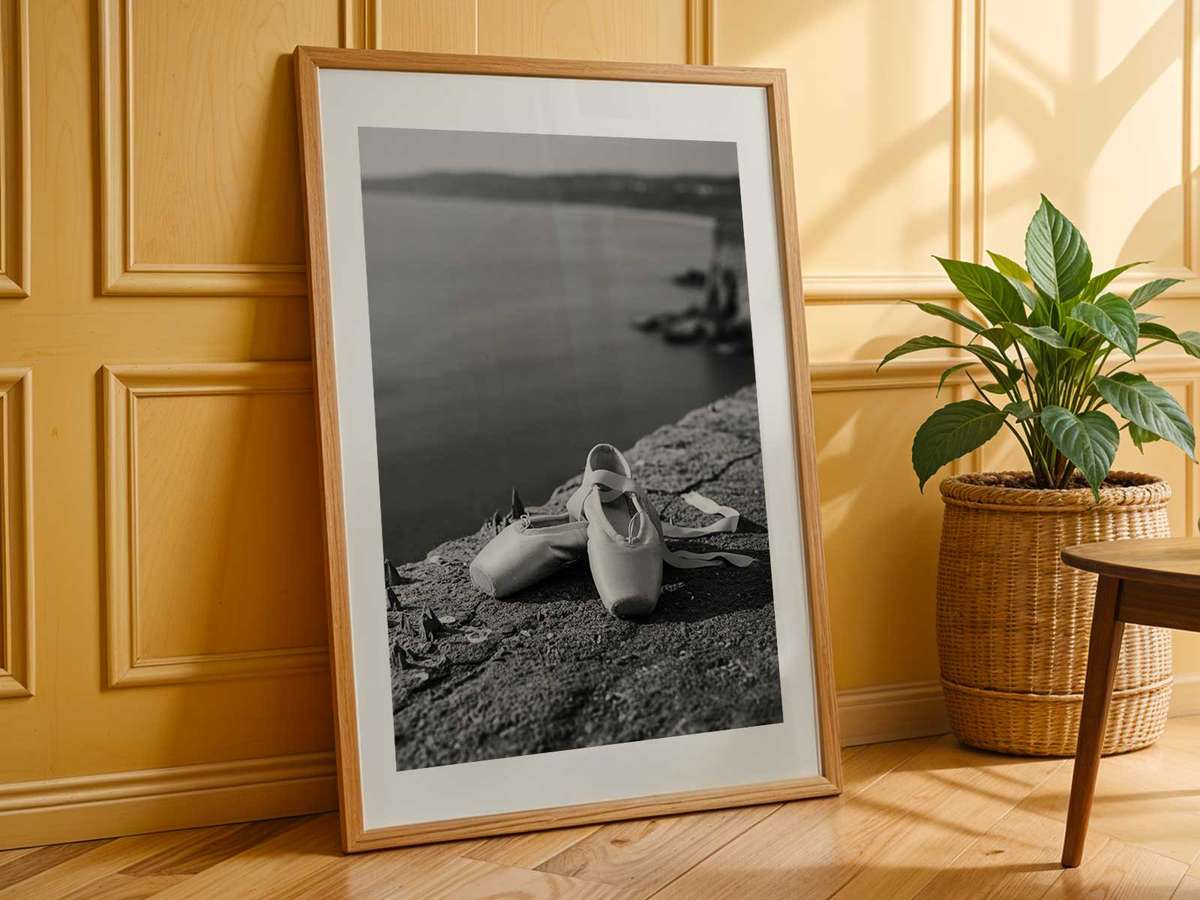
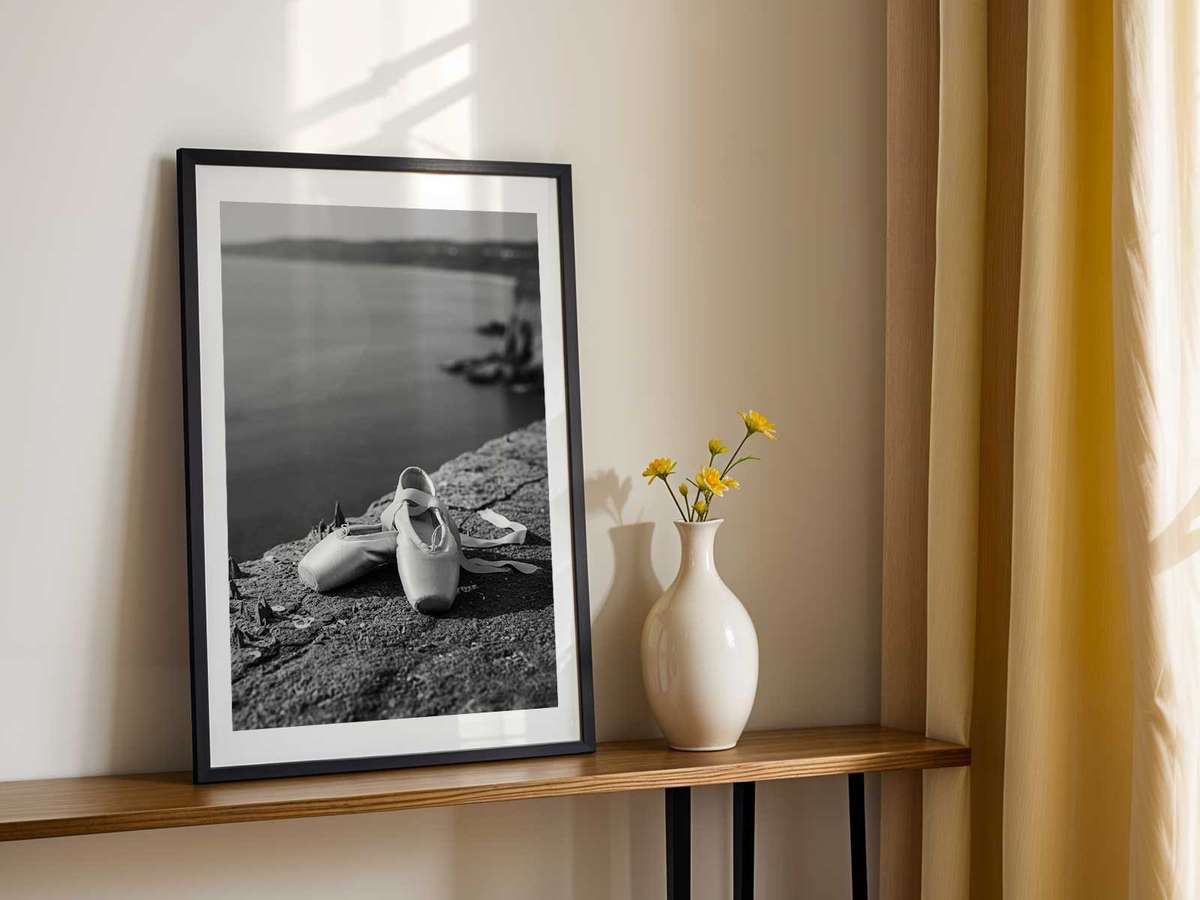
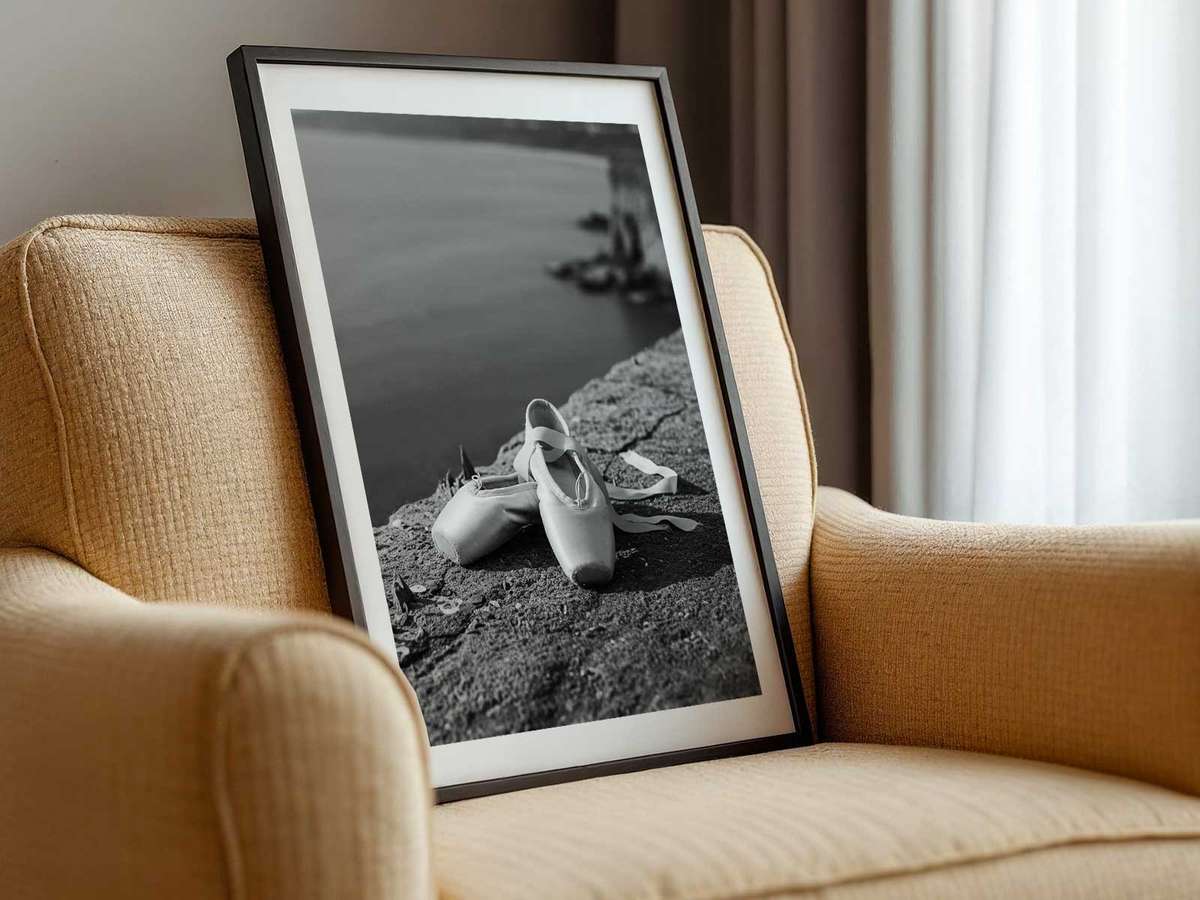
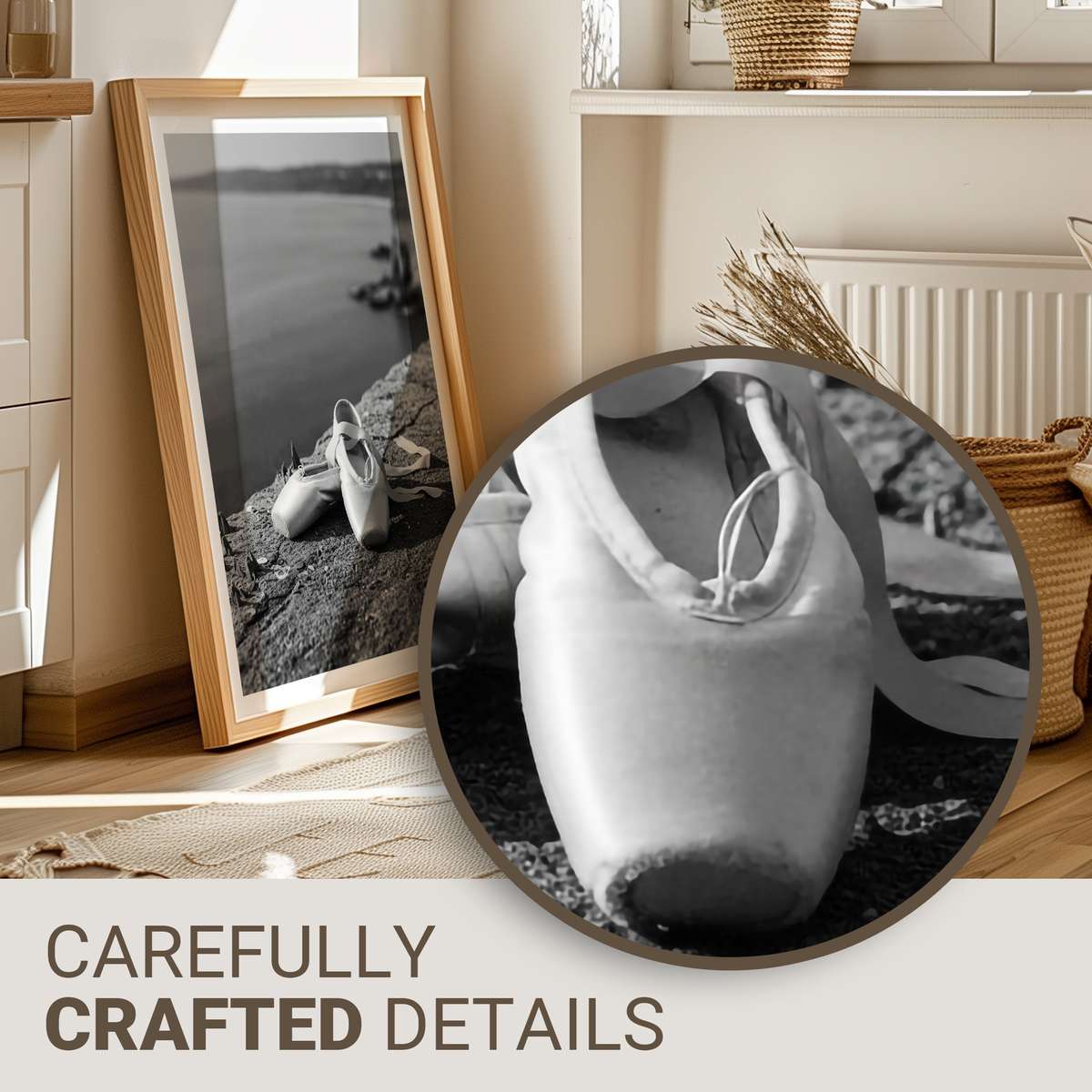
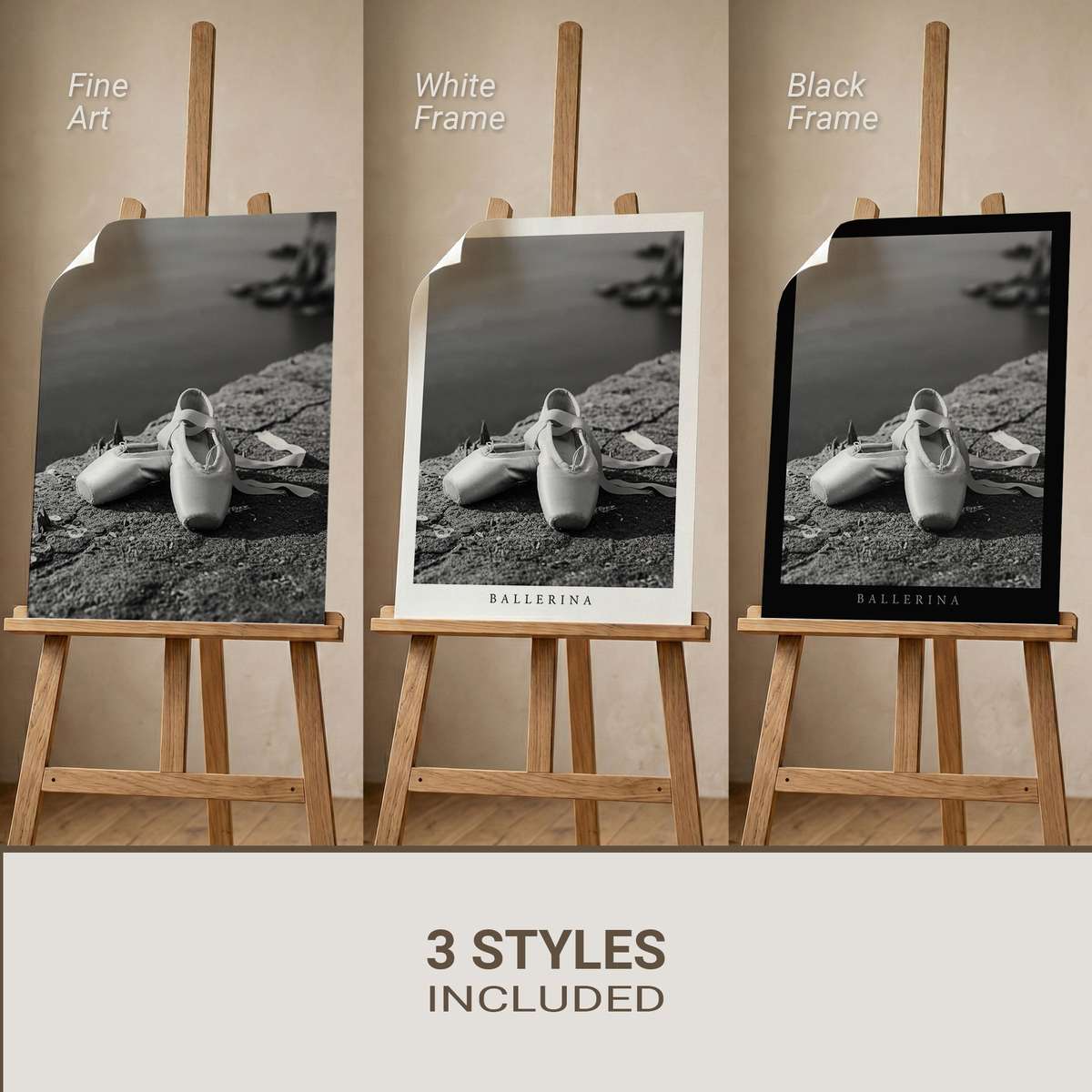
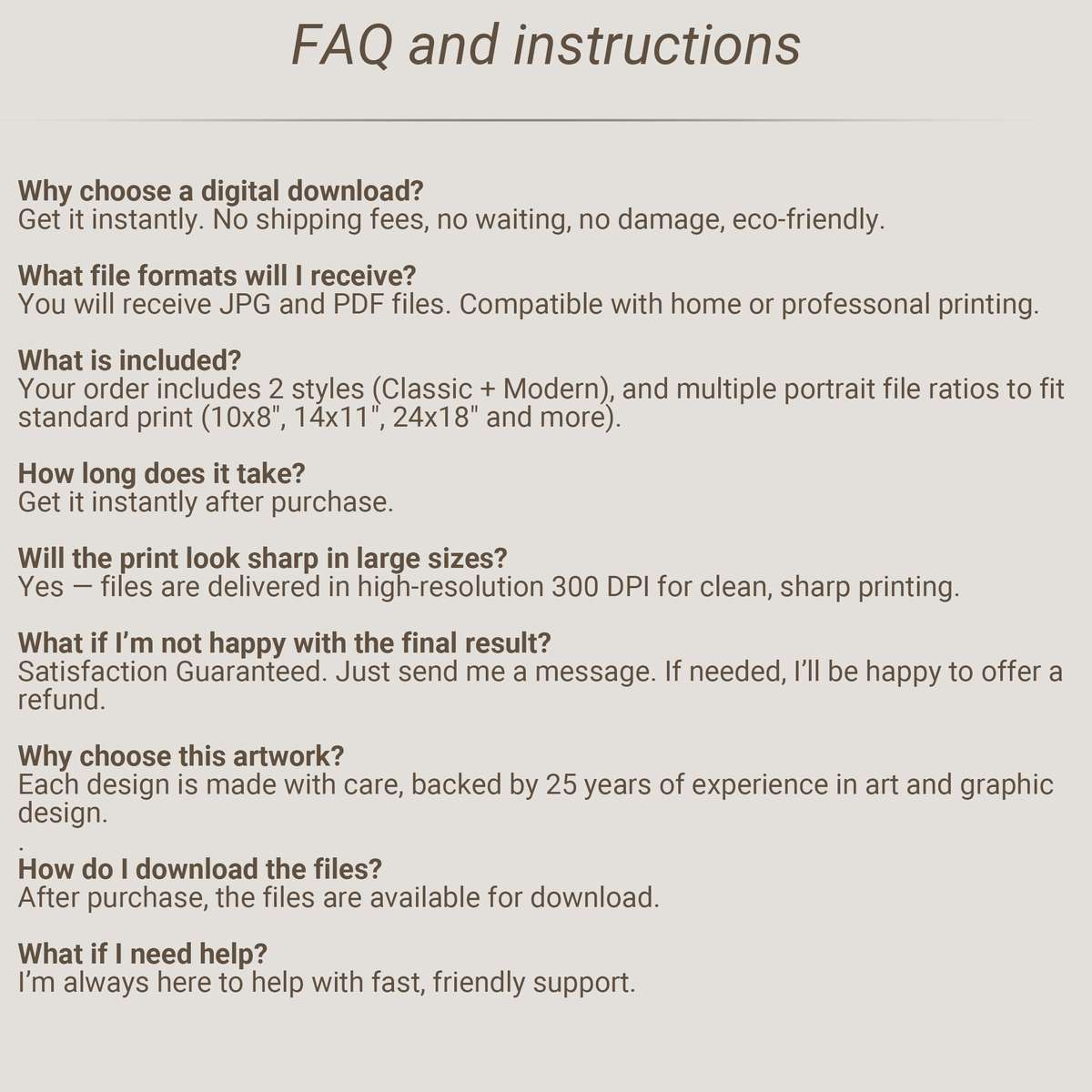
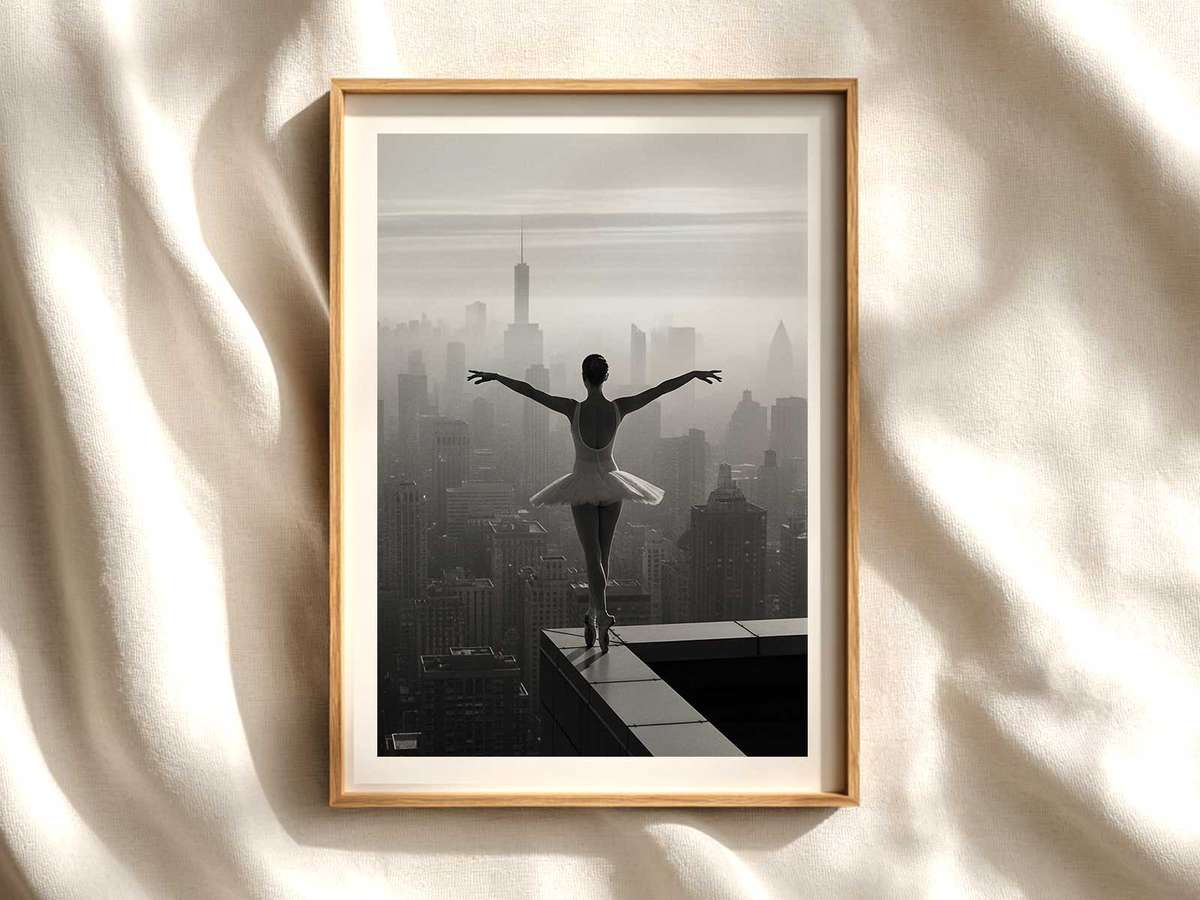
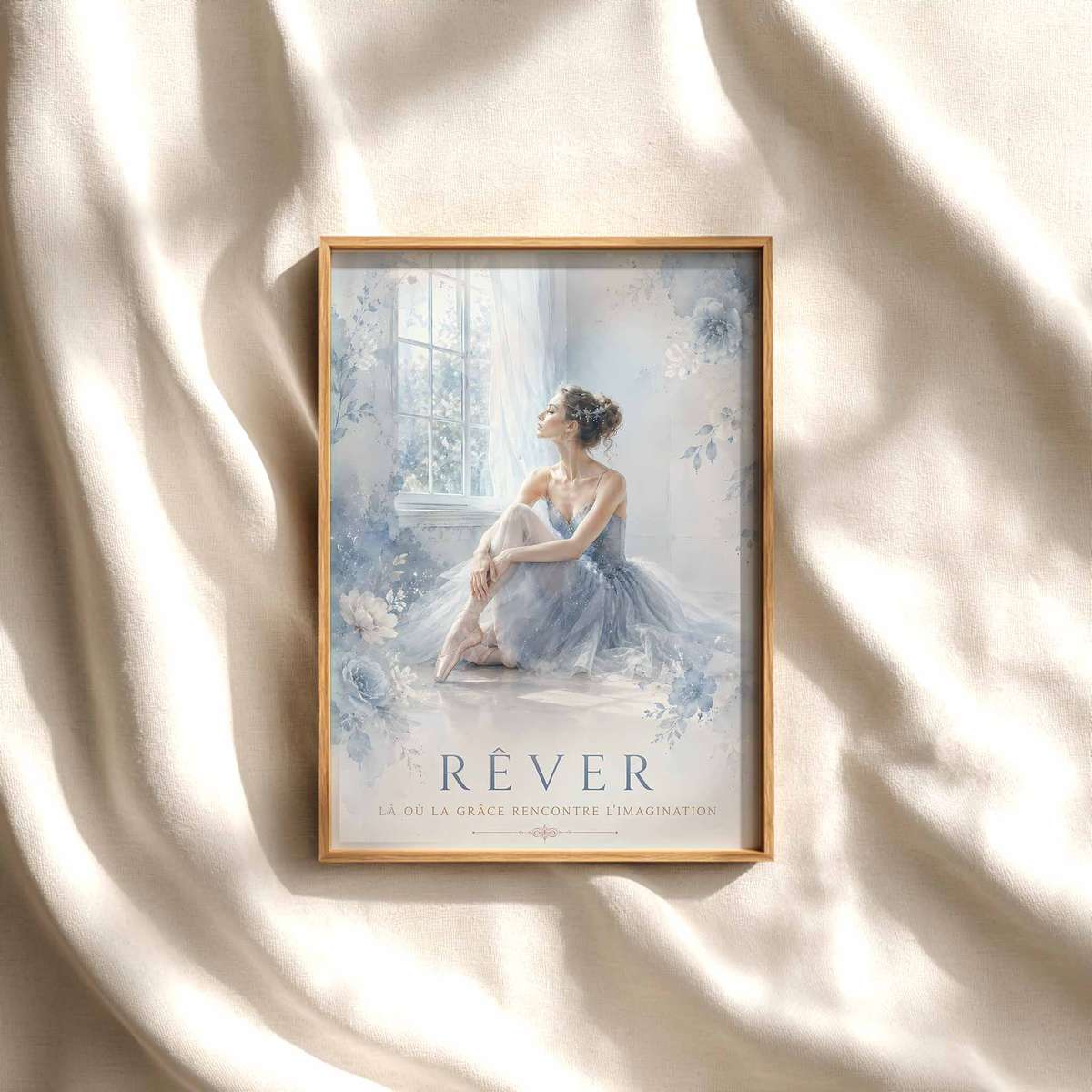
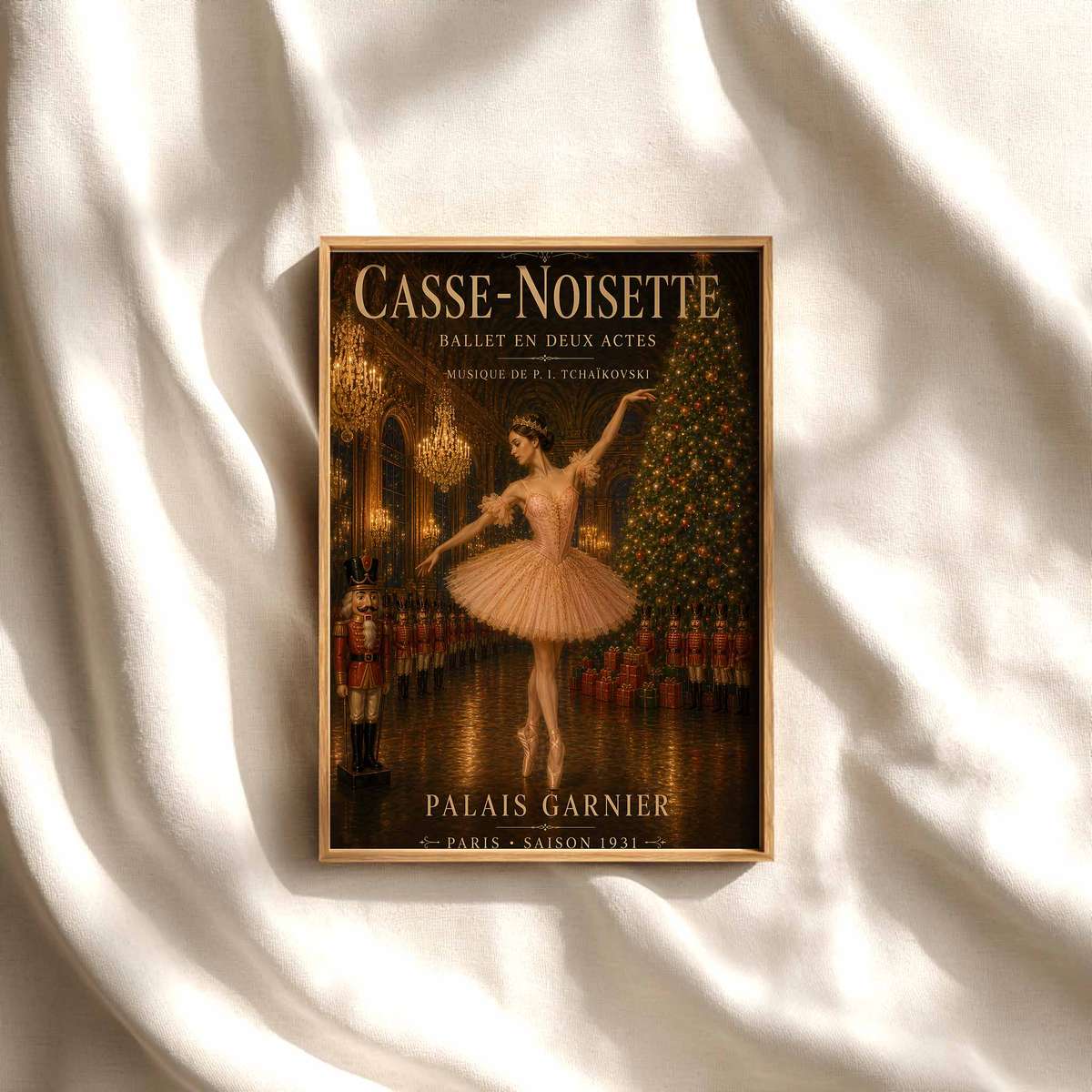
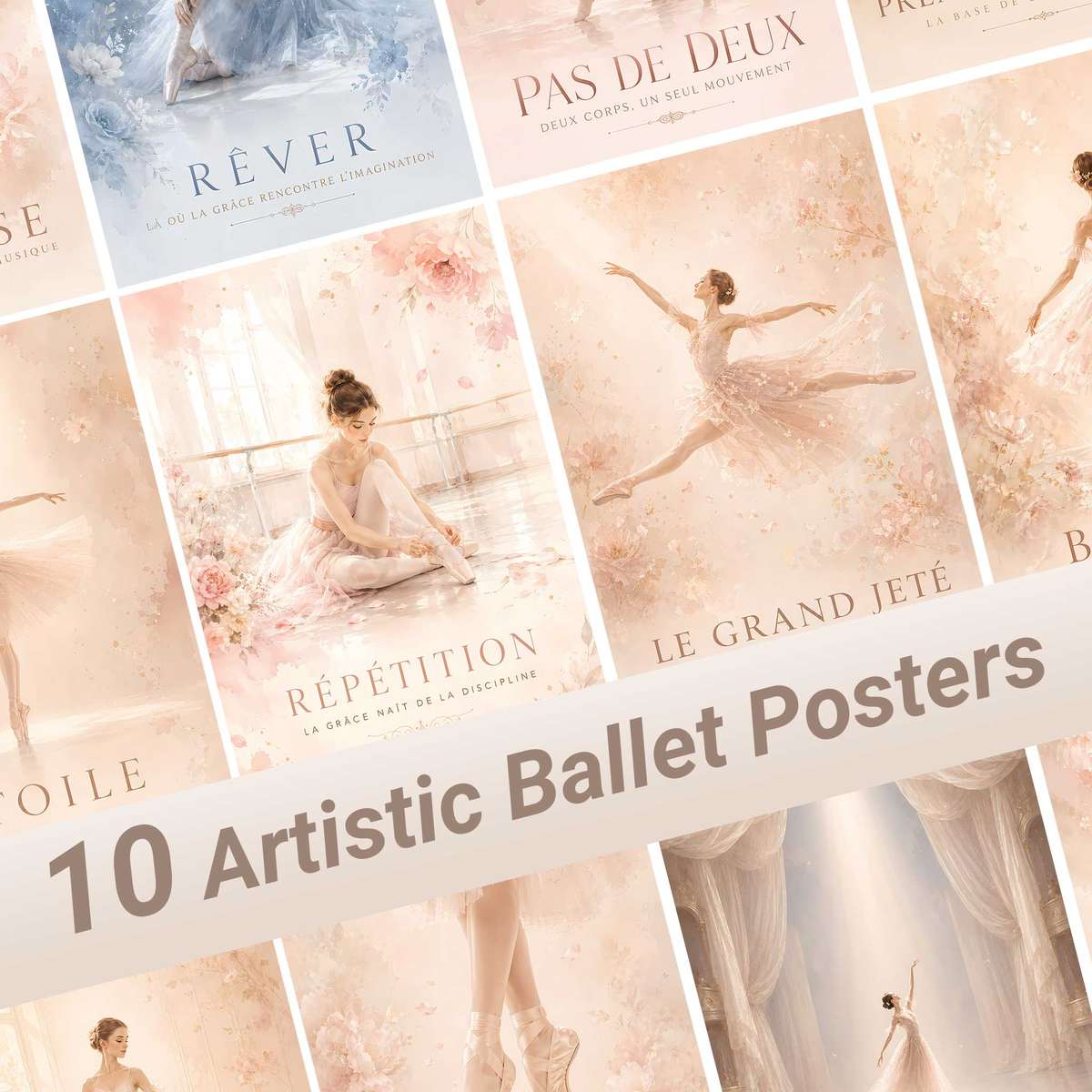
The first thing you notice in this ballet print is not a face or a pose but a constructed graphic: the meeting of pointe, costume and the leg line that together carve a clear, decisive silhouette. The dancer's extended limb becomes a drawn axis; the costume does not merely decorate but amplifies that axis, its cut and fall accentuating the limb's geometry so the whole image reads like a studied sketch in motion.
Where costume becomes part of the line
Here the costume frames the body with intent. A skirt that is cut narrow at the hip and then softens toward the hem directs the eye down the leg and onto the foot, making the pointe an architectural terminus. Rather than concealing muscle or contour, the fabric obediently follows the line of the thigh and calf, its subtle drape suggesting weight and release. The result is a silhouette that elongates: verticals feel clearer, diagonals feel decisive, and negative space around the limb reads as an essential compositional element.
Fabric in this poster behaves economically. Where it gathers, it generates momentary volume—an echo of a step—and where it falls, it smooths the outline so the leg appears both sculpted and lightly softened. This interplay between taut leg line and softer textile edge produces a visual tension that stops the eye and rewards repeated looking: at once engineered and sensuous, precise yet quietly responsive to implied movement.
[IMAGE_INSERT_ARTICLE_01]
Soft structure, strong visual presence
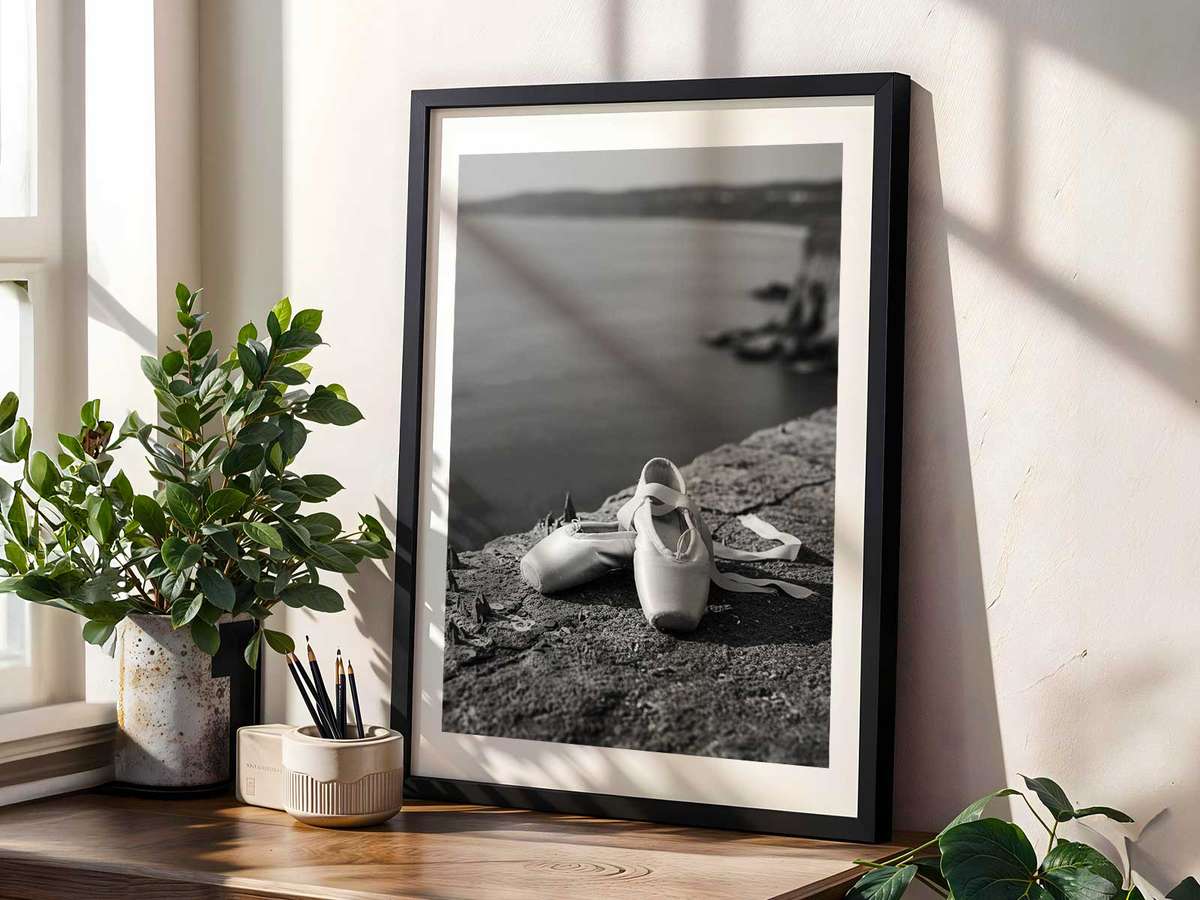
The palette is restrained so the costume’s shape does the talking. Muted tones let shadows and seams define planes, and a gentle contrast between fabric and skin turns the dancer into a study of form rather than a display of ornament. That tonal economy gives the poster an architectural calm—it hangs on a wall like a piece of considered décor, not a loud statement. In a bedroom, a studio, or a quiet living area, the image provides a clear focal point that organizes surrounding objects through its own compositional logic.
Look closely and you see how posture completes the argument: an extended arm or angled torso aligns with skirt lines and pointe, producing a network of implied vectors. These vectors create a sense of movement that is contained and intentional; the image does not rely on motion blur or dramatic flourish but on the precision of line to suggest momentum. That restraint is what keeps the image elegant rather than sentimental, decorative rather than decorative excess.
More than a pretty picture, this ballet print is a study in the partnership between body and costume. It demonstrates how cut, fall and the punctuation of pointe can turn a single pose into a composed graphic—one that reads clearly from across a room and rewards a closer glance with layered detail. For anyone drawn to dance aesthetics, textile nuance, or composed figurative art, the poster offers a compelling reason to bring ballet’s disciplined beauty into a living space: it is the marriage of line and cloth that makes the image both memorable and refined.