New York City Ballet: How Balanchine and a Troupe Culture Built Its Enduring…
The institution discussed here is the New York City Ballet (NYCB), the resident company of Lincoln Center whose artistic identity is inseparable from George Balanchine and the School of American Ballet (SAB). This article explains the precise kind of company NYCB is, how its artistic profile grew from Balanchine’s choreography and from a close school-to-company relationship, and why those elements continue to shape its repertory, performance culture, and reputation.
Quick answer
NYCB is a resident company defined by a concentrated choreographic lineage: Balanchine’s aesthetic and an institutional pipeline from SAB created a persistent repertory, technique, and troupe culture that anchor the company’s artistic identity.
What this article explains
- How Balanchine’s choreography established technique and repertory priorities.
- The operational link between NYCB and the School of American Ballet as a principal feeder.
- How centralized artistic authority and repertory-preservation practices sustain identity across generations.
First reading of the company
At first glance the New York City Ballet presents as a repertory company with a clear genealogical claim: it is the house most closely associated with George Balanchine’s choreography and the performance values he promulgated. That immediate association signals not only a list of ballets the company performs, but a particular set of aesthetic expectations — speed, musical precision, and an organised repertory upheld by institutional mechanisms.
How the institution took shape
NYCB was founded in 1948 by George Balanchine and Lincoln Kirstein. From the start the company was created with a dual ambition: to present Balanchine’s choreography at scale and to establish an American training-to-company pathway. The School of American Ballet, founded earlier by Balanchine and Kirstein in 1934, functions as the official training academy and principal feeder school for NYCB. This formal link – school and company conceived together – supplied a steady stream of dancers trained in the same aesthetic priorities that Balanchine set out.
Style, school, and artistic temperament
Balanchine developed an unmistakable set of choreographic and technical priorities that came to define NYCB’s stage manner. The verified record emphasizes qualities such as speed, musicality, and precision as central to the Balanchine aesthetic. Because most NYCB dancers have historically been trained at SAB, the company’s technique and onstage temper are shaped by that pedagogical continuity: line, musical responsiveness, and a repertory-ready ensemble approach are instilled before dancers join the company.
Repertory and stage culture
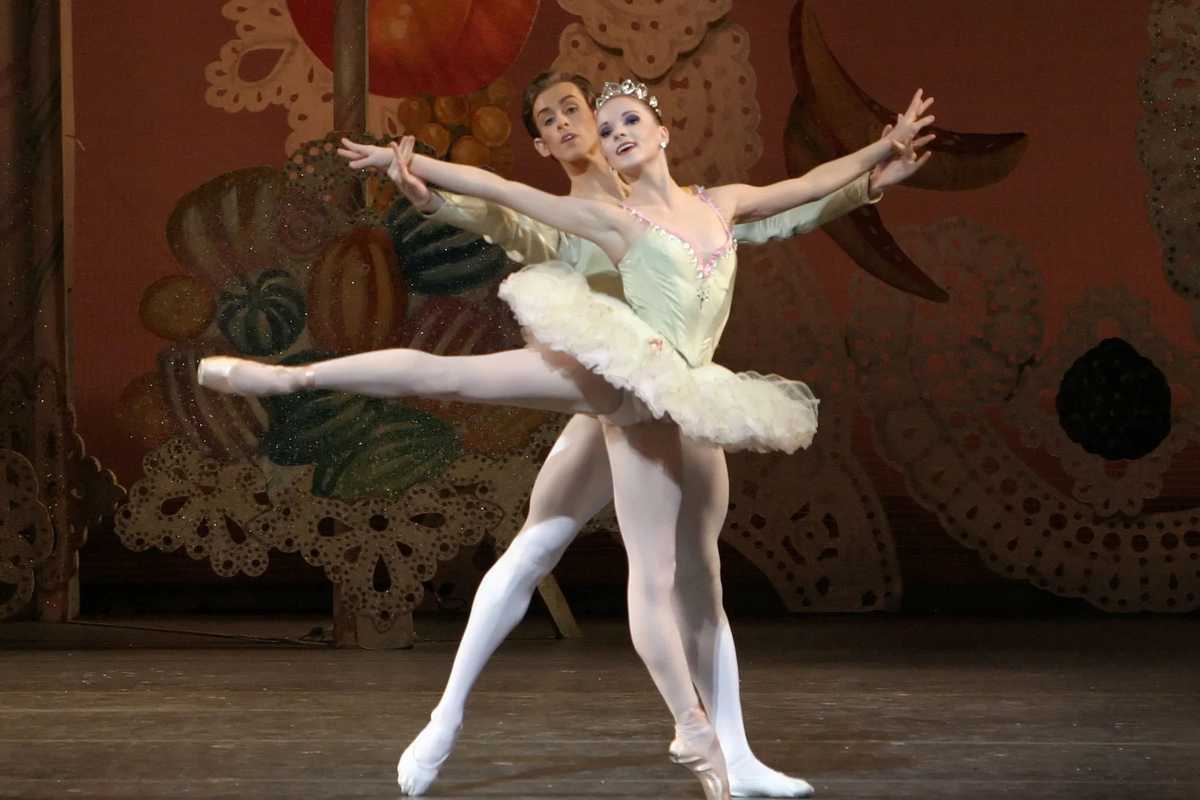
Balanchine’s works form a central portion of NYCB’s active repertory; the company maintains an extensive Balanchine catalogue. Preservation and transmission are managed through repeatable institutional structures, including the George Balanchine Foundation and the George Balanchine Trust, repertory restaging by certified repetiteurs, and archival practices. That concentration of Balanchine pieces means programming often emphasizes a particular neoclassical lineage rather than a scattershot anthology of unrelated styles, which in turn reinforces a consistent stage culture season after season.
Artists, directors, and the company culture
The company’s identity has also been built by centralized artistic authority. Historically, artistic direction at NYCB has been shaped around its founding choreographer and later long-serving leaders, producing a hierarchical culture that focused power in a few figures. That centralisation helped maintain stylistic coherence and technical standards but has also attracted criticism: observers and cultural reporting have noted that such concentration of authority can produce governance and ethical challenges. The company experienced notable leadership and cultural upheaval in 2017–2018 when Ballet Master in Chief Peter Martins took a leave of absence in December 2017 and announced his retirement on January 1, 2018; the company and school later stated that an internal inquiry did not corroborate the allegations. These events are part of the recent institutional history that forced conversations about power, culture, and accountability inside the company.
Turning points, preservation practices, and continuity
NYCB’s operational model — a resident company attached to Lincoln Center with a closely affiliated school — creates the conditions for repertory continuity. The company performs in the David H. Koch Theater and has longstanding seasonal ties to venues such as the Saratoga Performing Arts Center, anchoring its presence within established performance circuits. More important artistically is the way NYCB institutionalised repertory preservation: Balanchine works are maintained through trust and foundation mechanisms, repetiteurs, alumni links, and the school-to-company pipeline. These practices allow specific choreographic texts, stylistic habits, and technical demands to survive personnel change without dissolving the company’s artistic core.
Why the company feels distinct
Several concrete features distinguish NYCB from other major houses. First, the formal link with SAB makes the company as much a pedagogical project as a performing ensemble; training and repertory are coordinated. Second, the centrality of Balanchine’s choreography — preserved through trusts and foundations — orients the company’s programming and technique around a coherent neoclassical language. Third, the institutional habit of concentrating artistic authority historically produced a coherent company culture: tight repertory standards and a strong, recognisable stage manner, even while that habit also exposed the company to governance questions in moments of crisis.
Cultural position and enduring meaning
NYCB’s name endures because it denotes a particular lineage and institutional architecture: a repertoire anchored in Balanchine, a training pipeline through SAB, and preservation systems that keep those ballets alive. That constellation creates a company identity that is not merely reputational but procedural — a set of practices that reproduce a style across dancers and seasons. The company thus functions as a living repository for a specific strand of ballet history, one that remains influential through both performance and pedagogy.
Closing interpretation
Understanding the New York City Ballet means seeing it as an arranged ecosystem: choreographer, patron, school, and company engineered to sustain an aesthetic. Balanchine’s choreography provided the vocabulary; the School of American Ballet supplied the speakers; institutional preservation and a history of centralized leadership kept the voice consistent. That combination explains why the name NYCB still signals a distinct artistic identity in ballet culture — not simply a catalogue of famous works, but a maintained performance logic and an organisational method that reproduces a recognisable style.
Author: William L.