Bolshoi Ballet: How Grandness, Heroic Projection and Institutional Power Shape…
The Bolshoi Ballet is a company name that immediately evokes scale: the Russian word Bolshoi literally means "big," "large," "great" or "grand." This article treats the Bolshoi not simply as a repertory troupe but as an institutional imagination — a company whose aesthetic has been shaped by an appetite for dramatic amplitude, heroic projection and the resources of an official cultural flagship.
Quick answer
The Bolshoi projects itself through an insistence on grandness: muscular, theatrical dancing staged on an epic scale, reinforced by long-standing government support that turned the company into a vehicle for large-scale spectacle.
What this article explains
- Why the name "Bolshoi" signals a commanding aesthetic of scale and drama.
- How institutional context and state support enabled lavish productions and heroic repertory choices.
- Which stylistic features critics link to the company's public image.
First reading of the company
At first mention, "Bolshoi" announces itself as a promise of magnitude. The literal meaning of the word — great, large, grand — is not ornamental: it frames audience expectation toward spectacle. The name belongs to a company with historical roots and a visible repertorial habit of presenting ballets on a scale that foregrounds wide stage pictures, expansive corps de ballet writing and elaborate mise-en-scène.
How the institution took shape
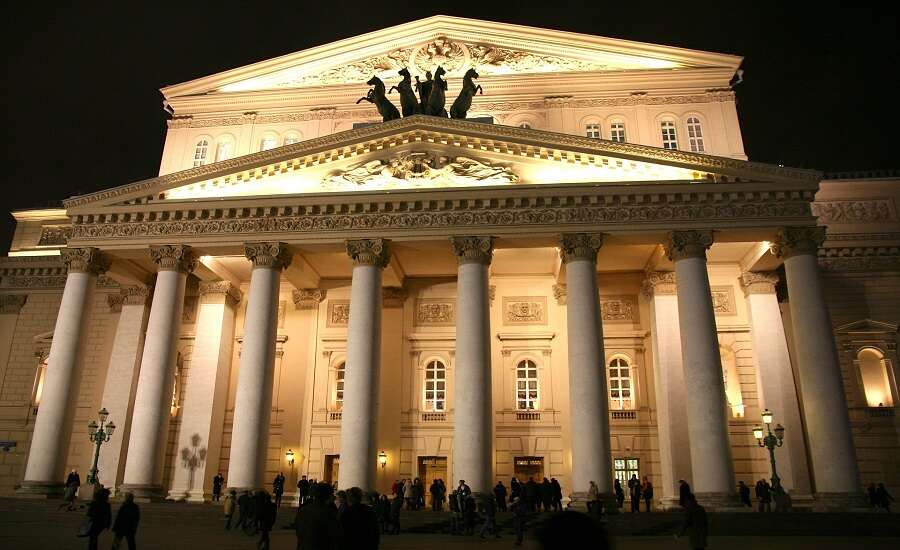
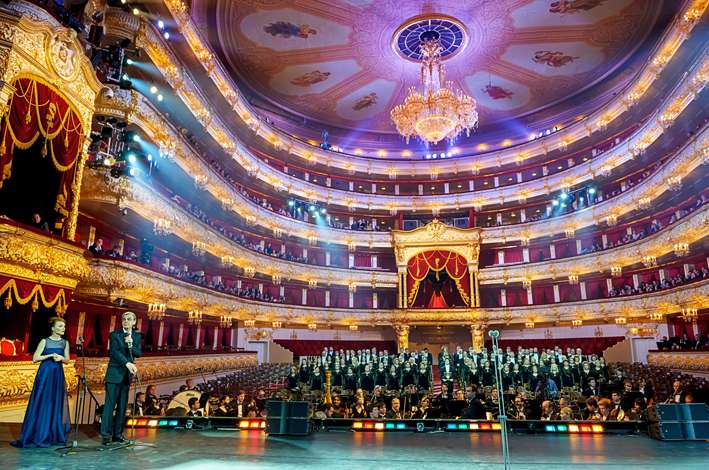
The Bolshoi Ballet traces its institutional lineage deep into Russian cultural history and is long associated with the Bolshoi Theatre in Moscow. Over centuries the company evolved into one of the world's most widely known ballet organisations. Its formation within a major national theatre established an early relationship between a resident company and a venue capable of mounting large productions — a relationship that would be sustained by patterns of government support and public investment.
Style, school and artistic temperament
Critical and scholarly commentary consistently characterises the Bolshoi's stage manner as bold, muscular and theatrically intense. That temperament combines athletic technique with an emphasis on dramatic expressiveness: dancers are often presented in gestures of heroic projection, and performances favour clear, forceful presentation over intimate understatement. This is a company temperament that reads readily in large auditoria and is designed to register at distance as well as close up.
Repertoire and stage culture
Reviews and analysis emphasise a repertory committed to epic staging. Productions commonly prioritise spectacle: generous corps de ballet sequences, elaborate sets and costumes, and pronounced stage effects that amplify narrative drama. Classical and narrative titles staged by the company are frequently described as epic in scale; the company's approach has historically favoured works that allow broad theatrical gestures and massed ensemble writing.
Institutional role and legacy figures
Beyond technique and repertory, the Bolshoi's image is inseparable from its institutional position. During the Soviet period the company became a flagship of cultural policy, associated with heroic, expressive works attuned to socialist-realist tastes. That association reinforced a public image in which individual virtuosity often served a larger narrative of national pride and state spectacle. The theatre's long-standing government support supplied the resources — financial, technical and promotional — necessary for large-scale productions, making institutional power a structural component of the Bolshoi's aesthetic.
What makes the Bolshoi distinct
Three linked features distinguish the Bolshoi's identity. First, the semantic weight of its name pre-frames expectation toward the grand and the heroic. Second, its staged aesthetic — muscular, dramatic, designed for theatrical impact — is consistently emphasised by critics and historians. Third, institutional backing and historical placement within state cultural structures allowed the company to realise productions at a scale many others could not sustain. Together these elements produce a recognisable cultural shorthand: Bolshoi = grand spectacle.
Cultural position and enduring meaning
The Bolshoi's continuing resonance in ballet culture rests on the coherence between name, style and institutional capability. The company's reputation for epic productions and heroic projection is not merely rhetorical; it has been built through repertory choices, performance practice and the material capacity of a major theatre supported as a national cultural asset. As a result, the Bolshoi functions as a reference point for how ballet can be theatricalised on a grand civic scale: it represents one model of what ballet can mean when invested with institutional power and the intention to project drama to a mass public.
Closing interpretation
The Bolshoi's identity is less a single signature move than a knot of mutually reinforcing facts: a name that signals grandeur, a documented style that privileges bold, theatrical athleticism, and an institutional framework that has enabled large-scale spectacle. Understanding the Bolshoi requires attending to how these elements interact — how language, stagecraft and state support together shape a company that, in the imagination of ballet, stands for the epic, the heroic and the magnificent.
Author: Alex R.