Giselle: why the ballet remains the Romantic touchstone — real, supernatural…
Giselle is a two-act Romantic ballet that premiered in Paris on 28 June 1841. It matters because its structure stages a calculated movement from a grounded, realistic first act to a haunted, moonlit second act — the famous "white act" — and because the title role requires a single dancer to embody both earthy life and an otherworldly revenant. These elements do more than tell a story: they make Giselle a compact lesson in how Romantic ballet uses narrative, technique and visual code to shift a performance from the concrete to the mnemonic.
Quick answer
Giselle works as a Romantic model because its two-act design moves the audience from a believable village into a stylized supernatural realm, the Wilis’ world, and because the title role’s dual demands — peasant girl versus ethereal spirit — make the ballet a concentrated study of fragility, transformation and memory on stage.
What this article explains
- How the plot deliberately shifts from realism in Act I to the supernatural "white act" in Act II.
- Why Giselle’s role is technically and dramatically fragile: two contrasting personae in one part.
- How Act II’s Wilis and music create an atmosphere that reads as memory and mourning.
The clearest way to understand it
At its simplest, Giselle stages a two-part transformation: Act I presents a rural, believable world where love and betrayal lead to Giselle’s madness and death; Act II abandons realism for an otherworldly nocturnal realm populated by the Wilis, the spirits of jilted girls. This formal split — realistic scene followed by supernatural tableau — is the idea you carry away. It is not decorative: it organizes everything that follows, from choreography and music to costume and dramatic priorities.
What makes it visually or structurally distinct
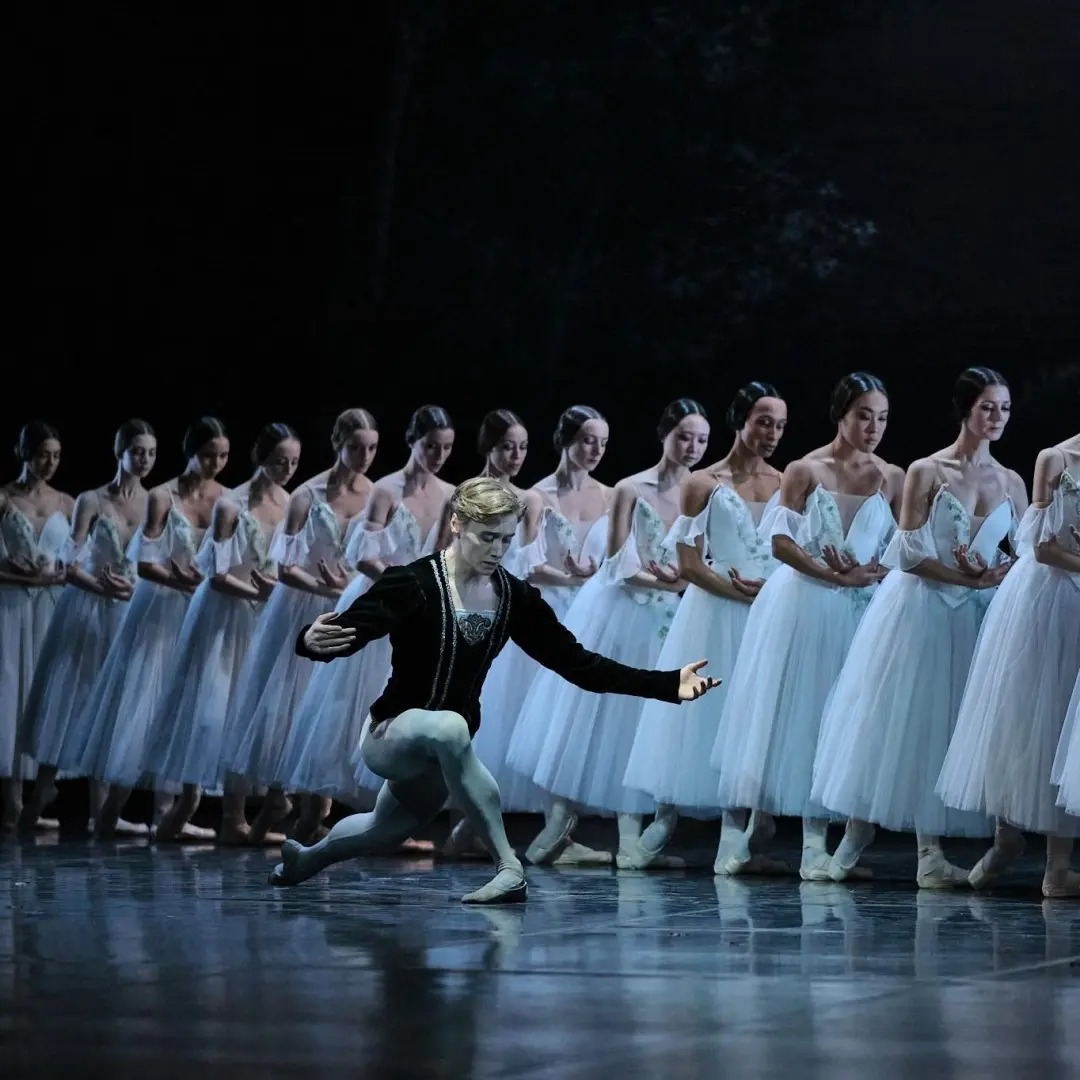
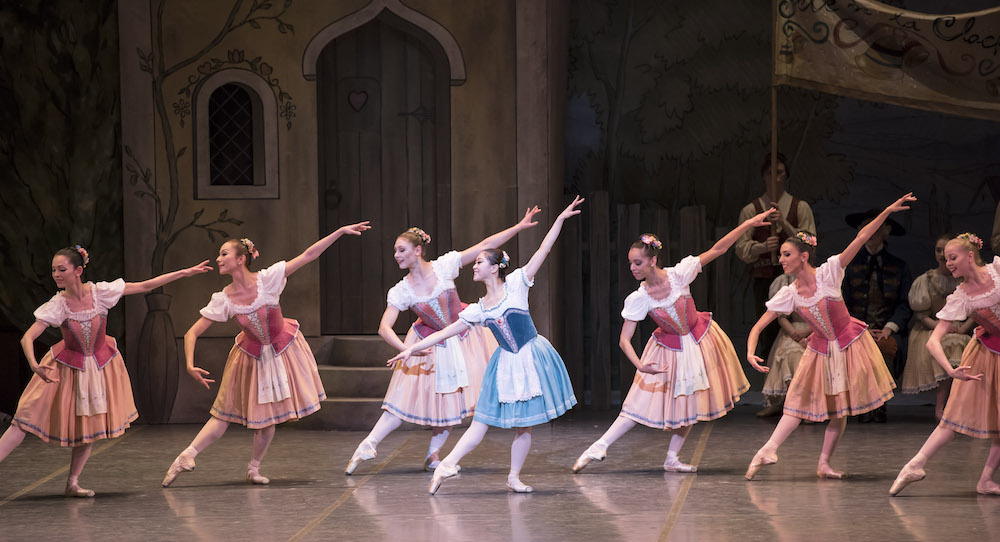
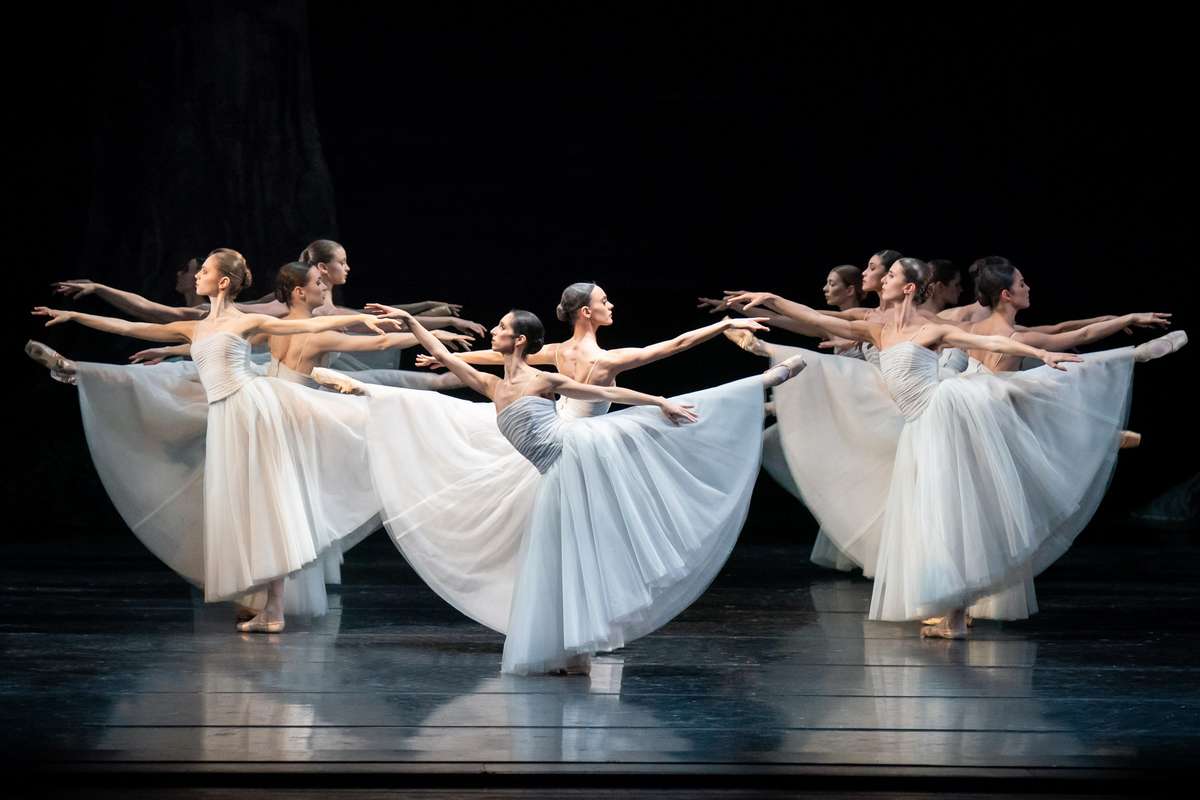
The contrast between acts is immediate and structural. Act I uses village detail and emotionally charged pantomime to root the audience in a recognizable social world. Act II replaces that specificity with a pared-down, moonlit landscape and a corps of Wilis whose uniform white presence and nocturnal logic create what audiences and critics call the "white act." The shift produces a visible change in atmosphere: the stage no longer shows events happening in time so much as a harmonic, suspended environment where memory and supernatural law govern movement.
How it works in ballet
The mechanism is threefold and interdependent. First, narrative: the story carries the transition — Giselle’s death turns motive from social conflict to the consequences of betrayed love. Second, choreography and technique: Act II’s dance vocabulary favors sustained, weightless effects that read as spectral rather than physical; pointe work and corps phrasing are used to suggest levitation and inexorable ritual. Third, music and scoring: Adolphe Adam’s score helps erase the texture of everyday life and replaces it with an atmosphere that supports the mnemonic quality of the second act. Together these elements convert a scene into a remembered, mournful space.
Why the role feels fragile
Giselle’s fragility is not only psychological but performative. The dancer must inhabit two cohesive but contrasting states: in Act I she is an innocent, embodied peasant whose sensuality and social position are specific; in Act II she becomes an ethereal presence shaped by grief and supernatural rules. That duality is technically demanding because it asks for distinct uses of weight, épaulement and stage energy. The sense of fragility emerges when a single body must convincingly move from warm corporeal life into the liminal economy of the Wilis without breaking dramatic credibility.
Common misreadings or confusions
Two frequent oversimplifications weaken understanding. One is to treat the second act as mere spectacle: it is tempting to see the "white act" as decorative, but the choreography, corps use and score are narratively purposeful — they stage mourning, supernatural justice and memory. The second is to split the role into two unrelated parts. The two Giselles are connected; Act II reframes the character established in Act I. Reading them as isolated costumes or moods misses how the ballet links earthly emotion to afterlife consequences.
Why it matters in ballet culture
Giselle is often cited as the quintessential Romantic ballet because it embodies the period’s aesthetic concerns in concentrated form: a fascination with the supernatural, a preference for emotional intensity over classical restraint in storytelling, and an appetite for stage effects that transform ordinary scenes into morally charged, symbolic landscapes. Its pedigree — scenario by Théophile Gautier (with Jules-Henri Vernoy de Saint-Georges), music by Adolphe Adam, and an original staging associated with Jean Coralli and Jules Perrot, premiered in Paris on 28 June 1841 with Carlotta Grisi in the title role — anchors the ballet historically while its formal choices keep it a touchstone for restaging and reinterpretation.
Closing interpretation
Giselle endures because it teaches a particular lesson about how ballet can move an audience from the believable to the mnemonic without losing dramatic coherence. The shift from a realistic Act I to the Wilis’ "white act," combined with the title role’s fragile duality, converts technique and costume into a language of memory, mourning and moral consequence. Read that way, Giselle is less a period relic and more a compact manual for how ballet makes the unreal feel necessary.
Author: William L.