Why Misty Copeland Became a Defining Modern Ballerina
Misty Copeland is both an artist on stage and a public figure whose career reframed conversations about who belongs in ballet. Her promotion to principal dancer at American Ballet Theatre on June 30, 2015—a historic first for the company—made visible a trajectory shaped by late formal training, intense public scrutiny, and a performance identity critics and profiles have consistently noted.
Understanding Copeland matters because she occupies an unusual intersection: a technically accomplished soloist and principal whose stage presence and musical clarity were singled out by critics, and a cultural signpost in national conversations about representation in major American ballet institutions.
What defines this dancer
Misty Copeland's defining combination is clear: a commanding stage presence and evolving musical sensitivity, anchored by a public narrative—documented in her memoir Life in Motion—that emphasized a late start in serious training and an uncommon rise within American Ballet Theatre.
What this portrait explains
- How Copeland's stage presence and musical clarity shaped critical response to major role debuts.
- Why her promotion at ABT in 2015 carried institutional and cultural weight.
- How her public narrative—late formal training and a memoir—framed her visibility beyond the company.
First visual and artistic impression
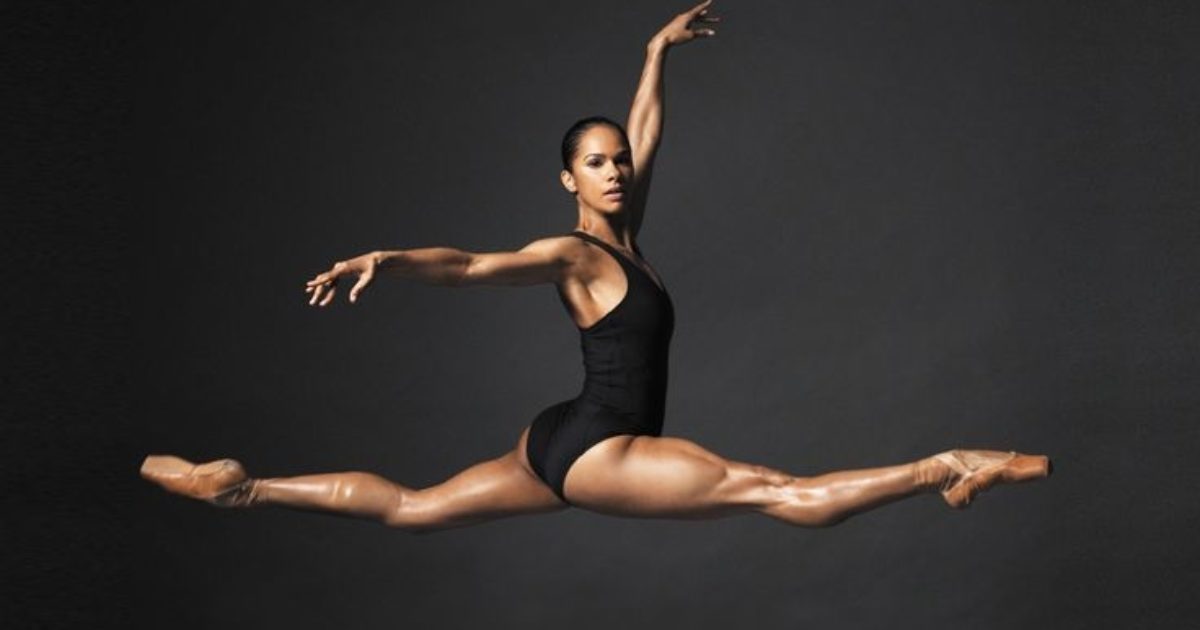
Observers often describe the immediate effect of Copeland onstage as a presence that arrests attention. Long-form profiles and reviews have emphasized a dramatic clarity: when she enters, movement choices read as deliberate and theatrical. That clear stage identity made role debuts especially noticeable to critics, who tracked her artistic growth as she took on larger parts at American Ballet Theatre.
Line, port de bras, and movement quality
Critical commentary about Copeland stresses not only physical line but musical clarity. Reviews and profiles point to an evolving musical sensitivity that shaped phrasing and timing in major role performances. Her movement quality, as described in reputable arts coverage, married technical control with expressive emphasis, allowing audiences to follow both musical detail and narrative intent.
Stage presence and dramatic power
Across profiles and critical notices, the recurrent attribute is theatrical force. Critics have singled out Copeland for the way she inhabits character and for a stage focus that amplifies dramatic moments. This kind of presence helped critics and audiences take note as she moved from corps and soloist work to principal-level roles at ABT.
Roles and repertoire associations
While this portrait avoids exhaustive role lists, it is important to note that Copeland’s major role debuts at American Ballet Theatre drew substantial critical attention. Such debuts became occasions for critics to evaluate how her presence and musical approach translated to canonical, technically demanding parts—moments that contributed to the perception of her as an artist with both technical and theatrical authority.

Career turning points and artistic context
Two concrete anchors shape any account of Copeland’s career. First, her late start in serious formal training—documented in profiles and in her 2014 memoir Life in Motion: An Unlikely Ballerina—became part of the public narrative that framed her development as atypical and resilient. Second, her promotion to principal dancer at American Ballet Theatre on June 30, 2015, was an institutional milestone widely reported in mainstream and arts media. That promotion is the factual hinge that places her career in a broader cultural conversation about diversity in major American ballet companies.
What made Copeland distinctive
Misty Copeland's distinctiveness rests on a cluster of defensible points: critics noted a striking stage presence; profiles emphasized refined musical clarity in phrasing; and her biography—particularly a late move into serious training and a widely read memoir—created a public storyline that amplified each performance. Combined with a historic promotion at ABT, these elements separated her from peers by linking artistic development with visible cultural significance.
Why the legacy endures
Her legacy persists for two related reasons. Artistically, critics and long-form profiles documented an evolution in performance that made major role appearances worth watching. Culturally, mainstream coverage—Time, The Guardian, The Washington Post and others—framed her 2015 promotion as a milestone in ongoing conversations about race and representation in ballet. Together, the artistic record and broad media visibility ensure that Copeland remains a reference point when ballet institutions, critics, and audiences consider who is seen—and who is recognized—on major stages.
Closing interpretation
Misty Copeland matters because she made visible an intersection between the craft of ballet and the cultural questions that animate it. Her performances were read not only for technique but for theatrical clarity and musical intelligence; her life story and memoir positioned a late-start trajectory as meaningful context; and her promotion at American Ballet Theatre transformed personal achievement into a widely reported institutional milestone. That combination—artistic presence, musicality, and charged visibility—is what keeps her a defining figure in contemporary ballet conversation.
Author: William L.