Diana Vishneva: From Vaganova Formation to an International, Repertory-Driven…
Diana Vishneva is a Russian ballerina whose career maps a deliberate passage from classical formation to international repertory prominence. Born in Leningrad in 1976 and trained at the Vaganova Academy, Vishneva's path is notable not only for company rank and awards but for the way repertory choices and curatorial projects shaped a distinct artistic identity.
Quick answer
Vishneva's trajectory moves from rigorous Vaganova schooling to rapid professional rise at the Mariinsky, then onto a wide international career built on equal fluency in classical, neoclassical and contemporary works.
What this article explains
- How Vaganova training provided a technical and expressive base.
- Why her Mariinsky years and rapid promotion mattered to her visibility.
- How a deliberately broad repertory—classical roles, Balanchine, and major contemporary choreographers—shaped her artistic identity.
Quick access
Early formation
Diana Vishneva was born on 13 July 1976 in Leningrad (now Saint Petersburg). Her early life in that cultural environment placed her within Russia’s long-standing ballet ecosystem, where formal schools and a strong theatrical tradition frame a dancer's choices from the start. That context delivered both technical expectation and access to repertory that would later become central to her career.
School, method, and artistic roots
Vishneva trained at the Vaganova Academy of Russian Ballet, a fact that anchors her technique and artistic temperament. Vaganova training is widely recognized for combining strength, clarity and expressivity; for Vishneva, it provided the disciplined base that made her equally credible in full-length classical fare and in more streamlined neoclassical and contemporary work.
Entering the professional stage
After graduating from Vaganova, Vishneva joined the Mariinsky (Kirov) Ballet in 1995 and became a principal the following year. That swift elevation inside one of Russia’s leading companies gave her early exposure to important classical roles and established a professional platform from which to accept invitations beyond the Mariinsky.
Breakthroughs and repertory breadth
Vishneva's career is defined less by a single breakout performance and more by an expanding repertory that bridged eras. Her stage repertoire includes the great full-length classics—Giselle, Kitri in Don Quixote, Juliet in Romeo and Juliet, Aurora in The Sleeping Beauty—while also embracing neoclassical and modern works such as Balanchine pieces and Jewels. Alongside these she pursued a substantial contemporary repertoire, dancing works by choreographers associated with 20th- and 21st-century modernism.
Roles, partnerships, and international work
As a Mariinsky principal, Vishneva became a sought-after guest star, performing with leading companies internationally. Her guest appearances included engagements with companies such as American Ballet Theatre, the Bolshoi, Paris Opera Ballet, Teatro alla Scala and Bayerisches Staatsballett. Those invitations allowed her to alternate between canonical classical roles and contemporary projects, reinforcing a public image of versatility.
Curation and artistic initiative
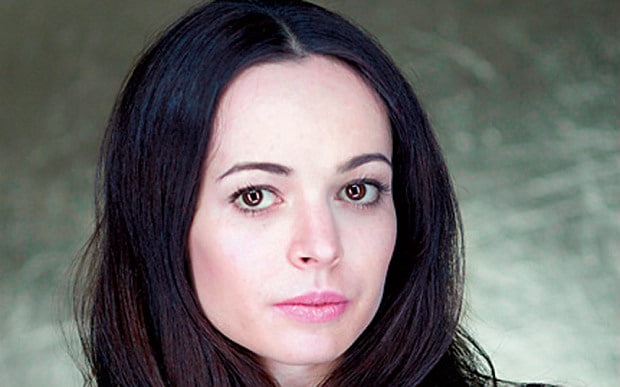
Beyond individual roles, Vishneva took an active part in shaping programs. She initiated and curated projects that paired contemporary and modern works with the Mariinsky repertoire. A notable example is the project "Diana Vishneva: Dialogues," premiered in October 2011, which foregrounded her interest in broadening the Mariinsky’s programming to include significant 20th-century and contemporary choreographers. Such initiatives made her not just an interpreter but also a cultural interlocutor within the company.
Recognition and awards
Vishneva’s career has been recognized by major prizes and state honors. She was a laureate of the Benois de la Danse in the mid-1990s and later received the State Prize of the Russian Federation (2000), multiple Golden Mask awards, and the title People's Artist of Russia (2007). These honors trace a professional arc in which institutional recognition paralleled artistic expansion.
Maturity, transition, and retrospective moments
Throughout her mature career Vishneva balanced company commitments with international guesting and project work. This pattern allowed her to maintain a strong presence at the Mariinsky while pursuing collaborations abroad. A retrospective-type appearance with American Ballet Theatre colleagues at the Metropolitan Opera in June 2017 stands as an example of how her career came to function publicly as both performance and summation.
Why the legacy endures
Vishneva’s career matters because it models a modern, repertory-driven path: rigorous pedagogical roots, rapid company advancement, and a sustained commitment to mixing classical heartland roles with neoclassical and contemporary experiments. Her curatorial projects and international collaborations helped bring contemporary works into dialogue with traditional repertory, a move that has meaning for companies and audiences seeking a broader ballet vocabulary.
Closing interpretation
Diana Vishneva’s arc—from Vaganova formation through Mariinsky prominence to international repertory leadership—illustrates how a dancer can build a coherent artistic identity across styles and stages. Rather than privileging a single specialization, her career shows a deliberate melding of technical authority, dramatic intensity and repertory curiosity that continues to inform how dancers and institutions think about versatility in the 21st century.
Author: Alex R.