Dégagé meaning in ballet: why the foot leaves the floor and how it builds…
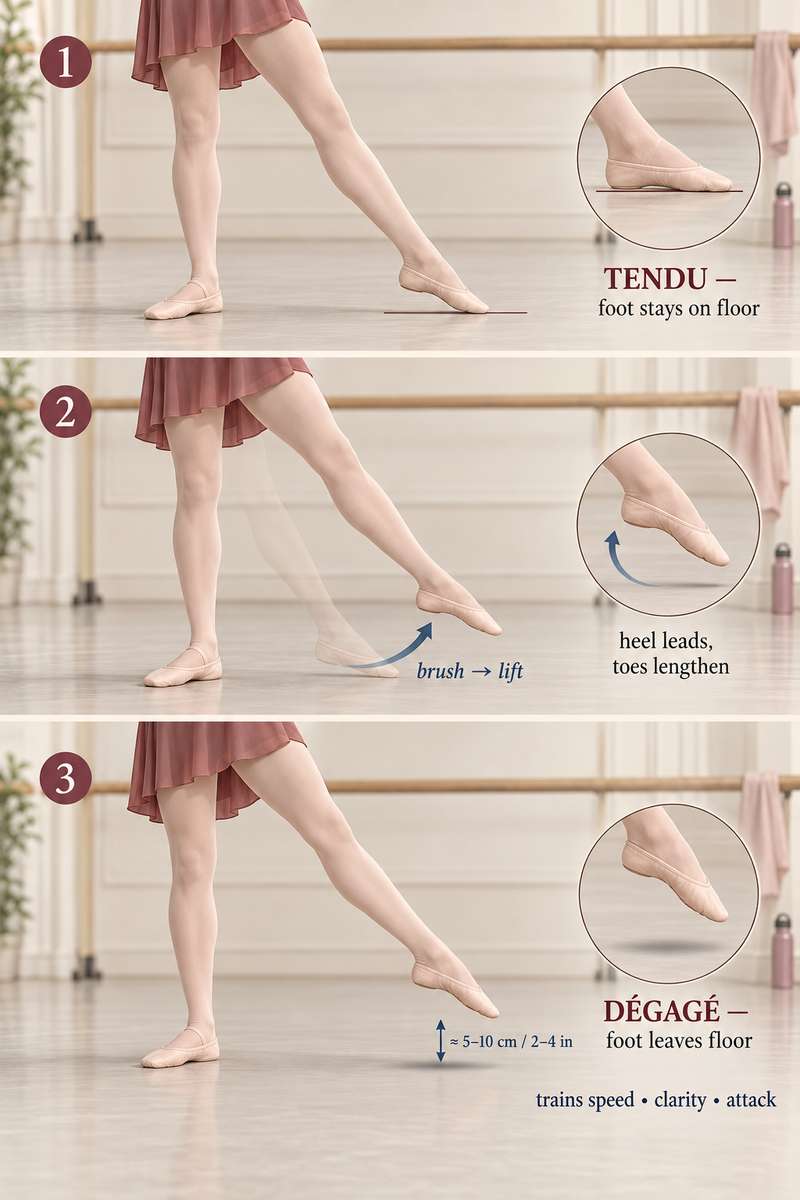
Dégagé, short for battement dégagé, is a fundamental battement in classical ballet. Unlike a tendu, where the working foot remains in contact with the floor, a dégagé brushes through the floor and lifts a few centimetres—usually pointed to roughly 45° or less. This small, sharp disengagement trains the dancer’s speed, articulation and the clear "attack" that makes footwork readable to an audience.
Quick summary: A dégagé is essentially a tendu that finishes by leaving the floor. It is practiced faster than tendu and focuses on a brisk brush from the cou-de-pied through the floor so the foot can lift cleanly and show a precise line.
Quick access: Definition • Technique & mechanics • Dégagé vs tendu
CLEAR DEFINITION
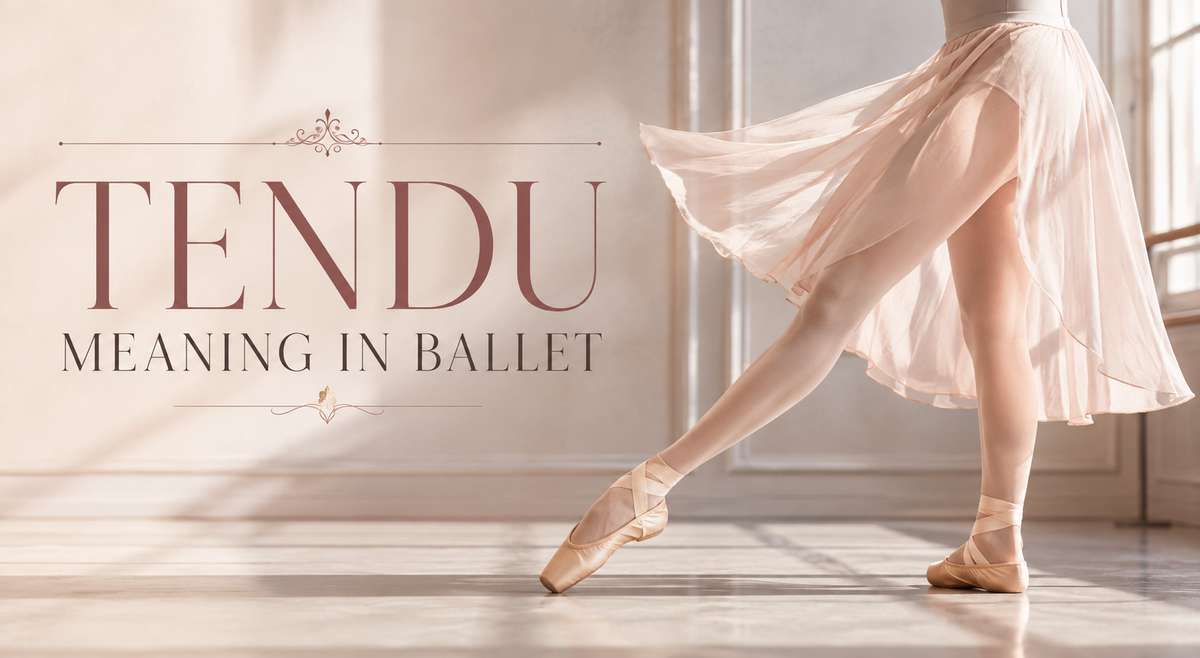
In plain terms, dégagé (battement dégagé) is a battement in which the working foot brushes along the floor and then disengages from the floor, lifting a few centimetres into the air. The foot is pointed in the air to about 45° or lower. The action is short and crisp, intended to be faster and more articulated than a sustained, floor-contact tendu.
WHAT THE VIEWER SEES
From the audience the difference is visual: a tendu reads as a long, continuous line along the floor, while a dégagé snaps off the floor and produces a small, sharp accent in the line. That momentary lift creates a brighter, more percussive effect on stage and helps phrasing cut through ensemble textures or musical accents.
TECHNIQUE AND BODY MECHANICS
Technically, dégagé begins like a tendu: the foot brushes from cou-de-pied (the position at the ankle) through the floor. The dancer shifts weight securely onto the supporting leg, uses a brisk brush through the toes, and allows the working foot to disengage cleanly. The lift is small—only a few centimetres—but must be controlled and well pointed. Proper turnout, alignment of hips and pelvis, and a stable supporting leg are essential to keep the lift crisp rather than compensatory.
TRAINING AND DISCIPLINE
Across many syllabi—Cecchetti, RAD, Vaganova and numerous school traditions—dégagé is treated as the next technical step after tendu. Teachers use it to develop faster foot articulation and to instil an "attack": a clearly initiated brush and a decisive finish. In class it is often practised at quicker tempi than tendu so dancers learn to coordinate ankle articulation, timing and weight shift under speed.
COMPARISON: DÉGAGÉ VS TENDU
The core technical distinction is simple and stable: a tendu (battement tendu) keeps the toe in contact with the floor for the full extension; a dégagé disengages and lifts slightly off the floor. Some schools use alternate names—battement tendu jeté or battement glissé—for similar actions, and traditions vary on emphasis: the French school may favour a sliding quality while Cecchetti, RAD and many American methods emphasise a quick, elevated disengage.
MUSICALITY AND TIMING
Dégagé is often matched to faster musical figures or accents. Because it produces a distinct attack, choreographers use it where clarity is required: in quick footwork, allegro preparation, or ensemble unison. Accurate timing—knowing when to begin the brush and when to finish the lift—turns a technical exercise into a readable musical gesture.
COSTUME, STAGECRAFT AND WALL ART
Although small on its own, dégagé contributes to the visual vocabulary of ballet imagery. A sharply pointed foot leaving the floor reads well in photographs and posters where the quality of line and the momentary break from the floor can catch light and shadow. For wall art and studio decor, images of dégagé convey precision and motion: the slight gap between toe and stage suggests energy and training rather than mere stillness.
COMMON MISUNDERSTANDINGS
Beginners often think dégagé is simply a higher tendu; the real distinction is technical and temporal. It is not about greater elevation but about the disengagement and speed. Another common mistake is allowing the working hip to compensate for a weak supporting leg—this blurs the attack and ruins the clean line that dégagé aims to create.
CLOSING INTERPRETATION
Dégagé may look modest on the stage, but it is a pedagogical hinge between steady floor work and faster, more airborne steps. By training a brisk brush, a small lift, and an articulate finish, dancers build the speed, clarity and attack that make classical technique legible. For fans and for those who decorate with ballet imagery, the small, decisive moment of a dégagé captures training, timing and the visual economy that define classical dance.
Author: Alex R.