Tendu Meaning in Ballet: How the Foot Stretches and Why Articulation Matters
Tendu — short for battement tendu — is one of the first exercises a ballet student learns and one of the clearest ways to see how classical technique shapes line and precision. Literally meaning "stretched" in French, tendu asks the working foot to glide along the floor to a pointed position while the supporting leg maintains placement and turnout. From stage moments to ballet photography and wall art, the clarity created by a well-executed tendu underpins the visual language of classical dance.
Quick summary: Tendu (from the French tendre, "to stretch") is a battement in which the working foot slides along the floor into a fully pointed position without leaving the floor. It is taught at the barre to develop foot articulation, turnout, placement, line, and precision.
Quick access: Definition | Technique | Training & barre
CLEAR DEFINITION
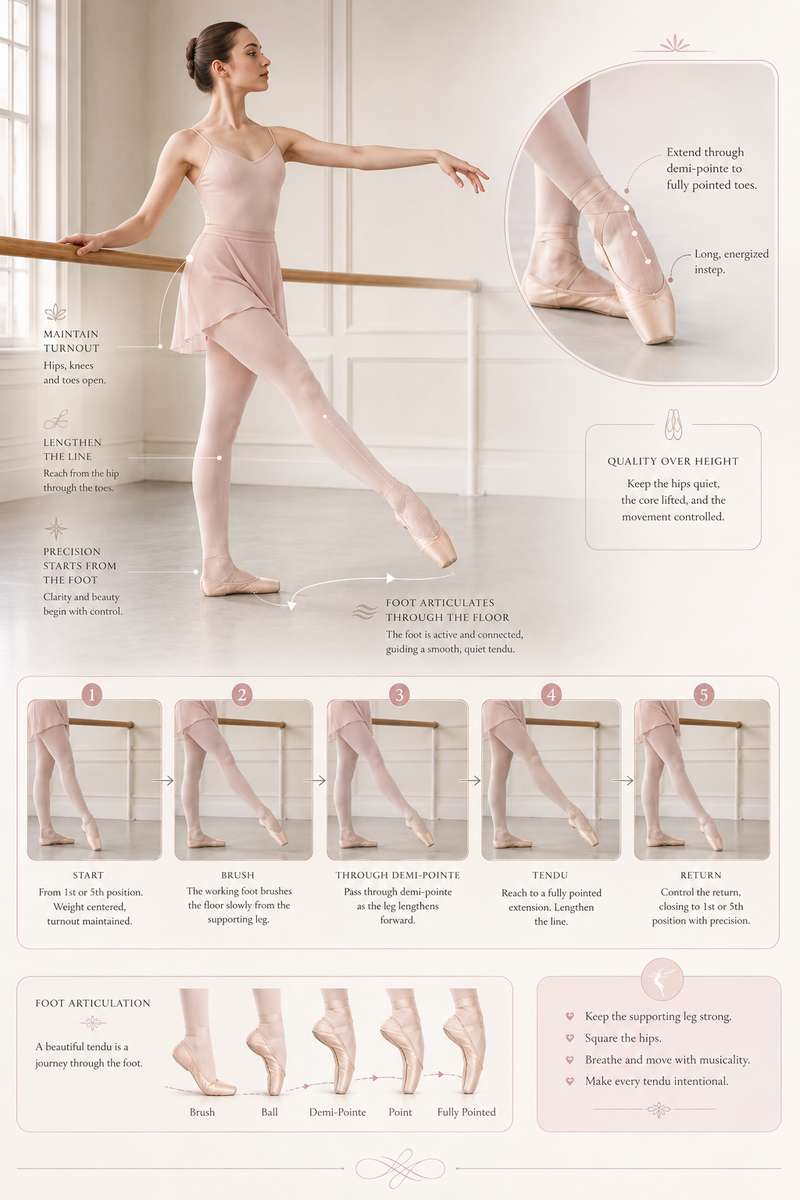
In classical ballet vocabulary, tendu is the short form of battement tendu and comes from the French past participle of tendre, meaning "stretched." The exercise is executed by sliding the working foot along the floor to a pointed position at the front, side, or back while keeping the toe in contact with the floor and the supporting leg in place. Depending on the school or syllabus, tendu is distinguished from related steps such as battement glissé or dégagé by the fact that the foot remains on the floor for tendu.
WHAT THE VIEWER SEES
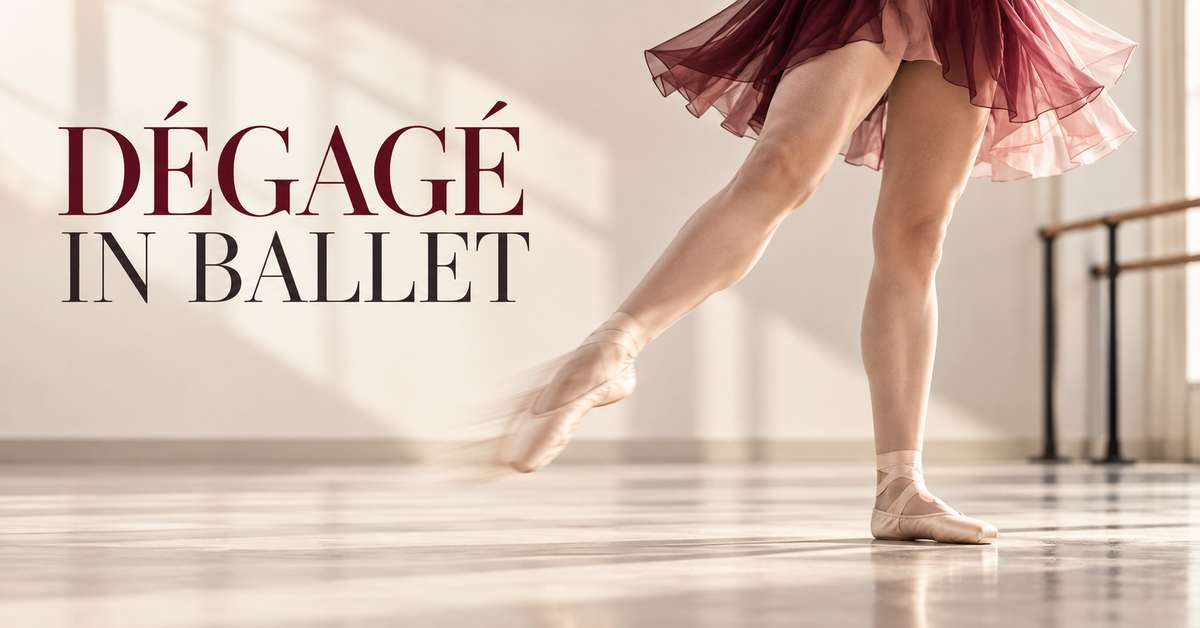
On stage or in a photograph, tendu reads as a long, clean line from the hip through the pointed toes. Because the working foot never leaves the floor, the movement appears controlled and precise rather than aerial. This flat, extended line is one reason tendu contributes so directly to the kind of elongated silhouettes favored in ballet posters and wall art.
TECHNIQUE AND BODY MECHANICS
Proper tendu technique emphasizes articulation of the foot from heel through instep to toes. Teachers often cue a "heel-to-toe" or "heel through to the toe" action: the movement begins as the heel slides forward (or sideways/back) then the arch opens and the toes point, maintaining turnout and even weight on the supporting leg. The working foot remains in contact with the floor, so alignment, turnout and stable placement of the supporting leg are essential to preserve balance and the visual line.
TRAINING AND THE BARRE
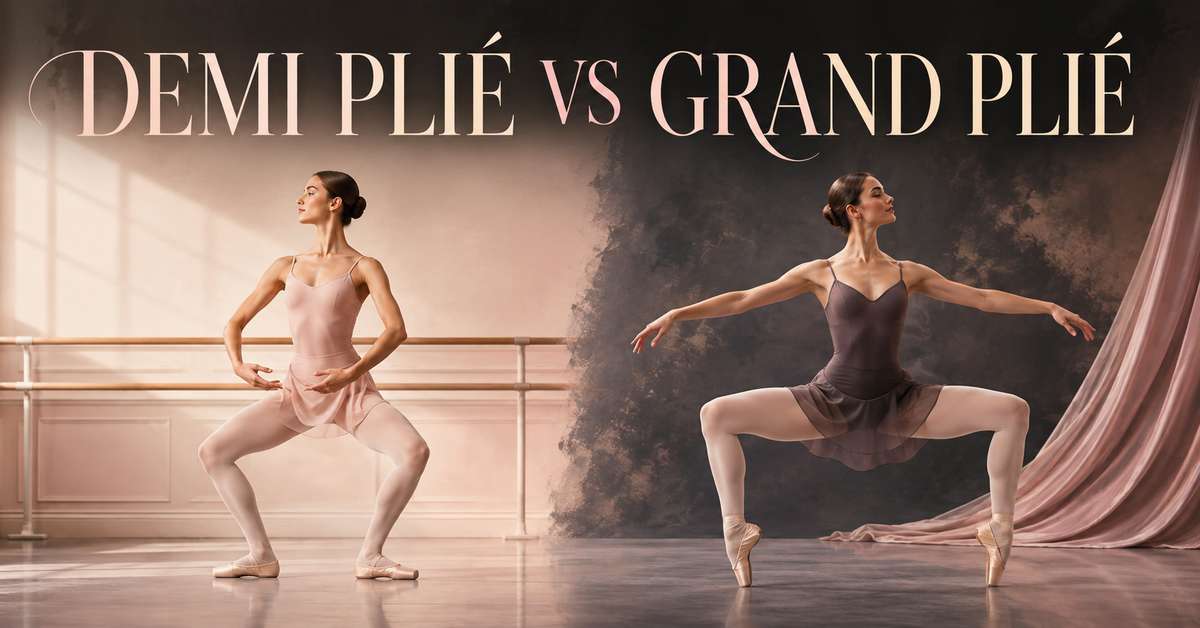
Tendu is taught as one of the earliest and most foundational barre exercises in classical ballet. Its repetition helps develop the small muscular control needed for foot articulation, turnout and placement. In many classical traditions and syllabi, tendu is practiced in variations and progressions that prepare the dancer for dégagé (when the foot leaves the floor) and other vocabulary.
SCHOOLS, VARIATIONS, AND VOCABULARY
Different classical schools and syllabi use tendu within their technical specifications and describe variations or progressions. For example, syllabi may list battement tendu alongside battement glissé or dégagé to indicate when the working foot should stay on the floor versus when it may lift slightly. These naming differences are part of each tradition's way of teaching articulation and speed.
COMMON MISUNDERSTANDINGS
Beginners sometimes assume tendu is merely a decorative point of the foot. In fact, tendu is a technical exercise: its purpose is to teach precise weight placement, turnout, and the coordinated, articulated movement of the foot. Because the foot stays on the floor, any failure in alignment or articulation is immediately visible and can be corrected at the barre.
READER VIEWING GUIDE
When watching a performance or studying ballet art, notice where the line begins and how cleanly the foot is pointed. A true tendu creates a continuous visual line from hip to toe; photographers and poster designers often choose such moments because the extended floor-supported line reads strongly in two-dimensional images. Also pay attention to the supporting leg: correct placement there keeps the tendu crisp rather than collapsing at the ankle or hip.
CLOSING INTERPRETATION
Tendu may be simple to describe, but it is a cornerstone of classical technique. Its careful practice builds the foot articulation, turnout and placement that make more complex steps possible and that shape the elongated lines we admire in stage performance and in ballet wall art. Understanding tendu deepens appreciation of how seemingly small exercises create the visual precision that defines classical ballet.
Author: Cynthia D.