Nutcracker Ballet: The Stories and Stage Episodes That Built Its Reputation
The Nutcracker is more than a holiday spectacle; it is a work whose reputation was built in stages and decades rather than at a single triumphant premiere. Behind the familiar music and sugar-plum imagery lie distinct turning points—an uneven 1892 reception, the split authorship of choreography, and a mid‑20th‑century American reinvention—that explain why the ballet today feels both classical and newly made each season.
In short
The Nutcracker reached its cultural prominence through uneven early reception, choreographic handoffs at the 1892 Mariinsky premiere, and a 1954 Balanchine staging that anchored it in American holiday repertory.
What this article uncovers
- How the 1892 premiere and its choreographic authorship created an ambiguous origin story.
- Why the heroine’s name appears as Marie in Hoffmann and often as Clara on stage, and what that choice signals.
- How George Balanchine’s 1954 New York staging transformed the ballet’s place in American cultural life.
Jump to
How this ballet entered cultural memory
The Nutcracker’s current ubiquity is the product of slow accretion. Composed by Pyotr Ilyich Tchaikovsky and first presented at the Imperial Mariinsky Theatre in Saint Petersburg in December 1892, it did not arrive as an instant classic. Its music and visual possibilities were always present, but the work’s place as a seasonal tradition emerged only through later productions and national reinventions. That layered history is why a single performance or premiere cannot explain the Nutcracker’s hold on audiences; it is a repertory phenomenon shaped by multiple moments of adoption and reimagining.
The creation and premiere: Petipa, Ivanov, and December 1892
The Nutcracker’s origin is anchored in the Imperial theatre machinery of late‑19th‑century Russia. Tchaikovsky provided the score for a production presented in December 1892 at the Mariinsky, often noted alongside the opera Iolanta. Marius Petipa produced the scenario and began the choreography, but illness meant his assistant Lev Ivanov carried the choreography that appeared at the premiere. Contemporary records emphasize this dual authorship: a scenario by Petipa realized in practice by Ivanov for the stage that first saw the ballet.
The premiere date itself appears in primary sources with both Old Style (Julian) and New Style (Gregorian) calendar notations—a reminder that the simplest historical facts about 1890s Russian theatre often need careful dating. Scholars and theatre references commonly cite December 1892 as the premiere, with specific dates recorded in Old Style and Gregorian forms.
The name that travels: Marie and Clara
One small but revealing detail in the Nutcracker’s transmission is the heroine’s name. In E.T.A. Hoffmann’s original tale the girl is named Marie; many later stage versions use the name Clara. This seeming shift matters because it shows how producers and companies adapt a story for different tastes and cultural contexts: restoring Marie can be an explicit nod to Hoffmann’s narrative, while Clara became a familiar stage shorthand in many productions. The variation is a concrete example of how stagings alter identity without changing the ballet’s broad outline.
The Balanchine turning point: 1954 and the American tradition
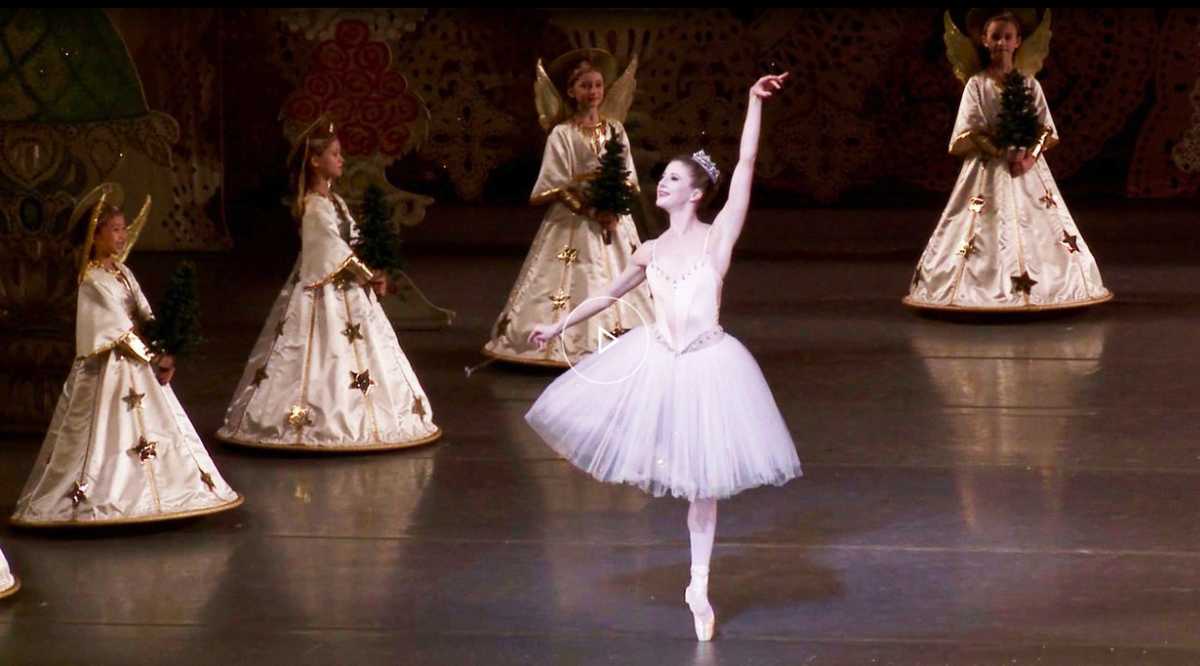
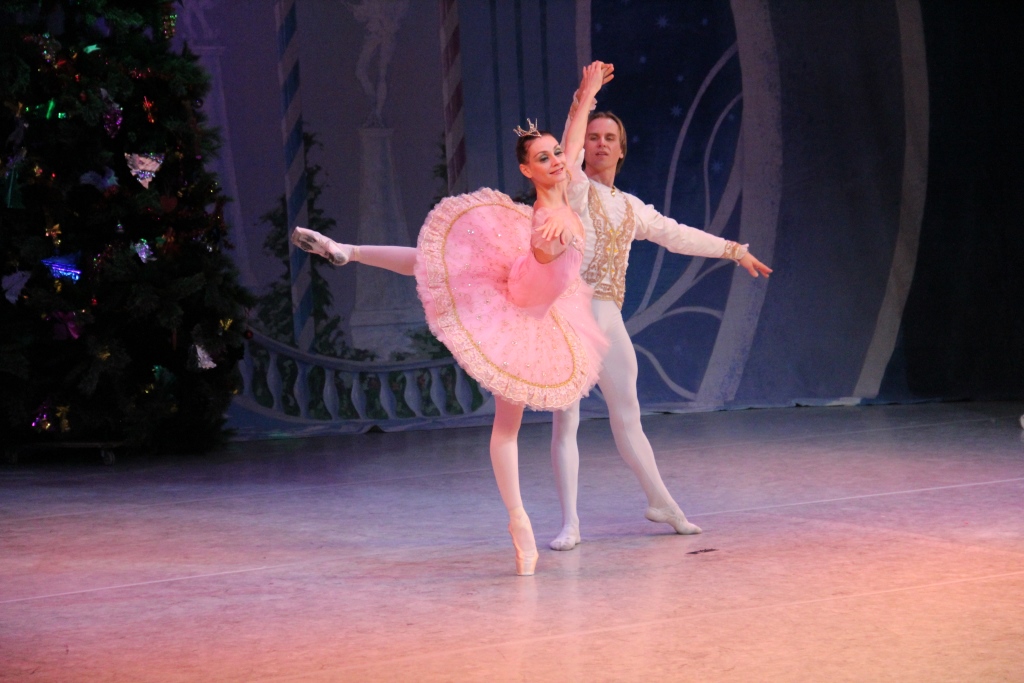
The Nutcracker’s transformation into a holiday mainstay is most clearly linked to George Balanchine’s 1954 staging for what became New York City Ballet. Premiered on February 2, 1954, at City Center and featuring dancers from the School of American Ballet, Balanchine’s production is widely credited with establishing The Nutcracker as an annual American tradition. Where the 1892 premiere did not secure lasting fame, Balanchine’s revival created an institutional habit: companies, schools, and audiences in the United States came to expect and embrace a seasonal Nutcracker each year.
Balanchine’s production introduced staging conventions—such as theatrical effects and specific moments of spectacle—that many companies adopted in whole or in part. This American chapter shows how a distinct production can reframe a work for a new cultural landscape, turning a score and scenario into a ritual that supports company finances, training pipelines, and public memory.
What the stage and studio reality reveals
Reading the Nutcracker’s history through productions and staging choices exposes the practical pressures behind repertory decisions. The ballet’s scenes for children, its parade of divertissements, and the visual pleasures of Tchaikovsky’s score make it adaptable and, crucially, producible at scale. Companies can recruit students and local communities for casts, and choreographers can insert or reshape dances to suit company strengths. Those practicalities—the ability to mount a work that involves many participants and reliable box-office draw—help explain why the Nutcracker has become institutionalized where other 19th‑century ballets have not.
Why audiences kept returning
The Nutcracker’s emotional and repertory appeal rests on several interlocking reasons that productions have consistently exploited: evocative music by Tchaikovsky, a clear two‑act structure that separates domestic scene from fantasy, and staging that accommodates spectacle without destroying classical technique. Balanchine’s success in the United States demonstrates how audience habits can be encouraged by a single influential production: when a respected company makes the ballet an annual event, audiences grow up with it and institutions build traditions around that expectation.
Closing interpretation
The Nutcracker’s story is not just about a composer or a single premiere. It is about how productions, choreographic hands, naming choices, and influential revivals collectively turned a late‑19th‑century score into a cultural ritual. From the Petipa/Ivanov choreography realized at the Mariinsky in December 1892 to Balanchine’s 1954 American reintroduction, the ballet’s reputation was made incrementally: by staging choices that invited repetition, by practical production logic, and by an American revival that gave the work an annual home. That layered genesis explains why the Nutcracker today feels both timeless and distinctly the product of modern ballet’s institutional life.
Author: William L.