Fifth Position Ballet Explained: Why It Organises Line, Turnout, and…
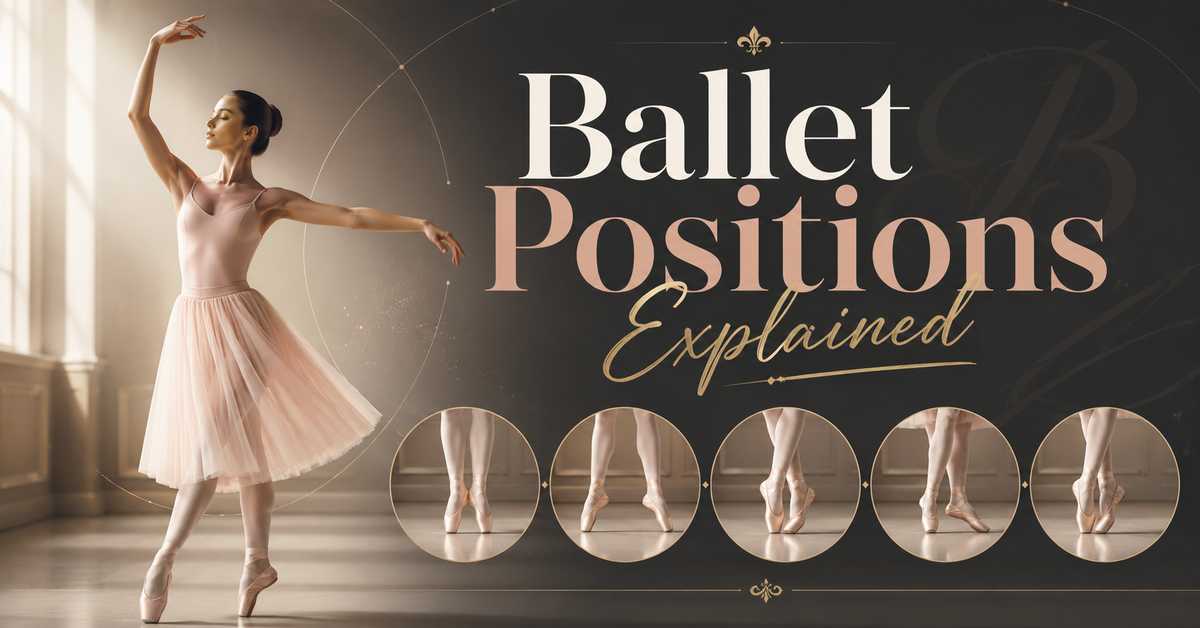
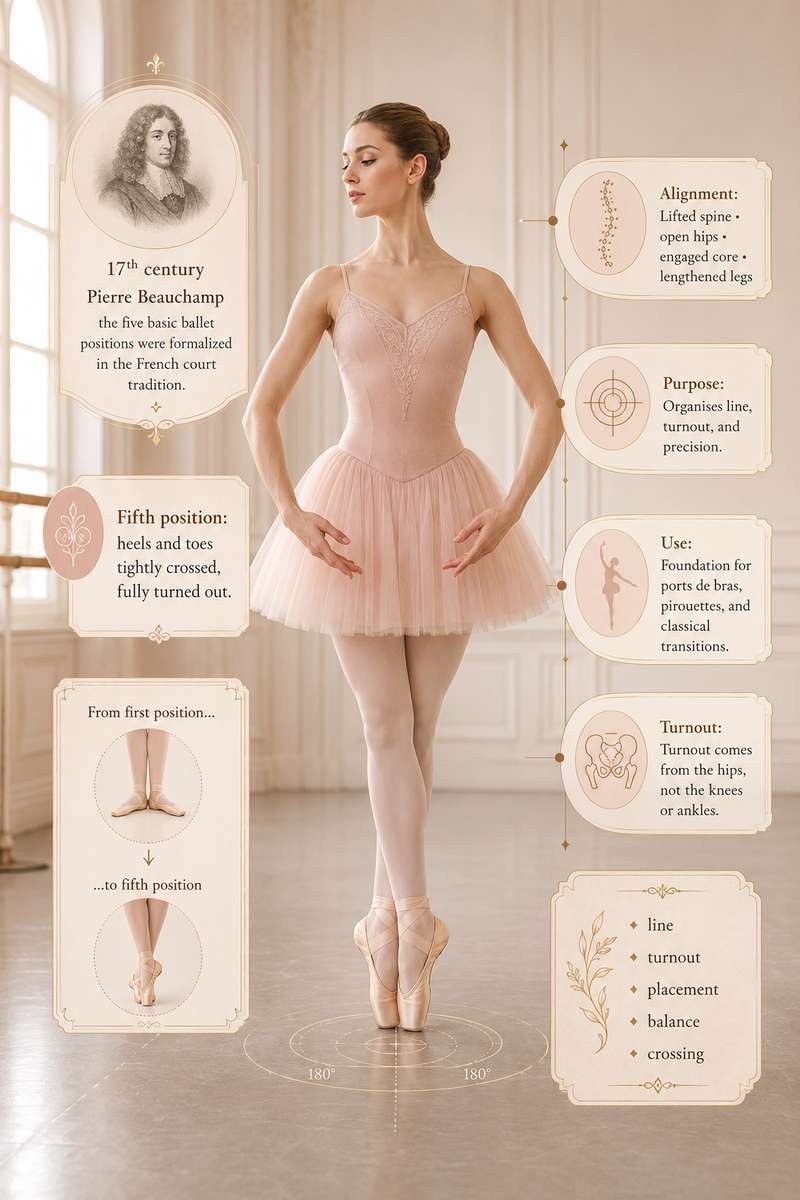
Fifth position is one of the five fundamental positions of the feet in classical ballet. Dancers cross the feet so the heel of the front foot nearly touches the toes of the back foot; exact placement and arm positions vary by method. Fifth functions as a primary starting and ending placement for many classical movements and is central across major training systems.
Quick summary: Fifth position organises a dancer's line and forces precise turnout and alignment. It appears at the barre, in centre work, as the base for pirouettes, and as an entry for grand allegro. Clean fifths are technically demanding because they reveal gaps in turnout, alignment, and weight placement.
Quick access: Definition • Technique & body mechanics • Training & pedagogy
CLEAR DEFINITION
In classical ballet teaching, fifth position places the feet crossed so the heel of the front foot nearly touches the toes of the back foot. It is one of the five basic foot positions and is named and described in multiple methods. Arm placements and the exact closeness of the feet differ between schools, but the visual idea is a tightly closed, crossed base.
WHAT THE VIEWER SEES ON STAGE
On stage, a dancer in fifth reads as a compact, ordered starting point: a closed line that suggests readiness and control. Audiences often notice its neat silhouette—particularly in photos, posters, and prints—because a true fifth produces a clean sight line from hip through the front leg to the foot. In corps de ballet formations and promotional imagery, fifth contributes to geometric uniformity.
TECHNIQUE AND BODY MECHANICS
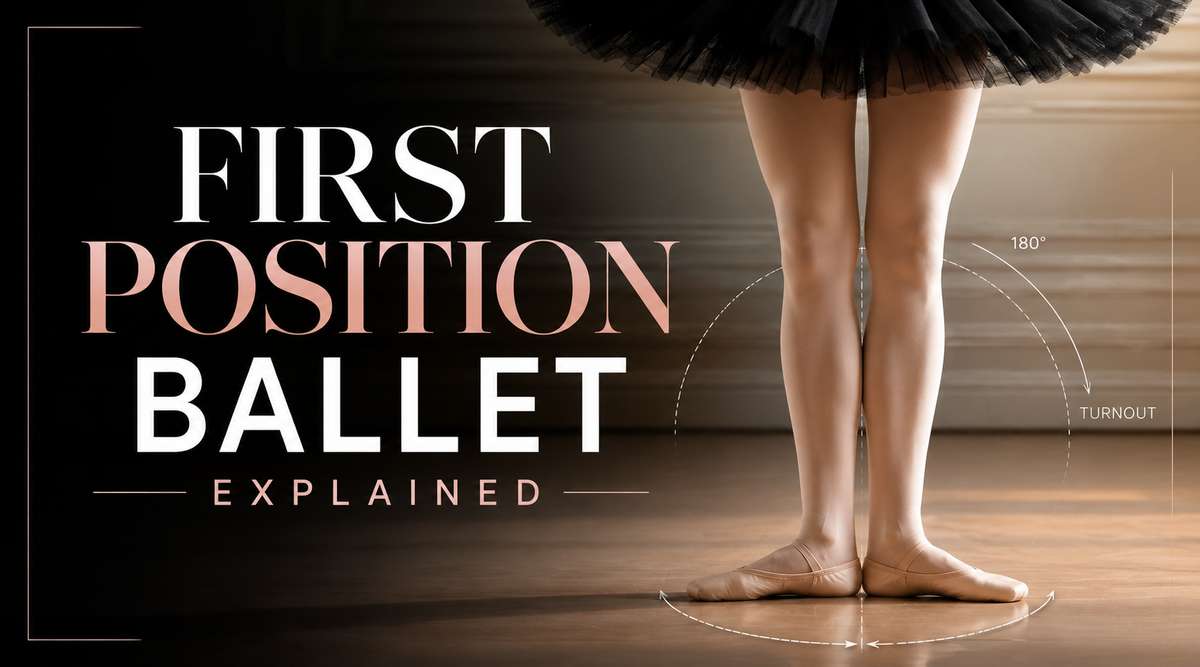
Fifth demands coordinated external rotation (turnout) from the hips so that both legs can close without twisting the knees or feet. To look clean, the pelvis must be neutral, knees aligned over toes, and weight precisely distributed between the feet. The position exposes any lack of turnout: insufficient hip rotation, a tipped pelvis, or internal rotation of the knee will visibly break the line.
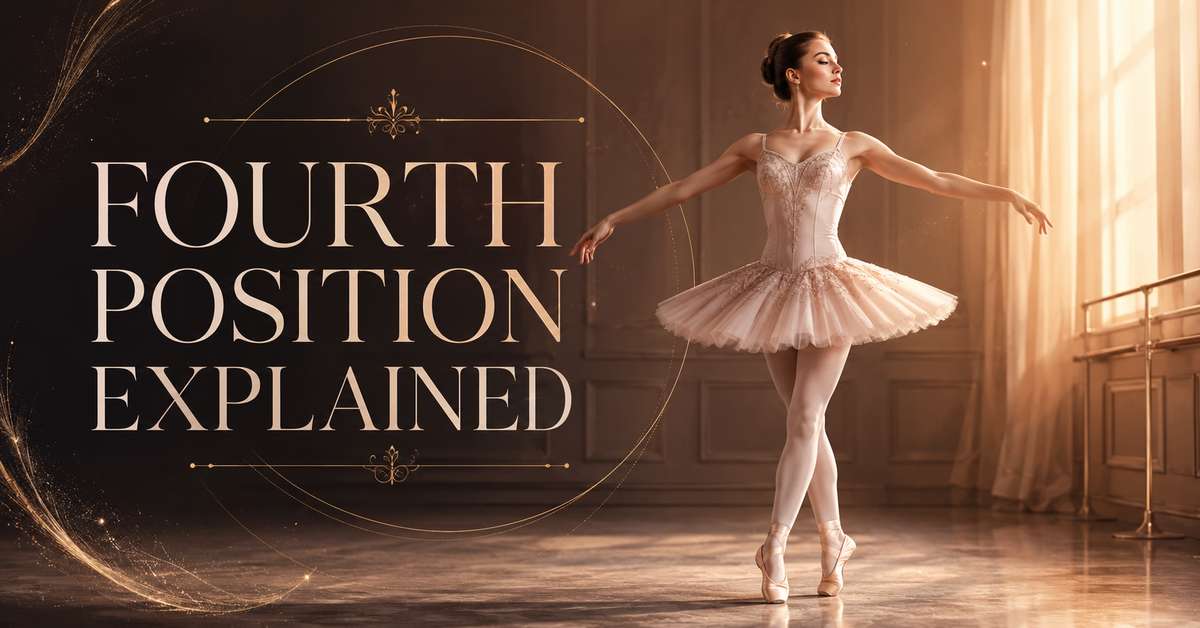
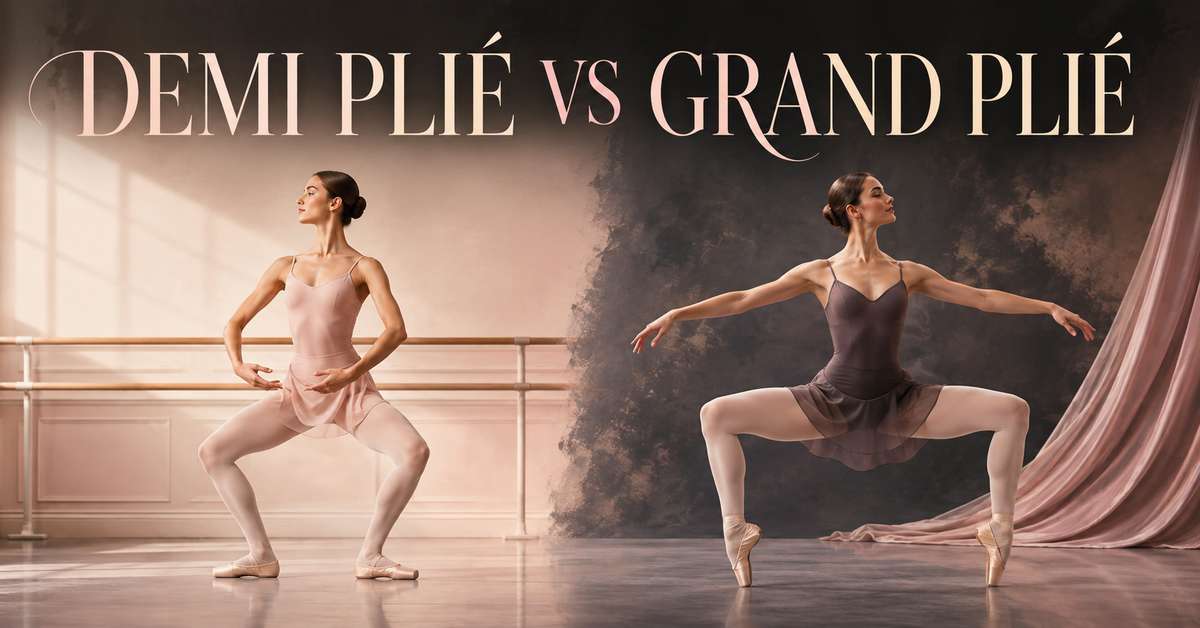
Because fifth is a tight, crossed placement, it also affects actions that begin or end there. Pirouettes from fifth require a secure, compact base; entries into grand allegro use fifth as a springboard for extension. On pointe, closing to fifth adds further demand: pointe shoes and the vertical balance they require magnify small alignment faults.
TRAINING AND PEDAGOGY
Major syllabi include fifth as a foundational placement used at the barre and in centre work. Teachers across RAD, Vaganova, Cecchetti and other systems use fifth as a technical reference because it organises turnout and line. Training focuses on strengthening the turnout musculature, correcting pelvic and knee alignment, and practising weight placement so closing into fifth becomes safe and visually clean.
There is pedagogical debate about insisting on a full classical fifth for every student. Research and some teachers argue for modified or third-position alternatives when a dancer lacks anatomical turnout, to avoid compensatory movements that can be unsafe. Depending on the school and the student, teachers may adapt how strictly fifth is taught.
COMMON MISUNDERSTANDINGS
Beginners often think fifth is simply about crossing the feet tightly; in reality it is a test of coordinated turnout and alignment. Trying to force a textbook fifth without the required hip rotation or strength commonly produces compensations—rotated knees, pronated feet, or an arched lower back—that both look incorrect and increase injury risk. A visually tidy fifth is the result of correct mechanics, not just muscle memory.
STAGECRAFT AND VISUAL LANGUAGE
Choreographers and lighting designers use fifth to create precise entrances, compact phrase endings, and clear sight lines in group patterns. In photography and wall art, the crossed legs of fifth translate into striking negative space and confident vertical lines; posters often exploit that closure to frame a dancer’s port de bras or extension beyond the closed base.
Costume elements—tutus, the length of skirts, or the taper of tights—interact with fifth: a clean fifth keeps the leg line uninterrupted, which is why classical silhouettes emphasise the ankle and foot. On promotional prints, a neat fifth reads as discipline and control, reinforcing the classical aesthetic.
CLOSING INTERPRETATION
Fifth position is more than a static foot placement: it organises a dancer’s line and turnout, anchors many movements, and exposes technical strengths and weaknesses. Its difficulty explains why teachers treat it as a barometer of classical training and why photographers and poster designers favor its compact geometry. Understanding fifth helps audiences see how subtle mechanics create the apparent effortlessness of classical ballet.
Author: Alex R.