Can You Start Ballet at 16 and Become a Ballerina? A Clear, Realistic Guide
Starting ballet at 16 raises an honest, immediate question: do you mean becoming a technically trained, confident adult dancer, or entering the typical childhood-to-vocational pipeline that feeds major classical companies? The short answer: beginning at 16 makes the usual route into major classical-company careers unlikely, but meaningful alternatives and rare exceptions exist. This article explains what changes when you start late, which goals remain realistic, and how to test your potential without mistaking hard work for guaranteed outcomes.
Quick answer
Most professional classical ballet dancers start formal training much earlier—often by age 8 with pre-professional training in the early-to-mid teens—so beginning at 16 significantly reduces the likelihood of following the conventional path to a major-company career. Still, accelerated training, focused intensives, contemporary or regional-company routes, and other professional or teaching careers remain realistic alternatives; moreover, there are notable exceptions of late starters who achieved high levels after rapid progress.
What this article reveals
- Why starting age matters for the classical-company trajectory and what it changes in training needs.
- Which technical, physical, and artistic abilities companies look for beyond flexibility.
- Practical pathways and programs that can accelerate development for older beginners.
Why age matters: the standard training timeline
Established training pathways for classical ballet typically involve many years of regular lessons beginning in childhood. Many dancers begin regular classes by around age 8 and enter pre-professional programs in their early to mid-teens. This long runway builds pliability, daily technique habits, and the motor learning that classical repertoire demands. Starting at 16 shortens that runway dramatically: the same technical elements must be learned and strengthened in a compressed time frame.
What companies really need (beyond impressive flexibility)
Artistic staff and training programs look for repeatable technique, musicality, alignment, and the ability to work in an ensemble under pressure. Clean basics, consistent placement, coordination, and the capacity to maintain quality across long rehearsal days are often more decisive than a single advanced pose or dramatic extension. For late starters, these daily, repeatable standards typically take years of focused, consistent training to reach.
Exceptions and what they teach us
Although rare, there are well-documented exceptions of dancers who began later than the usual norm and achieved top professional positions. Such cases show that accelerated progress is possible, but they are exceptional rather than typical. They underline two points: exceptional natural aptitude combined with access to intensive, sustained training can overcome a late start in specific cases; and such stories should be seen as exceptions that illuminate possibilities, not guarantees.
Accelerated paths: intensives, vocational study, and realistic alternatives
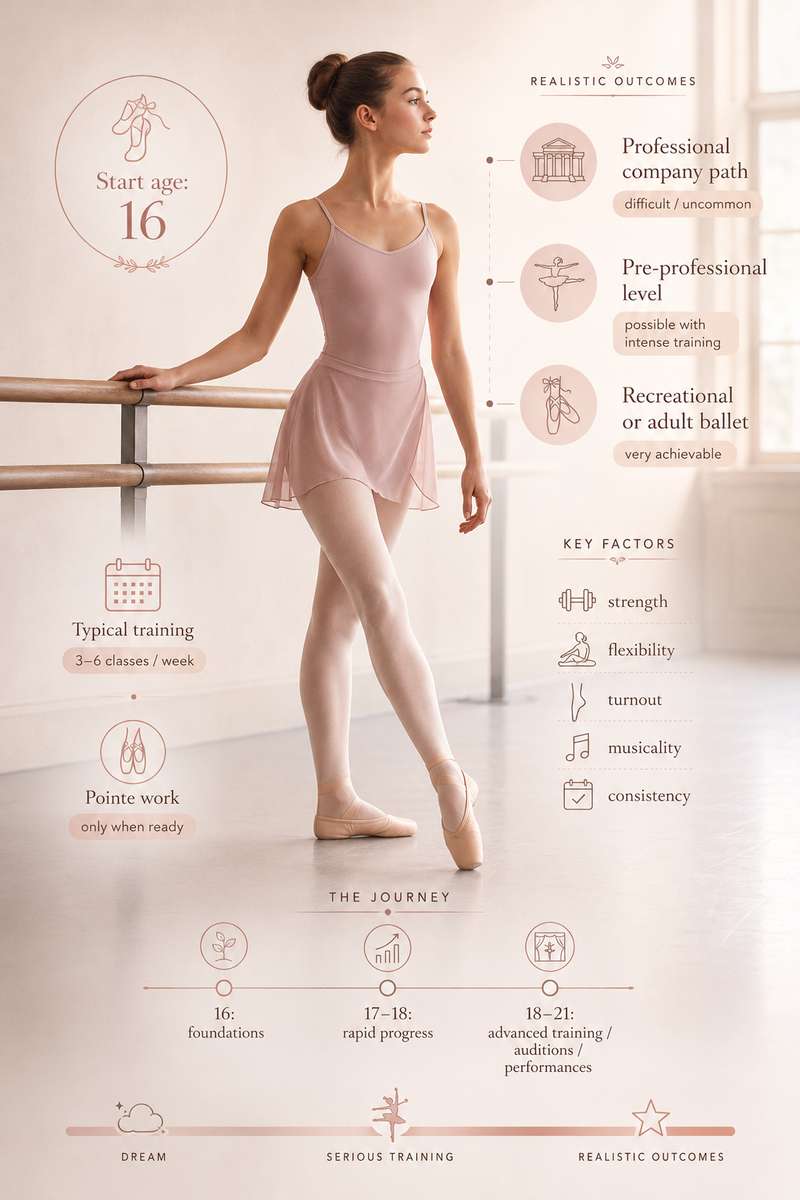
For many 16‑year-old beginners who want to pursue dance seriously, pre-professional summer intensives, conservatory or vocational programs, and disciplined daily training are the practical mechanisms to accelerate progress. These programs can accept older teens for concentrated study but expect high weekly training loads and rapid technical absorption. Even with committed training, the conventional route into major classical companies remains difficult; however, alternative professional paths—contemporary or modern companies, regional companies, trainee/second-company roles, teaching, choreography, or other dance careers—can be meaningful and sustainable.
Testing your potential: concrete studio signs to watch
If you start at 16 and want to assess realistic prospects, watch for these indicators during focused training: how quickly you internalise corrections; the consistency of your placement under fatigue; musical responsiveness; ankle and core strength development; and the ability to sustain class quality across several hours. Teachers at intensives and vocational programs will notice learning speed and repeatability more than one showy achievement.
What usually exposes limits first
In accelerated training, limits commonly show up when technique must be repeated under longer rehearsal and performance conditions. Fatigue reveals weak turnout mechanics, sloppy foot and ankle support, poor core control, or inconsistent épaulement. These are the areas that separate an accomplished-looking movement from a reliably professional one and are often the hardest to close quickly after a late start.
Making a plan if you start at 16
Be clear about ambitions and design a practical plan: choose focused daily classes, target reputable intensives or vocational programs that accept older beginners, and work with teachers who understand accelerated development. Balance technique with conditioning and recovery to prevent overload. Also clarify outcomes you value: becoming an excellent adult ballet dancer, pursuing a teaching certification, or auditioning for contemporary and regional companies are all distinct goals that require different timelines and commitments.
Realistic outcomes and honest choices
Beginning at 16 can lead to substantial, personally meaningful achievement: strong adult technique, quality performance in amateur or semi-professional productions, and pathways into dance education or contemporary companies. Reaching the conventional corps‑to‑principal trajectory of major classical companies is less likely simply because most dancers on that track began much earlier. Recognising that distinction helps you choose the right programs, set achievable milestones, and make informed sacrifices.
Final interpretation: ambition versus pathway
Can you start ballet at 16 and become a ballerina? It depends on what you mean by ballerina. If you mean joining the standard childhood-to-vocational pipeline that feeds most major classical companies, starting at 16 significantly reduces the odds. If you mean becoming a skilled, performance-capable ballet dancer, exploring accelerated study, and pursuing alternative professional dance avenues, then with focused training and realistic expectations you can make substantial and rewarding progress. Use intensive programs as rigorous tests, watch for repeatability under fatigue, and choose pathways that align with the timeline you can commit to.
Author: Cynthia D.